

Gary Petty
This transcript was generated by AI and may contain errors. It is provided to assist those who may not be able to listen to the message.
What an extremely important announcement I forgot to mention. We have an anniversary this month. Not everybody gets married in January, but Pharrell and Lula Thomas did, and they will be celebrating on the 15th their 36th wedding anniversary. So that certainly is a milestone in achievement. We'd like to congratulate them, and we'll look forward to that. I'm sure they'll invite us over to their house that night.
It's very interesting in the Gospel accounts that Jesus Christ spent a great deal of time instructing His disciples on the importance of prayer. Now, if He placed a great deal of emphasis on the topic, it should lead us to begin to focus on it. It should elevate it to the top of the list, or close to the top of the list, of the things that we would be concerned about. And studying through the Gospels, you find that Jesus did not teach His disciples how to preach, but He did teach them how to pray.
Now, let me explain what I mean by that. Jesus Christ did say, go into all the world, and preach the Gospel. So it's not a matter He didn't talk about preaching. But you don't find any long dissertations in the Scriptures, especially in the Gospels, on how to preach proper techniques. This is the best way. This is what works.
This is what doesn't work. There's just not a whole lot of instruction like that given in the Bible. He spent more time on teaching them how to pray than on almost anything else. So it was something that was very personal, very close to Him. Christ also set an excellent example before them that they would not soon forget. You might remember on one occasion He prayed all night to the Father when He was about to choose the disciples. This was not just a decision that was foregone.
He prayed about it to make sure that God guided Him. Why did He have to do that? Because He was God in the flesh. I'm going to hear you just a few years before that. He had been in heaven, was glorified, all-powerful. He's the one who God used to create the universe. So why would He need to spend so much time praying? You might remember that prior to His crucifixion and His beating, He prayed for three hours.
Well, let's go to the book of John. I think the book of John is very helpful when it comes to why Jesus Christ prayed. In John 4, beginning in John 4, verse 34, there are all kinds of Scriptures here in the book of John that, in one way or another, address this, touch on it. Jesus said to them, John 4, 34, My food is to do the will of Him who sent me, and to finish His work.
So Christ wasn't interested in doing anything that was going to grandize Him, point attention to Him. He always gave the credit to the Father, He always gave the glory to the Father, and He was there to do the will of the Father, not His own will. Do not say, there are still four months, and then comes a harvest. Behold, I say to you, lift up your eyes, look at the fields, for they're already white for harvest. He realized that in order to have the power to accomplish the purpose for being sent to the earth, the will of God, and to carry out His plan, that He had to rely upon the Father.
Now turn over to chapter 5, verse 19. Chapter 5, verse 19, you find further information. When Jesus answered and said to them, most assuredly, I say to you, the Son can do nothing of Himself. Now is that something that we say all the time? I can't do anything of Myself? Or do we think we can do almost all things by ourselves?
Now Christ said, I can do nothing of Myself, but what He sees the Father do, for whatever He does, the Son does in like manner. So Christ imitated the Father and what the Father did, and likewise we should imitate Christ. In chapter, well, verse 30, here in the same chapter, again He said, I can do, or I can of Myself do nothing.
As I hear, I judge, and My judgment is righteous, because I do not seek My own will, but the will of the Father who sent Me. So He wanted to always do God's will. Now in chapter 6 and verse 38, Christ said, I have come down from heaven not to do My own will, but the will of Him who sent Me.
So He wanted to make sure that He was attuned to God, attuned to God's program, attuned to what God had in line for Him to do, and then that is what He did. And again, not His own will. In chapter 8 and verse 28, He again said that He could do nothing of Himself. Chapter 8 and verse 28, you know, there are just so many scriptures here. In chapter 14 and verse 10, let's notice this scripture. Chapter 14 and verse 10.
Do you not believe that I am in the Father and the Father in Me? The words that I speak to you, I do not speak on My own authority.
But the Father who dwells in Me does the works. Brethren, it's God in us who's going to accomplish the works. Anything spiritual is accomplished through the power of God.
Not through our own power, but through the power of God. Now, we have to put forth effort. We all know that. But if it's going to be accomplished spiritual, it's going to be by the very power of God. No great work is going to get done if prayer is not a major part of it. You need to think about that because I think that's the key to our doing great works. I find generally there are two major reasons why people don't pray. One is timing. People think, I don't have enough time.
I'm too busy. We get up in the morning, we take off for work, we work all day, we come home, we're bone tired, we fault the traffic, and time just seems to evaporate and we end up in front of the TV watching television. Another reason is a lack of believing God. We don't believe God. We want to especially take a look at the last point. That is, believing God. Brethren, what would happen if we really believed God, if we had that type of confidence, to believe in God the way that we should?
Back up to Matthew 21, beginning in verse 18. Matthew 21, verse 18. Christ very clearly gave some Scriptures dealing with this. Verse 18. Now in the morning, as He returned to the city, He was hungry. So you find that Christ was a human being. He got hungry, just like we do. And seeing the victory by the road, He came to it and found nothing on it but leaves.
And He said to it, Let no fruit grow on you ever again. And immediately the tree withered away, and you just died. Now when the disciples saw it, they marveled, saying, How did the fig tree wither away so soon?
It just boom happened so quickly. So Jesus answered and said to them, Assuredly I say to you, that if you have faith and do not doubt, you will not only do what was done to this fig tree, but also you shall say to this mountain, Be removed and be cast into the sea, and it shall be done. And all things whatever you ask in prayer, believing, you shall receive.
Now, if you and I have faith and we don't doubt, we know that doubt and fear are two of the greatest enemies of faith. And we many times doubt. Now, He said in verse 22, In all things whatever you ask in prayer. Now, does that mean anything that you ask? Well, it means if you ask according to God's will, not contrary to God's will. Let me illustrate what I'm talking about. What if somebody mistreats you?
So you get down and you pray, Father, so and so mistreated me. I want you to kill that person and his family in an automobile accident. Is God going to answer that prayer? Is that according to His will? Or would God be more likely to answer a prayer, Father, this person has mistreated me. He needs help. Please be with Him. You pray for that individual. And you ask God to be with that person. Help that person. Help them to see perhaps the fault or the mistakes that they have made and that they can repent.
Because it's only God who can really bring to our attention those type of things. So if we don't like somebody, do we say, kill all of my enemies? What about you go to God and say, Father, you promise, and you read the Scripture here? I want to be a millionaire. And so I would like for you in 2008 to make me a millionaire. I believe. And so you've got to believe. Is that going to happen? That may be the worst thing in the world that could happen to you to have a million dollars. The very fact you're asking for it in the first place shows there might be something wrong with the attitude or the approach.
And that perhaps you don't fully understand. So when it says God, when we ask for all things, it's talking about if we ask according to the will of God. That's why I read those Scriptures concerning Jesus Christ. What did He say? He said, I didn't come to do my own will. Now, if Christ had been running around the earth saying, Well, I'm the Son of God. I can do anything I want to, and you know, my purpose. And then, you know, He changes the purpose of God and gets out here and starts building a kingdom and setting up the kingdom now.
God would not have been with Him. It was because He knew God's will. He knew God's purpose. And He then had full confidence that if you obeyed according to that will, the purpose for Him being on the earth, that God would back Him up.
What about moving mountains? Does this mean that as Christians, we can go around shaping the landscape of the countryside? What if you lived in an area and there was a mountain behind your house, and you didn't want the mountain to be there? And you just really, in the way, blocks the sun, it doesn't... it goes down too soon. You're not able to see the river. So you pray and you ask God, please move this mountain and put it over here. I'd rather have it over here on this side of the house. And so there's a quaking and a shaking, and the mountain comes up and moves over here into the next field.
It happens to be some poor farmer's house there. His sheep, children, plop, plops down there. Mountain is moved and you have your wish. Well, there's somebody else in the church, and he's a Christian. He lives on the other side of that mountain, where it is now. And he says, I don't like that mountain there. I would rather see it back where it was. So he prays, and the next morning it's up and it moves back over there. So the two of you begin to have this battle, day after day, and it keeps shifting.
Well, I know I'm being very facetious here, and I know we all realize that. But it's basically, it's not talking about God wants us to get out here and just command mountains and, you know, have them jump all over the place. He's basically, in one sense, talking about anything that's so big or too big for us, humanly, that it's impossible for us to do anything.
That He will intervene, and He will answer that. There are times in our lives that we come to the Red Sea, just like Israel did. And we have no place to go. And unless God intervenes and moves the mountain, or, you know, He parts the sea, we won't go anywhere. Those are the times that we can have confidence that if God wants us to do it, and we've hit the Red Sea, that He will intervene, and that He will open the door.
We've all heard the expression that sometimes you have to move mountains to get things done. Now, I gave this sermon this morning in Rome. I had a member come up to me and said, well, he knew of a lady who prayed this prayer, and the mountain was moved.
And he went on to recite a story about this woman who didn't like this bridge behind her because it blocked the sun. And about 15 years, 10, 15 years later, they came in and cut all the timber off of the mountain.
So it had been denuded. And then the heavy equipment got out there, and they started flattening the mountain and dug a big hole through it, built a highway through there, and cut it down. And she was able to see the sun setting behind that hill now. In that case, she did get her mountain moved. Let's go over to 1 John 5 and verse 14.
Beginning here in verse 14. Now this is the confidence that we have in Him, that if we ask anything according to His will, He hears us. And if we know that He hears us, whatever we ask, we know that we have a partition that we've asked of Him. So notice the progression. If you ask it according to His will, you know He hears. The implication is, if you don't ask according to His will, if Christ had asked God to do something that wasn't according to His will for Him, that would have been completely different. But if we ask, He hears. And if we know that He hears, then we know we have the answer. I mean, it's that simple. 1, 2, 3. Now you'll notice here the first sentence, which I think is the key. This is the confidence. Do we have confidence in Christ to do what He said He would do? To have confidence. Have we ever stopped to think that when you say you have faith in God or confidence, that you're talking about having faith in a person, or in this case, in a being? We can have confidence in a car starting. I think sometimes people have more confidence in their car than they do in God. Go out every morning, turn the key, it starts. So they feel comfortable, it's going to start. People can be more confident in the fact that the sun rises in the morning, sets in the evening, they've got total confidence in that, because it's always happened. But when it comes to having confidence in God who made the sun, who made the earth, who set it in orbit, who sustains it, all at once there's this doubt that enters in. There's this unbelief. See, faith isn't just an idea or a concept, but faith is in an individual, in a spirit being. Now, what do we know about the being that we are petitioning in our prayers? What do you know about God? What do you know about the Father? See, this is what believing is all about. We come to have complete confidence in God. And that's what faith truly comes down to. We have that confidence, that trust. You know what God will do, and you know what God is capable of, because you know who He is. Some people, we know that you couldn't trust them as far as you could throw a bull over a fence. Why? They're just not trustworthy. And they've proven themselves over and over. Maybe they're a liar. Maybe they don't keep their word. And so, therefore, you can't trust them. But Jesus Christ and God the Father cannot do anything else than what they are.
What are they? They're God. They're omnipotent. They're eternal. They've always lived. They're the Almighty God. They're all powerful. There's nothing... You can use all kinds of adjectives to describe them, but they are the supreme beings in the universe and all powerful. There is no power that can keep them from carrying out their will, their plan, their purpose. Are we confident that Jesus Christ will grant us our petition if we ask, if we pray in His name, when we petition the Father? You see, it comes down to a matter of confidence in Jesus Christ when we pray in His name. In John 14 and verse 12, Jesus Christ made the statement, which we're all aware of, in John chapter 14 and verse 12. Most assuredly, I say to you, He who believes in me, the works that I do, He will do also. Now notice, here are the promises. If we believe in Him, the works that Christ did, we will do also. And greater works than these He will do, because I go to my Father.
And whatever you ask in my name, I will do that the Father may be glorified in the Son. You see, we will do greater works if we ask in His name. So rather than our personal works and our collective works as the Body of Christ, can be greater, but we must be of the same mind and the same temperament and the same approach that Jesus Christ. Christ said, I know that you always hear Me. He knew the Father heard Him. He always did the will of the Father. And while Jesus Christ was on earth, He glorified His Father on earth. Now, Christ, if you'll remember, was on the earth in a physical body. And when God looked down to see if His work was being carried out through Christ, it was. Now, when God looks down today, we see, still see Christ's body, but it's a spiritual body. It's the Church. And so God looks down, He looks at the spiritual body to see, are we doing His will? Are we doing His work? By so doing, we glorify Christ, which glorifies God. Again, the glory, anything that is done, is not something that we should point to ourselves, toot our own horns, and think that we're anything. In chapter 15, hear the book of John, in verse 7, Christ said, If you abide in Me, in My words, abide in you, you will ask what you desire, and it shall be done for you. By this My Father is glorified that you bear much fruit. So this is how we glorify God. We bear much fruit, and we then are His disciples. In verse 16, He said, You did not choose Me, I chose you. And I appointed you that you should go and bear fruit, and that your fruit should remain. Whatever you ask the Father in My name, He may give you. So we can go and we can pray in the name of Jesus Christ. Brethren, you and I cannot come before the Father on our own credentials, or on our own merit, or under our own righteousness. God will not accept this, and He will not allow it. We have to come to the Father in the name of somebody else.
And there's no other being that is acceptable except Jesus Christ. That's why when we pray, we pray in the name of Christ, meaning by His authority, that we have been granted the privilege or the authority to approach to God. But we have to have confidence in our relationship to Jesus Christ to know that we will be heard, and that what God says is a promise. I think sometimes, perhaps not most of the time when we're praying, we just sort of tack on at the end and in the name of Jesus Christ. And we don't give it very much thought. We don't stop to think about what that means. We don't stop and think that the only reason that we can come into the very presence of God is that Jesus Christ made the way for us. You might remember over here in chapter 14 in verse 6, Christ said, I am the way. I am the truth. I am the life. No one comes to the Father except through me. So it's only through Christ that we have access to the Father. He is the way. Hebrews 10 explains this in verse 19. Hebrews chapter 10 in verse 19. When Paul makes his statement about Christ, Therefore, brethren, having boldness to enter the holiest by the blood of Jesus.
In a new and a living way, see, I am the way. The new and the living way, which He consecrated for us, or set it apart for us, through the veil, that is, His flesh. The veil being a symbol of His flesh being ripped and torn. You might remember when Christ died, the veil was ripped in two, a type of what Christ had gone through, having His body beaten, crucified. And so you find in having then a high priest over the house of God, where to draw close unto God, with a true heart, in full assurance, and having our hearts sprinkled from an evil conscience, and our bodies washed with pure water. So how do we enter into the holy of holies now? What's through the blood of Christ? It's through the flesh of Jesus Christ that we can. So we pray to God, but it was made possible by the torn body, the veil, of Jesus Christ being ripped. We end our prayers a lot of times, again, in the name of Christ, but many times we don't even think about it. And I've heard people pray, and always at the end of the prayer, sometimes it's just sort of tacked on, and in the name of Christ, Amen. And no thought is given to it. When we pray, we need to be aware of what that phrase means. We need to be aware of the sacrifice that went into it, that made it possible for us to have access to the Father, so that we just don't take it for granted.
Let me tell you a story I think maybe would illustrate what we're talking about. It's a story of a young man who went off to war. He had a very promising career in his father's business, but he went off to war. He left his family at home. He was an educated man. He was very talented. And as a result, he had good potential. He rose in the army and several ranks while he was in the army. While his father back home wanted to contribute to the country's effort, help his son be able to help the soldiers, and so he formed a return soldier support group, that as the soldiers returned home, he would be there to help those who were injured, help those who were wounded, be able to comfort those who had psychological, emotional damage, and be able to help them acclimate themselves again back into society. Now, he was quite successful in this project of helping many soldiers to return. In fact, he was so successful, this project began to dominate almost all of his time, and he had very little time for his business. So one day, he announced to his wife, today I'm not going to do anything with the project, today I'm going to devote myself to my business, or I won't have any money to help these soldiers coming back. And so he buried himself in his office, his nose in the desk, looking at everything that he had to take care of. While he was sitting at the desk, a soldier came in in uniform, walked in, and just stood there. The man did not acknowledge him, he was hoping he would go away, he kept on working, and a considerable amount of time passed, and the soldier just stood there. Finally, the soldier took a crumpled piece of paper and put it down in front of the man on the desk. And the man opened it up and recognized his son's handwriting.
And the note said, quote, I know this man, he's been sent home to be with his family before he dies from his injuries. Please take care of him until he is strong enough to travel home.
Now because of that, his father immediately got up from the desk, comforted the man, took care of him until he was able to travel further. The lesson? Well, brethren, you and I, when we go into the presence of the Father, do so figuratively speaking with a note from Jesus Christ. That note says, I know this person. Please grant him or her what she needs. And so you find that's the way it is. Christ comes before the Father as our High Priest. He represents us. He is there to plead on our behalf. And so, He knows us. Now, almost everybody says they know Jesus Christ. A lot of people say that. In fact, that's a common expression in our society. It's good to know the Lord. Hallelujah! Do you know the Lord? You find religious types who will go around asking that particular question. And yet in 1 John 2, verse 4, the Bible clearly says, He who says He knows Him and does not keep His commandments is a liar and the truth is not in Him. How does Jesus Christ know you? Have you ever asked that question? How does He know you? How well does He know you? Of course, you might say He knows me too well. But how well does He know you? You might say, well, He knows all about me.
Well, does He or does He know about you just like He knows about everybody else?
Does He know you because you've told Him about you? Do we tell God about ourselves? God knows us, but He wants us to reveal ourselves to Him, to be able to tell Him that. This is actually what comprises in the bottom of having a right relationship with God. That we come to God and that we speak from the heart and that God is able to see the real us. This is what pleases God. In essence, we lay it all on the table before our Maker. How many of us have one person that we tell everything to? I think few of us really do that, do we? You may have a best friend that you tell a lot of things to. But as we go through life, we dole out little pieces of information, little bits and pieces. Sometimes we give some intimate information, thoughts about how we think. But hardly do we ever give a total disclosure to a single friend.
Sometimes people say they're your best friends, but you never really disclose yourself to them. Because you want them to think that they're halfway decent of you. You want them to think that you're a pretty decent person, nice guy or girl. Well, how does God know you? He knows you because you make yourself known to Him through total disclosure. How many of us tend to come before God with our best foot forward? And give an impression to God.
Now, God doesn't buy that. We may think that He would, but He doesn't. Let's notice a gentleman in the Bible who did that in Luke 18.
Luke 18, verse 10. Here we have an individual who did exactly that. Who came before God with an image that He wanted God to know.
Two men went up into the temple to pray. One a Pharisee, the other a tax collector. The Pharisee stood and prayed, thus within himself. God, I thank you that I am not like other men.
Now, hopefully you've never prayed that. I mean, how can a person get down and pray? I'm glad I'm not like all of these other people around here, all these other sinners. They're extortioners, unjust, adulterers. Even like this old tax collector over here. I fast twice in the week. I give tithes of all I possess. So He started tuning His own horn and all of His good works. And the tax collector, standing afar off, not so much as raised His eyes to heaven in verse 13, but beat His breast, saying, God, be merciful to me, a sinner.
I tell you, this man went down to his house justified rather than the other. For everyone who exalts himself will be abased, and he who humbles himself will be exalted.
Make sure I get the sermon water.
I don't know what's happened to that sermonette water. It's growing. It's turning green over here.
The publican said, be merciful to me, a sinner. He had a realistic viewpoint of himself. The other man, the Pharisee, did not.
Now, does God really get to know us? None of us are ever totally genuine, or we don't... Let me rephrase that. None of us are ever genuinely know ourselves as we should. The Bible says, the heart is deceitful above all things and desperately wicked. So when things come to our mind, perhaps we do repent of them, and we're sorry for them. But we don't really know fully what our natures are like. God reveals a little at a time, doesn't He? If God were to dump the whole load on us and tell us exactly the way we are, we'd probably all go running off screaming into the bushes. We couldn't take it, but He gives us a little at a time. Many times we operate on a certain level with God. And God will eventually tell us that relationship isn't going anywhere. It has no energy, it has no life, it's not growing. Because we might be trying to con God. And you know what? You can't con God. It just does not work. The Pharisee was kidding himself. He had an image of Himself that was not based on reality. Remember back here in verse 9, notice the setting for this parable.
Also, He spoke this parable to some who trusted in themselves that they were righteous and despised others. Okay, here was an individual who was righteous, self-righteous, and He despised others, and He trusted in Himself. Now, that's the way God saw Him. How did He see Himself? I thank You that I'm not like other men. Now, there was a dichotomy there. I mean, there's a split. God's view and His view were totally different. His relationship between Him and God was dead. God was not listening to Him because He was not listening to what God was trying to get through, or across to Him. Let's notice in Psalm 32, Psalm 32, verse 1, we'll begin with.
Psalm 32, beginning here in verse 1.
Blessed is He whose transgression is forgiven and whose sin is covered. Now, how are our sins covered and our transgressions covered and forgiven? Well, we have to repent. When we repent sincerely from the heart, God forgives us. What does that mean? Well, that means that you have to acknowledge your sins. You have to acknowledge the way you are, what you're like. Blessed is the man to whom the Lord does not impute iniquity. And in whose spirit there is no guile, no deceit. He's not deceitful in how He deals with God or He deals with others. When I kept silent, my bones grew old, through my groanings all the day long, for day and night your hand was heavy upon me.
My vitality was turned into drought of summer. I acknowledge my sin to you and my iniquity I have not hidden. I said I will confess my transgressions to the Lord, and you forgave the iniquity of my sin. You see, what God is looking for is God is looking for us to be willing, when He pointed out to us to freely acknowledge our sins, our weaknesses, and the way we truly are.
For this calls everyone who is godly shall pray to you in a time when you may be found. So, brethren, it's not a matter that God doesn't know us. I mean, let's face it, He can read our minds, He looks at our heart, He sees all of our actions, He knows everything that we do. But He wants us to know ourselves, that we're not trying to hide our weaknesses, our sins, and our faults.
We have to be totally open with God, with God in order to have a proper relationship. Many times we think we're open, but how often do we really stop, analyze ourselves, and just think about where we stand with God? In Psalm 139, Psalm 139, and beginning of verse 23, David said, Search me, O God! Know my heart! Now, here was David that God said was a man after his own heart. And yet, David says, Know my heart! Try me! Know my anxieties! See if there's any wicked way in me.
Lead me in the way everlasting. So he was asking that God would show him, search him. Why? He wanted to know. If you and I come to know ourselves in the right way, we can truly have an intimacy with God. That is something that God seeks with us, where we're totally dependent upon Him. In Revelation chapter 3, we're familiar with the seven churches here, and we have the Laodiceans mentioned here. Notice how God describes the Laodiceans. I know your works, verse 15, that you're neither cold nor hot, and I could wish that you were cold or hot. So then, because you look warm, neither cold nor hot, I will spew you out of my mouth.
And because you say... Now notice here is their summation of their spiritual condition. Now the reason why I think this is significant is because this is set in the end time. We live in the age where we see an age of people being lukewarm, not on fire, not really stirred up. He says, because you say, I'm rich, I become wealthy, I'm in need of nothing. Now notice what God says.
Here's God's evaluation. And you know not that you are wretched and miserable and poor and blind and naked. I counsel you to buy me gold, refining the fire, that you may be rich and white garments, that you may be clothed, and that the shame of your nakedness may not be revealed, and I say that you may see.
So they had one opinion, but they were blind to what Christ saw. And brethren, this is part of what I'm trying to get across to us. We need to make sure that we know ourselves, and not just go from day to day and just sort of scoot through life, and not really taking stock of who we are, where we are, and how we're doing. We need to be able to move forward.
Now, Jesus Christ has been, I think, working with all of us, and there are times in our lives, and you stop and think about it, when there are flashes of what we are really like, and we pick ourselves up and hurry on so often. Now, I say flashes. You may have been studying, meditating, thinking about something, heard a sermon, read an article, read the Scriptures, and one day something dawns on you. Could that be talking about me? Am I really that way? Do I hold grudges?
And you begin to think, and you know that, yeah, I did here, I did there. What God does occasionally is to give us insight into ourselves, to see what we will do with it. Now, if we just take a look at the insight and pass over it and begin to ignore it, then it may be a while before we get another.
Many times we ignore these revelations. Or we think about them temporarily. We can think about something, and we pray about it, we ask God to help us. But instead of then going to battle, writing it down so we never forget about it, working on it, and then seeing, okay, a month from now, two months from now, how am I doing? Have I overcome this? You know, this was a flash, this was an insight, God gave it to me, He inspired me.
This must be something He wants me to work on. And if so, how am I doing? Too often we tend to forget about it. What does James say back here in James 1? Notice James 1 and verse 23. James chapter 1 verse 23. It talks about a hearer of the Word. And if we're a hearer and not a doer, we're like a man, He says, who beholds his natural face in a mirror. And he observes himself, and he goes away, and he immediately forgets what kind of man he was. But he who looks into the perfect law of liberty continues in it, and is not a forgetful hearer, but a doer of the Word.
This one will be blessed in what he does. So if we want God's blessings, this is how they come about. Don't let those insights, those flashes, whatever you want to call them, they come to us occasionally. Don't let them get away from you. Write them down so that you don't forget them. You might remember that Jesus Christ hung on the stake of the cross. When He was crucified in front of humanity, there were hundreds, maybe thousands of people there.
He was naked, He was afflicted, He had been scourged, He had gone through the deepest of agony and pain. Finally, He had a spear crammed into His side, and He died. Romans 5, verse 8 shows why He did this. Romans 5, verse 8 says, God demonstrated His own love toward us. So here is a demonstration to show us God's love. In that while we were still sinners, Christ died for us.
This shows the depth of the love of the Father, that He was willing to give His Son, of the Son that He was willing to give His life. And Christ was willing to do this with no guarantee that you would ever repent, or I would ever repent. There are those who will not repent, and will end up in the lake of fire. So, He did it anyway, because He knew that there was only one way that you and I, anyone in the human race, could enter into His Kingdom, and that was through His sacrifice.
You'll find that when Jesus Christ was on the earth, that He was very transparent with His disciples. He was not aloof from His disciples. He lived with them. He lived right in their midst. He ate with them. He was involved in their disputes. He was intensely involved in their lives, because He was concerned about them. He was training the future leaders of the church, who were going to set the pace and the direction for the Church of God.
And so, He will do the same thing for us. He's the Head. He will, through His Spirit, become intimately involved with us. He's not aloof. He wants to be more involved with us. Do we believe Him? Do we believe that we can ask what we need, and that He will grant it? With no doubts, no suspicion, again, doubt and fear, lack of courage. You know, these are the three great enemies of faith. Can we trust Him? Can we say to God when we go before Him and in prayer and mean it?
I trust you completely, have confidence, as to whether you will grant me this request and how you were granted. But I know that you hear and you will answer. If we can't say that or believe that, then we don't really believe. God is looking for a church of believers, those who have total confidence and trust in Him. As Proverbs 3, I believe, summarizes it in verse 5. Proverbs 3, verse 5.
Trust in the Lord with all your heart. That's the one we're to trust in. You can't trust in human beings because all of us as human beings are human. That's the first strike. We don't always keep our word. We're not always responsible. We're human, so therefore we can't always carry out what we want to do, even though we may be sincere. But God can. There is no power in the universe that can keep God from doing what He wants to do and carrying out His plan. So it says, Trust in the Lord with all your heart. Lean not to your own understanding. And all your ways acknowledge Him, and He will direct your paths. And then one final scripture in 2 Chronicles 16. 9. 2 Chronicles 16. And we'll read here in verse 9.
Whatever it is that we might need, it says, Those whose heart is loyal to Him, or as the King James says, Perfect. The word means to be perfect or complete in the sense of covenant perfection or obedience. You and I, brethren, if we are perfect in our heart before God, and we're able to go before God, not trying to hide, not trying to con Him, not trying to pretend that we're not a certain way, but asking God to help us in His mercy. Show us what we're like. Help us to be like Him. And when we find out that we're wrong, that we're willing to just freely admit it and acknowledge it, ask for help, acknowledge how weak we are, how we can't do anything, that we can't accomplish anything without His strength and His power, that we need Him in our lives. So God wants that type of a heart, that type of a relationship with us. He wants us to be perfect in our heart, in our mind, our motives, our attitudes, not just letter perfect, not holding back, not hedging, not having motives or guile, no doubting, just simply having complete, total faith in Him. We should be able to say, I know God. And that means you know Him, what He's like. And if you're ever wondering what you want to study, you can always study what God is like, His nature, His attributes. And that God, I know God and He knows me. And we make complete disclosure to Jesus Christ and God the Father. We've asked for forgiveness. We don't try to hide anything. God longs for this type of a relationship with His children, so that He can do us good, so that He can help us, so He can be more intimately involved in our lives. So, brethren, we all want to have an intimacy with God. And so that comes from us knowing God and making sure that God knows us.
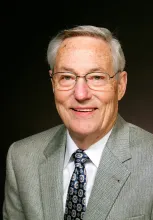
At the time of his retirement in 2016, Roy Holladay was serving the Operation Manager for Ministerial and Member Services of the United Church of God. Mr. and Mrs. Holladay have served in Pittsburgh, Akron, Toledo, Wheeling, Charleston, Uniontown, San Antonio, Austin, Corpus Christi, Uvalde, the Rio Grand Valley, Richmond, Norfolk, Arlington, Hinsdale, Chicago North, St. Petersburg, New Port Richey, Fort Myers, Miami, West Palm Beach, Big Sandy, Texarkana, Chattanooga and Rome congregations.
Roy Holladay was instrumental in the founding of the United Church of God, serving on the transitional board and later on the Council of Elders for nine years (acting as chairman for four-plus years). Mr. Holladay was the United Church of God president for three years (May 2002-July 2005). Over the years he was an instructor at Ambassador Bible College and was a festival coordinator for nine years.
