
Greg Thomas
This transcript was generated by AI and may contain errors. It is provided to assist those who may not be able to listen to the message.
Well, welcome to the Roman year of 2015. It is hard for me to believe that I've even lived this long. As a kid in the 1960s, I used to look at the year 2000 like a million years away. And not only did we lapse over the year 2000, here we are at 2015. The earliest recorded festivities in honor of a new year's arrival actually go back about 4000 years ago to ancient Babylon. For the Babylonians, the first new moon following the vernal equinox, that is, a day in late March, a day in late March is what's known as the vernal equinox. That's when there's an equal amount of daylight and equal amount of darkness. And the day that tips the scale where there's a little bit more light was celebrated by them heralded as the start of a new year. That's actually very close to the Hebrew calendar where the new year began in the spring. So the oldest recorded observance of a new year is the Babylonians who observed the new year beginning in the springtime. The early Roman calendar was interesting. It consisted of 10 months and 304 days a year, which means it lost like 361 days every year. So that's a lot of time that you're losing. And they, like the Babylonians, actually in ancient Rome started the new year in the spring, just like the Hebrew calendar has. And that was according to their tradition. According to their tradition, it was created by Romulus, the founder of Rome, whom they believed started that calendar. Now, over the centuries, the calendar fell out of synchronization with the sun, as you can guess, if you're losing 65 days every year. So in 46 B.C., that's approximately 40-plus years before the birth of Jesus Christ, Emperor Julius Caesar decided to solve the problem. And he gathered together the most prominent astronomers and mathematicians of his time. And as part of his reform, Caesar instituted no longer the spring, which their original calendar had, but instituted January 1st as the first day of the year, partly to honor the month's namesake, Janus, of which January gets its name, who was the Roman god of beginnings. Janus had two faces, unfortunately, like a lot of people I've known in my lifetime.
Janus had two faces that allowed him to look into the past and look into the future.
And that is how we have come today to observe in Western civilization the New Year beginning on January 1st.
Now, one of the traditions that have developed around New Year's Day is a time when many people make what's called New Year's resolutions. Have you ever heard of the phrase, a New Year's resolution? Well, what is a resolution? Well, according to the dictionary, it comes from the Latin word resolutio, and it means a firm decision to do or not to do something.
According to a recent article in Forbes magazine, over 40% of Americans make New Year's resolutions, yet only 8% achieve their goals.
So, of everyone who starts out with a New Year's resolution, 92% give up on it, actually over a very short period of time.
Why is the percentage of New Year's resolutions so small?
Well, there are three reasons, and I'm actually going to weave these three reasons throughout the rest of this sermon, but here they are.
Most New Year's resolutions are made without much forethought or planning. For many people, it's just a faddish thing. They read an article. It's getting closer to the end of the year.
They're here. Uncle Joe made a New Year's resolution to drink one bottle of gin less every day than he's been drinking.
So, they say, whoa, that sounds cool. I think I'll have a New Year's resolution. So, that's how many of them start.
They're made without much forethought or planning. It's often an emotional or spontaneous goal that doesn't survive the realities of life.
The realities of life are, unless you have a goal that is planned, unless you've given a lot of thought to, the pulls of time and your job and family needs and your car breaking down and all of these other things are going to pull you away and distract you.
And very soon, that so-called resolution is going to fall by the wayside.
So, that's reason number one. Reason number two are most, not all, but most New Year's resolutions are external. And some of them are very shallow.
Though they may be good, they don't really influence anything on the inside. For example, a common New Year's resolution is to lose weight.
And losing weight is great. But that's physical. That's physical appearance. That's something that's occurring on the outside.
Some of them are to start an exercise routine. And that's good. Again, exercise is a great thing, but that's kind of an external thing.
Sometimes there can be a shallow, is eating less chocolate. I mean, people treat some rather bizarre New Year's resolutions, but most of them are something that happens on the outside. It's outward appearance, and they tend to be very shallow.
They typically are not about dramatic inward change, changing something from within. They're more often about outward appearance.
The third reason that most New Year's resolutions fail are that people are comfortable in their ruts.
People are comfortable in their ruts. They may have some willpower and self-discipline, but they try to do things through mere human effort alone.
And you know what? The really tough things in life require more than mere human effort alone.
And thankfully, God doesn't even expect us to create the changes that we need to do in our lives through mere human effort alone.
But that's what most resolutions are. I am going to do such and such and overcome this problem, or start a new habit, or stop a bad habit, or whatever.
And again, because people are in their ruts, there's always that pull to come back home where, Ah, it's comfortable! And there aren't any new expectations of me.
And it just feels so good here with these two walls, and all I have to do is walk between the two walls.
Just kind of like a little gerbil, walking, walking, walking, walking.
Ah, my rut is comfortable. I don't have to stretch myself. I don't have to get out and do anything new. Oh, yes.
And that's what basically happens with most human beings. So what do New Year's resolutions have to do with us?
Well, very little, really, because God offers a better way for His people to be all that we can be.
And it begins, it's called the process of conversion. God is not interested in our own resolutions, but what God is interested in is our renovation. A resolution versus a renovation.
According to dictionary.com, a renovation is to restore in good condition, to make new, as if new again, to reinvigorate, to refresh, to revive.
So in contrast to a New Year's resolution, what I would like to talk about today is renovation.
Let's turn to Matthew 18, verse 2. If you will be kind enough to turn there with me. Matthew 18, verse 2. Most New Year's resolutions, 92% according to statistics, fail miserably because it doesn't generate change on the inside.
Something has to happen on the inside before even outward appearance and changes can be permanent, can affect us in a positive way, and that is attitude. Many people who establish New Year's resolutions, they're trying to create a new habit.
They're trying to break a bad habit, but they don't acknowledge the fact that the change has to be generated from within for those new positive habits to be instilled in our lives. Matthew 18, verse 2. It says, then Jesus called a little child to him, and he sent him in the midst of them and said, Assuredly, I say to you, unless you are converted, that is changed from one form to another, and become as little children you will by no means enter the kingdom of heaven. According to the Believer's Study Bible, here's what it says. It says, childlikeness, not childishness.
Read that again. Childlikeness, not childishness, is essential to conversion, and hence an entrance into the kingdom of God. Children are normally characterized by simplicity, profound trustfulness, and honesty. Such qualities in a man lead him to Christ and conversion. And if you've ever seen the wide-eyed innocence of small children, there is a natural humility there. They are in love with life. They are exploring the world the same way that we should be excited about spiritual things. And they are humble. And everybody in the world is bigger than they are. Maybe that's what promotes that humility. Everyone towers over them in physical size, but they are humble. And life is simple to them.
It's not complex like it is to us adults. Life is very simple. Have fun, sleep, have fun, eat, have fun, and have some more fun. Right? That's their mission statement. Very simple, very beautiful, and enjoyable until, unfortunately, you get to an age when somebody says, Get a job! Get to work! Right? And then all of that, all the wonderful joys of life quickly come to an end. Verse 3, I'm going to read this from the New Century version. Then he said, I tell you the truth, you must change and become like little children. Otherwise, you will never enter the kingdom of heaven. So the very first step towards permanent, lasting change is our attitudes. If our attitudes stink, then change is not going to be permanent. If we don't first adjust our attitudes to become positive and can-do, and trusting that God is doing a work in my life. Until we do that, all other change is superficial and will fall by the wayside. We must be humble, teachable, and trust that God is doing a work in us as individuals. We have a very special calling, brethren. We have been called to change from selfish, carnal beings toward spiritually-minded children of God. That's a dramatic change, and that change is a process. This takes time, and it takes patience. As a matter of fact, it takes a lifetime. Change is a process, not an event. We repeat that again. Change is a process, not an event. When we repent of our sins, we turn around from the direction that we were heading, which usually was very bad. Bad for us, bad for those who love us. When we repent, we turn around and we go the other way. We start heading toward God, His laws, and building and growing a relationship with Him.
So repentance is the process of a complete turnaround in our lives. Each step we take brings us closer to God and opens our minds to a greater understanding of what God can do in our lives.
Let's take an example. Let's go back a few chapters, Matthew 5, and see an example of a dramatic change in attitude. This is a hard one. I'm still working on this one. I am not there yet with what Jesus says His disciples' kind of attitude, His disciples should have.
I'm still struggling and working on this one. I don't know about you, but I still have a way to go. Matthew 5, verse 44. Jesus is cutting to the heart of having a childlike attitude and of being spiritually minded. One thing is a funny thing about little children. Little children will get in a squabble, they'll get in an argument, get mad with each other.
Five minutes later, they're playing together again. It's all forgiven and forgotten. What do adults do? Adults brood. Adults keep. Long after their children are playing together again, adults hate each other's guts for years over some simple little thing that occurred with their children. He says, but I say to you, love your enemies, bless those who curse you, do good to those who hate you. Wow! That's a pretty tough standard. For me, it's a pretty tough standard. Someone asked me once, Mr. Thomas, Jesus said that we should pray. Can I pray that my enemy dies? And I said, well, that is a prayer, but I don't quite think that's what Jesus had in mind when he said that. Do good to those who hate you and pray for those who spitefully use you. In other words, pray for those who purposely, not by accident, purposely humiliate you and attempt to shame you in front of the eyes of other people. That's the person, he says, that you should pray for and not pray for their death. They're not to pray for a speedy death. Who spitefully use you and persecute you, that you may be sons of your Father in heaven, for he makes the sun the rise and the evil and the good, and he sends rain on the just and the unjust. He says, look at God's example. When the sun comes out tomorrow, it's going to shine on God's people, and that same sun will shine on the most degenerate pervert who lives in Grafton, Ohio. The same sun will warm both groups, because God's love is so good that it affects the righteous and the unrighteous, the good and the bad.
He says, verse 46, for if you love those who love you, what reward have you? Do not even tax collectors do the same? He says, don't even people who work for the Internal Revenue Service love their own families? What advantage is there? I mean, every group, every little group loves their own, no matter how dysfunctional, what kind of culture they are on earth, whether they're aboriginal, whether they're sophisticated, every group loves its own, cares for its own, nurtures its own. He says, big deal! That doesn't mean anything. He says, for if you love those who love you, what reward have you? Do not even the tax collectors do the same? And if you greet your brethren only? If someone or the brethren walks through the door, hey, how you doing? Happy Sabbath, great to see you!
And you see someone out in the street, and they say, good morning! That's not the kind of example that Jesus wants us to have. He says, if you greet your brethren only, what do you do more than others? Do not even the tax collectors do so? Therefore, you shall be perfect, just as your Father in heaven is perfect. Couple of points I want to make about the statement of Jesus, you shall be perfect. First of all, as I mentioned a little while ago, change is a process, not an event. Perfection is a process. The word implies full development, growth into the maturity of godliness, and that takes time.
What Jesus describes the spiritual qualities here is of a person who has gone from completely carnal to the world of all around them, and they're spiteful, and they're resentful, and they're angry to someone who is at the level of perfection. And all of us are most likely somewhere in between the two of those.
But my point is that the word implies a full development. That's our goal, growth into a maturity of godliness. Now, in this physical life, there's a second point I want to bring out about what Jesus said. We are incapable of perfection. As long as you are carnal, as long as you have physical flesh, as long as you have a fleshly mind, you are incapable of perfection.
It's Christ dwelling in us through the gift of the Holy Spirit that grants us the status of perfection in the eyes of God. It's Christ righteousness that makes us perfect in the eyes of the Father. And our perfection is only possible when our ultimate perfection is only possible when we are spiritual and immortal. That's the only time when, of ourselves, we will become perfect. As John said in chapter 3 and verse 2, Beloved, now we are the children of God, and it has not yet been revealed what we shall be, but we know that when He is revealed, we shall be like Him.
There will come a time when we will no longer be fleshly immortal, but we will be immortal, incorruptible, and at that time, because of the grace and love of God, because we will be part of the literal family of God, we will achieve the level of perfection, which we as human beings certainly cannot achieve now. Paul even understood this near the end of his life after a lifetime struggle with his own flesh and his need for personal overcoming.
Let's go to Philippians chapter 3 and verse 8 and read about this. Again, Philippians chapter 3, and we'll pick it up in verse 8. Philippians chapter 3 and verse 8. He says, We can't achieve that on our own. I want you to think a minute of what Paul gave up. He's talking about how he suffered the loss of all things. First of all, he was highly intelligent. He spoke a number of languages. He was a Roman citizen which gave him the ability to travel freely throughout the Roman Empire. He obviously was a great author. Most of his, many of his epistles are reserved as part of the New Testament.
He learned under one of the most esteemed rabbis of his time, Gamaliel. Paul very well may have been a rabbi himself even before he was called to Christianity on that road to Damascus by the experience. He obviously was on the fast track in Judaism to acknowledgement, to recognition, to authority, to responsibility, highly respected by the Jews, wise, had Jewish rabbinical training, was a Pharisee, and tried to be perfect by keeping the law. And of course, that's why he makes this statement here, that he came to see that righteousness has to come from God by faith, not by his own righteousness.
But he gave up the stability, he gave up the prestige, he gave up the recognition from his community in order to become a disciple of Jesus Christ. And what was his reward for doing that? Instead of spending a comfortable life in Jerusalem, reading manuscripts, teaching people all day long, like a college professor or, you know, a rabbi preaching in a comfortable synagogue, he gave all of that up so that he could go from city to city throughout the Roman Empire, half the time, be spit upon, be argued with, sometimes beaten, shipwrecked, and that was his reward for giving up all that he gave up.
And he says here that he counts all things lost for the excellence of the knowledge of Christ Jesus, my Lord. He said it was all worthwhile. It's all worthwhile. Verse 10, that I may know him and the power of his resurrection and the fellowship of his sufferings being conformed to his death, in other words, being a living sacrifice, being willing to sacrifice, if by any means I may attain the resurrection from the dead.
Not that I have already attained. He says, look, I'm not there yet. I'm not righteous. I'm not perfect. I haven't grown as far as I need to grow. I haven't changed as much as I need to change. He says, not that I am already attained or am already perfect or perfected, but I press on that I may lay hold of that for which Christ Jesus has also laid hold of me. Brethren, I do not count myself as to apprehend. He says, I have not arrived.
Not perfect. Not righteous. I'm not there yet. Things I need to work on. He says, but one thing I do, forgetting those things which are behind and reaching forward to those things which are ahead. I press towards the goal for the prize of the upward call of God in Christ Jesus. Therefore, let us, as many as are mature, that is growing towards perfection, have this mind. And if any of you think otherwise, God will reveal even this to you.
So again, Paul knew that his own life that he lacked perfection and that it would only come from a spiritual transformation called the resurrection. Yet, in spite of that, he didn't give up. He didn't make excuses. He pressed on by looking forward and maturing toward the upward call of God. He continued to take that step, one step at a time, putting one foot in front of the other, walking in the right direction every day to get closer to God, to know God better, to deepen that relationship that he has with the Father. Paul knew that change and growth and sanctification were part of his calling. How about us? Do we understand and appreciate that that's part of our calling? And instead of, in contrast, the New Year's resolution, which occurs once a year, which usually is not well thought out, spontaneous, sometimes a knee-jerk reaction to what our culture says you should do. In contrast to that, there is God's way, which is a lifetime of continuous growth and process as we become more God-like and as we draw closer to our loving Father. You may remember that point number one regarding New Year's resolutions. I said that most New Year's resolutions are made without much forethought or planning. They're usually an emotional or spontaneous goal that doesn't survive the realities of life. Now, in contrast to that, in Christian renovation, Christian renovation is not quick. It is not spontaneous. It is not a knee-jerk, emotional reaction. It's a lifelong process as we move beyond carnal desires and move towards becoming a new creation in Christ, as Paul spoke about in Galatians 6 and verse 15. So rather than being quick, spontaneous, it is planned, it is a process, it takes time. The second point I brought out is that most New Year's resolutions are external or shallow. They may be good goals, but unfortunately, they're usually regarding outward appearance. They may be to lose weight, which is very common for New Year's resolutions, until they experience that first cookie. It may be to start to exercise. It may be to eat less chocolate. It may be to drink less. Again, most of them just tend to be outward in appearance and rather shallow. In contrast, Christian renovation starts with a change in attitude because you must first become the change you want to see in the world. It has to happen on the inside. If you want the world to have peace, you must first develop peace between this government that's located between your two ears. This is where peace has to begin. Only when peace begins here can we be the kind of book that Frank talked about in our sermon at a living book that promotes the spirit of peace to the world. It's a little contradictory if we say, yes, we believe in peace and we're angry or we're bitter or we're constantly frustrated.
That is not the kind of example that radiates that this person believes in peace or kindness. If we're rude, if we're abrupt, if we cut people off, if we're short, that kind of contradicts what we're saying that we believe that there should be more kindness in the world. We believe the kingdom of God will come to this earth to establish kindness and all of the fruits of God's Holy Spirit.
So again, Christian renovation is a change in attitude. It is internal. That's where it starts. Not on the outside. Eventually, the outside is changed because of what first took place on the inside. It's internal. It's deep. It's not shallow.
It slowly but surely changes who and what we are to become inwardly better. And in time, that inward change becomes reflected on the outside by how we treat people, by the things that we say, by our actions, the things that we do.
Now, I also mentioned that the reason 92% of New Year's resolutions don't happen, since the article said 8% are finished, is because people are comfortable in their ruts. They have some willpower or self-discipline, but they try to do things through mere human effort. And that's what most New Year's resolutions are centered on.
You know what Newton's first law of motion is? Ever heard of Newton's three laws? That's Sir Isaac Newton. By the way, after he died, they found out he was an anti-Trinitarian in his writings, which you could never reveal in his lifetime, because he would have been imprisoned and lost his job because the Anglican Church was basically the Church of England. But later on, they have found in his writings he was an anti-Trinitarian. He was also an avid Bible student, by the way. But putting that aside, his first law of motion is this, and it highlights people being in their ruts. It says, There it is, again. An object that is at rest will stay at rest unless an external force acts upon us. Now, the good news for you, brethren, is unlike people who are in the New Year's resolutions and are trying to do things all by themselves, God has given us an external force to push and to prod us in the areas of growth, which alone we could never possibly achieve of ourselves. Let's go to 2 Timothy chapter 1 and verse 7. If you'll turn there with me, please. 2 Timothy chapter 1 and verse 7.
Paul writing to the evangelist Timothy, bringing up a little bit of his background. Timothy was what we would call today a third-generation Christian. He was there because Grandma brought him to church. He was there because Mom brought him to church. That's why he was able to be used three generations of being taught God's way. 2 Timothy chapter 1 and verse 1. Paul, an apostle of Jesus Christ, by the will of God, according to the promise of life, which is in Christ Jesus, to Timothy, a beloved Son, grace, mercy, and peace. From God the Father and Christ Jesus our Lord.
I'll be praying for each other every day.
To stir up the gift of God, which is in you, through the laying on of my hands. Now, Timothy was going through something, and we don't know exactly what it was, but Timothy was obviously discouraged. Something was bugging him. He was not on fire like he had been before. Paul wrote this letter to kind of stir him up, to encourage him, to stir him up a little bit. Paul wanted to say something to him that I think is very important for us to understand when we consider the fact, again, of Newton's first law of motion, an object.
That is, at rest, we'll stay at rest unless an external force acts upon it. He says, I remind you to stir up the gift of God, which is in you, through laying on of my hands. For God has not given us the spirit of fear, but of power, and of love, and of a sound mind.
God has given us a spirit that guides us towards change and character development. We don't need to try to do things alone. We can't do things alone. If we try to do things all by ourselves and leave God out of the picture, the growth is going to be minimal. The growth is going to be shallow, and we don't need to do that. God is giving us something special. God is giving us something extra.
When we receive this Holy Spirit, a spirit of power, in order to propel us, in order to even, as we'll see in a minute, to give us the will and the desire to change our lives for the better and do wonderful things. Again, we don't need to do things alone, including me to change. As a matter of fact, we shouldn't even try to do things on our own. We should always rely on God.
The external force that can act upon us is God's Holy Spirit. I'm going to read verse 7 from the translation of New Century Version. God did not give us the spirit that makes us afraid, but a spirit of power and of love and of self-control. This is very important because, sadly, some religious people, including many whom I have known, think Christianity is all about controlling their believers. It's all about making them afraid. You do that? You won't go to the place of safety. You do that?
You won't achieve salvation. It's all about mind control and manipulating people. Sadly, they think that God has given us the spirit of fear. But this is not a biblical concept. It only ultimately leads to the person failing. Fear is only a short-term motivator. People eventually become immune to fear tactics, and they won't put up with the baloney anymore.
And good. They should not have put up with the baloney in the first place. We should be here. We should be part of God's church. Not because we fear anything. We should be here because of the joy that we have of being together with like-minded believers. We should be here because we believe that we want to be part of something that's bigger than ourselves alone. That we want to be part of something that is committed to changing the world.
And our growth has to be positive-oriented. Not growth out of fear. As it says, God has not given us the spirit of fear, but of power and of love. You know what the opposite of fear is? It's love. That's the kind of spirit we've been given. And the result of that is a sound mind. The spirit of fear is paranoid. A spirit of fear is a martyr complex. A spirit of fear is self-righteousness and judging everyone else who isn't exactly like you.
That's what a spirit of fear does to people. And we do not want to have that kind of spirit. Again, people eventually become immune to fear tactics. The power of the Holy Spirit allows us to develop spiritual fruits. And they're all listed in Galatians 5. We don't have time to go there today.
But it gives us the power to resist temptation far greater than our own mere human efforts. We're only so strong of ourselves. But that old man, that carnal fleshly human mind, will always pull us in a negative and bad direction. Whereas the power of God's Spirit within us will make us perfect, won't do what we can do ourselves, but it can give us additional strength as that external force to resist temptation even greater than our own mere human efforts to do something wonderful or to create change in our lives.
Ephesians 4 and verse 17. Paul, again, is going to contrast here a spirit that was within the human mind and is one of power and of love and the normal human mind that is devoid of God's Spirit. He says, What comes natural? The futility of the human mind. Trying to do everything my way, trying to reason the purpose of my life my way, looking to philosophy for answers, looking to science for the complex answers of life rather than looking to God. That's the futility of the mind, trying to solve all of our things through our own mere human efforts. And what is the result of that?
It is futility. And continuing verse 19, who, being past feeling, have given themselves over their lewdness to work all uncleanness with greediness, but you have not so learned Christ. Those are not Christian principles. That's not what you learned from Jesus Christ. 21, if indeed you have heard Him and have been taught by Him as the truth is in Jesus, that you put off concerning your former conduct the old man which grows corrupt according to the deceitful lust, and be renewed in the spirit of your mind. That's renovation. And renewing, a daily renewing of our minds.
A process of renewing our minds, our attitudes, of taking another step closer towards God each and every day. Verse 24, in that you put on the new man which was created according to God in true righteousness and holiness. Therefore, He's going to talk about attitudes that we need to put away.
If we want to demonstrate being renewed in the spirit of our minds instead of the futility of the mind, here are some of the things we have to do beginning verse 25. Putting away lying. But each one of you speak truth with his neighbor, for we are members of one another. Be angry, but do not sin, and do not let the sun go down on your wrath. In other words, don't hold anger. Hold it, maybe, for the length of that day.
Process it. Pray about it. Forgive someone who's upset you, who's alienated you, maybe someone who's even spitefully hurt you, persecuted you, and let it go. Don't let that wrath be held for more than a day. Nor give place to the devil. Don't allow the devil any area of your life. Why? Because the devil's been around since there have been human beings. And you know what? He knows all of your weaknesses. He knows mine. He goes generations. He knew the weaknesses your grandfather had. If your grandfather was an alcoholic, he knows that.
If your grandfather had problems with being faithful to his wife, Satan knows that. He knows our DNA. He knows our Achilles heel. And each and every one of us have openings for the devil to take advantage of if we give place to him. He knows our family history. Therefore, the wise thing to do is not to give place to the devil. Don't let him in any area of your life, because you'll just kind of linger there, and when he sees an opening, you'll go for it. He's very deceitful, very wicked.
He knows exactly what he's doing. Verse 28, Verse 28, When it is good for necessary edification, that may impart grace to the hearers. Be careful of your language. And, you know, strong language, he says, is only valid when it is good for necessary edification. And sometimes, if people don't understand something when it's put nicely to them, they might get it if it's put a little more strongly to them. Some people are just hardness of hearing, right? Hardness of listening. And sometimes, to necessarily edify people, you have to say things that are very strong to them. But he says, don't allow corrupt words to come out of your mouth. Verse 30, Do we know that we can grieve the Holy Spirit of God?
Holy Spirit of God won't necessarily leave us. But we can ignore that power within us to a degree that God's Holy Spirit is almost like, Hello! Here I am! Remember me? Hello! I'm here to do remarkable things in your life. And we're just plodding along, and we're in our own little world, and we're trying to do everything all by ourselves. We're trying to solve every problem. We're trying to fix ourselves by ourselves.
And we are grieving that tremendous power, that gift that God has given us, and we don't want to do that. Do not grieve the Holy Spirit of God by whom you were sealed for the day of redemption. Let all bitterness, wrath, anger, clamor, and evil speaking be put away from you with all malice. And be kind to one another, tenderhearted, forgiving one another, just as God in Christ forgave you. So what Paul is discussing here is lasting change, not superficial, not spontaneous, not some outward change in appearance. But what he's talking about is lasting inward change that is energized by the Holy Spirit dwelling within us. Its presence is a down payment of eternal life and immortality. That's what the down payment is when we receive the gift of God's Holy Spirit. And brethren, to grieve it only allows that corrupt old man to stir up within us. You know, there's an anti-type. The type is we go down in the baptismal tank and we come up as a new creature in Christ, symbolic of a resurrection. The anti-type of that is that that old man, that means our carnal selves, our pre-Christian selves, that old man is always there and ready to raise his ugly head and influence our lives again if we start letting go. If we stop using the power of the Holy Spirit, we are going to resort by default to the attitudes and the actions of that old man. So to grieve the Holy Spirit allows that corrupt old man to stir up within us. Philippians 2, verse 12. If you will kindly turn there with me. Philippians 2, verse 12.
This Scripture I always find rather interesting because there are religious traditions who say that all you need to do is accept Jesus. And you don't need to do anything else. You can continue to be an alcoholic. You can continue to beat your wife.
You can continue not to work because Jesus did it all. And all you need to do is receive the love of the Lord. And Jesus did everything, and you are saved. There's a religious tradition that believes that within parts of the streams of Protestantism. And we are often criticized because people say, oh, you're a legalist. You people, you believe in everything by works.
You're trying to work your way to salvation. You keep that seventh-day Sabbath. You keep those holy days. You pray. You study. You believe in God, you legalist. You own a Bible, you legalist. You believe that Jesus is the Christ, you legalist. So there are kind of competing religious philosophies. And here's what Paul said. He said, therefore, my beloved, as you have always obeyed, not in my presence only. This is a prison epistle, by the way. But now much more in my absence. Work out your own salvation with fear and trembling. Now, is Paul saying, do it yourself? You don't need God's Holy Spirit? Of course not. What he's saying is with the power of God's Holy Spirit, God has given us the spirit of power and of love and of a sound mind. Each day, take another step with fear and trembling and respect for who and what God is, another step towards the Father. And continue to work on your issues. Continue to overcome your problems. Don't be deluded or deceived to think, well, Jesus did it all. Therefore, I can continue to be a slug in life. That is not a biblical philosophy. He says, work out your own salvation with fear and trembling, for it is God who works in you both to will and to do for his good pleasure. It says, God, if you ask, if you're working on it, if you have that power that is of love and of a sound mind, it'll even give you the desire. It'll give you the will beyond your own ability, beyond your own lack of self-discipline. It'll even give you the will to do what God's pleasure is. And what is God's good pleasure? God's good pleasure is that we continue that journey from the corrupt, self-centered person who only thought of themselves when God first began working with us, to the good pleasure of conforming ourselves into the mind of Christ and being spiritual and demonstrating all of those fruits of God's Holy Spirit. That is exactly what God's good pleasure is. Verse 14, do all things without complaining and disputing that you may become blameless and harmless children of God without fault in the midst of a crooked and perverse generation among whom you shinest lights in the world, holding fast the word of life so that I may rejoice in the day of Christ that I have not run in vain or labored in vain. Paul said, my prayer is that when I am resurrected from the dead, that I receive word back that the Philippian congregation whom you founded and whom you gave your blood, sweat, and tears, they did okay! They were faithful to the end. Many of those members are part of this resurrection. Paul said, that's what I pray. Even additional willpower can come from God. Our willpower is limited. We're carnal, we're human, and I know depending on our backgrounds and education, some people have a stronger willpower than others, some people have a greater self-discipline than others. But my point is that as carnal people, it is still limited. The amount of self-discipline you have is still limited. But God's Spirit can give you more. The amount of willpower that you have to make the changes you need to make in your life are limited. Mine are. Certainly acknowledge that. But we don't have to do it alone. With the power of God's Spirit, we can be given additional willpower to make the changes we need to make in our lives.
If our will or our desire is weak, we can draw from the power of the Holy Spirit to propel us forward so that we can march towards God's good pleasure.
So don't let anybody deceive you. We absolutely have our part to play in sanctification and becoming more like Jesus Christ. I'd like to read verse 12 from the New Century version. This is verses 12-14.
As we get close to the end of the sermon, you may remember the third point that I brought up about New Year's resolutions. It took me a while to answer it.
But basically, most New Year's resolutions fail because people are in comfortable ruts. We read about what Newton's Law says.
They have some willpower, they have some discipline, but they try to do things, they try to make changes in their lives through mere human effort alone.
Now, in contrast to that, Christian renovation uses the power of the Holy Spirit to prod us to change and grow. It's a spiritual power that can provide us the willpower we lack, that can provide us the self-discipline that we naturally lack so that we can make those changes in our lives.
Brother, the bottom line is that God is not interested in New Year's resolutions. Instead, He's interested in a new covenant renovation.
That's what He's interested in. That's what He's doing.
So, which one will we choose to participate in this year? The Roman year of 2015.
How does this renovation take place? Our final scripture today, Luke 13, verse 1. If you'll turn there with me, Luke 13, verse 1, our final scripture, and we're going to answer the question, how often does this renovation take place?
Is it a once-a-year declaration?
Now, in the springtime, around the spring holy days, we often emphasize the importance of growth, renewing our covenant with Jesus Christ. And that is certainly good and wonderful, and a perfect time of the year to emphasize the opportunity for new growth, just like we see in nature outside these windows, as plants come through the ground, spring flowers bloom.
But we don't ever want to give the impression that growth is something that we do one season of the year.
Or growth is kind of a one-time activity. Luke 11, verse 1, Now came to pass as he was praying in a certain place when he ceased.
One of his disciples said to him, Lord, teach us to pray, as John taught his disciples.
So he said to them, when you pray, our Father, say this, our Father in heaven, hallowed be thy kingdom come, your will be done on earth as it is in heaven.
We actually covered this part of this two weeks ago, didn't we, talking about God's will. But notice what he says in the next verse.
Give us day by day our daily bread.
Brethren, Jesus Christ is the bread of life.
God's renovation work in your life goes on day by day.
And each day we need to approach that throne of grace, and we need to talk to our God, and we need to partake of that daily bread.
So our growth isn't seasonal. Our growth isn't something that we just do one time a year.
We make a resolution that we're going to do something different.
God's renovation work in your life goes on day by day until we no longer draw breath as physical, mortal beings.
Each day we begin a new opportunity for growth, step by step, continuing what began at repentance and we turned around from the direction that we were headed and we began to walk towards God.
And walking towards God means that we accept His laws and His values, and it means that we develop a deeper and deeper and deeper relationship with Him.
Step by step we journey closer to God.
In the hymn, Great is Thy Faithfulness, it has a line that I absolutely love.
It says, morning by morning, new mercies I see.
And that's what each day is like. It's a new opportunity to draw closer to God, to take one more step in the right direction. Let us allow God's great work to continue with each and every one of us in this Roman year of 2015.
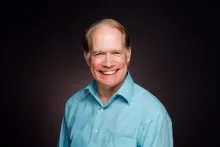
Greg Thomas is the former Pastor of the Cleveland, Ohio congregation. He retired as pastor in January 2025 and still attends there. Ordained in 1981, he has served in the ministry for 44-years. As a certified leadership consultant, Greg is the founder and president of weLEAD, Inc. Chartered in 2001, weLEAD is a 501(3)(c) non-profit organization and a major respected resource for free leadership development information reaching a worldwide audience. Greg also founded Leadership Excellence, Ltd in 2009 offering leadership training and coaching. He has an undergraduate degree from Ambassador College, and a master’s degree in leadership from Bellevue University. Greg has served on various Boards during his career. He is the author of two leadership development books, and is a certified life coach, and business coach.
Greg and his wife, B.J., live in Litchfield, Ohio. They first met in church as teenagers and were married in 1974. They enjoy spending time with family— especially their eight grandchildren.

