
Greg Thomas
This transcript was generated by AI and may contain errors. It is provided to assist those who may not be able to listen to the message.
Well, thank you once again and happy Sabbath to everyone. We know that God is interested in our personal spiritual growth. It's one of the reasons that we have been called to become a disciple in this age. You know, God could have called us at a later time in his plan. He could have called us after the thousand years. There are many people who never responded to the message of Christ, who lived in areas of the world and never even saw a missionary or heard the name of Jesus Christ, who lived and died their entire lifetimes knowing nothing. And they'll be resurrected after the thousand years of the reign of Jesus Christ is over. But God chose a different path for you. He called you in this lifetime during this age. According to dictionary.com, the word growth is defined as this, quote, the act or process of growing development gradual increase.
So are we growing? Are we developing? Is there gradual increase in our level of maturity, in our level of a desire to have a relationship with God? You know, the very moment that God calls us, he begins the process of sanctification. That sounds like a large word, a theological word, but what it really means is God starts a process of setting us apart and helping us become more spiritually thinking and more spiritual oriented and less carnal or physical oriented. He literally begins working on an individual plan for you and for me the moment God begins to call us. So today I'd like to begin a series on spiritual growth. I'm going to ask some questions, and along the way we're going to answer some of these questions. What is spiritual growth? Why does it matter? Why is it important? And why oftentimes is it just so hard to do? What should we know about the process of spiritual growth and how can we encourage it within ourselves? Well, let's begin our series today by answering some of these questions because it all begins with a choice. Let's begin by going to Matthew chapter 9 and verse 9. Matthew chapter 9 and verse 9. And say that Jesus here calls a man named Matthew who is a sinner. And what's his sin? Well, in his culture he was in a very despised profession. He was a tax collector. And the reason that they hated tax collectors is because the way the system worked when you were a tax collector, you had to give a large sum of money for the right to be able to have a particular territory that you would collect taxes. So the governor, the administrator, would say, I want X number of dollars for you and you have these counties in this area that you collect taxes in and this is what you owe me. And then the tax collector would keep anything above that amount. So naturally there was a human inclination to gouge everybody and to get more taxes out of people than they actually needed to pay. And that's why people hated tax collectors. They tended to be very well off and tended to be robbing, taking advantage of people. So it says here, beginning in verse 9, as Jesus passed on from there, he saw a man named Matthew sitting at the tax office. And again, this was a very despised profession. And he said him, follow me. And so he arose and followed him. You know, Matthew made a choice. He didn't ask 480 questions of Jesus.
It says he just simply heard message and he responded to it. So he said, follow me, and he arose and he followed him. Now as it happened, as Jesus sat at the table in the house, and this very well might have been a house that Jesus owned in the house, that behold many tax collectors and sinners came and sat down with him and with his disciples. So Jesus is associating with some of the most despised groups of people in that culture. And that is tax collectors and sinners. Or we should say maybe other sinners. And when the Pharisees saw it, they said to his disciples, why does your teacher eat with tax collectors and sinners? Why does he lower himself? Why does he spend time talking to the most despised members of our culture, of our community? And when Jesus heard that, he said to them, those who are well have no need of a physician, but those who are sick. Jesus is being, a little sarcastic, a little being tongue-in-cheek. He's saying, you're self-righteous. You think that you have this great relationship with God because you're obedient to all of these commandments, all these oral laws, and you minutely obey all these silly little things. You're not humble. The difference, Jesus is saying, is they're humble enough to realize that they're spiritually sick and they need a Savior. You're beyond that. You're so arrogant and cold and self-righteous, you don't see the fact that you are spiritually diseased. Verse 13, but go and learn what this means. I desire mercy and not sacrifice. And of course, at the time Jesus said this, there were animals being sacrificed in the temple. All the time, every day, there were animals being sacrificed in the temple. But Jesus says, that's not really what is important. What is important from God's perspective is to demonstrate and have mercy. He continues, for I did not come to call the righteous, but sinners to repentance. You see, sinners are humble enough to know that they need a Savior.
The self-righteous Pharisees were too proud and didn't think they needed Jesus Christ as their Savior. So, in a similar way to Matthew's experience, we too made a decision to follow Christ. Somewhere along the line, something happened to us. We all have our own wonderful story, and it's a unique story for all of us. We came to the point in life where we decided to make a decision to follow Jesus Christ. And I hope we made that decision not because we felt we are more righteous or superior to others, but because we are sinners and we are in need of a Savior in the shed blood of Jesus Christ. God called us because of His mercy, of His compassion, and His grace, and not because we're better or superior to anyone else. It's after we accept the Father's calling and after we receive the gift of the Holy Spirit that we're set apart as the sanctified children of God, but again, only because of God's grace, not because we of ourselves are superior or better than anyone else. So, the first choice towards spiritual growth is to respond enthusiastically to our calling. Matthew only needed to hear it once. That's the remarkable thing about him. He didn't need to have all kinds of questions answered. He heard it, and he got up, and he left his career. Now, that's sacrifice. He left his career immediately to follow Jesus Christ.
Jesus said in Matthew 22 and verse 14 that many are called, but few are chosen. What He meant by this was that the invitation of the Gospel goes out to many, and we sent out millions of booklets and magazines and all kinds of things to many, many people in various languages around the world. So again, what He meant is that this invitation of the Gospel goes out to many, but only a few accept the invitation and say, yes, I'll accept that. I'll accept Jesus Christ as my Savior. I'll become a disciple. I'll walk this way of life. Only a few respond to and are chosen to receive the Holy Spirit and to begin a way of life as a faithful disciple. So with that in mind, it all begins with making that choice, and that choice is, yes, I will respond to God's calling. Yes, I will accept discipleship. I will repent of my sins. I will be baptized. I will receive the gift of God's Holy Spirit, and I'm ready to be used by God as His servant, as a disciple of Jesus Christ. The next important thing is to understand what our calling and our reward really is. And again, sometimes this gets people a little bit off track. To understand what our calling is and what our purpose is, we have to begin with the end in mind. Now, that's a phrase that happens to be used by Dr. Stephen Cubby in a book that he wrote called The Seven Habits of Highly Effective People, it was actually habit number two, begin with the end in mind. And we too, if we want to continue to be motivated and have spiritual growth, we have to begin with the end in mind. Let's see what that is. 2 Peter chapter 3 and verse 10. I'm going to give you a hint. It goes far beyond this physical world and any material gain we could possibly achieve. Far beyond this material world and any physical or material things we could possess or acquire in our lifetimes. 2 Peter chapter 3, and we will pick it up in verse 10. It's important to begin with the end in mind.
2 Peter chapter 3 and verse 10. Peter says, but the day of the Lord, and what he means in context here, isn't the immediate return of Jesus Christ. He means the day of the Lord as that period of time that the Lord reigns over the millennium and the kingdom of God. But the day of the Lord will come as a thief in the night in which the heavens will pass away with a great noise and the elements will melt with fervent heat both the earth and the works that are in it will be burned up.
So for me to realize that I want to begin with the end in mind is that that home that I love in Litchfield, Ohio someday is going to be burned up. Every piece of clothing that I have is going to be burned up. Every car that I have, anything that I would possess is going to be burned up because it's just simply physical. And God is going to get to a period of time after the thousand years where God decides to upgrade the earth and make everything spiritual. And he does that by having a fire come and consume and burn away anything that is physical or material left in the world. Let's continue here. Verse 11. Therefore, since all these things will be dissolved, gone, all these things that we usually put our heart into, all of these things in this physical life that we usually desire that are important to us, it says these things will be dissolved. What manner of persons ought you to be in holy conduct and godliness? So considering the fact that everything that is important to us in this physical life is going to be burned away and dissolved. Shouldn't our goal, shouldn't our vision be beyond the physical? Shouldn't it be spiritual? Shouldn't it be looking forward to a time in eternity and when we are spirit and everything that is left of this universe is spirit and not allow ourselves to get so wrapped up in just acquiring stuff and things and working so hard to achieve physical things when in the long run, as Peter tells us, it really is not going to matter. Let's continue. Verse 12. Looking for and hastening the coming of the day of God because of which the heavens will be dissolved, there's that word again, being on fire and the elements will melt with fervent heat. So is it worth making all of that time and effort and everything involved in our lives about something that is going to be dissolved and melted away with fervent heat? Nevertheless, we, according to his promise, look for new heavens and a new earth in which righteousness dwells. And of course, that's spoken of in the later part of the book of Revelation, the new heavens and the new earth when God the Father literally also comes down to earth and establishes his throne for the universe right here. Therefore, beloved, looking forward to these things. See, looking forward to that being our goal, not just physical accomplishments or physical achievements, those are fine and those are part of the process of having a physical life and all of that is good. But looking forward to these things that are spiritual, that are beyond physical acquisitions, be diligent, that be found by him in peace without spot and blameless and consider that the long suffering or the patience of our Lord is salvation. In other words, we are saved because God is patient. He is very patient with us. As also our beloved brother Paul, according to the wisdom given to him, has written to you. So Peter here is also telling us to keep the end in mind. Make sure that our vision is on the right things and not just material physical accomplishments because those are temporary. Everything we have is temporary. Everything that we own we are only a trustee of. We really don't own it. We just get to use it for a while. Notice that he said we should look forward to these things. He says that in verse 14. These things regarding a new heaven and a new earth when everything is dissolved having been purified and made righteous by fire, by that kind of a cleansing.
The ultimate purpose we have is spiritual. God's ultimate plan for the universe is spiritual, not physical. If we envision our purpose in life as the need to acquire physical qualities or acquire more physical material possessions, that's good, but it's the wrong focus. If that becomes our passion, if that becomes our reason for being, then it's the wrong focus. Now if we acquire those things because we work hard and we make good decisions throughout life and we're blessed with good things, that's wonderful. God is all for that. But if our hope, if our focus, if our goal is merely on the physical, then we are missing the mark. We're off and we're not going to be hitting the bullseye. That only leads to problems and frustrations. I'm going to read these verses from 2 Peter from another translation, the New Century version. So bear with me, and here's what it says. But the day of the Lord will come like a thief, the skies will disappear with a loud noise, everything in them will be destroyed by fire, and the earth and everything in it will be burned up. Verse 11. In that way, everything will be destroyed, so what kind of people should you be? Knowing that this is going to happen, should we be all concerned and have the major goals and focus of our life and our passion, just simply on acquiring or maintaining physical material possessions? This is what Peter is asking us, continuing here on that way. Everything will be destroyed, so what kind of people should you be? You should live holy lives and serve God. Here's what he says in verse 12. Again, this is the New Century version. And as you wait and look forward to the coming day of the Lord, when that day comes, the skies will be destroyed by fire and everything in them will melt with heat. But God made a promise to us, and we are waiting for a new heaven and a new earth where goodness lives. Dear friends, since you are waiting for this to happen, do your best to be without sin and be without fault. Try to be at peace with God. Remember that we are saved because our Lord is patient. Our dear brother Paul told you this, told you the same thing when he wrote to you with the wisdom that God gave him. Again, that's end of quote, that's from the New Century version. So in this world, in contrast with what Peter's telling us should be our end in mind, in this world, everyone strives for material gain and abundance. It's human to want to grasp as much pleasure and comfort and security and material possessions as we possibly can. We've all heard the expression, he who dies with the most toys wins. But brethren, this is shallow and it's fleeting because everything we gain in this physical life is lost to death. Death is the great equalizer. So when you have that perspective, you understand what is really important. Spiritual growth doesn't happen automatically. We have to do it intentionally. We have to do it on purpose. It takes commitment. You know, God can even put us through a severe trial to try to teach us something, but if we're not paying attention, we won't even get the message and we'll have to repeat that trial all over again.
They're very important things that we need to understand about our spiritual growth. Number one, we have to want to grow. That desire has to be there. Number two, then we have to decide to grow.
Now, that's beyond the intellectual understanding that I want to grow. Then we have to decide to grow. Finally, we have to make a commitment and an effort to grow and persist in that growth and not quit. God is not interested in us becoming perfect. He understands that's impossible for us as physical human beings. What he does want us to do is continue to grow, is to persist throughout all the days of our lives, striving for spiritual growth. Let's take a look at Ephesians chapter 3 and verse 14.
If you'll turn there. Ephesians chapter 3 and verse 14. Somewhere along those three stages that I mentioned, many people pause. Something happens and then they get into a spiritual rut. This happens because spiritual growth is very hard. It means to consciously diligently survey our own attitudes and our own behavior. And that's hard. Paul himself understood that by our own will alone we are unable to achieve the kind of growth that we or God desire. Some people I've known in the church try to grow by their own sheer willpower. I'm just going to, you know, my whole life I've achieved things and I'm just by my own sheer willpower I'm going to overcome these issues and problems and I'm going to grow.
Let's see what Paul says here. Ephesians chapter 3 and verse 14. For this reason I bow my knees to the Father of our Lord Jesus Christ, from whom the whole family in heaven earth is named, that he would grant you, according to the riches of his glory, to be strengthened with might through his spirit in the inner man. Paul is saying that we really need something to help us to grow spiritually. Just having strong will isn't enough. Strong human effort and will isn't enough. We need something else inside of us to be able to achieve the kind of spiritual growth that we desire and that God desires and that, of course, is the Spirit of God dwelling in us.
Verse 17. That Christ may dwell in your hearts through faith, that you, being rooted and grounded in love, may be able to comprehend with all the saints what is the width and the length and the depth and height, and to know the love of Christ, which passes knowledge, that you may be filled with all the fullness of God. And how is that possible? Is it possible because of our own free will, our own willpower? We say, I'm just going to overcome one problem at a time and do it.
No, that's impossible from a human perspective. We need help, and that's why God offers His Holy Spirit. Verse 20. Now to Him, He was able to do exceedingly abundantly all that we ask or think according to the power that works in us. And what is that power that works in us? It's not our own power. It's not our own self-will. It's not our own willpower. It's the gift of the Holy Spirit within us. Some brethren, by neglecting the spiritual tools that are available, try to develop spiritual growth by their own willpower.
I've known people who would say to themselves, I'll force myself to pray and study, and I'll set a clock, and I'll sit here until those 30 minutes tick off, and I'm going to stay here by hook or by crook, and pray and study until that time is up. Or I'll force myself to stop smoking, stop taking drugs. I'll force myself to stop drinking, stop lying. And you know what? For a short while, it may actually produce some short-term change, but it doesn't feel natural. It's not natural to force ourselves to do something. So eventually, we give up. We try it for a while, and it may even work for a little while, but eventually we give up.
This is why so many so-called New Year's resolutions, like exercising or weight loss, fail within a couple of weeks after they start. Because people are trying to force themselves to do something that's not natural. We can start out with the right intentions, but soon go back to our very own ways of being human. So why does this happen? It's because we've not changed the root cause. The root cause is how we think about things.
And until we change that, then we're just not going to be able to change or grow very much at all. And our own willpower certainly is going to fail. First of all, we need to be rooted and grounded in love. That means a different perspective on the purpose of our lives. It means taking a different approach to each and every day. It means thinking differently than we think naturally as human beings. So we need to be rooted and grounded in love. That's a phrase that Paul used in the scripture that we just read. The root cause is how we think about things, our attitude. We need to be rooted and grounded in love. And until we turn off the autopilot that's guiding our lives and purposely say, I think I'm going to change how I think, I'm going to change what I'm doing, I'm going to change what I say, then we are going to continue to struggle with the same whole problems over and over again. God offers us something stronger than willpower. He offers us spirit power. And the way that spirit power works is that it all begins our part is commitment. We have to be committed to God's way of life. This is the reason Jesus said in Luke 9, verse 62, He said, no one putting his hand on the plow and looking back is fit for the kingdom of God. You see, what is the plow? The plow is the hard work that God has given us to do. And you know what? Changing yourself is the hardest thing that you'll ever do in this human experience. The hardest thing you'll ever do is changing yourself through the power of the Holy Spirit. Looking back, Jesus said again that no one having put his hand on the plow and looking back is fit for the kingdom of God. Looking back is backsliding or beginning to go backward. Here we were making some wonderful progress and we were growing and then all of a sudden something happens and we start going back into the world. We start thinking carnally again. Our commitments either develop us or they destroy us. Either way, in time, what we are committed to eventually defines who and what we are. Doesn't matter. You tell me what you're committed to, what you're really committed to in this life, and I'll be able to tell you what you'll be doing in 10 to 20 years.
That's what commitment does. Eventually, we become what we are committed to. And if we're committed to God's way of life and we're clinging to the trunk of the tree and we're plowing that hard, difficult field and looking forward and hanging on and looking into the future like God wants us to do, then that's a good thing. That's the right kind of commitment. If we're kind of wishy-washy and we're looking back into the world and we're sliding backward and we're becoming more carnal and we're thinking less and then pretty soon we stop attending church regularly and we just begin to crumble. Our whole foundation, the whole roots of our spiritual lives just begins to crumble and it begins to fade away. Let's take a look at Romans chapter 12 and verse 1. Romans chapter 12 and verse 1.
Are we committed to God's way of life? Are we diligent about the spiritual change that needs to happen in our life?
Romans chapter 12 and verse 1. I beseech you therefore, brethren, by the mercies of God, that you present your bodies a living sacrifice wholly acceptable of God, which is your reasonable service. I've said before the problem with being a living sacrifice is that we can wiggle right off of the altar and we can go back word. That's the problem with being a living sacrifice.
But Paul is saying we need to be willing to make a sacrifice every day because God has set us apart to make us holy because of his grace and we should desire to be acceptable to God. What we do should be pleasing and acceptable to God. And it's reasonable that God would ask us to be a living sacrifice. After all, Jesus Christ was willing to be a dead sacrifice for us. He was willing to shed his blood and die for us. Can't we at least live for him? This is what Paul is implying here, verse 2. And do not be conformed to this world, but be transformed by the renewing of your mind, that you may prove what is that good and acceptable and that perfect will of God.
Being a living sacrifice means that we're willing to take a loss. That's what the word sacrifice means. You're giving something up, probably something you want really bad. We have to be willing to take a loss or do without some physical thing that we really, really want in order to achieve a spiritual gain. So we're willing to take a short-term physical loss, knowing that the payoff, the benefits long-term, is a spiritual gain, something that we'll enjoy for all eternity.
And Paul's saying here, if we become a disciple of Jesus Christ, this is reasonable. This is a reasonable act of devotion towards God, being willing to be a living sacrifice. Jesus said in Luke chapter 9 and verse 23, if anyone desires to come after me, let him deny himself, that being a living sacrifice. Let him or her be willing to deny what they want, what's pleasurable or easy or tempting. Let them deny himself and take up his cross daily and follow me. For some of us who have chronic diseases, taking up our cross daily is living with constant pain. Or it's living with a chronic disease that we know eventually may take our lives. For some of us, taking up our cross daily may be the perpetual financial burdens and stresses that we've been struggling with our whole lives, and we'll probably continue. And dealing with that, and in a positive way, getting through life in spite of those challenges and difficulties, that is taking up our cross daily. But that's what we're called to do. That is part of our calling. Each day we must be willing to make a sacrifice.
Further, our calling is not to become more like this world, and all of the cheap glitter and shiny tinsel that the world offers. Our calling is for our minds to be transformed from a selfish, fleshly experience to becoming spiritually minded. This is the very reason that God gives us the gift of His Holy Spirit. So what are we transforming into? What does it mean to become spiritually minded? Well, the answer, of course, is throughout Scripture, but the first one it should come to mind should be Philippians chapter 2 and verse 5. Let this mind be in you that was also in Christ Jesus. And Paul makes that statement after talking about how Jesus Christ was willing to empty Himself of His glory. He had the full Godhead, the full glory of heaven, sharing that with the Father, emptied Himself of that glory, and came to earth to walk on earth as a mere human being, to suffer the indignity of humiliation and physical abuse and verbal abuse and ultimately crucifixion so that you and I would have an opportunity to live forever and have a relationship with the Father. Paul is saying that's the mind that we should have. Sacrificial, putting others before ourselves, let this mind be in you which was also in Christ Jesus. I'm going to read verse 2 again from verse 2 here in Romans chapter 12, again from the New Century version, different translation. Here's what it says, do not change yourselves to be like the people of this world, but be changed within by a new way of thinking. Then you will be able to decide what God wants for you. You will know what is good and pleasing to Him and what is perfect. So Paul's saying we don't want to go backward. We don't want to start thinking carnally. We don't want everything is about me and what I want and what makes me happy. That's going backward. That's childish. We want to be looking forward. We want to be spiritually minded and care about others and think of the future and think of the consequences of the things that we do.
So the next step to spiritual growth when we are converted and we receive God's Spirit is to begin to change the way that we think. And I know what some of you may be thinking. He isn't again going to harp on self-talk, is he? You bet I am.
Due to human nature and the influence of Satan the devil, the prince of the power of the air, much of our self-talk is untruthful, negative, and harmful.
Psychologists say that 80% of what enters our minds is negative and works against us.
And we are never going to get anywhere until we begin to challenge those negative thoughts and attitudes that enter our minds. We heard in the fine sermonette today that 12 spies went in and checked out the Promised Land. What's the difference between the 10 who came back negative and the two who came back positive? They all saw the same land. They saw the same people. They saw the same opportunities. They saw the same challenges. Two had the right attitude and 10 didn't after experiencing the exact same events. What's the difference? The difference is what was going on between the two years of each and every one of those spies that went into that land.
Some had learned to guard their self-talk and to have faith and trust this God who had done so much for them. Again, Jim outlined all the miracles and wonderful things that God did for them. And they repeated that when they were talking to the congregation, being overwhelmed by the negativity. But to the 10 who never checked their self-talk, it was never enough. An attitude of entitlement, an attitude of victimhood. No matter what God did, it was never enough.
That's what our self-talk does to us. If we don't control it, if we don't challenge it, it can begin to destroy us. So we have to begin to challenge our self-talk and not just accept it that it what we say to ourselves is true. We have to dismiss it and we have to replace it with positive affirmations. Healthy, short prayers are positive affirmations. If you look at virtually all the prayers of Jesus in the Gospels, they're very short. And most of them are very short, powerful affirmations in which in faith he asks God to do something for him.
That's an example of a positive affirmation. Repeating scriptures to ourselves is another form of positive affirmation.
But the key is that if you simply discard harmful thoughts and without replacing it with something positive, you leave a void. And you know what's going to fill that void if you don't replace the negative with something positive? Something else negative is going to just jump right in there. That event that happened to you when you were four years old and you were so humiliated, you felt so foolish. That old memory that never wants to die will come jumping right in there after you try to get rid of something else if you don't fill that void with something positive.
So we need to begin to displace and replace the negativity that enters our heads with something positive. And it can be a short prayer. It can be some examples of scriptures. I'm just going to give you a few examples of scriptures that are positive self-affirmations. They're everywhere in scriptures. If we look for them, if we realize what they are and what they can tell us, here's one of the most candid ones and one that's very powerful. Paul in Philippians chapter 4 and verse 13, quote, I can do all things through Christ who strengthens me. That's a positive affirmation. One I might add that you need if you're going to be going into strange cities all the time and facing and not knowing whether you're going to be welcomed or pummeled in with rocks. That might be one that helps you to get through the day. Here's another one. This is from Psalm chapter 23.1. This is from the international standard version. The Lord is the one who is shepherding me. I lacked nothing. I lack nothing. It's a positive affirmation. Sitting there feeling sorry for ourselves. Well, so-and-so's got a new car and I saw this person's got a new suit, last Sabbath, and I'm sitting here stewing. How come I don't get the brakes? And how come all these good things don't happen in my life? It's the Lord who's the one who's shepherding me. I lack nothing.
After all, is it about material possessions anyway? Didn't we just cover that in the book of Peter? Is it about someone's got a bigger house than I do or a newer car than I do or a bigger 401k than I do or whatever? Is it really about that? No, it's not about that. If we keep the end in mind and realize what God is doing in our life. Here's a good one from Psalm chapter 27 and verse 1. This is the good news translation. The Lord is my light and salvation. I will fear no one. The Lord protects me from all danger. I will never be afraid. It's a positive affirmation. I will never be afraid because God is my light and my salvation. Here's one Ephesians chapter 2 and verse 10, taking from the eye to we collectively as God's children. For we are God's handiwork. Some translations say that we're God's masterpiece created in Christ Jesus to do good works which God prepared in advance for us to do. So a big part of spiritual growth is recognizing that our self-talk is negative and harmful and destructive and then catching ourselves and then replacing and displacing the negativity with something positive. It could be a short prayer. Father, please give me strength. I shouldn't be thinking about these negative things. Father, forgive me. Help my mind to be refreshed and then flip on to something else.
Or it could be learning a few very important scriptures that you can repeat to yourself.
Again, to displace that negativity with something that's positive. The key is to be selective about what you allow to enter your mind throughout most of the day. And that's a challenge for us in the 21st century. Much of what we call media and entertainment today, frankly, is a wasteland.
Have you made the mistake of looking at so-called daytime television lately? Just look at the TV log and see what kind of mindless empacility is being offered to Americans on daytime television. It's a national disgrace. Most of what's on daytime television is a septic tank.
And personal leadership is all about making choices. It's all about saying, I'm not going to leave that in the background as I'm trying to do this, and it drones on about someone's agenda or some freak show going on television. I'm not going to have that playing on the background. I'm not going to allow that to influence my mind. I'm going to make choices. It means that we protect and guard what we allow to enter our minds. It means that we also choose what we're going to listen to and what we're going to watch. Because, again, much of what is in our so-called media environment today, much in what is in so-called entertainment, is a total wasteland. We need to make our own choices of the news and the entertainment that we listen to.
For example, good music should inspire you. It should lift you up.
If you're listening to music that is not lifting you up and inspiring you, why? When the song is over, when the music is over, we should feel inspired. We should feel uplifted, not pulled down into the gutter and chanting phrases of worldly domination over females or money, money, money, money, or whatever. So many of these songs, unfortunately, are centered around. We need to make our own wise choices and programming. Good media programming should make you feel refreshed and energized when it's over. If you watch something on television, you watch a movie when it's over, you should feel energized, inspired, do what they did, achieve great things, to do wonderful things. And I've been enlightened. If we watch a movie or something on TV and we feel like we need to take a shower when it's over, then it's probably not good for us. It's sludge. Why would we want sludge entering our very valuable minds and influencing how we think?
The row spiritually. Again, we need to get off of autopilot and just doing what we've always done, because it's normal and natural to us, get off of autopilot and take control of our lives, especially what and who we allow to influence us. If something is on the radio, is on the TV, is negative, and they're bashing something or a value you believe in whatever, turn it off!
Get rid of it! Don't allow the chattering background of all that white noise to be influencing you all day. Even if you don't think you're listening to it and you're doing other things subliminally, you're getting the message. You're being influenced. So it's very important for us to make those choices. Proverbs chapter 4 and verse 23. Let's turn there. Proverbs chapter 4 and verse 23. So we're talking about attitude. We're talking about how we think, our thinking process. Proverbs chapter 4 and verse 23. First, I'll read it in the New King James version, which I admit is a little bit cryptic, and I don't believe we get the heart of it because of the way it was translated. It says, keep your heart with all diligence, for out of it spring the issues of life. I'm going to read you another translation that I think makes it more clear with the original intent of the Hebrew. This is from the New Century version. Be careful what you think, because your thoughts run your life. Be careful what you think, because your thoughts run, guide, direct your life.
Brethren, what the author is saying here is that behind every one of our behaviors is a thought. A thought prompted that behavior. Every behavior is motivated by what we believe, what our core values are. Hopefully, they're aligned with what God's core values are. Every individual action is motivated by an attitude, and if our attitudes are poor, ultimately our behavior will be poor.
If what's going on inside of our heads, inside of our minds, are critical and judgmental and cynical, our actions will also reflect that level of negativity to other people. It'll be reflected in our behavior. The things that come out of our mouth, the things that we say, the things that we do, a poor attitude or mindset not only affects our behavior, but did you realize it can affect our physical health, our mental health, our emotional health? Let's take a look at another scripture who are already in the book of Proverbs, chapter 17 and verse 22. How we think can affect our mental health.
I'll never forget years ago when I began treatments for leukemia, I went in to see my new doctor at OSU, and we talked for a while and he said, I think you're going to be fine. He says, you're going to deal with this really fine. I said, why is that? He said, well, I can usually, in a conversation with my patients, I can tell you whether treatment is going to be successful or not, depending on their approach and their attitude towards the disease. He said, you're going to be okay. Here's what the book of Proverbs says, a merry heart does good like medicine, but a broken spirit dries the bones. The literal translation from the original Hebrew is that a merry heart causes good healing. So having a positive and joyful attitude, and that would a merry heart is, one that has joy. Let's see, what are those fruits of that spirit again? A fruit of that love? Joy! That's right! A merry heart does good like medicine, but a broken spirit dries the bones. The original Hebrew is it causes good healing. So having a positive and joyful attitude promotes healing. It promotes spiritual healing when we're going through a very difficult time. It promotes mental healing, emotional healing. Joy, which again is the fruit of the Holy Spirit, reduces stress.
It makes everything we do a lot easier to complete because when you have joy, the little things that go wrong, they don't irritate you. They don't become a stumbling block. When you're on edge, every little thing suddenly becomes a big thing, and you get angry, and you get frustrated.
But when you have joy, even the little problems that come up, you just plough right on off of those, and you keep going forward. Who cares? It's not a big deal.
So it makes everything we do easier to complete. It adds a whole dimension of personal fulfillment and a state of contentment. Joyful people live in a deeper sense of contentment in life than those who are always on edge, those who are always anxious, those who are always cynical or critical. So the proverb here is very powerful. A merry heart does good like medicine, but a broken spirit, on the other hand, eats away at our insides, destroys us, makes us unhealthy physically, mentally, emotionally. Now let's go to Ephesians chapter 4 and verse 17. Ephesians chapter 4 and verse 17.
Paul wrote to the brethren at Ephesus. Ephesians chapter 4 beginning in verse 17. This I say therefore and testify in the Lord that you should no longer walk as the rest of the Gentiles walk. How do the rest of the Gentiles walk? The same way we did before we were called. It's all about me. My goal in life is to acquire wealth and prestige and power and have big home and have a great car and to control everybody around me. And that's what life is all about.
Power and control and good stuff. And Paul says you should no longer walk as the rest of the Gentiles walk. Why? Because Paul kept the end in mind. It's not about what we acquire. It's not about physical things. He calls it that they walk in the futility of their mind. Why is it futile? Because when they die, everything that they worked so hard for is taken away from them. They're in the ground. They're dead. Goodbye. So long. Next!
To futile. Having their understanding darkened, being alienated from the life of God because of the ignorance that is in them. They're ignorant in that they think that I'll be happy someday once I get enough wealth. Once I get enough material possessions, then I'll be happy. I think I've told you the human life cycle. I'll be happy when I can drive a car. I'll be happy when I'm married. Then I'll be happy when I have a career. And then I'll be happy when the divorce comes through. And then I'll be happy when I get retirement. And they're never happy. It's always just an arm's length away from where they're presently at, reaching out grasping for happiness. And happiness never comes because it has nothing to do with physical possessions. It's ignorant to think that just stuff will make you happy. If it makes us so happy, then why are there so many suicides in our Western culture? There's all the wealth and opportunities that exist today because of the ignorance that's in them, because of the blindness of their heart, who being past feeling had given themselves over to lewdness. Another defining word of that Greek word they've given themselves over to being filthy. He says, and think of what's on our television today. The emphasis of same-sex marriages and transgender this and all of this stuff that's on television today, emphasizing these so-called sitcoms with their silly canned laugh tracks is filth, absolute filth, to work all uncleanness with greediness. But you have not so learned Christ. This isn't the way of Christ. This isn't what we learned about the example that Jesus Christ set for us. If indeed you have heard him and have been taught by him as the truth is in Jesus, that you put off concerning your former conduct the old man, which grows corrupt according to deceitful lust. You put off the way that you thought before you were converted. Because before you were converted it was all about you and you getting everything that you wanted and you gaining everything that you thought was important. Continuing here in verse 23, and be renewed in the spirit of your mind and that you put on the new man which was created according to God in true righteousness and holiness. So Paul's saying here the same thing to Ephesus that he said earlier we read the book of Romans he's basically saying the same thing to the brethren here in Ephesus our life has two options and choices. Remember at the very beginning it's I said it's all about a decision it's all about a choice. One choice is to follow the old man through the rest of our spiritual lives. The old man who's carnal and self-absorbed, negative, competitive, corrupt, deceitful, and focused on what I want now. That's one choice, that's one option. The other option is what Christ taught us by his example. It's sacrificial, it's transformative in that we grow away from the carnal and toward the spiritual. We become a new spiritual person. We have a spiritual side of our thinking and of our existence that's nurtured by the gift of the Holy Spirit. We become a new creature in Christ seeking spiritual goals first and foremost like the kingdom of God service towards others developing the fruit of God's Holy Spirit.
This option, the second one, is very hard and that's why so few choose it. Jesus said in Matthew chapter 7 and verse 13, enter by the narrow gate, for wide is the gate, and broad is the way that leads to destruction, and there are many who go by it. That's the carnal way. That's easy. That's just following our instincts, our human carnal instincts. The way is broad and wide and it leads to destruction. Continuing, he says, because narrow is the gate and difficult is the way that leads to life, and there are few who find it. So Jesus is encouraging us to consciously choose the narrow gate. Yes, it's hard. The difficult path rather than the wide and the broad gate. He says it's difficult because we have to make some hard choices. Spiritual growth is very hard. Well, that's our conclusion for part one, our discussion today. Today we have seen that accepting discipleship means commitment to lifelong change, not for a little while and then bail out, not going forward and making some progress and then looking back and longing for the life that we once knew or going backward. It means having the right perspective, the end in mind, which is eternity and goes beyond material acquisition and material physical pleasures we have in this life. We should strive for spiritual growth by keeping that end in mind and never forgetting what our purpose is and why we're here. Spiritual growth happens when we do it intentionally and by doing our part using God's Holy Spirit within us because spiritual growth is a battle of the mind. The carnal versus the spiritual. We can only grow when we begin to change our way of thinking and challenge what we say to ourselves, challenge how we think, and to replace and displace the negative with things that are positive. And if we're willing to do that and work at it and it's hard, then that wonderful transformation can begin to change us and take effect. Next time, we will discuss the tools and the experiences that God uses to transform our lives. Have a wonderful saturday.
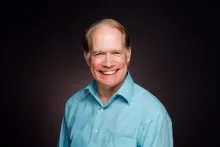
Greg Thomas is the former Pastor of the Cleveland, Ohio congregation. He retired as pastor in January 2025 and still attends there. Ordained in 1981, he has served in the ministry for 44-years. As a certified leadership consultant, Greg is the founder and president of weLEAD, Inc. Chartered in 2001, weLEAD is a 501(3)(c) non-profit organization and a major respected resource for free leadership development information reaching a worldwide audience. Greg also founded Leadership Excellence, Ltd in 2009 offering leadership training and coaching. He has an undergraduate degree from Ambassador College, and a master’s degree in leadership from Bellevue University. Greg has served on various Boards during his career. He is the author of two leadership development books, and is a certified life coach, and business coach.
Greg and his wife, B.J., live in Litchfield, Ohio. They first met in church as teenagers and were married in 1974. They enjoy spending time with family— especially their eight grandchildren.

