
Robin S Webber
This transcript was generated by AI and may contain errors. It is provided to assist those who may not be able to listen to the message.
I want to talk about something that's been on my mind here. I want to mention that if you've ever been up to the Central Valley and you're either plying up to 99, which is in the middle of the valley going north, or you're going up on the west side of the valley, about every 10 miles in that fertile, fertile land that you go through, which is the fruit basket, the vegetable basket of America, you'll go up and about every 10 miles in our brethren in the garden spot—that's Bakersfield, but we'll know this—you see the sign, and it simply says this, where water flows, where water flows, plants grow. It's that simple. It's cause and it's effect. And that water is a gift of the Sierra Nevada that comes down and through the irrigation goes through what would basically be a semi-arid desert, and in that sense allows the desert to bloom and to feed people. Well, water is precious to people, too, and I want to build upon that phrase again. You might want to jot it down, where water flows, plants grow. Well, water is also very precious to human beings as well. And to be frank, as you know, and I know, it is the difference between between life and death. You can only go so long without water. Actually, if you go without liquid, if you go without water in your system, then you will begin to show the effects within three days, and you can possibly go for 10 days. But basically, that's as far as you can go. That's how precious water is. You can go without food for much, much longer, much, much longer. Actually, over a month you can go without food. But water, water, you begin showing dynamic dehydration within three days, and some people can't even make it to that. And 10 days, basically, that's all you can go without liquid nourishment.
It is water that I would like to speak to you about today. For water has much to do, with the festivals of God, and with the redemptive plan of God's purposing for you and me to one day share worthwhile eternity with Him and with His Son. And water has a lot to do with the Spirit of God as well. And so we're going to tie in those signs up in the Central Valley with the importance of water and with the importance of the Spirit, because they all go hand in hand, because where water flows, plants grow. But it's got to be able to flow, and it's got to have a source that is there that allows it to flow. And that's what I want to talk about to each and every one of us today at a very, very personal level, wherever you are, whoever you might be. And that is to allow the Spirit of God to be able to flow through each and every one of us as His vessel, as His instrument, just as much as we've seen the Spirit of God flowing back and forth across the Atlantic Ocean to our friends and our brethren over in Angola. This is a daily activity. It is not just simply a work-wide activity. It's not just simply for others to do. But we're going to come to find that that invitation and that promise is to each and every one of us. And I'm really excited to talk to you a little bit about this during this time, because in this time of the COVID-19 virus, as we've heard time and again, that this is a time of meditation, a time of reordering ourselves, of realigning ourselves with the call of the Father and with the example of His Son, Jesus Christ.
And it's kind of interesting when you think about it that from the Sabbath between the high days of Unleavened Bread, that Sabbath, that late in the afternoon when Christ rose from the dead, and then to think of Pentecost 50 days later, that in this time period—think about it for just a second, are you with me? Think about it for just a second, that we in a sense are in a microcosm of Jubilee. We often think of Jubilee being every 50 years of a complete reordering, a complete realignment, where in a sense everything comes before God and everything is planed out and made right, made good, where God's mercy and God's grace touches every individual that was in His kingdom society back in ancient Israel, and will once again in the wonderful world tomorrow. You and I in that sense right now are in this 50-day span between the days of Unleavened Bread and Pentecost, and it's a time of reordering and really recognizing the source of life, recognizing the source of water, of the source of the Spirit, and how important it is for us to drink in that Spirit, drink in that water which comes from above. And I want to share it with you right now, not just wait until Pentecost. In Pentecost, we normally start talking about the Spirit of God. We talk about Pentecost. We know that the disciples had to wait until then to really understand or begin to fully understand what was ahead of them with the Spirit. So we're kind of looking at that in the rear view because we can look back and see what happened. But all we have is today, and I don't think that we can wait tomorrow for some of us to recognize that we need that divine flow of nourishment that is in us and to know where it comes from and to long for it. To remember what the Beatitude itself says, that blessed, happy are those, complete are those, that hunger and thirst, thirst for righteousness. Remember when Jesus spoke that, he was talking to people that lived in a semi-arid society, lived in the desert. Water was life.
You didn't get to go to the kitchen tap or to the bathroom tap and turn a spigot, and on came the water. It was a gift. It was not a given, and people would pray to God for it.
Jesus said, blessed are those people that recognize the need to hunger and to thirst and to long for righteousness. They recognized that they didn't have it within them. They recognized that all their goodness and all their good works, all their human doings of them by themselves would ultimately vanish. But there was something new that God wanted to give us, something that he wanted us to imbibe of and then allow to flow through us. Allow me to give you the title of this message. When we're done, hopefully you'll remember that what we talked about. The title of my message is simply this. The invitation to flow with the Spirit. The invitation to flow with the Spirit. The key emphasis on all of this are going to be flow and spirit. I'm going to use some props and examples later on that are going to be put out in front of you to ask where you are at as a Christian. No matter how long you've been in this way of life, to recognize that in a sense just like the people of old in Judah or Israel, we live in a spiritual desert. We live in a spiritual wilderness and we need to be able to tap in and understand where the source of our true nourishment comes from as we span this time of jubilee these 50 days between the days of Unleavened Bread and Pentecost. In so doing, I'm going to share with you three stories and I'm going to make them one. They're all going to be dealing in that sense with water and with the Spirit. What we're going to do is to stay with me for a second. What we're going to do is we're going to start wide and we're going to narrow down these stories. They're all out of the Bible. They're all out of the Bible. We're going to start wide with a cast of thousands, like an MGM production. Then we're going to go down to one and ones. Don't go away because at the end you and I are going to be that last story. Because you and I are the continuance of an Exodus story, of a drawing out, of a moving forward towards the ultimate promised land.
We are that current edge of what God is doing and working with. We have to understand how we can allow His work to be in us. The first story that I'd like to share with you then, the first story that I'd like to share with you, is found over in John 7.
You might want to turn over there. I'm going to give you some frame of reference for a moment to kind of build to the story. But in John 7, we often turn to that during the Feast of Tabernacles and during the eighth-day period, the fall festivals that will be coming upon us. We often talk about what is called the water ceremony. I'd like to talk about that.
I haven't heard a lot of sermons ever given, just simply on the water ceremony. I did some research on this, and I hope you'll stay with me, because it is so incredibly exciting to set up the framework of what actually happened in John 7.36, 37, 38. There's going to be two big things out of that that happened thousands of years ago, but as a part of our life today. The water ceremony was during the Feast of Tabernacles. Now, you and I are familiar. This is the first story. This is wide and long ago, and we're going to bring it forward. But the water ceremony took place during the Feast of Tabernacles.
It occurred on the seventh day of the Feast, which is that last great day of the festival. The Feast was a pilgrimage festival, one of the three great festivals where people would actually come into Jerusalem. As they would come in, they would have temporary abodes. We that observe these festivals under the New Covenant understand that in part. But what would happen during that time, as the pilgrims would come into Jerusalem, is that they would have every day a very certain ceremony. And I never recognized until I really researched into it what an incredible, incredible experience this was and the joy and the enthusiasm that occurred during this ceremony.
Because it would start up in the temple complex, but then ultimately go down into lower Jerusalem and then go back. It was an entire parade. Now, we that are in Southern California, especially, innovative grew up in Pasadena like I did.
We're very familiar with the Rose Parade. And we recognize that we're waiting in line, we're waiting on the streets, and all of a sudden, you hear the music begin. You begin to... the whole crowd comes alive after a night time on the streets. The whole crowd begins to move and get excited, looking down at the procession that's coming our way. Well, that's kind of how it was back in ancient Jerusalem, because the priest would be up in the temple complex, and they would take a picture.
They would take a picture that was empty, a picture, like a cup that was empty. And they would take it with them, and a great procession would begin, and it would be accompanied by musicians going in front of them. They would be on flutes, there would be cymbals, there would be tambourines, and they would be going down the streets that were crowded. They were going down the streets that were crowded, and they were moving towards the pool of Celion. And the crowd would be enthused, and they would be excited, and those that were ahead of the priest, the musicians, they would be singing, and the crowd would be singing along with them out of Isaiah 12, verse 3, and allow me to share that with you, where I would say, therefore with joy you will draw water from the wells of salvation.
Therefore with joy you will draw water from the wells of salvation. And the great crowd would go down with the priest, and the priest would come up to the the pool of Celion, and the crowd would be, you know, they would, because they would have palm fronds and date fronds on their on their sukkahs, they take some of them off, and they would be waving them, and just, you know, excited. But all of a sudden there'd be a silence!
There'd be a silence as the priest knelt down by the pool, and he took his picture.
He took his picture. I'll take this as my picture right now. I'm sure he's looked a lot better. He took the picture, but he was silent, and he would scoop up the water, and he would lift it up, and the crowd would go wild. They would begin singing again. They would begin cheering again.
Once again, they would go up to the temple complex. They did this every day during the feast of havernacles. But then on the seventh day, something unique happened.
Once again, go down. The priest would go back up.
People singing, people cheering, people sighting out of Isaiah. Once he was up by the altar, he would go by the altar. Excuse me. He would go around the altar seven times, seven times, seven times, to rehearse and remind the people and to praise God seven times for God's victory over Jericho, and opening up the land of promise to his chosen people who had not been a people.
And then, of course, there would be the daily sacrifice, but then he would pour out water onto the altar. And it is at that point that there would be a powerful climax that was raised up by the high priest. It's called the Great Hoshiana. The Great Hoshiana. God save now. God save now. Remember, we as Christians, we look forward to what God is yet to do in the future, but the Feast of Tabernacles out of Leviticus 23 was initially rehearsing what God had done.
Had freed them from slavery, had given them a land, promised to a brahm their forefather, but now theirs. It was a time of harvest to thank God for the harvest and to ask God for rain from heaven, for the nourishment that they needed to continue to be as his people. So there was this Great Hoshiana going up. And then they would quote out of Isaiah 44 in verse 1, Fear not, O Jacob, my servant, and you, Jesherun, whom I have chosen, for I will pour out water on him who is thirsty, and floods on the dry ground, and I will pour my spirit on your descendants and my blessing on your offspring. End of story. And done. People were probably ready to go back to their Sukkos. Done for another year. Gone through the ceremony. Gone through the cycle.
Were they informed? Yes. Was it an inspiring to be a part of that parade and to be a part of that celebration? Yes. But the big question is this beyond information and inspiration. For the moment, where would their nourishment ultimately be and could there be transformation?
And it's at this point, it is at this point that once the water, once the daily sacrifice was given, once the water is poured, there was a silence. There was a moment. And Jesus of Nazareth was the master of timing. As the creator, he had created time, but he was also the master of timing. And it's then that we find in that moment, join me now in John 737, on that last day, that great day of the feast, Jesus stood. Jews did not rise to teach or to speak. They sat, but he stood and cried out, saying, if anyone thirst, let him come to me and drink. He who believes in me, as the scripture has said, out of his heart will flow rivers of living water. In that moment, this man stood up. And normally at this time, standing up would be an emissary or a herald, perhaps a Roman, perhaps somebody of the temple guard, whatever. But here is Jesus, took advantage of that silence, took advantage of that moment. And he was a herald. He was a he was representing a kingdom. And he was that emissary. He was the incarnation of that kingdom.
And he offered an invitation to every man. It's called the every man's, every woman's invitation, saying, those that come into me, open, no filters, no gates, no 21 questions, complete transparency. Those that will come unto me, if anyone thirst, let him come to me. Don't come necessarily to an organizational Bible study.
Don't come through the doors here. Don't come through the doors there. I am the door. I am the one. I am the one that is that rock, the one that led your fathers in the wilderness and instructed Moses to stand back and allow me, Jehovah, to bring water out of that rock when there was no water, when you were in the wilderness, when you were in the desert, when you were famished.
Yes, I am he. So let's understand something. Are you with me? Number one, he gave a great invitation, an ongoing invitation that never ends, that is always before every human being to pick up and to take that challenge and to follow him. But there is also now notice a promise, notice what it says, it says, he who believes in me as the scripture is said out of his heart, not my heart, not speaking of Jesus, but out of the follower, the one that will Bible that nourishment, the one that will in faith take up that invitation. Notice what it says, verse 38, but this he spoke concerning the Spirit, whom those believing in him would receive, for the Holy Spirit was not yet given because Jesus was not yet glorified.
This was not just simply about water, which is nourishing, but this was talking about the Spirit, the life-giving Spirit, John 663, the life-giving Spirit, again spoken in the book of Corinthians, about Jesus being a life-giving Spirit. This meant something to the people back then. They were living in the Middle East, they were living in the desert, they were living in an area that was so dry that, you know, the moisture just sucked out of you.
They could not take water for granted. They had to look to God. And God sent his Son to this earth for them, for you and me, to take it a step further and to recognize we can do this and we can do that and we can go through life and we have our check-off list, oh I did this, I'm a good person, look at me, I did this and I did this and I did this and I did this and you know what you can take that whole list of I did this and I did this, you know, there's a lot of eye in that and there are good people.
There are really good people that are on the ball, Johnny or Janie on the spot, but all of our goodness, all of our human goodness of and by itself goes to the grave. And on this day, between the days of 11 bread and Pentecost, this time of jubilee in which we are realigning ourselves in the image of Jesus Christ, God tells us, keep on responding to that invitation. It's personal, nothing in between, and you can come unto me, but if you do, if you do, you're going to come to be like me.
And that's the agreement that out of you, yes, I am the nourishment that the Father has sent to this earth, but likewise as my Spirit, as my persona, and as the Spirit of the Father is in you, you are to send forth life, life as it comes into your path and your way. I could ask for a show of hands, how many of you have ever been up to 395 going through the Olens Valley? And you look over to the left, you look, I'm going north, you're looking over the left, you see the western flank, excuse me, the eastern flank of the High Sierra, and it all looks like rock.
It all, it's semi-arid until you get up about 7,000 feet on the eastern flank, but as you're looking up sometimes maybe 15 to 20 miles, as you're looking at that, that, that, that flank that comes down, kind of at a 45 degree, you see little lines of green, you see little lines of green coming down to the bottom of the Olens Valley, especially when you're up in Lone Pine, Big Pine, Independence, Bishop, see that little line of green, you know what that is?
That's water. The rest is gray, the rest is gravel, the rest is rock, nothing moving. You know that line of green? That's life. And I'm here as your friend and as your fellow Christian to tell you that God, as we accept His invitation, it's not just all about us, but as His Spirit flows through us, as it grows in us, it is to go out. The promise that Jesus gave isn't everybody promise.
It's an everybody promise, and that's what Mr. Kubik was talking about. You and I are not the only people on the block.
To any and all that accept that invitation, come to Messiah and have the faith of Jesus and keep the commandments. God says, there's somebody that I can work with.
Now what we recognize then is simply this. I'll look at my notes for a moment. Two things that we learned that I want to share with you. Number one, each and every human being on earth is given a personal invitation. I didn't say they're all going to pick it up right now, and we know the purposes and the plans of God in general, but each and every one of us have been given a personal invitation. It's not been duplicated. It's not been Xeroxed. It's not on some form of communication that we can't pick up Twitter or Facebook or this or that. It comes to us as we read the word of God. Number one, you and I have been given a personal invitation. There's no mistake. Number two, we have been given a personal responsibility upon accepting that invitation and recognizing who is Senate. That is, that water is to flow out of us. Let's go to the next story. Join me if you would in John 4. Wonderful story to build upon this. In John 4, we have the story of the Samaritan woman. And again, it revolves around water, and it revolves around the spirit. It says here that so, so often the stories of Jesus begin in so, and another story. So, he came to the city of Samaria, which is called Zechar, near the plot of ground that Jacob gave to his son Joseph. Now, Jacob's well was there, and Jesus therefore, being wearied from his journey, sat thus by the well. And it was about the sixth hour. So, small village in Samaria, which is basically a no-go ground for most Jews of that time, but he's been Zechar. He's by the well. It's the sixth hour. And a woman of Samaria came to draw water, and Jesus said to her, give me drink. It was thirsty, kind of interesting that here he was exhibiting that he was human, and he was the son of man, and he was thirsty. For his disciples had gone away from the city to buy food. And then the woman of Samaria said to him, how is that you being a Jew? Ask a drink from me, a Samaritan woman. For Jews have no dealings with Samaritans.
Jesus was there, sitting on the side of a well, that was 1500 years of age, sitting on its edge. This woman's coming towards them, and she goes, oh, look what I have here. I've got a Jew, and a Jewish man at that.
Jews don't have anything to do with my people. They think we are, to use the term of old, half-breeds, and that we're worshipping on the wrong mountain. We'll have nothing to do with us.
And so much so that they would not even eat out of the utensil and their laws that are used by us, lest they somehow be polluted.
And not only that, but I'm a woman, and I've read about how the Jews regard their women.
So why is he going to have a conversation with me? He's asking a friend of me.
You know, one thing about when you're dealing with Jesus, you come to expect the unexpected, because he does not think like you and me. He doesn't deal with moats. He doesn't deal with walls. He doesn't deal with moats full of alligators and barbed wire. He was always open to every human being that ever lived. That's what made him Jesus. That's what made him Christ.
And it says, Jesus answered and said to her, if you knew the gift of God and who it is who says, you give me a drink, you would have asked him and he would have given you living water. Remember again the ceremony, the water ceremony? He would have given you living water. Not stagnant water, not dead sea water, but living water. And the woman said, I'm sure you have nothing to draw with, and the well is deep. Where then do you get that living water? See, if you don't ask questions, you'll never know. Where do you get that water? And are you greater than our father Jacob, who gave us the well? Big question he's about to answer. And drank from it himself as well as his sons and his livestock. She's basically saying, this is suffices. This is what we have used for hundreds of years. We're doing okay with the status quo.
What is it that you have? What do you mean, living water?
Well, you keep on talking to Jesus, you're going to get more of the answer. And Jesus answered and said to her, whoever drinks of this water will thirst again. But whoever drinks of the water that I shall give him will never thirst, but the water that I shall give him will become in him a fountain of water springing up into everlasting life. And the woman said, Sir, give me this water that I may not thirst, nor come here to draw. And Jesus said her, Go, call your husband, and come here. And the woman answered and said, I have no husband. Jesus came back and said, Yeah, I know. I know. You've already had five husbands, and the one that you're living with right now, you're not married to. I know all about you.
I know that your life is not happening right now. But I'm going to keep on talking to you. I'm talking about an invitation that can make all the difference in your life.
And the woman said to him in verse 19, Sir, I perceive that you are a prophet. Our fathers worship on this mountain, and you do say to Jerusalem is the place where one ought to worship. And Jesus said to her, Woman, behold, believe me, the hour is coming when you will neither on this mountain nor in Jerusalem worship the Father. You worship what you do not know. You know what we worship for salvation is of the Jews. But the hour is coming. And now is when the true worshipers will worship the Father in spirit and truth, for the Father is seeking such to worship Him. God is the Spirit, and those who worship Him must worship in spirit and in truth. She went on to ponder more about what that meaning was.
But that woman was offered living water.
The invitation was there, and the responsibility would be there, too, if she would pick it up. And that might be the rest of the story that we'll hear about one day.
But you know, it's very interesting when you recognize who was talking to her at that time. And going back to the water ceremony in Jerusalem, when that great Hashem went up, God saved. God saved! And then Jesus came back and stood.
Jesus, Yeshua, whose very name means salvation, spoke. The power of these stories so far is simply this, dear friends.
Jesus can speak to crowds and does. But on this day, through the words of God, dear friends, fellow Pilgrims, Scripture is reminding us of where our nourishment comes from.
And with that nourishment comes a responsibility to have rivers of living water flow out of us.
But that takes us to point number three. That's to you and me today.
You say, well, how are we in Scripture? Good question! Join me if you would, over in John 17. In John 17.
Are you with me? We're on the third story. You thought it was going to take an hour per story. John 17. And notice what it says here in verse 20. It's always kind of exciting to me when I read it, because I recognize that on that evening of the Passover, that Jesus, in what he was praying, was not only for those in that time and in that room, but being God in the flesh, he was looking down through the ages and saw you and saw me.
It was praying for us. I do not pray for these alone, but also for those who believe in me through their words, that they may all be one as you, Father, and me, and I in you, that they also may be one in us, that the world may believe that you sent me. And the glory which you gave me, I have given them, that they may be one just as we are one. I in them, you in me, that they may be made perfect in one, and that the world, the world, may know that you have sent me and have loved them as you have loved me. Father, I desire that they also whom you gave me may be with me where I am, that they may behold my glory which you have given me, for you loved me before the foundation of the world. O righteous Father, the world is not knowing you, but I have known you, and these have known that you sent me. What is the great witness of the church down through the ages? The ecclesia, the people. I'm moving beyond organization, as Mr. Cupid himself mentioned. The church today, the body of Christ as a whole, that spiritual organism, has instruments within it.
An organization has its role, but you and I are the church.
The church is not made out of cement. It's not made out of fiberglass. It's made out of flesh and blood, that believe and have understanding that the great God, our Heavenly Father, so loved the world that he gave his only begotten Son, that whosoever believeth on him should not perish, but be nurtured and nourished so that ultimately that they would have eternal life.
That's the first step.
That's an understanding. And there are people that understand and have a knowledge, have a knowledge, appear in the cranium that God sent his Son. But there are other steps beyond that that you and I have to contemplate between the Days of Unleavened Bread and Pentecost as first-roots. And that is that God the Father not only sent his Son, but that his Son and the Spirit of the Father now resides in us.
Resides in us. That we talked earlier about that, that the temple complex and the altar. But God tells us that in Scripture that we're his temple in 1 Corinthians 3 16 through 17, 1 Corinthians 6, that God no longer has a temple made of stone and mortar, but has this reconstituted temple on earth, a flesh, a blood, a heart. And that our heart becomes the altar. Our heart becomes the altar that the throne of Christ rests upon, and that we give him praise, and we give him sacrifice on a daily basis as we respond to that invitation and allow the Spirit of God to flow from him through us out to others. In the same spirit that Jesus welcomed that Samaritan woman, that Samaritan woman, a Samaritan 1, number 2, a woman, and a woman that was in that moment in sin. And sometimes we can look at others with outward-looking eyes and forget where God and where his Christ picked us up along their way of salvation for us to be with them. Oh, oh, oh, my, my, my, it's so easy to forget. It's so easy to look at others, to disdain, to create a verse, to be with them. Look at me. Look at us. Rather than recognizing that without the Spirit of God in us, without that spiritual nourishment of water, of Spirit in us, we would dry up in this secular, humanistic wilderness that's all around us. You know, you can, are you with me? We can know that God the Father sent his Son to this earth and believe that Jesus, Yeshua, Jesus of Nazareth, born in Bethlehem, born of a virgin, yeah, was sent by God. But that's where it can stop. Unless we have that light, that nourishment, that water coming out of the rock of eternity, Jesus Christ moving out of us, and recognizing that we are to be that instrument, those first fruits that give out. I want to share a phrase with you, and I want you to think about it during this time of Jubilee, these 50 days, so that we can become square by God's grace and by his forgiveness of us, perhaps, for not fully taking opportunity with what he has given us. I have a question for you.
That woman in Samaria was satisfied with Jacob's well, dug 1500 years before, working off of something that's 1500 years old. Well, you can say, well, Ben April, don't fix it. Okay, got it. But that well is basically gathering seepage from a rain here and a rain there, all three inches in the desert at that time, whatever, and you had to send a bucket down, hoping that there'd be a splash down below to draw water.
And it's a little bit well-working so far. It's like the story of the people that are on the safari. They're out in the jungle, but they're lost. They're hacking away with machetes, and they kind of wonder if they're on the right course and finally say, would you please shimmy? Why don't you just shimmy up that palm tree and kind of give us a scope of what's going on? So the guy goes up, up, and he's looking around, you know, 360 degrees, and he goes, oh, I can't believe it. He yells back down to the rest of the safari group and says, you won't believe this, but we're in the wrong jungle.
They said, oh, yeah, come on down. Come on down. We're making progress anyway.
That's sometimes how we can even be as Christians, dear friends. And I speak as one. I speak as one that was a dying man to people that have been dying people, like you, until we were given the libation of the nourishment of the pouring out of Christ's sacrifice of that blood, of that water, and gave us life. But sometimes we just settle for same old, same old. I have a question for you. It says that if you accept this invitation, and if you come unto me, that living water is going to flow out of you. I've got something here for you for a moment. As we're in this time of jubiliness, we're sorting out these 50 days, I want to show you something. But this is water. Water.
I want you to look at this water for a moment, and I'd like to ask you a question. Is this you? We saw it looks pretty good. Okay, fine, I got it. But is this you?
Are you a Christless Christian? A Christless Christian?
Because ultimately, it's not enough just knowing about Christ, but allowing the love and the grace of the Father through Christ to flow through us to others, to be a light, to be an example, and to be a part of the work of salvation of light and a difference.
Jesus says, Behold, I create all things new.
Go like this. Are you with me?
Okay, open it up for a moment. Sometimes we open up for a little bit, and we close it. You say, well, we've done our duty, just like the Jews back in Jerusalem. They had a parade and went home, and we have to ask how much really changed. We have not been called for parades, brethren.
We have just not been called to show up. We have not just been called to go through ceremony.
We have been called to be a living sacrifice, holy and acceptable unto God. How long have you been in this way of life? How much have you known that the Father sent the Son to this earth? Okay, good. And have remained like this, like Jacob's will, bottled up, just bottled up, always there, always there. I want to show you what God's goal is for us.
As we're coming up to the day of Pentecost, this is what Jesus was talking about. If I can open this. Whoa! Ah, there we go.
I'm going to show you what I have here. Let me go down a little bit here.
Oh, coming down. Let me get this yet. One second. I'm going to go up a little bit. Okay. When Jesus was in Jerusalem, and he mentioned that living water, and that was to come out of us, this is what he was talking about.
It keeps on going, doesn't it?
Keeps on pouring. Just keeps on coming. Where water flows, plants grow. Where the water of the spirit flows, hearts grow. Hearts are changed. Hearts are developed. We become an impact zone for the Kingdom of God now on this earth ahead of time, as the first fruits of God, the Spirit of God, and to recognize that we are in partnership with God Almighty.
Back. What do you want to settle for? Because God doesn't want just a part of you. He wants all of you. That was the deal that we made with God at baptism. That we went underneath that water.
Just as Jesus went underneath the water of the River Jordan, which was alive and which was flowing, that came out of Galilee in the north and moved towards the south but to a different part of water, to the Dead Sea. But it was in the vibrant, flowing water of Jordan that Jesus submitted himself to the will of the Father. And the one thing that the disciples picked up was that, especially in the book of John, in the chapter of John, it says that they saw like a dove descending, and it remained on him. It remained on him. It didn't come and it didn't go like the prophets and the kings of old, like a yo-yo, back and forth and back and forth. It was a fulfillment of the messianic prophecy out of Isaiah 11, where it said, and the Spirit will descend, and it remained. They knew that this was the God-Man. They recognized that this was Yeshua, this was salvation. They recognized that there was something totally different that was so vibrant, that was so nourishing, that was so incredible.
Not only because of what happened at the Jordan, but everywhere he went. Everybody that he touched, there was life where there was no life. There was hope where there was no hope. We think of the story of the widow of Nan in AIN coming out, and it says, and now she was coming out. Here's a widow and her son, her only son had died, and Jesus and the disciples saw that. It was in their path. It was right in front of them. It was in their spirit of influence, and Jesus went over, touched the lad, brought him up out of death into life.
Oh my, my, Jesus loved people. He touched people. His life flowed into people like water. His spirit was magnetic.
Think of the story of the woman that touched Jesus from behind in a crowd of thousands, and yet out of that faithful touch, he recognized the circuits. The circuits were clicking.
There was a connection. There were a lot of people that were not receiving him, but this woman wanted to receive the nourishment that he had to give, and she got it, and she was healed of that issue of blood.
In Psalm 46, it talks about a stream, a stream that makes glad, the city of God, a stream that flows down through eternity to us today on this current edge of the Exodus story of moving towards the land of promise, a stream that makes glad. Hmm. Have you thought that you're part of that stream now, or have we just kind of bottled ourselves up, the same old, same old, think, well, I've got the truth. I've got the understanding.
I can tell you about this, and I can tell you about that, and I can tell you about this in the Bible. Oh, I know about them. I've got the truth. Rather than you can have the truth until the cows come home. But if we only have truth, if we only have knowledge, and we do not have faith, if we do not have hope, and if we do not have love, those nourishing elements of the Spirit of God that have been visited upon you and me were nothing. This is a time of reordering our lives, of not only reading Isaiah and Revelation, behold, I do a new thing. But perhaps, no matter how long we've been in this way of life, that God, God, I need your water. I need to reformulate that Spirit that you've given me to be an instrument of your peace and in your hand.
Hmm. You say, well, I know that the Spirit of God was given at Pentecost. Peter got up. The Apostles got up. I'm not Peter. I'm not an apostle. I'm not a pastor. I'm not the president of an instrument within the body of Christ like Mr. Cubic. I'm not this and I'm not that. Brethren, you can take your I'm not to the grave. It's not going to help you.
Yeshua, Jesus, salvation, that the Jews of old proclaimed during the water festival, He's coming to your life.
No matter who you are, that we all contribute. I want to share a story with you. With me, we're almost done. The Amazon River starts on the east bank of the Andes Mountains, and it flows for 3,600 miles across the top of South America.
And then it comes into the Atlantic Ocean after 3,600 miles. Do you realize that there is such a volume of water—I don't have my mic.
Yeah, there is such a volume of water—are you with me? You might want to jot this down, check on it— that when the Amazon comes into the Atlantic Ocean, there is such a volume of water that 1.4 million gallons of water per second move into the Atlantic. And with such a force, with such a dynamism, that it pushes out 60 miles into the ocean with fresh water—60 miles, 2.5 times almost— as far out as Catalina is, 26 miles out to sea. Catalina waits for you and for me, like the old song. Beyond Catalina times 2 and then 12 more miles. That is the force of flowing, living water.
Hmm. Well, I said, well, what's that have to do with me?
That Amazon, for those 3,600 miles, starting so small up in the high recesses of the Andes with the trickle, becomes a stream, becomes a small river, and other streams and other streams, other small rivers begin to be a part of the whole.
Are you with me? Do you understand?
We don't have to be at the mouth of the river. God will take care of that.
But He wants us to contribute. He wants to see what He poured out on us.
Not because of who we are, but because of who He was. We were found in sin, and we were redeemed. We were given light. We were dying men.
Have you ever thought, as we come up to Pentecost, that the power of Peter's sermon was that he spoke as one that was a dying man to dying men? It was not only the Jews of Jerusalem that had deserted and crucified the living, loving one that said, I will give you nourishment.
Peter is nowhere to be found. He ditched his friend when he needed him most. Hmm. So it's not about us, brethren. It's about the grace, the love of God, and the righteousness of Christ that cloaks us. Because He did what we could never do. And now allows His robe of righteousness. Because He alone is righteous in human flesh.
It's that robe of righteousness that cloaks us. And as that robe of righteousness cloaks us, as spoken in Isaiah 61, then we in turn move into the lives of others. Join me, if you would, in Revelation, as we're going to conclude in about two minutes. Revelation. Because water is spoken about throughout the Scriptures. And Revelation 22.
And it says in verse 1, He showed me a pure river of water, of life, clear as crystal, proceeding from the throne of God and of the Lamb. And in the middle of its street, and on either side of the river, was the tree of life, which bore twelve fruits, each tree yielding its fruit every month. And the leaves of the tree were for the healing of the nations. This comes out of Ezekiel 47. Where water flows, plants grow. Where water flows, trees grow. Where salvation flows, things happen. Interesting. Interesting. Something that we cannot afford to do, brethren, right now, on this day, as we realign ourselves with Jubilee, is to allow Jubilee to come to others. God's Jubilee. Even if they don't understand it, even if they don't submit right now into the way of God, that they will know that you have been an instrument in a desert of humanism and secularism. That there's something about you that's different, just like Jesus, the Jew, at the well with the Samaritan woman. Allow me to finish with these thoughts, and you can only fill in the answers until next time you speak. Okay?
What's flowing out of you? What's flowing out of you?
The river of self, or the river of Christ? What's flowing out of you? Nothing?
Keeping it bottled up?
Or is it that river that makes glad, whose source is not the Andes, but the kingdom of God, and has an impact not on the Atlantic Ocean, but those that are made in the image of God? It might be your wife. It might be your husband. It might be your child. It might be your grandchild. It might be your neighbor. It might be your co-worker. It might be your fellow student. It might... will you fill in all of the mites? But we can read about Revelation 21 and 22, what is not going to be in the New Jerusalem. Let me ask you about your Jerusalem right now. When we think of the water of life that you protrude in, that you move into people's lives as Jesus gave his nourishment, God the Father has given his nourishment, that as you hunger and thirst after righteousness, that it emanates out of you the water of life, the spirit of life to others.
Here's some trees of healing, leaves of healing along the river of eternity. Do you personally bring life and healing and times of refreshing where relationships have died and our hope is lost?
Only you can fill that in. But that's what the kingdom of God is about. That's what's going to be in the heavenly Jerusalem, and that's what's entered our life now.
Do we make room in our end? There was no room in the end for Joseph and Mary. But do we make room for others that have only known closed doors, had doors slammed on them, or never opened at all?
Do we build walls, or do we build bridges in regards to relationships? There's not too much in between. Do we build walls, or do we build bridges?
And who goes first? Do we use our ears more than our mouth? Do we exercise patience more than anger?
Do we seek cures and solutions from Scripture for people whose lives are in pain?
Do we bring joy in lives that are filled with sorrow?
Do we bring joy? The joy that we saw our African brethren exude? In such a beautiful manner today, the Spirit was upon them, and it flowed forth.
Do we wipe away tears from those who cry?
Or do we, because we're bubbled up, do we make them cry?
Do we bring blessings where there's only been cursing?
Do we bring light where only darkness has been known?
Only you can answer that question.
As we are in the midst of this time of Jubilee, I'd like to conclude by turning to Psalm 51, if you'll join me, in Psalm 51.
Let's notice verse 12.
As we go between 11 bread and Pentecost, this is the time of Jubilee. Jubilee is about restoration. It's about that which has been a desert by our own doing, turned over and nurtured through the loving hand of our Father and the loving guidance of our Savior.
It says here in verse 12, restore to me. Water me. Allow me to open up to your Spirit. Allow me to perhaps recognize because of my own doing.
I've bottled myself up. I've not been that floating river that you want me to be.
Not to the whole world right now, but as Mr. Kubik said, we're not in this alone. There's other groups, there's other fellowships, and there'll be other people, but we're a part of that tributary of that great river moving towards the kingdom. We only may be a trickle. We may only be a stream, but let's be the best trickle. Let's be the best stream to add to that river that makes the city of God glad. Restore to me the joy of your salvation and uphold me by your generous Spirit. Then I will teach transgressors your ways and sinners shall be converted to you. Perhaps the best way of teaching is by example. Your life was touched, not from the outside in, but from the inside out, when the call of the Father came. He said, I want you.
I will be a Father to you. You will be my people, and I will be your God.
And by the way, all you have to do is go through this door, the door, the righteous door to me.
Not because of your righteousness, not because of your good doing, but the greatest impact that you will make is as you allow me and my Son and the river of eternity to flow through you by my Spirit and leave the rest to me and the partnership that I want to have for you. Just think about it, brethren. Just think about it. Just throw away the bottle. Let's ask God to pour in us His Spirit, and let's allow it to emanate it from us during this time of Jesus Christ.
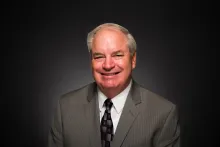
Robin Webber was born in Chicago, Illinois, in 1951, but has lived most of his life in California. He has been a part of the Church of God community since 1963. He attended Ambassador College in Pasadena from 1969-1973. He majored in theology and history.
Mr. Webber's interest remains in the study of history, socio-economics and literature. Over the years, he has offered his services to museums as a docent to share his enthusiasm and passions regarding these areas of expertise.
When time permits, he loves to go mountain biking on nearby ranch land and meet his wife as she hikes toward him.
