

Robin S Webber
This transcript was generated by AI and may contain errors. It is provided to assist those who may not be able to listen to the message.
Like you all to please turn over to Philippians 4, and let's take a look at verse 13. It'll be the foundation that we build upon for this message that I'm bringing to you on Pentecost 2016. In the midst of a statement or a section of statements, Paul simply says this in Philippians 4 and verse 13, I can do all things through Christ who strengthens me. I can do all things through Christ who strengthens me. That's quite a profound statement for any one individual to make. My question to all of you this afternoon is simply this. Have you ever contemplated why the apostle Paul could actually say this? Have we considered it in depth? And what does this festival, the Feast of Pentecost, have to do with this and to allow us to understand this statement that all things ahead of us, no matter what comes our way, that we can do all things in Christ. Today, we meet on what is called the Feast of Harvest. You find that mentioned in Exodus 3 and verse 16. I find that term interesting. And of course, that fits in with our further understanding as we wander through the Scriptures to recognize that in Leviticus 23 it's mentioned as the Feast of First Fruits. But what is it within those first fruits that God is harvesting down through the ages?
What is it within them that allows them to have that confidence and to have that boldness that through Jesus Christ all things are possible? You and I are here today in Murietta, California. Yesterday, and in yesterday's age on this festival and in this time, another covenant people stood before a mountain. And from that mountain of God, they received the law of God from on high.
Covenant people have always come up against this day and they've received something. They've received a benefit from God. They've come to understand His love, His law, His rule over their lives. As was mentioned earlier, as we wander into the book of Acts, as we come into the New Testament, we're familiar with the story of what we call now in the Greek language Pentecost, or at account 50. And it's on this day in which a great God and a loving God gave us a gift. He gave us a gift of the Holy Spirit spread abroad. And it's a day that sealed the words of Jesus Christ on that last night of His life when He was betrayed. I'd like you to join me, if you would please, to the Gospel of John. Join me in John 14 because John 14 has everything to speak of why the Apostle Paul could say, through Jesus Christ, I can do everything. And brings into full play, full depth, the meaning of this day of Pentecost. In John 14, and let's pick up the thought if we could, in verse 15. Again, remembering that Jesus, these are His last words as a human being, as it were on that night. If you love me, keep my commandments, and I will pray the Father, and that He will give you another helper or comforter, and that it may abide with you forever.
Now, it's going to be very important when you understand this, which is to come, was going to abide forever. Not come and go, not up and down, but would be ever present and would be with them.
The Spirit of truth, whom the world cannot receive, because it neither sees it nor knows it, but you know it, for He dwells with you and notice, and will be in you. And I'll not leave you orphans. And it says, Jesus, speaking of himself, I will come to you. A little while longer, and the world will see me no more. But you will see me. Because I live. It says, you also shall live. What does this have to do with us?
Terminology that Jesus used with those that were dear with Him on that evening, that He would come to them, that because they do live, that He would also live.
And He said, I and my Father and you, and look that they would buy. Look at verse 20, and at that day you will know that I am in my Father, and you in me, and notice, very importantly, that's going to, we're going to build upon these last three words, notice, and I, or last four words, and I in you. Have you ever taken that phrase apart? Well, we're going to do that.
We're going to build upon it, and we're going to understand fully the promise that Jesus gave to His disciples on that last night. It's already been mentioned, Acts 2, the mighty wind came, the tongues of fire, the speaking in different languages, so that all the Jews of the diaspora might understand what was being spoken on that day by Peter and the others on that day of Pentecost.
But here's a thought I want to share with all of you, if I can be bringing you into this message, even though Acts 2, 38, where Peter got up and said, and repent and believe, be baptized, and receive the gift of the Holy Spirit, even though Acts 2, 38 came after the recorded ascension of Jesus. There's no evidence through the book of Acts, no evidence at all, that the early church ever truly perceived that Jesus was gone from their midst.
They took Him at His words, in the words that He spoke on that night in which He was betrayed, that I will come to you. We'll come to find that through these men, and those that followed them, that He healed, He spoke, and directed the work of His disciples.
And even when preaching, the disciples' earnest desire was that every human being that came into contact with them might encounter the message, in the words of Jesus Christ, that they might experience it up close and personal, and that they may not only encounter those words, but they might experience His reality in them, that He would be their guide, that He would be their teacher, that, as He said in the book of Matthew, lo, I shall be with you even to the end.
Jesus died. Jesus was resurrected. Jesus ascended. But Christ remains present in the work of the church today and of that which the Bible calls His body. It's a different work today. When He first came during His earthly ministry, He was constrained because He was incarnate. He was in the form of a human being. He was encapsulated in what we call flesh.
And so, in that sense, He was to a degree limited as we are by time and space. But Acts tells us what happened afterwards, a new dimension of the work of the Father through Jesus Christ, and that it was no longer just His physical body, but He took on the stature of a spiritual body, a spiritual body to do His work.
And that body is what you and I are as called ones out of this world. It's called the church. When I say the word the church, I'm not speaking of an organization. I'm not speaking of a corporation. I'm just speaking just simply in English of what the Greek tells us, those that have been separated, those that have been called out, that if Jesus Christ is the head of the body, the head of the church, then you and I have the privilege.
We have the privilege of experiencing His heart. We have the privilege of being His eyes as we come amongst a crowd. You and I have the privilege of walking and being about His mission as we take care of others. You and I have the privilege through that Spirit, through Him living in us. That, indeed, as Paul said, that in Him we can do all things.
Now you say, well, Weber, where are you going with this? Thank you for asking that question. Let's go to another scripture, 2 Corinthians 13, and let's take God at His word. That's what we do as members of the Church of God.
In 2 Corinthians 13, if you'll join me there, let's notice again Paul's words. I don't think they need a lot of explanation. Let's just take it as He gives it here in 2 Corinthians 13. Because sometimes, sometimes, we have to almost be slapped into reality. So often we can look at the entire Bible and it kind of goes on and on and on.
And we don't just center on one set of scripture or section and take it for what it's worth. And let's take a look at it because Paul asked a question to the Corinthians. Examine yourselves as to whether you are in the faith.
Examine yourselves as to whether you're in the faith. Now, with that question, we might ask this. What we might ask is what faith and or faith in what? As to whether you are in the faith. Test yourselves. Examine yourselves. And then notice what it says here. Do you not know yourselves that Jesus Christ is in you? Don't you get it? Don't you understand? Yes, He came to this earth. Yes, He died. Yes, He was resurrected. Yes, He ascended. And yet, Paul says here that Jesus Christ is in you. That's a mighty big statement and something that we have to kind of wrap our minds and wrap our hearts around. And that's why I'm glad I have a few extra minutes in this message to share that with you. Now, when we say that and we look at the reality, we say, well, Jesus, no, no, Jesus Christ is at the right hand of the Father. It says that, doesn't it, too. Yeah, that's all right. He's Spirit. That's how Spirit works. But it says also that He is in us.
What does this convey to you and to me? At times, we somehow today can lessen the biblical reality and relegate what Jesus clearly stated and what the Holy Spirit truly is and simply relegate the Holy Spirit to what we might call a spiritual power tool. With the trial that we're going through, just like a carpenter or a plumber has tools, is you're going through it, okay, I'm going to need it. I need to reach over here and God says, so give this to me, and I need to reach for this. And now, oh, and I need this drill piece, the spiritual drill piece over here. And what we can do is, if we're not careful, we can relegate, we can relegate what the Holy Spirit truly is. When we don't understand who is Holy and who is Spirit and the great miracle that we're working in each and every one of us, and that indeed is why you and I are called in the Scriptures a new creation. And we don't want to do that. If we're not careful, we can neuter and we can impersonalize the greatest gift that God gives us. And that is simply this. You might want to jot it down. I'll put it in a word. God gives us His essence.
For indeed, that is what the Holy Spirit is. It is the essence of God, and we'll build upon that a little bit later. But what does this phrase mean when it says that, do you not know yourselves that Jesus Christ is in you? If you're looking for a title of this message, that is the title of this message. Don't you realize Christ is in you? Don't you realize that Christ is in you? So let's build upon that as we go along here.
The Scripture allows us to understand that over the ages, God reveals Himself and expands His definition to covenant people. In the Old Testament, we find the writings from Genesis forward, we find as we open up to creation that it says that the Spirit of God hovered over the waters. And so we have this sense of essence, this sense of something that is moving or above that which is in the creative world, somewhat impersonal in nature. Later on, as Israel became a nation and strove to follow God, that the Spirit of God would come and go. It would either come and go from the tabernacle, it would come, the cloud would be there at the Shekinah, and then it would dissipate. It would come, it would go. Among some of the judges of Israel, like a Samson, when there was a need, it says that the Spirit of the Lord came upon Him, the power of God, to serve the purpose of God. But it would come and it would go.
Thus, we find in the Old Testament, to use that phrase, we find that the Spirit of God is both impersonal and transitory. But that all changed as we come to the New Testament. Join me if you would in Matthew 3. In Matthew 3 and verse 16, if we'll take a look here, let's notice the account of Jesus' baptism. And maybe you've never focused on these words before, but do I dare say it's quite extraordinary. In Matthew 3, and it says, and when He, speaking of Jesus, had been baptized, He came up immediately from the waters. And notice, and behold, the heavens were open to Him, and He saw the Spirit of God descending like a dove and alighting upon Him. We know that through other phrases in the Gospels, that it was the voice that came down from heaven, saying, this is my Son, in whom I am well pleased. Now, when we look at Matthew 3 verse 16, we notice something. It says that it alighted upon Him. It never says again that it departed from Him. There was something incredibly different as the ministry, the earthly ministry of Jesus, began. And it is in this sense, not only that the Spirit alighted on Him and it did not depart, but that this is what attracted people to Him. They began to understand that in this physical man, this person from the Galilee was the Spirit of Him, that great God, the One, that had led Israel from Egypt to the Promised Land and had been their rock and their anchor all of these years. There was something incredibly different that is going on here. Now, Jesus would go on to explain that a new dimension in the manner that God relates with His covenant people and how we are to relate with Him. We find that in the story of John 4. Join me if you would over in the Gospel. In John 4, very interesting, let's notice something here.
It's the story of the encounter with the Samaritan woman. I'm going to go right into the story here in John 4, and let's pick it up in verse 19. The woman said, "'Sir, I perceive that you are a prophet. Our fathers," speaking of the Samaritans, "'worshiped on this mountain, and you do say that in Jerusalem is the place where one ought to worship.' Jesus said, "'Woman, believe me, the hour is coming when you will neither on this mountain nor in Jerusalem worship the Father.'" Now, mountains were very important to the people of God. When you think of this festival going back that as we understand it and place it, that the children of Israel were before Mount Sinai on this day as the law was delivered to them.
And later on, the temple would be built upon the mount in Jerusalem. But notice what Jesus says, "'Woman, believe me, the hour is coming when you will neither on this mountain nor in Jerusalem worship the Father.'" There is going to be a new way of doing spiritual business and relationship. You worship what you do not know. We know what we worship for salvation is of the Jews. But then he repeats it again in verse 23, "'But the hour is coming, and now is when the true worshippers, the true worshippers,' notice, will worship." That means to give God his worth.
The Father, notice, "'in spirit and in truth. For the Father is seeking such to worship him.'" Now, notice verse 24. "'God is spirit, and those who worship him in this new atmosphere that is now coming forth as Jesus pronounces it must worship him in spirit and in truth.'" Thus, we find that Jesus introduces us to a world that we're not naturally familiar with, physical human beings. We are in the world of the Spirit. And what Jesus is saying here to his followers, then and to you and me today, it's very easy to follow something that we see. And we know that God used tools in the past, whether it be the pillar of fire by night or the cloud by day, that there was something out in front of them to follow, to reach for, seeing his believing. And that is what was happening at that time.
Not only that, we recognize that again. We think of Moses on a mountain, that he comes into the presence of the burning bush, and out of the burning bush comes the voice, I am that I am. So there's a bush that was on fire, and the fire did not dissipate. There was a cloud during the day, and it led to Israel.
And the people of God for 1500 years had been used to this kind of world, of God being out there and reaching for God, searching for God, seeking for God, looking for the next power tool to move them through with their relationship with God. And Jesus said that there was going to be a new way of being, that we would not worship God on mountains, but we would worship him in spirit and truth. And a part of that is the lesson of today, of understanding what the spirit is on this day of Pentecost. What's really nice about the day of Pentecost, you know, it's such a happy day. Well, we all like to whenever, and especially when we're surprised, everybody likes to receive a gift. Everybody loves a gift. Gift is one of the most beautiful four-letter words there are. I'm going to give you a gift, but I wasn't expecting it.
I didn't buy it. I didn't plan this. And yet, on this day of Pentecost, God says, I'm going to give you a gift. Now, oftentimes, somebody in their well-being and well-meaning give you a gift, and they open it up, but they didn't read the directions. You find out that the batteries were not included. And sometimes you find out, then, oh, you've got to go get the batteries. And the batteries were actually more expensive than the gift, the way some batteries are today. But even those expensive batteries are going to wear out, aren't they? And yet, the Apostle Paul said to Jesus Christ, I can do all things. And the spirit that is given this world of spirit that we entertain on this, the Feast of Pentecost, the spiritual battery that God gives us never wears out. It never becomes deplete. It's a beautiful gift. And God as a Father loves to shower us as His children with gifts. Join me in Ephesians 3.
In Ephesians 3, the Book of Ephesians is just one of my favorites to go through. And sometimes we say, but God, you know, I just need a little bit more in my tool case. You know, there's just kind of something missing out here and just can't put my hands on it. That's half our problem. We're looking for God's help from the outside and bringing it in, rather than during the Feast of Pentecost, we come to work, understand that we're working in the world. We've been invited in the world of spirit, and the spirit works from the inside out, not the outside in. And that's the great lesson I want to keep on pounding into you today, in a loving way. When I say the word pound, I better paraphrase that. That we so often in this world of sight and sound and feel and touch, we want to, like that little baby that's born when they kind of reach for that bowl of oatmeal. I see Elena out here and her husband, I'm sure they've had the oatmeal thing where the little ones are kind of going for them. We want to kind of grab for the nourishment on the outside, and it's all over the face. Dust it up again. And we can do that. We can keep on searching out here. When we notice what it says in Ephesians 1, verse 2, "'Grace to you in peace from God our Father and the Lord Jesus Christ, and blessed be the God and the Father of our Lord Jesus Christ, who has noticed, blessed us, blessed us, with every spiritual blessing in the heavenly places, notice in Christ." We've already been blessed.
We've been given everything that we need to develop relationship with God Almighty and His Christ. Just as He chose us in Him before the foundation of the world that we should be holy and without blame before Him in love. And let's drop down now to verse 11. "'In Him also we have obtained an inheritance, being predestined according to the purpose of Him who works all things according to the counsel of His will, that we who first trusted in Christ the first fruits, we who first trusted in Christ, should be to the praise of His glory. And in Him you also trusted after you heard the word of truth, the gospel of your salvation, in whom also having believed you were sealed with the Holy Spirit of promise, who is the guarantee of our inheritance until the redemption of the purchased possession to the praise of His glory.' We have been given a blessing upon all blessing." With all this stated, before we could receive that gift, we had to, in our time and in our way, we had to understand the words that the Holy Spirit inspired Peter to say in Jerusalem. At the moment of anguish, darkest spot, most lonely island in our imagination, when like the men of Jerusalem, they said, oh no, what are we going to do?
That is in that moment when God gives us hope, when we're at our darkest. And through Peter, it said, repent, change, give it up, don't go back, don't be like Lot's wife, don't wallow in the past, and please don't create any more past in your present. Repent, be baptized, don't just simply immerse yourself in water, for the water will come and go. That's symbolic. But immerse yourself in the life of my son.
Be baptized and receive the gift of the Holy Spirit. God, when He did that, wants us.
Now, you say, well, I've got to do this, and I've got to do that, I've got to do this, and I've got to do that. Now that God's moving in, I've got to do this, I've got to do that, and I've got to do this, and I've got to do that. It's kind of fun to say.
That is not speaking tongues, by the way. I hope you got that point. Okay.
But God doesn't want us to do the repairs. He wants our sight. He wants our human location.
And then He wants to put something in there to reside in there. And that's where Paul's statement comes in. Don't you know? Don't you know that Jesus Christ is in you? Join me if you would in 1 John 4. In 1 John 4, join me if you would there for a moment. Beloved, these are God's words to us today here in Muratia. Beloved, if God so loved us, we also ought to love one another. No one has seen God at any time. Speaking of the Father, if we love one another, God abides no to us and us.
And His love has been perfected in us. By this we know that we abide in Him. And notice He in us.
And because He has given us, notice His Spirit. And we have seen and testify that the Father has sent the Son as Savior of the world. Yes, He gave His only begotten Son, as it says in the Gospel of John. But He gave His Son again and bequeathed His Son to live in us, to be present.
We call it the Holy Spirit. We'll find other words that speak of the Spirit of Christ. We'll also see phrases that speak of the Spirit of God.
Whoever confesses that Jesus is the Son of God, notice God abides in Him and notice and He in God. And we have known and believe the love that God has for us. God is love. And He who abides in love abides in God and God in Him. We notice this closeness that God is speaking about here. Paul was not speaking poetically or metaphorically. What Paul was getting to in his epistles is that Jesus Christ is literally dwelling within believers.
He said, well, Mr. Weber, where do you come up with that? I come up to the Bible. Remember what Paul said, I am crucified with Christ. Nevertheless, not I, but Jesus Christ lives in me. I have a question for you. Is that just poetry? Can you and I, with what you and I are experiencing today in 21st century America, much less our own personal lives, our personal valleys of despair, our personal escalators of challenge that face us, are we just simply to live on poetry, metaphorsism, cute words? Or do these words have the power of God in us to recognize the greatest miracle that God is performing is that He is allowing the spirit of His Son to live in us today?
The spirit of His Son, the life of His Son in us that we can draw upon, that you and I no longer have to go to the mountaintop in Sinai. We no longer have to go to Mount Moriah in Jerusalem, but through that Son and through His name we have access to our Heavenly Father and to tap upon the very power that God Almighty has said that He will give us, if only we ask. Sometimes we, as the book says, that the reason why we don't obtain is because we don't ask. And sometimes we don't know what to ask for. Sometimes, you know, it's like that little expression, so near and yet so far. My dad, for those of you that remember my dad, he has an old expression, if sometimes things are so close, he'd say, if there's a rattlesnake, he'd be dead. Thanks, dad. But that kept me on my toes. But we're not talking about death, we're talking about life. I have a question for you. May I, just sharing as one Christian to another, just talking here for a moment? When we think of this day of Pentecost and what God has bequeathed to us, the Holy Spirit, are we just looking for a spiritual screwdriver? Are we looking for a handyman's kit that is going to, as we go, a long kind of help us? Or do we really recognize the new creation that God is working in us? That He has allowed the Spirit of Christ, synonymous with the Holy Spirit, to live with us? That's why when the early apostles, when He's so often, and I know all of us have gone through this exercise of time, so I'm going to move my knees here a moment. All of us have gone through this exercise from time. Why can't we be like the people in the book of Acts? You know, why can't we be like the best generation? We kind of hover. We kind of go down. Why can't we be like a Peter? Why can't we be like a James? Why can't we be like John? Why can't we be like those people that were in Philippi or Corinth or in Ephesus or whatever? Well, I say, rather than why not, we should. But the reason why they could is they, like Paul, understood that by Jesus Christ, they can do all things. And they never, while He in a sense, yes indeed, did go to heaven on His ascension. In that world of Spirit, nonetheless, God bequeathed Him to us through that Spirit to live and to reside and to be inside of us so that when we are in the darkness of life, we don't have to go down some eerie hallway looking for the answers. The answers are in us. If, are you with me? If, if we have the sensitivity of knowing who and where and when to draw upon it. And that is one of the great thoughts that we have to understand in Christianity, that when God gives us His Holy Spirit, He expects us to respond to it. He expects us to be prompted by it. He expects us to understand that this new life in Christ, not just about Christ, the early church should not just simply preach about Christ, but that Christ could live in us in this day and age.
And obviously, all of us understand that's not the end of the story. We understand that there is more to come, and we'll talk about that later, and that's what the fall festivals are for. But let's go a little bit deeper here and to understand the, the aspect of what we want to get to. So I just want to share a few verses with you for a moment, see what time it is here. I'm going to give the rest of the sermon next year when I come back, but we're just going to go through a few verse, that's what's always fun about notes. Let's go to, let's go to Romans 8. I'm just going to raise your level of awareness on a few verses. I'm going to go through them real quickly here. Romans 8. Romans 8, verse 9. Romans 8 is about the Holy Spirit. Romans 8, verse 9.
But you are not in the flesh, but you're in the spirit. Do you believe that, brethren? Do you understand and grasp the miracle of God Almighty, that He has invested the life of the Son and us by His Holy Spirit? If indeed the Spirit of God dwells in you. Now, if anyone does not have the Spirit of Christ, Spirit of God, Spirit of Christ, Holy Spirit, I didn't say Holy Ghost, Holy Spirit. God the Father is holy. Are we all in agreement with that? That's when we start nodding. God holy? This is not a trick question. It's not tough. Is He Spirit? God is holy. God is Spirit.
Jesus Christ. Is He holy? Yes. Is He Spirit? That's what we're talking about. We're not talking about some neutered essence. We're not talking about a spiritual power drill. We're talking about the life of Christ in us that we can draw upon. We can draw upon His humility. We can draw upon His power. We can draw upon His boldness. We can draw upon His prayer life, is how He responded to His Father, and knowing that His Father would respond to Him. We can respond to when we suffer to understand how He suffered and draw upon that experience in our life to handle the suffering that you and I are going through. And when everything seems like a dead end, literally, we can also draw upon Him in us and say, Father, into your hands, I commit my Spirit. We notice Romans 8 then here, verse 9. But you're not in the flesh. It talks about the Spirit of Christ. And if Christ, notice, is in you. If Christ is in you. What's that mean? Want to look up here a moment? This is the PowerPoint. This whole book is a lot about Jesus Christ, so does that mean, okay, now Christ is in me? Does that put Christ in me?
No.
If Christ is in you, meaning that the living head of the body of Christ, which is a spiritual organism, is in us, lives in us, has united with that spirit that is in us, that God created from the beginning called the spirited man. But we only get so far on that. But when that Spirit of Christ, that Holy Spirit, unites, we're now a new creation for God. He who raised Christ from the dead will also give life to your mortal bodies, through his Spirit, who dwells in you.
Brethren, this is a revelation that comes from God on high to encourage us, to remind us of Jesus' words when it says, and I will come to you. I know sometimes we can think, well, that is way off in the future when we go through the tribulation, and then we go through the day of the Lord, and then we go and then, yes, that is all coming and in its time. That's a different part of the program, as we say. But when Jesus said, I will come to you, he meant it in every stead. It was to encourage us that we're not alone. Join me if you would in 2 Corinthians 4, verse 6, for a second. In 2 Corinthians 4 and verse 6.
Allow me just to read this to you. This is very encouraging.
For it is the God who commanded light to shine out of darkness, who has shown in our hearts, not up on the mountain top, but in our hearts, in this new creation, to give the light of the knowledge of the glory of God in the face of Jesus Christ. But we have, notice, having spoken about this face of Christ, as the illusion is both from the physical creation of the spiritual creation, as there was a darkness in the physical creation, and God said, let there be light. In the darkness of our lives, God said, let the light of this world, the one that said, I am the light, come into our lives. But we have this treasure in earth and vessels, that the excellence of the power may be of God and not of us. We are hard pressed on every side, yet not crushed. We are perplexed, but we're not in despair, persecuted, but not forsaken and struck down, but not destroyed, always caring about in the body the dying of the Lord Jesus, that the life of Jesus also may be manifested in our body. For we who live are always delivered to death for Jesus' sake, that the life of Jesus also may be manifested in our mortal treasure, in our, excuse me, in our mortal flesh. Let's look at verse seven. Let's go back up to verse seven here. But we have this treasure in earthly vessels. I have a question for you. How would you describe that treasure? What is that treasure? Is it merely a hope? Or is it the reality that God the Father has bequeathed the Spirit of His Son, who is in the image of Him who is preeminent?
To be in us. This allows me to ask you a question, dear friends. How much do we treasure that treasure in us? That God in His incredible wisdom and in His majesty not only gave us His Son the first time for our sins, but now bequeathed to us His Son for us to be emboldened like an Apostle Paul in this life to strengthen us and to recognize that through that in us all things are a victory for God. I suggest to you that that treasure that is an earthly vessel, that's us, we're but vessels and we are very earthly. If you don't believe so about this time of day, ready for the pinch test? We are earthly. Ready? Anybody scream? Oh, okay. We're earthly. The treasure is none other than the spiritual life of Christ in us, His righteousness. Not our righteousness, His righteousness. But we've also got a choice because we are also created with choice. Even as New Covenant Christians, we have got to make a choice to continue to allow that treasure to shine rather than our own acts, our own words, our own motives. We can, as it says in 1 Thessalonians 5.19, we can quench that spirit if we are not galvanized in spirit to allow ourselves to be attached to that vine, into that root system that goes into eternity, that is the Alpha and the Omega. We, of all creatures, then are most miserable because then we're alone. As we come to understand that that treasure of the life of Christ, that even as He ascended, has not departed from us, that we that are under the New Covenant, where God says that He will write His laws in our hearts and our minds, we no longer go to the mountaintop of Sinai. But that that is enshrined in us. That's not platitude. That's not platitude. That's not just words. That is the living energy of eternity in us so that we can respond to the challenges that are before you and me on this day. There's something that always pulls me back to the Book of Ephesians. I'm going to read this from the New Living Translation, Ephesians 3, 12 through 20.
Because of Christ and our faith in Him, when I say in Christ, I also mean our faith in His heavenly Father, our Father, for all things flow from God the Father. Because of Christ and our faith in Him, that faith, if we are going to rise to the full magnitude of what it means to be a first fruit in this day and age, is not only faith in that He came, and it's not only in faith that He will yet come in the future for the entire world, but that same faith in the words that He used on that night of nights when He said, I will come to you. He made a promise, and that promise led to expectation. It led to something incredibly courageous that they remained in Jerusalem, just like like He told them to. The hot spot for them then and there as their group leader had just been crucified recently. But that promise, that He would not leave them alone, and that He would come to them, fueled them, inspired them, He had said it, He would do it. The message that I want to share with you on this Pentecost, to move into your hearts, that you might rise to the occasion to allow that spirit to bloom and grow on you, to be that fruit of the first fruit, is just Jesus came. And yes, He will yet come and touch the Mount of Olives in the future, but He promised that He would come back for us in this time. His Father above would have it no other way. And that's the gift that's given to us because of Christ and our faith in Him, faith in His words that He gave that night. We can now come boldly and confidently into God's presence. So please don't lose heart because of my trials here. I'm suffering for you, so you should feel honored. Paul speaking. When I think of all of this, I fall to my knees and pray to the Father, the Creator of everything in heaven and on earth, and I pray that from this glorious, unlimited resources, He will empower you with inner strength through His Spirit, no longer looking for something from the outside and moving it in, but that Spirit that is inside of us, that resides in us, that dwells in us, then Christ's notice will make His home in your hearts as you trust in Him. Is that just kind of ooey-gooey poetry? He'll make His home. Have a little sign, home sweet home. No, here's what I want to share. This is the power of Pentecost. Did you just think you were going to come and go and not learn something today? Did you just want to come and go through the what you've heard before? Or do you realize that what this is telling us is that God has allowed His Son to take up residence in our lives. He is alive. He is well. He is resurrected. He has ascended. And through what we call the Holy Spirit, He has taken up residence in our hearts, as we've given our minds, our hearts, our soul, our words, our actions, our deeds, and all of the underlying motives to Him, and gotten out of the way so that that light might shine in us all the more. It says He's taken up home. He's taken up residence. A home is more than just simply a structure. It's a relationship. He's taken up home. And notice what it says further, in your hearts as you trust in Him. I have a question for you based upon Philippians 4.13, for Scripture about Paul, that I can do all things. Do you think that Paul trusted him?
How many of you think Paul trusted him? Can I see a show of hands? Okay. Trusted him. This message has been given to you to allow you to recognize that the Holy Spirit of God is not something ethereal, whiffy, puffy. It's not Casper with good manners.
The Holy Spirit is no less than God the Father and Jesus Christ. It is their essence. It is the virtue of all of their nature and all of their attributes that they allow us to have in part now to see if we fully appreciate them and grow in them. If we have that confidence, it says your roots will grow down into God's love and keep you strong. And may you have the power to understand, as all God's people should, how wide, how long, how high, how deep His love is, and may you experience the love of Christ. Though it is not too great to understand fully, then you will be made complete with all the fullness of life and power that comes from God.
Where are we today? And where were the early apostles of yester-age?
Did they just go forth and move into a world and give the world just simply the almanac facts? About the man from Galilee? From the descendant of David?
Did they hit the world up with just simply facts? He lived this long. He was born here. He did that.
Brethren, we've got to, yes, understand the knowledge of God. But I do dare suggest that those men like Peter and John and like Apoll, as they went through Bithynia and Cappadocia and Asia, through Thrace, through Babylon, to Cyrene, into the gates of Rome, when they went out and they were full of the Holy Spirit, they did not just simply go out to offer encounter of facts with people. They wanted individuals to know that as they experienced Christ day by day in their life, that treasure that is in earthly vessels, that they wanted the very same experience for them, because that's why God sent His Son. That we might repent. That we might believe.
And that you and I, by God's grace, might receive on this day so long ago, and when we were baptized, a gift from God, the Holy Spirit, the life of His Son, the essence, the light of this world that is in us, to treasure, to be emboldened, a power source, a humility source, a love source, a wisdom source, than like any battery ever created by man, never runs out. As we get out of the way, it just keeps on growing. That's the most exciting news that I can bring you today. That you and I have this treasure in this unworthy earthly vessel, but because of God's great love, we can face any challenge that lies ahead as we look for that light, no longer on the top of a mountain, but the light that God has placed in each area, every one of us.
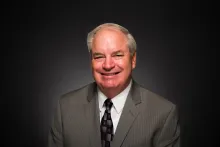
Robin Webber was born in Chicago, Illinois, in 1951, but has lived most of his life in California. He has been a part of the Church of God community since 1963. He attended Ambassador College in Pasadena from 1969-1973. He majored in theology and history.
Mr. Webber's interest remains in the study of history, socio-economics and literature. Over the years, he has offered his services to museums as a docent to share his enthusiasm and passions regarding these areas of expertise.
When time permits, he loves to go mountain biking on nearby ranch land and meet his wife as she hikes toward him.
