
Rick Shabi
This transcript was generated by AI and may contain errors. It is provided to assist those who may not be able to listen to the message.
Welcome again to everybody that's both studying this evening. We are going to begin in Isaiah 63.
In Isaiah 63 and verse 1, we shall begin. In this beginning of Isaiah 63.1, we have the Lord's day of vengeance. So God begins to wreak vengeance upon the nations. It seems that he starts, first of all, with Edom. Edom is Edom, as it says in Genesis 36 verse 1. There were 12 princes from Esau. So what is called the Palestinians now, the people from Gaza, there are a whole group of people from that area who spring from that seed. That is, the seed of Esau and eventually Ishmael married into Esau as well.
Who is this that comes from Edom? There are two nations, I guess we'd call them nations, tribes of people, that God has the most anger against. And those two nations are Edom and Moab. And so in this he starts with this, with his day of vengeance against Edom. Of course, this is in apparently during the time in which he comes with the saints, as we'll note from Revelation 19. Who is this that comes from Edom with dyed garments from Basra? Basra was the principal city, oftentimes referred to as the capital of Edom. Now Edom is in the area of Petra, that rocky area down in what is now southern Georgia. And I have been there and walked through the sea and explored the land of Petra, that particular land. This is glorious in the, he is glorious in his apparel, traveling in the greatness of his strength. I that speak in righteousness, mighty to saints, wherefore are you red in your apparel, and your garments like him that treads in the wine path. While his garments are red in the blood of the people, and he likens to what is going to happen to them in verse 3 with your being pressed through a wine press. I have treaded the wine press alone, and a people there was none with me. I will tread them in mine anger, God does, and he's angry with the wicked every day, as it says in the book of Psalms, and trample them in my fury, and their blood should be sprinkled upon my garments, and I will stain all my raiment. For the day of vengeance is in mine heart, and the year of the redeemed is come. And when it says the year of the redeemed is come, it means their deliverance, and what is going to happen for them will be very glorious and joyous. The day of vengeance, remember, we read from Luke 4.17 how Jesus returned to Nazareth, got the book of Isaiah, and he read that first part that's recorded in Isaiah 61. And then when he came to the day of vengeance, he did not read that, he sat down, but now that day has come. The day of vengeance, it is at some appointed time in the future. For the day of vengeance is in mine heart, and the year of my redeemed is come. In other words, the deliverance of the redeemed has come, and he is going to deliver them with a mighty hand. But as we noted when we covered Isaiah 61, as the time that he does deliver them, they are in mourning.
And I looked, and there was none to help, and I wondered that there was none to uphold. Therefore mine arm brought salvation unto me, and my fury it upheld me, and I will tread down the people in mine anger and make them drunk in my fury, and I will bring down their strength to the earth. It seems from reading the various prophecies, and the minor prophets as well, as Zephaniah being one of the main places, and there are other places, but God basically destroys Edom and Moab, so that they are no longer a people. So now the Lord's mercy remembered the redeemed. I will mention the loving kindness of the Lord, the praises of the Lord, according to all that the Lord has bestowed on us, and the great goodness toward the house of Israel, which he has bestowed on them according to his mercies, and according to the multitude of his loving-kindnesses.
For he said, Surely they are my people. They are my people, children that will not lie, so he was their Savior. So they don't lie, of course, after they are converted, more about that as we go. In all their affliction, he was afflicted, and the angel of his presence saved them in his love. Now this hearkens back to the time that he delivered them from Egypt, and this is very important, the angel of his presence. I have covered this, I think two times, maybe three, since we started the book of Isaiah, but I hope that you get it. We turn to Exodus 23 and verse 20, and we'll read into this verse that talks about the angel of God's presence in Exodus 23 and verse 20. Exodus 23 and verse 20.
For my name is in him. See, there is no angel. There are only two beings, God and Jesus Christ, that have the authority, the ability, vested in them to forgive sin. So they are warned not to provoke him, because if they do, then he will not deliver them from their adversaries. I will be an enemy under your enemies and an adversary under your adversaries. But on the other hand, for your angel shall go before you and bring you into the Amorites, Hittites, Parasites, Canaanites, Hittites, and I will cut them off. You shall not bow down to their gods, nor serve them, not do after their works, but you shall utterly overthrow them and quite break down their images. So God led them into the Promised Land through the angel of his presence. Now we know that from the New Testament in 1 Corinthians chapter 10, and we'll just read verse 4, which specifically addresses this. And did all drink the same spiritual drink, for they drank of their spiritual rock that followed them, and that rock was Christ. So it was Christ that led them, the angel of God's presence, into the Promised Land. Now we go to, so you have to note with regard to this what is said in Exodus 23, verse 22 and 23, where it says, My name is in him. My name is in him. So what is God's name? Well, Moses asked that question to God when he was called, and he asked God, Boom shall I say, sent me. And God told him to say that Yahweh sent me. So we note in Exodus chapter 3 and verse 13, When Moses said unto God, Behold, when I come unto the children of Israel, and shall say unto them, The God of our fathers has sent me unto you, and they shall say to me, What is his name? What shall I say unto them?
See, even Abraham only knew God by the name of El Shaddak, as we read one time from Genesis chapter 6, think of verse 4. And God said unto Moses, I am that I am. And he said, This shall you say unto the children of Israel, I am who sent me unto you. And God said, Moreover unto Moses, you shall say unto the children of Israel, The Lord God of your fathers. Now, for Acts 5, we notice that the God of our fathers is the one who, of course, resurrected Jesus Christ, and other things are noted in the New Testament, obviously, about God the Father. The Lord God of your fathers, the God of Abraham, Isaac, and Jacob, and the God of Jacob, sent me unto you, This is my name for ever, Yahweh, the ever existing one, the one who was, who is, who is to come. And this is my memorial unto all generations. You see, the name of the one who became Jesus Christ was also in Him, that is, the one who became Christ, and the angel of God's presence. And as we read from Isaiah 1639 here, and from 1 Corinthians 10.4, where it says, that rock was Christ. So, that's a very important understanding. If you understand that, that is so critical to so many things. Understanding that, that Jesus Christ was the one who interacted with Israel, and with Moses.
So, let's read Isaiah 1639 again after that. In all their affliction, He was afflicted, and the angel of His presence saved them. In His love, in His pity, He redeemed them, He delivered them, He saved them, He bare them. You know, in Exodus 19, it says, He bare them on eagle's wings, and He bare them and carried them all the days of old. And as I have said in the past, that literally He dragged Israel into the Promised Land. Israel had nothing to boast of about coming into the Promised Land. Of course, a few people did, but by and large, the nation did not.
Now verse 10, but they rebelled and vexed His Holy Spirit. Notice that. He is Holy Spirit. This, once again, very important. It's God's Holy Spirit. It's not the Holy Spirit of the Holy Spirit. It's God's Holy Spirit. He is the vexed what? He is Holy Spirit. They vexed His presence. Therefore, He was turned to their enemy, and He fought against them. So He allowed them to go through all kinds of trials and troubles and tribulations and forty years of wandering in the wilderness before Joshua led them into the Promised Land across the Jordan. Then He remembered the days of old Moses and his people, saying, Where is He that brought them up out of the sea with the shepherd? Out of the sea, the Red Sea party with the shepherd of His flock? The shepherd of His flock is probably referring to the angel of His presence, where He had put His Holy Spirit within Him. Now, this is another difficult thing for people to grasp, I think. With regard to the Holy Spirit, God can put His Holy Spirit in a person, and the Spirit can speak through that person. Even Balaam's donkey spoke through the Holy Spirit, and like it says about Saul, the Holy Spirit came upon Saul and he became a different man. But then, later on it says, the Spirit departed from him. And of course, we could debate whether or not Saul was begotten of the Holy Spirit, but based on Balaam's donkey and based on this, I would say, probably not. That is, Saul was probably not begotten of God's Holy Spirit, but the Holy Spirit came upon him. The Holy Spirit was upon Moses. Verse 12.
He has done so many miracles. Verse 13.
Once again, the Spirit of the Lord, not the Spirit of the Spirit, we know the Holy Spirit is not another person. That is one of the damnable doctrines of Protestantism and Catholicism with regard to those who profess to be Christians, and they are not Christians in the truest sense of the word. Though some of them strive probably more diligently than we do to be Christians, and I think I can think of my mother, I can think of other people who have striven and given their lives even for what they believed. Some of them, in translating the Bibles, did we intend them. The Spirit of the Lord caused him to rest, so did you lead your people to make yourself a glorious name. Now, if he is God the Father, he led them through the angel of his presence, and the angel of his presence was that rock in 1 Corinthians 10.4, Jesus Christ.
Now, here is where you look down, verse 15, look down from heaven, and behold, from the habitation of your holiness and of your glory, where is your zeal and your strength and the sounding of your bowels and your mercies toward me? Are they restrained? So, here is a prayer for mercy. Can't you hear me? Don't you know I'm suffering? Won't you deliver me at this time? And then he says, Doubtless you are our Father, though Abraham be ignorant of us. And that is an amazing statement there, that Abraham be ignorant of us. I don't want to get sidetracked into a long discussion with regard to Abraham. He was the Father of the faithful. Though Abraham be ignorant of us, and Israel acknowledge us not.
You, O Lord, are our Father, our Redeemer. Your name is from everlasting. And of course, God is our Father in the spiritual sense. He beget us. And sometimes I think we think that the prophets knew more than they actually knew. I want to start in 1 Peter 1-8 right now. 1 Peter 1-8. And just look at this, what it says here. 1 Peter 1-8.
With regard to the marvelous salvation that we've been called to. Paul notes in Hebrews that we should not neglect so great a salvation. 1 Peter 1-8. Whom having not seen we love, in whom we have not seen we love, in whom though you see Him not yet believing, you praise with joy unspeakable and full glory.
Joy unspeakable and full glory. And God intends for us to be joyous, but it seems like... You know, Peter starts the book and says, I know you're in manifold trials at this present time, but you need to keep your eye on the big picture of what is to come. Verse 9. Receiving the end of the outcome, the talos. We have mentioned several times, any time you see the end of something in the New Testament, the Greek word is probably talos, T-E-L-O-S, and it means the outcome or the result.
Receiving the outcome or the result of your faith, even the salvation of your souls, of which salvation the prophets... Of which salvation the prophets have inquired and searched diligently, who prophesied of the grace that should come unto you, searching what or what manner of time the Spirit of Christ which was in them did signify when He had testified beforehand the sufferings of Christ and the glory which it felt.
See, the prophets didn't fully understand what you understand. I don't believe with regard to all of these facets of being called, being begotten, being born in the family of God, as you see. You know, like David was a prophet, and he prophesied, like it says in Acts 2, that the Father would raise Jesus from the dead, that His body would not see corruption. And David lived in the circle of 1900 B.C. and so that prophecy is like 3000 years old. So, continuing here, will Abraham be ignorant of us and Israel acknowledge us not?
You, O Lord, are not our Father, our Redeemer, the one who brought us back. Your name is from everlasting. O Lord, why have You made us to err from Your ways? Well, He didn't make them go their way. They did it on their own.
I want to look at this verse a little bit more closely here. In the Bible, in Isaiah 63-17, you have made us to go. The commentator says, the prophet uses a common form of speaking for it as usual in the Scriptures, to say that God gives the wicked over to a reprobate mind and hardens their heart.
Thus speak, they do not intend to make God the author of error or sin as if they were innocent. So God doesn't make us sin, but He allows us to sin. Satan is the author of sin, and Satan is continually placing seeds of doubt in our minds about all kinds of things. And when we mull it over, in fact, maybe we should look at that. In teaching General Epistles, I cover this with regard to how sin comes about.
So in James chapter 1 verse 25, but who shall relish him to the perfect law of liberty and continues therein, he being not a forgetful hearer but a doer of the work. This man shall be blessed in his deeds. If any annoying you seem to be righteous and bridles not his tongue, but deceives his own heart, this man shall look in his vein.
And he shall be blessed in his religion and undefiled before God and the Father, is this to visit the Fatherless, the widows who are in their affliction and to keep themselves unspotted from the world. In verse 13, but let no man say, when he is tempted, I am tempted of God, for God cannot be tempted. What evil cannot be tempted with evil? Neither tempts any man. God does not tempt, but he allows Satan to tempt. He allows human nature. We have human nature and pre-choice within us. Satan is continually trying to plant seeds of doubt in our minds, as he did with Adam and Eve in the Garden of Eden.
And James goes on here in the next verse to describe what happens in verse 14. But every man is tempted when he is drawn away of his own lust and entice, then when lust has conceived, in other words, we start thinking about it, we mull it over, we talk about it, we think about it, we may pray about it, and so on. But if it's the wrong decision, it's the wrong decision, and it says, when lust has conceived, of course, that might be one of the keys there, but let every man that is tempted, when driven away by his own lust and entice, then when lust has conceived, it brings forth sin, and sin, when it is finished, brings forth death, the wages of sin is death. So let us continue here, back in Isaiah 63-17, reading it again.
And not here only, as we read from James, that you may be hardened by heart from your fear, returned for your servant's sake, the tribes of your inheritance. In other words, there was no fear, no awe, no respect for God, after they had turned their hearts, and they had erred from his ways. When you err from God's ways, he sends a hardening of the heart. Remember from Exodus that God hardened Pharaoh's heart. Pharaoh just couldn't bear to see Israel, his workforce, his slaves, depart from him. And even with the killing of the firstborn, he told Moses, well, get your people, get out of here. And so Moses and the people departed, and you know the story.
But God oftentimes hardens people's hearts in Romans 1, because they did not like to attend to receive or to believe God. He gave them over to a reprobate mind.
And even in 2 Thessalonians 2, verses 9, 10, and 11, where it says, Because they love not the truth, God shall send them strong delusion. So you have to be careful about anything. I need one sin, like maybe it's something you do in the Sabbath. You know you shouldn't have done it. Or you find out, become convicted some way that you did it, and you shouldn't have done it, and you were a pen of it. But then if you go back and do it again and again and so on, it becomes easier and easier. And it just sort of becomes a way of life. That must not happen to any of us. Verse 18, The people of your holiness have possessed but a little while our adversaries have trodden down your sanctuary. So the Prophet is saying, we haven't been here all that long. And with regard to Solomon's Temple, Solomon's Temple was built in the circle of the 900s B.C. And then it was destroyed about, what, 600, about 350 years. That's just a way ballpark guess on it, about 350 years later. Return for your servant's sake the tribes of your inheritance. Of course, God intended that Israel be the model nation and lead all of the nations into a relationship with God and Christ when he called them out of Egypt. And that's what he intended. And you read about that in the first five or six verses of Exodus 19. Now that has passed to the church. The church now is the Israel of God. And it includes not just those of the seed of Abraham or the seed of the twelve tribes of Israel, but of all nations, kindreds, races, tongues, ethnic groups. God is not the God of the deers only, but of all people. But back at that time, the people of your holiness have possessed but a little while, and our adversaries have trodden down your sanctified area. We are yours. You never bear rule over them. They were not called by your name. So the plea and the prayer is, look, we are your children. You're the one that delivered us. And we sinned. We went away. Our heart was hardened. But we are your children. We are the heirs of the promise. Won't you hear us? Won't you deliver us? Won't you come back? And of course, for God's name's sake, he did deliver them time after time. He delivered them. And there are Psalms that talk about that, that we should be aware of. Let's notice Psalm 78. In Psalm 78, it talks about God's deliverance and how God chose Judah over the other tribes of Israel. He chose Judah over Ephraim. Ephraim was a leading tribe when they went into the Promised Land. In Isaiah 78, we're going to put... not Isaiah, but Psalm 78.
Verse 65, Then the Lord awakened his one out of sleep, and like a mighty man that shouts by reason of wine, and He smote his enemies in the hind parts, He put them to a perpetual reproach. Moreover, He refused the tabernacle of Joseph, and chose not the tribe of Ephraim, but chose the tribe of Judah, the Mount Zion, which He loved. And of course, that's where David had pitched his headquarters and eventually built the tabernacle on Mount Zion, and the Ark of the Covenant was brought into Mount Zion. But He chose the tribe of Judah, the Mount of Zion, which He loved. And remember, Zion is symbolic of the Church, which we've said many, many times. And He built His sanctuary like high palaces, like the earth which He has established forever. Notice that, the earth which He has established forever. He chose David also, His servant, and took him from the sheepclothes. From the following of the years, great with young, He brought Him to feed Jacob, His people, that is Israel, His inheritance. So He fed them according to His integrity of His heart, and guided them by the skillfulness of His hands. And of course, the one who became Christ led them into the Promised Land. But He chose Judah, and it is evident that our Lord sprang out of Judah, as Paul writes in Hebrews 7, that Christ came out of Judah, and God wants us all to become spiritual Jews, or spiritual Israelites of the Israel of God.
Okay, now we go to Isaiah 62. Isaiah 62. Isaiah 62. Isaiah 64. Isaiah 62. Isaiah 62. Isaiah 62. Isaiah 63.
Isaiah 63.
Isaiah 63.
Isaiah 63.
Hopefully, it's quickly to 1 Corinthians 2 and verse 9, and we'll see that the Apostle Paul quotes this verse.
1 Corinthians 2 and verse 9.
1 Corinthians 2 and verse 9. Paul says that, 1 Corinthians 2 and verse 9. 1 Corinthians 3 and verse 9. We cannot even imagine, and as we already mentioned, from Hebrews chapter 2, where Paul says, 1 Corinthians 3 and verse 9. A salvation that we cannot even really comprehend, but a salvation that we know that we desperately want to be in God's kingdom and his family, and to enjoy the blessings of it. Now, verse 4. For since the beginning of the world, men have not heard nor perceived by ear, neither have I seen, O God, beside you, what he has prepared for him that waits for him. So the Apostle Paul quotes this very verse, which we just read, from Isaiah, and it's such a wonderful verse that he does quote.
Now verse 5. You meet him that rejoices and works righteousness, those that remember you in your ways. Behold, you are mad, for we have sinned in those in continuance, and we shall be saved. Let's read that again. You meet him, or you meet his him that rejoices and works righteousness, those that remember you in your ways. Behold, you are mad, for we have sinned in those in his continuance, and we shall be saved. If we continue in God's Word, of course, we're going to be saved.
God is angry with the wicked every day, and he is angry with those who continue in their sins. Verse 6. But we are all as unclean things. This is quoted, basically, in Romans chapter 3, in verse 23, I believe it is.
We'll go there in just a moment after we read this. For we are all as unclean things, and all our righteousness are as filthy rags, and we all do fade as a leap, and our iniquities, like the wind, have taken us away. There is none that calls upon your name, that stirs up himself. Notice that, stirs up himself. Brother, we need to be stirred up at this time, as never before. We are really not stirred up. And you say, how can you make such an observation? Well, I can make it from several different perspectives, of which I don't desire to go into at this time.
But there is nothing that stirs up himself. We have to stir up ourselves. God doesn't necessarily stir us up, but we are stirred up when we begin to seek Him. He says, seek me while I can be found, call upon me while I am near, and while I am near. What stirs up himself. So, we are to stir ourselves up and to realize, what we have just read here, that everyone is a sinner, and all have sinned and come short of the glory of God.
And that's why Paul's writings in the New Testament, in what the salvation is a rock, through God's grace, love, and mercy, is so vital to us. In Romans chapter 3, As it is written, this is verse 10, Romans 3.10, As it is written, there is none righteous, no, not one.
There is none that understands, there is none that seeks their God. There are gone out, they're all gone out, they are together become unprofitable. There's none that does good, no, not one. Their throat is an open sepulcher, with their tongues they have used to seek.
The poison of ask is in their lips, whose mouth is full of in being and bitterness. Their feet are swift to shed blood. Destruction and ministry are in their way, and the way of peace they know not. And there is no fear of God before their eyes.
And then Paul begins to go into how we may be justified before God, and it is not by deeds of the law, it is through faith. And he says the last verse, which I've asked this question several times, I hope we can answer it.
Do we then avoid the law through faith? God forbid. Yea, we establish the law. How do we establish the law by faith? It is if the law did not exist, there would be no need of a savior.
There would be no need of the law. The savior, there would be no need of the law. Because if the law didn't exist, there wouldn't be no sin. It says in the Bible, where there is no law, there is no sin. So because God had sinned His only begotten Son to us to redeem us from our sins, then we can be saved through the blood of Jesus Christ as He goes on to explain. We're back here once again in Isaiah 64 verse 7. There is none that calls upon your name that stirs up Himself to take hold of you, for you have hid your face from us and have consumed us because of our lawlessness, our iniquities.
But now, O Lord, You art our Father. Now we read from Isaiah 63. 16, Now You art our Father. And here we read once again, But now, O Lord, You art our Father. Yahweh is our Father. God the Father is our Father in the ultimate spiritual sense. He is the one that begets us with His incorruptible seed.
We have been begotten by the Father of incorruptible seed. We note this in 1 Peter chapter 1. 1 Peter has a lot of things in it. In 1 Peter chapter 1, verse 20, Who barely was foreordained, that is Christ, before the foundation of the world. Foreordained means it's progonosco in the Greek. It means to know beforehand. Who barely was foreordained, known beforehand, before the foundation of the world, but was manifested these last days for you. Who by Him did believe in God, that raised Him up from the dead, and gave Him glory, that your hope and faith might be in God.
Seeing you have purified your souls and obeying the truth through the Spirit unto unfeigned love of the brethren. See that you love one another with a pure heart, vermin, being begotten again, not of corruptible seed, but of incorruptible seed by the Word of God, which lives and abides forever. So we have been begotten by the Word of God. We, of course, can call Him Father.
He is our Father. So we read Isaiah 64.8 once again, but now, Lord, You are our Father. We are the clay You are to potter, and we all are the work of Your hand. We have all entered into a covenant of sacrifice that we would give up ourselves to serve God, and giving up ourselves.
We have three things that we have to overcome, three main things in the generic sense, and the principle one is self, another one is Satan and society. We have three yeses. Satan, self, and society, we have to overcome. But now, Lord, You are our Father, and we are the clay. Verse 9, Be not mad, very sower, O Lord, neither remember iniquity, for ever.
Be whole, see, we beseech You. We are all Your people. And in praying to God at this present time for myself, my wife, and others, I appeal to the fact that we are God's people. He has called us out of this world.
He has begotten us with an incorruptible seed. He has loved us. He has cared for us. He has brought us through many trials, troubles, and tribulations, and He will continue to do so. And sometimes we have to wait much, much longer than we thought we would have to wait. And in some cases, we have to wait until we are resurrected. But whatever the time is, God is our Deliberate. We can appeal to Him as we aren't His people. We are begotten of His very essence, His Spirit.
He has sent His Son to die for us that we might receive, that our sins might be forgiven, and we might receive the earnest of the Spirit. Now verse 10. Your holy city is a wilderness. Zion is a wilderness. Jerusalem a desolation. Of course, then He goes back to the destruction of the temple and Jerusalem under the hands of Nebuchadnezzar. And of course, the Romans came later in 6970 A.D.
and destroyed the temple of Joshua and Zerubbabel. Now verse 11. Our holy and our beautiful house where our fathers praised you is burned up with fire, and all our pleasant things are laid waste. So all the pleasant things.
Of course, when the first temple was destroyed, the Babylonians took a lot of the instruments from the temple and to Babylon, and we read about that when the handwriting appeared on the wall in which they were feasting and eating and drinking and frolicking and having a good time, in which the handwriting appeared on the wall, letting them know that their kingdom had been weighed in the balance and found wanting, and this very night they would be destroyed.
While they were completely destroyed, they were conquered and came under the rule of the Persians and the Medes, and we have the beginning of the Medo-Persian Empire. Now the second temple, with regard to the instruments that were in it, the Romans, Raz, did and brought it to the ground, and I don't know what happened to all the instruments there. Will you refrain yourself for these things, O Lord? Will you hold your peace and afflict us very soon? In other words, is this going to continue? Of course, we have the points in which God allows His people to be tested and tried.
We have all of the prophecies that talk about the wonderful restoration, especially in the millennium. And then we have the part where God is a God of Judgment, and He's going to judge the nations, and all of us are being judged at this time. Judgment is now on the house of God, and it's a righteous, scarcely be saved, where shall the sinner and the ungodly appear? That's what it says in Peter's epistle, and I believe it's chapter 3. So here we are at the end of another Bible study.
I've got 8 o'clock on my computer right on the nose. So we'll pick up with Isaiah 65 next time, so we'll have Isaiah 65 and 66, and we'll complete the book of Isaiah. We'll have more to say about that before we come back for questions and comments. Now we have time for questions and comments. If you will unmute, we will have questions and comments. Next time, on April the 17th, two weeks from now, we will complete the book of Isaiah 65 and 66, which to a large degree they go together.
And once again, ties in greatly with Revelation 21 and 22, and to some degree 20 with regard to new heavens and new earth. So any of you have any questions or comments at this time? I have a comment, Dr. Ward. I was just thinking as we were reading through this, just about how the challenge for us, I think, is to keep our relationship with God solid and consistent throughout whatever phase of life we go in. Because right now, we're living in the good times, and like you said, we're maybe not as stirred up as we need to be. And in the good times, we need to make sure we're stirred up.
And then when we're going through the trials and difficulties, or we see society degrading around us, that's when we also have to be close to God and make sure our relationship is right with Him then. So I think Isaiah brings both of those concepts in. Yes, and we live in such deceptive kinds of times. And you know, if you live in East Texas, and basically your life is centered around a church of God, and meeting the nice building in Big San David, Sabbath, and even though you go to the grocery store in Walmart and wherever you go, it's not that big a deal.
But this world is suffering, and the peoples of this world and in this nation, they are suffering. These are very difficult times. And in the church, as Jim was saying there, it's like for us, it's good times in a way, in the sense that we're not being persecuted, per se, and we can freely go and come and that kind of thing. But I do see a lot... there are people who say, you know, I don't go to church to learn anything, I go for fellowship.
Well, we should go for both. Surely we want to go to learn something. And of course, we go for fellowship to be with one another, and we strengthen one another through fellowship.
Yeah, and I listened to a pretty famous conservative commentator who lives on Long Island, New York, and he basically is crying out for the atrocities that are happening in his city and all that's going on. And we have the policeman that was killed by the person who had been arrested 21 times and released and never should have been out on the street. And it's just, you know, it's just a microcosm of what, you know, what could eventually happen and will eventually happen in many, many places. Yes. New York City is an absolute travesty at the present time. Yeah. Well, there's no way that the media can sugarcoat it. They played today on Fox. How that the, you know, these Sunday morning shows have the various senators and people in government there as guests to be interviewed by Stephanopoulos. And so he was interviewing, you know, what's his name? South Carolina, the senator there. Ken Scott. What's Scott, the other one?
Lindsey Graham. Lindsey Graham. He was interviewing Lindsey Graham. And Lindsey Graham says, let me finish. Let me finish here. George was trying to talk over him, but he wouldn't have any. He kept on talking about how that the double standard of in this case, it was the Biden classified documents, how that they were near his garage in Delaware and eventually wound up in Penn State and all of that. And George said, you have no proof of that once you're a governor. And he said, yeah, we do and so on. And they played several clips of people who came back and they took the narrative themselves and the interviewer would say, well, I'm asking the question. He said, well, I'm trying to answer your question. Maybe we're waking up, I don't know.
There's just there's. I'm surprised that even George would have a conservative on his show. There seems to be so few of them that come on anymore. But then when they do, obviously, they don't want to hear what's being said. Right. Anybody else have a question or comment?
It just amazed me a little bit. And I look around and some of the churches around here and so forth and so many of our younger people don't even bring Bibles to church. They sit there. I suppose they're listening, but they don't reference any materials. They don't write anything down. I mean, we try to tell them, but they just I don't know what they're thinking where their heads are. They can't possibly prove anything. And no one has perfect memory. So it really bothers me when I see that. And I see it more and more. Yeah, that's why I spent that time. You know, when Paul wrote to Timothy, he said, He said, stare up the spirit that was in you by the laying on of my hands. And you have to ignite yourself. I talked to a person recently. I said, What are you waiting on? And he said, Well, I'm waiting on God to heal me. I said, Well, God is not going to supernationally take you out of your present condition and give you everything you've got to go do yourself. And so much is taken for granted. And we're going to have a read awakening. And I'm afraid that read awakening is going to hit a lot of people in the church. Absolutely.
Anybody else?
Dr. Ward, maybe I'll mention what to me is a high note in verse eight of chapter 64 of Isaiah, where it talks about, Oh, Lord, you're our Father. And then it follows up with your, He's the potter and we're the clay. And it's just to me, that's an encouraging relationship because it reminds us that God will work out all things for the good in the end in our life, if we're willing to be molded by Him. And, you know, maybe there's times we go through rough patches in our life, or maybe we have to be waking up out of a sleep or stirred up. And sometimes God may allow us to go through certain things to stir us up. But if we're truly His, as you said, we appeal to Him as His people. If we are truly His, we know that the things He brings us through ultimately will be for our good so that we're formed into that vessel that He so desires. And just to me tying the term Father in the same verse with potter, it's an encouraging relationship to know He has our good intent and purpose because He created us for the purpose of being His children. Yes. The Puritans' article of faith believes that He exists and He's a rewarder of those who diligently seek Him.
Yeah, man, what you had in what you said in the opening prayer of that intimate relationship with God and Christ, that's so important too. The two main ways, of course, is prayer and studying of the Bible and them to obey Him and live it.
Okay, anybody else? Just on a positive note from the charity auction last week, we raised around $8,000. So let's go for a woman's educational... I believe it's in France. But the kids really worked hard for the benefit of others, so... Are you guys traveling out with your corral? Yes, we have been since February. We're going to Indianapolis this coming Sabbath, and then the week after that is they're going to be their class trip, and we're going to Chattanooga down to see the holidays.
Okay, I guess we'll close it for this evening. One last chance if you have something burning on your heart or lips. I did want to ask how your brother is. He's doing a lot better. He's doing... Actually, the fall is worse than the little chip off of bone in the back. He had a fall of...
He was on one level, and he didn't see that the next level was lower. And he stepped off of that, and I mean his backside just scraped all the way down the upper level. Oh boy. Quite bruised. But he is better. He is better. I talked to him last night. Okay, good. Okay, we'll see you on the 17th. And let us know what you would like to be covered next if we're going to continue this. I noticed attendance continues to... I think it was 23 tonight.
And a lot of people dropped off as soon as it's over. It's down to 16 right now.
But when we first started this, we had in the 40s... That was way back when we were doing Jeremiah. That was probably three years ago, two or three years ago.
Anyhow, if you have recommendations on what to cover next... And last year, beginning in daylight savings time, we started in May. We're finishing up a book in April this time. We took off until after the feast because of... It's daylight here when I sign on and sign on. Sundown is about to tell what, 740? But it's getting pretty light at 7.
Okay, anybody else?
We'll see you next time. Thank you, Dr. Wurm. Thank you. Bye, everyone. Good night. Good night.
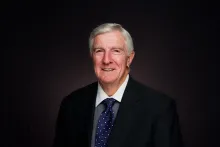
Before his retirement in 2021, Dr. Donald Ward pastored churches in Texas and Louisiana, and taught at Ambassador Bible College in Cincinnati, Ohio. He has also served as chairman of the Council of Elders of the United Church of God. He holds a BS degree; a BA in theology; a MS degree; a doctor’s degree in education from East Texas State University; and has completed 18 hours of graduate theology from SMU.
