
Isaiah Bible Study Series: Chapter 1 continued - Chapter 2
Given on
Given in
Downloads
Downloads
To download a file, right-click (or long press) a link above and choose Save As.
This is a continuing series expounding on the prophecies God inspired Isaiah to write as well as examining Christian living content within those prophecies.
Transcript
This transcript was generated by AI and may contain errors. It is provided to assist those who may not be able to listen to the message.
Isaiah chapter 1. We didn't go through all of the chapter. Let me give you just a little bit of review. In Isaiah chapter 1, we see God summoning his sinful people, Israel, to a court trial. When God gave Israel its law under Moses, God promised them Israel, Judah, blessings for obedience, cursings for disobedience. And in the book of Deuteronomy, four times he calls heaven and earth as witnesses concerning this covenant he was making with the nation at that time. In your notes, you might want to write down Deuteronomy chapter 30 in verse 19. I'll read this for you. Deuteronomy 30.19. For God says, They call heaven and earth as witnesses today against you that have set before you life and death, blessing and cursing.
Therefore, choose life that both you and your descendants may live. Well, by Isaiah's day, Israel had repeatedly broken the covenant. God was in about twenty years, eighteen to twenty years from the time Isaiah started writing. We believe Isaiah, when he started writing, may have been as young as eighteen years of age. Between eighteen and twenty years down the road from that point, God is going to send Israel into national captivity. So this is something that Isaiah is going to see in his lifetime.
It's obviously going to impact the way he thinks about things, the way he views things, and the message he's going to be giving on God's behalf to the nation of Judah, and also for those eighteen to twenty years to the nation of Israel. So in Isaiah, especially in Isaiah chapter one, God has got a case. He's presenting to the nation. Isaiah, in one sense, is acting as a spokesman. He's acting as a lawyer, as an attorney, God's attorney, to present the case. It's done in a very powerful, dramatic presentation.
In that presentation, we see an outline, and I'll go through that outline at this point. The chapter, chapter one, is divided into four sections. Verse one is the first section, where it shows Isaiah being given a very special vision by God. Isaiah is going to receive a number of visions.
We're going to see in chapter six, when we get there, that he has a vision, much like the Apostle Paul. There's a number of correlations between Paul and Isaiah. Both men were very well-educated men. Both men received a vision in terms of their calling.
We're going to see Isaiah's calling, his conversion, and chapter six. Here in chapter one, we're seeing a vision where God is just starting the discussion with the nation. So that's the first section. The second section is verses two through ten. This is the very first charge. God is lovely against the nation. They are a rebellious nation. That's verses two through ten. We covered that last time. The second charge against the nation is they were indulging in an unacceptable form of worship to the great God.
We saw that in verses eleven through twenty. We went through that last time. They had a lot of form, but they were very short on substance. That was verses eleven through twenty. Today, we want to cover the third charge that God has against his people. That's in verses twenty-one through thirty-one. Twenty-one through thirty-one. That is, that they were deceitful. So that's a little bit of review. Let's begin going through that last section. We always want to keep in mind, brethren, as we're going through any prophecy, what the overall purpose of prophecy is.
I'm trying to make at a point, as we go through Isaiah, not just to stay in Isaiah. We will go through other prophecies, other prophets, and so forth. I also want to bring in a New Covenant, New Testament set of ideas and principles to make it relevant for us. We don't want to just look at a book that has long gone by. Isaiah is a truly remarkable book. As I mentioned last week, or the last time I spoke about Isaiah in Chicago, I was there as a great deal of the gospel being preached in the book of Isaiah.
A great deal of the gospel. I think Old Testament gospel? Well, what is the gospel, brethren? The gospel is a discussion about the kingdom of God. In the book of Isaiah, we've got some of the greatest sections about the kingdom of God. In chapter 9, it talks about how that government will last once it's set up by Jesus Christ in the future. It will last for all time.
I was about to say I have it on my hand, but I don't have it on my hand today. My Ambassador College ring is designed after a king's signet ring. On that ring, you've got the old crest that we used in the worldwide Church of God, the little child, the lamb, and the lion.
That's Isaiah 11, verse 6. That's a gospel setting. Certainly, when we get to chapter 2, we're going to see more gospel being talked about in terms of the kingdom of God. As a matter of fact, in chapter 4 of Isaiah, you see some of the greatest, most beloved sections of Scripture dealing with the gospel in all of the Bible.
We'll get to the first part of that today as we go through chapter 2. Yes, the purpose of Bible prophecy is to encourage us as New Covenant, New Testament Christians, to change our lives. We see what God is saying to Israel, but let's not just view it toward a bunch of people who are long gone. Let's you and I look at what God says and let's ask ourselves, well, is this relevant to me? Is what the prophet's saying to Israel, is that relevant for me in my life?
Is there something God wants me to learn here? So again, we're now into the God's third charge against the nation. They were unjust. They were deceitful. Let's take a look as a guiding New Testament principle at 1 Corinthians chapter 6. So if you'd like to turn there, 1 Corinthians chapter 6. 1 Corinthians chapter 6 verses 9 and 10, guiding principle for this section of Isaiah.
Verse 9, do you not know that the unrighteous will not inherit the kingdom of God? Do not be deceived. Neither fornicators nor adulterers nor homosexuals nor ossadomites nor thieves nor covetous nor drunkards nor revilers nor extortioners will inherit the kingdom of God. So the concept there is we reap what we sow. And as Christians, we need to be aware of that. We reap what we sow. Sin has its consequences. If we make bad decisions, we will reap bad results.
If we make bad decisions, that will hurt us in terms of making better decisions down the road. Perhaps you've noticed that in your life. I've noticed that in my life. If you make a bad decision, it seems as easier as time goes along to continue to make bad decisions. You go down a faulty road. You keep on stumbling. With that in mind, let's go to Isaiah 1.
Let me turn to Isaiah 1. Starting here in verse 21. How the faithful city has become a harlot. It was full of justice, righteousness lodged in it, but now murderers. So basically what is being spoken about here is Jerusalem. Historically, under David's leadership and during the early part of Solomon's reign, Jerusalem had been a faithful city. Now, it wasn't that there weren't sinners in the city. There's always going to be sinners. We're all sinners. But as a general rule, the nation under David and the first part of Solomon's reign, they were striving more to be a faithful group of people as they followed their leader.
But after that time, things began to unravel spiritually. Verse 22. Your silver, something of value, has become dross, something of no value. Your wine, something of value, has been mixed with water. And so just as under David and the first part of Solomon's rule, the people were rich spiritually speaking, but as time wore on and they began to mix more and more with the world and worldly thinking, what was of value to them became invaluable to them.
And again, we ask ourselves, is that happening in our life? Where are we in terms of our walk with God? Where are we in terms of our love for the truth? You know, we had a tremendous zeal when God first began working with us. Where are we now? Maybe we've got a better zeal than before.
I hope that's the case. But these are some of the questions we can ask ourselves. Verse 23. Your princes are rebellious in companions of thieves. Everyone loves bribes and follows after rewards. They do not defend a fatherless, nor does the cause of the widow come before them. So here we see leaders that are out to get. They're not out for the betterment of those that they are ruling. Do we see any of that today? I mean, are you happy with the political landscape we see in this country today? I'm not happy at all with the political landscape we see in this country.
Over the course of the last couple of presidents in particular, we've seen our country under Mr. Obama move further to the left. At least those who are of the left move further to the left. And under President Trump, those who were of the right moving further to the right. And as you see now, we've got a country that's deeply divided. I mean, Republicans and Democrats have never liked each other. Never liked each other.
In there have been times in our history, if you go back to the times of the Revolutionary War, even after the Revolutionary War, when we became our own nation, where the political landscape was very toxic. I mean, you go back and you examine our history. You think it's bad? And that was bad back then, too. But the difference is, now we're at the end of the age.
You know, we are in a gun lab. And I think this only bodes very, very poorly as we move forward. But again, our political leaders, they are rebellious. They are looking for bribes. They are after get, as opposed to being for the people they're representing. Matthew 24.
Therefore the Lord says, the Lord of Hosts, the mighty one of Israel, ah, I will rid myself of my adversaries and take vengeance on my enemies. And who's he talking about there? He's talking about his own people there. Because they have rebelled, because they need a good spanking as a nation. So Isaiah here is predicting the verdict, the sentence of God. He's predicting what's going to take place. And to emphasize the certainty of God's verdict, notice what he says there in verse 24. Notice the language he uses. Notice the terminology. He uses three names for God here. And I want to quote the Expositor's Bible Commentary. They've got a very interesting section here. This is Expositor's Bible Commentary, which is one of the best commentaries you can get.
And I quote, this is the first of the terms, Lord means master. It is used of God by Isaiah more than any other Old Testament writer. And in its absolute form, as here, it always introduces a note of judgment. Continuing on with Expositor's, it says, the second, the Lord Almighty, often linked with it, indicates supreme power. While the third, the mighty one of Israel, is somewhat uncommon term, suggestive of bull-like strength. So here's God is talking to his people, talking about judgment, God's supreme power, and God's bull-like strength is power.
Verse 25 adds weight to verse 24. I will turn my hand against you. So obviously, when verse 24, I start talking about ridding myself of my adversaries, God is saying, you know, you're going to go into national captivity because of your sins. And God, in verse 25, is saying, I will turn my hand against you and thoroughly purge away your dross and take away all your alloy. So it's going to be a time of purification for the nation.
A time of purification for the nation. God's purpose is to purify the city so no evil will dwell within its boundaries. Now that speaks more, obviously, to the future. There's going to be a new Jerusalem, a future capital of the world. In that city, there will be nothing sinful, nothing that is ungodly. So history only was a type of what we see in the future.
Verse 26 and verse 27 again refers to a future fulfillment. I will restore your judges as at the first and your counselors as at the beginning. Afterward, you shall be called the city of righteousness, the faithful city. Zion shall be redeemed with justice and her penitence with righteousness. So here it's referring to the resurrected saints. I will restore the judges, proper judges, righteous judges, spirit beings who are now judges, counselors who are spirit beings who have been changed into spirits.
So here we've got some discussion about our future and what God ultimately wants for the nation. But this is, like I said, the future. Verse 28, the destruction of the transgressors and of sinners shall be together, and those who forsake the Lord shall be consumed. So here we have a complete annihilation in some ways. Now, not all of God's people in the Old Testament were completely unannihilated, and neither will they be in the end of the age.
But the idea is a tremendous consumption. Verse 29, they shall be ashamed of their terebinth trees, which you have desired. You shall be embarrassed because of the gardens which you have chosen. Verse 29 is talking about pagan worship. And there's going to come a point when their minds are opened, when you and I as helpers to them, when we are spirit beings teaching them, and they begin to see the truth that Christmas and Easter and Halloween. I mean, one of the holidays that's most, I don't know if it's most worshiped or most observed today, but one of them most, would be Halloween.
A time that talks about all sorts of spirits and demons and things like that, but it shows you where that's coming from. There's going to come a time when people will be ashamed that they want that direction. And brethren, there's going to come a time when those that used to sit among us, who knew about the Sabbath, who knew about the Holy Days, and then left the church.
There's going to come a time in their life, and I'm hoping it's in the Second Resurrection if they've already died, where maybe they were never really converted. Maybe they just knew a lot of facts and sat in services with us, but there's going to come a time when their minds are really opened, and they're going to be ashamed of the fact that they didn't do the right thing.
They made some wrong choices. They left God's church. Now, I'm hoping for the most part, that's people who weren't really called, because I hate to think that so many of the ones we knew are going to be in a lake of fire. So I'm trying to think positively about those who have left our number. For you shall be as a teremonth whose leaf fades and a garden that has no water.
So again, something that is of no great import and does not last. The strong shall be as tender, the work of it as a spark. Both will burn together, and no one shall quench them. So the works of unrighteousness will be taken care of. The works of unrighteousness will come to an end. Okay, that brings us to chapter 2. Chapter 2, 3, and 4 of Isaiah are one long discourse. 2, 3, and 4. In chapter 2 and in chapter 4, we have two really beautiful bookends talking about the Kingdom of God. Chapter 2 and chapter 4.
In chapter 3, in the middle of all that, is a discussion about God judging the nation. So God begins this discourse and ends this discourse, chapters 2, 3, and 4, with some really positive discussion, but also a discussion about where the country needs to be. Chapter 2 deals with the fact that all human idols are going to be taken care of, done away. It shows that there's going to come a time when the whole world will want to worship and desire to worship the true God.
And there's a date stamp here. Let's take a look at this. Isaiah 2, 2. Now shall come to pass in the latter days. Now we've discussed that when we were going through the book of Daniel. When you see that phrase, the latter days, that's talking about end-time prophecy. Okay? Drop down to verse 11. The lofty looks of men shall be humbled, the haughtiness of men shall be bowed down, and the Lord alone shall be exalted in that day.
Now we're narrowing the focus here. We're talking about the latter days, but we're also talking about in that day. What day? Verse 12. For the day of the Lord of hosts shall come upon everything proud and lofty. So we've narrowed it down to the day of the Lord.
The day of the Lord. What is the day of the Lord? The day of the Lord is that very last year before the return of Jesus Christ. Three and a half years before the return of Jesus Christ, we call that the times of the Gentiles.
That whole three and a half year period is what we would call the Great Tribulation. Great Tribulation. The last year of the Great Tribulation is also the day of the Lord. And it's the day of the Lord where we see the seven trumpet plagues play out. We talk about that all the time. We have our discussions on prophecy. Let's take a look at it. Put a marker here. Let's go to Acts 3.
Acts 3, verse 20. Actually, let's start in Acts 3, verse 19. Repent, therefore, and be converted, that your sins may be blotted out so that the times of refreshing may come from the presence of the Lord. So once again, we see the purpose of prophecy. We're talking about make sure we are all repenting. Repentance is a way of life for the Christian. Verse 20. And that he may send Jesus Christ, who was preached to you beforehand, whom heaven must receive until the times of restoration of all things. So this is what's going to take place after that day of the Lord, a time of the restoration, going back to what it was like in the Garden of Eden before Adam and Eve had sinned. Whom heaven must receive, Christ will be in heaven until the times of restoration of all things, which God has spoken by the mouth of all of his holy prophets since the world began. So certainly that's talking about Isaiah. It would include Isaiah. So the Bible reveals that Jesus Christ will remain in heaven until the times of the restitution of all things. Something has to be restored. The government of God has to be restored. Let's turn now to the book of Joel.
You've got the book of Daniel and Hosea, then Joel, Joel 2, Joel 2, verses 30 and 31. And I will show wonders in the heavens and in the earth, blood and fire and pillars of smoke. The sun shall be turned into darkness and the moon into blood. So here we're looking at the heavenly signs, which is the sixth seal. This all happens before the coming and the great and awesome day of the Lord. So you've got six seals taking place prior to the day of the Lord.
And the one that takes place just before that seventh seal, or the day of the Lord, is these heavenly signs. Let's refresh our minds a little bit and go back to Revelation chapter 6.
Revelation chapter 6. Remember, I told you that Isaiah would be a tremendous launching off place for other prophecies and certainly a great deal of Christian living material. We're certainly going to see that here. Revelation chapter 6. Verse 1. Now I saw when the lamb opened one of the seals, and I heard one of the four living creatures say with a voice, like thunder, come and see. And I looked and behold a white horse. So this is seal number one. He who added on a bow and a crown was given to him, and he went out conquering and to conquer. Now there are plenty of people in the religious world who think this is Jesus Christ. But this is not Jesus Christ. This is talking about false religion. This is talking about false Christs. Verse 3. When I opened the second seal, I heard the second living creature say, come and see another horse, fiery red. Why is it fiery red? Because the second seal shows blood. It shows war. He went out and was granted to him who sat on it to take peace from the earth, and that people should kill one another. And there was given him a great sword. Okay, so that's the second seal. Third seal. Verse 5. When I opened the third seal, I heard the living creature say, come and see. So I looked and behold a black horse. He sat on a pair of scales in his hand. You know, symbolic of obviously in the real world of weighing things.
I heard a voice in the midst of the four living creatures say, a quart of wheat for a denarius, and three quarts of barley for a denarius, and do not harm the oil and the wine.
So this third seal is the seal of famine, where food had to be weighed out very carefully, because it was getting so scarce. Verse 7. When he opened the fourth seal, I heard the voice of the fourth living creature saying, come and see. So I looked and behold a pale horse.
Now, when you're sick, one of the things your mother taught you, or said to you when you were ill, as a little kid, they would say, you don't look so good. You kind of look pale.
And so this fourth seal represents disease. Disease. You know, brethren, the world has had tremendous disease epidemics in the past. There was a flu outbreak during World War I, that general era, that killed millions upon millions of people worldwide. And now, we've manufactured various types of bugs as weapons. And at some point, those things are going to get loose. Whether intentionally or accidentally, they're going to get loose.
And tremendous loss of life will take place.
Verse 8, So I looked and behold a pale horse, and the name of him who sat on was Death, and eighties followed with him. And the power was given to him over a fourth of the earth, over a fourth of the earth, to kill with sword and hunger and death, and by the beasts of the earth. So a tremendous loss of life as a result of these various plagues. Verse 9, when he opened the fifth seal, the fifth seal is the Great Tribulation. The Great Tribulation is Satan's War on God's People. Satan's War on God's People Nationally. This is where we believe our nation goes into national captivity after war. It's a war on God's People spiritually, where we will have a target on our backs because of what we believe. When he opened the fifth seal, I saw under the altar of those souls who had been slain for the word of God and for the testimony which they held.
In other words, martyrs. And they cried with a loud voice, saying, How long, O Lord, holy and true, until you judge and avenge our blood on those who dwell on the earth. And a white robe was given to each of them. These were, as we heard in the sermonette earlier, these are the saints.
Or were the saints. And it was said to them that they should rest a little while longer, and I were to stay in your graves, until both a number of their fellow servants and their brethren, who would be killed as they were, was completed. And brethren, please hear this.
In verse 11, there is coming a time of the martyrdom of real, true, faithful saints. And I think sometimes people have really gone out of their way to talk about a place of safety, like as though everyone is going to be spared. Well, the Bible doesn't say that. It just doesn't say that. Were all the apostles spared? Of course not.
Ever read a little bit of Fox's book of martyrs? And we're not even sure all those people were what we'd call true Christians. And yet, a tremendous martyrdom has always taken place among the faithful. It's going to happen in the future. Does it mean that those who are persecuted in the future aren't faithful? Well, were 11 of the 12 apostles faithful men? Yeah. And they all died horrible deaths. The only one that history, or at least tradition, says didn't die a horrible death was John. And yet, tradition says he was boiled in oil and survived because God protected him. So just because, you know, Paul, look at all the way he went through. He was certainly a faithful man. So just because we go through trials and martyrdom doesn't mean we're not faithful. Verse 12. And I looked and opened a sixth seal, and behold, there was a great earthquake, and the sun became black as sackcloth. Now this is where we go back to, you know, Joel and Isaiah. The sun became black as sackcloth of hair, the moon became like blood, the stars of heaven fell to the earth, as a fig tree drops its light figs when it's shaken by a mighty wind. The sky receded as a scroll when it's rolled up, and every mountain and every island was moved out of its place. In other words, God is really getting everybody's attention here. People who say there is this secret rapture. How do you have a secret rapture in this in the midst of all this?
Nothing is secret about this. Literally, God is shaking this planet.
The kings of the earth, the great men, the rich men, every command, the commanders, the mighty men, every slave and free man hid themselves in the rocks and in the caves of the mountains.
We're going to see that in Isaiah. And said to the mountains and the rocks, fallen us and hide us from the face of him who sits on the throne and from the wrath of the lamb.
As it says in Revelation chapter 1, every eye will see him. No secret rapture.
For the great day of his wrath, again what we're seeing in Isaiah chapter 2, for the great day of his wrath, that last day before the return of Christ, has come.
I'm not going to turn there for lack of time. In your notes, you might want to jot down. Well, let's turn there. Isaiah chapter 34. If we go over a little bit, fine.
That'll get after anyway. Isaiah chapter 34.
Talking about what we've seen in Isaiah chapter 2, the latter days in that day, the day of the Lord. Isaiah 34 and verse 8.
For it is the day of the Lord's vengeance, the day of the Lord's vengeance, the year of recompense for the cause of Zion.
This is why we say the day of the Lord is one year.
In your notes, you might want to jot down Ezekiel chapter 4 and verse 6.
Ezekiel 4, 6 gives the day for a year principle.
It's also given in Numbers chapter 14 verse 34.
So that's Ezekiel 4, 6 and Numbers 14, 34, the day for a year principle.
So that's a bit of background to chapter 2 of Isaiah. Let's turn to Isaiah chapter 2.
Again, remembering the overall purpose of Bible prophecy is to encourage us to change our lives and see where we need to do what is right in God's sight and get back with him. In chapter 2 of Isaiah verse 1, the word that Isaiah the son of Amos saw concerning Judah and Jerusalem. So he saw a word here. He's having a vision.
Verse 2, Now it shall come to pass in the latter days, the end of the age, that the mountain of the Lord's house shall be established on the top of the mountains, and shall be exalted above the hills, and nations shall flow to it.
Again, here is a scripture preaching the gospel.
Notice how beautiful this is. As you're well aware in prophecy, a mountain represents a nation.
Hills represent smaller nations. And so you've got God's mountain. You've got God's government. The kingdom of God being established on earth, being exalted above everything.
And notice the end of verse 2, And all nations shall flow to it.
In other words, people, number one, have a desire to flow to it. They've got a desire to keep the law of God. They've got a desire to keep the holy days. And then they're going to do it. They're going to flow into Jerusalem to see what needs to be done, how they can live by God's law.
Let's go to Jeremiah chapter 31.
Jeremiah chapter 31.
Here we see a prophecy that bears on this particular time period.
Jeremiah chapter 31 verse 10, going through verse 14.
Hear the word of the Lord, O nations, and declare it in the aisles of far off, and say, He who scattered Israel will gather them. It's coming a time of a second exodus of our people, and keep them as a shepherd does his flock. Safeguard them, watch over them, protect them.
Verse 11, For the Lord has redeemed Jacob and ransomed him from the hand of one stronger than he. Again, talking about our national captivity that's coming, but it's going to come at times to the end of that national captivity.
Verse 12, Therefore they shall come and sing in the height of Zion, streaming to the goodness of the Lord. They're going to flow to Jerusalem. For wheat and new wine and oil, for the young and the flocks of the herd, their soul shall be like well-watered gardens. They shall sorrow no more at all, because a new age has come. Then shall the virgin rejoice in the dance of the young men and the old together. For I will turn their morning to joy, mourning at their national captivity, but joy in the establishment of the kingdom of God, and will comfort them and make them rejoice rather than sorrow. I will satiate the soul of the priest with abundance. And as the priests are satiated with abundance, they teach the will and the law of God. My people shall be satisfied with my goodness, says the Lord. God's way satisfies.
The ways of the world don't satisfy. You've seen that in your own life, as you've repented of various issues in your life, me and mine. How we look at sin and we say, you know what, as the Bible says, sin does seem pleasant for a season, but when you stop and examine it, what do you have? You've got nothing of value. The only thing of value is things that are of God.
Chapter 2 of Isaiah, verse 3. Many people shall come and say, come, let us go up to the mountain of the Lord, to the house of the God of Jacob. He will teach us his ways, and we will walk in his paths. So again, people now are attracted to God. They're not repulsed at the things of God. They are attracted by the Lord's ways. They're attracted by his paths. They want to be in Jerusalem.
In your notes, you might want to jot down Matthew 7. The Scripture talks about knocking and asking and seeking. Well, that's where people are going to be here. They're going to be knocking. How do I find out the truth? They're going to be seeking. They're going to be asking. Just like when on the day of Pentecost, Peter was giving that inspired sermon in Acts 2. When people's hearts and minds were being opened, what was their response? The response was in Acts 2.37, men and brethren, what shall we do? And that's the same thing here. When people have their hearts and minds are fully opened, they're going to say, what shall we do? That's why they're going to flow to Jerusalem. That's why they're going to say, come, let us go there. We saw what happened at the end of the age. How horrible all of that was. All the death, all the carnage. Quite literally, the planet stank. It could not even survive. Life could hardly survive on the planet. We need something better.
So the law will go out from Zion. People will want that. Verse 4, He shall judge between nations and rebuke many people. They shall beat their swords into plowshares, their spirits into pruning hooks. Nations shall not lift up sword against nation. Neither shall they learn war anymore. So here we're looking at a total reorientation of humankind on planet earth.
Think about what could be done if we just take our nation, and we took all the money we put into our military, and all the money we put into our police forces, and we took all those funds and used it for good purposes. Think where we would be. And yet this is going to be something that's true worldwide. Worldwide. So in our outline in verse 1, we saw God giving Isaiah a vision. In verses 2 through 4, which is the second section of this chapter, we saw the good news of God's coming kingdom. As we go through our outline, we see now another section. It's only one verse. It's verse 5.
Verse 5 talks about how we need to be people of light. People of light.
If you would, you can turn to 1 John chapter 1 and verse 7.
A New Testament, New Covenant, spiritual principle here that covers this section of Isaiah. 1 John chapter 1 and verse 7.
But if we walk in the light, as he is in the light, we have fellowship with one another, and the blood of Jesus Christ the Son cleanses us from all sin. We are to walk in the light.
Let's read verse 5. Isaiah 2.5.
O house of Jacob, come and let us walk in the light of the Lord.
Come and let us walk in the light of the Lord.
Let's turn to another couple of scriptures here. Let's go back to Psalms 1.19.
Beautiful Psalm talking about the law of God. Psalm 1.19. Psalm 1.19.
Psalm 1.19 verse 105. Your word is a lamp to my feet and a light to my path.
In the world tomorrow, there's going to be an ambassador college. There will be all over the place. I don't know what we're going to do with education in the world tomorrow. I don't know if it's going to be all homeschooling or if we're going to have colleges and high schools and grade schools and that sort of thing. But no matter what kind of education we have in the world tomorrow, the core of the curriculum is always going to be the Word of God.
It's always going to be the Word of God, and it's going to be a word that people will understand.
Today, it's written here a little there a little. God is not opening people's minds and hearts, but in the world tomorrow it's going to be much different.
Much different. And you're going to have a part to play in that. You are going to be a teacher in the world tomorrow. All the things you've learned. Sometimes you wonder, you know, I was doing a Bible study over at one of the members' homes in Chicago this last Thursday evening.
And as I was looking at, you know, we had a small group there. There was only eight of us there, myself included. But as I was looking at the group there, I couldn't help but look at who was in the group. One man, a deacon in a church there in Chicago, has by his own count gone through over a thousand kidney stones. One is horrible. One, you think you're going to die. I think he's closer to 1,100. I can't imagine that. You talk about suffering. You talk about an individual who, on any number of occasions, was on his way to church, he and his wife, and had to turn back because the pain was so bad. And for him, pain has to be really bad for him to miss church, if you know who I was talking about. Then there was another gentleman there who was a grandfather of some young lady in the Chicago church who've gone through tremendous trials the last four and a half years. You know what I'm talking about. And you ask yourself, why do God allow these trials that last for years? For years? Well, brethren, we're seeing that right now in the book of Isaiah.
People are going to flow to Jerusalem. Yes, they're flowing to see Jesus Christ, but they're also flowing there because you're there. You're at headquarters. You're on staff.
And you know the truth about God. And the beautiful thing about the spirit of man, it's this big recording device. You might say to yourself right now, I can't remember Scripture.
Ah, as a spirit, you have read the Bible through and through. You've probably read the Bible through and through many times in your life. But as a spirit being, somebody says John chapter 18 verse 17, you've got to turn. As a spirit being, you know it. It's there. You recall it. Your mind is like a supercomputer. And not only that, as I was discussing with the folks there at a Bible study Thursday evening, any number of people who have come through the Great Tribulation Day of the Lord, who are very dysfunctional people at this point, who've gone through horrible years of suffering at that point, they need healing. They need healing mentally and physically and emotionally, most of all spiritually. And you are going to be there as individuals who've gone through years of trial, years of examination, years of privation and hardship. When you discuss things with these people who are hurting so badly, you're not going to be spouting platitudes.
You're going to be discussing from your heart, and they'll see your sincerity. You'll discuss chapter and verse of what you've gone through. You'll discuss how you were able to overcome with God's help, with the Holy Spirit, with God's law as a basis.
And that's one of the reasons why people want to flow to Jerusalem, because they know that healing is there. They know real counseling is there. If you were to announce, it could be done in today's world, where people could go someplace where there was really truth and counseling and real help, the highways would be jammed. People going for marital counsel, people, psychological issues, various health issues. If people realize there really was an answer if I go to this town, like the Bible said, people would flow to it. So we want to be people of light, as it says. Let's go back now to Isaiah. Isaiah chapter 2, verse 6 through verse 21. After this beautiful discussion about the Kingdom of God and being people of light, now we have God saying, but there are things that need to be changed here. There are some real crimes and resulting punishment that needs to take place. In your notes, a principle here, we're getting a little short on time, but in your notes, you might want to jot down Matthew chapter 7 and verse 19. There's a principle there, Matthew 7, 19. Every tree that does not bear a good fruit is cut down and thrown into the fire. So God wants to make sure people understand that, you know, your actions, our actions, our choices have consequences.
Verse 6, Isaiah chapter 2, verse 6. For you have forsaken your people the house of Jacob, because they are filled with Eastern ways. They are soothsayers like the Philistines. They are pleased with the children of foreigners. Now again, I'm not going to turn here in your notes. You might want to jot down Deuteronomy chapter 18. Deuteronomy 18 verses 10 and verse 14, which is talking about the occult, you know, witchcraft, soothsayers, astrology. And isn't it interesting?
I've known any number of people over the years in a church who always wanted to check their horoscope. I checked my horoscope this morning. Here's what it said I should do. Well, here, what was it? Just a few years ago, I guess scientists have discovered that the signs of the zodiac were all in the wrong positions. So if you were a Capricorn, you really should be a Sagittarius. So what does that do for your daily checking out your horoscope? You were looking at the wrong one all those years. But this is what was taking place in Israel. It's taking place there a day today. You know, when you watch TV, when you see what's coming out in movies, for years now, there is a preoccupation with the other world, with the occult, with demons and vampires and all that kind of funny stuff.
Satan knows what he's doing. Satan knows exactly what he's doing. He wants people interested in the occult. He wants people interested in his world. Verse 7, their land is full of silver and gold. There is no end to their treasures. And shortly, brethren, this was true. You know, just 20 years before Israel went into national captivity, it was a time of tremendous prosperity.
There is a pattern, there is a parallel there between their day and ours.
We are living in a time of tremendous prosperity.
And we may only be a few years before our going into captivity. Their land is full of horses. They've got, you know, powerful army. There's no end to their chariots. Their land is full of idols. They worship the work of their own hands, which their own fingers have made. Obviously, talking about false gods. People bow down. Each man humbles himself. Therefore, do not forgive them. So basically, God is saying, as it says in Isaiah chapter 59, I can't hear your prayers because you're sinners.
Now, if you would repent, I can hear you. But you don't want to repent. Verse 10.
Verse 10 goes back to what we read in Revelation chapter 6. Revelation chapter 6, where we're talking about the heavenly signs. Remember what it said back in Revelation. Look at Isaiah chapter 2, verse 10. Enter into the rock and hide in the dust from the terror of the Lord and the glory of His majesty. So just as people at the end of the age are going to be trying to hide from God, there's no hiding from God. The lofty looks of man shall be humbled. The haughtiness of men shall be bowed down. The Lord alone shall be exalted in that day. So again, this is a time where God's going to say, enough is enough. Enough is enough. We can march through verses 12 through verse 18 fairly quickly. Basically, just talking about how the whole world will be humbled in the day of the Lord. The whole world, not just Israel. That last three and a half years before the return of Christ, the time of the Gentiles, nobody comes out a winner. Yes, there's a period of time where our nation goes into national captivity, but then the two other power blocks that are remaining, the Europeans and the Asians, they're duking it out, and then Jesus Christ comes, and they all band together what's left of them to fight Christ. And of course, they're not going to win that one.
Verse 12. Verse 12, going through verse 18, talking about the whole world. For the day the Lord of hosts shall come upon everything proud and lofty, upon everything lifted up, and it shall be brought low. It's talking about everything, the whole world over. Upon all the cedars of Lebanon that are high and lifted up, upon all the oaks of Bayshen, upon all the high mountains, upon the hills that are lifted up, every large nation, mighty nation, every small nation, upon every high tower, upon every fortified wall, none of your vaulted military is going to save you.
Upon the ships of Tarshish, upon the beautiful sloops, you're not going to be able to buy your way out of this. The loftiness of men shall be bowed down, the haughtiness of men shall be brought low. The Lord alone will be exalted in that day. Mankind has a stiff neck. God is going to have to work on that stiff neck. But the idols he shall utterly abolish.
They shall go into the holes of the rocks and into the caves of the earth. Again, talking more about Revelation 6. From the terror of the Lord, from the glory of His majesty, when He arises, to shake the earth mightily. Remember when we were talking about Revelation 6 and all the goings on, the mountains being moved, the islands being moved? Literally, God is shaking the earth, getting the earth's attention. Again, there is no secret rapture here.
Not when all this is taking place. In that day, verse 20, a man shall cast away his idols of silver and his idols of gold, because he realizes they are nothing, which they made, each for himself to worship. He'll cast them to the moles and to the bats, just as their false gods are worthless, they're throwing them to the lowly creatures, the vermin of the earth, to go into the clefts of the rocks, into the crags of the rugged rocks, from the terror of the Lord, in the glory of His majesty, when He arises to shake the earth mightily.
Last section of this chapter is 1 verse, verse 22. Verse 22 talks about putting no trust in man or man's ways. No trust in man or man's ways. Settle yourselves from such a man, whose breath is in his nostrils, for what account is he? So don't put your faith on some elected official. Don't put your faith on some trusted advisor who does not know God. Put your faith in the true God.
So chapter 2 of Isaiah starts out with a very powerful message about the gospel of the Kingdom of God. But then it shows, but before that time, some other things have got to take place. Now, this discourse then moves into chapter 3 and chapter 4. Next time I come here to discuss Isaiah, we'll go through chapter 3 and 4 together. Couldn't cover it all today because I want to finish up chapter 1. But I think you can see, brethren, I think you can appreciate as we look into Isaiah, there's so much there for us. So much Christian living. We're going to see a tremendous amount of prophecy as we look at Old Testament prophecies and New Testament prophecies, but an awful lot of Christian living, just like we saw in the book of Daniel. So let's read ahead, be thinking about the things we'll be covering, and we'll take you from there next time.
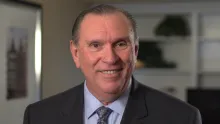
Randy D’Alessandro served as pastor for the United Church of God congregations in Chicago, Illinois, and Beloit, Wisconsin, from 2016-2021. Randy previously served in Raleigh, North Carolina (1984-1989); Cookeville, Tennessee (1989-1993); Parkersburg, West Virginia (1993-1997); Ann Arbor and Detroit, Michigan (1997-2016).
Randy first heard of the church when he was 15 years old and wanted to attend services immediately but was not allowed to by his parents. He quit the high school football and basketball teams in order to properly keep the Sabbath. From the time that Randy first learned of the Holy Days, he kept them at home until he was accepted to Ambassador College in Pasadena, California in 1970.
Randy and his wife, Mary, graduated from Ambassador College with BA degrees in Theology. Randy was ordained an elder in September 1979.
playlist
Related Sermons
