

Rick Shabi
This transcript was generated by AI and may contain errors. It is provided to assist those who may not be able to listen to the message.
I'm going to continue our discussion on Isaiah. The reason I'm doing this is because the material that we're covering in chapters 1 and 2 are very relevant to this time of the year. So I thought I would give this a nice start by going through the first two chapters right at the onset of this series. We may mention, just a little bit of review here, that in chapter 1, God is summoning His sinful people, Israel, to a court trial. When God gave Israel His law under Moses, He promised them blessings for obedience, cursings for disobedience. He wanted them to live, to enjoy life to the fullest in abundance. We read Deuteronomy 30, verse 19. I'm not going to have you turn. I'll read it for you. I call heaven and earth as witnesses today against you that I have set before you life and death, blessing and cursing. Therefore, choose life that both you and your descendants may live. Well, Israel didn't take that admonition. Both Israel and Judah did not.
Before long, God was going to take the nation of Israel and send it into captivity. Not long after that, the nation of Judah, the southern kingdom. So God chose Isaiah to present His case, and that's what we have in the book of Isaiah. Isaiah makes a very powerful, dramatic presentation of God's charges against Israel and Judah. You know, I don't know if it's just me, but I feel like I'm straining to be heard. I don't know what the sound is. Can we have some better sound or louder or something? Otherwise, I know I'm going to fail toward the end of the sermon. Both of my lungs are going to give out, but I just felt like I was just kind of really straining to be heard here. Um, brethren, as I've made mention, the overall purpose of Bible prophecy is to encourage us to change, to take a look at what God is saying to His people. And we are His people. We are His spiritual people, uh, to change our lives and to be what God wants us to be. So last time we went through and we outlined chapter one. Yeah, I just want to give that to you again, and then we want to continue on. Uh, so far as the chapter outlined, the first verse, uh, is the first section that we covered. Uh, God's prophet Isaiah, given a very special vision by God. Uh, as I was going through the sermon last week, I actually went through and, uh, in a thumbnail view, uh, outlined the whole of the book. And that's one of the beautiful things that we have, brethren, when we have a sermon like this or a series like this. Uh, don't worry if you can't get everything as you're sitting there in services. Uh, do what I do. I'm sure that many of you do it. Uh, when I hear a sermon, I want to really take notes on and to file away and have a future reference. I make it a point, I listen to that at home, uh, where I can hit the stop button. I take my notes, hit the resume button, listen some more, hit the stop button, take notes, and so forth. Uh, so we're going to be covering an awful lot of material here, uh, rather, rather rapidly. So please be aware of that.
In the audience, you sound powerful. All right. I don't know, maybe it's just a little dead spot up here. I feel like I'm really straining. Uh, but maybe that's just the senior moment taking place.
Uh, now, if we're too loud, you know, we've got all sorts of things that you can do as an audience to let me know I'm, you know, too loud or, you know, where time is done. Uh, if you can't hear me, there's all sorts of things. Now, of course, this, this many times means, you know, forget it, Delisandro. You know, uh, do you have another sermon you brought with you today?
Okay. So in the outline, verse one, was God giving him Isaiah, a very special vision. Uh, the second portion, uh, four portions to this, uh, to this chapter, uh, was God's first charge against, uh, Israel, against Judah, that they were rebellious. We saw that in verses two through 10. We went through that last, uh, Sabbath. And then the next section would be verses 11 through 20, which is God's second charge that they were, their worship toward him was unacceptable, unacceptable. And then God's third charge was in the last section of the chapter, verses 21 through 31, that they were a unjust and deceitful people. So we went through, uh, a good bit of this. And I want to start here, um, that very last section of the, actually the second section. We got into it a little bit, but I want to start there, starting in verse 11. So let's turn over to Isaiah chapter one. And what I like to do is give a New Testament spiritual principle for all these various sections. So we're not just thinking this is just something from the Old Testament, not that there's anything wrong with that. There certainly isn't, but we want to make sure that we are well grounded in both Old and New Testaments. Um, in 2 Timothy chapter three and verse five, again, you don't need to turn there. I read it last Sabbath or last time. Uh, the principle here is having a form of godliness, but denying its power and from such people turn away.
You and I don't want to have a form of godliness, but not have real godliness. We don't want to have, we want the real substance, the real deal, uh, not just something that may look good to those on the outside. So here in chapter, uh, one of Isaiah starting here in verse 11, to what purpose is the, as the multitude of your sacrifices to me? You know, what, why are you doing this? God says, I have enough of burnt offerings and of rams, the fat of fed cattle. I do not delight in the blood of bulls or, or rams or goats. When you come to appear before me, who has required this from your hand to trample my courts? So they were religious people. They were church-going people in one sense, but they were very hypocritical. Uh, you know, it takes more than faithful attendance in a place of worship to make one right with God. And they certainly weren't right with God. Last time I quoted 1 Samuel chapter 15 and verse 22. I'm not going to go there. Where it talks about to obey is better than sacrifice. We also quoted Romans chapter 6 and verse 17, where it talks about how we obey from the heart. We obey from the heart. And then John chapter 4 and verse 24, we also read where God is spirit and those who worship Him must worship Him in spirit and in truth.
Isaiah 1 verse 13, bring no more futile sacrifices. Incense is an abomination to me. The new moons, the Sabbath, the calling of assemblies, I cannot endure iniquity in the sacred meeting. Now again, we mentioned that was their, of their doing. We see that more clearly in verse 14. Your new moons, your appointed feasts, my soul hates. They are a trouble to me. I am weary of bearing them. When you spread out your hands, I will hide my eyes from you. Even though you make many prayers, I will not hear your hands are full of blood.
Now, brethren, why is that so important to us? You and I have lived through something like this in the mid-90s, where in our former association they said, well, we can serve God in this way, and we can honor Him in this other way. And they would use what they felt was scriptural proof for doing so. And of course, their scriptural proof wasn't any proof at all. It was misguided thinking and rationalizations of men. So we don't want to walk away from the teachings of the explicit teachings of God, as some have done. We want very much to do what God would have us to do. Let's put a marker here and go over to Leviticus chapter 23.
You know I'm about to read, but we need to get our bearings here spiritually.
Leviticus chapter 23.
Speak to the children of Israel and say to them, the feasts of the Lord, the feasts of the Lord. How many times have you read that in your personal study and also in services? Which you proclaim to be holy convocations. These are my feasts. There's no place else in the Scriptures to talk about how we are to worship God. We have it right here.
Verse 3, Six days shall work be done, but on the seventh day is the Sabbath of solemn rest, a holy convocation. You shall do no work on it. It is the Sabbath of the Lord in all of your dwellings. Verse 4, these are the feasts of the Lord, holy convocations, which you'll proclaim at their appointed times. On the fourteenth day of the first month of twilight is the Lord's Passover. On the fifteenth day of the same month is the feast of unleavened bread to the Lord.
Now I can just kind of go over and over this, but you've got this in verse 8. You've got this in verses 11 through 14. You've got this in verses 16 through 18. Verse 20, verse 25, verses 27 and 28. Verse 34, verses 36 through 41, 43 through 44. I could have read all of that, but it's the same thing over and over talking about these are the feasts of the Lord. These are God's solemn days. And so you and I are on solid footing when we worship God the way we worship God. People may make fun of us. They may make fun of what we do. They may say that what we do is funny and so on and so forth, but it is not. These are the beautiful truths of God that we embrace. You and I. Both Israel and Judah went into national captivity because they did not honor those days.
We certainly want to honor those days and obey those and worship on those days and understand the meaning, the deep meaning of those days. Okay, let's go back now to Isaiah chapter 1.
Again, in Isaiah, he speaks very plainly to the people, but there's always hope for change. There's always hope for repentance. Remember something. We touched on it in the background, but the prophet Jonah, we believe, wrote his book somewhere in the 780s, 770s, 760s, somewhere in that era. Jonah was an older contemporary to Isaiah. So about 20 years or so after Jonah wrote, Isaiah began to write. Now, do we know whether Isaiah knew everything about Nineveh and all that? Well, I don't know that I can prove that, but I'm speculating that he would have known.
I'm speculating that he would have known that a nation that was so sinful could actually repent before God. God would view that, and God would say, hey, it's not smoke and mirrors. These people are truly repentant. Their heart is in the right spot. So that is backdrop. Let's now take a look at verse 16.
Isaiah chapter 1 verse 16. Wash yourselves, make yourselves clean, put away the evil of your doings from before my eyes. Cease to do evil. So he's saying to them, repent, just as the people in Nineveh repent. Repent. Go away from sin, like the days of Unleavened Bread teaches. And now verse 17. Learn to do good. Seek justice. Rebuke the oppressor. Defend the faveless. Plead for the widow. Interesting the way he phrases this. Does verse 17 bring up a thought in your mind from the New Testament? I think that it probably does. Again, put a finger here. Let's go over to James chapter 1.
James chapter 1. Verse 27. James 1, 27. Pure and undefiled religion before God and the Father is this, to visit orphans and widows in their trouble and to keep oneself unspotted from the world.
Why is it this talked about to visit orphans and widows in their trouble?
Because these are people who can't pay you back. They are in a desperate spot.
And the reason they're in a desperate spot is because they have a lack of resources or other things are happening to them. Perhaps ill health, maybe a number of things happening all at one time. But they're not in a position to do something back for you. And so we learn the value of giving, as opposed to getting. We serve without any hope of getting something back in return.
We live God's way of life, which is the give way of life.
And that's what Isaiah was talking about as well. It's an eternal principle. We see in both the old and New Testaments. Since we're in the New Testaments, go over to Mark 1. Mark 1.
Jesus Christ starting His ministry here.
Mark 1.14.
Now, after John was put in prison, Jesus came to Galilee preaching the gospel of the Kingdom of God and saying, the time is fulfilled. The Kingdom of God is at hand. Repent. Repent and believe in the gospel. Believe in the good news. Believe in the glad tidings.
Yeah, we need to repent. We also need to have faith. To believe is to have faith in. We have faith in this way of life, a beautiful way of life. So that's what Isaiah is getting back. You know, going back to Isaiah chapter 1, this is what he's getting at here. Learn to do good. Seek verse 17. Seek justice. Rebuke the oppressor. Defend the fatherless. Plead for the widow.
Verse 18. Come now. Let us reason together. Says the Lord, though your sins are like scarlet, they shall be as white as wool. So here we're going to see some contrasts.
Sin like scarlet, well, we repent. They become white as wool because we have been forgiven.
Though they're red like crimson, they shall be as wool. White as wool. Again, contrast. If you are willing and obedient, you shall eat the good of the land.
So, you know, Isaiah always wants to have this out in people's eyes, to see that, you know, there's something better for them, that these things he's going to prophecy don't have to come to pass if they repent. Again, that's the overall purpose of prophecy, to encourage change.
On the other hand, verse 20, But if you refuse and rebel, you shall be devoured by the sword, for the mouth of the Lord has spoken.
Sin has its consequences. Bad decisions have their consequences.
So that finishes up the second charge that God had against his people. We now go to the last section of chapter 1, which is verses 21 through 31. It's God's third charge against his people, that they were unjust and that they were deceitful.
They were unjust. They were deceitful. Again, a New Testament spiritual principle. I'll read this. If you want to turn there, you can. I'll read it for you. 1 Corinthians chapter 6 verses 9 and 10.
Do you not know that the unrighteous will not inherit the kingdom of God? Do not be deceived, neither fornicators nor idolaters nor adulterers nor homosexuals nor sodomites nor thieves nor covetous nor drunkards nor revilers nor extortionals will inherit the kingdom of God. Very clearly, so you are going to reap.
Sin has its consequences. Bad decisions come back to haunt us. Okay, let's go back now to Isaiah chapter 1 again, verse 21. How the faithful city has become a harlot. Talking about Jerusalem. It was full of justice. Righteousness lodged in it, but now, murderers. You know, in the time of David, in the earlier days of Solomon, it was a glorious, spiritual time. Not that people were perfect, not that David and Solomon were perfect. Now, obviously, they had their issues. We know those well. But in general, it was a time where people honored God. But now, not so much. Verse 22. Your silver has become dross, your wine mixed with water. In other words, your values are decaying, where once upon a time you had the silver, now it's just gum. It's the dross. It's that stuff that comes to the surface when you're smelting the silver. Your wine once was good, but now it's been cut by water. It's no longer what it once was.
Verse 23. Your princes are rebellious and companions of thieves. Everyone loves bribes and follows after rewards. They do not defend the fatherless, nor does the cause of the widow come before them. So again, we see in verse 23 the same idea of defending those, being there for those who can't help themselves. It's the way of give. It's the way of service. Their public servants were out for themselves. They were sick, as we read earlier, from the head to the tail, from the head to the foot, from the greatest in society to the least in society. They were wanting bribes. They were wanting get and not to give. Verse 24. Thus the Lord says, the Lord of hosts, the mighty one of Israel. Now, in God's thinking, He's being very strong here. God is being very strong because He's using three of His names here. Three of His names. The Lord of hosts, number one. The mighty one of Israel, number two. And the very first one, the Lord, the very first part of verse 24. Three of God's names. The Lord introduces a note of judgment. So many times when that name of God is used, it introduces a note of judgment. The Lord Almighty indicates His supreme power. The mighty one of Israel suggests His tremendous strength. So here's one who is introducing judgment with supreme power and awesome strength. And He's saying this to His people. He's getting their attention. Ah, he says, middle of verse 24, I will rid myself of my adversaries and take vengeance on my enemies. I will turn my hand against you and thoroughly purge away your dross and take away all your alloy. So here we see a time of purification. We may well see this in our day, where this nation is purified, the fires of purification. It's not going to be pleasant.
We can look forward to the return of Jesus Christ at the end of all of this, and that's going to be marvelous. You know, King all glorious, it's going to be wonderful. But before that time comes, planet earth is going to have some very, very difficult times. But the part that we need to appreciate is that this is a time of purification. Now, God would prefer that we would repent, but if we don't, as a people, He's going to make sure that He purges us by having us go through the fires of tribulation.
Verse 26, I will restore your judges as at the first, and your counselors as at the beginning. Afterward, you shall be called the city of righteousness, the faithful city. Zion shall be redeemed with justice and her penitence with righteousness.
Brethren, historically, this never happened. This is a prophecy for the future, talking about the coming kingdom of God, talking about the time when Christ returns, we are resurrected, we are glorified, and we are ruling with God the Father and Jesus Christ.
The destruction of transgressors and of sinners shall be together, and those who forsake the Lord shall be consumed. For they shall be ashamed of the teremonth trees, which you have desired, and you shall be embarrassed because of the gardens which you have chosen. Verse 29 is talking about false gods, places of false worship.
There's coming a time when we as a nation, when God's people racially, physically, begin to see the error of their ways, how they should have been doing something much different in terms of how they worshiped the great God. They'll be ashamed of what they did. Verse 30, For you shall be as a teremonth whose leaves fade, and as a garden who has no water.
So things are going to turn for the worse. The strong shall be as tender, the work of it as a spark. Both will burn together, and no one shall quench them. Not until God's work of purification is over. That's when those fires will be quenched, when God is finally done, and had done the work He wanted to do with them.
Chapter 2.
Chapter 2, we see that God is going to bring to nothing all human religion, all idol worship, and establish His kingdom, cause the nations to flow. One of the greatest sections of prophecy is here in Isaiah chapter 2. It's a section you've read so many times. I've read. We look forward to seeing this come to pass. But there's also something in chapter 2. I want to take a few moments to examine a little more thoroughly before we get into the whole outline of the chapter and going through the chapter. Chapter 2. Let's take a look at verse 2.
Now, it shall come to pass in the latter days.
The latter days. Okay, so there's a time frame being spoken of here.
Dropping down to verse 11. The lofty looks of men shall be humbled, the haughtiness of men shall be bowed down, and the Lord alone shall be exalted in that day. In that day. So the latter days, and in that day, talking about the same period of time. We see that phrase in that day also in verse 17 and verse 20. So it's in verses 11, 17, and 20. Verse 12. Verse 12. For the day of the Lord of hosts shall come upon everything proud and lofty, upon everything lifted up, and shall be brought low. So here you have the day of the Lord spoken of. Now, the point I'm making, brethren, is that this is all talking about the same period of time. Whether we're talking about the latter days, or in that day, or the day of the Lord. You know, so that we understand prophecy and understand things prophetic as talking about the same time. So what is the day of the Lord? And again, this is one of the reasons why I thought this would be appropriate for right after trumpets. In the broadest sense, the day of the Lord simply refers to the time when God's going to take control of the earth. When God is going to take control of the earth. Right now, we're living in the days of man.
But it's coming the day of the Lord. Now, we realize, and again, this gets into a little more detail, but we realize that the day of the Lord is the last year before the return of Jesus Christ.
We've got the great tribulation and the day of the Lord. Combined, that's three and a half years.
Our understanding is that the great tribulation starts, goes through three and a half years, and then at the same time that last year, you've got both the great tribulation and the day of the Lord happening at the same time. Okay? Let's look at Isaiah chapter 34. Isaiah 34 and verse 8. For it is the day of the Lord's vengeance, the year of recompense for the cause of Zion, the year of recompense. Now, you can add to your notes, I'm not going to read these, but Ezekiel chapter 4 and verse 6, and Numbers 14.34.
Ezekiel 4 verse 6 and Numbers 14.34, which talks about a day for a year, a day for your principle. So this day of the Lord that we see in Isaiah chapter 2 is a period of time at the very end of the age. Now, there's other ways that this, you can put a marker here in chapter 2. Let's go over to 1 Peter chapter 2. Let's see where else is it made mention of, and we get the other portions of information as we look at this. 1 Peter chapter 2. And verse 12. 1 Peter 2.12.
Having your conduct honorable among the Gentiles, that when they speak against you as evildoers, they may by your good works, which they observe glorify God in the day of visitation. The day of visitation, talking about the very same period of time. The day of visitation. The day when Jesus Christ comes back to the earth. He comes back to the earth. 2 Corinthians chapter 1.
2 Corinthians chapter 1 and verse 14. As also you have understood as in part that we are your boast as you are ours in a day of the Lord Jesus. When we've reached our goal of being truly sons in the kingdom of God, truly sons in the kingdom of God.
Joel chapter 2 gives us a time frame for this as well. Joel chapter 2. Joel chapter 2 verses 30 and 31.
And I will show wonders in the heavens and in the earth, blood and fire and pillars of smoke. The sun shall be turned to darkness, the moon into blood, before the coming of the great and awesome day of the Lord. We went through last trumpets and we went through and showed the various seals. I've spent a little more time than just on the trumpets a couple years ago where we had the seven seals of Revelation. And you've got the fifth seal, which is the great tribulation. After that you've got heavenly signs. That's the sixth seal. Then after the sixth seal you've got the seventh seal, which is the day of the Lord. In the day of the Lord is all seven of those trumpets. Then that seventh trump, the last trump, is seven last plagues. So again, just a little bit of a refresher on that so that we have our minds in the same place. Let's go back now to Isaiah chapter 2. Outline again the chapter here for you. It's got five portions to this chapter.
First portion is verse 1, showing it's the God's people. Second portion, second section of Isaiah is verses 2 through 4, the good news of God's coming kingdom.
The third section is just one verse, verse 5.
Turn from sin, walk into light.
You know, it's interesting the way these things turn out.
I was thinking about the sermon I've got in Wisconsin Dells on the opening day, the holy day, first the high day. What should I speak on? You know, you're asking for God's inspiration. You are asking that God would inspire those of us who are speaking at the feast. And I settled on that thought, walking in the light, what that means. I thought it was interesting as well that when we had our conference call, we were talking to all the other fellows who are giving messages in Wisconsin Dells, a fellow by the name of Jonathan Faye, is also going to be speaking on that same subject. He's going to cover it a little different angle than I am, but together we're both talking about that same idea. And we see that idea right here in Isaiah chapter 2 and verse 5. Fourth section of the chapter, verses 6 through 21, the bulk of the chapter, the consequences of sin, and verse 22. Last section, just one verse, put no trust in man or his ways. Put no trust in man or his ways.
Okay, Isaiah chapter 2, verse 1, the word of Isaiah, the son of Amos, saw concerning Judah and Jerusalem. Now that's God's people physically there. We are God's people spiritually. New Testament spiritual principle. If you want to write this down for this section, is 1 Corinthians chapter 2, verses 9 and 10. 1 Corinthians 2, verses 9 and 10.
But as it is written, eye is not seen, nor ear heard, nor is entered into the heart of man, the things which God has prepared for those who love him. But God has revealed to them, to us through his Spirit. For the Spirit searches all things, yes, the deep things of God.
So we are fortunate as brothers and sisters in the faith that God is speaking right to us, that we've got his Spirit that helps shed light on the truth.
We now go into the second section of this chapter, the Good News of the coming Kingdom. We see this in verses 2 through 4.
The spiritual principle here in New Testament is Acts chapter 3 and verse 21.
Let's turn now. I've not read that in a long time. I don't know if I've ever read that here. Let's go to Acts chapter 3 and verse 21.
Powerful statement, encouraging statement, inspiring statement here in Acts chapter 3, verse 21. Whom heaven must receive until the times of restoration of all things, which God has spoken by the mouth of his holy prophets since the world began, the time of restoration of all things. Jesus Christ will remain in heaven until he returns. And when he returns, he's going to reinstitute something that was here once upon a time.
And what was here once upon a time? The government of the Kingdom of God. And that's going to then be restored. With that in mind, let's take a look starting in verse 2 of this prophecy.
Now shall come to pass in the latter days, end time, that the mountain of the Lord's house shall be established on the top of the mountains, and shall be exalted above the hills, and all nations shall flow to it. Now you know from your understanding of prophecy that mountains represent countries, hills represent lesser countries, smaller countries. But you notice what it says here, that the mountain of the Lord's house, the government of the Lord's house, the government of the temple, the government of the church, shall be established on the top of the mountain. So in other words, God's government is going to be established over the entirety of the earth. How beautiful is that! And it says here, all nations shall flow to it. Not just trickle, not just stumble around. The nations shall flow. Are the nations flowing to our doors here in Chicago? Here at the community house? Are they flowing to any of God's churches anywhere?
It's not happening today, but in the future it will happen. People will want to flow.
Let's look at Jeremiah chapter 31.
Jeremiah chapter 31.
Verse 10, Here the word of the Lord own nations, and declare it in the aisles of far off, and say, He who scattered Israel will gather them.
Now, I'm not going to take the time to go through and discuss all this in great detail, but there, you know, it's coming a time when our people will go into captivity, will be scattered through the nations. But there's also a time when God has a second exodus of His people, who scattered Israel will gather them and keep them as a shepherd does his flock. A shepherd wants to safeguard each and every one of those little lambs. For the Lord has redeemed Jacob and ransomed him from the hand of one stronger than he, one that's stronger than Jacob. Therefore they shall come and sing in the height of Zion, streaming, flowing to the goodness of the Lord, streaming to the goodness, flowing to the goodness of the Lord.
For wheat and new wine and oil, for the young of the flock and the herd, their soul shall be like a well-watered garden. They shall sorrow no more at all.
A beautiful time when people begin to want to worship God. We need to go back to Isaiah now, chapter 2 and verse 3. Isaiah 2.3. Many people shall come and say, Come, let us go up to the mountain of the Lord, to the house of the God of Jacob. He will teach us his ways, and we will walk in his paths. For out of Zion shall go forth a law and his word from the Lord, and the word of the Lord from Jerusalem. So full of meaning, that verse. Many people, not a few, many people shall come and say, Come, let us go up to the mountain of the Lord. What are they doing there? Remember this scripture? It says in Matthew 7, 7, Seek and you shall find, you know, knock.
People want to do this. Many people shall come and say, Come, let us go up to the mountain of the Lord, to the house of the God of Jacob. He will teach us. There's a time, brethren, when they want to be taught. They want to be taught the things of God. People don't really want that today. They will want that in the world tomorrow. He will teach us his ways. And notice, we shall walk in his paths. People will want to walk in his paths. They will want to hear it. They'll want to do it, because there's a whole new spirit that's pervasive on planet earth.
Satan and the demons are locked away. God's spirit, the sons and daughters of God, as we are teaching, the knowledge of the Lord will fulfill all of our places of education, homeschool, whatever way we're doing education in the world tomorrow. It's going to be nothing but truth. Pure, unadulterated truth.
Whatever we have in terms of libraries, nothing but truth. Whatever we have in the way of educational institutions, nothing but truth. And people will want that. They will long for that.
For out of Zion shall go forth the law, and people aren't going to fight it. Not the majority. Now, there'll be some. You know, we've seen Zechariah 14, where some nations are going to fight it. But in general, people aren't going to fight it. For out of Zion shall go forth the law, and the word of the Lord from Jerusalem. He shall judge between nations. He shall judge.
Not our president. Not Mr. Putin. Not anybody in the world. Christ shall judge between nations, with perfect righteous judgment, with mercy. He shall judge between the nations and rebuke many people. And they shall beat their swords into plowshares and their spears into pruning hooks.
So we see a total reorientation, a total redirection of the world, with Jesus Christ at His return, with you and I, with you and I at the return of Jesus Christ. That truly is a tremendous thing for us to be looking forward to.
So the second section was that the good news of God's kingdom will be proclaimed. Now we go to that third section, which is 1 verse 5. Let's read it. Isaiah 2, verse 5. O house of Jacob, come and let us walk in the light of the Lord.
Come and let us walk in the light of the Lord.
New Testament spiritual principle here. 1 John 1, verse 7. 1 John 1, 7. But if we walk in the light, as He is in the light, we have fellowship with one another, and the blood of Jesus Christ, His Son, cleanses us from all sin.
If we walk in the light, as Christ is in the light, and this is what God wanted for them back then, this is what God wants for His people at all times for us to be people who walk in the light. Not in darkness, but in the light.
And God is going to be giving people tremendous tools to be able to do that. Let's look at Psalm 119.
Psalm 119, verse 105.
How do we walk in light? Psalm 119, verse 105. What does it say in John, chapter 17, 17? What is truth? God's Word is truth. The light of truth is what we'll be having in the world tomorrow. Something for us to look forward to.
Of course, another tool that God gives us is His Spirit. And it's a very important tool. And it's a very important tool.
Let's revisit something we read some time ago over in Daniel, chapter 5.
Daniel, chapter 5.
Here in Daniel, chapter 5, you've got the handwriting on the wall incident. The king's counsel is the king's counsel.
We're not able to decipher what all of this meant.
Let's drop down here to verse 9. Daniel, chapter 5, The kingcrew will be starlight in the chemgrigent courts.
Now, God inspired that to be written. Notice how it's described that He was a man of light and understanding. Drop it down to verse 14, same chapter. The king speaks to him, to Daniel, verse 14. I have heard of you that the Spirit of God is in you, and that light and understanding and excellent wisdom are found in you.
Brethren, you have that same Spirit. You have that Spirit of light. You have that excellent Spirit of wisdom. Now, there are times we don't think we've got that. Some of the decisions we've made. But you know, as you and I make decisions that aren't the best, God allows us to learn from that. Just like many times as you and I are rearing our children, sometimes you allow them to make a decision. And to let them see what the con... not something that's going to hurt them, or cripple them, or something like that.
But things that they can learn from. My mother tells a story about when my brother was a real little guy. This was back in the 40s. Back when dinosaurs roamed the earth. My folks were renting a place that had one of these... some sort of a stove that just kind of radiated heat.
And that's what warmed their apartment. And my... You may think my mother was mean, but she wasn't. But my brother one time was going to touch this thing. My mother could have stopped him, but she didn't. She allowed him to touch it just briefly. He learned something. She wanted him to learn something. She didn't want him to go over some day and just embrace it when she wasn't around. And so from that point on, my brother, whenever he came into that room, would walk a wide berth and point at that and say, Hot, hot, hot, hot, hot, hot.
And God does the same thing for us. He wants us to learn. You know, He's given us a spirit of wisdom. And sometimes we learn wisdom through the things that we... the mistakes we make, and then the wisdom we learn as a result of that. So they walked in the light. More on that for those of you who are going to Del's. You'll hear more of that feast time. Let's go back now to the book of Isaiah. The larger portion of this chapter, verses 6 through 21. Verses 6 through 21. The consequences of sin, the punishment from God. Spiritual principle, Matthew 7, verse 19. Every tree that does not bear good fruit is cut down and thrown into the fire.
Every tree that does not bear good fruit is cut down and thrown into the fire. We're not going to spend a lot of time on this. You know, in some sections of Isaiah, we're just going to kind of go through... and not spend a lot of time. I think this is pretty much easy for us to understand. Verse 6. For you have forsaken your people the house of Jacob, because they are filled with eastern ways.
They are sous-sayers like the Philistines. They are pleased with the children of foreigners. So God is basically saying, you know, you love the occult. You have been corrupted because of the occult. And my face is going to turn away from you because of that. Verse 7. Their land is full of silver and gold. There's no end to their treasures. The land is also full of horses, and there's no end to their chariots. So, as we made mention in the background, this is a time of economic boom for Israel.
I mean, they're just a few short decades from going into captivity. But this is a time of economic boom. This is a time when their military, they feel, is very strong. Their borders are the greatest that they've seen. And so here in verse 7, God is saying, yes, you are rich, but you don't have my riches. Yes, you are militarily strong, but you don't have my strength. Remember when we went through the fast of Jehoshaphat? How when there was a huge army facing Jehoshaphat, where the whole nation fasted. And what did they do? Did they fast so that they could be better warriors? No.
In Jehoshaphat's time, when everybody was fasting, the way they met their enemy, they opened the city gates. And what? A thousand rambos walked through? No. Out through the gates went the singers, the choir. You know, John Barbush and company. Here they go. The army was behind that. Now, if you were a singer back in those days, you're probably thinking, John Barbush better know what he's doing. But, you know, the singers go out, the musicians go out, and they're singing praises to God. And the enemy, they kaput. Nothing. The army of Jehoshaphat didn't have to shoot one arrow, draw one sword, because they relied on God.
Here, verse 7, Isaiah 2, 7, they were relying upon their own strength. Horses is symbolic of military strength. Verse 8, Their land is also full of idols. They worship the work of their own hands, that which their own fingers have made. People bow down. Each man humbles himself. They humble himself, and they bow down to these idols. Therefore, do not forgive them. This is not going to be forgiven unless they repent.
Verse 10, Enter into the rock and hide in the dust, from the terror of the Lord, and the glory of His majesty. I do want to turn to Revelation 12.
Let's turn over there for a moment. It speaks to this section of Isaiah.
Revelation 12.
Revelation 6, and verse 12.
Revelation 6, 12, I looked, and when He opened the sixth seal, behold, there was a great earthquake. And the sun became black as sackcloth of hair, and the moon became like blood. The stars of heaven fell to the earth as the fig drops its late figs when shaken by a mighty wind. Now, God is doing this to get everybody's attention.
Those people who say there is no God, well, they're getting a real education at this point.
Then the sky receded as a scroll when it's rolled up in every mountain and every island was moved out of its place. So now, people can see into heaven.
They can see the being, they said, and God allows us in some way, shape, or form.
So they're not destroyed immediately. But they see the great God. And the kings of the earth, the great men, the rich men, the commanders, the mighty men, every slave, every free man hid themselves in the caves of the rocks and the mountains, and said to the mountains and the rocks, fall on us and hide us from the face of Him who sits on the throne.
I would think that's Christ they're talking about here, the one that they're seeing.
For people who sits on the throne and from the wrath of the Lamb, well, there you go, for the great day of His wrath has come and who is able to stand.
So remember, at the beginning of chapter two, we talked about in that day, the latter days, the great day of the God. Here we see it again, the great day of His wrath.
So people want to hide from the face of Jesus Christ. They want to hide from God who's returning, who's going around collecting the saints that we see in Matthew chapter 24, verses 29 through 31.
Isaiah 2, verse 11, The lofty looks of men shall be humbled, the haughtiness of men shall be bowed down, the loom shall be exalted in that day. The loom shall be exalted in that day. So people are getting their humbling.
For the day of the Lord of Ho shall come upon everything proud and lofty, upon everything lifted up and shall be brought low.
Tremendous day of humbling, upon all the cedars of Lebanon that are high and lifted up, upon all the oaks of Bayshen, upon all the high mountains, upon all the hills that are lifted up, upon every high tower, every fortified wall, all the ships of Tarshish, upon all the beautiful sloops, the loftiness of men shall be bowed down, the haughtiness of men shall be brought low, the Lord alone will be exalted in that day, but the idol shall be utterly abolished.
So again, over and over, we're talking about humility being forced upon the people of the earth. They're being humbled by the hand of the great God.
They shall go into the holes of the rocks, as we saw there in Revelation 6, they shall go into the holes of the rocks and the caves of the earth from the terror of the Lord, and the glory of His majesty, when He arises to shake the earth mightily.
In that day a man will cast away his idols of silver, his idols of gold, which they may free themselves to worship, to the moles and the bats.
So as the people are trying to escape what Jesus Christ is bringing upon them at His return, gold, which they thought of as being such a great thing, they worshipped gold and silver and that sort of thing, it became their God.
At that point they realize gold is nothing, silver is nothing, and in order to escape the wrath of God, they throw that back, they just throw it down. It weighs them down. They don't want to have that on their person, it just weighs them down. So it throws them down to these despicable things, the moles and the bats.
Gives a mindset to, you know, where they're at this point. Verse 21, to go into the clefts of the rocks and the crags of the rugged rocks, from the terror of the Lord and the glory of His majesty, when He arises to shake the earth mightily.
God is shaking the earth because He needs to shake the people.
Because He needs to shake the people.
Last section is verse 22. Last section of chapter 2 is verse 22.
Put no trust in man or man's ways.
Spiritual principle from New Testament is 2 Corinthians chapter 1 and verse 9.
2 Corinthians 1-9. Yes, we have a sentence of death in ourselves that we should not trust in ourselves, but in God who raises the dead.
Trust not even in our own conversion, but trust in the great God.
Because even we as converted people can make mistakes.
We can make bad judgment. We can make bad judgment. But God is above all that.
Verse 22. Severe yourself from such a man, whose breath is in his nostrils, for what account is he?
Isaiah 2.22. What account is man? Who is he?
So, Brendan, we're going to end there for today. We've accomplished everything I wanted to accomplish, and time's just about up. After the feast, we're not going to be going through Isaiah week after week. Don't want to do that for three and a half years. I think you would give me this sign if that took place. So we're not going to do that. But I wanted to get us off on a good start, and it was relevant information for this time of the year.
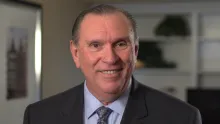
Randy D’Alessandro served as pastor for the United Church of God congregations in Chicago, Illinois, and Beloit, Wisconsin, from 2016-2021. Randy previously served in Raleigh, North Carolina (1984-1989); Cookeville, Tennessee (1989-1993); Parkersburg, West Virginia (1993-1997); Ann Arbor and Detroit, Michigan (1997-2016).
Randy first heard of the church when he was 15 years old and wanted to attend services immediately but was not allowed to by his parents. He quit the high school football and basketball teams in order to properly keep the Sabbath. From the time that Randy first learned of the Holy Days, he kept them at home until he was accepted to Ambassador College in Pasadena, California in 1970.
Randy and his wife, Mary, graduated from Ambassador College with BA degrees in Theology. Randy was ordained an elder in September 1979.
