

Rick Beam
This transcript was generated by AI and may contain errors. It is provided to assist those who may not be able to listen to the message.
Today we want to turn our attention back to the book of Isaiah. Last time we were together, we were going through a portion of Isaiah 7. As I was looking at the balance of Isaiah 7, I saw something that really caught my eye. There was a particular verse that is the launching pad for today's sermon. To give you a little bit of background as to what I'm hoping to accomplish today, let's take a look at what Isaiah was trying to accomplish, what God was accomplishing through him. When you look at his life, Isaiah, his whole life was spent under the shadow of the threatening Assyrian power. He himself witnessed the carving up of the nation of Israel, piecemeal. He saw the nation of Israel go into national captivity. Now, he was from Judah, and he was prophesying to both Israel and Judah as he was prophesying to Israel. He saw those prophecies come to pass. Certainly, they came to pass regarding the nation of Judah as he was living, a number of them the prophecies did. He was prophesying about another power rising, the power of Babylon yet to arise. And again, his nation of Judah was going to suffer great national difficulties, persecutions, and collapse at the hands of the Babylonians.
But when you take a look at the whole scope of the book of Isaiah, you see a book that is very inspirational. I've given Bible studies and sermons of the feast regarding what we see in the book of Isaiah because they're so encouraging. So encouraging. Why, in the midst of all these bone-crushing prophecies in the book of Isaiah, was Isaiah himself so positive? One of the reasons he was so positive is because he kept the dream alive of the kingdom of God.
A number of commentators, as they look at the book of Isaiah, some commentators call him the evangelical prophet. They call him the evangelical prophet because of all the messianic prophecies contained in the book. Some say that we see the gospel of Jesus Christ in the book of Isaiah, the gospel of the kingdom of God. Perhaps that's one of the reasons why Isaiah adjoins Deuteronomy in Psalms as one of the three most quoted books, or referred to books, in the New Testament.
But let's take a look at the scripture that caught my eye as I was preparing the sermon for today. Let's go to Isaiah 7.
Last time we were here, I went through, I think, the first nine verses of Isaiah 7. But as I was surveying the rest of the chapter, I fell on verse 14.
And again, this will be the springboard for the sermon today.
Isaiah 7, verse 14. Therefore the Lord himself will give you a sign, behold the virgin shall conceive and bear a son, and shall call his name Emmanuel.
Now, we know that as a scripture that deals with the birth of Jesus Christ, right? Certainly what we're looking at there is a tremendous spiritual golden nugget.
This statement was a message that brought a great deal of hope to Isaiah, and certainly it brings a great deal of hope to us today.
The setting for this particular section of scripture is that both at this point, Israel and Judah were rife with disobedience. They were rife with all sorts of issues, difficulties, challenges. They were in many ways kind of a hopeless group of people. And yet this scripture, as we understand this scripture, gives us a great deal of hope.
My theme today is very simple, and it is this. If you take notes, this is something you might want to write right across the top of your paper. Isaiah proclaimed a message of hope through the Messiah. Isaiah proclaimed a message of hope through the Messiah.
What does the name Emmanuel mean? What does it stand for? The name Emmanuel means God is with us, or God with us. Imagine how life would be so different in the world today. If mankind would allow that name, with all that that name represents, to impact every thought, every action that took place in every individual's life. It would be a tremendously different world, wouldn't it?
Now, we turn over to the New Testament, Matthew chapter 1, and we see that Matthew also is going to refer to that scripture. Matthew chapter 1.
The import of this all-encompassing name was not lost on Matthew. He used this name when telling the message about how the angel came to Joseph concerning the birth of Jesus Christ. Let's start here in Matthew chapter 1, verse 18. Now, the birth of Jesus Christ was as follows. After his mother Mary was betrothed to Joseph, before they came together she was found with child of the Holy Spirit. Then Joseph, her husband, began being a just man and not wanting to make her a public example, was minded to put her away secretly. But while he thought about these things, behold, an angel of the Lord appeared to him in a dream, saying, Joseph, son of David, do not be afraid to take to you Mary your wife. For that which is conceived in her is of the Holy Spirit, and shall bring forth a son, and you shall call his name Jesus, for you shall save his people from their sins. So all this was done, that it might be fulfilled, which is spoken by the Lord through the prophet, we're talking about Isaiah here, saying, behold, a virgin shall be with child, shall bear a son, and they shall call his name Emmanuel, which is translated God with us.
God with us. Now, brethren, in the course of our study of the Bible, we've seen God intervening in so many different ways, especially as we were taking a look and we're thinking about the Old Testament you know, we're looking at Isaiah and thinking about the Old Testament. We look at some of the interventions of God in the Old Testament. We see tremendous numbers of powerful manifestations from God. We saw the pillar of cloud, the pillar of fire, as Israel was leaving Egypt. We saw any number of visions that took place. We saw the tremblings of earthquakes. We saw even a still, small voice. All of those were very powerful manifestations of God's power, and we certainly don't want to shortchange any of those. Those are all very wonderful experiences.
But a prophecy regarding the birth of Emmanuel, the Messiah, that is something on a whole other level. Take a look at the book of John, John chapter 1.
John chapter 1. We were in the book of John for the sermon, but let's go over here to John chapter 1.
God with us prophesied to come. Matthew said, Here he is. He is now in the flesh.
And here there's an interesting scripture, John chapter 1 and verse 14.
And the Word became flesh and dwelt among us, and we beheld as glory. The glory is the only begotten of the Father, full of grace and truth. I want to point out and examine this word, dwelt. And the word became flesh and dwelt among us. The word dwelt comes from the Greek word, I guess you can pronounce it, skenu. It's Strong's number 4637. That word dwelt means literally to pitch a tent or to tabernacle. Jesus Christ came with a human form to pitch a physical, fleshly tent. It's in John under the inspiration of God who shows us that Christ came to pitch this tent in the wilderness of the human condition. Jesus Christ, God with us. And Jesus Christ, as God with us, brought a message. Very powerful message. Let's go to the book of Mark, Mark chapter 1. It's a message you and I proclaim to this day. It's a message we put our all behind. We put our prayers, we put our fastings, we put our substance behind this message.
Mark chapter 1 verse 14. And whenever you're talking to anybody and you want to talk about the life and teachings of Jesus Christ and you want something very succinct to turn to that has a good overview as to what Christ was doing, Mark chapter 1 verses 14 and 15 gives you a very good synopsis. Verse 14. Now after John was put in prison, so here you've got a time frame after John the Baptist was put in prison, Jesus came to Galilee, so here you've got a location, preaching the gospel of the kingdom of God. This is what he taught, the gospel of the kingdom of God. And saying, the time is fulfilled, the kingdom of God is at hand, Christ was at hand. Repent and believe in the gospel.
There are things we need to do with this message. It was a message of repentance and drawing near God. It was a message that had to be believed. We've got to have faith in that message.
So what was it that gave Isaiah so much hope as he talked about, and we're going to see, were Isaiah proclaimed the gospel of the kingdom of God?
I don't know. Hopefully that doesn't shock anybody. You know, was the gospel message just a message to be found in the New Testament? We're going to take a look at that as we go through the Scriptures today. You know, here in Mark chapter 1, if you take a look at the heading that is here in the book, in my Bible, it says, the gospel according to Mark. If you look at Matthew, Luke, and John, you'll see the same thing. The gospel according to Matthew, the gospel according to Luke, the gospel according to John. But we're going to see today how the gospel message was very much preached by Isaiah in the Old Testament. It's a message, brethren, a beautiful message that runs the length of the Scriptures from the Old to the New Testaments. Let's take a look at Acts chapter 28. Acts chapter 28. Acts chapter 28 verse 23. So when they had appointed him a day, many came to him at his lodging, talking about the Apostle Paul here, to whom he explained and solemnly testified of the kingdom of God, persuading him concerning Jesus from both the law of Moses and the prophets from morning till evening. So here we see in the Old Testament the gospel can be preached. Paul preached the gospel of the kingdom of God using the Old Testament. Now why is that valuable? You know, for those, there are plenty of people who think all we need is the New Testament and maybe Psalms and Proverbs. That's all we need. Bibles are printed like that.
Psalms, Proverbs, and New Testament. And yet we're going to see, as we look at one of the key the key things Jesus Christ taught, that message running the whole of the Scripture.
It's the message God wants everybody to understand, everybody to fully comprehend. So today we're going to explore in the writings of Isaiah the good news of the gospel, the good news of the kingdom of God.
Now before we go to Isaiah and look at a number of Scriptures, and I'll probably be using more Scriptures than normal today, understanding the terms. Gospel. What's gospel mean? The gospel is strong in the original language. Strong's number 2098. 2098. 2098.
You understand that it means the good news. Other lexicons will say it means information that causes joy. Yes, the gospel causes joy. It was interesting as I was going through the various lexicons and they were defining the word gospel. One of the lexicons was talking about how the word gospel was used in secular Greek literature. I really kind of like this definition. In secular Greek literature, the word gospel, and this is not a definition that was used in Scriptures, but in secular Greek literature, the word gospel meant news of victory. I like that. News of victory. News of victory. So what is meant by gospel? The good news. Information that causes joy.
Now, the gospel has a very multifaceted topic. I don't have time today with what I want to try to accomplish in the book of Isaiah to go through all that there is about the gospel. That would probably take a number of sermons to do that. But as I was going through my concordance and taking a look at the word gospel, it was interesting to see how gospel was used in some of the situations in the New Testament. Mark 1, verse 1. I'm just going to read these for you so you don't wear yourself off all the turning of Scriptures. Mark 1, 1. The beginning of the gospel of Jesus Christ.
Okay, so that tells us something about the gospel. It's also the gospel of Jesus Christ, the Son of God. In Acts chapter 20 and verse 24, I'll read this for you. Acts 20, 24. But none of these things move me, nor do I count my life dear to myself, so that I may finish my race with joy and the ministry which I receive from the Lord Jesus to testify to the gospel of the grace of God.
The gospel of the grace of God. Now, once again, we're seeing various aspects, facets of the gospel of the kingdom of God. We're all talking about the same thing, but we're looking at different facets of the same thing. Romans chapter 10 and verse 15. Romans 10, 15. How shall they preach, unless they are sent? As it is written, how beautiful are the feet of those who preach the gospel of peace, the gospel of peace, who bring glad tidings of good things. So the gospel message has to do with peace. Again, these could be all different sermons all to themselves. Romans chapter 15, verse 16. Romans 15, verse 16. That I might be a minister of Jesus Christ to the Gentiles, ministering the gospel of God, the gospel of God, that the offering of the Gentiles might be acceptable, sanctified by the Holy Spirit. And one last example is found in Ephesians chapter 1 and verse 13. Ephesians chapter 1 and verse 13. In him you also trusted, after you heard the word of truth, the gospel of your salvation, the gospel of your salvation, and whom also having believed you were sealed with the Holy Spirit of promise. So to this point, we've seen where Immanuel, God with us, was promised in the Old Testament. We see where he was born in the New Testament. We've seen where the gospel has aspects dealing with God the Father, Jesus Christ, grace, peace, salvation. And that's just some of the story about the gospel.
Let's take a look at some other aspects here before we get into the book of Isaiah. Acts chapter 28. Acts chapter 28. The gospel of the good news of the kingdom of God also emphasized Christ's life, death, and resurrection. That's a part of the gospel, the good news.
We've got a living Savior. We've got a high priest. Acts chapter 28, verse 31. Paul here is being spoken of. Preaching the kingdom of God and teaching the things which concern the Lord Jesus Christ with all confidence, no one forbidding him. So he tied in all of these things with the gospel of the kingdom of God. We've already read Mark chapter 1 and verse 15, where it talks about how the gospel needed to be believed, how in the gospel message repentance was being spoken of. But let's now turn to 1 Peter chapter 4. See another aspect. Again, this is... I know I'm moving a little quickly here, but I'm trying to give an overview.
1 Peter chapter 4 and verse 17.
For the time has come for judgment to begin at the house of God, and if it begins with us first, what will be the end of those who do not obey the gospel of God? And there we see that name. It's the gospel of God. And we need to be obeying the gospel. We need to be believing in the gospel.
Now, we've already seen in Acts chapter 28 how the gospel was preached using Old Testament scriptures. I made the point that the gospel is something we can see from the Old Testament all the way through into the New Testament. Let's turn to Galatians chapter 3, because there's a very important personage here that's being spoken of who the gospel was preached to in the Old Testament. Galatians chapter 3 verse 8 and 9. And the Scripture foreseen that God would justify the Gentiles by faith preached the gospel to Abraham before saying, In you all the nations shall be blessed, so then those who are of faith are blessed with believing Abraham. The gospel was preached to Abraham. Interesting. So, we've got the story of the good news. We see it's a many-faceted discussion, worthy of a great deal of our time and efforts in prayer and study.
But there's more to it than just good news. It's the good news of the coming kingdom of God.
The gospel deals with government. Government. Let's go back to a book we studied some time ago, book of Daniel chapter 2. Daniel chapter 2. Here in Daniel chapter 2, you see a discussion about world-ruling governments. That's the context. Real government. These various successive world-ruling governments are being spoken about. And then we see, starting here in verse 44, something else. Daniel chapter 2 in verse 44. And in the days of these kings, the God of heaven will set up a kingdom which shall never be destroyed, and the kingdom shall not be left to other people. It shall break in pieces and consume all these kingdoms, and it shall stand forever. So here we see a scripture that talks about the gospel of the kingdom of God being about real government. Government supersedes the governments of mankind.
It's the gospel of the kingdom of God. It's about a future world-ruling kingdom that comes up the second coming of Jesus Christ.
Combine that with what we see in Revelation chapter 11.
Revelation chapter 11.
Revelation chapter 11 in verse 15. Then the seventh angel sounded, and there were loud voices in heaven, saying, The kingdoms of this world have become the kingdoms of our Lord and of His Christ, and He shall reign forever and ever. Revelation 11.15. Again, the good news of God's kingdom ruling, and it's going to rule forever. Now, who's in this kingdom? Who's in this kingdom?
Is just anybody in this kingdom? When does a person enter the kingdom of God? Well, we enter the kingdom of God at the second coming of Jesus Christ. Those who are the firstfruits. Not just everybody, but those who are the firstfruits. Let's take a look at 1 Corinthians chapter 15, the resurrection chapter. 1 Corinthians chapter 15. Starting here in verse 50. 1 Corinthians 15 verse 50.
Now this I say, brethren, that flesh and blood cannot inherit the kingdom of God. No people in the kingdom of God. Spirit beings, yes. Flesh and blood cannot inherit the kingdom of God, nor does corruption inherit incorruption. Behold, I tell you the mystery. We shall not all sleep, but we all shall be changed. So here in verse 51 we see about the resurrection of the saints, the firstfruits. In a moment, in the twinkling of an eye, at the last trumpet, for the trumpet will sound, and the dead in Christ will be raised incorruptible, and we shall be changed. It's these individuals who are being resurrected at the time of the first resurrection who are in the kingdom of God. The people who remain on planet earth, those who go through the cataclysm at the end of the age, they live on into the millennium. They are flesh and blood human beings. The kingdom of God rules over them. They are flesh and blood. They can't be a part of the kingdom. They're not part of the family of God at that point in time.
The people who remain in the nations of the earth who are not resurrected will not yet be in the kingdom of God because they're still mortal. They're still human. They will be ruled by the kingdom of God. They will be ruled by the kingdom of God. The kingdom of God's rule on earth will consist of the reign of Christ and those who have been given eternal life. And it's important for us to understand it because I think sometimes it's easy for us to think of the millennium as the kingdom of God. And there's a distinction there. Yes, the family of God is ruling in the millennium, but those physical flesh and blood human beings being ruled over, they're not a part of the kingdom of God yet. Now, with all of that as background, let's take a look at the book of Isaiah.
You know, when we think about a government that's going to rule over the world, to have a government, as we've said in the past, this is something that's teaching you, you remember from early days when you first came to the church or you were first being taught by your parents or grandparents about the church, four things are needed for government, right? You need territory, you need a ruler, you need subjects, and you need laws. You need those four things, correct?
Let's take a look in the book of Isaiah, in the book of Isaiah, about these things, aspects of the gospel of the kingdom of God. And remember what Paul told Timothy about how he understood things leading to salvation that he knew from the Holy Scriptures. And at that point, the only scriptures Timothy had, Old Testament. There's all we need in terms of understanding about salvation in the Old Testament. And so people want to say, well, we don't want that Old Testament. We're throwing away so much valuable information when they say, we just don't need the Old Testament.
So much today, this evening, we're going to be over at the Phaesom. And there's going to be a discussion about the Proverbs. You know, of course, people who don't think much about the Old Testament, they love Proverbs, they love Psalms, but it's the whole Word of God here. So let's take a look at these four areas. Let's start with territory. Let's go to Isaiah 2. And this particular verse really summarizes all four aspects of the kingdom.
But here, I put it under the heading of territory. Isaiah 2, starting in verse 2.
Isaiah 2.2, Now shall come to pass in the latter days, talking about end time, that the mountain of the Lord's house, talking about government, the mountain of the Lord's house, God's government, shall be established on top of the mountains.
It shall be over all the governments of earth, and shall be above the hills. Mountains and hills, some governments are larger, some are smaller. God's government is above all.
And nations shall flow to it. Many people shall come and say, Come, let us go to the mountain of the Lord, to the house of the God of Jacob. He will teach us his ways. We will walk in his paths. So here we see not only the territory, which is the earth, we see subjects, and we see laws. For out of Zion shall go forth the law, and the word of the Lord from Jerusalem.
He shall judge between the nations. So here we see rulership. He shall judge between the nations, and rebuke many people. And they shall beat their swords into plowshares, and their spears into pruning hooks. The nations shall not lift up sword against nation, neither shall they learn war anymore. And there's some teeth to this. If people don't do this, they don't get rain.
The ruling body, the family of God, enforces these laws on the subjects, the human subjects.
So here we see a portion of the Gospel being talked about in the book of Isaiah.
Now some of the things, some of the scriptures I'm going to read to you today from Isaiah, some deal with the first coming of Christ, some deal with the second coming of Christ, all deal with the Gospel of the kingdom of God. Let's take a look at the second aspect of a kingdom, which is a ruler, supreme ruler, Isaiah chapter 9. Isaiah chapter 9 and verse 7. Isaiah 9 and 7.
Of the increase of his what? Of the increase of his government and peace, there will be no end.
Upon the throne of David and over his kingdom, so here we see this idea of rulership here, to order and establish it with judgment and justice. From that time forward, even forever, the zeal of the Lord of hosts will perform this, that government will take care of this. And here we see something else about judgment and justice because of the laws that are in effect in this government. Let's take a look at some of the characteristics of those governing Isaiah chapter 11.
Isaiah chapter 11 and verse 2. Well, let's start in verse 1. Isaiah 11 verse 1. Thou shalt come forth a rod from the stem of Jesse, and a branch shall grow out of his roots. The Spirit of the Lord shall rest upon him, the Spirit of wisdom and understanding, the Spirit of counsel and might, the Spirit of knowledge and the fear of the Lord.
So here's a family that is run by the power of the Spirit of God.
You know, I could have read other verses on Daniel where it talked about how the kingdom wouldn't be given to flesh and blood human beings.
The kingdom is being given to the family of God, spirit beings, the spirit family of God.
Isaiah chapter 42.
Here again, we're looking at the rulership aspect of the kingdom. Isaiah chapter 42 verse 3. But, bruised reed, he will not break, and smoking flags he will not quench. He will bring forth justice and truth. So here we see a here we see rulership that is gentle, where gentleness is needed. Compassionate. This is not, you know, the rule of the gentiles, where they are harsh, and so forth. Rulership here is full of love, full of compassion.
Understanding. Wisdom.
Isaiah chapter 53.
We go here all the time on Passover evening, don't we? Isaiah chapter 53.
Here we're talking about the first coming of Jesus Christ. Here we're talking about this aspect of the gospel message. Isaiah 53 verse 3. He is despised and rejected by men, a man of sorrows and acquainted with grief. And we hid, as were our faces from him. He was despised and we did not esteem him. So here we see some of the suffering that Jesus Christ went through, that Emmanuel went through in the first coming. It wasn't all, you know, as torturous in terms of being on the cross or on a stake. Some of the difficulties, some of the challenge, some of the trial was emotional in nature, mental in nature and scope. And here we see that here.
A man of sorrows and acquainted with grief. We hid, as it were, our faces from him.
The disciples ran away from him. These were all things that Christ went through that horrible day.
This is a part of the gospel of the kingdom of God. Surely he has borne our griefs and carried our sorrows, yet we esteemed him stricken, smitten by God and afflicted. Yes, he has borne our griefs. He has borne all of our iniquities and all the difficulties and things and so forth. Verse 5. He was wounded for our transgressions. He was bruised for our iniquities. The chastisement for our peace was upon him and by his stripes we are healed. So here we see the crushing, brutal nature of the torture that Jesus Christ went through in his first coming.
Verse 6. We all, like sheep, have gone astray. We have turned every one to his own way, and the Lord has laid on him the iniquity of us all. As a part of the gospel of the kingdom of God, we see what our Savior has gone through for us.
We see what we must come to believe in, what we must have faith in, what we must, as we understand our calling, obey. It's not just a matter of accepting Christ as our Savior and it's doing any old thing. That's what, you know, we have the Passover, which represents what Christ did for us, our accepting what he did for us. We also have the days of unleavened bread. The picture that we are to live a certain way of life. We are to be getting sent out of our lives and bringing righteousness into our lives.
There's an obedience angle, aspect to the preaching of the gospel, understanding the gospel message. Verse 7. He was oppressed and he was afflicted, yet he opened not his mouth. He was led as a lamp to the slaughter, as a sheep before his shearers, as silent. So he opened not his mouth.
He was taken from prison and from judgment and who will declare this generation. For he was cut off from the land of the living. For the transgression of my people, he was stricken. Yeah, part of that gospel message is we have a Savior. Our sins are forgiven because of what he did. And yet, notice, we don't worship a dead Savior. Verse 10. Yet, it pleased the Lord to bruise him. He has put him to grief. When you make his soul an offering for sin, he shall see his seed.
He shall prolong his days. And a pleasure the Lord shall prosper in his hand. We're looking here at a section of scripture that talks about how Christ triumphs over death. He was raised from the dead. He is our high priest. He is our intercessor. So here we see now a third, excuse me, a second aspect of a kingdom. We've seen territory, the whole earth, and now we've seen a king. We've seen various aspects of what Christ has done for us as king.
Let's take a look at the citizens, the citizens as we look at this government of God. Go back to Isaiah 11. Isaiah 11. Starting here in verse 10. Isaiah 11. And in that day there shall be a root of Jesse, who shall stand as a banner to the people, for the Gentiles shall seek him. Here we see some of the people who are going to be listening, not only listening, but be a part of those being ruled in that territory. The Gentiles shall seek him, and his resting place shall be glorious.
And shall come to pass in that day, the Lord shall set his hand again the second time to recover the remnant of his people who are left, from Assyria and Egypt, from Pethros and Kush, from Elam and Shinar, from Hamath and the islands of the sea. So in verse 10 we're seeing where there's going to be Gentiles in this kingdom. In verse 11 we see where the people of God nationally, Israel and Judah, are being spoken of.
They're coming back out of national captivity. We're looking at a second Exodus at the end of the age. Verse 12, he will set up a banner for the nations and will assemble the outcasts of Israel and gather together the dispersed of Judah, very plain, from the four corners of the earth. So Israel and the Gentiles alike are going to be, physically speaking, are going to be a part of this kingdom in terms of the physical flesh and blood citizens being ruled by the kingdom of God.
Isaiah chapter 19.
Talking about the power of this gospel, the power of the family of God ruling, notice what we see here in Isaiah chapter 19. And again, I'm sure that this gave Isaiah a great deal of encouragement as he looked past the bone-crushing prophecies of what was going to happen to Israel and Judah in the prophecies he was articulating to a better time. Isaiah chapter 19, verse 23. And that day there shall be a highway from Egypt to Assyria, and the Assyrians will come into Egypt, and the Egyptians into Assyria, and the Egyptians will serve with the Assyrians. In that day Israel will be one with the three, with Egypt and Assyria, a blessing in the midst of the land, whom the Lord of hosts shall bless, saying, Blessed is Egypt, my people, and Assyria, the work of my hands, and Israel, my inheritance. People who were avowed enemies once upon a time, in the future, that will not be so. In the future, that will not be so. And what an encouraging thing. What an encouraging thing to look at the various prophecies in the book of Isaiah. And again, we understand many of the things Isaiah went through. He needed encouragement. He needed something better to look forward to, as he wrote what he wrote. And we believe we understand in Hebrews chapter 11, where it talked about the various saints, Old and New Testament, basically Old Testament, or mostly Old Testament, where one of the individuals was sawn in half. Tradition has that that was King Manasseh killing Isaiah. So, you know, a man who understood difficulties. Let's go to Isaiah chapter 35. Beautiful chapter. Encouraging, inspiring chapter.
Again, looking at the subjects of the kingdom of God, being ruled by the kingdom of God, the spirit family of God. Isaiah 35 verse 1. The wilderness and the wasteland shall be glad for them, and the desert shall rejoice and blossom as the rose. All the wastelands of this world, you know, the Sahara's, the Gobi Desert, all those places that are just nothing, you know, Siberia, a lot of the places there, that won't be. You know, when we take a look at prophecy, brethren, and we see what's happening at the very end of the age, how islands are going to be repositioned, how some mountains are going to come down, what is God doing at the end of the age? God is reworking the topography of planet earth, so the weather patterns are going to be changed and different. At the end of the crisis, at the close of this age, at the return of Jesus Christ, this world will be an awful place to be living in. Hardly able, people hardly able to catch a breath because of all the green things that have been destroyed.
And we see in prophecies where the angels are told, don't destroy any more green, people won't be able to survive. And yet, through all that reworking, we see God planning for the millennium, a 1,000 year period where the earth is going to be turned into a tremendous bread basket. And why? Because at the end of that 1,000 years, all the billions of people who've never understood the gospel of the kingdom of God will be resurrected. And we better have a planet that's a breadbasket because they're going to be resurrected and after a few hours, if they're anything like me, they're going to be willing to eat something. A few hours after that, they're going to want to do other things.
Like take a shower and so forth. But here we see the wilderness becoming blossoming as a rose. Verse 2, It shall blossom abundantly and rejoice, even with joy and singing. The glory of Lebanon shall be given to it, the excellence of Carmel and Sharon. They shall see the glory of the Lord, the excellency of our God.
Strengthen the weak hands and make firm the feeble knees.
Do we have any of that on planet earth today? Do we have people who simply are so fragile they can barely get through a day?
I had a relative like that. And my heart went out. It was one of my uncles. He had such a very difficult time just getting through each day because of what life had done to him personally.
And you know, I've known other people. You've known people that represent what we see here. The weak hands, the feeble knees, the people are just so fragile because life has just beaten them down. Well, verse 4, Say to those who are fearful hearted, be strong, do not fear. Behold, your God will come with vengeance. With the recompense of God, he will come and save you. There's going to be from the family of God, from the spirit beings, who the first roots have been resurrected into the family of God, into the kingdom of God. We will now take all the trials and tribulations we've had in life, and now we'll turn our attention to those who have need. And you know, all of us have gone through our share of trial and testing. All of us have cried our share of tears as to what we've gone through in life. And that's not been in vain because as the time comes for you to work with these people who are so crushed, you're not going to quote platitudes to them. You're going to quote what you have experienced in your life. The heart-wrenching trials you've gone through, the difficulties, the fears, the pain you personally have experienced. People who have lived, who have gone through this life into the beginning of the millennium, they're going to be largely dysfunctional, and they're going to need a loving group of people like you, who are now spirit, who are now eternal beings, to help them with their weak hands and their feeble knees. Verse 5, The eyes of the blind shall be opened, the ears of the deaf shall be unstopped.
Now that's not only true physically. I believe this is also true spiritually. We know this is true spiritually, that in the millennium, as we begin to teach the gospel of the kingdom of God to that group of people, that they will begin to see and hear and understand. Verse 6, The lame shall leap like a deer, the tongue of the dumb sing, for water shall burst forth in wilderness and streams in the desert. Again, physically speaking, yes, these things are going to be beautiful. They're going to be fun to see these things.
I read this scripture, I think, when I was a kid in Yosemite Park. I remember what it was like I always volunteered for the early crew going from Los Angeles up to Squaw Valley. They needed some people to set up the chairs there in the hall we had for the feast. Back in those days, Squaw Valley was a small feast site with 9,500 people. That was considered a small feast site.
We had all these folding chairs way up on top of where the seating area was, and they all had to be brought down. I forget how many feet, all the way down to the floor, and we had to set all those chairs up. Well, if you volunteered to be on the early crew to go do all that work, we spent a couple of days in Yosemite. This was back in 1970 through 1974, so it was beautiful back in those days. I remember with a group of people running up behind half dome, and I thought I was in shape in those days. I was wearing my lungs on the outside of my chest because the other guys were in better shape than me. But when we got up there, there was a cool or cold mountain spring that was up there, and I just remember falling face first into that and drinking it and then feeling the water, ice-cold water, going all the way down. It felt so good, but it was so cold.
We're going to see things like this, you know, where the water is going to come forth and burst forth and in wilderness and so forth. The parched ground shall become a pool for seven. The thirsty land springs of water. Verse 8, a highway will be there on a road. It shall be called the highway of holiness. Do you drive the work today on the highway of holiness? When people are honking at you and making gestures at you, are you driving on the highway of holiness? They're telling you to hurry up or slow down or whatever they're telling you to do. The unclean shall not pass over it, but it shall be for others. Whoever walks the road, although a fool, shall not go astray. No lion shall be there, nor any ravenous beast go upon it. It shall not be found there, but the redeemed shall walk there. The ransom to the Lord shall return and come to Zion with singing, with everlasting joy in our heads. And they shall obtain joy and gladness and sorrow and sighing, shall flee away. So the physical peoples of this planet are going to be so enriched by what the God family is doing on planet earth and the way you're going to be counseling, the way you're going to be talking, the way you're going to be helping. And that's such a beautiful thing to see. Lastly, we've talked about territory, we've talked about the ruling king, we've talked about subjects, form of government, form of government. Isaiah chapter 11.
Isaiah chapter 11.
Again, this is not a government. This is a partial government. This is a government that is a world-ruling government, not in the hands of physical human beings, but in the hands of God the Father, Jesus Christ, and the God family, spirit beings. They are the kingdom of God. Isaiah chapter 11, verse 9. They shall not hurt nor destroy in all my holy mountain, for the earth shall be full of the knowledge of the Lord as the waters cover the sea. The earth shall be full of the knowledge of the Lord as the waters cover the sea. What a highlight! What a thing to proclaim! What a beautiful statement! As you and I go through the world today, and we see how people are destroyed for lack of knowledge. Or people don't understand anything, it seems spiritually. And it's getting worse along those lines, much worse along those lines. And yet there's coming a day where no matter which way a physical human being turns.
I mean, I don't know in terms of, are we going to have schools? Is it all going to be home schooling? I don't know how that's going to work. You don't know how it's going to work. It will work, whatever way God wants it to work. But to understand that if we had schools and universities and all that sort of thing, that it's run properly. Every textbook is truth. Every line in a textbook is truth. The Word of God is plainly taught. Feast the tabernacles in beautiful settings all around the world. They don't have to travel hours and hours and hours. It's such a beautiful thing to behold, and Isaiah was talking about it. Isaiah was talking about it. The gospel of the kingdom of God.
Verse 3. Verse 3.
His delight is in the fear of the Lord. He shall not judge by the sight of his eyes, nor decide by the hearing of his ears. But with righteousness he shall judge the poor, and decide with equity for the meek of the earth. He shall strike the earth with the rot of his mouth, and the breath of his lips shall slay the wicked. Righteousness shall be the belt of his loins, and faithfulness the belt of his waste. What is righteousness? All of God's laws are righteousness. What is going to be the law of the kingdom of God? In the world tomorrow, the Ten Commandments with the statutes and judgments.
Isaiah chapter 42. Isaiah chapter 42.
Verse 1. Behold, my servant whom I uphold, my elect one whom my soul delights, I have put my spirit upon him. I will bring forth justice to the Gentiles.
We drop down to verse 4. He will not fail nor be discouraged till he has established justice in the earth, and the coastland shall wait for his law. So there's justice, there's righteousness, there's faithfulness, there's the law of God. Lastly, Isaiah chapter 33. Isaiah chapter 33.
And in verse 22. Isaiah 33 verse 22. For the Lord is our judge, the Lord is our lawgiver, the Lord is our king, he will save us.
So we see judges, judgeship, kings, lawgivers, and we understand that all of that comes from the Word of God. The Word of God.
Today, brethren, we've taken a little bit of a journey. You know, I know I've been giving a lot of material in Isaiah and from other places, some of these bone crushing prophecies, but when I saw Isaiah chapter 7 and verse 14, I thought, let's take a bit of a break here. We can take a break from all these bone crushing prophecies and take a look at the good things. I shouldn't put it that way. Take a look at these very wonderful prophecies about the world tomorrow. The Gospel of the Kingdom of God. We've taken a look at what the name Emmanuel means. God is with us. We've seen that he came in his first coming to dwell among us, that he tabernacled in the flesh with us. We've seen and we've explored through the Book of Isaiah elements of the Gospel of the Kingdom of God.
Brethren, let's allow those beautiful scriptures to inspire us, especially during the times when we've got dark times in our life and we all have those. We've got those dark times. Let's take a look and be refreshed. Wash our mind off. Our mind is being totally, you know, we heard in the sermonette about how Satan wants to get asked. We want to make sure we've got that shield of faith.
You know, I remember giving a sermon on that section of Scripture and it was interesting because those shields are really something else, what the Roman army used. When they would interlock those shields together, they could form what we call a tortoise. And what you had is a wall of shields in front. Some of the guys in the middle would put the shields over their head, the guys around the side, guys in the back, and then they would move very slowly like a tortoise. But they were totally covered by all those shields. Commentators have said the combined power of those shields was so strong that Roman soldiers were even able to drive horses over those.
If you had enough people in that tortoise, drive horses over those. And so we want to make sure that we're fortified with our shield of faith, that we look into the Scriptures of God, that we allow, you know, during the very hard times, we allow these beautiful things to come to the forefront of our mind. This is what we're fighting for. This is what we're working toward.
And we want, we never want to lose grasp of that.
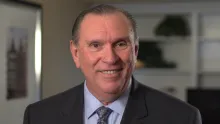
Randy D’Alessandro served as pastor for the United Church of God congregations in Chicago, Illinois, and Beloit, Wisconsin, from 2016-2021. Randy previously served in Raleigh, North Carolina (1984-1989); Cookeville, Tennessee (1989-1993); Parkersburg, West Virginia (1993-1997); Ann Arbor and Detroit, Michigan (1997-2016).
Randy first heard of the church when he was 15 years old and wanted to attend services immediately but was not allowed to by his parents. He quit the high school football and basketball teams in order to properly keep the Sabbath. From the time that Randy first learned of the Holy Days, he kept them at home until he was accepted to Ambassador College in Pasadena, California in 1970.
Randy and his wife, Mary, graduated from Ambassador College with BA degrees in Theology. Randy was ordained an elder in September 1979.
