

Rick Beam
This transcript was generated by AI and may contain errors. It is provided to assist those who may not be able to listen to the message.
Today we want to return back to Isaiah. I gave a sermon on Isaiah, a portion of Isaiah 7. We went through the first nine verses of chapter 7. As I was looking at the balance of chapter 7, one verse in particular stood out in my mind, and this whole sermon is going to be springing from that one verse. Before we get into that one verse and the sermon that I want to give you today, let's have a little bit of a review. Isaiah lived his life under the shadow of the threatening Assyrian Empire. He actually, after about 20 years of his ministry, saw the nation of Israel go into national captivity. Now Isaiah was from Judah, and at that point Babylon had not risen the prominence, but it was going to. And as Babylon rose to prominence, that nation, Babylon, would subjugate his nation of Judah, and they would go into national captivity. But as you go through the book of Isaiah, you see some of the most inspiring commentary in all of the scriptures. And I've said on numerous occasions to you that when I go to the feast, if I don't have a good helping of the book of Isaiah, I feel kind of gypped. I feel like as though something was wrong. Why don't we have some Isaiah? And I've given the sermons basically in Bible studies, basically on the book of Isaiah, and there at the feast. Isaiah was known by some people as the evangelical prophet, because of all the Old Testament books, all of his messianic prophecies contain something that's very interesting. They contain the gospel of the kingdom of God.
Did you ever think you would find the gospel of the kingdom of God in the Old Testament? Well, a little bit of a preview. That's exactly what we're going to discuss today. We're going to take a look at the gospel of the kingdom of God as seen in the book of Isaiah. Perhaps that's one of the reasons why Isaiah joins Deuteronomy and Psalms as the three most quoted books in the New Testament. Now, let's drill down to that one golden nugget, spiritual golden nugget I made reference to, and that's found over in Isaiah 7, verse 14. So let's turn over there. So let's turn over there.
Isaiah 7, verse 14.
Therefore the Lord himself will give you a sign, Behold, the virgin shall conceive and bear a son, and shall call his name Emmanuel. A prophecy about the birth of Jesus Christ. The birth of Jesus Christ. And again, remember the setting here. These are very dark times that Isaiah was living through. And yet in these darkest of times, he has this golden nugget here that he proclaims, the birth of the coming Messiah. So I thought it would be good for us, since we've gone through so many bone-crushing prophecies in this book of Isaiah, to have a little bit of a respite and to take a look at the positive things, the things we love to meditate on and to feast our minds on, the beautiful prophecies of the wonderful world tomorrow.
We're going to do that today. And as we do so today, we're going to take a look at the Gospel according to Isaiah. Now in your Bibles, when you look at Matthew 1-1 or Mark 1-1 or Luke 1-1 or John 1-1, you probably see something that says something in effect, the Gospel according to Matthew or the Gospel according to Mark or the Gospel according to Luke or the Gospel according to John. You don't really see that when you turn your Bibles to Isaiah 1-1, but today we're going to take a good long look at the fact that there is a good long look at the Gospel message in the book of Isaiah.
So if you're taking notes and you want something to write across the top of your paper for your notes, the theme for today's sermon is this. Isaiah proclaims a message of hope through the Messiah. Isaiah proclaims a message of hope through the Messiah. And this is what inspired Isaiah and all of the writings that he put together, things that you and I enjoy reading so very, very much. Now we see here in Isaiah 7, verse 14, that this individual who was to be born of a virgin, his name shall be called Emmanuel.
What does that name mean? Emmanuel. Emmanuel means God with us. God with us. Rather than consider how different today's world would be if mankind allowed that one name to affect every one of our thoughts, every one of our thoughts, every one of our actions, everything that we did as a human race, God with us. We would see a very different world, wouldn't we? Let's take a look at Matthew chapter 1.
And as you can see, as you turn probably in your Bible, I know it's written this way in my Bible, the Gospel according to Matthew. Matthew chapter 1, verse 18. Now the birth of Jesus Christ was as follows. After his mother Mary was betrothed to Joseph, before they came together, she was found with child of the Holy Spirit. Then Joseph, her husband, being a just man and not wanting to make her a public example, was minded to put her away secretly.
But while he thought about these things, behold, an angel of the Lord appeared to him in a dream, saying, Joseph, son of David, do not be afraid to take to you Mary, your wife. For that which is conceived in her is of the Holy Spirit. And she shall give birth, and she shall bring forth a son, and you shall call his name Jesus, for he shall save his people from their sins.
So all of this was done, that it might be fulfilled which is spoken by the Lord through the prophet Isaiah chapter 7, verse 14, saying, behold, a virgin shall be with child, and shall bear a son, and they shall call his name Emmanuel, which is translated God with us. God with us. So this name of this individual is going to be born, it was talked about in Isaiah 7, 14. It was talked about by Isaiah, talked about by Matthew, talked about any number of people in the New Testament.
God with us. And you know, it's interesting, brethren, when you take a look at the various things that God was doing in the Old Testament, you had the pillar of cloud, the pillar of fire, you have various visions of the prophets, you have earthquakes, you've got lightnings, you've got, you know, God coming down to Mount Sinai with the all the clouds and the the ear-splitting thunder and lightning and so forth. You even had to steal small voice.
And in all of that, you saw powerful manifestations of God. And we don't want to make light of any of those manifestations, but the biggest manifestation is what we're seeing prophesied in Isaiah 7, 14. Emmanuel being born. Jesus Christ being born. Now, let's take a look at John 1.
Because John has something to say about Emmanuel.
John 1. He's got a lot of things to say, but there's one thing in particular I want to point to here, John 1, and in verse 14. John 1.14. And the Word became flesh and dwelt among us, and we beheld as glory, the glory as of the only begotten of the Father, full of grace and truth. So, this is a discussion about Emmanuel. This is a discussion about the Christ that was going to be born, Jesus. And I want to draw your attention to the word dwelt. Emmanuel came and dwelt among us. The word dwelt comes from the Greek word skinu, which is Strong's 4637. Strong's 4637. The word dwelt literally means to pitch a tent or to tabernacle. So, what is John saying here? John is saying, under the inspiration of God, that Jesus Christ came in a bodily form. His body was like a tent, a fleshly tent. Jesus Christ came into the wilderness of the human condition to become with us, God with us, through His body. He tabernacled with us through His body. And not only did He tabernacle, He brought a message. It's a message that we see running throughout the course of the Bible. Old Testament anew. Let's go back to Mark chapter 1. We went through this with our in-home Bible study, but let's refresh our minds. Mark chapter 1.
This is the message that Emmanuel brought as He was tabernacling with us, as He dwelt with us. Mark chapter 1 verses 14 and 15. Now, after John was put in prison, John the Baptist, Jesus came to Galilee. This is where this message is going to start. Proclaiming the gospel of the kingdom of God. And in just a little bit, we're going to go through what that means. The gospel of the kingdom of God. And saying, the time is fulfilled and the kingdom of God is at hand, repent and believe in the gospel. We have to believe in this word. We've got to believe in the gospel. We've got to believe in this message that Emmanuel brought. The good news of the kingdom of God.
Now, I made mention a moment ago when I saw a few eyes rolling a little bit when I said the gospel message was not only preached in the New Testament, it was preached in the Old Testament. Let's take a look at that. The gospel message being preached in the Old Testament. We're going to turn to the New Testament to see a reference that I think will bear witness to what I'm saying. Acts chapter 28. Acts chapter 28. Acts chapter 28 and verse 23.
Acts 28. Here we're talking about the apostle Paul. He's under house arrest. And people wanted to come to him and hear the words he had to speak about the gospel message. Notice what he says here, what it said here. Acts chapter 28 verse 23. So when they had appointed him a day, many came to him at his lodging to whom he explained and solemnly testified of the kingdom of God persuading them concerning Jesus from both the law of Moses and the prophets from morning till evening. So here's a scripture in the book of Acts saying how the apostle Paul talked about the kingdom of God as witnessed by the law of Moses and the prophets. Now, you know, brethren, there are many people who think we don't need the Old Testament at all. There are people who are very zealous people, very dedicated people. They want to get Bibles to everybody they can get Bibles to. And normally the Bibles they hand out will have the New Testament. Sometimes they'll have Psalms and Proverbs. And that's it. Psalms, Proverbs, and New Testament. Don't need the rest of that Old Testament. And yet I would tell you if all you had is the Old Testament, you would be able to find scriptures dealing with salvation. So let's explore. Well, let me prove that to you. Let's go to 2 Timothy chapter 3. 2 Timothy chapter 3 and verse 15.
Paul here talking to a young gentleman in the ministry, Timothy. 2 Timothy 3, 15, that from childhood you have known the Holy Scriptures. Now in Timothy's childhood, the only Holy Scriptures he had available to him was the Old Testament. And from childhood you've known the Holy Scriptures which are able to make you wise for salvation. So yes, you can preach salvation if all you have is the Old Testament. And from childhood you've known the Holy Scriptures which are able to make you wise for salvation through faith which is in Christ Jesus. And you can have learned faith through the pages of the Old Testament as well. So here we want to talk about the gospel of the kingdom of God. Let's define some terms here. What does the word gospel mean? The gospel is Strong's number 2098. 2098 means good news.
One of the lectionaries that gives definitions of biblical words talks about how the word gospel in the Old Testament means information that causes joy. That's another definition of the gospel, information that causes joy.
In secular Greek literature, it's not defined this way in the Bible, but in secular Greek literature the word gospel is translated news of victory. Now I really like that. Again, you're not going to find that in the Scriptures. It's in secular Greek literature, but it's also very interesting. News of victory. So the gospel is the good news. The gospel is the information that causes joy of the kingdom of God. Now I want to quote, save you from reading or turning to so many scriptures today, and I've got more than normal. I'm going to go through five scriptures here. I'm just going to read them. You can take them down your notes if you want a full set of notes. But the gospel is referred to by a number of names. Same message, but different names for the same message. Each of these names, just like God has a number of names. Same God, a lot of different names. And just as with the God name, with the names of the gospel, each name gives you a different understanding. The gospel message is a very, very large message. You can take a number of sermons talking about all there is when you're talking about the gospel. A very involved message. Many faceted. So let me just go through these five. Mark 1.1. The beginning of the gospel of Jesus Christ. So here we see the gospel is Jesus Christ's gospel. Mark 1.1. Acts 20, verse 24. Acts 20, verse 24. I'll read this for you. But none of these things moved me, nor do I count my life dear to myself, so that I may finish my race with joy and a ministry which I receive from the Lord Jesus to testify, and here it is, to the gospel of the grace of God. The gospel of the grace of God. So the gospel message also deals with grace.
The third one, Romans 10, verse 15. And these aren't the only ones, brother. There's others that you can get into. I just wanted to give you a sampling to show you how this one message has got a number of names and how it's many-faceted. Romans 10, 15. And how shall they preach unless they are sent? As it is written, how beautiful are the feet of those who preach the gospel of peace.
The gospel of peace. Another facet to the gospel of the kingdom of God. Romans 15, verse 16. Romans 15, 16. That I might be a minister of Jesus Christ, that the Gentiles, ministering the gospel of God. The gospel of God. That the offering of the Gentiles might be acceptable, sanctified by the Holy Spirit. It's God's gospel as well. And the last one I want to refer to is Ephesians 1, verse 13. Ephesians 1, 13.
In him you also trusted, after you heard the word of truth, the gospel of your salvation.
The gospel of your salvation.
In whom having believed you were sealed with the Holy Spirit of promise.
So we see a number of things there in terms of the names regarding the gospel of the kingdom of God.
Does the gospel of the kingdom of God talk about the life and death and resurrection of Jesus Christ? Of course it does. That's a major aspect of the gospel message. Let's look at Acts chapter 28. Acts chapter 28. We were here a moment ago, but we're going to read a different verse this time. Acts chapter 28 verse 31. Acts chapter 28, let me get there, verse 31. Preaching the kingdom of God and teaching the things which concern the Lord Jesus Christ with all confidence, no one forbidding him. Notice, preaching the kingdom of God and teaching the things which concern the Lord Jesus Christ. So there's a scripture that talks about how the good news includes a message about what Christ has done for us. I'm not going to go back and turn to Mark chapter 1 again. Mark chapter 1 verse 15. It talks about how repentance of sin and belief in the gospel is also required. So repentance is a part of the message of the gospel. Belief or faith is also a part of the message of the gospel. Let's now turn to 1 Peter chapter 4. 1 Peter chapter 4. And verse 17.
For the time has come for judgment to begin at the house of God. That's God's church today. And if it begins with us first, what will be the end of those who do not obey the gospel of God? So obedience is also a part of this discussion about the kingdom of God.
I may mention from Acts chapter 28 and verse 23 that the gospel can be preached from the Old Testament scriptures. Let me give you one more citation I think is interesting regarding that. It's over in Galatians chapter 3.
Galatians chapter 3.
Verse 8 and 9.
Galatians chapter 3 verse 8. And the scripture foreseen that God would justify the Gentiles by faith preached the gospel to Abraham. The gospel was being preached to Abraham very early in the Old Testament. And preached the gospel to Abraham before and saying, And you all the nations shall be blessed. So then those who are of faith are blessed with believing Abraham. So what have we seen to this point in the sermon? We've seen in Isaiah chapter 7 and verse 14, we've seen in the book of Matthew how Emmanuel was to be born, God with us. We saw in the book of John how he was going to dwell among us. He was going to tent or tabernacle with us. We've seen different names of the gospel. It's the gospel of Jesus Christ. It's the gospel of grace. It's the gospel of peace. It's the gospel of God. It's the gospel of salvation. We see his message was discussed in the Old Testament. So that's the good news. The good news. But what is the good news of? It's the good news of the kingdom of God. It's the good news about government. It's the good news about government. Let's turn to Daniel chapter 2. We went through the book of Daniel, but let's refresh our memory on something here. In Daniel chapter 2, you see the image that we discussed that talked about the various world-ruling kingdoms. And this is important in that discussion about world-ruling government. That's the context. Let's take a look at Daniel chapter 2 and verse 44. And in the days of these kings, the God of heaven will set up a kingdom, will set up a government which shall never be destroyed, and the kingdom shall be not left to other people, shall break in pieces and consume all these kingdoms, and it shall stand forever. So Daniel chapter 2 and verse 44 talks about the gospel as a message about world-ruling government.
Let's add to that Revelation chapter 11.
Verse 15, and the seventh angel sounded, and there were loud voices in heaven, saying, the kingdoms of this world, the governments of this world, have become the kingdoms, or the government, of our Lord and of His Christ, and He shall reign forever and ever. So in two of the greatest prophetic books in the Scriptures, Daniel and Revelation, we see the context is real world-ruling government, and how God's government will rule the world.
Now, before I start getting into these wonderful scriptures in the book of Isaiah, there's just one other thing I need to discuss with you. Who's in the kingdom of God? Who's in the kingdom of God? There are times, I think, when some of our people think that all those living the millennium are in the kingdom of God. If you think that, you would be wrong. You would be wrong. Let's take a look at 1 Corinthians chapter 15. 1 Corinthians chapter 15.
Now this I say, brethren, that flesh and blood cannot inherit the kingdom of God. Flesh and blood cannot inherit the kingdom of God, nor does corruption inherit incorruption. Behold, I tell you a mystery. We shall not all sleep, but we all shall be changed. In a moment, in twinkling of an eye, at the last trumpet. For the trumpet will sound, and the devil will be raised incorruptible, and we shall be changed. So, who is in the kingdom of God? Only spirit beings are in the kingdom of God. The kingdom of God in the millennium will rule over flesh and blood human beings. But those flesh and blood human beings are not in the kingdom yet. They will be in the kingdom when they're resurrected to be spirit beings. So the people who remain in the nations of the earth who are not resurrected will not yet be in the kingdom of God. They're still mortal. Flesh and blood cannot inherit the kingdom of God. So that's a very important aspect to this whole discussion, which I think sometimes we may not fully appreciate. Now, we talked about the good news of the government of the kingdom of God. Let's now go through Isaiah, and only using Isaiah show the discussion about the gospel of the kingdom of God. To have a kingdom, to have this government that we're talking about, you need four things. You need territory, you need ruler, you need subjects or citizens, and you need laws. You need those four things to have a government. Let's take a look at number one, the territory that is being ruled over. Isaiah 2.
Actually, in Isaiah 2, we are going to see a summary of all four aspects for all four elements of the kingdom. Isaiah 2, verse 1, Now the word that Isaiah the son of Amos saw concerning Judah and Jerusalem, now shall come to pass in the latter days, end of the age, that the mountain of the Lord's house, God's government, the kingdom of God, shall be established on top of the mountains and shall be exalted above the hills. So God's government of the kingdom of God, of the spirit-ruling family of God, is going to be established on all the lesser governments that are on earth. There will be Israel, there will be Egypt, and so on and so forth. Those are governments of physical people, but the spirit family of God will rule over that.
Notice verse 2 is talking about the whole world. So the territory of the kingdom of God, what the kingdom of God is ruling over, is the entirety of the earth. Verse 3, Many people shall come and say, Come, let us go up to the mountain of the Lord, to the house of the God of Jacob. So here we've got those being ruled over, the physical human beings. He will teach us his ways, and we shall walk on his paths, for out of Zion shall go forth a law, and a word of the Lord from Jerusalem. There we've got the laws of the government. You know, just like Mark chapter 1, verses 14 and 15, is a really good summary of the gospel message. Isaiah chapter 2, the first four verses, are a really good summary of the gospel of the kingdom of God as found in the Old Testament.
Verse 4, He shall judge between the nations. So again, this is discussing rulership, and rebuke many people. Well, spirit beings don't need to be rebuked. They're talking about the physical people being ruled over by the kingdom of God. And they shall beat their swords into plowshares, their spears into pruning hooks. They shall not lift up their sword against nation, either shall they learn war anymore. Again, so that section of Scripture, Isaiah chapter 2, verses 2 through 4, goes through all four elements of what a kingdom is. Let's now take a look at item number two, in what a kingdom or what a government entails, and that's rulership. Those ruling. Isaiah chapter 9. Isaiah chapter 9, verse 7, of the increase of His government and peace, there will be no end. So obviously, this is a government that will last for all eternity. It's the government of the family of God.
Notice, upon the throne of David and over His kingdom. We're talking about government again. To order it and to establish it with judgment and justice laws. From that time forward, even forever, the zeal the Lord of hosts will perform this. Now, let's take a look at some of the attributes of the God family that's ruling. Isaiah chapter 11. This is all under the second portion here of rulers and who these rulers are going to be and what are their characteristics. Isaiah chapter 11, verse 2. The Spirit of the Lord shall rest upon Him, the Spirit of wisdom and understanding, the Spirit of counsel and might, the Spirit of knowledge and the fear of the Lord. So here we see the empowerment of the Holy Spirit powering the family of God, and specifically Jesus Christ being referred to here. Chapter 42 of Isaiah.
Isaiah chapter 42 and verse 3.
Again, this will refer—some of these scriptures will refer to Christ's first coming, some will refer to His second coming, but they all refer to Christ or the family of God, depending upon which one I'm reading. Here we're looking at Jesus Christ. Verse 3, Isaiah 42.3, a bruised reed He will not break, and the smoking flax He will not quench. He will bring forth justice for truth. So here we see an individual who's compassionate and gentle toward the weak. Not like the governments of today, that lack compassion and could care less for the weak.
Isaiah chapter 53. We read this every year at Passover, referring to Christ's first coming. Yet this is a part of the gospel message in Isaiah. Isaiah chapter 53 verse 3. He is despised and rejected of men and men of sorrows and acquainted with grief, and we hid as it were our faces from Him. He was despised and we did not esteem Him. Christ did more than was being crucified and tortured on a cross, on a stake. Jesus Christ went through a lot of mental and emotional anguish. Those people who said they loved Him, fled away from Him. This is all part of what He had to endure. Verse 4. Surely He has borne our griefs and carried our sorrows, yet we esteemed Him stricken, smitten by God and afflicted. He was wounded for our transgressions. He was bruised for our iniquities. The chastisement for our peace was upon Him, and by His stripes we were healed. We quote this verse on most occasions to talk about how Jesus Christ underwent severe torture to the place where He was hardly recognizable as a human being. And all we life sheep have gone astray. We have turned everyone to His own way, and the Lord has laid on Him the iniquity of us all. He was oppressed. He was afflicted. He was yet He opened out His mouth. He was led as Lamb to the slaughter, as a sheep before its shearers, as a silent. So He opened out His mouth. And yet we see that in the Gospel record, when Jesus Christ was being on trial and all that He endured.
Verse 8. He was taken from prison and from judgment. Who will declare as that generation? Who is cut off from the land of the living? For the transgression of my people, He was stricken. But now notice verse 10. Yet it pleased the Lord to bruise Him. He has put Him to grief when you make His soul an offering for sin. Talking about all that Christ did with His His whole life and at the end there His torture and so forth. He shall see His seed. He shall prolong His days. And the pleasure of the Lord shall prosper in His hand. Verse 10 is talking about how Jesus Christ was resurrected and overcame death. We don't just have a Savior who died on a cross or a stake. We have one who is resurrected from the dead. We worship a living Savior. Okay, so we're taking a look at the territory which is the whole of the earth. We've taken a look at the king of the supreme rulers of the government, generally in the form of Jesus Christ. Of course, the saints are going to be a part of that and a rule with Jesus Christ. Take a look now at number three, the subjects or the citizens that are being ruled over. Isaiah 11.
Isaiah 11.
Starting here in verse 10. Isaiah 11 verse 10.
So Gentiles will be a part of the group that's being ruled over. Verse 11.
There's going to be a second exodus when our nations are taken into national captivity. There's going to be a second exodus of our peoples who are scattered throughout the globe back to the holy land. And these peoples, whether they be Gentiles or Israel, will be rule those being ruled over by the kingdom of God. Isaiah chapter 19.
Isaiah chapter 19 verse 23.
In that day there shall be a highway from Egypt to Assyria, and the Assyrians will come together into Egypt and the Egyptian into Assyria, and the Egyptians will serve with the Assyrians. In that day Israel will be one with the three, with Egypt and Assyria, a blessing in the midst of the land, whom the Lord of hosts shall bless, saying, Blessed is Egypt, my people, and Assyria the work of my hands, and Israel my inheritance. So this is a profound scripture showing that in the kingdom of God is its ruling. Rules rule over enemies that were former enemies, but now are brothers, former enemies now at peace. Egypt, Assyria, and Israel. This is what takes place in the kingdom. Chapter 35. We talked about some of the characteristics of those who were ruling the family of God. Let's take a look at what happens to those who are being ruled over. The healing of the nations. Isaiah 35. The wilderness and the wasteland shall be glad for them, and the desert shall rejoice and blossom as the rose. In the world tomorrow, we're not going to have the Sahara Desert. We're not going to have the Gobi. We're not going to have the frozen waste up in Siberia. We can't afford to have that in the world tomorrow, because after 1,000 years, billions upon billions of people are going to be raised all in one second, and they're going to need a tremendous breadbasket of a world to be able to have food. These people are resurrected. There are probably going to be some of them like me, and after a few minutes they're going to want to eat. And after they eat, they're going to want to do other things. And so we've got to make sure this world is ready to accommodate all these people and all of their needs. And of course, I've told you in the past that right now under the Sahara is an aquifer that contains more fresh water than all the Great Lakes combined. But it's so far down, it's not economical to get to that. We just can't drill far enough and make it cost effective. To get at that water. But God has His own way of drilling. He doesn't have to work in a union.
If He wants something to be done, it's going to be done. So the world is just going to be a tremendous place to see in terms of how beautiful it is. Verse 2, "...shall blossom abundantly and rejoice, even with joy and singing, the glory of Lebanon shall be given to it, the excellence of Carmel and Sharon. They shall see the glory of the Lord, the excellency of our God." And so we're looking at a time of just fantastic beauty on planet earth for those physical human beings who are now living on planet earth. And remember, once Christ comes to establish the Kingdom of God on earth, ruling all these human beings, at that point at the beginning of the millennium, the world is in such bad shape people can hardly get a breath of fresh air. That's why the angels had to say, don't hurt any more green things. The world will have gone through biological war, nuclear war, chemical war, 90% or more of the human population will have died in all of that cataclysm. And so now, when the world is in such horrible shape, and this is going to take a while, that's not going to happen overnight, God is going to refashion things. We see that at the end of the book of Revelation, where mountains are going to be lowered, islands are going to be changed, so the topography of the world can be changed, so weather patterns will be changed. And then with the weather patterns being changed, then we're going to see the earth blossoming like the rose. Verse 3, strengthen the weak hands and make firm the feeble knees. Now, that's true physically.
I'm not that old, but I don't get out of bed as fast as I once did. I don't get out of a chair as fast as I once did. But a lot of this I was also talking about people in their mental outlooks being so fragile. By the time the millennium starts, any human being still alive are going to be basically people who are very, very dysfunctional. All the things they will have seen, all the things they will have gone through, the death and so forth, and they will have weak hands, they will have feeble knees from a mental and emotional perspective. Say to those who are fearful-hearted, Be strong, do not fear. Behold, your God will come with vengeance, with the recompense of God, for He will come to save you. So now God is going to intervene. The eyes of the blind shall be open, the ears of the deaf shall be unstopped. Now, there's physical and spiritual aspects to this.
Not only is this true physically, people who have got all these various physical issues, but it's also true spiritually. The eyes who are blind spiritually shall now be open. The ears who can't understand the gospel message, those ears will now understand. Things will be clear. God's spirit will be used, and God's law will be all throughout the earth. Verse 6, The lame shall leap like a deer, the tongue of the dumb sing. And again, talking about physical maladies being corrected, but also touching base with spiritual. For water shall burst forth in wilderness and streams in a desert. And, you know, this is all typical of God's Holy Spirit. Just as God's Spirit is going to be throughout the course of the earth to help people to understand, there'll be physical waters to refresh the earth. Verse 7, The parched ground shall become a pool, and the thirsty land springs of water. The inhabitants of jackals, where each leg shall be grass with reeds and rushes. A highway shall be there in a road. It shall be called the highway of holiness. The unclean shall not pass over it, but it shall be for others. So there's going to be a highway where people can go to Jerusalem. Whoever walks the road, the little fool shall not go astray. Why not go astray? Because God's laws will be being taught. No lion shall be there, nor shall any ravenous beast go upon it. Nor shall not be found there, but the redeemed shall walk there, and the ransomed of the Lord shall return, and come to Zion with singing, with everlasting joy on their heads. They shall obtain joy and gladness, and sighing shall flee away. So here you got the discussion about, you know, not all roads leaning to Rome, but a roadway, a tremendous roadway, leaning to the place in Jerusalem where the law of God will be taught. Lastly, of our four things, we've taken a look at the territory. Number one, we've taken a look at the rulers. Number two, number three, we've seen the subjects. Now, number four, the laws. We've actually touched base on this as we've been going through various scriptures. Isaiah 11, verse 9.
Isaiah 11, verse 9.
They shall not hurt nor destroy in all my holy mountain, for the earth shall be full of the knowledge of the Lord as the waters cover the sea. The earth shall be full of the knowledge of the Lord. Right now, people are being destroyed for lack of knowledge of knowledge of God, but after the return of Jesus Christ and the establishment of the kingdom of God on earth, the earth shall be full of the knowledge of the Lord. Now, I don't know how much, you know, we're going to do in terms of homeschooling in the world tomorrow. I'm sure there'll be some of that. There may be also public education, public universities, libraries. Isn't it a wonderful thing to imagine that every book on planet earth will be nothing but truth? No lies, nothing to deceive or mislead, nothing but truth. Every place you go, the truth of God, the truth about anything you want to look into. You know, you don't have to worry about area 51, and so some of those things people think about today. You know, all you're going to have is the pure word of God wherever you go, and how is that in terms of God's knowledge and way of life? Here in chapter 11, let's look at verse 3.
His delight is in the fear of the Lord. He shall not judge by the sight of his eyes, nor by the hearing of his ears, but with righteousness he shall judge the poor, and decide with equity for the meek of the earth. He shall strike the earth with the rod of his mouth, and with the breath of his lips he shall slay the wicked. Righteousness shall be the belt of his loins, and faithfulness the belt of his waist. So here we're looking at judgment in righteousness. What is righteousness? God's law is righteousness. The laws of the world tomorrow are not a burden. People today want to say the law of God is burdensome. It's not burdensome.
It's beautiful. Isaiah chapter 33, as we begin to close down shop here, Isaiah chapter 33, verse 22.
Isaiah 33 verse 22. For the Lord is our judge, the Lord is our lawgiver, the Lord is our king, he will save us. Judge, lawgiver, king, laws, and a form of government.
So today, brethren, we've taken a look at Isaiah chapter 7 verse 14. We've taken a look at the idea that a child was going to be born, the prophecy about Emmanuel coming. It was prophesied by Isaiah. It was written by Matthew when he was actually born. That child, God with us, Jesus Christ, came to dwell among us in his fleshly tent. He came proclaiming the gospel of the kingdom of God. And we've taken a look at that gospel, and we've taken specifically a look at the gospel message that came from the pen of Isaiah in the Old Testament. We've seen in the New Testament, in the book of Timothy, where Timothy can learn all he needed to know about salvation from the Old Testament scriptures. So why have I given the sermon today? Well, first of all, I think it was time to go away from some of those bone-crushing prophecies. But secondly, it's just good for us to appreciate the beauty we have in all of Scripture, the beautiful message we have that starts in Genesis and goes all the way through Revelation. The Bible is not at war with itself, and when you have people who want to say, well, I don't need that Old Testament, yes, we do. We need to live by every word of God, every word of God. And certainly, we want to live by the words of God that preach the gospel of the kingdom in the Old Testament.
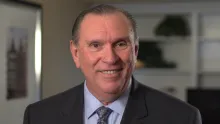
Randy D’Alessandro served as pastor for the United Church of God congregations in Chicago, Illinois, and Beloit, Wisconsin, from 2016-2021. Randy previously served in Raleigh, North Carolina (1984-1989); Cookeville, Tennessee (1989-1993); Parkersburg, West Virginia (1993-1997); Ann Arbor and Detroit, Michigan (1997-2016).
Randy first heard of the church when he was 15 years old and wanted to attend services immediately but was not allowed to by his parents. He quit the high school football and basketball teams in order to properly keep the Sabbath. From the time that Randy first learned of the Holy Days, he kept them at home until he was accepted to Ambassador College in Pasadena, California in 1970.
Randy and his wife, Mary, graduated from Ambassador College with BA degrees in Theology. Randy was ordained an elder in September 1979.
