
Frank Dunkle
This transcript was generated by AI and may contain errors. It is provided to assist those who may not be able to listen to the message.
Once again, Mike and Jim appreciate your service to God's people today. Happy Sat with all of you again!
I would like to begin the sermon today by telling you a true story of a series of events that occurred in 1979, 41 years ago. I have a close acquaintance who witnessed the events that I'm about to describe. So these are from his first-hand experience of these events. He was 25 years old at the time. To give you some background, he was attending a small private religious college in Southern California. The founder of the college and of the church that subsidized it were very controversial. They were well off financially, bought a lot of media time, had a lot of influence and a major footprint in the religious world, considering how small their actual numbers were. They were not part of the mainstream. So now I'm going to begin the story. On January 2nd, 1979, suddenly, in a great shock to this church organization, a court-appointed receiver arrived on the main building, unannounced, as a result of a lawsuit brought forward by the California Attorney General's office, charging the church leadership with pilfering church funds, liquidating assets, selling property, using church transactions for personal gain, and living extravagantly. A group of former disgruntled members had actually gone to a loft firm in New Jersey. Well, New Jersey's not California, so that didn't help much, but they hired an attorney from California, whose name was Hillel Chodos, to become involved in these accusations. He went to the Attorney General's office and convinced the Deputy Attorney General, whose name was Lawrence Kapper, to use his powers to place the church under a receivership. The name of the Attorney General at that time was George Duque-Majean, and the receiver was a retired judge named Stephen Wiseman, W-E-I-S-M-A-N. Now, the normal course of events similar to this, what would have occurred is an individual or a state would have filed a lawsuit, and in it they would go to court and request the court that demanded all financial records to be subpoenaed, and then there would be testimony and cross-examination and investigation of those financial records. But this was draconian. This did not happen in this case. It was rare, exceedingly rare, that an Attorney General of any state would go and appoint, suddenly, without the church first being able to respond in any way, a receiver to control the finances of that church, and in essence, it's going to control the ecclesiastical nature of a church, because pastors receive salaries. That's financial. Churches purchase magazines. That's financial. How many magazines? Churches purchase TV time. They pay for hall rentals. They pay to help those who need emergency funding. So you cannot separate finances of a church from its ecclesiastical responsibilities. Most of those ecclesiastical responsibilities cost money, and they're involving the decision to spend money. But that didn't happen, the normal course of events, in the case of this church. There was no actual evidence of a crime, just some scandalous accusations. The state came in looking for a crime to prosecute this church for and its leaders. Now, that was rare then. Unfortunately, things have degenerated in our culture today, where this happens every day now in American politics. Groups of people, sometimes Congress itself, subpoenas' records, and subpoenas' information, just on mere accusations, and then looks through all of them to try to find a crime, depend on a particular politician. My close acquaintance was actually there the very minute that the receiver, and his posse of lawyers, arrived. They came in suddenly, came in rapidly. There was the receiver, an elderly gentleman, Judge Wiseman, who walked rather slow and was elderly. With him was Hillel Chodos, the man that I mentioned who had been contacted from a law firm in New Jersey, and a number of other attorneys, all came into the building that was called the Hall of Administration, and walked up to the information area, and said to the young lady who was there, we would like to speak with the founder of this organization, who happened to be Herbert W. Armstrong, we would like to talk to him.
And the young lady, the receptionist who had no idea what was going on, said, I'm sorry, he's not here, there's nothing that he can answer for you because he's not here. And they said, well, we would like to see the person who is responsible for the management of this organization. We'd like to talk to him. And his name was Ellis LaRavia. And he died, by the way, not too many months ago. He was a pastor in the United Church of God. He came down the elevator, spoke with them briefly and asked them to leave. They immediately all ran to the elevator, pushed the button on the elevator to the fourth floor, which was where the main executive offices were, and started sailing up to the main part of this particular building. And again, my close acquaintance was there at that time. He was an electrician. He was actually changing light bulbs and fixtures between each of these four floors were two large atriums, and between the floors were beautiful brass light fixtures that occasionally needed light bulbs changed. And my closest acquaintance was there at that moment changing light bulbs and one of those light fixtures between the floors.
On January 4th, two days later, my friend personally attended a hearing before Judge Vernon Foster in downtown Los Angeles in a courtroom. The room was packed. It was standing room only. You were standing there in the gallery, the public gallery of that courtroom, sardine, packed tightly together to the point where they couldn't fit everybody in the room anymore, and they had to close the door. And in the entire hearing, you were in a standing position with bodies pressed against you front, back, and sideways. No financial misconduct had been discovered. That was admitted so far. The court ordered that all records were to be returned to the church. However, the investigation the judge said would continue, and the receiver would still remain in place. The receiver would remain in control of all church finances and, in essence, ecclesiastical affairs, and continue to examine financial records at the church's main administrative office. So the judge ruled. My close acquaintance joined a group of students and employees and picketed in front of the L.A. County Courthouse. He held up a sign that said, California, unfair to churches, and with them he picketed all day. As soon as the receivership began, one of the church's primary banks canceled a crucial multi-million dollar loan. Many members also stopped sending their tithes and offerings to the church because they didn't want the money to go to a court-appointed receiver. They didn't want him spending their tithe dollars. These factors immediately put the church into a financial crisis. Members withheld their tithes or sent them to the church's founder who at that time was living in the state of Arizona. The receiver sent a telegram to all ministers of the church, decreeing that members were not permitted to make contributions to the church leader or his representative for church purposes or on behalf of the church. So here's a receiver telling people individually what they are allowed to do. My close acquaintance was told by his friends and co-workers, don't be stupid! Don't get involved in this. You might get arrested. You might have a criminal record that will affect you and hurt your employment opportunities for the rest of your life.
There might be danger if you pick it. There may be people there who don't agree with you. You might get arrested if you pick it. And the Apostle Paul said in Romans that we should submit the government authorities. That's what he was told. On January 22nd, which was a Monday, about 3,000 members without being urged by any church leaders, just word of mouth among employees and college students, spontaneously descended upon the church headquarters and campus. This included my close acquaintance and his wife and their two-year-old daughter.
That morning, some ministers organized a church service in this main building known as the Hall of Administration. Since they were holding a religious observance on their own private property, these members locked the doors, which is something we do. After services have been going on so long, we oftentimes lock the doors to this building as a safety procedure. When the court appointed receivers showed up for work that Monday morning, he couldn't get in. And needless to say, Judge Wiseman was not happy, because my close acquaintance was there and remembers the look of disgust on his face when he pulled that handle on that building door and it would not open. One of the placards were put up that read, Not many wise men now are called. I know it's corny. Actually, it was soon taken down because there was a fear of it being considered anti-Semitic. Judge Wiseman was of Jewish heritage. On January 24th, a few days later, there were about 5,500 brethren occupying those church buildings. The court appointed receiver, Judge Wiseman, was quite angry at this time. He immediately secured a court order, authorizing the use of force if necessary to get into the buildings. That day, police forces massed just outside the church headquarters and campus, ready to seize the building by force and the jail thousands of church members. There were rumors that a group of police in riot gear were assembling at the Rose Bowl, which was an athletic stadium not too far from this location, and they were preparing the storm building by force. Inside the main administrative building was my close acquaintance, his wife, and their two-year-old daughter. Again, my close acquaintance was told by friends and co-workers, don't be stupid! Don't even get involved in this. You might get arrested. You might be physically hurt when the police come in. Your wife and daughter might be harmed during a police raid. You might have a crime in your personal record. You might hurt your employment opportunities for the rest of your life. And don't forget, the Apostle Paul said in Romans that we should submit to government authorities. Well, by now, this church versus state standoff had made national news. Eventually, it was even included on a very popular weekly news program on Sunday night. It's called 60 Minutes, in which one of the leaders of the church was interviewed by one of the 60 Minutes correspondents. Judge Wiseman recognized that if he used force to arrest hundreds of peaceful religious protesters, it would be extraordinarily bad publicity for the state, especially if any members were harmed in the process. So he sought a compromise, and the receiver agreed to stay off campus and check church records in an office nearby, but literally off campus. But technically, the receivership was still in charge. On February 6th, former judge Steven Wiseman, who had been appointed the receiver thus far, resigned abruptly, expressing difficulty that he wasn't getting cooperation from the church staff. So he became frustrated, and he resigned his position as receiver. On February 21st, the church won a short-term victory in its legal battle. When the state of California Judge Julius Teitel of Los Angeles Superior Court said he would suspend the nearly two-month receivership placed on the church, he directed that the attorney general simply conduct an audit of the church's financial records at state expense. Then he did something rather interesting as part of his decree. In conjunction with the dissolution of the receivership, Judge Teitel awarded the receiver and his attorneys fees in the amount of $250,000 to be taken out of church funds.
The church continued its appeal, didn't like this decision, continued appealing the receivership. Judge Teitel reimposed the receivership on the grounds that the church appealing, using its constitutional rights to appeal, quote, raised a question as to why they are resisting, end of quote. So the receivership was removed shortly thereafter the receivership was reinstated. On March 12th, Judge Teitel appointed another receiver. However, by mid-March, the California Attorney General's office was receiving massive political criticism, including criticism from other religious organizations who didn't appreciate their heavy-handed approach to this small church organization, and they began to realize that they had grossly overstepped their bounds.
On March 16th, the judge recognized the church's right to appeal. Suddenly they had a right to appeal. A few days earlier, they didn't, and another receiver had been appointed, and he accepted a bond that was signed by 900 church members guaranteeing $3.4 million in security. And this provided the money needed to get the receiver out and to protect the church while the case continued through the courts. And it slowly did, as most legal cases do. About a year and a half later, October 4th, 1980, the state of California officially dropped the lawsuit immediately as a response to the California state legislature passing a law that limited the Attorney General from investigating religious organizations in the heavy-handed way that they had seized the worldwide Church of God. So controls were now put on the state Attorney General's office that were not there before. In December 9th, 1981, an interesting thing happened. One of the original California attorneys named Hillel Chodos, remember I mentioned him? He was contacted by the law firm in New Jersey, and he's the one that went to the Deputy Attorney General's office and pushed for a receivership. Well, he had become, after the receivership was instituted, a special, deputized Attorney General for the state of California. So in December 1981, he went to court demanding that the church pay him $100,000 in attorney's fees. The California Second Court of Appeals denied his request, and here's what they stated in their denial. I'm going to read this. I'm going to quote from this. Quote, we are of the opinion that the underlying action, that is the receivership, and its attended provisional remedy of receivership were from the inception constitutionally infirm and predestined to failure. It follows that the burden of the ill-conceived litigation, including the expenses of the receivership and chodo's fees for procuring that receivership, should not be borne by the prevailing party, the church. End of quote. So that kind of put everything buttoned up in a neat package together. There's a silver lining to all that. Actually, with anything in life, no matter how difficult, how challenging, there's always a silver lining. And here's the silver lining of that whole episode. Among other things, the court had blocked the sale of a second college campus that had signed a contract to sell a campus in Texas, 20 million dollars, and the sale would have gone through. And the receivership stopped that sale. Remember, that was one of the accusations they were selling church properties? If it were not for the receivership, that sale would have gone through in 1979, and an entire generation of students would not have had an opportunity to attend there. So that's the silver lining. So what's the purpose of this truthful story today?
Well, I followed the example of the Apostle John in his Gospel, and I spoke in third person about my close acquaintance, because I wanted the main focus of this story to be on the actual events, and not on myself. I am the person who lived through these events, as did my wife, B.J., as did our small daughter, two-year-old daughter, Kelly, at the time. If I had to do the same thing today, I would do it all over again, without hesitation, without skipping a beat. I feel that strongly about the rights I have been given as an American citizen. And in spite of the criticism that I received, I didn't care, because I knew that the Scriptures were on my side. And we're going to take a look at that in a few minutes. And I knew something else. Here's my favorite saying from Martin Luther King. And I think I've mentioned this before in services. He was addressing a group of people, African Americans, and some did not want to peacefully protest. And they had good reasons. We might get beat up. They might put dogs on us. They might hit us with a fire hose. My boss may recognize me and fire me. Some of the similar things, criticism I received from my co-workers and friends when I picketed it, when I went inside of the buildings that were re-seized the buildings over again from the state of California. Martin Luther King said this.
He said, if you're not willing to die for something, you're not fit to live.
So what are you willing to die for?
What in your value system is important to you?
Well, let's take a look at Mark chapter 12 and verse 14. I'd like to answer some questions today, because one of the things that I heard over and over again is that what I was doing by picketing, what I was doing by staying inside of buildings, what I was doing by protesting peacefully, was not being submissive to the government. Is that true? Well, let's begin in Mark chapter 12 and verse 14, get into the scriptures and take a look at a few things together. Again, this is Mark chapter 12 and verse 14. And when they had come, they said, him, teacher, we know that you are true and you care about no one. Now, what they mean there is that you really don't care what other people say. You don't care that you've heard other people's opinions or feelings. Jesus was a lot different than the many politicians and CEOs we have today who say something on Twitter, say something and get a little push. I'm sorry! Jesus wasn't that way. He really didn't care if you liked what he said or not. So they said and care about no one, meaning Jesus didn't lose sleep over what other people thought about him or if he said strong things, what he said. For you do not regard the person of men but teach the way of God in truth. Is it lawful to pay taxes to Caesar or not? Shall we pay or shall we not pay? But he, knowing their hypocrisy, said to them, why do you test me? Bring me a denarius that I may see it. So they brought him a coin. And he said to them, whose image and inscription is this? And they said to him, Caesar's. And Jesus answered and said to them, render to Caesar the things that are Caesar's and render to God the things that are God's. And they marveled at him. Some of them were hoping to trap him. They were hoping it would say you don't have to pay taxes. That's secular. That's of the world. Don't pay taxes. So they could all go tiptoeing to the Roman authorities and saying, this man is preaching. We don't have to pay taxes. So they really wanted to test him and make him stumble. The New Century version says here in verse 17, then Jesus said to them, give to Caesar the things that are Caesar's and give to God the things that are God's. The men were amazed at what Jesus said. End of quote. What Jesus is saying here is that we do indeed live in a secular world. This means that we have obligations, we have laws, and we have rights from secular rulers. In a similar way, we have obligations, we have laws to obey, and we have certain rights from God. If the two, by the way, are ever in conflict, we follow the instruction of the apostles in Acts chapter 5 and verse 29. It says, but Peter and the other apostles answered and said, we ought to obey God rather than men.
So Jesus says there are two different environments that we respond to. One is the secular government and rulers, and we obey those laws, and we respect what we're asked to do, and in a similar way, we do the same thing towards God.
Let's now go to Romans chapter 13 and verse 1, and we'll see that Paul later addressed the issue of taxation and more. He even goes a little more deeply in this when he gives particular instructions to the church at Rome. Romans chapter 13 beginning in verse 1.
He says, let every soul be subject to governing authorities. Now, in context, now you have to go to the context. He's talking about the Roman government. He's writing to the congregation that exists in the capital of the most powerful empire on earth at that time. Be subject to the governing authorities, for there is no authority except from God. In other words, God allows them. You may like them, you may not like them, but the fact that they are the authorities and they're ruling over you in this secular world means that God allows it to happen. It may not necessarily even be as well, but they're there, so he obviously allows it. And the authorities that exist are appointed by God. Therefore, whoever resists the authority resists the ordinance of God, and those who resist will bring judgment on themselves. Paul says here in verse 3, for rulers are not a terror to good works. And again, in context, he's talking about the Roman government. The Roman government was not oppressive regarding religion until the Jews rebelled in 70 AD and the Romans had to send an army in there. The Roman government normally didn't care what your religious beliefs were. As long as you didn't mess with the government, they didn't care how many gods you believed in or God that you believed in, they really didn't get involved in that. For rulers are not a terror to good works, but to evil. Do you want to be unafraid of the authority? Do what is good, and you will have praise for the same. Just obey the laws, and you won't get in trouble, is what Paul says. Verse 4, for he is God's minister. Same word used for servant. He is God's servant. He is God's servant to you for good. But if you do evil, be afraid, for he does not bear the sword in vain. Bearing the sword is an illusion of capital punishment here. For he is God's servant, an avenger to execute wrath on him who practices evil. Therefore, you must be subject not only because of wrath, but also for conscience sake. For because of this, you also pay taxes. For they are God's servant, attending continually to this very thing. Render therefore to all their due taxes, to whom taxes are due customs, to whom customs fear, to whom fear honor, to whom honor. What did Paul understand this to mean?
Some may read this, including those who were critical of what I did many years ago during that time, and perhaps even today. Who knows? Would say, well, by picketing, by demonstrating, by doing the things that you did, by not simply submitting to what a judge had said, or what some ruling was, you were resisting the government, you were violating what Paul said here. Is that true?
What did Paul himself understand this to mean? The best way to understand what Paul meant here is to look at an actual example and see what he did. So if you go to Acts 22 and verse 17, that's exactly what we're going to do. We're going to take a look at an actual story, an example, of Paul when he was being interrogated about his beliefs and who he was by the Roman authorities. Let's see what happened when Paul visited a temple. He visited a temple and he caused an uproar by his presence.
He was accused of defiling the temple by bringing Gentiles into the temple area in which Gentiles were not supposed to be. This caused a riot. He was beaten, and in a nick of time, because he might have been killed by the Jews in the nick of time, the Roman authorities came in, seized Paul, literally carried him out of the area, and on the way of taking him out, he says, wait, wait, wait!
I want to talk to these people! I want to give them a sermon! I want to tell them in Hebrew my side of the story! So they set him down, and that's exactly he begins talking to the crowd. Now, for the sake of time, we can't go through his whole sermon, so we're going to pick it up here in verse 17.
He's near the end of his little sermon. Now it happens! He's telling the crowd, when I returned to Jerusalem and was praying in the temple that I was in a trance, and saw him, that is Jesus, saying to me, make haste and get out of Jerusalem quickly, for they will not receive your testimony concerning me. So I said, Lord, they know that in every synagogue I imprisoned and beat those who believe on you. And when the blood of your martyr Stephen was shed, I was standing by consenting to his death, and guarding the clothes of those who were killing him.
Then he said to me, depart. This is Paul relating what God said in Pihart, for I will send you far away to the Gentiles. Did you say, did he say that word? Did he say the word Gentile? The man who just brought Gentiles into the holy temple of God? So let's continue. Verse 22, and they listened to him until this word, Gentile?
And then they raised their voices and said, away with such a fellow from the earth, for he's not fit to live. Then they cried out and tore off their clothes and threw dust in the air. The commander ordered him to be brought into the barracks and said that he should be examined under scourging, so that he might know why they shouted so against him.
And as they bound him with thongs, Paul said to the centurion who stood by, quote, is it lawful for you to scourge a man who is a Roman and uncondemned? Paul had already been beaten by the Jewish mob just the earlier chapter before the Romans showed up at the last minute to arrest him, Acts 21 and 32.
This taking of beating stuff was getting a little old by now for Paul. He wasn't a young man anymore. This was getting a little old. Verse 26, and when the centurion heard that, he went and told the commander, saying, take care what you do, for this man is a Roman. This man has the rights of a Roman citizen. Caesar renders Roman citizens special rights. Then the commander came and said to him, tell me, are you a Roman?
And he said, yes. The commander answered, with a large sum, I obtained this citizenship. And then Paul went up some, well, that's really nice, but I was born a citizen of Rome. Then immediately, those who were about to examine him, I want to remind you that it said there, back in verse 23, that he was going to be examined under scourging. Remember what scourging was? We talked about it before around the Passover. Scourging was when they would take a whip that had leather straps, and on the end of it were tied bone or sharp objects, and you literally would be beaten or scourged with this whip.
And not only did those particles flash into the flesh of your body, when the whip was pulled back, it would pull out chunks of your flesh. It was very painful.
They were just about ready to do that to Paul before he asked about his rights as a Roman citizen. Verse 29, then immediately, those who were about to examine him withdrew from him, and the commander was also afraid after he found out that he was a Roman because he had bound him by Roman law.
No magistrate was allowed to punish a Roman citizen by binding him, by beating him, or by punishment of death. You had to have a trial. You had the right of a hearing. Sound familiar? Like maybe something you lived in in the 21st century? In other words, Caesar rendered upon Roman citizens very special rights, and claiming your rights granted by law is not resisting authority. Again, I want to emphasize that. Claiming your rights granted to you by the government that you live under is not resisting authority. Paul had no problem claiming those rights for his own benefit.
Being subject to authorities doesn't mean we simply become a doormat.
It means when the authorities give you certain rights, it's okay to claim and to expect that you be given those rights. And on the other hand, it also means that when all of your appeals and rights are exhausted, that you accept the judgment the authorities give you without complaint.
So here we are in the 21st century. We have individuals who are protesting in our streets.
We have people who are demonstrating in our streets. We have our own Caesar in modern times, known as the national government, the federal government, and state governments. And if you want to know why we have to, you need to read the Federalist Papers and what James Madison said about dual sovereignty. And you'll understand that it was his idea. And the idea was when you have an authority, a state authority, and federal authority, they will compete with each other. And that's good for you as a citizen. It will dissipate their autocratic tendencies. When you reduce the power of each by giving some power to this person, some power to this person, and create an adversarial role for the two, you win, citizen! That's exactly why we have dual sovereignty.
So in essence, we have two Caesars, federal government and a state government. The difference here is that in a democracy, citizens are given special rights and privileges. I want to focus on an important group of these rights that we should never, ever take for granted, or condemn those who peacefully claim these rights. When the American Constitution was first created, it was sent out. Some of the founding fathers, like Thomas Jefferson, who wasn't at the particular convention, were apoplectic when they read it. Go! You're leaving out specific rights for the people. You've done a really nice job defining what the government's role is, but you forgot that this is a government of the people, for the people, by the people, and you haven't given them rights in this new constitution. So to fix that, they immediately made amendments. And here's the very first one, and perhaps the most important. Perhaps it should have been the first. I'm going to read it. Codified in 1789, Congress shall make no law respecting an establishment of religion, prohibiting the free exercise thereof, or abridging the freedom of speech, or of the press, the right of the people who peacefully to assemble and to petition the government for a redress of grievances. That's a right. The words of this First Amendment itself establish actually six rights in those words. The right to be free from governmental establishment of religion. That's called the Establishment Clause. The federal government can never say, all right, from now on, I favor the Catholic Church, and you get special privileges if you become Catholics. Federal government can't do that. It's supposed to be separate from taking a religious position. The second is the right to be free from government interference in the practice of religion. That's called the Exercise Clause. The third is the right to free speech.
The fourth is the right to freedom of the press. The fifth is the right to assemble peacefully, which includes the right to associate freely with whomever one chooses. And the sixth is the right to petition the government for a redress of grievances. So, brethren, we all live under a Caesar that gives us protections and rights, and it is within this Constitution that we render unto Caesar the allowances and the freedoms that Caesar grants us. And when I hear about individuals in the Church judging and mocking peaceful demonstrators, I think personally that it's a shame when we do that.
Caesar renders you the allowance to peacefully assemble, to carry a sign, to contort your face, to look mean and ugly, to utter chance and let the government know that you're unhappy with something that you want the government to reconsider, that you want them to redress a grievance that you have. These are rights that we should guard carefully. Now, having said that, having said that, when you become violent or destroy property, you cease being a demonstrator and you become a criminal. When you go on private property uninvited, you're a criminal. When you destroy property that belongs to others, including your local community, you're a criminal. When you stay beyond a curfew or later than your permit states, you're a criminal. But we must realize there's a vast difference between the constitutional right to assemble peacefully and to demonstrate to the government our grievances, in contrast to just being a thug, because there is a vast difference between the two. So why did the Founders include this right in our Constitution? Why was it so important to them? It's because only democracies care about the people's will. Allowing people to demonstrate peacefully and ask the government to redress their grievances reduces the potential for an actual revolution because it acts like a pressure valve. People get excited. People get emotional. You get upset. And rather than just smashing them, you allow them peacefully to go to a street to redress the government, to court their faces, to hold up signs, to chant what they want to chant, and that acts like a pressure valve that dissipates some of the steam, some of the emotion that occurs in the background. And again, I want to emphasize why this is so important. During World War II, Stalin mocked Winston Churchill about Gandhi. Gandhi was an activist pushing for the British to allow India to have independence. And here's what Stalin told Winston Churchill, quote, we don't have any Gandhis in the Soviet Union. When a man is a problem, eliminate the man, and you eliminate the problem.
But you see, the Soviet Union was not a democracy.
Brethren, our rights are precious. There are no Gandhis in Russia today. There is no Nelson Mandela of China. There are no Martin Luther King's in North Korea. There is no Abraham Lincoln in Iran, because anyone who dares to protest the government is soon arrested, tortured, and either killed or magically disappears for the rest of their life. We are blessed to live in one of the rare governments in human history that allows our means of expression to correct what we may perceive as an abuse. It allows minorities to have a say. It allows them to demonstrate their grievances as long as it's done peacefully. And we should applaud and enter everyone's right to do it and respect their right to do it. Someday, you may need that right to express, to protect your freedom, or your church, or your family. Let's take a look at one scripture as we close the sermon today in John chapter 10 and verse 10.
Let's make sure we understand the difference between those who are correctly using their constitutional right to peacefully protest and demonstrate and express their grievances and draw a thick line of distinction between them and their rights to do that. And violent thugs who begin to destroy property, begin to destroy our communities, pull down monuments. For crying out loud, they pulled out a monument of Frederick Douglass this week. They're not interested in liberty. They're not interested in freedom. I told my wife the other day they wouldn't know the difference between General Lee and Andy Lee. They're just not that bright. It's about destroying things, destroying your culture, destroying your heritage. It's not about improving anything. Satan is the author of Destruction in Revelation chapter 9 and verse 11. It states, and you may remember the prophecy about locusts coming in and stinging and harming mankind. And it says, quote, and they had a king over them. The angel of the bottomless pit, whose name in Hebrew is Abaddon, which means destruction. But in Greek, he has a name Apollyon, which also means destruction in Greek. Anything that tears down, anything that is destructive is generated and originated by the actions and thoughts of Satan. Let's see what Jesus said in our final scripture today, John chapter 10 and verse 10. The thief does not come except to steal and to kill and to destroy. Unfortunately, that's been happening a lot in our streets the last number of weeks. In contrast to that, Jesus said, talking about the kingdom of God and His rulership in that kingdom, I have come that they might have life, not hate other people, not want to pull things down, but that they might have life and they might have it more abundantly. I am the good shepherd. The good shepherd gives his life for the sheep, but a hireling who is not the shepherd, one who does not own the sheep, sees the wolf coming and leaves the sheep and flees. And the wolf catches the sheep and scatters them. The hireling flees because he is a hireling and does not care about the sheep.
Jesus Christ cares about this world. He cares about His sheep. Jesus Christ believes that all Black lives matter. That includes Black lives who unfortunately are killed by corrections officers, but that also includes Black lives that unfortunately are killed by other Black lives and what we know on Black crime. But that also includes the 16 million abortions of Black feet since 1973. Yes, those Black lives matter to God. To God, all Black lives matter. Verse 14, I am the good shepherd and I know my sheep and am known by my own. As the Father knows me, even so, I know the Father and I lay down my life for the sheep. So, brethren, we live in an age where the thief does come to steal and kill and to destroy, but let us all make sure that we're of the mindset and looking forward to the kingdom of God, where we will all be part of that kingdom. We will all be ruled by the good shepherd and the laws of God's kingdom, and the things that we see around us will finally fade away. Have a wonderful Sabbath day!
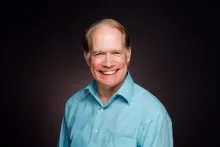
Greg Thomas is the former Pastor of the Cleveland, Ohio congregation. He retired as pastor in January 2025 and still attends there. Ordained in 1981, he has served in the ministry for 44-years. As a certified leadership consultant, Greg is the founder and president of weLEAD, Inc. Chartered in 2001, weLEAD is a 501(3)(c) non-profit organization and a major respected resource for free leadership development information reaching a worldwide audience. Greg also founded Leadership Excellence, Ltd in 2009 offering leadership training and coaching. He has an undergraduate degree from Ambassador College, and a master’s degree in leadership from Bellevue University. Greg has served on various Boards during his career. He is the author of two leadership development books, and is a certified life coach, and business coach.
Greg and his wife, B.J., live in Litchfield, Ohio. They first met in church as teenagers and were married in 1974. They enjoy spending time with family— especially their eight grandchildren.
