

Greg Thomas
This transcript was generated by AI and may contain errors. It is provided to assist those who may not be able to listen to the message.
It is the 4th of July weekend, so this is a special time to talk about our nation. I thought this is a specialty sermon because of all the things happening and also how important it is for us to look to Scripture and examine what God expects of us. We should never forget what blessing it is to live in this land. Those who have had the privilege of living outside of this country, as Cady and I did for 23 years. Of course, she's even longer than I, but I was living in different countries of Latin America for 23 years, and we can see the contrast. This is still the greatest land of opportunity by far. It's a land where we can worship without direct or indirect persecution because when you're living in these other countries, they basically tolerate you, but you don't have the same rights as the majority of the people in that country with their own religion. Basically, they have a state of religion, whether it's official or non-official.
We are still reaping the promises that Abraham received from God and was transferred to the sons of Jacob, especially Manasseh, who along with his brother Ephraim, would be blessed materially above all the other tribes and all the other nations of the world. We trace our origins back to the descendants of Manasseh that got to northwestern Europe and eventually to England, and especially to the western part of England, where they had a group of people that were more industrious and independent-minded. They didn't want monarchies as such, and they just had that spirit. When the United States opened up for settlement, that's where they went. Here we are, 244 years later, after the founding of this country, and it's a moment to remember Lincoln's insightful comment about the United States. Way before he became president, actually in 1838, he was 28 years old, and he was a lawyer, and he gave an address at a school. This is called the Lyceum address, and he said this, we find ourselves in the peaceful possession of the fairest portion of the earth as regards to the extent of territory, the fertility of the soil, and salubrity of climate. Salubrity means healthy climate. We find ourselves under the government of a system of political institutions conducting more essentially, or conducing more essentially to the ends of civil and religious liberty than any of which the history of former times tells us. We, when mounting the stage of existence, found ourselves the legal inheritors of these fundamental blessings. We toil not in the acquirement or establishment of them. They are a legacy bequeathed to us by a once hearty, brave, and patriotic, but now lamented and departed race of ancestors. Theirs was the task, and nobly they performed it, to possess themselves and through themselves us of this goodly land. This task of gratitude to our fathers, justice to ourselves, duty to prosperity, prosperity, and love for our species in general all imperatively require us faithfully to perform. So he says we owe a note of gratitude to the founders, to those who fought and established so many freedoms that we enjoy. He goes on to say, how then shall we perform it? How can we be grateful? He says at what point shall we expect the approach of danger to this nation? By what means shall we fortify against it? Shall we expect some transatlantic military giant to step the ocean and crush us at a blow? Never! All the armies of Europe, Asia, and Africa combined could not by force take a drink from the Ohio river or make a trek on the Blue Ridge Mountains.
It is in a trial of a thousand years, he says, they could not accomplish it. At what point, then, is the approach of danger to be expected to this country? I answer, if it ever reach us, it must spring up amongst us. In other words, it's not outside, it's inside that the danger lies. It cannot come from abroad. If destruction be our lot, we must ourselves be its author and finisher. As a nation of freemen, we must live through all time or die by suicide. Nobody's going to kill us from the outside. We will kill ourselves from the inside, is what he's saying. He says, I hope I'm over wary, but if I am not, there is even now something of ill omen amongst us. I mean the increasing disregard for law which pervades the country, the growing disposition to substitute the wild and furious passions in lieu of the sober judgment of courts, and the worse-than-savage mobs for the executive ministers of justice. So, the problems that he was worrying about have multiplied a hundredfold since then.
So, what did our founding fathers fear the most? George Washington, in his farewell address, said the following, Of all the dispositions and habits which lead to political prosperity, religion and morality are indispensable supports. Let us with caution indulge the supposition that morality can be maintained without religion. Reason and experience both forbid us to expect that national morality can prevail in exclusion of religion. So, he warned, once religion started getting watered down and being put to the side, that would be the great danger of this country. Tim LaHaye, in a book called Faith of our Founding Fathers, said this, The United States was founded on more biblical principles than any other nation in history, the secret to America's greatness. Those principles originally permeated our educational system, courts, public life, religious life, and economic system, producing what President Ronald Reagan calls, quote, traditional values. When these values prevailed, the quality of life from the family to the streets was far better than today. And so, these things have roots as their problems. They have causes that produces them. Just one more quote. This is from the famous 19th century lawyer, considered probably the greatest lawyer in the United States, Daniel Webster. He said, if we abide by the principles taught in the Bible, our country will go on prospering and to prosper. But if we and our posterity neglect its instructions and authority, no man can tell how sudden a catastrophe may overwhelm us and bury all our glory in profound obscurity. So, been a lot of warning through time, how pressured it is to keep the Christian roots in our country with these principles that have upheld this land for so long. So, what has happened?
Is God surprised by this? No. God knew it would happen all along. Notice the description that he inspired Paul to write in 2 Timothy chapter 3 verses 1 through 4. I'd like to read it in the New Living Translation. 2 Timothy 3, 1 through 4. He said, You should know this, Timothy, that in the last days there will be very difficult times, for people will love only themselves and their money. Does that sound pretty common today? I would say so. They will be boastful and proud, scoffing at God, disobedient to their parents, and ungrateful. Does that sound common today? Certainly does. They will consider nothing sacred. They will be unloving and unforgiving. They will slander others and have no self-control. They will be cruel and hate what is good. They will betray their friends, be reckless, be puffed up with pride, and love pleasure rather than God.
Pretty close to the description you would see today. If you just go out to maybe 100 places and stay there for a week, what would be the result? Unfortunately, this description would fit the great majority of those places. When we take the long view of history, we would see that one of God's main jobs has been to limit mankind's increase of knowledge and technology. He had to keep toppling the towers of Babel, of science and technology, as they rose up. So man wouldn't discover the secrets in nature to blow themselves up. Only in the end time would God relent and allow it to happen. As it tells us in Daniel 12, in verse 4, God's word version says, But you, Daniel, keep these words secret, and seal the book until the end times. And then the description of the end times. Many will travel everywhere, and knowledge will grow.
Young's little translation uses the term multiply. Knowledge will multiply. In other words, many times over. It's a good description of what we have today. The main problem has been one just as in the past. Other civilizations have gone the same way, and that is when abundant freedoms turn into license. And Paul warned about this. In Galatians 5, verse 13, he says, My brothers and sisters, God chose you to be free. But don't use your freedom as an excuse to do what pleases your sinful selves. Instead, serve each other with love. That's the good news Bible version.
So what has happened? We have seen government permissiveness, and they have crossed the boundary between good and evil. This affects the family, society, sexual mores.
And once again, we see even reproduction. How children are reproduced, what happens with abortions, what happens with the kids that grow up in these multiple families, and all of these strange situations? Of course, they're going to be disrespectful. They're not going to have that same solid background and foundation. So it's going to cause more problems.
According to Dr. Rex Russell, who wrote the book, What the Bible Says About Healthy Living, he said, God is not trying to limit sexual pleasure, but to enhance it, to make it even better if we follow his rules. He says, more than 26 highly contagious diseases are passed through homosexual activity. 26 different diseases. If you want to practice that lifestyle, you've got 26 of these potential diseases, all different that a person can get. Once again, a loving creator cared for us enough to reveal his law against this behavior, and warned that it would have tragic results. And that's what we have seen. So this leads to actually the most important point of the message when we ask what to do.
Well, the answer is we have a dual citizenship, whether we know it or not. Let's go to Matthew 22, verse 16. Matthew 22, verse 16. I call Matthew 22 the chapter of trick questions, because the whole chapter, it's these Pharisees and then the Sadducees and then the Herodians. And they came to try to trick him.
They were just watching to see how they could catch him so they would accuse him before the authorities and say, see, this man is teaching against Rome. See, this man is a rebel. And so one of the trick questions is in verse 15. It says, then the Pharisees went and plotted how they might entangle him in his talk. It's very clear. They weren't trying to learn something. They had what today we call gacha questions, which if you see the news, that's all they're posing. Gacha questions! Not genuine. They're not trying to learn something. They're trying to trip you up, embarrass you, make you look silly or ridiculous. And this is what they were doing. And here, you think religious authorities would not have stooped down to this type of behavior, but they did. Verse 16, and they went to him, their disciples, with the Herodians. Now, who were the Herodians? Well, this was another party in Israel, and these were the backers of Herod the Great and all of his dynasty. He had sons that were in charge. Now, Herod Antipas and Herod Agrippa and others. And so, they put the government above religion, because they were the ones that called the shots, and so they followed Herod. And so, most of the time, the Pharisees and the Herodians were on opposite sides, because the Pharisees didn't want the Herodians with Rome behind them to be getting into their religious practices and trying to rule over them and telling them how they should do things. The Pharisees, in that sense, they wanted more independence. The Herodians, they just followed the party line. They wanted to get good with these leaders. But here, they joined ranks, because they had one common enemy, and that was Jesus Christ. They both felt threatened by him.
And so, they came and they started out very subtly, just praising Jesus and trying to make him feel like they actually were genuinely happy with him. And then they thrust the dagger. They said, teacher, we know that you are true and teach the way of God in truth. Nor do you care about anyone, for you do not regard the person of men. So here, they were flattering him, but he was just trying to get his guard down. And now, they had the thrust of the dagger. He said, tell us therefore, what do you think? Is it lawful to pay taxes to Caesar or not? See, that was a loaded question.
And just as it mentions that Nelson's Bible commentary says, the dilemma was obvious. The Jews side with the Pharisees and risk being accused of insurrection against the Roman government, or side with the Herodians and lose the favor of the masses. Taxes included an annual tax paid by every Jewish adult to the Roman government. The Jews despised paying this tax to their hated oppressors. So you see, whatever Jesus said, he was going to divide the group, because he couldn't please all of them.
And so, Jesus had the perfect answer for them. He said in verse 19, show me the tax money, show me the coin. So they brought him a denarius. This would have been like a silver dollar, because people usually they got paid a denarius per day. That was what a person earned. So they brought him a denarius, and he said to them, whose image and inscription is this?
They said to him, Caesar's. And he said to them, render therefore to Caesar the things that are Caesar's, and to God the things that are God's. When they had heard these words, they marveled and left him and went their way. In other words, he had outfoxed the human foxes.
In antiquity, coins were a symbol of the government in charge. As soon as a new king took over, they would normally make new coins with his image to show the legitimacy of his reign. Thus, the coins represented the king whose image was stamped on them.
And Christ ingeniously showed there are certain duties we have toward God and other responsibilities we have toward the rulers. So church members have a dual citizenship. The first and most important is when one is baptized and becomes a citizen of God's kingdom. Notice in Philippians chapter 3.
Philippians chapter 3.
In verse 20, Paul said, For our citizenship is in heaven, from which we also eagerly wait for the Savior the Lord Jesus Christ, who will transform our lowly body, that it may be conformed to his glorious body according to the working by which he is able even to subdue all things to himself.
So Paul, he was a Roman citizen, but he was also a citizen of God's kingdom. And he said, this is the one that we establish not by birth, but by baptism. That's we become. And it says here that your baptism is recorded. Just like here, you have civil registries and your name, and you got a birth certificate to prove where you were born. You also have one up in heaven. Notice in Philippians.
Just a little bit. Before this, because he was bringing up a little farther. Philippians 4. It says in verse three, and I urge you also, true companion, help these women who labor with me in the gospel with Clement also and the rest of my fellow workers, whose names are in the book of life. So there's a book of life in heaven. And it's recorded when a person is baptized, when they receive God's Spirit, they begin that citizenship. One that we should never forget. Notice also in Hebrews chapter 12. Tell us about, again, this registration that happens in heaven.
It says in verse 22, Hebrews 12, it says, But you have come to Mount Zion and to the city of the living God, the heavenly Jerusalem, to an innumerable company of angels, to the general assembly and church of the firstborn, talking about that they are the ones first called among humans who are registered in heaven to God, the judge of all, to the spirits of just men made perfect. All of these people eventually, they died and they're awaiting their resurrection, but they are the faithful. And so we should never forget that first citizenship we have.
But we also have a second citizenship, and we should be respectful. Notice in Romans chapter 13. Romans chapter 13 tells us we should be respectful. We should not be rebels going out, throwing stones at the police and all of these types of behaviors.
Verse 1 says, Let every soul be subject to the governing authorities, for there is no authority except from God, and the authorities that exist are appointed by God. So God is still the ultimate responsible. He's the creator of all things. And so He delegates and He allows things to happen, just like He allowed things to occur during the Garden of Eden, and then the punishment and the removal into this present evil world, as it tells us in Galatians 1. It says, verse 2, Therefore, whoever resists the authority resists the ordinance of God, and those who resist will bring judgment on themselves. For rulers are not a terror to good works, but to evil. This is now talking about the police, those that are there placed to maintain law and order. If you're meant, if you're keeping law and order in your life and in your house, you don't have to worry about the police. They're not there to punish the good citizen. They're there to punish the lawbreakers. He goes on to say, Do you want to be unafraid of the authority? Do what is good, and you will have praise from the same. And police, they're happy when they have people that are respectful and do the right things. For He is God's minister to you for good. So this especially was the case after the flood, because before the flood, apparently there were not world governments. People would go in droves and mob rule and mob action, and that's the way it just got filled with violence. And then afterwards, God added and said, Well, here are certain rules I don't want people to take upon themselves to this mob rule. You will establish authorities, and you will establish those that will enforce the laws. And so here is the case. For He is God's minister to you for good. So in a way, there you're keeping law and order, and that is something positive in God's eyes. He doesn't want to see chaos, murder and destruction and theft. He says, But if you do evil, be afraid, for He does not bear the sword in vain, for He is God's minister and avenger to execute wrath on Him who practices evil. So unfortunately, there are some people that have to be stopped. Anybody that reads the paper will read about this golden state killer. They finally caught him after decades. He killed dozens of people, innocent people. And now he confessed, and he's going to get, of course, life, but he's not going to get executed. But the point is that somebody has to take care of these. And God did not appoint the church to become the policeman of society. But He does have people carrying out that role. And we should be thankful there are those guardians of the law. He goes on to say, therefore, you must be subject not only because of wrath, but also for conscience's sake. Not only because you fear the punishment, but because you shouldn't be doing things that are against the law.
And He says, because, for because of this, you also pay taxes. So it tells us here, we should not be those that avoid paying taxes. For they are God's ministers. Again, they're used as tools to maintain law and order, attending continually to this very thing. Render, therefore, to all there do. And this sounds like that trick question. Remember to respect what Caesar says and to respect above that what God says.
Render, therefore, to all there do. Taxes to whom taxes are due. Customs to whom customs. Fear to whom fear. Honor to whom honor. And so we see this principle that has all the backing from God. So we have a dual citizenship, and we should be good citizens of both of this age and also of God's kingdom. But what happens when there's a conflict? What if the government tells us something that goes against God's laws? Are we supposed to put the government first? Should we honor them first?
Well, we know what it tells us in Acts chapter 4 verse 19. Actually, we have two incidents where the apostles explained to the governing authorities. They also had the backing of Rome, but they were told prohibited to preach God's word.
Acts chapter 4 in verse 18 starts the thought. So they called them and commanded them not to speak at all nor teach in the name of Jesus. But Peter and John answered and said to them, Whether it is right in the sight of God to listen to you more than to God, you judge, for we cannot but speak the things which we have seen and heard. So when they had further threatened them, they let them go, finding no way of punishing them because of the people since all glorified God for what had been done.
Of course, a great healing had been done at that time. For the man was over 40 years old, on whom this miracle of healing had been performed. And then they get into trouble again because of preaching God's word in Acts chapter 5. In verse 27, and when they had brought them, the apostles again, they set them before the council, and the high priest asked them, saying, Did we not strictly command you not to teach in this name?
And look, you have filled Jerusalem with your doctrine and intend to bring this man's blood on us. But Peter and the other apostles answered and said, We ought to obey God rather than men. The God of our fathers raised up Jesus whom you murdered by hanging on a tree. Him God has exalted to his right hand to be prince and savior, to him to give repentance to Israel and forgiveness of sins. And we are his witnesses to these things.
And so also is the Holy Spirit, and it should say, which God has given to those who obey him, who follow him. And guess what? You're not obeying him. You're the ones that have the problem. And so in the church, we also put God above man's laws when they conflict. But most of man's laws do not conflict. And we should be good citizens, good examples, love our country.
We have our flag out there today. Roy and Ann Tower told me in a little text that they had their flag out. And guess what? That Roy was celebrating a 400 years of ancestors all the way from the Mayflower.
So he's the 13th generation from that time forward. And I think that's inspirational. We have people like that in the congregation. But remember, brethren, that we are special. We're that bride of Christ that we're preparing for that coming wedding because we are citizens. We are part of God's people. And how wonderful that wedding feast will be one day. And that's what we're doing here today, worshiping God in spirit and in truth on his Sabbath day, because we are obedient.
And that's why God sends his Holy Spirit to people that obey him. So to end, just one last note. So we pledge allegiance, but first to God the Father and Jesus Christ the Lamb. And then we pledge allegiance to our land.
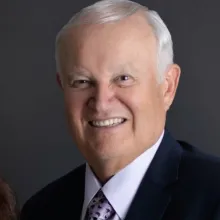
Mr. Seiglie was born in Havana, Cuba, and came to the United States when he was a child. He found out about the Church when he was 17 from a Church member in high school. He went to Ambassador College in Big Sandy, Texas, and in Pasadena, California, graduating with degrees in theology and Spanish. He serves as the pastor of the Garden Grove, CA UCG congregation and serves in the Spanish speaking areas of South America. He also writes for the Beyond Today magazine and currently serves on the UCG Council of Elders. He and his wife, Caty, have four grown daughters, and grandchildren.
