
Jorge de Campos
This transcript was generated by AI and may contain errors. It is provided to assist those who may not be able to listen to the message.
Brethren, we have been going through a number of sermons about the Gospel according to Matthew. And I'm trying to go through it, like, once a month. And we might not be able to get through it once a month. Sometimes we have to take it longer, because maybe there's a feast, or this, or that. But anyway, we're making progress. And in the book of Matthew, we've seen that Matthew is addressing or reminding the Israelites, put it this way, and asks that Jesus Christ is the Messiah, is the Lord, is the King, is the prophesied Messiah. So, we have been trying to remind you of the outline in the book of Matthew, because there is, let's call it, a biographical outline of the story of how He is the Son of David, and how He fulfilled the Messiah's prophecies, and how He is the Messiah. It starts, so if you just turn to Matthew, it starts, obviously, from His birth, His early years as lineage, in the first few chapters. So that's like the first section of the biographical outline from chapter 1 to about chapter 4 verse 16. It's His early years. And then, from verse 17, it says, from that time, so it actually is like a dividing marker, from that time, Jesus began to preach and say, repent, for the kingdom of heaven is at hand. So, now we have a whole section here from chapter 4, through to just about the end of chapter 16. So, turn to chapter 16, turn to chapter 16, and then, this section ends at verse 20, when it says, then He commanded His disciples that He should tell no one that He was Jesus the Messiah. And then, obviously, so that they wouldn't kill Him too early. That was why. So that He could still complete His mission. But then, you read in verse 21 that same marker, it says, from that time, Jesus began to show to His disciples. So, from chapter 4 verse 17 to verse 3, in chapter 16, we have, let's call it, a chapter, a section of Christ's teachings, which are basically, He's called to repentance because the kingdom of God is at hand. Then, from verse 21 onwards, He is saying that He must go to Jerusalem and suffer. So, He's now, in a sense, bringing additional prophetic statements about His role as a Messiah. And then, right at the end, there's a final section, which is when He's going to be killed. So, there's a fourth section. But this second section, from chapter 4, 17, till chapter 16 verse 20, is the section, where in we are at the moment, which is basically, once again, a section that Christ is calling us to repentance because the kingdom of God is at hand.
We, now, let's go a little bit deeper in this section because we are already covered a little bit of that. So, let's go back to Matthew 4. Starting from verse 17, as you can see there in verse 17, it starts showing, because it says that Christ now began to preach, the kingdom of God is at hand, showing some miracles. He calls some of His disciples, and we can see He's healing a great multitude. But then, we get into, let's call it His first sermon.
His first sermon. It's the sermon on the Mount. And so, from chapter 5, all the way till about the end of chapter 7, that's His sermon. In other words, that's His message about repentance, called to repentance, and basically, that is giving the standard of what we've got to repent to. In other words, He's amplifying the law, and He says, this is what we've got to repent to. We've got to repent to the spiritual standard of God's law, which is the law that's been amplified.
Right. Then, after that, then Matthew continues to explain, through miracles, that Christ is the Messiah. It was miracles that only the Messiah could fulfill. No other being would have that they point specifically to the Messiah. Miracles like cleaning a leper, healing the centurion's servant, and so on. And then, forgiving and healing the analytic. So, it's got all these different miracles, the mute man, and various miracles that point specifically to the Messiah, because there were prophecies that said the Messiah would do that. So, they are there. Then, after that, then we see, in chapter 10, where Christ gives like, let's call it His second sermon.
And His second sermon is giving the commission to the disciples that He's called. So, He's setting up His team to assist Him with the job of calling to repentance, people to repentance. So, it's training these people, which are His disciples, His apostles, training them and giving them the commission, and giving them like a training opportunity so that they would be prepared to do this job later on.
After that second sermon, within this context of calling to repentance, then in chapter 12, John continues, now not by just showing miracles that were prophetic to occur, that will point to Christ being the Messiah, but then He goes into a section that covers prophecies, for instance, that prophetically there would be a man, which was John the Baptist, that would prepare the way for the Messiah. And therefore, He shows that John the Baptist was that one and therefore pointed to the Messiah.
So, now He's using that example showing that that would be the curse. So, He gives those examples. And that is basically, more or less, where we stopped lost time. And because He said, listen, the problem is you people are not repenting. You got all this evidence. You got all the prophecy. You got this man that was prophesied that would announce that the Messiah is coming, and you are not repenting.
Because if it was done in Tyre or in Sidon, those people would have repented. And yeah, it's one that's greater than them, and you are not repenting. And remember, there's going to be a judgment, and you're going to have to be accounted for it. So, again, He's calling to repentance and saying, you have to repent.
And it's nothing different than the situation today. God's giving us all today time to repent, and we need to repent. Because there's a day of judgment. So, Christ's message, as we can see now, is clearly a call to repentance and a warning if people don't repent.
We stopped round about verse 27, but let's read from verse 25 of chapter 11. So, at that time, Jesus answered and said, I thank you, Father, Lord of heaven and earth, that you have hidden these things from the wise and prudent and have revealed them to babies. Even so, Father, for so it seemed good in your sight.
What Christ is saying is, God, the way things are being done, it's the way you wanted it. It's according to your will. And now that we have seen that Matthew described through healings that Christ was the Messiah, that described through John the Baptist that appointed the Messiah, now Christ himself declares that he is the Messiah, that he is the Lord. And look how Matthew records that, and it's such an important structure, that I want to take a little bit of time going through it and the implication thereof today.
And this is in verse 27. All things have been delivered to me by my Father. Can we just take a moment and ponder on the profound meaning and implications of this statement? All things have been delivered to me by my Father. You just finished saying, this is your will, Father. This is your will.
This is according to God's will. That's the way God wants it. And he said, everything has been delegated to Christ. Even Christ himself says that. Everything has been delegated to me.
And then he says, a big part, And no one knows the Son except the Father, Nor does anyone know the Father except the Son, And the one to whom the Son was to reveal the Father. No one knows the Father can understand God the Father except the Son, Wolves to reveal. And this is all according to God's will. Reverend, I think this is so profound, so pivotal. It's such an important scripture that outlines the preeminence and the authority that the Father has given by and according to his will to the Son.
I think it deserves a minute to meditate on that. It really is powerful. Now, we obviously keep on marketing in Matthew because we're going to be coming back to Matthew, but we're going to look at a few scriptures now to look a little bit more deeper about this point.
And the point is basically the title of my sermon, which is, Jesus Christ is the Lord. Everything has been delivered to Jesus Christ. He is the Lord. I mean, it's like saying, He's the boss. He's the master. That's what the Lord means. Everything gets focused, delivered to Christ, and then Christ will deliver it all to the Father. That's what it says. It's nothing new. You read this in the scripture. By doing it this way and understanding it this way, we can see this is the Father's will, because we just read that in verse 26. It's the Father's will. It's very important to understand this. Respecting the position and authority and the preeminence of Christ is not putting the Father on a corner, because that's the will of the Father. You know, it's like you and your children. If people respect your children, they are respecting you. And so, this is the will of the Father that everything would have been delivered to the Son. Turn with me to 1 Corinthians 8, verse 6. 1 Corinthians 8, verse 6.
For yet, for us, there is one God. Brethren, of course, the Supreme, the Father, the highest, is the God. The Father, of whom are all things, and we for Him. But in addition to that, and one Lord, one boss, one master, that we fall under, that everything is being delivered to Him by the Father, and one Lord, Jesus Christ, through whom we are all things, and through whom we live.
Through whom are all things. In other words, He is the one that created everything under the delegated responsibility from the Father. And it's through whom that we live. He is the Savior, He is our Redeemer, He is the one that gave His life for us, He created us physically, and He is creating us spiritually. Everything is being delivered to Him. It's a job, a mission that is being given to Him. It is so important for us to understand the preeminence that the Father is even to Christ. Turn to Colossians chapter 1, verse 15 through 18. Colossians chapter 1, verse 15 through 16. It says, He, talking about Christ, is the image of the invisible God. He is the image of the invisible God, the firstborn over all creation. In other words, the firstborn from man into, as to put it, being. He is the first one that pioneered that way. One day the resurrection will follow that way. But He is the firstborn. Proto-coss. In other words, it's not the first begotten, it's the first born. So it's the first that actually gone from man to spirit being over all creation. For by Him, that's why Jesus Christ, all things were created. Christ created all things that are on heaven and that are on earth. That means He created angels and human beings. Visible and invisible. So if we don't understand that, He kind of underlines it and says it again. Visible and invisible. Whether they are human crowns and dominions and human kingdoms, or they are precipitities of powers that are spiritually all done by Him. All things were created through Christ. Yes, because in the end, the Father is the Creator. Nobody is denying that. But the Father delegated to Christ and through Him, Christ was the executor. The general manager that actually did it, was the Father in an analogy like the owner, but He's the general manager that did the execution. All things were created through Him and for Him. And He is above all things. He is above all things. Christ is above all things. And in Him, all things consist. 18. And He Christ is the head of the body, the Church. Who is the beginning? Christ is the beginning. Because He began everything. He's the one that initiated everything. The first born from the dead, again, using the same word, protocols, the first that was born from the dead, becomes through it being, that in all things He Christ may have the preeminence.
Do we understand the very high position of power and authority that the Father delegated to Jesus Christ? It is for us to have great respect for that position. Now, understand then, at the time that Christ was on earth, He had emptied Himself of that position. He stole the vine, He stole the being that He was, but He had emptied Himself of that power. Like, say, He had emptied it, tightened that off. And so He became a human being in flesh, just like you and I. You stole the same being, the same person, let's call it that way, but He did not have that spiritual power. He had the power through prayer. He said, I can't do anything, I pray to the Father, because He was a physical human being. Look at that in Philippians 2. Philippians 2, verses 5-7. Let this mind be in you, which was also in Christ Jesus. You know, Pauli is saying, we must have the same attitude that Christ had, because look at it, because Christ, who being in the form of God, Christ, who was, let's call it, of the kingdom of God, of the God-kingdom of the form of God, of that type of God-kind of being, do not consider it to be identity theft to be equal to God. I'm just putting a team. Language theft, that is today. In other words, do not consider it robbery to be equal to God. He was not saying, well, I'm using somebody else's title. He was. He was of the form of God. But he made himself of no reputation. In other words, he emptied himself. He took that reputation, that power, and he became a human being, taking the form of a bondservant and coming the likeness of a man. This is the attitude that you and I need to emulate. Obviously, we know about it. But Christ was somebody, more than somebody. He was in the form of God. And look at the attitude that he had and what he did. Why? For us. Then we could share of the same glory, where he came from and that he got back to. Then we could have the same glory, so we could follow him to give us the same. Wow! And that's why he was the first. He's our captain. He's our pioneer. And he's the beginner and the end is the first and the last. Look with me in Revelation chapter 1, verse 17 and 18. Revelation chapter 1, verse 17 and 18. And when I saw him, this is John, I felt that he was dead. But he said, he laid his hand, right hand on me, saying to me, do not be afraid, for I am the first and the last. Excuse me.
I am the first and the last. Who is this being that he's talking? Is it the father or the son? Well, just read the next verse. I am he who lives and was dead. That's Christ. I am the first and the last. I am who he who lives and was dead. Behold, I'm alive forevermore. Amen. Full stop.
And I have the kids of Hades and of death. Actually, in the Greek it says of death and Hades, but anyway, that's interesting. But there is the point. Jesus Christ was the one who lives, but was dead and is not alive forever. He is the first and the last. He is the one that emptied himself voluntarily. He is the one who has got the keys of death and Hades. Because he can allow us to get out of death and resurrect. He has got the keys. And he can decide to put us back in death if he wants us to, to the second death. And he has got the keys of Hades. It was of the great. He is the one that created us under the authority of the Father. He is the agent of the order represented above the Father. Think about it. He is the one represented Father. He is doing this at the Father's will because all was delivered to him by the Father, as we read in Matthew.
He is our Redeemer, isn't he? He is life. He paid with his life. He is our Redeemer. He is the first and the last. Now look at Isaiah 44 verse 6. Isaiah 44 verse 6. Isaiah 44 verse 6.
Isaiah 44 verse 6. Thus says the Lord. YHWH, the King of Israel and his Redeemer. In other words, he is the King and he is the Redeemer of Israel. He is the Lord of hosts. I am the first and the last. Who is the first and the last? Besides me, there is no God. There is no conflict, yes? He is the God that created us and the authority of the highest. Other gods that people have, the pagan gods, are no gods. They are useless. He is the Kingdom of God, the God family. Besides this family, there is nobody. And this God is Elohim. Besides me, there is no God. In other words, no Elohim, which is the plural word.
Look at Isaiah 48 verse 17. Isaiah 48 verse 17. Thus says the Lord, YHWH, your Redeemer, who is our Redeemer, who gave his life for us, the Holy One of Israel, I am the Lord your God, who teaches you to prophets, who leads you by the way you should go. Oh, that you had heeded my commandments!
Jesus Christ is our Redeemer. He is the First and the Last. He is the Lord under the authority of the Father, because all is being delivered to him by the Father according to the will of the Father. And that's why Christ said, I thank you, Father, that you reveal this only to those that you want to reveal, because I just don't understand it. Turn with me to Psalm 110.
Psalm 110. Now, now, some of you know where I'm going. Psalm 110. Look at verse 1.
The Lord said to my Lord, sit at my right hand. The Lord said to my Lord, sit at my right hand. There's two Lords. And one is sitting at the right hand of the other Lord.
Both are called Lord. Both are called Y-H-W-H, Lord, Master.
One is sitting at the right hand of the other. They're two different beings. And who is at the Father's right hand?
Jesus Christ, right? Keep your finger there, because I'm going to show you one or two other scriptures, and we're going to come back to Psalms. So, Acts 7, 54. Acts 7, 54. This is a time that Stephen was being stoned and just about died. Acts 7, the first martyr, Christian martyr. Acts 7, 54.
He had a vision just before he died.
And when they heard these things, they were cut to the heart, and they nested him with their teeth, 55. But he, that Stephen the martyr, being full of the Holy Spirit, gazed into heaven, and he had a vision and saw the glory of God, and he saw Jesus standing at the right hand of God. Who is at the right hand of the Father? Jesus Christ. Look at Hebrews 12, verse 2. Hebrews 12, verse 2.
Hebrews 12, verse 2.
So, he says, you know, that's also, we have such a cloud of witnesses. Let's hold on, looking at Jesus, verse 2. The author and finishing our fight. In other words, he's the first and the last. You know, as the author and finishing our fight. Who, for the joy that was set before him. What is the joy set before him? That you and I will be next to him, and you and I will have the same glory that he has. That's a joy for him. He wants you and I to be there. That's what he's looking forward to. And because of that, what do you do? He enjoyed the cross. Because of that, he suffered for you and I, despising the shame, and now, as sat down at the right hands of the throne of God. Who is at the right hands of the Father, Jesus Christ? Look at 1st Peter, chapter 3, verse 22. 1st Peter, chapter 3, verse 22.
1st Peter, chapter 3, verse 22.
And it's talking about Jesus Christ at the end of verse 21. You can see that. Who has gone into heaven and eased at the right hand of God.
Angels and powers, and he may be made subject to him. He's not preeminence over all, and he's at the right hand of the Father. So, going back to Psalm 110, he says, The Lord said to my Lord, Sit at my right hand. Who is David's Lord? It's Jesus Christ.
Jesus Christ is the Lord. Does that say that the Father is not the Lord? No, because the Lord said to my Lord, that thou art Lord, one is Him. The Father is highest, He is the Lord. Christ is below him, but also the Lord, and we all, under Christ, all are delivered to the Lord Jesus Christ. No contradiction.
But look at first part of Psalm 110.
The Lord is at your right hand. The Lord is at your right hand.
A little detail we are between brackets is that, in verse 5, the other word, the Lord, should be in all caps. The Masarites changed to Adonai because they said, How can it be to YHWH's?
That is documented. The Masarites documented that alteration. In fact, they made some very enormous in the hundreds of alterations like that. They all documented. But the idea is that YHWH, that is Christ, is at your right hand, which is the Father's.
And He, Jesus Christ, shall execute kings in the day of His wrath. The day of Christ's wrath. Where is the day of the Lord's wrath?
That's symbolized. Do you remember by what?
The seventh seal, which then has seven trumpets. And that is the day of the Lord's wrath, which represents maybe that period of a year. Where He's going to bring and execute judgment on earth. And at the end of that period, at the seventh trump, at the last trump, He'll come and there'll be the resurrection.
He shall judge among the nations. He shall fill the places with dead bodies. He shall execute the heads of many countries. He shall drink the brook by the wayside. He shall lift up the head.
The point is, the point is, do we understand the preeminence of Christ? There is at the right end of the Father. He is our Lord, obviously under the Father, the Lord, but that's according to God's will, as we saw it. And that's what Christ said in Matthew. He was giving such a powerful message in Matthew, saying, I am the Messiah, I am the Lord. And do you know what happened to the people? We'll be right over it. Look at John 17 verse 5. John 17 verse 5. John 17 verse 5 was after the ceremony of the Passover, and then he was giving that final prayer after his discussions with the disciples before he went to the garden and before he was betrayed. But that same night, same night, that he was betrayed. So basically, on the day of Passover, which started at sunset, right? From that same day, 24-hour period from sunset to sunset, Matthew having a part of John 17, John 17 verse 5. The eyes crashed, prayed to the Father, and he says, And now, O Father, glorify me together with yourself, with the glory which I had with you before the world was. I don't think it can be any plainer. I don't think it can be any plainer. And he says, And now, O Father, give me the glory back that I had with you, because I emptied myself, I'm now a human being, but now give me back what I had with you. That same glory, that same power. Now, I had with you. Now, those people that say, Oh, well, you know, that Christ was inside the Father, and it's the word, it's the mouth, and the words came out, and it became a human being. You won't even believe what people think and say that I've come across. It's just strange. But anyway, it says, I had with you, not in you, and it was two different beings, two different independent beings. When? Before the world was. Before everything was created.
And of course, we know, he's now at the right hand of the Father. He has the danger, briefly. He has the danger. That some people deny that Christ came as a human being. And you know, that's anti-Christ. But you know, what people don't often think about is that there's two sides to this equation. They deny that Christ came from the position that he was, in the form of God, with the glory that he had next to the Father. They deny that. Or they may say he was a human being, but they deny the other side of the equation. It's both sides of the equation that you've got to take into consideration. Where he came from and what he became for us. What he gave up for you and I.
And that's why in 2 John it says, in 2 John, verse 7, 2 John 7.
2 John 7.
He says, For many deceivers have come into the world. And when he says many deceivers, it does not just mean quantity of people. It means quantity of ideas. They come out with all different shapes and ideas and ideologies and concepts of deception. Because Satan is the master of deception, provided his thumb's deception doesn't care which one it is. So many deceivers have gone out into the world who do not confess Jesus Christ. That is the Savior, the Messiah, as coming from where he was, coming to the flesh. So it's both sides of the equation. This is a deceiver and an antichrist. It was these against who Christ actually was and is. Therefore, to say that Jesus Christ is anything less than our Lord, and where he came from, and what he is, and the preeminence that he has, for us not to fully understand and recognize, or to allow that to be preached, or to accept that, that's antichrist. And why is this so important? Because there's spreadsheets in the world. It's all over. And therefore, beware of it. Okay, let's go back to Matthew. Let's go back to Matthew. Matthew 11, verse 27. All things are being delivered to me by my Father, and no one knows the Son except the Father. So this takes a miracle for us to understand, nor does anyone know the Father except the Son, and the one to whom the Son wills to reveal it. So this is a miracle, and if you understand it, that is a miracle from God. Accept and recognize that, and give God thanks. Come to me, all your labor, and are heavy laden, and I'll give you rest.
Oh, how we so easily miss the meaning. You see, quite often we just think, oh well, Christ gives us rest. Yeah, we come, we're in the church, and we have these beliefs, and we've got rest.
And I'm not saying that's not true, that is correct, but there's so much more than that. That's what I mean, we miss the depth of this meaning. What is the real rest, brethren? It's the entrance into the kingdom of God. Come to me, and I'll give you true rest in the kingdom of God. Look at Hebrews 4. Keep Matthew there as a tag, but let's look at Hebrews 4. Hebrews 4.
You see, brethren, there's so much we can get out of the Gospels, if we're just not digging into it. It's like a mind-jam of beautiful knowledge that we can just read out for it. But when we start digging into it, it's so beautiful, isn't it? Let's look at now in Hebrews 4. Therefore, since a promise reminds of entering His rest, Who's rest? Christ's rest! And He said, Come to me, and I'll give you rest. A promise reminds of entering into His rest. Let us fear lest any of you seem to come short of it. For indeed, the Gospel, what's the Gospel? Of the Kingdom of God was preached to us as well as to them, but the word which they heard, the not-prophet them, the not-prophet Israelites, not being mixed with faith in those who heard it. What do you mean, not being mixed with faith? Because they didn't trust it. They didn't have confidence in it. They did not faithfully obey what they were told.
You see, it was not mixed with faith. And faith, as you know, it's demonstrated by words. It's doing what is right regardless. And God, as I gave a sermon previously, said God considers a person righteous, even though we may have shortcomings, provided we have a teachable trust in him, because God can bring such teachable person to perfection over time. And that's why he imputes us as righteous, because we have that faith, teachable trust. But let's continue in Hebrews 4. He says, The Gospels in the end preached to us as to them, but the war which they heard, they did not profit them, because it was not mixed with faith in those who heard it. In other words, they didn't demonstrate that faith with words.
Look at verse 8. Look at verse 8. For if Joshua had given them rest, if Joshua had given them true rest, yes, Joshua was the captain that brought them to the Promised Land, wasn't he? Right. If Joshua had given them rest, then he would have not afterwards have spoken of another day. There remains, therefore, a rest for the people of God. Jewel meaning, Sabbaticians, of course, the word rest, rest, ya, if you look in Greek, the Sabbaticians, which means obviously keeping the Sabbath, but rest means the Kingdom of God, the real Kingdom of God that remains that hope for us.
Look at verse 11. Let us therefore be diligent to enter that rest. In other words, let us be diligent to make an effort to enter the Kingdom of God. Let anyone fall according to the same example of... Oh, because the end example was not mixed with life, remember? What was the end example? Not mixed with life? The end example of disobedience. Life is demonstrated by obedience.
We've got to be faithful to the end in obedience, and then we'll enter in the Kingdom of God. That's why it says, Persevere to the end.
So let's go back to Matthew. So we were reading in verse 28 to verse 11, Take my yoke upon you and learn from me, for I am Nick, gentle but should be Nick and lowly and hot and humble, and you will find rest for your souls in the Kingdom of God. For my yoke is easy and my burden is light, compared to the reward that we will get. At that time, Jesus, chapter 12, Jesus went through the grain fields on the Sabbath, and his disciples were hungry and began to pluck heads of grain and to eat.
And when the Pharisees saw it, they said to him, Look, your disciples are doing what is not lawful to do on the Sabbath.
Do you recognize this was a weekly Sabbath? But there's something interesting, yeah? There's something very interesting, yeah? Is there more about this Sabbath?
Now remember, Jesus Christ taught his ministry in AD 27, the year 27, and there are many ways to do that. Perfectly using Daniel 9, I'm not going to go into that. There are many others. There's historical record. There's Herod's true death. When you look at the true eclipse of 1 AD and the reign of Tiberius, if you don't include the counting as Josephus, Josephus never included the counting. And if you count it correctly, and I know people have made universal decisions, but I don't know how many of you have counted it. But the point is, we get down to Christ starting his ministry in AD 27 and finishing his ministry in AD 31.
Now, if you look at the harmony of the Gospels, and there's a very good harmony that we get down to, if you look at the harmony of the Gospels, and there's a very good harmony that we use at ABC as a source of the material at ABC. Obviously, we have handout material, which the Church has produced, but this is the source of that material. It's a harmony of the Gospels by A.T. Robertson, which gives a good harmony, putting the Gospels in a good, harmonious sequence, one after another. Obviously, they look at some dates incorrectly, because they look at the Friday crucifixion and things like that, so they kind of get dates to match that. But you take that aside. If you look at that, you then can see that at the beginning of Christ's Passover, I beg your pardon, at the beginning of Christ's ministry, and we start his ministry round about. Trumpets, Feast of Tabernacles, A.D. 27. But then we get to his first Passover, which then would have been A.D. 28. That was the half year there of 27, beginning a few months of 27. Then you get the first Passover, which would have been A.D. 28. And then that first Passover we can see from the harmony, again. It's described in John 2. So look at John 2 very quickly. John 2, very quickly. That's his first Passover. John 2, verse 13-16.
And it says, Now the Passover of the Jews was at hand, and Jesus went up to Jerusalem. So this was Passover season, 11th bread season, A.D. 28. And he found in the temple those who sold oxen and sheep and dogs and money changes doing businesses. And he said, Hey, throw this all away, and you don't do these things. They are my father's house. You know that story. But that was the first Passover. He turned the tables. And many believers, you can read from verse 23, he says, And when he was in Jerusalem at the Passover during the feast, many believed in his name when they sold the fimes that he did. So many believed. This was right at the beginning of his ministry, like in the first year. Okay, so it started to run about trumpets, piece of tabernacle season, 27. So this was like six months later, the Passover, A.D. 28.
This section in Matthew 12 is actually one year later in the second Passover. This section in Matthew 12 is actually a second Passover, an 11 bread season, which therefore is A.D. 29. Because they're walking down and plucking the rain. Obviously it's not the Passover itself. It's the period of 11 bread. I use the word Passover colloquially because like when I go to Brazil for instance for Passover season, I say, well, I'm going for Passover, but obviously it's Passover and 11 bread. It's that period. So you know what I mean. So they were walking around during the days of 11 bread plucking rain, barley grain. Now we know it was that period from the harmony. That's why I said, you know, it's good to have an harmony to look at the sickness. But now turn to the same example of Matthew 12 in Luke chapter 6 verse 1 through 5. Look chapter 6 verse 1 through 5.
Look chapter 6 verse 1 through 5. Now it happened on the second stab of Dr. I that he went through the grain fields. And his disciples plucked the heads of grain and ate them, rubbing them with their hands. And some of the Pharisees said to them, why are you doing what is not lawful on the Sabbath? So you can see it's the same event, the same story. But look as I described in the second Sabbath after the first. In Greek, δθθηηη or Πάθηηη. δθθηηηηη, like the autonomy. Second, Πάθηηηη means first, like prototype, you know, Πάθηηηηηηηη.
What does that mean? Well, Bible scholars just don't get it. Why? Because they don't keep the Holy Days. If you keep the Holy Days, the second high day after the first is when? If you keep the Holy Days, the second high day, which is a Sabbath, after the first is when? So, the Sabbath is when I'm going to bread. Right? So, Christ and the disciples were walking in the field, picking up grain on the weekly Sabbath, yeah, because it was a Sabbath, but it was also the second high day, which is the seventh day of the level of bread. Therefore, on AD 29, the last day of a level of bread was a Sabbath, a weekly Sabbath. That is pretty important, because that is only possible with a calculated calendar with postponements. Because, if you look at AD 29 without postponements, that would be on a Friday. AD 29, for the last day of a level of bread, to be on a Sabbath, had to have postponements. Postponement rules had to apply. Ah, the people that look at observation, they say, well, by observation, well, if you look at observation in the morning, if you were going that, then it would have been a Monday, not a Sabbath. So, AD 29, for the last day of a level of bread, to have been on a Sabbath, it had to be with a calculated calendar, like the Hebrew calendar, using postponement rules. For those people who say, oh no, but we're one year out, so it should be all one year earlier. Well, then let's look at AD 28.
If this last day of a level of bread was on AD 28, with a calculated calendar, with or without postponements, that day would have fallen on a Monday. And if you do by observation, it would have fallen on a Wednesday. So, 28 doesn't fit. Oh, and people say, oh well, then go one year earlier. Go to 27. Well, with a calculated with postponements would have been a Wednesday, without postponements would have been a Tuesday, and with observation would have been on a Thursday, so it doesn't fit either. I'm not saying this is a proof, but I'm just saying it's an interesting point that we have on the last day of a level of bread. They're picking up grain, and that was a Sabbath. And that is the important thing, but I just thought outside, track it a little bit, to show you another interesting little point to prove something else. And that's a whole different subject. I can prove it by many other ways. Many other ways. So, let's just continue. In Matthew 12.
And he said to them, Have you not read what David did when he was hungry? He and those who were within, how he entered the house of God, and he ate the show bread, which was not lawful for him to eat, nor for those who were within. It was not legal for them either, but only for the priest to eat it. Or have you not read in the law that on the Sabbath, the priests in the temple profiled the Sabbath and are blameless? Yet, I say to you that in this place, right now, where are you looking at? One is greater than the temple! In this place, there is one that is greater than the temple. In other words, I am the Lord. I am greater than the temple! So, you're worried about the temple. I am the Lord. I'm greater than the temple! But, if you had known what this means, I desire mercy and not sacrifice. You would have not condemned the guiltless. You would have not condemned the guiltless.
See, brethren, I started to accuse the Lord Jesus Christ, who was doing all this in submission to the Father. And Jesus Christ is saying, you guys don't understand what mercy is all about. But because, why? Because you're self-righteous. And because you're self-righteous, you now start accusing. And because you start accusing, you have a spirit of condemnation. And because you have a spirit of condemnation, you have a spirit of murder. Because he's going to go on to that. And because you have a spirit of murder, they're accusing the work that God, the Father Himself, is doing through Christ, through the power of His Spirit, that is bringing redemption to mankind. And because of that, if you get to that point, because you're working against what God is doing through the power of His Spirit, and because you are unrepentant, and because you don't want to repent, that's the unforgivable sin. And that's what I'll cover next sermon that I'll cover in this section. But it's just giving an introduction to that. So therefore, we can see Matthew, he has revealed and is revealing yet clearly that Jesus Christ is the King. He's the Messiah. He's the Lord. And He has great preeminence, and all was done through Him. Let's not forget that.
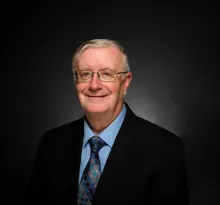
Jorge and his wife Kathy serve the Dallas (TX) and Lawton (OK) congregations. Jorge was born in Portuguese East Africa, now Mozambique, and also lived and served the Church in South Africa. He is also responsible for God’s Work in the Portuguese language, and has been visiting Portugal, Brazil and Angola at least once a year. Kathy was born in Pennsylvania and also served for a number of years in South Africa. They are the proud parents of five children, with 12 grandchildren and live in Allen, north of Dallas (TX).
