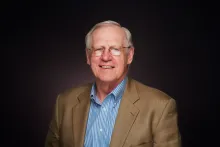

Vincent A Szymkowiak
This is the most famous verse in the whole Bible. I will explain that of all people, we understand what this truly means. Because of the meaning of this Last Great Day we know that God's plan is to offer salvation to every human being who has ever lived. We do not believe that everyone will be saved but we do believe that the offer of salvation will be given to every human being.
This transcript was generated by AI and may contain errors. It is provided to assist those who may not be able to listen to the message.
Greetings, everyone. Very good morning to all of you, and a very happy, high, holy day.
This great day of salvation for billions of people. I do want to make a comment about the Feastkeepers this year, just for a moment. But it's been a long time since I have seen so many young families with young children. Everywhere my wife and I, Carol, go around, there's a husband and wife, two, three, four, five. So we've been surrounded by small children all feast long. It's really been wonderful. And they've been very well behaved. I enjoyed that as well. So thank you, parents, for the good job that you are doing. I wanted to thank also you for the beautiful special music and the offeratory as well. It was another great treat.
Well, now the title of my sermon is John 3 16. John 3 16, the title of my sermon.
This is the most famous verse in the whole Bible, and it is called by many the golden verse of the Bible. And I would agree with that. John chapter 3, let's turn to that and read verse 16. And certainly for those who like to memorize scriptures, this would be one that we should memorize.
For God so loved the world that he gave his only begotten son, that whoever believes in him should not perish, but should have everlasting life. Now, this is such an important verse that is basically repeated in verse 17. Verse 17 says, For God did not send his son into the world to condemn the world, but that the world through him might be saved. And this is such an important verse that is basically repeated in verse 15, that whoever believes in him should not perish, but have eternal life. So John 3 16 is the most famous of them all, but verse 15 verse 17, they all say the same thing. Now, let's take another look at John 3 and verse 16. John 3 16. And why is it is called the golden verse of the Bible? Let's go to that. For God starts out, for God. Well, God is the subject of everything, and he is the most important being of all. So loved the world. He loves the world because God is love. We find that in 1 John 4 and verse 8, God is love, that he gave, you know, that he gave. God is the greatest giver of all. And how do we know that? Next line. His only begotten son.
He allowed his son to leave the throne in heaven, come to this earth, be born of a relatively poor family, become a human being. And we know that you're rather poor family because they offered some smaller offerings when they brought him to the temple. They were, they had like a level of offerings you could give, and they gave one of the smaller ones. So, but anyway, he became a human, he died for the sins of the world, and God gave his only begotten son. That whoever believes in him should not perish, should not die the eternal death, but have everlasting life. Really can't beat that scripture, really. It is a beautiful, beautiful scripture. Now, God has given our church, the Church of God, a certain ownership, a certain ownership of the truth of these verses. We understand what others do not understand about this. Now, in the opening message by Mr. John Elliott, he mentioned that we have knowledge, we have a precious knowledge, a precious salvation knowledge, that others simply don't have yet. He did mention that in the opening message. Now, we shouldn't brag or boast about that. That's not what we're trying to do. I think Dr. Frank Dunkel, the leader there of the ABC, Ambassador of Bible College, the way he puts it is, we are not better, we're just better off.
So, we want to be humble, not proud, we're not better, but with this knowledge that God has given, we are better off. So, because of the meaning of this great day, and for 117 billion people, it is going to be the greatest day of their life. So, the meaning of this great day is that God's plan is that He wants to offer salvation to every human being. If God can keep track of the sparrows that fall to the ground, how much more important is the littlest of the human beings? There is such a thing as a little human being. So, professing Christians are really in a trap, because they teach that God loves everybody, right? God loves everybody. And everything will be just fine, but that the problem is, the majority are going into ever-burning hell fire. And I grew up in a church that taught that, and so for the first 16-17 years of my life, I was really in horror of the idea of dying and burning in hell fire forever and ever. Well, now, there's another extreme going around, though, being going around for quite a while. That's one extreme, you know, God will save a few, burn everybody else. But the other extreme of you is that some people claim that God's going to save everybody, in other words, universal salvation. And they're even saying now that you don't need Jesus Christ, that blasphemous thought. You don't need Jesus Christ. You can be a good Buddhist and go to heaven. And there's two terrible lies in that. So, you've got these two extremes. One extreme is the majority goes to ever-burning hell fire. The other one says, don't worry, everybody goes to heaven. Everybody will be saved and go to heaven. But these views are as popular as they are. They're wrong. They're just simply wrong. And in this great day, it teaches us the truth about God's plan of salvation. I want to turn to Revelation chapter 20. And we've been here quite a bit, this feast. We've been focusing on this, as we should be. And I want to repeat those verses 4, 5, and 6, kind of as a context to the sermon. Verse 4, Revelation 20 and verse 4, And I saw thrones, and they sat on them. Don't forget, brother, you're going to be sitting on a throne. You're going to be sitting on a throne. That's what the Bible says. That's what it says. And judgment was committed to them. And I saw the souls of those who had been beheaded for their witness to Jesus and for the Word of God, who would not worship the beast or his image, and did not receive his mark on their foreheads or on their hands, and they lived and reigned with Christ for a thousand years. Now there's the parenthetical statement in verse 5 that we'll be talking about the whole sermon long. But the rest of the dead, again, 117 billion or more, because, well, we just don't know for sure. That's a lot of people. The rest of the dead did not live again until the thousand years were finished. This is, that's a parenthetical phrase. Now he goes back to the first resurrection. Blessed and holy is he.
Blessed and holy, happy and holy is he and she who has part in the first resurrection on such the second death, eternal death, has no power. But they shall be priests of God and of Christ and shall reign with him a thousand years. And that's why you are here, brethren. That's why you are here to partake of that great first resurrection. Now let's drop down to verse 11 of Revelation 20. Then I saw a great white throne, giant throne, and him who sat on it, from whose face the earth and the heaven fled away. You know, the power of Christ is so magnificent. He could just speak a word and the earth could just bounce out of orbit and just kind of flee away from him. And the heavens, too, the heavens can be rolled back like a scroll. And there was found no place for them, a lot of people. And I saw the dead, small and great, standing before God, you know, rich and famous. They're standing before God and another book was open. And the books were open, I say, the books were open. And another book was opened, which is the book of life, which is an invitation to have your name, their names written in the book of life and to live forever with God and Jesus Christ. And the dead were judged according to their works by the things which were written in the books. The sea gave up the dead who were in it, and death and Hades, death and the grave, delivered up the dead who were in them, and they were judged, each one according to his works. People will be judged according to our works. Death and hell then were cast into the lake of fire. This is the second death, the final death. And anyone, it doesn't say in everyone, it doesn't say everyone, right? We don't believe that everyone is going to go to hell. And anyone not found written in the book of life was cast into the lake of fire. Now we do need to take a look at the word judgment. Judgment is being talked about here. We're giving judgment and a little bit about the word to judge. It basically has two meanings, and when you check the concordances, they like to emphasize the punishment, you know, strongs has to distinguish. That's not too bad of a definition, to decide, but then it talks about condemning, punishing, and it seems like the concordances like to focus on that. But the first meaning of to judge is Judgment Day for each one of us, where we hope to hear from Jesus Christ, well done, you good and faithful servant. You have been faithful in a few things. Now you're going to be faithful in many things, many things. Enter now into the joy of your Lord. That's our judgment. That's what we're looking for, and we'll be judged, and we will be judged to live forever under Jesus Christ. And the second meaning is Judgment is a process of it. It's a process of Judgment. It's a process of time. It's a lifetime. Once God calls us and we repent and accept faith in Jesus Christ, then we are judged every day of our lives after that. And there are scriptures that we will be turning to. So there's those two meanings. It's a one-day event, or it's a lifetime of God judging us. Again, it can mean to punish, condemn, we understand that. Vines dictionary is very good. It means to separate, select, choose, determine. That means, again, separate, select, choose, determine. And we see an example of that in Matthew 25, 32, where Jesus Christ will separate the sheep from the goats. He'll put the sheep on one hand, and well, let's just turn to that, because we want to make sure that in that day we are sheep. Matthew 25, 20, 32.
Well, how about 31? I'll do what Mr. Tom Hoechkolter did. 31. When the Son of Man comes in his glory and all the holy angels with him, then he will sit on the throne of his glory. And all nations will be gathered before him, and he will separate them from another as the shepherd devises sheep from the goats. And he will set the sheep on his right hand, but the goats on his left.
By the way, there tends to be a difference between sheep and goats. Sheep are followers. Goats are not followers. They want to go their own way.
My granddaughter was raising some, I think, what do you call it, pygmy, pygmy, nubian goats, little bitty, tiny things. And I walked up to a billy, one of the tiny little things, walked up to this billy goat. First thing he did is butted me in my knee. That's how he greeted me. But sheep tend to be followers. They follow the shepherd. Then the king will say to those on his right hand, Come, you blessed of my father. This is what we are going to hear, dear brethren. Inherit the kingdom prepared for you from the foundation of the world. So I'm wanting to spend some time on this process of separation, this process of judgment. The word to judge in Revelation 20 does not always mean to condemn. It means also to determine, to determine. It's a process of judging as what we will do with what God has given to us. I want you to notice a few scriptures here. 1 Corinthians 6 verse 2. 1 Corinthians 6 and verse 2. Do you not know that the saints, that's you and I, brethren, shall judge the world. We're going to judge the world. Not a one-day thing, but a process of time. And we will also judge angels. Know ye not that we shall judge angels. I do wish Paul would have spent a little bit more time explaining that, but it is the word of God. It is true. So obviously it is a process of judgment, not just a one-day sentence. And again, I can notice something else here as well. Luke 22. 30. Luke 22. 30. That you may eat and drink at my table. Christ was saying this was at the Passover.
In my kingdom, he said, and sit on thrones judging the twelve tribes of Israel. So the twelve apostles will be able to be sitting on these thrones judging over a period of time the twelve tribes of Israel. So this does not mean that we will therefore automatically condemn Israel to hellfire. We will evaluate them over a period of time. And after that, of course, after they receive the Holy Spirit, and we will see a scripture on that as well. So I just want to emphasize again, it means more than a one-day sentence. Sentencing can mean a process, a period of judgment over a process of time. And that's where you and I are right now. We better be preparing for that. That's where we're not just spectators, we are participants. So let's go to our participants in the unfolding plan of God. Second Corinthians 5 and verse 10. Second Corinthians 5 and verse 10.
No wonder I can't find that I'm in first Corinthians. Try this again. Second Corinthians 5 and 10. For we must all appear before the judgment seat of Christ.
Are we getting ready for that day? We're going to stand before Jesus Christ.
And that each one may receive the things done in the body according to what he has done, whether good or bad. So that time of appearing before Christ is going to be upon each one of us. Now, and that time for us is kind of really a special time. Once we're called, baptized, have hands laid on us, it is a special time. And something begins happening at that time. And again, along the same lines, 1 Peter 4 and verse 17. 1 Peter 4 and verse 17. For the time has come, meaning now, meaning now, the time has come for judgment to begin at the house of God. And if it begins with us first, what will be the end of those be who do not obey the gospel of God? So the clock is ticking. The time of judgment is right now, upon the house of God. The time for judgment has begun at the house of God. Now, we do this quite a bit at Passover season. I mean, we should be evaluating our progress all year long, really.
And it's through our prayer life, our Bible study life, our fasting, that we can look inside of us introspectively and see how we're doing. But we certainly do it at the beginning, you know, maybe some time before Passover. And the Passover chapter of 1 Corinthians 11 and verse 31, there's many others, but Paul simply says that this puts it this way. For if we would judge ourselves, we should not be judged. So if we put the pressure on ourselves, if we put the, you know, the positive burden upon ourselves, the search ourselves, and we do a good job of judging ourselves, then we will not be judged.
So we must be staying close to God in prayer right now. Let's read God's plan, Romans chapter 11.
Romans chapter 11, verse 32.
And I want to read it first in the King James Version.
Romans 11. In fact, I thought that I always take things later than I should have, but I was thinking, you know, Romans 9, 10, and 11 would make a very good eighth-day sermon because it just unfolds the plan of God. So we'll find a few verses as to why I believe that. Romans 11, 32, in the King James, For God has concluded them all in unbelief, that he might have mercy upon them all. Now that seems almost strange, doesn't it? Not to God. But he's included them all in unbelief, that he might have mercy upon them all. And in the New King James, it says this, For God has committed them all to disobedience, that he might have mercy on all, you know, allowing them to be disobedient so that he can have mercy on them. And then the third translation, For God has shut up all mankind, except for the few, but all mankind together in disobedience, in order that he might show mercy to all.
Now, I have a family, I have children, grandchildren, I have dear friends, the girl I loved dearly, and I often say, Oh, I just wish they were called. Oh, I wish they were in that church. Oh, I wish we could keep the Feast of Tabernacles together and worship together. But you know what? If it's not their time, I don't want them called. If God knows something about them, maybe they don't have the staying power. You know, they're certainly better than I am, but maybe they don't have the staying power or something that God sees. Maybe the difference between them and us is that the us, that you and I, fall down flat on our face, we get back up and pray to God for mercy. And we do that all of our days. Make mistakes, fall down on our face, get back up, get on our knees, and pray for God's mercy. And other people apparently don't have that stick-to-itiveness. That's the best way that I can think. But I don't want any of my family and friends called, only to fall away later on. So, based on these verses, it's one verse, but it's three translation.
God is not sitting in heaven gleefully waiting for the majority to fall. God has a plan, and it is a great plan, and it is a fair plan. God's plan is fair. All humanity will be offered a fair chance to live forever with God and Christ in the coming kingdom. It is a fair chance. Romans 11 and verse 33 now, we covered verse 32, now 11, 33, O the depth of the riches, both of the wisdom and knowledge of God, how unsearchable are His judgments and His ways past finding out. I think one translation has it, how unfathomable are His judgments and His ways past finding out. God knows right. He knows what's right. He knows what's best for everybody. So, and again, I think while we're here, we might as well go to chapter 11 and again verse 26, 27. And all Israel, so all Israel will be saved as it is written, the deliverer will come out of Zion, and he will turn away ungodliness from Jacob. This is my covenant with them when I take away their sins. When God takes away their sins, that's the beginning, really, of life and the abundant life. So God is fair, and He's going to give everybody a fair chance for salvation. And, you know, some will, and hopefully it'll be very few, will reject God's fair offer. I don't know, some people just want to be crabby all the time. They want to be uncooperative. They want to be miserable and give them eternal life, and they'll be miserable for eternal life. And hopefully that is a few. But God's making a promise here. All Israel will be saved.
And with God's power, these promises can be fulfilled, and with God's power, these promises will be fulfilled. So let's turn over now to 2 Peter chapter 3 and verse 9. 2 Peter chapter 3 and verse 9.
The Lord is not slack concerning His promise. This is a promise that God is fair, and there are not going to be any excuses. So concerning His promise is, some count slackness, but is long suffering toward us, not willing that any should perish, but that all should come to repentance. This is what God wants for every human being. So when we see that everybody, God wants everybody to come to repentance that ever lived, there appears to be a problem. As far as the vast population of the world, of the world of religion, in many avenues, there's something missing. Or maybe I should say there's someone missing, and that someone is Jesus Christ.
If people are ever going to enter into the kingdom, Christ is the door. He is the gate, the door, to the very Kingdom of God. And so let's turn here now to Acts chapter 4. It's not going to be like, well, look God, you never called me, you never gave me the name Jesus Christ. This is not my fault. Well, everybody is going to have the name Jesus Christ well established in their minds. So chapter 4 verse 10 of the book of Acts, let it be known to you, to you all and to the people of Israel, that by the name of Jesus Christ of Nazareth, whom you crucified, whom God had raised up from the dead, by him this man stands before you whole. And this man was a man who had been crippled from birth, and he was carried to one of the gates of the temple, asking for alms, and that's the way he made a living. He said, but because of the name of Christ, this man has been made whole. This is the stone which was rejected by you builders, which has become the chief cornerstone, nor is there salvation in any other. For there is no other name under heaven given among men by which we must be saved. So Christ is the only path to salvation.
And whether it takes a resurrection of everybody who ever lived, that's fine too. That's what that is. Buddha will not do. I've got a piece of paper here somewhere on Buddha.
Now here it is. Buddha will not do. Mohammed will not do.
There's not salvation given other than the name of Jesus Christ. Now this is five years old. This came out in this report came out in August of 2021, and I think that by now the statistics are even worse. But here it is from the Christian Post. More than 60 percent, 60 percent of born-again Christians in America between the ages of 18 and 39 believe that Buddha, Mohammed, and Jesus are all valid paths. This is blasphemous. Valid paths to salvation. And then they go on with some other things. They say horribly blasphemous things. And I don't want to read them to you, but this is bad enough. 60 percent believe that Buddha, Mohammed, and Jesus are all the same. What a blasphemous, horrible statement. Let's go to John 14, John the 14th chapter in verse 6.
Another good scripture to remember. He said, Jesus said to him, John 14, 6, I am the way, the truth, and the life. No one comes to the Father except through me.
So these other people we've mentioned, there's no path to salvation. Christ is the only way, and Christ has a great plan to make that take place. We know what that is. We have billions and billions of people who are going to say, Jesus? Who's Jesus? Well, let's go to, for one example, let's go to Ezekiel 37 verses 1 through 14, and we're going to throw in a few more there as well.
And this is something that I've just marveled at. And by the way, what came out on United News just recently, the artist that drew seven pictures of the Holy Days, and this time he was talking about, it's on your computer, or United News, he was talking about the Second Resurrection, and he said, this of all the paintings, this was the hardest one for me to do. How do you capture 117 billion people coming up out of their graves? And he did really a good job. He did an amazingly good job. The hand of the Lord came upon me and brought me out in the spirit of the Lord and set me down in the midst of the valley, and it was full of bones. Chapter 37 of Ezekiel verse 2. Then he caused me to pass by them all around, and behold, there were very many in the open valley. Indeed, they were very dry. This is the vision of all the cemeteries that Israelites are buried in. And he said to me, Son of Man, can these bones live? So I answered, O Lord God, you know. And he said to me, prophesy to these bones, and say to them, O dry bones, hear the word of the Lord. Thus says the Lord God to these bones, surely I will cause breath to enter into you, and you shall live, and I will put sinews or tendons on you, and bring flesh upon you, and cover you with skin. There's kind of an order the way God is doing this. Bone to send you, send you to flesh, flesh to skin, but you still can't breathing, so God will go ahead and breathe into these people, and you shall live, and then you shall know that I am the Lord. So I prophesied as I was commanded. The prophets just did what they were told. You know, they just, God says prophesy to a bunch of dead people. All right, I'll prophesy to a bunch of dead people. And as I prophesied, there was a noise, and suddenly a rattling, and bone came together, bone to bone. Indeed, as I looked, the sinews and the flesh came upon them, and the skin covered them, but there was no breath in them. And they said to me, prophesy to the breath, prophesy, son of man, and say to the breath, Thus says the Lord God, come from the four winds, O breath, and breathe on these slain, that they may live. So Ezekiel is going to do just what God tells him to do.
So I prophesied as he commanded me, and breath came into them, and they lived, and stood upon their feet, an exceedingly great army. And apparently they're going to be pretty shocked, pretty scared, pretty depressed. Then he said to me, son of man, we read this in verse 11, These bones are the whole house of Israel. They indeed say, uh-oh, our bones are dry, our hope is lost, and we ourselves are cut off. I imagine one person would be there and say, oh, I'm in trouble now. Grandma told me if I kept drinking, I was going to hit a tree and die. And then there was that night I drank too much at the local bar, got in my car, ran into that big tree, and that's all I remember. Grandma was right.
Our bones are dry, our hope is lost. There's kind of a story that my granddaughter tells me. She's an EMT, and she doesn't administer Narcan, but the one next to her does. And she said, these people are dead. They're not breathing. They're basically dead. They can't really be dead, but they certainly appear to be dead to her. And you give them this Narcan, and they wake up. And she says, they're mad. They're mad that you woke them up from the very best sleep they ever had. And they just want her to stay in that period of slumber because their personal physical life was so bad that they took drugs to escape. And the EMTs, you know, and the 9-11 people ruined their chance for more sleep. So our bones are dry, our hope is lost, and we have nothing to live for. We're cut off. Therefore, prophesy and say to them, Thus says the Lord God, Behold, O my people, this is God's promise. This is God's promise.
I will open your grave and cause you to come up from your grave. I will bring you into the land of Israel. Then you shall know that I am the Lord. They didn't know Jesus. They didn't know the Lord, but now they do. When I have opened your grave, O my people, and brought you up from your grave. And I will put my spirit in you, and you shall live, live like you've never lived before. And I will place you in your own land. Then you shall know that I, the Lord, have spoken it and performed it, says the Lord. Brethren, dear brethren, this is an ironclad promise from Jesus Christ. They will live. Now let's drop down to verse 21. Then say to them, Thus says the Lord, Surely I will take the children of Israel from among the nations, wherever they have gone, and I will gather them from every side and bring them into their own land. You know, Israel scattered throughout the world. He said, I'll bring them. I'm going to collect them. And I will make them one nation in the land, in the mountain, verse 22, in the mountains of Israel. And one king shall be king over them. We know that to be David. And they shall no longer be two nations, nor shall they ever be divided into two kingdoms again. Verse 23, They shall not defile themselves any more with their idols, nor with their detestable things. You know, unfortunately, there's a lot of detestable things in America. Don't want to get into them detestable things, nor with any of their transgressions, but I will deliver them from all their dwelling places in which they have sinned, and will cleanse them. They shall be my people, and I will be their God. And then the promise about David being their king comes next. Let's drop down to verse 26. Moreover, I will make a covenant of peace with them, and it shall be an everlasting covenant. No more battles, no more wars, no more tank wars, missile wars, drone wars, nothing like that. And it shall be an everlasting covenant with them. I will establish them and multiply them. I will set my sanctuary in their midst forever. That's the temple of God. My tabernacle shall also be with them. Indeed, I will be their God, and they shall be my people. Now, brethren, you and I are going to have the opportunity to introduce these people to God's plan, and to tell them whoever you are that ran into the tree and killed yourself, it's going to be all right. Now, you've got to repent. You've got to get baptized, but it's going to be all right. The nations will know that I, the Lord, sanctify Israel when my sanctuary is in them. So what about now the next question? What about the Gentiles? Will Israel just be the only one saved? What about the Gentiles? Since God is perfectly fair, he has a great plan for the Gentiles, whom he is calling even now.
You've noticed my name is Simkowiak. So anyway, Polish name in case you didn't know that.
But God is fair, and so the Gentiles will be given us a chance for salvation as well. Joel chapter 2, and I think for time I may just read one verse.
Joel chapter 2, and verse 27, well, verse 27-28.
Then you shall know that I am in the midst of Israel, and that I am the Lord your God, and there is no other, and my people shall never be put to shame. And it shall come to pass, verse 28, afterward, that I will pour out my spirit on all flesh, not just Israelites, but all flesh. Your sons and daughters shall prophesy, your old men shall dream dreams, your young men shall see visions. Now let's go to Isaiah 42, because we're talking about the Gentiles. We're talking about God's plan for the Gentiles. So we go to Isaiah 42, and speaking about Christ, the prophecy of Christ. Behold my servant, Isaiah 42. Behold my servant whom I uphold, my elect one in whom my soul delights. I have put my spirit upon him, and he will bring forth justice to the Gentiles. He will not cry out and erase his voice. He won't cause a big stink somewhere. He will cause his voice to be heard in the street, not campaigning for the latest cause. A bruised reed he will not break, and that simply means someone who was emotionally, maybe spiritually, emotionally shattered, tattered, and torn. Christ is not going to just mash him down. He's not going to do that. Well, it's a bruised reed. I'll just mash her down. No. A bruised reed, well, he will not break, and smoking flax he will not quench. Maybe somebody just has a little tiny bit of the Holy Spirit left. Christ is not going to just quench it and throw him away or throw her away.
He's going to rescue those people. He will bring forth justice for truth, and he will not fail, nor be discouraged, until he established justice, fairness, in the earth, and the coastland shall wait for his law. And Christ quotes this in chapter 12 of Matthew. There's kind of a big, long quote here. You know, Matthew chapter 12. And we will start in verse 18.
My beloved, well, we'll go to verse 18. Behold my servants, he's just quoting right out of, you know, right out of Isaiah 42. Behold my servant whom I have chosen, my beloved in whom my soul is well pleased. I will put my spirit upon him, and he will declare justice to the Gentiles.
God is a fair God. He's going to bring in the Gentiles as well. And he will not quarrel, nor cry aloud, nor will anyone hear his voice in the streets. A bruised reed he will not break, and smoking flax he will not quench, until he sends forth justice to victory. And in his name, Gentiles will trust. God is fair, and he's going to give favorable judgment to these people.
Now, God named some names about who he will, the cities he will be working with. Let's go to chapter 10 of Matthew, and he named some names here. Matthew chapter 10, and verse 11, he is actually in this section, he is commissioning the apostles to go out and preach the gospel of the kingdom. Whatever city or town you enter, inquire who was in it is worthy, and stay there until you go out.
But now verse 12 of Matthew 10, and when you go into a household, read it. And if the household is worthy, let your peace come upon it. But if it is not worthy, let your peace return to you. And whoever will not receive you, nor hear your words, when you depart from that house or city, shake off the dust from your feet. Assuredly, I say to you, it will be more tolerable for the land of Sodom and Gomorrah in the day of judgment than for that city. For these people to reject Jesus Christ is pretty bad, pretty serious.
He is comparing them to Sodom, who were terrible people, Sodom and Gomorrah. I won't turn to chapter 13 and verse 13 of Genesis. Genesis 13, 13, but the men of Sodom were wicked and sinners before the Lord exceedingly. That's a pretty strong way to put they were sinners, you know, exceedingly. But God says, Christ says, it'll be more tolerable for them than for the cities that were rejecting the teachings of Jesus Christ. So if God is going to have mercy, though, upon all of Israel, He will have mercy upon people who never knew the right way, who never believed in Jesus Christ, never heard His name, never heard about the Ten Commandments.
God will have mercy on them. Matthew chapter 11 and verse 20. And you've got a couple of cities mentioned here around the Sea of Galilee, up in that northern area. So we'll go to verse 20. Then He began to upbraid, or correct strongly, the cities in which most of His mighty works had been done, because they did not repent. You know, you'd think the power of God working in your life would bring you to repentance. Woe to you, Carazan, woe to you, Bethsaida, for at the mighty works which were done, and you have been done in Tyre and Sidon, and they were really bad pagan cities, they would have repented long ago in sackcloth and ashes.
But I say to you, it would be more tolerable for Tyre and Sidon in the day of judgment than for you. And you, Capernaum, who are exalted to heaven, will be brought down to Hades, for if the mighty works were done in you, had been done in Sodom, it would have remained until this day. But I say to you, Christ repeats Himself, that it shall be more tolerable for the land of Sodom in the day of judgment than for you.
You've got kind of a tale of three cities here, or two sets of three cities, Carazan, Bethsaida, and Capernaum, versus Tyre, Sidon, and Sodom. It would be more tolerable for them than for the Jewish cities. I want to note chapter 12, and Matthew chapter 12, and verse 40. For as Jonah was three days and three nights in the belly of the great fish, so will the Son of Man be three days and three nights in the heart of the earth.
The men of Nineveh will rise in the judgment with this generation and condemn it, because they repented at the preaching of Jonah, and indeed a greater, a greater than Jonah, is here. The queen of the south, the queen of Sheba, will rise up in the judgment with this generation and condemn it. For she came from the ends of the earth to hear the wisdom of Solomon, and indeed a greater than Solomon is here.
She would say something like this, I came all this distance to see King Solomon. You had Jesus Christ with you all these times, and you didn't do anything about it. You didn't change your life, so she's going to condemn it.
Well, I want to turn now what the great plan is as far as prayer, and that's in Isaiah 56. And I will say something positive about the nation of Israel right now. They want to see this scripture fulfilled. They're even taking great risks with their with their whole life, as some of them are, to see this fulfilled. And they want to see people pray at the temple.
And verse 7 of Isaiah 56, this is because they want, in other words, they too want the Gentiles, I'm trying to say, they too want the Gentiles to pray at that temple, which has not yet been built, but it will be. Isaiah 56, 7, even then will I bring to my holy mountain and make them joyful in my house of prayer. And Jesus Christ talked about his father's house being a house of prayer. Their burnt offerings and their sacrifices will be accepted on my altar, for my house shall be called a house of prayer for all nations. So very much in God's mind, he is going to build that temple, it's going to be in Mount Zion. And God's plan is to bring everybody, you know, Jews and Gentiles to the house of prayer. And it'll all be praying to the same God during the kingdom and during the Great White Throne period and even beyond that. So I do want to circle back now to John chapter 3 and verse 16. I'm going to circle back to that. And I want to read it one more time. John chapter 3 and verse 16.
For God so loved the world that he gave his only begotten Son. Notice the word world, everybody, that whoever believes in him should not perish but have everlasting life. I want to do my conclusion by reading it. I don't normally read a paragraph for my conclusion, but I want to hopefully this will be helpful for us to remember the basic principle here. So the conclusion is how humbling and yet most gratifying it is to understand God's plan of salvation. Of all people, we humbly understand what this truly means. Because of the meaning of this great day, we know that God's plan is to offer salvation to every human being who has ever lived. We do not believe that everybody will be saved, but we do believe that the offer of salvation will be given, fairly given, to every human being. People will come up thinking they are doomed to ever burning hell fire, but instead they will be offered the Holy Spirit upon repentance, and ultimately most of humanity will accept what John 3 16 is really saying. They too will join the family of God.
