
Robin S Webber
This transcript was generated by AI and may contain errors. It is provided to assist those who may not be able to listen to the message.
1 John 2. We're going to move right into it. Let's understand again. Let's see who I've got in the audience here. A couple of new people, okay? So that John... 1 John is being written about 85 to 95 AD. He is being written by a gentleman who is a senior citizen in God's service. He has been there from the beginning.
From the beginning is a theme that is like a hammer on a blacksmith's anvil again and again and again. From the beginning, from the beginning, from the beginning. And that's one of the hallmarks of John's style of teaching. In fact, remember, we were just in the Gospel of John. In the beginning was the Word, and the Word was God, and the Word was with God. In the beginning is very important in understanding John's style of teaching. In fact, for those of you that are here for the first time, or on the fourth class, it's very interesting that the Apostle of 1 John, his name is never mentioned in the book. So it is all by deductive reasoning and conclusions that we come up with John. But it's never been doubted that the Apostle John was the one that penned or spoke the words. It might have even been, in that sense, some of the commentaries bring out that more than a principled letter, it might have been even a sermon, in a sense, that was taken down and spread abroad, especially directed towards the Church of Asia, which we'll be talking about here in a moment. The theme of 1 John is Christian certainty. These are the things that you can really know that you can be a part of. Let's understand that Christianity was now moving into the third generation of human experience. So people were kind of removed from that early core of individuals that had literally handled and touched and experienced Jesus, save individuals like John, who had actually been one of his disciples. And that's why he uses such graphic language that we handled the word. We experienced him. We also recognize that there were troubles both in the Church and outside of the Church. This is being written during the time of Domitian of the Flavian house. Domitian, his brother, was Titus. His father was a Vespasian. It was of the Flavian line. Probably no Roman emperor was a piece of cake, but Domitian was like a piece of poison. He was literally, in a sense, a beast-type power. He was certainly the magnification of what it meant to be a Gentile kingdom. He did come down upon the Christians. It was the second major persecution of the Christians, the first having been under Nero. And now Domitian is making life miserable for anybody that will confess Jesus Christ. So here's John speaking to a generation that has been removed from the initial experience, a generation that is being persecuted. And so he is laying forth certainties. Those certainties come...the theme of John is in two major thoughts. Number one, that we can have fellowship. That we can have fellowship not just simply with one another, but with God the Father and Jesus Christ. This is not just simply a social circle of human beings, but literally. And I want you to think about this, that when we pray, as we have today in church, when we invoke the Father and invoke Jesus' presence, they are here because God is everywhere.
That, in a sense, is for us to be brought into remembrance and to ask for their being to be with us. That is the blessing of coming to church. Church is not just simply to hear another preacher. It is to commune with God. Our fellowship is with God the Father and Jesus Christ. So does it about fellowship, and it is that our joy might be complete. The joy is not just a quarter complete. You just don't have half a tank of joy. But with what John brings out is the certainty that we can have the full joy through the Father and through the Son. This is then brought to light through three different scenarios brought to light. So John uses examples of light, of love, and of life. That is eternal life. We're going to transition today in a moment from understanding God as light, and then we're going to move into God being love, and we're going to be doing that in about 20 minutes. With that spoken, let's go to verse 18, chapter 2. Here John, an elderly man, is talking to the audience, and he uses an affectionate term. He says, little children. Your translation might say, dear children. Here's a senior patriarch of the church, and as was the case in the early church, they were known to be presbyteros. That's a Greek word for elder. That is a church where we're to deal with one another like a family.
A family, not just simply a corporation. We're a family.
So he says, dear children, it is the last hour. And as you have heard that the Antichrist is coming, even now, many Antichrists have come by which we know that it is the last hour. For they went out from us, but they were not of us. For if they had been of us, they would not have continued with us, but they went out that they might be made manifest, that none of them were of us. Now a couple of thoughts as we look through those two scriptures. Number one is we see that John identifies this time period. He calls it the last hour. A couple of thoughts, a couple of ways that we might be able to look at that. In the book of Revelation, the term hour is often used as a note of encouragement to the saints.
Hour meaning a short time. The Christian church was under so much at that time and so much pressure that at times God would encourage them that what you're going through is the last hour. That things are not always going to be the way that they are. This thing is almost over. Let's understand that God, in His wisdom, always deals with His people through every generation, human generation, or down through the generations of time in the sense of now. God is dealing with the now. At this time there was that sense, especially with the aspect of omission, the aspect of the persecution, the aspect of what was creeping up in the church, the false teachers and the false preachers, that again it might have seemed very much like the time of the end. Actually, on another theological note, that the last hour has always, in a sense, been that time from the time of Christ first coming until His second coming is also a way of looking at the last hour. That is the end of the age. Let's go to 1 Corinthians 10 and verse 11 for just a second to show you how that works. 1 Corinthians 10 and verse 11.
Now all of these things happened to them as examples, and they were written for our abinition, notice, upon whom the end of the ages have come. And this is Paul writing, Corinthians, probably around 50 to 60 A.D., that from Jesus' first coming to His second coming is technically known as the end of the ages.
And or in that, since the last hour. And it says here, And as you have heard that the antichrist is coming, even now many antichrists have come. Now, the issue, the germane issue that's being brought up time and again for those that weren't here before, is that the false teaching of Gnosticism was inserting itself in the church, and basically simply this, that this was not flesh, that Jesus was not man, that He was simply divine, that in no way could a good God be encapsulated within human flesh. It was looked upon as being to the Gnostics heretical. They couldn't imagine that. And that's why John keeps on pulling the discussion back. Let's understand that Jesus was both the Son of God, divine, and He was the Son of Man. He was fully man. And so that's a lot of the discussion here. Another reason then, you see this thought of antichrist. Now, oftentimes we think of antichrist being the Son of Perdition and or the, the beast that's mentioned in Revelation 13, what we call the second beast or the false prophet. And yes, in a sense, that is antichrist. Technically, the term antichrist can be used as anything that confronts either Jesus Christ or the doctrine of Christ. I think that's important to understand. And or the nature of Christ, which makes it very important that we really do come to understand and appreciate the nature of Christ, because this is the issue in 1 John. One of the reasons why John is calling this last hour, join me in Matthew 24. Jesus had mentioned that, you know, this is what would happen between when he would ascend and when he would come back. And when you go to the Olivet prophecy in Matthew 24, and he's telling them what are some of the signs of his return.
In verse five, it says, for many will come in my name, saying, I am the Christ and will deceive many. So you can appreciate John having heard this on the Mount of Olives and then people coming and preaching Christ, saying that they are of Christ or preaching Christ.
But they're not teaching the same doctrine that he had heard. So you could begin to understand his scenarios and his concerns. Now, let's understand something about the anti-Christ picture. We recognize that this is going to be an ongoing, what we might call layered understanding, until the end times. There are many types and anti-types. And what happens is prophecy is layered and it develops upon itself, representing that which came before, but perhaps crescendoing, that while there were anti-Christ that were exposing themselves in first century Asia, to recognize ultimately the crescendoing effect is going to be that beast or that false prophet that's going to come on the world scene and possibly deceive the entire world. But here we have a situation to where people were having to confront those that represented Christ, said they were representing Christ, but were not. Join me if you would in Revelation 2. Again, let's recognize that the book of John was perchance written from the island of Patmos, just as was Revelation. And that most likely a lot of this letter was directed towards Ephesus, which was the capital city in Asia. Where John had spent much of his time. And notice what it says in Revelation 2, speaking to the churches that were the church that was at Ephesus. It says, I know your works, Chapter 2 and verse 2. I know your works, your labor, your patience, and that you cannot bear those who are evil. And notice, and you have tested those who say they are apostles, those that have been sent forth bearing authority and are not, and have found them to be liars. Now that's interesting. You might want to circle that because we're going to... John's about to talk about lying here. So here is a compliment to that church. And this was happening in real time to real people, and they will be challenged. Now, verse 19, it says, these went out from amongst us, these antichrists and these people, but they were not of us. For if they had been of us, they would have continued. But they went out. The term, they went out, is very important. Let's not miss that in the discussion. That basically means that they did not abide in the initial teaching. Abiding is a very important word in the letters of John, be it the Gospel or be it the letters. Now, I know the song, Abide with Me, an old-time Protestant song, Abide with Me, oftentimes sung at a funeral. And so sometimes we can take the word, abide, as almost a sweet word or a passive word. Allow me to share a few definitions of abide with you. What abide means is simply this. It's taken from the Greek word, mino. I'm not talking about the fish. M-E-N-O. This is a good four-letter word. M-E-N-O. It means to continue, to dwell, to endure.
We talked about enduring in the message today, a perseverance. To remain, to stand. It means to tarry, which is a bilpul word, which just simply means to wait. We often talk about waiting on the Lord. There's nothing passive about waiting on the Lord, is there? It takes all the activity of God's Spirit in you to bear up to the strength, waiting for God's best answer rather than your good answer, and taking matters into your own hands. So, abide is a very important understanding to abide in doctrine, to abide in truth, to abide in the fellowship of Christ. Now, these people went out. Now, let's understand something. One of the aspects that John uses about God is that God is light. It's kind of interesting that light can attract...and you've seen this before on your porch. You know, at nighttime, when you turn on your light porch, it attracts all sorts of little critters, doesn't it? Have you ever noticed that? All sorts of little juicy, squishy little things come up against that light. Light can just attract a whole lot of different people.
The question is, why are we attracted to God's way of life? Why have we moved forward to this light? No, people come to church for all sorts of different reasons. Some people come to church to be seen. Some people come to church for a social life, for community. Some people, do I dare say, people come to church to rise and to somehow control others in a church setting. Others come just simply because the facts kind of line up. So they come to a church because that church or its teachings agree with them. Some people come to church because it's just been a long-standing habit in your family that you just simply don't miss church. Church is a part of your life. So we see all of these things come along. Sometimes it's just a long-standing habit. The question that we want to look at when we see that there's people that are, that John is mentioning, that were here but no longer here and they weren't of us, brings us to the question, why are we at church? What is our fellowship about? Is our fellowship just simply with one another? Is this just simply a social setting? Is this just simply a think tank of doctrine? Or is there a galvanizing of a spiritual creation occurring where God's activity is here and working with our hearts and working with our minds as we surrender ourselves in this fellowship that something beautiful is being produced down here to honor God? We need to ask ourselves, why are we in church? Now, I've been in the Church of God community since I was a Kittlet. I was 12 years old when I first graced the halls of a church here in San Diego. So I've been coming to church for Church of God, at least, community for 44 years. I'm just saying, he's 56. Okay, you got it. The front row is thinking it out right now. I know they're all math majors. Okay. The point is simply this. I've seen a lot of people over the years sit in chairs. And a lot of them have been there for all sorts of different reasons. They didn't come into these chairs to fail. Nobody ever plans to fail. You know, we don't go to school and say, looking down the catalog, oh, look, there's a class on failurehood. Failurehood 1-0 and goes through 401. I think I'll kind of take those courses over the years and get it. No, nobody ever plans to fail. Nobody studies to fail. But John is giving us a warning here to ask us, why do we come to church? Just simply to be seen or to see others, or for to have this communion, this canonia, this fellowship with God the Father and Jesus Christ. And it's not only enough to do that, but notice, I have not written to you because you do not know the truth, but because you do know it, and that no lie is of the truth. You can't have truth and lies together. Now, what John is kind of saying here is very interesting. Oh, excuse me. I want to go up to verse 20. I skipped over that. Because John's talking about, pardon me, this whole thing about, there's these people that have gone out, and that can kind of be at the moment, where is everybody going, and what have I gotten into, or am I going to be all alone?
And it's very interesting that John gives this encouragement. Again, 1 John is about certainty, but you have an anointing from the Holy One, and you know all things. Now, we realize that we're in the last hour. We realize the Antichrist is going to appear. John is just basically telling us that these Antichrists and these false propositions, they can come from the external, and sometimes it will come from the inside. And I think that's something that, in talking to this audience, we've seen both in our lifetime, that there have been people that have tried to alter the truth from the outside, and we've seen an altering of the truth from the inside.
So these words speak to us, and they're nothing new, but the encouragement here is that you have an anointing from the Holy One, and you know all things. In other words, John is saying, you know what you need to know, and you've been given this anointing. Well, what kind of anointing is that? Maybe I haven't got... Now, Weber has never put me in the closet.
Do I have that special anointing? Well, what's that all about? Would you join me, please, in 2 Corinthians 1? 2 Corinthians, the Bible defines the Bible, and we find it over here in 2 Corinthians 1, verse 20. For all of the promises of God in him are yes, and in him amen to the glory of God through us. Now, he who establishes us with you... We're talking about a fellowship in Christ, the linchpin to that fellowship. And notice, and has anointed us as God. So here it speaks of an anointing, who also has sealed us and given us the Spirit in our hearts as a guarantee.
The easy way of understanding the anointing that God gives us is that he has granted us the Holy Spirit. Another terminology, biblical terminology, is unction. It's kind of a fun word to say, unction. The only one that has unction, okay, like auction, but unction.
But anointing will do fine. And that anointing is not something that's mysterious. See, what John is trying to say... John's not a complex guy. He's getting right down to brass tacks and says, Look, don't be afraid. It's not like you don't know the truth. It's not mysterious. And let's remember what Jesus said, that he would give us that comforter.
He would give us the Spirit. And we have an anointing. John 16.13. Join me there for a moment about defining what that anointing does for us. Join me, please, in John 16.13. However, when he, the Spirit of truth, has come, notice. He's going to guide you into truth. For he will not speak on his own authority, but whatever he hears, he will speak. And he will tell you about the things to come. And he will glorify me, for he will take of what is mine and declare it to you.
So, the Holy Spirit there is to convict us of the way, to convict us in the truth, to allow us to continue to abide. How important is it to abide? This is kind of a power word. John 15 and verse 5. Join me over here for a second. John 15.5. And you know, you might want to make a whole study of this as you're coming up to the Passover, seeing we're wanting Christ to abide in us. Notice John 15.5. I am the vine. You are the branches. He who abides in me and I in him, see the fellowship, the khanoneah, the communion, bears much fruit.
That's where the joy then is full. For with you can do nothing. Abide is one of the power words of all of Scripture. Very important to understand. So John says beyond that, you do know the truth. And you know the truth. In this room, you know the truth. You know that there's a father. You know that there's a son. You understand the elements of the Gospel of Jesus Christ and the kingdom of God.
None of this comes as a mystery. That's kind of what John is saying here. You know the truth because you do know it. But the question is, what are you doing about it and how are you allowing it then to affect your life?
Verse 22, who is a liar but he who denies that Jesus is the Christ? He is anti-Christ who denies the Father and the Son. Whoever denies the Son does not have the Father either. And he who acknowledges the Son has the Father. He's basically saying this, you cannot circumpass Jesus. You cannot circumpass Jesus Christ. You can't just say, well, I've got a relationship with God the Father and I understand the Father, but I'm going to limit Jesus or I'm going to kind of work around the nature of Jesus or the commission that the Father has given Jesus and everything will be alright. No, it says, look, whoever denies the Son, that means does not respect fully the credentials and the nature of Christ as revealed in the holy canon, cannot have the Father. Bottom line, friends, you don't get one without the other.
If you go that way, let's understand. What are the two joys of 1 John? That we can have full fellowship and that we can't have full joy. And basically what is being said here is if you do not recognize what and who Jesus is and His communion and fellowship with the Father that then is offered to us, you cannot have full joy. You cannot have full fellowship. Basically what it's saying here, it takes more than two to tango. It takes three. The Father, the Son, and you. And you must have that. Therefore, verse 24, let that abide in you which you have heard from the beginning. And if what you heard from the beginning abides in you, you also will abide in the Son and in the Father. I'm going to take a break and I'll be happy to take any questions here for a moment. I want to speed up here a little bit. Go ahead. Any questions? Thoughts? Walter, can I ask you a question? How important is it to understand the nature of Jesus Christ? Pardon? Okay. Okay. Stay there. I'll make a... Jim, how important is it to know the nature and the capacities of Jesus Christ?
Right. Because otherwise, what's really being said here is if we do not fully comprehend and know Jesus Christ, we can't know the Father. So thereby, we can't fully experience the Father and all that He wants to give us if we don't understand Christ. The lesson of John here in 1 John is learn not to limit Christ and how God wants Him to impact you in life. If we do so, verse 25, thank you. In verse 25, and this is the promise that He has promised us, here's a certainty with Domician doing his thing out there in 85 to 95 A.D. with all of these false prophets from the inside, much less those guys that are coming from the outside. If you will abide in this union, this fellowship, this joy, there is a promise. There is eternal life. These things I have written to you concerning those who try to deceive you. Who try to deceive you. But the anointing, that is, that giving of the Holy Spirit which you have received from Him abides in you. And you do not need that anyone teach you, but as the same anointing teaches you concerning all things and is true, and is not a lie. And just as it has taught you, you will abide in Him. Now, this is an interesting verse, and there's a reason I like to bring this up.
I have often, not often, it's not like every day, I have to kind of come back and not exaggerate a million times. Okay, in that sense. At times, people have said, this verse tells me, Mr. Weber, Robin, that I don't need you because I am taught by the Holy Spirit. So therefore, I no longer need you. Now, if you read that at face value, would that not be a conclusion that you might have? Oh, I just saw some of you drop. Now you're lucky. Okay, go read that for a second, okay?
Just me and God. Me and the Spirit. I'm abiding in the Spirit. The Spirit's teaching me, you know? That's all I need. I don't need you.
Let's back up here a second. It's very interesting because this is a discussion that you might have with somebody someday. Let's understand, John is dealing by and large with the infiltration of lies that have not come in from the outside, but from the inside, and working on the inside people.
Let's back up to verse 26. These things I have written to you concerning those who try to deceive you. The I there is the Apostle John. This is a man being used of God.
And this is establishing the authority of not only the teaching of Christ, but apostolic teaching.
These things I have written to you concerning those who try to deceive you. Let's understand that God, in His wisdom and in His mercy, allows man, allows John, allows me as a pastor to guide and to direct and to assist people in this way of life.
What John is trying to do is he's trying to tie in verse 27 back to his teachings, back to what God has inspired him to do as an Apostle. But the anointing which you have received from him abides in you, and you do not need that anyone teach you. The aspect here is about the contrary teaching, as if what was happening is that these Gnostics were coming in and said, We've got secret knowledge. We've got something that nobody else knows about. Have you ever had somebody come up to you and look at you and say, Do you know? Have you heard?
About that time you want to put up your secret decoder ring and get messages, you know? And then if you don't, they'll kind of go, They just don't get it. Then they'll move on to the next aisle and try to share. Am I the only one that runs into people? Is the pastor the only one that runs into people like that? No? Okay. We've all been there, done that thing, you know? This is what the Gnostics were doing. They prided themselves in secret knowledge, esoteric knowledge. John's saying, Look, I've written to you. And not only that, but the Spirit corresponds. Here's a bottom line that I remember many years ago that my mentor taught me, and I'd like to share a thought with you, and it's simply this. If you'll write this down, this will work for you the rest of your life. You young people here, I can give you a better saying.
God doesn't work against Himself. God doesn't work against Himself. If you know where God is working and where Christ is, and then somebody else comes in from another direction, you're not going to get a, what is it? It's been a long day. A round peg and a square hole? No. Help me, Jim. It's been a square peg and a round hole. It's going to fit. It's been a long day. I won't tell you the other part of the day. Anyway, it's that it's just going to fit. And if it doesn't fit, you've got to go back and pray about it, study about it, implore God, beseech Him, supplicate Him. God's ways don't work against Himself. This is what John is bringing out.
Now, verse 28, and now, little children, you dear ones, you're like family members to me. We have a relationship. Abide in Him. Remember what abide means? It means to continue, to dwell, to endure, to remain, to stand, to wait. Abide in Him.
That when He appears, we may have confidence, that certainty, and not be ashamed before Him at His coming. That word, ashamed, is very much used. I like the same in 2 Timothy where it says to be a workman who rightfully divides the word of truth. As an apprentice of that way, that as an apprentice, when you were working for somebody, you wanted to honor them.
You wanted to make a valid interest in you. And so you want to do the very best that you could for them so that we need not be ashamed before Him coming at His coming. And if you know that He is righteous, you know that everyone who practices righteousness is born of Him.
Now, very interesting. Let's take a look at it. Everyone who practices righteousness. Now, let's understand something. What's happening here is it's not everyone that experiences knowledge has the facts, knows the doctrine, but those that practice righteousness.
Again, let's remember in the ancient world, people went to philosophers not to learn how to live, but how to think. While there were great philosophers, all a Cicero or a Seneca or a Marcus Aurelius in the second century AD, much of their lofty precepts that come down to us to our day were never practiced by them. Too well, if at all. So people went to philosophers in the ancient world not to learn how to live, but how to think. Christianity came along, and in Acts 1-2 it says, and Jesus both taught and did.
Christianity is not just simply about precepts, it's about practice. Now, with that thought in mind, these Gnostics were coming in with this secret knowledge. And that's why John hits us. Everyone, it's not about knowledge, it's not about this gray matter up here, it's not about all of these thoughts. But it's how you live, who practices righteousness is born of him. Now, let's understand something here as we look at it. Righteousness does not create the birth. The birth is what augments God's righteousness now working in us through his activity. Let's take a look at that. Everyone who practices righteousness is born of him. Now, what you might want to do is, and we don't have the time to do it today, you might want to go through John 3 and that amazing conversation with Nicodemus in John 3. The aspect of the new birth, as the Bible calls it, born again. The birth, the rebirth, the birth from above. There's many ways of discussing it. This new creation, this new identity, this seed that is put in us is born of him. So what we recognize here is that our good works of them by themselves don't produce righteousness. The righteousness comes from God at that birth and his activity in us. Now, at this point, which is very good, you might want to do a whole study on that. We don't have the time right now. No, this is not the end of the conversation of the beginning. This would be a very good, verse 29, would be really excellent presentation on looking at grace and works. I didn't say grace versus works, but we can begin to develop a picture like the chicken and the egg. What comes first? And this is kind of, you notice this, practices righteousness is born of him. The new birth comes before the practice of righteousness. There's nothing that we can do of and by ourselves in that sense. Now, John is really, we're going to finish up here in five minutes. John is just getting really excited. You ever get excited talking about God's way of life? I know when I speak and I preach, I know when I'm at home, Susan talks, she's going to, I'm going to embarrass my wife from what most of you think I tend to be a loquacious, preachy, talky person.
Well, Susan is the one that is full of God's love and studying and she'll just share and she just gets really, really excited and just full and wants to share everything she knows. Well, and that's kind of how I am when I speak. I get excited. People say, well, you know, Weber, why do you get so excited when you speak? Well, how can you not get excited when you're talking about God's way of life? All I have to do is stick my finger and stick my heart in that Bible and I'm spiritually electrocuted every time. I'm going every which way. I'm sorry. You've noticed that in four years, I presume. I just get excited talking about God's way of life. Well, here's John. He's getting spiritually electrocuted. The more he goes on, the more he gets excited. So they're going to see this transition now. We're going to go from the element of light. We're now moving into chapter three. He's going from light and he's saying, you know, you can also understand God through his love. And in chapter three, behold what manner we're just so you'll know for those of you that are not spiritual and counting the minutes, we're just going to go to verse three. OK, here we go. Behold what manner of love the Father has bestowed upon us that we should be called the children of God. Now, what happens here is behold is always a big word. That's like, whoa! You know, like we had those mules in the old days? Whoa! Stop! Get a hold of this one. Look up. Behold. What manner of love? Like I told you in the first message today, the Greek bears it out this way like this is not from around here.
The little translation is, this is not from this country. We haven't seen this before. This is from somewhere yonder. Behold what manner of love the Father has bestowed. Now, when you look at that word bestowed, that moves beyond simply sharing. The feel of the Greek is that God wants to lavish us with relationship and with His love that we can be called the children of God. And therefore, the world does not know us because it did not know Him. Now, this is very important to understand. What John is saying is, look, friends, you're not going to be validated by the Gnostics. You're not going to be validated by Emperor Domitian. You may not be validated by the family that you left as you departed paganism, but you are validated by God. In fact, you know what? He calls you His children.
You know, that was one of the first things, if I can share a thought with you, when I was first coming to the church at age 12 that just astonished me. Because when I was going to the other churches of this world, I'd always hear kind of about a bright future and a beatific vision, but I didn't know what I was going to be. I just thought I was going to be another angel.
Now, at times my mother thought I was an angel child, just teasing, no, I was just going to be another angel. No, the harp thing. Or being the choir, the heavenlies, the choir and sing.
And it was only when, you know, sometimes we can hear this for so long that it kind of mellows out, that the revelation that has been given to church at this time is that we are going to be more than the angels.
We're not just simply spiritual pets. We're not simply going to be spiritual robots. We're not just simply going to be a blip on the beatific glow screen.
God is calling us to be members of His divine family. We're going to be above the angels. We're going to be judging the angels. We're going to be a kingdom of priests. We're going to be teachers. We're going to be educators in His kingdom. We're going to be firstfruits. We're going to be the children of God. To be called that.
What an incredible, wonderful privilege that we have. And this is our validation. The world doesn't know that because it did not know Him. And if it didn't know Him, of whom the Father said, This is my Son in whom I am well pleased. Then folks get used to it. They won't know about it now.
Beloved, verse 2, Now we are children of God. And it shall not yet be revealed what we shall be, but we know that when He is revealed we shall be like Him. For we shall see Him as He is.
One thing for those of you that are just beginning your love and your study of the Word is it's really important always when you come up against the Word now, you might want to circle it.
God works with one clock. It's called now. He always deals with now. He always looks at things in the immediate and in the present tense. In other words, we're not going to be children. While we are going to experience the fullness of all that He wants to give us at the resurrection, He sees things as if they already are. That's what makes Him God, right?
He sees things as if we are already in that picture. He says, Now, now you are the children of God. And it has not yet been revealed what we shall be. Now, this is kind of interesting. I've got a...we're just talking here.
This reminds us, and it has not yet been revealed what we shall be. Now, God gives us a lot to consider.
And I can tell you a lot of what I have derived from the Bible that you have derived from the Bible that we're going to be the children of God, that we're going to be a kingdom of praise. That's both found in Exodus 19. It's also found in Revelation 5 verse 10.
We know that we are, in a sense, going to be partakers, how much will be interesting, but partakers of the divine nature. Oh, there's lots of scriptural scatterings that we can begin to kind of put a jigsaw puzzle together.
But this verse reminds us of one thing. Notice, now, the reason I mentioned this, and this is my...I'm studying over this.
It kind of hit me on the head with this hammer. Here's John, around 90 AD, and he's got the last word. He's got the word after Peter and after Paul. They're all dead, like Rover, all over.
They've been gone for 25 or 30 years. And John, who was Jesus' closest associate, the one that was said that he would perchance see the kingdom, which he did in that sense in Revelation, the one that had the longest to live this way of life, the one that would have had the last revelation. Notice what it says, And it has not yet been revealed what we shall be. This reminds you and me that Christians are not omniscient.
Hmm. We don't know it all yet. He said, but wait a minute. I thought we did. God says we don't. John says we don't...we look through a glass darkly.
John was probably remembering in Deuteronomy 29, 29, that the secret things belong to God. Oh, yes, he does reveal things. It says that in Deuteronomy 29, but he says the secret things.
There are things that are yet there that we don't quite yet understand. I said, but wait a minute. That sounds limiting. No, that doesn't...I'm not sure. That makes you unlimited.
That allows you to explore God and to understand God and to keep on looking for God throughout his holy word in ways that maybe you've never seen before. That up to this time of limit you because you said, well, I had it all figured out. God whispered in my ear, I know everything. I've already been there and the journey is over.
John was saying, as a senior citizen in God's way of life, that he still didn't understand at all and that there were things that were only left to God. Can I tell you something as your pastor?
I am so glad that I'm going to the book of 1 John with you, and I'm so glad I got my eyes on 1 John 3 here and that I got so excited by recognizing that John didn't know everything because that gives me permission not to know everything.
And it just reminded me that John didn't know everything. I don't know everything.
And that God has a whole lot yet more to reveal to me that the journey is still growing. It's going to get more exciting.
And God's going to reveal more to me, going to reveal more to you. You know, the Jews have a neat expression, and I'd like to share it with you.
It's simply this.
Leave something for God.
Leave something for God.
That's kind of neat.
Because so often we can think we have it all figured out, and God's going to come in a new and expanded direction that's going to make our human best look incomplete compared to His divine plan.
With that stated, and everyone, verse 3, who has this hope of being a child of God, of notice what it says.
Let me finish this thought. I'm sorry. Let me go.
We know that when He is revealed, we shall be like Him, for we shall see Him as He is.
There are three things, and I'll let you explore this in verse 2, that are revealed. Number one, there is going to be an appearing.
It says that we know that when He is revealed, so there is an appearing.
Number two, it says that we shall see Him.
This is not esoteric. This is not hocus pocus, abracadabra, alakazam.
We shall see Him.
And number three, the neatest thing, notice this, and it says, and we will be like Him.
Just in this little verse here, are three Christian imperatives of certainty.
Number one, we shall see Him. There will be an appearing.
What is that not worth?
Whatever we're going through right now, we'll be seeing the most marvelous episode, the interruption of human history by the heavenly court of that which is above.
And then we're going to see it.
It's going to be tangible, which just drove the Gnostics wild.
It's going to be tangible. It's going to be something you get a hold of and see and understand and be able to internalize in your heart and your mind and in your existence.
And not only that, that which we see coming, we're going to be like.
We're going to be partakers of that divine nature.
And everyone who has this hope in Him, the abiding in Him, cleanses Himself just as He above is pure.
Next time we get together, we're going to talk about what that purity is.
I've kept you over about 10 minutes. My apologies. Thank you for abiding, for tarrying.
I hope I've illuminated, hopefully through God's blessing. We've illuminated some minds and opened some hearts and looked at those verses in an expanded way.
I have notes for those. I'll send out the class notes tonight on the computer for the computer people.
Those that don't have a computer, I have the notes.
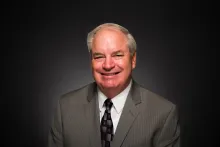
Robin Webber was born in Chicago, Illinois, in 1951, but has lived most of his life in California. He has been a part of the Church of God community since 1963. He attended Ambassador College in Pasadena from 1969-1973. He majored in theology and history.
Mr. Webber's interest remains in the study of history, socio-economics and literature. Over the years, he has offered his services to museums as a docent to share his enthusiasm and passions regarding these areas of expertise.
When time permits, he loves to go mountain biking on nearby ranch land and meet his wife as she hikes toward him.
