

Don Ward
This transcript was generated by AI and may contain errors. It is provided to assist those who may not be able to listen to the message.
If you want to turn to Ephesians 4 and verse 1, we'll start with this question today that we find here in Ephesians 4. Actually, it is not stated as a question here, but in Ephesians 4 and verse 1, the Apostle Paul writing. So, as we begin to read these first seven verses of Ephesians 4, let's ask ourselves, how well did each one of us do this past week in fulfilling the exhortation that the Apostle Paul gives us here, and exhortations in Ephesians 4, verse 1 especially, and we'll read through verse 7. I therefore, the prisoner of the Lord, beseech you that you walk worthy of the calling. Now, the word here for walk worthy of the calling, where in you are called, it's basically the same root Greek word that you walk worthy of the calling, wherein you are called. Just the calling within itself is a great miracle and divine favor from God in and of itself, and of course, you could give sermons on appreciating your calling. A lot of people work hard not to be called, and it is a tragedy that they do, not realizing that what this life is all about and why we were created in the first place is to have eternal life, and we have to be called in this age in order to be in the first resurrection. The calling wherein you are called, that you walk worthy of it. I mean, even the fact that we have life, how much do we appreciate just life itself? You get in a situation like Linda Hamlet is in, and you know that you can see your very body wasting away day by day to where you become a little emaciated hulk of being, and yet you enjoy and you appreciate life and you thank God for it. Then you add on to life itself the opportunity to be called today, to be among the first fruits, to have that opportunity to be able to work with relatives and friends, maybe your mother, maybe your daddy, grandparents, when they come up in the second resurrection.
Verse 2, with all lowliness and meekness, with long suffering, for bearing one another in love.
Endeavoring to keep the unity of the Spirit in the bond of peace. Of course, there are various spirits that people might make manifest. Today, to me, you walk into church services and those who are sensitive to the spirit of a body can oftentimes discern. It seemed today, to me, I discern a good spirit. We're here for the right reasons. We're here to be taught. We're here because we love God. We're here because we've humbled ourselves before Him, and we want to have that perfectly teachable heart that James talks about. There is one body and one spirit, even as you're called, and one hope of your calling. The same spirit that is in God is in Christ, is in each one of us. That eternal spirit, the essence of God in Christ, can be in each one of us. That is why, in resurrection, we are not created beings. We are born beings, born in the family of God. One of the reasons, I believe, as perhaps we'll get to later, that Satan is the way that he is and why he hates us so much is because he's a created being given free moral agency, and he chose to go the wrong way. Maybe after he learned that he could never be a born Son of God. The angelic realm was created to serve as ministering servants to the heirs of salvation, according to Hebrews 1.14. There's one Lord, there's one faith, there's one baptism. Now, the Bible does speak of three baptisms. The baptism by fire, which you don't want, where the pairs are gathered together at the end of the age and they are burned. There is a baptism in water. Man can baptize you in water, but only God can baptize you into the body of Christ. There is only one baptism into the body of Christ. That baptism, we'll read that scripture later, is through God's Spirit. For by one Spirit are you all baptized into one body. So the one baptism is into the body of Christ in keeping with the context. One body, one Spirit, even as you are called in one hope of your calling, one Lord, one faith, one baptism, one God and Father of all who is above all and through all and in you all. But unto every one of us is given grace according to measure of the gift of Christ. We all have various gifts. You know, Paul talked about the gifts that God had given him.
I think many of us can discern to some degree the gifts that God has given each one of us. We know the gifts that are given to us. As Paul talks about in 1 Corinthians 12, those gifts are given to us to edify the whole body of Christ. So how well did we do this past week in fulfilling the admonitions, exhortations, in those first seven verses? Did we become a yeah butter? Y-E-A-H, yeah butter, I guess is B-U-T-T-E-R, but I'm not talking about the kind you eat. The yeah butts. Yeah, but I did this. How you or I become a yeah butter while sitting in the seat of the scornful. Most everyone here could sing to him, blessed and happy is the man. Blessed and happy is the man who does never walk astray. Let's turn and read that and focus on the words here. Maybe you've never really focused on the words in Psalm 1. In Psalm 1, verse 1, Blessed is a man that walks not in the counsel of the ungodly. He doesn't listen to the ungodly. He doesn't listen to those who would lead him astray. He doesn't listen to those who are not willing to walk in the narrow way. He walks not in the counsel of the ungodly, nor stands in the way of sinners. You can't just point to him and say, well, you know, who would want to be in that church? Look at them. They can't even get along with each other. Yet they are going to teach the world and warn the world of the wrath to come. How can they do that? Stands in the way of sinners, nor sits in the seat of the scornful.
Have you ever really focused on the meaning of the words, and especially the word scornful? The word scornful, one of the primary meanings, is to talk arrogantly. And it is somewhat along the lines of, yeah, but. There's one more, yeah, but.
Let's read the rest of this song. Blessed is a man that walks not in the counsel of the ungodly, nor stands in the way of sinners, nor sits in the seat of the scornful. But his delight is in the law of the Lord, and in his law does he meditate day and night. How much did we meditate on the law of God this past week? Or were we so busy sitting in the seat of the scornful, and being a yay-butter, that the law of God sort of passes us by? Well, we know that. We really don't have time to meditate on the law of God. It's like there's something more important to do. That's not very exciting. He shall be like a tree planted by the rivers of water that brings forth his fruit in season, his leaf also shall not wither, and whatsoever he does shall prosper. The ungodly are not so, but are like the chaff which the wind drives away. Therefore, the ungodly shall not stand in the judgment nor centers in the congregation of the righteous. For the Lord knows the way of the righteous, but the way of the ungodly shall perish. You know, I look at this Psalm and I wonder, what does my life really represent to God and to other people? What does my life represent to God and Christ? What does my life represent to my wife and my children? What does my life represent to the members of the body of Christ?
Am I like a tree that's planted by the waters bringing forth fruit in due season? Does my life represent an invitation to life? Or does my life represent an invitation to death, to the dark side?
Brethren, with God, there's no middle ground. We're either for Him or we are against Him. You cannot be for God and cast His words aside and set in the seat of this corn-full and be a yay better. Psalm 50 now, please. Psalm 50. Psalm 50 is a picture of Jesus Christ returning again. I don't know if you've ever viewed this Psalm in that way.
Psalm 50, verse 1, The mighty God, even the Lord, had spoken and called the earth from the rising of the sun, and in the going down thereof, out of Zion, remember Paul says that Zion, you've come to Zion, the city of the living God, church of the firstborn, out of Zion, the perfection of beauty, God has shined, our God shall come and shall not keep silence. So here is picturing the coming of God, a fire shall devour before him, and it shall be very tempestuous round about him. He shall call the heavens from above into the earth, that he may judge his people, gather my saints together unto me those that have made a covenant with me by sacrifice. And at baptism, we entered into the covenant of sacrifice. And whomever counseled us for baptism made it very clear that they went through Luke 14 talking about counting the cost. They explained to us in Romans 6 that when we go into the watery grave of baptism, we're entering into the covenant of sacrifice. That is, that we will sacrifice, we will give up flesh, and we will serve the living God. And we will cross flesh out.
Verse 6, And the heaven shall declare his righteousness, for God is judge himself. Hear, O people, and I will speak of Israel, and I will testify against you, I am God, even your God. So what is he going to be concerned about? I mean, this Psalm provides you great insight into what God is really concerned about. He says, I'm not going to reprove you because of sacrifices, that is, burnt offerings being continually before me. The earth is mine, the fullness thereof. I own everything, the cattle on a thousand hills, and all of that. What I'm interested in, to a large degree, is how do you view me? How do you understand me? Verse 14, Offer unto God thanksgiving. Pay your vows unto the Most High. And of course, a vow is a form of sacrifice. Paul writes in Hebrews 13, verse 15, that forget not to offer the sacrifice of praise with your lips, for with such sacrifices, God is well pleased. He says, Offer unto God thanksgiving. Pay your vows unto the Most High. And call upon me in the day of trouble, and I will deliver you, and you shall glorify me. But unto the wicked, God says, What have you to do to declare my statues? Or that you should take my covenant in your mouth, seeing you hate instruction, and cast my words behind you?
To be instructed, to be corrected, sometimes it hurts. Sometimes we don't like it. I don't take to it all that well, and I know most people don't. But to become truly converted and have a perfectly teachable heart, you have to come to Thy will be done and not my will, and have that perfectly teachable heart.
Seeing you hate instruction and cast my words behind you, when you saw a thief, you consented with him. Have been a partaker with adulterers. You gave your mouth evil and your tongue framed deceit. You sit and speak against your brother. You slander your own mother's son. These things have you done, and I kept silence. And here's one of the, I guess you would call it, great admonitions in the whole Bible, which humankind as a whole, they have forgotten.
And they go out and they create idols and false gods, false philosophies, false theologies. And they do the work of Satan the devil, and people are deceived.
You thought that I was altogether such a one as yourself. God is not like us. His thoughts are not our thoughts, or our thoughts are not His thoughts. Of course, we can meditate on His line and His way to the point that our thoughts can be in harmony with His thoughts, in our ways in harmony with His ways. But I will reprove you and set them in order before your eyes.
Now consider this, you that forget God, lest I tear you in pieces and there be none to deliver, who so offers praise glorifies Me, and to Him that orders His conduct right will I show the salvation of God. Do we realize that we are standing daily before the judgment seat of Christ, and judgment is now on the house of God?
Oh, I know we can probably quote the Scriptures, but have we internalized it to the point that we actually understand it, and it's like frontlets between our eyes, and it's burned on our brain and on our gray matter that we know this. Let's turn to Romans 14, verse 7. Romans 14 and verse 7. As a reminder here, in Romans 14, verse 7, Mr. Corley talked about this being about one man choosing to be a vegetarian and another not choosing to be, and not judging one another about that, but it has greater implication as well. In Romans 14, verse 7, For none of us lives to himself, and no man dies to himself.
Everything that we do in one way or another, unless we just totally become a hermit and go live somewhere in the outback, wherever that might be in today's world, we have no contact with any other human being. If we have any contact with another human being, we communicate something to that person. It's either hope, or encouragement, or so many different things that we can do that we have power within us to do. And I know that I fall short, perhaps you fall short, and we all need to rededicate ourselves to doing whatever we can, because no man does live to himself.
Whatever we do affects somebody else. For whether we live, we live unto the Lord. And whether we die, we die unto the Lord. Whether we live, therefore, or die, we are the Lords. He created humankind. He made us. Without Him, we would not even exist. For to this end, Christ both died and rose and revived. That He might be Lord both of the dead and the living, because resurrection is coming. There is a resurrection, of course, the life and a resurrection to judgment. But why do you judge your brother?
Or why do you set it not your brother? For we shall all stand. And some of the commentaries bring out that this is in the progressive present sense as well, that we are all standing before the judgment seat of Christ on a daily basis. And even those who don't know the name of Christ, eventually will know the name of Christ. And as it says in verse 11, As I live, says the Lord, every knee shall bow, every knee shall bow to me, and every tongue shall confess to God, so that every one of us shall give account of himself to God.
Salvation is personal and individual. It is not on a national basis, per se. The Old Covenant was a national covenant. The New Covenant is individual and specific. It is between you and God and Christ. And of course, human beings enter into that equation because no man lives to himself. 1 Peter 4, verse 17. 1 Peter 4, verse 17. 1 Peter 4, verse 17.
For the time has come that judgment must begin at the house of God. And if it first began at us, what shall the end be of them that obey not the gospel of Christ? The time has come that judgment must begin at the house of God, and if it first began at us, what shall be the end of them that obey not the gospel? And if the righteous scarcely be saved, where shall the ungodly and the sinner appear? Christ is not going to judge you or me based on what other people do. But He is going to judge me and you based on how we respond to what other people do.
And I know that could be hopefully a sobering thought. But if a person sins against us, the test is first of all on us. But ultimately, the test is on the person who mistreated us or sinned against us. Never forget Galatians 4, verses 7 through 8. Let's read them. Galatians 4. Galatians 4.
It's not 4 and my notes are wrong, I'm pretty sure. Galatians 5. I'll get it right in a minute. It's Galatians 6. Galatians 6. Maybe I misread it in my notes. Yeah, I do have. I do have chapter 6 in my notes. Galatians 6, verse 7. Say it again. I cannot use human reasoning apart from the Word of God and hope to be able to stand blameless before God. As I've already said, God's thoughts are not our thoughts. God's ways are not our ways. The challenge is for us to be in harmony with God's thoughts and God's way. Satan has used the events of the past several months and to some degree the past several years to stir up emotions and cause division in the body of Christ. But the Scriptures state that Christ is not divided. So if there is division, it must be coming from us and not from Christ.
Is Christ divided? The great rhetorical question of 1 Corinthians. Is Christ divided? Basically, what 1 Corinthians shows you is that from your calling to the resurrection, Christ is not divided. They had just about every problem that you want to name in the Corinthian church. There were some there that didn't even believe in the resurrection. I don't know how on earth you would possibly be attending a church of God and not believing in the resurrection.
Notice in 1 Corinthians 11.7, of course, Christ allows division. We are not robots. We make choices. And one of the most difficult things to do is to sit in some office in the church and to really administer that office as Christ would have us to administer it. It's not that easy. You can read the record of those who sat in the offices in the Old Testament, the Judges, the Kings. I wondered some time, and I'm still studying and trying to come to a better understanding of what Christ said in Matthew 23 verse 1. Scribes and Pharisees sit in Moses' seat. Whatsoever they bid you do, but do not after their works, for they say and don't do, and they bind heavy burdens on men. Throughout Matthew 23, Christ takes them to task. And He comes to the conclusion that they should be doing the weightier matters of the law, judgment, mercy, and faith. These ought you to have done and not to have left the other undone. That is to exercise judgment, mercy, and faith. In 1 Corinthians 11 verse 17, Now in this that I declare unto you, I praise you not that you come together not for the better but for the worse. For first of all, when you come together in the church, I hear that there be divisions among you, and I partly believe it. Brother, we need to leave our divisions at home. You want to talk about the divisions. Do it at home. Do it privately. You cannot control your lives. But everybody here is not in tune with everything that you're in tune with. For first of all, when you come together in the church, I hear that there be divisions among you, and I partly believe it. For there must be no heresies among you that they which are approved may be made manifest among you. So God does allow human beings to make choices, and He allows divisions to be in the church. And as I said earlier, we cannot necessarily, in different words, control what others do to us, but we can control how we respond. I know I haven't always responded correctly, and I know that feelings are sometimes very difficult to deal with. We might define emotions, can be defined as feelings. Our feelings can run to gamut, rage, anger, hate, envy, love, joy, and peace. All the way through that gamut, and of course, there are many other emotions and in-betweens.
To some degree, we now have a virtual civil war going on in the church of God. And especially if you look at some of these, what do they call them, social sites like Facebook. Yet some of these people claim to be defenders of the faith.
Now let's look at some things here. Some have made the remark that the United Church of God is failing, and it is if they are overjoyed at this. We surely don't seem to be making a lot of progress, but are we happy about it?
To say that the church is failing is to say that you and I are failing. In one sense, we are the church. It's hard to have a church without people. You may have tried it, but it just won't work. You've got to have the brethren.
I don't intend to fail myself, and I don't think any of you intend to fail. You're not here for the purpose of failing. But I hasten to add that sin is so deceitful that we can fall into the clutches of the devil before we know it. But God has assured us. He's assured you and me that we will not fail if we are faithful to Him. No way, no how.
Perhaps what they mean when they say the United Church of God is failing is that the organization is failing, and they are above it all.
And it is obvious that mistakes have been made. But do we throw the baby out with the bathwater? You know, brethren, when it really comes down to it, those of us who have been called into the Church of God, and we know and we know that we know our choices are somewhat limited.
You know, we could go join another group. We could start another fellowship of our own. Or we could just sort of do our own thing. Maybe shop around, go a little bit here, go a little bit there, as some people have done, basically, since the Schism in worldwide in 1995. The word organization is a symbol for a collection. It's a word that symbolizes a collection of people who have banded together for a common purpose. The mission statement of the United Church of God is to preach the gospel of the Kingdom of God and to prepare a people. You know, when I was coaching, I placed a sign in the locker room that stated, when the going gets tough, the tough get going. Like the old Lynn Anderson song, I beg your pardon, I never promised you a rose garden. Now, if you really have read the book, you know that it talks about trials, difficulties, persecution. By placing that sign in the locker room, I was saying, in other words, you have to rise to the challenge. When the going gets tough, when you're down on the one yard line, it's fourth and one, and they have a gap six defense against you. That means they have six in the gap and five linebackers. You have to really bow your neck.
The final yard is a hardest yard, as they say. The final step is the hardest step in the Kingdom of God. Oftentimes, if you read about the end-time church in Isaiah 61 in the morning that is taking place, M-O-U-R-N-I-N-G, the Jesus Christ is going to come and comfort those who mourn in Zion.
Those who are really in the faith, they do not withdraw. They don't hold back. They don't flee. They charge into action. I want us now to look at John 10, verse 1. John 10, verse 1. Here Jesus Christ says that He's the door, and He is the Good Shepherd, and that He gives His life for the sheep. There's an admonition in here in John 10, verse 1. Fairly, barely, I say unto you, He that enters not by the door into the sheepfold, but climbs up some other way, the same as a thief and a robber. And of course, as we shall see here, there is no other way. But he that enters in by the door is the Shepherd of the sheep. To Him the porter opens, and the sheep hears His voice, and He calls His own sheep by name and leads them out. And when He had put forth His own sheep, He goes before them, and the sheep follow Him, for they know His voice. And a stranger will they not follow, but will flee from Him. They know not the voice of strangers. This parable spoke Jesus unto them, but they understood not what things they were, that He was talking about. What did He mean by this? Then Jesus said unto them again, Fairly I say unto you, I am the door of the sheep. All that ever came before Me are thieves and robbers, but the sheep did not hear them. I am the door. By Me, if any man enter in, he shall be saved, and shall go in and out and find pasture. The thief comes not but to steal and to kill and to destroy. I am come that they might have life, that they might have it more abundantly. I am the Good Shepherd. The Good Shepherd gives His life for the sheep. The Bible speaks of the Good Shepherd, the Great Shepherd, and the Chief Shepherd. Psalm 23 is to a large degree the Good Shepherd. The Lord is my Shepherd.
But he that is in hireling, and not the shepherd, whose own the sheep are not, sees the wolf coming, and leaves the sheep and flees, and the wolf catches them and scatters the sheep. The hireling flees because he is a hireling and cares not for the sheep. I am the Good Shepherd and know my sheep, and am known of mine. As a father knows me, even so know I the father, and I lay down my life for the sheep. So brother and each one of us should view ourselves in this role of the Good Shepherd as it were, that we are to love our wives and our husbands in sacrificial love as Christ loved the church. Ephesians 5 talks about this, that as Christ loved your wives, even so should husbands love their wives, even as Christ loved the church and gave His life for it. The Bible talks about us being members one of another. At Passover, before we take Passover, we wash one another's feet, which to me is saying that I would be willing to humble myself and give myself for my brother. The Bible talks about us being members one of another. And it's almost as like for some people who take up their keyboard, it's not the pen anymore, as if certain Scriptures were not in the Bible.
But all of the Bible, all Scriptures given of inspiration of God, that's what Paul writes and is profitable for instruction, direction, and instruction in all righteousness. So does 1 John 4. 1 John 4. 1 John 4. Verse 16.
Twice in this chapter, the statement is made, God is loved. Verse 8 and also in verse 16. Verse 8 through verse 15, Delores Agree is talking about Christ laid down His life for us. He did it first. He didn't wait for us to make the first move. God so loved the world, He gave His only begotten Son. Christ voluntarily gave His life. And so ought we to love one another.
Brother, we have talked about back years ago and worldwide that we're the Philadelphia era of the church of God. Philadelphia meaning brotherly love. We're the church of brotherly love.
That's another gap we need to close.
We need to make that a reality. I mean, you can't do some of the things and say some of the things and really say, I'm loving my brother.
And all of us, I know I have said things. I know I have done things that hurt other people. And I'm trying to repent of those things, and I hope we all are striving to do that. So that we can have that identifying sign that Christ gave us in John 13.35, by this shall all men know that you are my disciples and that you have loved one for another. In 1 John 4 verse 16, And we have known and believed the love that God hath to us. God is love, and he that dwells in love dwells in God and God in Him. God is love. Now like Paul talks about in 1 Corinthians 13, where he talks about charity. It says, though I speak with the tongues of angels and have the gift of prophecy and understand all mystery, have all knowledge, faith that I can remove mountains. If I have not charity, if I'm not becoming as God is, and God is love, it's all in vain. We're kidding ourselves. We're playing church.
Herein is our love made perfect that we may have boldness in the day of judgment because as He is, so are we in this world. There is no fear in love. Perfect love casts out fear because fear had torment. You see, if there is some little gnawing, aching thing or some big gnawing, aching thing that is not dealt with, it causes a sense of uneasiness, a sense of feeling that somehow we are under the gun or we need to do something. He that fears is not made perfect in love. For love, we love Him because He first loved us. If any man say, I love God, and hates his brother, he's a liar. For he that loves, not his brother, whom he hath seen. How can he love God whom he hath not seen? And this commandment have weave from him that he who loves God loves his brother also. But you know, the Scriptures go way beyond this in a sense, I guess you would say. Let's go to Romans 12.
You know, the Bible talks about, for a good man, some would even dare to die, but Christ loved us while we were yet sinners. Who would you die for? Who do you love? And I know we get down to the very heart and core of Christianity.
You remember those, I gave two sermons on the book of Romans. Mastering the book of Romans gave handouts. One of the things we talked about was that, to some degree, the seven basic doctrines of Hebrews 6 outlines the book of Romans. Repentance from dead works. The first two and a half chapters of Romans deals with repentance from dead works. The Gentiles of sin, the Jews of sin, Romans 3, 23, all of sin comes short of the glory of God. Repentance from dead works. Faith in God. How are we justified? Faith in God. Romans chapters 3, 4, and 5. Then, after we have faith in God and repented, baptized. Romans chapter 6. Then, the laying on of hands. The Holy Spirit. Romans 7 and 8. Then, resurrection and judgment. Romans 9, 10, and 11. Then Romans 12 through 16 deals with going on to perfection, being a living sacrifice. In Romans 12, 1 begins, I beseech you there, brethren, by the mercies of God that you present your bodies a living sacrifice, wholly acceptable unto God, which is your reasonable service. Now, basically, the rest of this chapter shows us, tells us, describes how we can become a living sacrifice. Now, we read 1 John 4, verses 16 through 21, I think it was. Now, notice, it goes beyond just loving your brother. In verse 12, rejoicing in hope, patient in tribulation, continuing incident in prayer, distributing to the necessity of saints, given to hospitality. 1 Bless them which persecute you, bless and curse not. I don't know if I'm there, as I should be. Bless them that persecute you. Rejoice with them that do rejoice. Weep with them that weep. Be of the same mind one toward another. Might not hide things but condescend to men of low estate. Be not wise in your own conceits. Recompense to no man evil for evil, provide things honest in the sight of all men. If it is possible as much as lies within you, live peaceably with all men. Dearly beloved, avenge not yourselves, but rather give place unto wrath. For it is written vengeance is mine, I will repay, says the Lord. Therefore, if your enemy hunger, feed him, if he thirst, give him drink, for in so doing you shall reap or heap coals of fire on his head. Be not overcome of evil, but overcome evil with good. See, wrong emotions cause people to do wrong things. It causes them to accuse one another, to be fearful and suspicious. Unbridled emotions cause divisions in any societal structure, from the family to the church. Proverbs 1632, if you would go there, Proverbs 1632, one of the great scriptures in all of the Bible, one that we all need work on. I tell you, frankly, that my spirit today is sad.
I'm sad. Now, the Ecclesiastes talks about, Ecclesiastes 3, there's a time and a season for every purpose under heaven. Time to be born and time to die, time to laugh, time to cry. And so on.
You know, Ezekiel 9 talks about sighing and crying for all of the things that are taking place.
So it is not necessarily a time to be giddy, as it were. But these are sobering times. But on the other hand, as I often say in funerals, there's a time to grieve, but we must not let grief become our master. There's a time to be sad and to be serious and sober-minded. But we must not let that become our master, because we want our lives to reflect hope. And we want our lives to reflect life and life eternal. In Proverbs 16, verse 32, "...he that is slow to anger is better than the mighty, and he that rules his spirit than he that takes a city." So ruling our spirit, our emotions, is very important to God. The Scriptures tell us that Christ is not divided, that we're baptized into one body. That one body, the same spiritual essence that is in God that is in Christ, is in us. And Christ desires that his body be united and edified with each joint, fitly frame together. And hopefully that is the goal of all of us. Now let's look at what I've just said paraphrasing. Let's look at the Scripture itself in 1 Corinthians 12, verse 12. To me, these are the two greatest unity Scriptures in the Bible.
Because it is through this baptism into one body that we are joined together. That we have this common essence within us. That we are members one of another.
1 Corinthians 12, for as a body is one and have many members, and all the members of that one body being many are one body, so also is Christ. For by one Spirit, are we all baptized into one body. Whether we be Jews or Gentiles, whether we be bond or free, have been all made to drink into one Spirit. For the body is not one member, but many. And we are all joined together as one by that common essence, the very essence of God in Christ, the Holy Spirit.
To me, this is the Bible definition of the spiritual organism. We call it the Church of God, of which Christ is the Head. Brother and those of you who sit here today, and as I stand here today, we're all here through the grace and mercy of God. And we've been able to remain faithful and stable and loyal through some unbelievable trials. We have surely lived through the description given of the Church at Ephesus in Revelation 2. Let's turn there to Revelation 2. Message to the seven churches.
We can represent, as we have said through the years, maybe three different things. The literal male route. There were seven churches on the male route.
A picture of the churches through the ages. In various eras, and that this message is applicable. All of these messages are applicable for us today. Under the angel, the Angelos, the Greek word Angelos can refer to a human being or to a spirit being. I submit in this case, it was probably to a human being, the pastor of the Church. And these letters were to be read by the pastor to the churches. I don't know if John would be writing a letter to an angel because he was receiving the message from an angel. Under the angel of the Church of Ephesus write, these things says, He that has the seven stars in his right hand, who walks in the midst of the seven golden candlesticks, I know your works and your labor and your patience, that you cannot bear them which are evil. You have tried them which say that they are apostles and are not, and have found them liars, and have borne and have patience for my namesake, and have labored and have not fainted. That's a description of many of you for the past several decades.
Nevertheless, I have somewhat against you because you have left your first love.
Now the great identifying sign that Christ gave was that you love one another as He gave commandment. That's John 13.34. Then He says, by this sign shall you know. Remember, therefore, from whence you are fallen and repent and do the first works, or else I will come unto you quickly, will remove your candlestick out of its place, except you repent. How serious is this? Leaving the first love. Now some basically focus, and there is, you can talk about first love and the first flush and the excitement of coming into the truth, and how excited you were and how you wanted to study and learn more and more. And you didn't mind so much that the preacher went over time. We weren't all that concerned about that.
And then somehow that sort of dwindled. But I don't think that may be part of it. See, it says you've left your first works to repent of that, or He's going to remove the candlestick. See, the seven churches are reflected to some degree by the vision in Zechariah chapter 3 and 4, mainly 4, of the two olive trees and seven candlesticks in the bowl. And if your candlestick is removed out of the bowl in which the olive trees are emptying the oil into the bowl, then you're cut off from the Holy Spirit. That's how serious it is.
I believe the first works have to do with the weightier matters of the law. So note once again the admonition to repent and do the first works. Verse 5, Remember therefore from whence you are fallen and repent and do the first works, or else I will come unto you quickly, will remove your candlestick out of its place, except you repent.
Christ told the Pharisees that they should have done the weightier matters of the law. Let's go back to Micah and come back to Matthew, Micah chapter 6. Sometimes we say, well, I just wonder what God expects of me. What does he require of me? Amos, over to Micah, right after Jonah. In Micah chapter 6, here's a summary verse of what God requires. It is parallel to Matthew 23, 23. He has shown you, O man, what is good and what does the Lord require of you, but to do justly, to love mercy, and to walk humbly with your God. Now let's go to Matthew 23 and verse 23. That's Christ inspiring the prophet Micah to write that in the Old Testament, and Christ Himself saying these words. And of course, Jesus Christ is the living Word of God. In Matthew 23 verse 23. Woe unto you scribes, Pharisees, hypocrites, you pay tithe the men, anise, and coming, and have omitted the weightier matters of the law, judgment, mercy, and faith. These ought you to have done, and not to leave the other undone. Of all the shortcomings of the church ever since I've been associated with it, I first started listening to the broadcast around 1960 and 1961, and then started on the correspondence course and so on. For the next couple of three years, and so on, it went to finally we moved to Texas and started attending Ambassador College.
The first week that I was at the college, I had come over in March of 1969, an interview with Mr. McCullough and Mr. Kelly. At that time, I was offensive coordinator for football team, Delta State University, and head baseball coach. And I had a master's degree and so on, but I grew up on a farm, and I remember in the interview, I said, you know, I know you got a farm here. I'd be willing to get out there on the farm. I know a lot about farming. I said, oh, we'd never put a guy like you out on the ground. So we moved in July, got the furniture in, got sort of settled, and went up and see Ron Kelly, who was dean of students, basically overseeing the student work program. And he said, well, you might as well get on. You get your overalls on and go out there with old Don Griffin and the plumbing crew. And the plumbing crew, that is, to me, the toughest job was there. Maybe washing dishes in the kitchen. I don't know. But anyhow, we ran sewage lines to the hangar out there at the airstrip. We ran gas lines in the piney woods. We ran water down to the horse tables. And we installed these Schwann sculpture in front of the, what became later, the Hall of Administration. And we had 40 days in succession that it was 100 degrees or more. And I got my baptism by fire by the first week.
The plumbing crew supervisor, who his wife had attended Imperial, grew up in the area, had filled me in on all the sins of everybody in the church. I knew it all.
So, of all the shortcomings ever since I've been associated, to me it's summarized by the need to do the weightier matters of the law. Judgment, mercy, and faith. That you walk in a reconciled position with God and Christ and each member of the body of Christ. It's also summarized by the two great commandments. You shall love the Lord your God with all your heart, mind, and soul. You shall love your neighbor as yourself on these two, hang all the law and the prophets. We have come too far to give place to Satan the devil now. Satan wants you to be in opposition to anything that binds us together through the unity of the faith and the bond of peace. Satan is against the kind of unity that the Bible describes. God desires that we be unified. God desires brotherly love. God desires that we give up self and look to Him in unwavering faith. Notice Romans 8. Romans 8, verse 31. I often quote to myself, I have given a full sermon on just this verse. Of course, you have to tie in many other aspects. In Romans 8, verse 31.
What shall we say then to these things? If God be for us, who can be against us? Is God truly the one who is going to fight our battles? Does He mean what He says when He says, vengeance is mine, I will repay. It is a fearful thing to fall in the hands of the living God.
If God be for us, who can be against us? And God knows our hearts. He knows everything about us. He that spared not His own Son, but delivered Him up for us all. In other words, He is so for us and He so loves us that He was willing to give His Son that we might live. You talk about sacrificial love. And His Son was willing to give His life that we might live. How shall He not with Him also freely give us all things? Who shall lay anything? To the charge of God's elect. It is God who justifies. Who is He that condemns? It is Christ that is risen again who is even at the right hand of God who also makes intercession for us. See, Jesus Christ, He's aware of my situation, your situation. And as I've told you before, sometimes I don't do this, but basically I try every night to quote Hebrews 7.25 in my goodnight prayer that Jesus Christ ever lives to make intercession for us, therefore He is able to save us to the uttermost. Of course. Not only are we praying one for another, but Jesus Christ says that He is interceding for us. And He is not going to let us down. If we keep the faith, He will not let us down. Who shall separate us from the love of Christ? How tribulation or distress or persecution or famine or nakedness or peril or sword? As it is written. Now here's one of the key verses of the whole Bible. It might be overlooked. It has to do with entering into the covenant of sacrifice that are read about in Psalm 50 and also Romans 6, that we are crucified with Christ. Go down in the watery grave. We give up self, a covenant of sacrifice. We're to become living in sacrifices. But this says, for your sake, we are killed all the day long. We're counted as sheep for the slaughter. What does this mean? Anything that I get above death is a gift. Wages of sin is death. So anything I get above that, since I am a sinner, is a gift. So what this is also saying is that I realize that my life is in the hands of God. And I am going to surrender and submit to Him totally and unconditionally. And if God be for us, who can be against us? Now many forces are going to come against us. No question about that. And many times we're going to be in the pit and crying out. You remember the sermon I gave about Joseph from the pit to the palace. And God was with him all the way because he was faithful. No, in all these things, we are more than conquerors through Him that loved us. For I am persuaded that neither death nor life nor angels nor principalities nor powers nor things present, nor things to come, nor height nor depth nor any other creature, shall be able to separate us from the love of God, which is in Christ Jesus our Lord. So brethren, we can be comforted with these words. Do not let any root of bitterness spring up among us. Do not fulfill the dictates of Satan the devil. Don't let him win because we have spiritual weapons that he cannot overcome. We can be more than overcomers. We can be more than conquerors. We stand in the gap, and we stand with God in Christ. We're also going to rule with Him. It'll be our Father's good pleasure to say to us, Well done, now good and faithful servant. Enter into life.
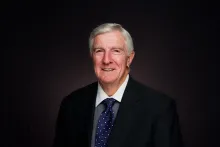
Before his retirement in 2021, Dr. Donald Ward pastored churches in Texas and Louisiana, and taught at Ambassador Bible College in Cincinnati, Ohio. He has also served as chairman of the Council of Elders of the United Church of God. He holds a BS degree; a BA in theology; a MS degree; a doctor’s degree in education from East Texas State University; and has completed 18 hours of graduate theology from SMU.
