

Don Ward
This transcript was generated by AI and may contain errors. It is provided to assist those who may not be able to listen to the message.
The title of the sermon, Essentials of Passover Preparation. Essentials of Passover Preparation. Suppose we could say the need for Passover originated with Satan and the demons, because Satan and the demons brought sin into the universe. Of course, Satan and the demons cannot be ransomed. Some people think, well, maybe there will be some kind of second chance for Satan and the demons. I see no evidence of that in the Bible. Some people want to quote 1 Corinthians 6, where it says, don't you know you'll judge angels?
That does not mean that there is a ransom for Satan and the demons. Satan, of course, deceived Eve, and then Adam went along with Eve. Sin entered into the world through Adam and Eve in the Garden of Eden. And thus, a need for Redeemer and thus a need for Passover, because the wages of sin is death. Notice in Romans chapter 5, Romans chapter 5, the Catholics talk about original sin, that just the act of you being born, sin's penalty is upon your head.
But notice what the Bible says in Romans 5, 12, Wherefore, as by one man sin entered into the world, and death by sin, and so death pass upon all men, for that all have sinned. It's not just because Adam sinned, because all have sinned. We're all guilty of the blood and life of Jesus Christ, because we have sinned, and the wages of sin is death, as it says in Romans 6 and verse 23.
The rest of Romans 5 is an interplay between first Adam and second Adam. The first Adam brought sin into the universe, or into the world. Satan brought it, I guess you would say, into the universe through his rebellion. And then the second Adam, Jesus Christ, through his obedience, many can be made righteous. Looking at verse 19, Whereas by one man's disobedience, many were made sinners, and you go back to verse 12, which says, In that all have sinned, so by the obedience of one shall many be made righteous.
Now some misapply that verse and say, okay, if you believe that Jesus Christ lived righteously, then that's imputed to you. But that's not what it's saying, because that Jesus Christ did what he did and paid the penalty for sin, you can be made righteous through repentance, faith in the sacrifice of Christ, being baptized and receiving the Holy Spirit. Moreover, the law entered that the offense might abound, but where sin abounded, grace did much more abound.
That word grace in the Greek is charis, C-H-A-R-I-S, and it means divine favor. And one of the aspects of divine favor is forgiveness of sin. Grace has many aspects. It's not just that. Divine favor has to do with even our calling and granting of repentance and so many other aspects of it. That as sin hath reigned unto death, even so might grace reign through righteousness unto eternal life by Jesus Christ our Lord. Jesus Christ was righteous, faithful unto death. And Paul knew that some would get the impression that, okay, the law is done away with through grace, what shall we say then?
Shall we continue in sin? May grace be abound, God forbid, how shall we that are dead to sin live any longer therein? So we go back to the first Passover. We ask the question when God instituted the first Passover, why did He institute that Passover? It was instituted to deliver Israel from Egypt, Egypt, symbolic of sin and death. So one of the greatest themes of Passover is freedom. Freedom from sin and death. Now, a lot of people want to drag their sins along with them, and they never totally let go of their sins, and as if they could do some kind of penance to pay for their sins.
Of course, you have to repent of your sins for your sins to be forgiven, but it's only through repentance and faith in the sacrifice of Christ that they can be forgiven, and God removes your sins as far as the east is from the west and has no more remembrance of them. Whereas we do remember. But the more that we can forget those sins, I think the better off we would be.
We were all once enslaved in spiritual Egypt, and the death penalty was on our heads because, once again, the wages of sin is death, and the only way it can be paid for is through death, and it required the death of the Son of God.
The Passover is rooted and grounded and founded upon God's law for us, and it goes back to why he created us in the first place. Why did God create humankind in the first place? Because God wanted to share who he is and what he is with humankind. He wanted to share his very being, his divine nature, as it says in Peter. His divine nature, the very essence of God, the Spirit of God, and we can become spirit beings. So God and the Word, somewhere back in eternity, ordained this great plan of salvation. They knew that humankind was going to sin, and eventually there would be a need for a Redeemer. The only way that we can be brought back from that sin is through Jesus Christ, as you heard in the sermonette. Let's go to Romans 3. The book of Romans is really the... They talk about peace so much in the world today. The book of Romans is really the recipe for world peace. If everyone understood the book of Romans and applied the book of Romans, we would have peace in the world. The first chapter of Romans deals with the sins of the Gentiles. The second chapter of Romans deals with the sins of the Jews. Paul begins to summarize in Romans 3. He comes down to verse 23. For all have sinned, Jew and Gentile, all have sinned and come short of the glory of God. So it doesn't matter your ethnic origin. It doesn't matter whether or not you are the seed of Abraham or of some other son of Noah that you can play a tracer lineage back to Ham or Japheth or Shem or whichever one it is. All have sinned and all need a Redeemer. All need the Passover. Being justified means paying the price freely by His grace, His divine favor and forgiveness through the Word of redemption. The word of redemption means buying back power. Through the buying back power that is in Christ Jesus who has set forth to be a propituation. A propituation means a go-between. He went in our stead through faith in His blood to declare His righteousness. His righteousness was declared in that He kept His promise from the time that Adam sinned. Adam and Eve in the Garden of Eden. Remember, before they were cast out of the Garden of Eden in Genesis 3 and verse 15, they were promised a Redeemer. To declare His righteousness for the remission of sins that are passed through the forbearance of God.
When the first Passover was instituted, God instructed the Israelites to kill lambs and sprinkle the blood on the doorpost of their dwellings. And when God saw the blood, He would pass over that home. Let's note that quickly in Exodus 12, the institution of the first Passover. Exodus 12 and verse 3. Speaking to all the congregation of Israel, saying, In the tenth day of this month they shall take to them every man a lamb, according to the house of their fathers, a lamb for an house. And if the household be too little for the lamb, let him and his neighbor, next unto him, join together according to the number of people, and every man according to his eating shall make your account for the lamb. Lamb shall be without blemish, male of the first year, you shall take it out from the sheep or from the goats. Keep it until the fourteenth day of the same month, and the whole assembly of the congregation of Israel shall kill it in the evening. They shall take the blood and strike it on the two side posts and on the upper door posts of the house wherein they shall eat it. So we know that through the blood of the lamb, when God passed over and he saw the blood of the lamb, then that house was spared. Verse 16, and in the first day there shall be a holy convocation, and in the seventh day there shall be a holy convocation, the beginning of unleavened bread. And now we come down to verse 29. And it shall come to pass that at midnight the Lord smote the firstborn of the land of Egypt, from the firstborn of Pharaoh that sat on his throne, and the firstborn of the captive that was in the dungeon, and all the firstborn of cattle. And Pharaoh rose up in the night, he and his servants, and all the Egyptians, and there was a great cry in Egypt, for there was not a house where there was not one dead. So the firstborn were smitten where the blood was not there. That, the sighting of the blood, they sprinkled the blood on the doorpost of their homes. Now we go to Hebrews, Hebrews 10, verse 19. This is one of my favorite passages in all of the Bible because it shows that we can live in the Holy of Holies 365 and 4th days out of the year through the flesh and blood of Jesus Christ, and that the blood is to be sprinkled on our hearts. In Hebrews 10, verse 19. Having therefore, brethren, bow lest to enter into the holiest by the blood of Jesus. See, before Jesus Christ came on the scene and paid the penalty for sin, only the high priest could go into the Holy of Holies, and that was the earthly tabernacle or temple. Now we can come before the very throne of God and, quote, live in the Holy of Holies because we always have that communion and access to God through Christ. So that's why he says, having therefore, brethren, bow lest to enter into the holiest by the blood of Jesus. We can go there into the holiest of all before the very throne of God.
By a new and living way, which he had consecrated for us through the veil, you have this Dublian tandre, the play on words, there was the veil that separated that one court from the Holy of Holies. And when Jesus Christ died, that veil was split, and it also made possible for Jew and Gentile through the blood of Jesus to enter into the holiest of all. He had consecrated for us through the veil, that is to say, his flesh, and having a high priest over the house of God, let us draw near with a true heart in full assurance of faith, having our hearts sprinkled from an evil conscience. And the sacrifices that were offered under the Old Covenant, the blood was offered, but the blood was served as a covering, kafar, K-A-P-H-A-R, and it's the same word as pitched, when they talk about pitching the art with tar, whatever they pitched it with. They covered it, kafar, with tar. And in the sacrifices, the blood was sprinkled, or put on, the various things in the temple, and it was a covering for sin, and the people who offered it made them ceremonially clean, able to enter into the congregation, and to remain in fellowship with them. But what the blood of Jesus Christ does is sprinkle from an evil conscience, and our bodies wash with pure water. Now, that body is washed with pure water. The pure water is the Word of God. Let us hold fast the profession of our faith without wavering, for He is faithful that promise. Now, back on page in Hebrews 9 and verse 13, Hebrews is a great place to do study before the Passover.
The book of Hebrews compares and contrasts the elements of the Old Covenant with the New Covenant. It talks about the priesthood. We have a superior priesthood today. Melchizedek is opposed to the Levitical priesthood. It compares and contrasts the offerings, which we're doing to some degree right here. It compares and contrasts the temple, the earthly temple, with the heavenly temple, the heavenly temple not made by hands. It compares and contrasts the promises under the Old Covenant with the promises under the New Covenant. So there's a lot of food for thought in this comparison and contrast of the two covenants in Paul's epistle to the Hebrews. In Hebrews 9 and verse 13, For if the blood of bulls and goats and the ashes of an heifer sprinkling, the unclean, sanctifies to the purifying of the flesh, See, that made him ceremonially clean, as we've already mentioned. That's what the Old Covenant did. How much more, this is what the New Covenant does, shall the blood of Christ, through the eternal Spirit, offer himself without spot to God, purge your conscience from dead works to serve the living God. It requires faith, of course, to purge your conscience from dead works. Conscience is the knowing within yourself. That's sort of a layman's definition of conscience, the knowing within yourself. What's right? What's wrong? And can you purge that conscience of the past, the dead works? See, everybody's conscience has to be trained. We're born into this world morally illiterate. And depending upon the culture and the training and education that you receive as a child, to a large degree will shape and mold your conscience. There are certain parts of Africa today that still practice headhunting. In fact, I read an article two or three years ago talking about how the pygmies might become extinct because of headhunters. Because one of the teachings in some of the religion there is, if you eat the flesh of another human being, then his spirit strengthens and enhances your spirit. You become stronger. They think that's all right. Or we could talk about, they do, they still practice in some parts of New Guinea. And you could go on and on with various practices that people have where their consciences and their culture embraces what would be totally foreign to us.
God wants us cleaned up from the inside out. And oftentimes the focus is easy to clean up the outside. Remember the Matthew 23 where we talked about the tribes and the Pharisees, that they paid special attention to clean up the outside.
But God wants the inside clean. The inside, the mind, the heart, the seat of where the Holy Spirit would dwell. The purifying of the flesh does not purify the heart and purge it of evil. But of course, to some degree, what you do with your flesh with regard to how you keep it, dress it, and so on, is a reflection, to some degree, of the inside. Through repentance and exercising faith in the sacrifice of Christ, we can be purged of sin, and by eating the unleavened bread of sincerity and truth, we can ingest the very mind of God in Christ. Mr. Eliot did an excellent presentation of that during the sermon at. So with that sort of general overview, now let's focus on the essentials for eating and drinking your Passover. I summarize the five great essentials as follows. Reconcile to God in Christ. You don't take the Passover in your sins. For some people, we talk about this, and we parrot the Feast of Unleavened Bread. What does it represent? The Feast of Unleavened Bread presents putting sin out of your life. Well, actually, you examine yourself, and you reconcile to God in Christ, repent of your sins before taking a Passover, right? You don't want to come to Passover and have something hanging out there or guilty conscience. So one of the great essentials, reconcile to God in Christ. Confess your sins. Exercise judgment, mercy, and faith before God in Christ. More about that later. Reconcile to our brother. That's the second. Thirdly, discerning the physical body and life of Christ that was given for our sins, as we have already talked about. If it were not for Christ, we would not have a ransom for sin. The wages of sin is death, and we would die. We would have no hope for eternal life. You know, the Christian religion is really the only religion that provides a sacrifice, a ransom, and atonement for sin. The Islamic religion does not have... they say that Allah is not forgotten, and neither does he begat. And it's through observing the five great pillars of Islam that you supposedly are able to enter paradise. So discerning the body and blood of Christ, and we also must discern the spiritual body of Christ, which is related to number two, being reconciled to your brother. The spiritual body of Christ is what? The spiritual body of Christ? The church. The brother. And realizing that we must keep the feast with the unleavened bread of sincerity and truth.
For one to be reconciled to God, one must be convicted of sin, repent of sin, exercise faith in the sacrifice of Christ, be baptized, and receive the Holy Spirit. Let's go to Matthew 23. I've mentioned this already, the weightier matters of the law. In Matthew 23, verse 23, this chapter, of course, is where Christ takes the scribes and the Pharisees to task.
Matthew 23, verse 23. One to you scribes, Pharisees, hypocrites. You pay tithe of men, anise, and coming, and have omitted the weightier matters of the law, judgment, mercy, and faith. See, it's the weightier matters of the law. Judgment, mercy, and faith stem from the law. The weightier matters of the law are judgment, mercy, and faith. Let's put this in simple terms. What does it mean? The law allows you to judge. Paul says, I would not know sin unless the law had said, don't commit adultery. So you go to the Word of God, and the Word of God, through the Spirit of God, convicts you of sin, and you make a judgment and say, I have sinned. Then the next step is, have mercy on me, Father in Heaven, I have sinned. Then God says, He's faith in the just, forgive you of all unrighteousness. Go walk in faith. Go and sin no more. So you exercise judgment, I have sinned. You cry out for mercy, forgiveness. And then God says, I'll forgive you, but go and sin no more. Go walk in faith. Faith is inextricably linked to obedience.
And you do the same thing with your neighbor.
If your neighbor, your brother, has offended you, then you go and be reconciled to your brother. Let's go back to Matthew 5.
Revelation 2, putting this in parenthetically while we're turning there, there's a letter to the church in Ephesus, where He commends them for a whole host of things. You've tried those who say they're apostles and are not, and you've found them to be liars. You have labored, you've endured, and you've done all these good things. Then He says, but I have somewhat against you, in that you have left your first love. Repent and do the first works, or else I will come and remove the candlestick out of its place. Candlestick in the bowl of the bowl. The candlestick is lit or lighted by the oil in the bowl, symbolic of the Holy Spirit. How serious is it? Well, if you don't repent of it, the candlestick's removed.
I would say the greatest weakness probably in the history of God's people. I remember giving a refresher program back in the 80s on this very topic of judgment, mercy, and faith. Basically, I tell you from the minor prophets, you read about in Zechariah 7 that one of the main reasons why Israel and then later Judah went into captivity was because they refused to exercise judgment, mercy, and faith.
It's easy to do the outward things, to clean up the outside.
And moving from one church organization to another church organization, or whatever you want to frame it, or getting all the leavening out of your house, which you're supposed to do. But just doing that does not change the heart.
God wants us to become as Jesus Christ is, who humbled Himself and gave Himself for us, and made it possible that we could walk in a reconciled position with God and Christ, each member of the body of Christ, and our neighbor all the time. But somehow, some way, some kind of... I don't know what you call it. Would you call it a spirit? Would you call it stubbornness within the flesh, or just the way human nature is? That... apparently we find it so difficult to do. I have failed in it, oftentimes virtually everyone in here, and in the church, or associated with the church historically, has failed in it. And I believe that's one of the great lessons. If you're going to have peace, you know Paul talks about in 2 Corinthians 5, verse 17, becoming a new creation and going on down, talks about He's committed unto us the ministry of reconciliation. And, brethren, we need all, brethren, those who have the Spirit of God to be reconciled to each other. If we indeed love God and Christ and each member of the body of Christ, I don't see how we can claim to be Christians and not do that. But all of us have a ways to go.
In Matthew 5, verse 20, I say unto you that except your righteousness shall exceed the righteousness of the scribes and Pharisees, you shall in no case enter into the kingdom of heaven. Now, one of the things that the Pharisees did was to boast of their righteousness. I pray, I fast twice in the week. I give tithes of all I possess. I thank God I'm not like this poor publican here.
The miserable creep that he is. I mean, brethren, when you build your spiritual foundation on your righteousness as opposed to somebody else's unrighteousness, the Bible is clear on that. You know where you are. And Christ says, unless your righteousness exceed, they were good at the outward stuff. You have heard, verse 21, that it was said by them of all time, you shall not kill. And whosoever shall kill shall be in danger of the judgment. But I say unto you that whosoever is angry with his brother without a cause shall be in danger of the judgment. Whosoever shall say to his brother Rechas, shall be in danger of the counsel. But whosoever shall say you fool shall be in danger of the gahin of fire. Now, one of the reasons why this is such a serious offense is because humankind was created in the very image of God. All of us, by creation, are the children of God. That's us by creation. It's physical children. But to be spiritual children, we have to go through what we're talking about here today. That is, we have to be convicted of our sins, repent of our sins, accept Christ as our Passover, and all of that. God wants everybody not only to be his sons and daughters through the physical creation of them, but to be spiritual sons and daughters in his kingdom and live forever.
Therefore, if you bring your gift to the altar, and there remember that your brother has ought against you, leave there your gift before the altar, go your way, first be reconciled to your brother, then come and offer your gift.
See, this is exercising judgment, mercy, and faith with your brother. I would say the two greatest essentials for keeping Passover in the sense of action we can do of judging ourselves, reconciled to God and Christ, reconciled to our neighbor. And of course, we can't have that unless we also understand the body and blood of Jesus Christ that was given for us.
When we kneel down and wash one another's feet, we're in essence saying that we will lay down our lives for the brethren, because washing feet was one of the most menial, servant-oriented tasks that could possibly be assigned at that time, in that culture. Christ washed their feet. Christ said, whose server would be great among you, let him become your servant. And thankfully, we have renewed the program of servant leadership.
Servant leadership. Now, some mistake that in various ways, but that's another subject. That's what we're supposed to do in it, and that's what we're affirming by going through this ceremony.
And being our brother's keeper requires courage. If you see him go astray, if you have a disagreement with him, or if you're offended by him, then you must take the necessary steps to correct the situation. And in so doing, there is great reward and there is peace. Look at James, the last two verses. Some people quote 1 Peter 4, I think it's verse 8 or 10, it says, Love covers a multitude of sins. See, there is only one way that sin can be covered. Now, see, if you love somebody enough, you are willing to make yourself vulnerable and go and try to be reconciled to them. That takes more courage in saying, well, I heard so-and-so down and out, so I'm going to take them a bag of groceries. That's a good work. But what requires more courage and more spiritual depth and strength has to do with the inside, the spiritual man being nourished and taken care of. In James 5, verse 19, Brethren, if any of you do err from the truth, and one epistrifo means to turn about, translated, convert. If you turn him about, see, if you say, here you're on the wrong path, I want to see you get on the right path. All of the qualifications that are mentioned in Galatians and other places in Matthew 7 of getting the moat out of your eye, consider your own self, and all of that, that in play. Let him know that he who turns about the sinner from the air of his way shall save a soul from death and shall hide a multitude of sins. But it requires that spiritual courage. You can't just say, oh, I love you and do nothing. Now, let's go to 1 Corinthians 11, where Paul gave specific instructions about the Passover. I think you'll see when we go through these verses here how it reinforces what we have said to this point. 1 Corinthians 11. You talk about a divided church. I don't think they had different organizations. I think they were still meeting together. But they were divided on everything from who is the greatest preacher. Some say I'm Peter, some say I'm Paul, or some even say they were of Christ. They were divided over men. They were divided over the incestuous fornicator. They were divided over going to court against their brother. They were divided over meet sacrificed idols. They were divided over divorce and remarriage. They were divided over... Even some said, and while spiritual gifts are one of the main things they were divided over, even some said there was no resurrection. That was a church at Corinth.
And we notice here how they were keeping the Passover and what Paul instructs them. And it basically reinforces what we've said to this point. 1 Corinthians 11, 17. Now this that I declare unto you, I praise you not that you come together not for the better but for the worse. For first of all, when we come together in the church, I hear that there be divisions among you, and I partly believe it. For there must be also heresies or divisions among you, that they which are approved may be made manifest among you. If we even go back to the time of the rebellion of Satan and the demons, God could have stopped Satan's rebellion. He created the angelic realm with free will and gave them an opportunity to have their character set. And once it was set, apparently there was no turning back.
How did Satan draw one-third of the angels to his cause? Well, in Ezekiel 28 it talks about he was puffed up because of his beauty, his intelligence, and all of that. But it must have been more to it than that.
My speculation is that God had revealed to Satan and perhaps the other angels his plan of salvation, that he was going to bring sons and daughters to glory in his family. And they would become actually born sons and daughters of God, not just created, and they would be on a higher plane than the angels.
So Satan had to some ways start criticizing and telling the others, those who were under his charge, I don't know if he got every last one that was under his charge or how that worked.
And God could have stopped. God does not create anything greater than he can stop. Okay? I hate I said that, but anyhow, be okay. I don't like that. I heard a minister the other day that he would say something was a bit controversial, and he'd say, But I got the mic. You don't have it. I got it.
There are heresies among you that they which are approved may be made manifest among you.
So, brother, we're standing before the judgment seat of Christ day and night, as they say, 24-7. When you come together, therefore, into one place, this is not to eat the Lord's Supper. So why do the churches call it the Lord's Supper? I don't know. There was a practice in the Greek world of when you had an event to come together and have a meal before the event. And that's what they were doing. It wasn't a potluck in that they put it all out on the table and everybody shared what everybody brought. They brought their own and they ate their own. And some fared sumptuously because they were richer and even brought wine. And as we'll read here, some were even getting drunk.
For in eating, everyone takes before other his own supper, and one is hungry and another is drunken. What have you not houses to eat and to drink in despise you, the Church of God? Now, the Church of God in this sense, obviously, is not the building, it's the people that make up the Church and shame them but have not. What shall I say unto you? Shall I praise you in this? I praise you not. For I have received of the Lord, that which also I delivered unto you, that the Lord Jesus, the same night in which He was betrayed, took bread. And when He had given thanks, He broke it and said, Take, eat, this is my body, do this in remembrance of me. So we remember that Christ paid the price for sin through the sacrifice. So perhaps the greatest of all the essentials in Passover preparation is to thoroughly discern the body and blood of Jesus Christ that was given for us. Because without that, we have no Passover. And we cannot be reconciled to God, we cannot be reconciled to our neighbor without this sacrifice.
So do this in remembrance of me. For you do show, katageloh, is the Greek word, katageloh, means you announce, you declare, you make known the Lord's death. So you do show the Lord's death. After the same manner, also He took the cup. When He had stopped saying, This cup is the new diathic covenant. In my blood this do you as often as you drink it in remembrance of me. For as often as you eat this bread and drink this cup, you do show the Lord's death till He comes. Wherefore whosoever shall eat this bread and drink this cup of the Lord unworthily shall be guilty of the body and blood of the Lord. We want to focus on this word, unworthily. Through the years, a lot of people in the church come out to Passover time, and they begin to get cold feet as a word. Well, I'm not worthy to take the Passover. I've done this, I've done that, I have this problem, that problem. This word, unworthily, here is not that kind of worthy or unworthy. We'll get to the Greek meaning of it in just a moment. If we look at ourselves, Paul, after 25 years in the church, said of sinners, I am chief. He talked about the struggle between the mind of the flesh and the spirit in Romans 7. If an apostle taught by Jesus Christ is still having that struggle, obviously we're going to have that struggle.
And so none of us are worthy in the sense that we might think in an English definition of that word that we're worthy to take it. Because anything we get above death is a gift, because we've all sinned. What this word means in the Greek, the Greek word for unworthily here, an axios, that's spelled A-N-A, X-I-O-U-S, in English, an axios. And it means irreverently. If you take it irreverently, they were taking it irreverently because they were having like a drunken brawl before eating it, and they were not discerning the body of Christ, the brethren, the church of God, and some had plenty and some had none.
So Paul warns them not to take the Passover irreverently because they had been doing just that. And there are many different ways that you can take it irreverently. You can be at odds with the church and the brethren. It would not be over having some kind of meal before Passover. It could be over a whole host of things. So in view of these divisive practices that had developed in Corinth, Paul said, When you eat and drink the Passover, do it in remembrance of the death of our Savior. To eat and drink it without showing regard and understanding of the solemn significance of this event is to be guilty of the body and blood of Jesus Christ, His very life. So in verse 28 we see that a person must examine. The word examine is dokemazo, means a test to prove, to scrutinize, to see whether a thing is genuine, such as in examining gems or metals. Is it the real thing? So in verse 28, Paul writes, But let a man dokemazo, examine, prove himself, and so let him eat of that bread and drink of that cup, after you do that. For he that eats and drinks irreverently an axios, eats and drinks credo, judgment, to himself, not discerning the Lord's body. He that eats and drinks, King James says, damnation. The Greek word is crema, it means judgment. Not discerning. Now this word discerning is an interesting word. It's diacrino, D-I-A. In Greek, you know what dia means, like diameter. Dia means all the way through. Diameter means all the way through a circle. So diacrino means all the way judgment, all the way through judgment, thoroughly discerning the body of Christ. So you discern the body of Christ that was given for us, His blood and His body, but also there are the brethren who are there with you. Do you have regard for them? And are you taking it reverently, reconciled to God in Christ and reconciled to each member of the body of Christ? So verse 29, For he that eats and drinks unworthily, irreverently, eats and drinks judgment to himself, not diacrino, not thoroughly judging, discerning the Lord's body. For this cause, how serious is this? For this cause many are weak and sickly among you, and many are dead, many sleep.
For if we would judge ourselves, we should not be judged. But when we are judged, we are chastened to the Lord that we should not be judged with the world. Once God calls us into His marvelous light and reveals Himself to us, and especially if we become partakers of the divine nature, He's not going to let us go easily, because you have come to a point, and basically all humankind will come to this point at one time or the other. There are just two great choices when all is boiled down and everything is said and done.
That is, choose life or choose death. But God loves us so much that even if we refuse to judge ourselves and do what we should do, He's going to step in and He's going to judge us and chase us, hopefully to get our attention to the point that we will come to our senses, that we will repent and turn to Him. That's what verse 32 is about. But when we are judged, we are chastened of the Lord that we should not be judged with the world.
Judgment is now in the house of God. Judgment of the world, later 1 Peter 4. Wherefore, my brethren, when you come together to eat, wait for one another. And if any man hunger, let him eat at home, that you come together not under judgment, and the rest will be set in order when I come. So in discerning the body of Christ, we have, of course, the body of Christ, the body and blood of Christ that was given for us, for their mission of sin. And we have the body of believers, our fellow brothers and sisters in Christ.
Now let's go to 1 Corinthians 10, just back in chapter 15. And notice what it says here. When we take the Passover, what are we saying? We are saying that we are one with God and Christ and each member of the body of Christ. That's one of the reasons why I talked about this Passover. How is God going to view each one of us when we take the Passover?
When we make this affirmation, because this is what we are affirming when we take it. Now the whole theme of 1 Corinthians is centered around the great rhetorical question, which I probably through the 40 years or so, in and out of Big Sandy, have read from the pulpit probably two dozen times. The great rhetorical question, 1 Corinthians 1.13, is Christ divided? And then Paul meticulously shows from your calling, not many mighty, not many noble, from your calling to the resurrection from chapter 2 through chapter 15, Christ is not divided. Those who have His Spirit. And when you take the Passover, 1 Corinthians 10.15, I speak as to wise men judge you what I say. Wise men, the cup of blessing which we bless is not the communion of the blood of Christ.
As you are entering into His very sacrifice and discerning what it means. The bread which we break is not the communion of the body of Christ. For we being many are one bread and one body. For we are all partakers of that one bread. And we're saying that the body of Christ is not divided. In 1 Corinthians 12, verse 12. Whereas the body is one and have many members. And all the members of that one body being many are one body, so also is Christ. We're all partakers of that one body. For by one Spirit are we all baptized into one body, whether we be Jew or Gentile.
Whether we be bond or free and have been all made to drink into one Spirit. So, brethren, we come to understand a little more. The bread that we eat also symbolizes, as you heard in the sermon at the Word of God. Man shall not live of bread alone, but by every word that proceeds out of the mouth of God.
Some people have tried to separate the spoken words of Jesus from the person of Jesus in the spiritual sense. John 663, which Mr. Eliot read in the sermonette, and I'm going to quote it here in comment. It says, It is the Spirit that quickens or makes alive the flesh, prophet, and smithing. The words I speak, they are Spirit and they are life. So, Jesus equates the Spirit, the Word, and the Life. Spirit, Word, Life. We call the Bible the Word of Life.
We call it the Book of Life. And so it is. And we have that verse. Not living by bread alone, but by every word that proceeds out of the mouth of God. We have Paul's admonition in 1 Corinthians 5-8, that let us keep the feast with the unleavened bread of sincerity and truth.
So, brethren, here we are, in one of the most critical crucial times in human history, facing another sacred calendar year in all the holy days in their sequence, all they represent. And we see the world and the way it is. And we know the trials, the tribulations, the difficulties that we've all been through.
I think we should turn and rehearse what I've already quoted in Revelation 2, and leave ourselves today with the challenge of whether or not we are going to repent and do the first works, whether or not we are going to really embrace the ministry of reconciliation, whether or not we're really going to take the Passover reverently, whether or not we can be able to say that we're all one bread and one bite.
In Revelation 2, verse 1, under the angel of the church at Ephesus' right, these things says, He that holds the seven stars in his right hand, Jesus Christ, who walks in the midst of the golden candlesticks, Christ, I know your works, your labor, your patience, how you cannot bear them, which are evil, you have tried them, which say they are apostles and are not, found them liars, and have borne and have patience for my name's sake, have labored, and have not fainted. I think we can mostly... that's basically what we've done for decades. But then the caveat here, nevertheless, have somewhat against you because you have left your first love. And some people just want to reduce this to, oh, when I first learned about the truth, I had this great flush, I studied day and night, now I've sort of lost that. It's far more than that. Because it seems that first love is equated with the first works, the next verse, because of, Remember therefore, He says you've left your first love, so what do you do about it? Remember therefore, from which you are fallen, so that you've fallen from something, the first love. See, you cannot really fulfill the two great commandments, to love God with all your heart, mind, and soul, and love your neighbor as yourself unless you are reconciled to God and each member of the body of Christ. Remember from which you are fallen and repent and do the first works, which I believe is Matthew 23, 23, the weightier matters of the law. Or else I will come into you quickly, will remove your candlestick out of its place, except you repent. And so, brethren, here we are with many challenges in our lives today. All of us, I'm sure, have our, as they say, our burdens to bear, and all of the things that go with living in today's world. So we have a challenge to really examine ourselves, prepare ourselves, to take the Lord's Passover so that we can take it reverently and so that we in good conscience can stand before God in Christ and say that we are one body and one bread. So, brethren, I enjoyed being with you here today and hope to see more of you in the fellowship hall. Until next time.
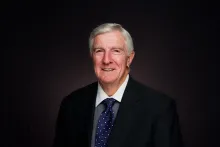
Before his retirement in 2021, Dr. Donald Ward pastored churches in Texas and Louisiana, and taught at Ambassador Bible College in Cincinnati, Ohio. He has also served as chairman of the Council of Elders of the United Church of God. He holds a BS degree; a BA in theology; a MS degree; a doctor’s degree in education from East Texas State University; and has completed 18 hours of graduate theology from SMU.
