

Ben Light
Jesus said, "The harvest truly is plentiful, but the laborers are few." What did He mean—and what does that mean for God's people today? Let's examine Christ's call for committed laborers in His harvest, and explore the spiritual harvest God is preparing, the character He seeks in those who serve Him, and the responsibility every Christian has to participate in His work. Rather than remaining spectators, God calls His people to be active workers, faithfully serving wherever He opens the door.
This transcript was generated by AI and may contain errors. It is provided to assist those who may not be able to listen to the message.
Well, thank you to the Youth Choir for the beautiful special music. Good reminder of what we need to be keeping track of and what we need to be focused on, seeking the Lord, seeking His kingdom, seeking His righteousness. So, appreciate very much the special music for today. Well, brother, in the past couple of months represent some of my favorite times of year here in Oregon. In my local neighborhood, even, it's one of the favorite times of the year. The temperature has started to shift a little bit. It's begun to dry out some, which is nice, maybe a little too dry this year. But the days are beginning to get longer and sunnier. You've got bees are flying, things are moving, flowers have begun to bloom. And the season begins to shift very considerably over the past couple of months. As many of you know, spring and summer in Oregon, especially early summer, can be quite pleasant. It can also be miserable at times, depending on the year and the weather. All too well, there's times of the year when it can feel a little more like December and not a whole lot like May or like June. I think we coined a term a few years back when it snowed in the midst of the early part of June that it was June-uary. We had these unpredictable weather patterns, so to speak. But once we reach the spring of the year in our neck of the woods there in the north part of Salem, right around the spring Holy Days, sometimes a little bit earlier, a little bit later, depending on the fluctuation of the Holy Days for that year, there's an event that occurs that I look forward to every year. And that's the blooming of the camis lilies in that part of the neighborhood.
There's some fields near my home that are the parking spot for the state fair, essentially. That's the area where they go through and park during the summertime. But they are just filled full of camis lilies, just beautiful, deep, purple flowers. They ultimately, again, use that for parking during the summertime. So by that point in time, they mow them under. Thankfully, they're a bulb, so they stay. They return again the next year. They're the spring and early summer of the year. There are so many plants in that section that it's this just vibrant sea of purple. It's just beautiful. And for those that are unfamiliar, the camis lilies are a plant that are native to Oregon. They typically grow in very moist climates, moist soils. And so these have been seeded. These are not natural. These have been ones that were planted as a part of the state parks department. Camis lilies have been used by Native Americans in Oregon for centuries. Prior to Western expansion in Oregon, they used it as a food staple. You can, apparently, the bulbs themselves are very rich in nutrients. They've been described as having a taste that is very similar to a sweet potato, only sweeter. The local Cauapua Indian tribes roasted them, and they dried them, and they ground them into flour. I'll admit, I've never eaten one. I don't know if anybody has, if anybody's tried camis lily bulb before or not. I've never eaten one, but I have certainly gained an appreciation for the beauty of them in the fields near my home. That purple color of just that whole field, just that sea of purple, as all those blooms wave in the wind, is just incredible. You might have also noticed, during the early spring, or the late spring, rather, in early summer, along the drive down here, along I-5, looking out over the fields, you see these fields of just yellow, these fields of white. See these fields that are red, the clover, the cover crops that they put in, that they'll then plow under before they seed those fields. But there is an incredible deal of beauty that is inherent in a field that has been sown. There's potential in that field. There's possibilities. You know, farming's kind of a gamble sometimes. You never quite know what your yield's going to be. But there's potential there. There's possibility. There's hope. There's sustainability. And there's continuity that's present. Let's turn over to John 4 real quick, as we begin today. John 4. And we're going to see the account of Jesus Christ and his disciples as they traveled through Samaria. Samaria was a region to the north of the nation of Israel, within the nation of Israel, kind of between Judea and Galilee. And the city that is mentioned here in this particular passage in John 4 is a city that was known as Sikar at the time. S-I-C-H-A-R. It was near Mount Ebal, but it was better known by a very different name throughout history. It was known as the city of Shechem. And you're probably more familiar with the city of Shechem, and the name of the city of Shechem than you would be the city of Shechem. But Shechem was a city that was kind of nestled in the valley between Mount Gerizim and Mount Ebal. And it is an area that is full, I mean just full, of biblical history.
Abraham, for example, built an altar in this area, and when he was promised the land. Jacob lived here and built an altar. In fact, you can tell from the account we're going to read, he dug a well there. That happened to be a very centerpiece of the conversation that Christ had with this woman we'll read in a moment. Simeon and Levi, you remember them, killed the men of Shechem as a result of what took place with their sister. It was a retaliation that took place. Joseph came to Shechem to look for his brothers. He was ultimately buried in this area. Israel shouted the blessings and the cursings from the mountains, from the tops of the mountains in this section near Mount Ebal and Mount Gerizim. And then Joshua provided his last words to Israel, here. Shechem became the first capital of Jeroboam and the northern ten tribes after the split of the kingdom. So this is an area that is just rich with biblical history. An awful lot of biblical history happened just in this little valley. Now during Christ's time, Shechem, Shechem, and Shechem, in this case, it's a part of Samaria. And it's home to a number of people that the Jews at that time refused to associate with. It wouldn't have anything to do with them. The name of the town, Shechem, actually comes from the Hebrew word for drunkard. So you can get a feel for how they may have felt about the individuals who were living in this area. The rift between the Jews and the Samaritans went back centuries. This was a rift that went back centuries. And honestly, it's difficult as you look through to pinpoint its exact beginning. Through the events of Jeroboam and the resulting captivity of the nation of Israel, that had a lot to do with it. Okay, what was taking place at that time had a lot to do with it. Now what happened with the Assyrians, when they came in and conquered the northern tribes, the Israelite captives were taken from some of the areas in which they lived and moved into other parts of Israel and vice versa. Right? So there was a diaspora that took place as they moved people from place to place to place. And so other people were moved into Samaria when the Israelites were moved out. And as a result of that, the individuals who came in were pagans. They worshiped pagan gods. They worshiped pagan goddesses. They had pagan worship practices that, unfortunately, Israel co-opted. And so thus begins the issues with Jeroboam. Thus begins a number of the issues that took place in that particular area. But they brought that pagan worship, and they ultimately began to mix it with the worship of the one true God. Now as time went on and the diaspora ended, Jews returned to that area. And that mixture of religion, that syncretist kind of religion that they observed and witnessed, was an abomination to them.
They were very displeased with that, because those who came back were coming out of captivity. They were coming out of an experience that they had gone into captivity as a result of these things. So when they see it now, they want to squash it. They want to put it out of every aspect of Jewish life. During the inter-testamental period, religious tension came to a peak and kind of came to a climax, so to speak, when the Jews destroyed the temple that was on Mount Gerizim.
So this history goes back centuries and centuries as to why there was such animosity between the Jews and the Samaritans at the time of Christ. But by the time of Christ, it had reached a point where they would have absolutely nothing to do with one another. Now, if you've gotten to John 4 already, John 4, we'll go ahead and pick up this encounter with the woman at the well. You can kind of skim through the section.
You can take a look at it as you go here. As the account progresses, as we see this story go, we see Jesus Christ engage this woman in conversation. He asks her to bring him something to drink from the well that she's pulling water from.
And they go back and forth a few times, and he reveals to her, in really no uncertain terms, that he is the Messiah. He reveals to her who he is. He makes it abundantly clear. Verse 27 of John 4. John 4, verse 27 says, And at this point, his disciples came, and they marveled that he talked with a woman.
Yet no one said, What do you seek? Or why are you talking with her? The disciples here are surprised. In fact, the word that's translated, marveled, can actually be translated, astonished. They weren't just marveling at this. They were shocked. Why is Jesus talking with this woman? It can be translated as astonished, or it can be translated as filled with wonder. They were just surprised. They were very surprised that here he was talking with this woman at the well. In those days, culturally, women were viewed in a much different way. There is actually a prayer that is preserved in the sinner, which is the Jewish prayer book, as part of the Dawn Blessings that reads, Blessed are you, O God, King of the Universe, who has not made me, and it lists a whole number of things that he has not made me, one of which is a Gentile, a slave, or a woman.
That was part of the Dawn Blessings. That was part of the prayer. And we hear that today to our modern sensibilities, and we go, Oh, Oh, really? Right? We kind of go, Oh, wow, look at this. But it actually wasn't intended as a slight. It wasn't meant to be something that was disparaging, actually. Men were tasked with religious duties. So the prayer is really intended to thank God for his making them a Jew. In other words, being their God. Right? That they were a free people, that they were no longer slaves, they were able to worship God in the way that he intended, and as a male, they would be able to participate more fully in aspects of their faith.
So we see that, and we go, Oh, wow, look at that. But it really was a thankful thing to God that they could participate fully in their faith in that way.
But it does go to illustrate a cultural norm at that time and throughout history. The Jewish men were not to have dealings, really, with women, to enter into discourse with them, particularly in public, and particularly if they were Samaritan. Right? And so Christ is breaking down barriers all over the place here. I mean, this is a very radical thing that he is doing here at this well.
In fact, culturally at that time, it was even looked down upon a little bit culturally to speak with your own female family members in public. Those conversations were intended to be private, intended to be behind closed door, and it could bring great shame to a prominent man at that time.
Now, that's not God's instructions. We recognize God didn't command that. God didn't say, can't talk to your female members of your family. That wasn't God. That was commandments of men. That was culture. But they were prevalent enough for Christ's disciples to ask the question, what are you doing? What is going on here? Right? Verse 28, verse 28, it says, He just kind of said that.
So we see the disciples urging Christ to eat here. It had been a long journey. We thought his discussion with the woman was because he was so hungry, he wasn't thinking straight. Maybe that was part of what they were thinking towards. But they urge him to eat. And I love this exchange because he's like, you know, I have food that you don't know about. They're going, well, did somebody get him food when we weren't looking? Did somebody slip him something? Did he go out and run down a 7-Eleven and grab him a taquito? Like, what happened here? But he says, look, I have food that you're not even aware of, you know, in this case. He is nourished. He is energized. He is strengthened by doing the will of the Father, by doing the work of God. That is what nourishes him, what strengthens him, and what provides for him. Verse 35 says, do you not say that there are still four months and then comes the harvest? Behold, I say to you, lift up your eyes and look at the fields, for they are already white for harvest. Again, picture in your mind those fields as we drive down I-5 and we look at those beautiful white fields of meadow foam, or we see the beautiful red fields of clover, or the yellows, maybe canola, maybe mustard, we haven't figured it out yet. We've asked a few people and gotten two different kinds of answers. It's probably canola. But the yellow fields that are out there, just this beautiful sea, he says, look at the fields, for they are already white for harvest. Bring this picture to mind. He who reaps receives wages and gathers fruit for eternal life, that both he who sows and he who reaps may rejoice together. Verse 37, for in this the saying is true, one sows and another reaps. He says, I sent you to reap that for which you have not labored, others have labored, and you have entered into their labor. So Christ makes a point to the disciples that there is a saying, there are still four months, and then comes the harvest. But he says, look at the fields.
Look at the fields. They're already white for the harvest. Now he wasn't talking about physical fields. He wasn't talking about the crops that the Samaritans were growing. He was asking his disciples to look up and to see the Samaritans, to see these people that they had nothing to do with, and to see the potential, and to see what was there in this crop that God had sown. How they responded to the woman telling them that the Messiah had come. They'd come running from town to the well to come and to see him. They responded to those words. They were coming to see and to listen to Christ. That field was white for the harvest.
These were believers the disciples had not sown. They didn't plant these seeds. They didn't plant the seeds of the Samaritans at this point. They didn't tend that field. They had nothing to do with that field. But his point was, you didn't sow it, but you are going to come along and you're going to reap it. You are going to harvest this field that you did not sow, and that you did not nurture, and you did not water.
But those disciples then would reap it. What's interesting is, later, at the day of Pentecost in 31 A.D., there was a group of Samaritans among the people who were gathered. Was that some of this group? Was that possibly some of these individuals who were from this meeting? It's hard to know for sure. It's logical. But Christ made a very powerful point to his disciples that the fields are white for harvest. There's potential. There's beauty. The fields are ready.
For those that appreciate message titles, the title of the sermon today is, Laborers for the Harvest. I'm not a farmer. Full disclosure, I'm not a farmer. In fact, I'm a pretty lousy gardener, too, on top of all of that. I have gardened before. That is not quite the same thing. But I can appreciate a certain degree of being able to look out over the garden some of the little seeds that maybe have gotten planted, and the satisfaction that comes from seeing those little green things that have grown, there's a satisfaction there.
And I can only imagine that if you're standing on the edge of your field and you've got 20 acres of whatever sewn in there, and you can see that color for 20 acres, I'm assuming there's a similar satisfaction that comes as a result of that.
Maybe there's also the whole, like, I gotta harvest this, I gotta fix the tractor, I gotta do all the things that go with modern farming today. But looking over acres and acres of healthy crops, crops that are disease-free, that are maturing appropriately and that are maturing on time, and that are nearing that point of harvest, there is beauty that is present in acres on acres on acres of these types of things.
Growing up in the Spokane area, I remember doing a lot of trips in and around the Palouse part of eastern Washington, kind of eastern and central Washington, mostly traveling through it, more often than not. We didn't stop all that often in the Palouse, but mostly going through it. But it's just made of miles and miles and miles of these rolling hills just covered in crops. Most of the time it's wheat, in fact, the wheat that they grow in the Palouse can yield up to 100 bushels of wheat per acre.
And in addition, that is typically the type of soft white wheat that is used, ends up being shipped to Asia for use in noodles and dumplings and things like that. So that's about double the national average of yield, and realistically, it's a billion dollar industry in Washington. But it is field upon field upon field, just hills and hills and hills for as far as the eye can see. And it doesn't seem to matter when you travel through the area. The fields are beautiful when they're green with new growth.
They're beautiful when they have the maturation of that wheat when it's ready to harvest. I can only imagine, if you're a farmer that lives in that area, looking out over those hills and seeing those crops is a satisfying thing. That it's something that you're excited about, in a sense, for the yield that is to come.
Harvesting itself is a lot of work. Harvesting takes a lot of work. We've automated a lot of it today. You see these massive combines that, you know, kind of follow each other just slightly behind the next one and mow these huge tracks as they harvest these areas, or I guess combine these huge tracks.
But the amount of labor that it would have taken to harvest some of these fields during Christ's time would have been significant. Would have been significant. When it's time to harvest, it's time to harvest. When it is time to harvest, it's time to harvest. You have a narrow, narrow window to work within. And so, you know, for those that are familiar with this process today, with wheat in particular, if you wait too long and you miss it, you get a sudden unexpected rain and you've lost your entire crop. It's gone. Sudden unexpected rain, and now you've got, you know, stuff that's rotting ultimately as a result of that. You get mildew, you get all sorts of other things, but that timing needs to be nearly perfect because that window to harvest is only open for so long. You've only got so long to get it done. That timing is essential. And it's, whether it's wheat, whether it's fruit, it doesn't matter. When the fruit is ripe, it's ripe.
Many of you do you pick. Many of you do you pick strawberries, blueberries, things like that here in the valley. Those of you who do, you know you do so because California strawberries cannot hold a candle to Oregon strawberries. That is why you go spend that time in the sun picking and burning and whatever else in the sun to be able to go and get those fruit. But you also know that if you don't get into those fields early, those plants are going to be completely picked through. And if you wait too long, the strawberries you're picking off are just mush. Because when they're ripe, they're ripe. They are ready to go when they reach that point. You cannot kick that can down the road. You can't put it off for three months. You can't say, I'll get to it later. I'll get to it later. I'll get to it later. If you do and you kick that can down the road, the fruit will rot where it stands.
Whether it's wheat, whether it's figs, whatever it is, you can't put the harvest off. When it's ripe, it's ripe. We are entering a period in the Church of God of transition. Many men who have served for many, many, many years are beginning to retire. In some circumstances, they're unable to continue due to health, due to other challenges. And one of the topics that has been coming up again and again and again over the last little bit has been organizational succession. How do we ensure that we do the best that we can to provide a smooth handoff, that we make sure that we can provide a handoff from one generation of laborers to the next? And there are men that have been at this for 50 to 60 years that have been laboring and laboring and laboring for many years and are reaching the point where they cannot do so anymore. And so we're entering a time of transition.
And there's discussions being discussed on how do we ensure that we take care of the brethren that are in these areas. One of the things when United formed, one of the things that they committed to early on, was that they would do their level best to ensure that people had pastors wherever they were. They didn't want to have a situation where their pastor lived six states away. They wanted to ensure that they had pastors in those areas as much as they were able to do. And it is really difficult to know sometimes exactly what God has planned. It's hard to know whether we're looking at an overall declining church population as we come into the time of the return of Jesus Christ, whether God is winnowing the harvest, so to speak, at this time, or whether God has planned another big influx of members before the return of Jesus Christ. We know the work will continue. We know that we'll do our level best to continue to do that. But the fruit of that work is uncertain. We're preparing as though it is the latter. We're doing our level best to prepare as though it is the latter, and that God is going to bring an influx of members to the truth. And we are working to identify and to train men who can stand in the gap as other men are unable to do so. If you look in the United News Weekly this week, you'll see there have been two new trainee hires, Chad Browning. Some of you know Chad Browning. Chad's been hired. He's going to be assigned. He's going to be moving to South Dakota. He's going to be working with Nick Lamore. So Nick Lamore there in South Dakota. Josh Vasquez was hired. He's going to be serving in Connecticut alongside Mr. Van Ostal, serving in Connecticut, New Jersey, and New York. We have two ministerial trainees from this latest round that are still in the process of being assigned. Mr. Neff and Mr. Raines are still in the process of being assigned to their locations. We're receiving our own associate pastor or assistant pastor, I guess, locally, Mr. Darren Henke, here in the next couple of months. So there are things that are taking place, and there are more hires in the pipeline to begin training to supplement, to help out in various areas in the field.
And in some cases, men are stepping in without the benefit of training. Without the benefit of training. You know, when Mr. Sephoric died, I was asked to step into this role. I did not know what to expect. I really didn't. I had no idea what to expect. I didn't have training, necessarily, pastorally. I mean, I'd been an elder for a couple of years, so I knew the people. I knew, you know, kind of some of that.
I'd been a schoolteacher for a time, so the speaking and the teaching piece was, you know, mostly comfortable. But the rest of it needed to be trained. And in the absence of a minister to provide that training, you provided it. You all trained me. That's where my training came from, was from working with you. Right? So we realized these are the situations that take place. You know, my work here added to the work of many men who came before me. Mr. Mills, Mr. Stiver, Mr.
Duncan, Mr. Sexton, Mr. Sephoric. And there are going to be those who come in behind me, and they are going to continue to do this work. And they are going to continue to work this field, so to speak. Each of us had our time. Each of us had our opportunity to plant, to water, and to ultimately tend the field.
Let's turn over to 1 Corinthians 3. 1 Corinthians 3. We'll pick the account up in verse 5. One of the challenges that the Apostle Paul faced in Corinth was a group of believers who had come out of a Gentile world. They had Gentile roots. And as we can see from reading the two epistles to Corinth, there were challenges. You know, the joke that I've seen, there was a little animated shot that somebody had made at one point, where the person opens up the little letter from Corinth, the little scroll, and it's an animated thing. So he opens it up, and he goes, oh, we've got an epistle from the Apostle Paul.
And he opens it, and this hand comes out and goes, And goes, and goes, and goes, and goes back into the letter. It was kind of like, yeah, that was the first epistle to the Corinthians. It was kind of a little bit of an intense letter, because there were issues in Corinth. There were challenges that they were dealing with. And in that first letter, Paul is really admonishing the people of Corinth about their quarreling, about some of the carnality that they were experiencing.
They were dividing themselves into factions. They were followers of Paul and followers of Apollos, and all these different things that were taking place. So Paul makes the point beginning in verse 5, 1 Corinthians 3, verse 5. 1 Corinthians 3 and verse 5, he says, Who then is Paul? Who is Apollos? But ministers, through whom you believed, as the Lord gave to each one. I planted, Paul writes, Apollos watered, but God gave the increase. So then neither he who plants is anything, nor he who waters, but God who gives the increase. Now he who plants and he who waters are one, and each one will receive his own reward according to his own labor.
For we are God's fellow workers. You are God's field. You are God's building. The field, so to speak, is God's. It's his field. He provides the increase. He is the one who provides the increase. And I think sometimes we get ourselves wrapped up in the metric of whether the gospel is being preached successfully. And the metric we're using is the number of people in the seats. That's the number that we use. Is there growth? Are we seeing growth as a result? And sometimes we may look at it and we don't see as much growth as we might like to see. And we see that maybe there are not as many people in the seats as we would like to see in those seats.
And our conclusion is that, well, we must be doing something wrong. Or there must be something else that we should be doing. Or there must be it's not been successful. Brethren, that's not the metric. It's not. We are told to go out and to preach the gospel of the kingdom of God as a witness to this world. And then baptizing those who believe. That's the instruction. That's the metric. Are you doing it? Yes or no? Now, there's discussions that can be had about effectiveness. There's discussion that can be had about a number of different things.
But we sow, we water, we care for the field itself. And ultimately, God provides the increase. We as workers plant. We as workers water. We care for that field until it's mature enough for God to harvest. So maybe as we think about the effort that goes forth, as we think about the various things that we experience, maybe the bigger and the more important metric for us personally to think about is, are the crops maturing as they should?
Are the crops maturing as they should? Are the people in the seats? Maybe the metric that we should be looking at is, are the people in the seats becoming more like our Lord and Savior Jesus Christ? How's the quality of the crop?
How's the quality of the yield? You know, as I've moved into this role in managing our international services department this last spring, it's been really eye-opening what God is doing internationally. Many of you have commented that there is a lot of emphasis being placed on the international side of things recently in the church, and you are correct. You're right. There is. We are seeing rates of growth and interest in the truth of God internationally from those who have no background in the church that is not happening to the same degree as is happening here in the United States.
Absolutely the case. There's a parable found in Luke 14. I think that we are seeing at least fulfilled partially in our eyes at this point in time. Luke 14 and verse 15. This is a parable of the marriage supper. It says, Now when one of those who sat at the table with him heard these things, he said to him, The acid is he who shall eat bread in the kingdom of God. Verse 16, Then he said to him, A certain man gave a great supper and invited many.
This is Luke 14 verse 16. A certain man gave a great supper and invited many, And sent his servant at supper time to say to those who were invited, Come, for all things are now ready. But they, with all with one accord, began to make excuses. The first said to him, I bought a piece of ground, and I must go and see it. I ask you to have me excused.
Still another said, I've married a wife, and therefore I cannot come. So that servant came and reported, oh, I'm sorry, I missed one, verse 19. Another said, I've bought five yoke of oxen, and I'm going to test them. I ask you to have me excused. Still another said, I've married a wife, and therefore I cannot come. So that servant came and reported these things to his master. And the master of the house, being angry, said to his servant, Go out quickly into the streets and the lanes of the city.
Bring in here the poor and the maimed and the lame and the blind. And the servant said, Master, it is done as you commanded, and still there is room. Then the master said to the servant, Go out into the highways and the hedges, and compel them to come in, that my house may be filled. For I say to you that none of those men who were invited shall taste my supper. And so this parable gives us this idea that God puts out the invite, so to speak. The word goes out and the word is sown. To the world around us today, that seed is sown.
The word goes out. And to a man, initially, at least in this parable, initially, we see excuses being made. We see, I need to go and see the field that I bought. I bought five yoke of oxen. I need to prove him. I've just married. I cannot come. Now, those were valid excuses in Israelite law.
Those were actually reasons one could be removed from military service, for example. So those were valid excuses in that sense, but excuses, nonetheless. All of these individuals, to some degree, had a degree of wealth. Buying fields. Buying oxen.
Ended in a marriage. Well, maybe they didn't have any money. I don't know. Somebody paid a bride price, you know, for that to take place. But there was a certain degree of wealth here. They were in the process of maybe building their lives, and the prevailing message that was received was, later. I'll get to it later. I'll take care of it later, after I do this other thing. And so what does the Master say? He says, go out into the streets. Find the lame, the poor, the blind, the maimed. Bring them to my supper. Go out, beat the bushes. Bring people in.
When you look at the developed world today, you look at the United States, you look at Europe, France, Germany, England, Italy, to some degree, Canada, other places in the developed world, so to speak, what we're seeing is this answer. Oh, no, no, no, no, no. I can't. I can't. I bought a field. I bought a field. You know, when you see the Gospel that goes out to the world around us today, they hear the message, and the answer is, I can't. I can't. It's a bridge too far. I can't do it. I bought a field. I've got oxen. I've got this. I've got that. I'll do it later. I'll maybe think about it later. But when that same seed gets sown in some of these international areas, the response is unreal. They are hungry for the truth of God. They want it. And what's been really interesting is we've seen that. The developing world, or the developed world, rather, has told God, not right now, God, I'm busy. I'll get to it later, if ever. That word now is going out to the world. God has said, Go out and beat the bushes. Fill my house. And that word now in the developing world, we're seeing responses. We're seeing responses. I mentioned this before. We are at approximately 4,500 members in 55 different countries right now, internationally. We are translating efforts into 32 different languages to be able to do the work that God has called us to do. And some of those members live in areas that have been served by senior pastors or are served. Others are served by national councils. And that 4,500 does not include the members of the large associated groups that we associate with in India and that we associate with in Angola. So that 4,500 does not include those numbers either. But as cellular and mobile communication has become more normalized around the developing world, people have access to a level of information that has not existed in their lives before. And they are seeking God with that newfound access. Starlink Internet. Believe how you believe in whatever you like about Elon Musk. The Starlink Internet is now available in 23 African countries. 23 African countries with half a dozen more slated to come online in the next few months. And that makes full speed, full bandwidth Internet available even in the bush. As far out as you can possibly go in Africa. At times, if you can get canopy cover clear, you can point the satellite up, and you've got Internet. What that's enabled us to be able to do is incredible. It provides opportunity for continued access and searching for God, but also it's given us the ability for ministerial training. It's given us the ability for regular check-ins. It was never an opportunity before. As an example, Mr. Kubik has begun a pilot program using Starlink and Zambia to conduct ministerial training. They've ordered five Starlink setups for the pastors that are in the area. They're working on having regular video conferences, regular training, regular classes, along with them via the web. They're connecting via webcast with other congregations, downloaded sermons, things like that, to allow faster and more reliable connections for reaching out and being able to connect with those senior pastors.
Internationally, we've seen a number of individuals with former Worldwide Church of God backgrounds begin to reach out as they see world conditions shifting and as they begin to seek additional information. And that's not unique internationally. That's happening here in the United States as well. I receive contacts every now and again. It's not real frequent, but every now and again from people who had a connection to the Worldwide Church of God. Sometimes those contacts end up moving forward to the point of attending services, down the path toward baptism, etc. And sometimes they don't. But that seed that was sown in the early days of the Worldwide Church of God is still germinating and it is still providing growth.
I think what's been fascinating to me recently has been the number of individuals with no real connection to the church. You ask them, how did they come across it? And they go, hmm, I've never heard of the Worldwide Church of God. I've never heard of, you know, Mr. Armstrong. I've never heard of any of these things. These are individuals who are seeking answers to questions that they've wondered about.
And those who have begun to see world conditions, they've begun to see various things, begun to seek questions about the Sabbath, for example, and beginning to ask questions. They're seeking truth. They're looking for this information. They're questioning that status quo. And they come to the conclusion that something's wrong and so they reach out. Unfortunately, that first step, that first step into the congregation, is a big step. It is a big step. Coming through those doors for the first time, worshipping God on his Sabbath day together with the community, it's a big step. And it is one of the most difficult steps for many to take.
But if God is working with someone, and they truly desire us to yield themselves to him, they will find a way. They'll find a way.
There may be some listening today, as a part of our webcast, or catching this later, who are in that spot, where you are just home, you're listening to these words, you're seeing these things, and you're considering taking that next big step. Very strongly encourage you to do so. We know it's a big step. We know it's a difficult first step. Step out on faith. Take that step. Trust God. Come and visit us. Find a way. This faith, this calling, this community, is meant to be experienced together. This is not intended to be a solo experience. This is intended to be together in a community. I want to turn over to Matthew 9 today as we begin to close. Matthew 9, we'll pick it up in verse 35.
Matthew 9 and verse 35. Through Christ's travels, he came across multitudes of people who came and gathered to listen to him speak. They came to hear his words. They were interested in what it was that he had to say, and they were desirous to understand what he was teaching. Matthew 9 and verse 35. Matthew 9 and verse 35 says, Then Jesus went about all the cities and villages, teaching in their synagogues, preaching the gospel of the kingdom, healing every sickness, every disease among the people.
But when he saw the multitudes, he was moved with compassion for them, because they were weary, they were scattered, like sheep having no shepherd. Then he said to the disciples, The harvest truly is plentiful, but the laborers are few. Therefore, pray the Lord of the harvest to send out laborers into his harvest. This is his harvest. He says, pray the Lord of the harvest to send out laborers into his harvest.
Jesus saw these individuals, and he was moved. He was moved with compassion, because they were weary, and they were scattered. They were like sheep without a shepherd, and they were so hungry. They were so hungry to learn. He told his disciples, The harvest is plentiful, but the laborers are few. There are so many needs out there today. There are so many needs, and there are so few to fill those needs.
There are so many sheep, and those sheep are so scattered. They're everywhere. I mean, you take a look at some of these locations. I was just talking with Mr. Cubic-Kabocha, and he said, I was talking with Mr. Cubic this past week about what's going on in Zambia.
Zambia is a country that is larger than the state of Texas. There are congregations throughout. There are massive mountain ranges that prevent east-west travel very easily. You've got to travel through the valleys. It's difficult to get around in Zambia. It's difficult for people. There's one member that's up here in the middle of nowhere, and the next closest congregation is 800 miles away.
They're scattered. They're out there in this way all over the world, all over the United States, for that matter as well. But he tells his disciples to pray. The Lord of the harvest sent out laborers into his harvest. I think I've mentioned this before, but if I haven't, I'm going to mention it again. One of the things that Mr. Myers has been encouraging the ministry to do is to set an alarm for 10.02 in the morning. Not to sleep through their original alarm and wake up at 10.02, but to set an alarm for 10.02 in the morning.
And that's based on the parallel passage to what we just read in Luke 10 and verse 2. But when that alarm goes off every day at 10.02, take the time to stop and pray that God provide laborers for the harvest. When that alarm goes off and 10.02 hits, whatever you're doing, drop it. Say a quick prayer that God provide laborers for his harvest. Now, this is something on the minds of many in the ministry at this time as these retirements and these transfers and other things come up. There are a lot of people who have seen world events recently and begun to ask the question, why?
What is going on? Why are these things happening? There's a layer of meaning behind them, and these individuals are coming to the truth. And there is, I wish I could take the time to tell you, all of the incredible things that are being done around the world right now. And the incredible things that are being done here in the United States as well. I don't want to leave us out. But the work that is being done in India and in Pakistan, me and Mar, efforts that are being done in South Korea and even recently, just this past week, outreach into the nation of Japan, beginning to go through the process of translating Beyond Today television episodes into Japanese.
I watched a video this week of Mr. Myers speaking Japanese with his voice. It was kind of crazy, to be honest. But they're going through and using some of these new tools to be able to make it so that we can move into some of these nations that we just don't necessarily have ministry that speak. But when those people respond to that gospel, because they will. God's not just calling people in the United States. He's not just calling people in sub-Saharan Africa. God is calling people everywhere, all over the world, at this time. That field is ripe for the harvest. Will we have the infrastructure in place to support them when he does?
As we preach that gospel and people respond, can we build that infrastructure? You know, our mission is two-fold, right? We've had it on our seal for years. We preach the gospel and we prepare people. It is a two-fold mission. But we cannot neglect the latter at the expense of the former. We cannot neglect preparing a people in order to preach the gospel. There's a balance. It needs to be balanced. We need to ensure that our congregations are places for interested people to come and to learn about God, to learn about His way, where there are laborers to work the harvest.
I am so thankful for all of you laborers in this congregation. It is incredible the work that you guys put in to making services happen, to making sure that everything gets taken care of and gets done. It is an incredible work and it is a labor of love. Because you're not getting paid, I know that. But it is a labor of love and I'm so thankful for it. Brethren, the fields out there, though, they're white.
They are ready to harvest. God has brought them to the truth. They are seeking. They are looking. Please continue to pray. Please continue to pray that God help each of us be effective laborers in His fields.
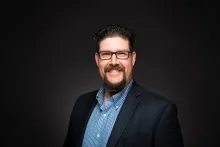
Ben is an elder serving as Pastor for the Salem, Eugene, Roseburg, Oregon congregations of the United Church of God. He is an avid outdoorsman, and loves hunting, fishing and being in God's creation.
