

C Mitchell Knapp
This sermon was given at the New Braunfels, Texas 2021 Feast site.
This transcript was generated by AI and may contain errors. It is provided to assist those who may not be able to listen to the message.
Good afternoon, everyone. Well, it's been a great feast, a lovely feast. It's been kind of a pain as well. And you know that's one of the big lessons of the feast. It's supposed to include some inconvenience. You get this many people together, whether it's a feast like this, or thousands or twenty, but you put a bunch of people together. For eight days, there's going to be some inconvenience, one of the lessons. My wife and I have had the inconvenience of being more old and tired than we've ever been at a feast.
We can't figure that out. And so, inconvenience or whatever you'd call it, that's part of it, though. That's part of the greatness of the feast and the last great day. I like that.
Thank you. New idea. But this has been, and you really can have, the greatest feast ever. It's really possible. It's not possible physically. And I used to, when I heard that early on, I thought, well, that can't be. You can't always have the greatest, you know. Well, yes, you can, but not in the physical area. But it just has been. It's just been lovely. I have personally enjoyed getting back to Texas. I've been here more than my wife. But there's something about Texas.
It's a different place, you know. And we've just loved it. We've met some new friends. We've got to see old friends. It's been what a feast should be. We learned some terrific lessons from the sermons and, well, all the messages. And it's just been great. I wanted to express that. The fellowship, the prayer, the learning, the serving, everything. I want to get a lick in for the fifth commandment, as John Hill said, when I was a young man. And he gave a feast sermon, and he said, he gave not a full tribute, but he just commented on some of the things his parents had given to him.
And he said, I just wanted to get a good lick in for the fifth commandment. So I thought about not mentioning people who said, well, this is my umpteenth feast and so on. So I thought, well, I don't want to brag, so I won't say. But then I thought, no. My mom died this year. Dad previously died. And this, I intend to see them a long time before the general resurrection, a thousand years before that.
But it still, you know, touches you. And so I thought I would say this for this sake, for their sake, because I was just a...pardon me. That may happen more, we'll go away. But I was a three-year-old, tagging along. My parents were baptized in August 1950. So Dad was out of town working and the mail was fouled up and he didn't get the letter. They didn't know what the feast was or, you know, they knew about Passover. And the letter bounced around a couple of times between Oklahoma City and Springfield, where he was...
Oklahoma City was where he was working, or maybe in Tulsa that time. But just out of town work. So he got the letter at his address in Oklahoma on the sixth day or the seventh day of the feast. And he read it. And it was Mrs. Armstrong had written. She wrote the personal letters then. And she wrote and said...talked about the feast and be sure to come and here's what to do and, you know.
And he got on the phone, pay phone, and called my mom in Springfield, Missouri and said, Phyllis, what are you doing tomorrow? Well, I'm gonna do the watch. She said, don't do anything. Why? Well, it's the last great day. What's that? And so he raced on home, took him a few hours, and got there.
I don't know if he got there, but sundown or not. But they kept the last great day in 1950. But the 51 was the first feast. So I was there. So technically I kind of halfway almost kept it. But anyway, 71 years and counting plus that previous year. That's a long time. And I just say that for the...they both died in the faith, mama, just this year at 97. And like Mr. Hill said, just wanted to give a good lick to the fifth commandment.
So didn't have any other purpose than that. Good thing to do. Keeps the fifth commandment publicly. Honor the parents. Now, the last great day...we've got quite a bit to go through here, so I better hurry. I just want to get right into it anyway. The last great day is a glorious denouement of God's great, supremely brilliant, complex, and intricate thousands of years long plan to bring from nothing children, not just to life, but to glory. It just boggles the mind.
What God must do. Denouement is, by the way, a great word. It's the outcome of a complex series of events, which I would propose in this case with God's plan. Plan is an understatement by far.
Complex for sure. One science class, and you know everything is complex. And all this physical world and everything that goes with it was made so he could wad it up and throw it away, burn it up, walk away after it's all done with a family. And all the glory in this physical creation be burned up, and he will walk away having regrets. No! Money well spent.
He could make another one real quick if he wanted to. And we could too. Money well spent. So it's a fantastic plan, and that's just about every time you talk about it, especially on this day. That's the word fantastic comes up or great, unknowable. David said, such knowledge is too wonderful for me.
It is high. High knowledge. I cannot attain unto it. And I sure feel the same way I presume you do, too. It's just so big. Just listening to several of the sermons this week, picked up some things I hadn't heard before, a new insight, really profound. I just have that feeling over and over. God's plan just grows exponentially, and you can't even understand that.
At least I can't. When you really think of how fast it grows. Mr. Shaw was talking about in the millennium how fast the non-economy... I need a new word now. That was a real good point. No such thing.
No scarcity, and no management of that needed.
One great lesson of... one great feast lesson in general is that God and Jesus Christ so deserve our praise and thanks. What they do, what they have done, what they are... pardon me. I think this may go away a little bit, I hope.
The last great day or the last great day or whatever symbolizes the resurrections that will complete God's plan, promises and his character. That as he finishes his plans and his word, his sovereign will, he finishes them. So the last great day symbolizes even his character, the character of God. Resurrection is one of God's great saving acts that is spoken of in the Psalms and elsewhere. It's driven and required by God because of his sense of fairness and his nature to be equitable. He talks about his truth and his faithfulness.
But a resurrection is much more than just the restoring of physical life of somebody who has died or even of billions who have died. It's much more than just that. It's the redoing the sacred act of creation of life which he did in the first place.
For the second time in one person's life, giving them life, sacred life, a part of himself. Like the first time, it's a creative act that is sacred. So for this particular sermon, most of you have heard many sermons on the last great day and studied many things about it.
It's a huge subject. It touches all the other doctrines, all the other holidays and all the other doctrines. But I'd like to take a look at what resurrection is. Not the first, second, or third resurrection specifically, but the reasons for resurrection. What it means to God, why God's character and his perfect plan requires resurrection as a part of the plan. The holiness, the equity, the justice, the kindness, and the love of the resurrection. Sounds like a big, huge topic, which it is. But we can look at the basic and central core of the meaning of resurrection.
First of all, the basic motive or idea, man is holy. Man is holy. Pardon me. That is, human life is sacred because... Oh, thanks very much. Appreciate that.
I just thought of an old joke and I'm not going to tell it. But thanks very much. Man is holy because God is holy, and he puts some of himself, his spirit, some of himself into man, making man perfect... not perfect, making man sacred. Because we have life, and life belongs to God, it is God. The physical creation. Of course, man rejected God in his marvelous offer, chose to follow Satan, the archenemy, choose the wrong tree, you know, good and evil, or mixed values, the tree of mixed...
I like this one. The tree of unintended consequences that's going around certainly did.
You know, God sees... pardon me, man sees God's way, and that produces all these benefits, and Satan's way, if they go far enough to understand that, and the evils that that produces, and they look at the consequences and the blessings, they say, we'll take the blessings! That's what we want! Then they get over here to the way of how to live, and they say, well, we want God's way, but except for, well, you know, and things start getting accepted. Little exceptions here and there, and they actually show they don't want God's way. I should say we, we humans, we want to do it our way. The ideas come from Satan's mind, but we still want God's blessings. It doesn't work that way.
You know, mankind says, and I've said this, you have, give me all the facts! I want to know what's going on here, and then I'll make a decision. Well, if it's a new car, good idea. If it's salvation, bad idea. You know, God says Psalm 110, 111, verse 10. No, it doesn't work that way. You obey first, and then I'll give you understanding which you can get no place else. Wisdom understandings strictly come from God. The farther you get away from God's law in society, the less, the more wisdom you lose. Now, man could have obeyed. Excuse me. When it gets that bad, you just stop and click it through. If you apologize for that, it seems to be allergies.
See if a little water will help. Man could have obeyed in the garden, but they couldn't. They couldn't fight Satan's overwhelming power. God knew what was going to happen. His temptation, his deception, and we chose, through Adam, the way of death.
That is, Adam and Eve did for all of their children, and therefore Satan became the first murderer because he's the one that motivated to make that choice. They wouldn't have done that, or at least might not have, if it wasn't for Satan. He is guilty. It's a great evil, of Satan and of man. Adam and Eve were put out of the garden, you know, God's presence.
They died without healing the breach. Their children, all of us, followed.
And now it is given to man once to die. Hebrews 927, as you know, this is part of life.
What would have happened if Adam and Eve had chosen God's way of life?
Well, we don't know, but it wasn't in the plan anyway because God knew.
The need for the coming of a Savior was planned before the world began. It says, the Lamb was slain from the foundation of the earth, Revelation 13.8.
So justice must be done. This has to do with the reasons for the resurrections.
This is the reason that people of the world must, number one, die. That's part of life, the end part.
And number two, be resurrected. So they have a fair chance without being murdered again, through Satan's deception. Thank you, Mr. Foster. First vodka, and then now a mint.
That was the dumb joke I didn't tell you all.
Now the question is, how did two on it talk at the same time? I'll just have to talk fast.
So justice simply has to be done.
If we didn't have the Day of Atonement and what it symbolizes, Satan being put away, there would be the general resurrection, and people would come up and do the same thing.
Because Satan would be around. He has to be put away.
But, and you know, that's the reason he has to be put away. He has to be separated forever from God's family. And then any humans who are resurrected and knowingly sin in rebellion without repenting must die the second death. It's a matter of choice. It's a matter of justice. The integrity of God's perfect law, his word must be upheld. God cannot lie because that would compromise. Well, it would break everything. But he can't lie because he won't lie because that's who he is. He is God of absolute truth. So we have to have resurrections for two reasons. One is to restore life, and the other is to square with the law and uphold the integrity of God, his own word, and his law. Thou shalt call, and I will answer thee. That's Job talking, chapter 14. You will have a desire to the work of your hands. Of course you put so much work into something, and you build a little machine or a work of art or whatever it is. And you're invested in it.
And this isn't some little thing. This is how many billion ever many billion there are people.
God, then, the resurrection is the great desire of God himself. He wants to resurrect. He wants to see all those babies that he made, that he created in the womb. Just like, you know, if you have children, you know. If you're not married and you have students, you know. And really, if you just have friends, you know. If you love somebody, you want to comfort them, you want to help, you want to see them again. You don't want to be separated. So resurrection is the work of God's hands, the work of creation, of giving life. Resurrection is a huge reunion of dear family members.
And resurrection is holy because life is sacred and holy. Revelation 26 has been mentioned before a couple of times. Blessed and holy is he that has a part in the first resurrection. And we could add and the second and the third because it's a righteous act for God to punish those who have broken the law without repentance. It's righteous. It upholds God's sacred word.
So resurrection is holy. I have a whole page of resurrection is things. I'll let you go through and make your own because I don't have time to read them all. But there are many of those.
God desires to give this gift of life to all people ever born. That's his perfect will. He's fair and equitable. On top of that, he loves everybody he created. Part two. The doctrine of the sanctity of life. That's what the resurrection is built on. The doctrine of the sanctity of life, which I've already mentioned. Life is sacred. It's a part of God. He owns it. If you have the Holy Spirit, even if you have the Spirit in man, you have a part of God in you. Human intelligence is far greater. It's a different thing than animal intelligence because God is in people. Then he receives the Holy Spirit and you have another level. It's also from God and part of God. It gives life to you. There are so many scriptures about the sanctity of God.
So we just make the second step. God breathes from himself life into Adam. Even later, he breathed the Holy Spirit, which was the second level of the Holy Spirit, of himself, into man. So he shows that he created his children for a holy youth to become holy and members of his holy family. Be you holy, for I am the Lord your God. I have severed you from other people that you should be mine, quoting out of Leviticus. But man rejected the idea.
The pre-flood world became, because of this initial decision, a violent world. It was terrible and just totally rejected God's commands, his advice. Man created, with Satan's influence, a world culture of murder and crimes against humanity, which, of course, was also, and Satan's idea was, crime against God. He hates God. He's always tried to nullify God's influence between God or over his children, with his children. So justice must be done, and it certainly will.
That's one reason for the flood. It rectified some of the evil of all of man's sins before the flood.
It didn't rectify. Rectify means to restore or make things right, to set things straight.
So some of that was done because evil was punished, and there was a world reset then.
But there was certainly a long way to go before we got to rectifying everything. The restitution of all things is still to come. After the flood, God made changes. One of the most important in terms of man's government was capital punishment. In chapter 9 of Genesis, verses 5 to 6, he said, I will require of you now a man's life for a man's life, capital punishment for murder. And what that did was that that set the price on a man's head. You know, the old west, a price on his head.
That set the price of every man, every person to be, that is, if you were murdered, to be his own life. And that made everybody, higher or lower, richer, poorer, you know, whatever, everybody the same value. The value, one person, one child of God, with the spirit in man, part of God. It just evens things out. And if you don't have capital punishment, which also includes punishment for other things, lesser crimes, then what happens? You'll produce this whole world of far more capital, well, like President Reagan said, we have, we've had capital punishment for the last 17 years since it was done away with. It's just the authorities aren't doing it. It's regular citizens who lose their temper or hate others. Mankind, if we don't have that kind of law guiding us and authority in our governments, whatever they are, that's why God says obey the government, authority holds things together. But if we don't have this specific law, crime will increase and overwhelm, and it will keep many, just continue this pre-flood, go towards it, world of crime and violence. And just of what it goes, it moves slowly and then fast down to where the price of a human life is not respected with not much at all. Somebody angers you, killed them. Of course, we've seen, we see evidence in this world. And so, that's a change that God made to hold down the crime so it would be longer, and he has all the time, he knows all the things to do, so that he knew how much time it would take to fulfill his plan of the gospel and the New Testament church and the second coming and all that. So, this was a good law in human society, but it wasn't the solution to murder, which is the basic crime.
God has given us the spiritual solution, and that has to do with all of the holy days, starting with Passover, because it has to do, there are two choices. Either Christ pays for murder and all of our sins, all the sins of mankind, with his own blood through grace and faith. And you know, he said, Romans 12-19, you know this scripture. I'm using several scriptures, but I'm not going to go turn to very many. He says, vengeance in mine, I will repay, says the Lord. Paul is quoting. That's Romans 12-19. So, sometimes people, you know, are hurting, and they're angry and hurt, and they say, just wait, God will pay you back. And he just might, and that's what we should pray for, that God pays them back. But how? Number one, wipe them out, you know, the heavy thumb comes down from heaven, and your life is squashed out. Or, Christ could pay for it like he's paid for our sins, and pay for it by his own blood.
That's the preferred method of Jesus Christ, and it's supposed to be the preferred method of our own. We think, well, and David prayed against his enemies in the Psalms, and others did.
Paul mentions that. We pray that it'll be resolved, preferably through repentance, then less conflict. You know, you tap down the violence, and the conflict, and the ill feelings, and so on. But if Christ, so Christ prefers to pay, but if his grace and sacrifice is rejected, only one other choice exists, and that is capital punishment or execution. That's why we have the third resurrection, which that is, to damnation. That is, to pay for the law. It must be paid, so that God's integrity is uphill. That must be had through eternity. That will turn into our integrity, our word, and our follow-through with what we have promised. One way or the other, the law is satisfied, and God's perfect character is unsullied. His word is left with no spot, and no jot or no tittle, as Christ said, will in any way pass from the law, until everything's fulfilled, until God wraps it up and ties all the loose ends up. Whether it's the disobedient or the obedient, everything is tied up. That is, finished up and wrapped in a nice fine package or whatever you would say. And this is what he's talking about. There can't be any exceptions, so that God's law, His Word is correct, and then that will be our word for eternity as well. If we repent, He will pay, but it must be paid in one way or the other, as they say. And even taking the lives of the rebels and the liars and the murderers is a righteous act of God's perfect justice.
So everything's tied up in the law. In other words, what God said and what He promised, and therefore the relationship between man and God, and man after, at that point, being able to become His children, God in fact. All those things are just completely rectified and brought put right and restitution is full. Remember Peter talked about the times of restitution, which will start while in one sense have started and will be finished by God. It'll actually happen. So there's another great and glorious aspect of God's holy resurrection plan. Let's say it's the one we have and finish. Finish that one up, and we'll be done. Another great and glorious aspect is, say, Christ, for example, pays for a person's sin, like yours or mine, with His own blood sacrificed after true repentance so that the murderer, that is the sinner, doesn't have to die the second death because he or she is forgiven. It's not just blotted out and not thought about or covered over. It's really forgiven because the repentance was from the heart and He commands us to forgive others from the heart. That's better than just clearing. There's a pop psychology thing that has been going for a few years, and they counsel people all the things you've done wrong to others and what you feel guilty about. Go around to them and ask for their forgiveness. Almost everybody will say, sure, you're forgiven, you know, whether they understand it or not. And so the term is clear. You cleared it. No, it's not just clearing it and covering over the sin. It's a real repentance and a determination to not sin from now on and to use that power that God has given us. Great point! You think your own spirit, you know, I'm too weak to do it, you know. You think that spirit is weaker than the spirit of God, which is in us? The power from on high? The answer to that is no. And I appreciate Mr. Shaw's mentioning that the other day. I've been just learning all kinds of stuff from all these other messages, you know.
It's just been a great feast. So there are two choices I mentioned. So this person, you and I, and a lot of others are forgiven because we accept Jesus Christ's sacrifice. There's a problem in this life, and that is this still doesn't bring back the murdered person. He was robbed of life. As glorious as forgiveness and acceptance is, it's only the first part of the story. It's only half the story of the crime, and the other half has to do with resurrection. John wrote, the day and hours coming in which all that are in the grave shall hear his voice. Chapter 5 verse 28-29. He talks about the resurrection of life and that all would come out of the ground, and all who hear will be resurrected. Again, not specific, but all will be resurrected.
So the last enemy that shall be destroyed is death. Paul's famous strange comment or strange concept to kill death, but resurrection kills death.
So that's what will happen, and it will either be done through forgiveness and Christ's death, or the guilty person that doesn't repent death. We need to make repentance a part of every prayer as well. We've heard two or three elements of prayer that have been taught this feast that need to be part of our every prayer. It doesn't mean if you're upside down in the well, you say, well, I gotta praise first, then I gotta forget, you know, repentance, then I know you just say, help!
You know, a shortcut if you're in danger. The house is on fire, there's an emergency, but when you have the time, and should be most every day, there are certain really big things. One of them also is just as for the gift of repentance and the gift of forgiveness. But the idea of killing death, it has to happen because he said absolutely everyone will be resurrected where they want to or not. And then he'll give glorious immortality to those who accepted his sacrifice and everything will be resurrected, pardon me, rectified by everybody being resurrected.
And all those who are murdered, which means everybody in the sense that Satan is the one that got them to sin, those converted, there was a substitution in Christ's death was inserted there to his glory and our glory, everything. But all those murders will be either paid for by the person who murdered or by Christ who gave his life. So this creates his glorious family and restores peace to the glorious realm that we think about, that we look forward to. And all this glory of our glorious God, by his grace and goodness, we celebrate today on this very holy day.
The final two resurrections.
And we actually, on the last great day, we include all the meaningness of all the holy days. So we're celebrating resurrection on this fine day, Job 14, 15 again. You shall call and I will answer you, and you will have a desire to work in your hands. Of course God desires that. Revelation 22, 20.
He says, surely I will come quickly, even so, amen, even so, Lord Jesus, come, Lord Jesus. That was his reaction, John's reaction, emotional reaction to it. And that's our reaction, too. Even so, come, Lord Jesus, that wonderful time pictured by the Feast of Trumpets, when all this will be set in motion and we will vault toward the restitution of all things completed, wrapped up, everything rectified, everything perfect, everything in unity with God. No reservations, no conflicts, no nothing like that. A fabulous time. Now, I've given this many times. You've heard it many times, possibly. And I have gotten through it just on a just-the-facts-man-just-facts basis. What I've given you is the facts. Mr. Shaw over here gave us the emotion, but there's more to come. And I appreciate it. It kind of set me up very well here.
But also, I say thanks, you know, but also I could say thanks because this is a day of weeping.
When you think of resurrection, he mentioned a couple of things. And what did you talk about at lunch? Didn't this come up at least once? Somebody that you missed? I think probably everybody talked about this a little bit at lunch. When it comes to the Holy Days, there are tears, sometimes tears of joy, but there are a lot of tears of sorrow and repentance.
There's a lot of emotion that goes around each step of the Holy Days, but when you come to this one, there's just a lot of emotion. There's the great joy of the resurrection mixed with the just the carefulness, not weeping for sadness, but weeping for joy.
So I appreciate Mr. Shaw's introduction. Also Mr. Faiz, I thought I detected a little quavering of the voice in Mr. Faiz when he talked about his father. And I feel the same way. He was a friend.
I met him when he came to college, and I was in grade school. He was this big guy and respected him, listened to his words over the years, you know. And I identified with Mr. Jonathan Faiz and his quaver of the voice, and I thought, me too. The subject of the second resurrection is a lot more than to bring a tear to the eye. I think that we... and I wanted to...
there he is. Thank Mr. Faiz for that, you know. Brought back a tender, just a recollection of... that tugged on my heart. And I thought Mr. Faiz went too soon, like Neil Diamond's song, Gone Too Soon, 75, I think. But that was God's plan. I'm not sure. I want to figure out these things. That and a whole bunch of others.
So, I'll try to get back to the subject here. I think that we tend to overlook the Father's emotions, Jesus' emotions also, but the depth of feeling, the devotion, the love, the constancy that he shows to us all. He's just always there. I will always be with you, as Christ said, and the Father is always right with him. They work together at a level that we really can't understand. I've seen various news programs, and you've undoubtedly seen the same thing. A child was kidnapped, or it might not have been a child, but somebody was kidnapped in the family and disappeared. All the signs pointed to abuse and murder, and there are different signs, and as the days go by, four or five days, you get this sinking feeling, and you hear every time you hear the story, and then it's not more likely, well, they found her body, like this one in Wyoming. I think it was Wyoming. It was just in the news this week, and sometimes there are two or three, and it reminds me before the flood, there was just a chain of murders, and it says that in Ezekiel, about God's people, Israel, the physical people, Israel, didn't respect his law, threw it away, and it was just murder upon murder. Blood touches blood, and so we're getting close to that, I think. We'll need God's protection more and more. But a child just goes missing and was obviously kidnapped, and there's a ransom note, and it doesn't matter the details, and you see the parents tearfully crying, begging for their child back. When you have no power, you beg.
You don't threaten when you have no power. And then I've seen a few of these where it shows the tearful reunion. They find the child or the family member, and I remember this one, and the parents were there, and the mother just ran over. No shame. She was running across the tarmac or whatever. I don't even remember that detail. And swooped up the child and just held it so closely, because it's part of her to get your child back. You thought it was lost.
We can all identify with that. Whether you're a parent yourself or not, you can identify that.
Just the crying, the tears, and the relief, and the blessing of having them back.
And sometimes I've sat and watched the news, the tears streaming down my face. I imagine you have, too. Remember, speaking of reunions, do you remember the movie Gone with the Wind?
Ashley had been off in the war, and Melanie was waiting. They had no social media. They didn't have telephones. Nothing. News came by horse. It was fast, and it might have drifted in more slowly without a horse that brought somebody with news. And so she didn't know if she was a married woman or if she was a widow. I think she was with child at this time. And she would always look out, excuse me, I'm going to get you, Mr. Shaw. He started me off on a bad note. So anyway, and everybody knows that's in jest, what jest I can muster. But she would always look out to find out if maybe she was still a married woman. You know, a mother for sure. Was she married? Would he come back? I thought there's another movie that's very similar. I don't have time to mention that. You probably didn't see that one anyway. One day she looked out. Off in the distance. By the way, I had the sign of stuff and I squeaked a lot of times when I intend to talk, so I'm not that bad.
Bad off today. But off in the distance, there's a person. He gets closer and is person with a forked branch as a makeshift crutch is limping down the lane, pretty long lane. He limps on toward her and then he looks up and, of course, the camera is just fixed. So you also recognize it is Ashley, just like she would. And they see each other. All emotion just breaks loose in both of them. He hobbles faster, you know, as fast as he can, and she runs down with no shame, nothing in the world.
She just wants her husband and they reach and they embrace and just hold on for dear life.
Like I say, I'm not actually... some of this is this miserable you know sign of stuff that's coming down.
It just... if you're human, it grabs your heart. Probably shouldn't here at least. At least one.
Now let's go to the Bible, the prodigal son. You know, he wasted all of his stuff, all of his wealth.
Wine, women, and song, and false friends finally had to take a job feeding the pigs. And that means he went out of the Jewish area, was over probably across the lake in the capitalist or somewhere where the debt culture ate pork a lot. Roman army ate pork a lot. And he comes back. He doesn't have to go around to the back door or anywhere and knock at all.
The father sees him coming from a long way off. This is a picture of God the Father.
This is a picture of God the Father and Jesus Christ right with him. And they are looking, they haven't forgotten, every last one of the several many billions, they have not forgotten. There's a real important reason for that.
When a person comes back and starts to repent, just starts a little bit, Jesus Christ and the Father are both right there to bring them back. So he threw a party. He was so happy. He threw a party for the whole hacienda, you know, all the family and all the servants and employees and everybody else. It's just a great party because one came back.
The angels in heaven shout for joy, Job tells us. When one person repents, I don't know what are they going to do when billions repent.
How will they manage that? I guess they have the emotional capacity.
But that's how God feels. He's looking a long ways off. At the Passover, the last Passover we had on earth, Luke 22.15, he said, with desire, I have desired or have yearned to take this Passover with you in the kingdom. That's his attitude towards the disciples and towards us. We've taken the Passover. If you just were baptized, congratulations, you take it this coming spring. We've taken the Passover. And Christ has desired to build a further relationship with you and I, each and everybody else.
When God says he really yearns with desire to be with us, that means more than even if we say it. It means a lot when we as humans say it. God says that to each of us.
And Christ said it directly. When you think about it, the Father and Jesus have both been abused by puny mankind over the millennia. You think of just ignoring them, discounting them, ridiculing them. And then you think about what the Father went through when he went ahead and allowed Jesus to go ahead and go through with it.
He had said, you know, until the disciples, if I asked for help, God would send ten legions, was it, or a lot of soldiers, many, many soldiers, immediately. He didn't have to go through, but the Father let him go through with that. Why? Well, he wanted a life for us, but also to prove with no doubt forever that Jesus Christ did it voluntarily. He wanted to do it, do that sacrifice. There are several other reasons you could add to that. That's one of them.
How hard would it be for you to just take one of your children, if he has them, take another child, the person that you like, if you don't have children, and just to sit by and see somebody mercifully beaten, and then beaten again. There were three beatings, I think, at least two, and then hung up on the cross, and you could have easily...
I would jump in a lot of places and just fix it right now. Well, if you just do this, you know, like the government and excess spending, for example, and other problems we have right now, let me be president for 10 minutes. I'll tell you exactly what to do. Well, there are, you know, in the first place I don't. I could fix something and, you know, unintended consequences. I don't have the wisdom. Only God has that wisdom to lead men. That is, to lead human beings in society.
We have trouble enough controlling ourselves, much less other people. But I would stop the process. I would have jumped in there and said, hold it, Eve! Wait just a minute! Don't you know that God... that's going to cause bad consequences? I would explain the whole thing to Eve and say, Adam, get over here. You should have been here anyway, you know, and a little chastisement there. And don't you let your wife do this and don't take it as she gives it. You know, I just fixed it right away. We wouldn't have had the problem. We would have had the problem of lousing God's salvation, plan of salvation up, but, you know, I would have gotten my way. We just have to learn. We have to believe it to God. In this case, think of your child again, and you have to watch your child being whipped and beaten and torn.
So, his face, you couldn't even make sure it was... it didn't even look human.
It's so ripped apart. Go all the way through with that. Now, think of this. Why do we have the emotion of desiring to see each other, even if you just know each other, but if you love each other very close and have been separated by some terrible thing, the desire to see each other, like Ashley and Melanie in the picture, and like that mother and the child that was lost and restored, and like... and you know better examples than I have, because you have your own.
If we have that strong emotion, desire to get back and have our friends and see our our dear loved ones... I went through my relatives when Mr. Shaw was talking about this. He named off, and I won't name all mine. Don't keep you all day. But you have your own. The people you dearly want to see and you're in to see and are confident you will see because you know the truth.
If we have these strong emotions... why? Well, because God has those emotions. And think about He just gave us a little bit of His capacity in all these different things.
Think of the reunion. Christ said, I haven't... don't touch me. I haven't, you know, gone to my father.
To be accepted later that day, He did allow them to touch him. He went to the father. Can you imagine that reunion? I can only imagine, but I can't really imagine. I don't know how it is in spirit life.
There was the equivalent of hugs and embraces and tears and joy being expressed, and however that works with spirit beings, we're so much more than we are.
That was a reunion, and there are to be many, many more just like it, because we are children too, first resurrection, and then all the others. When you think of allowing your children, your children to be abused because you know it's God's will, it only applies to God, doesn't apply that way to us. But God has allowed... Look at all these refugees, poor little kids, you know. This six-year-old was wandering across the desert. This was a story about four weeks ago or five. He was lost, he was crying, and he found a human. It was a policeman who was supposed to arrest him, you know, and he finally settled down. The policeman got him, and he said he was afraid he was going to be killed because he got separated from his party, and they said that he'd die if he, you know, and just terrified. Your heart goes out. We shouldn't be having this thing. This is a mess. Everything's a mess about it. And you think of that one young boy, and then all these others who are taken advantage of and whipped, abused in various ways, killed, or just left to die. God has, and you think of this one migration that's happening now, and you think of all the others that have happened, and all the other wars where a nation just picked up and left their food on the table and ran from the enemy army coming in. Most people in the last 6,000 years have had a lousy life. I remember talking with, when family was asked to do the funeral of a man who was a like a brother-in-law or something, or, you know, that's right, and he was around 50, the others about the same age, three healthy siblings, and he had had an accident when he was young. I think he hit his head and wasn't quite right and just couldn't, just, just, he was able to understand some, but he just had a lousy life all the way through. Almost everything happened to this poor fellow. He just didn't have a fair shake, and I was getting ready for the funeral. I came over to their house, and here are these three adults, two sisters and a brother, just sobbing, just crying, and they could hardly talk, you know, about what a lousy life he led. So that was a hard funeral as well, and I just, it's like Mr. Shaw said, you couldn't, there's no sense in trying to tell him about the glory of the resurrection. You just comfort them and do say, God does resurrect. Christ said, everybody will be resurrected and blessed and helped, and that's about all as far as you get. But you think of all that God has seen. He feels like that brother and sister. All these children abused, human sacrifice, that's gone, that's been all six, with a six thousand years, and still is going.
It's not talked about or admitted very much. And all the crimes against humanity, which is actually crime against God, and He has let it go. It's like Jesus Christ. He had to let it go to the end. Why does God let it go to the end when you and I would just run in there and fix whatever the problem is? Because man has to learn what we're here to learn, in part, at the Feast of Tabernacles.
And that is, man's way really is the way that leads to death. It doesn't do it real quickly. It'll go for generations, but eventually man will be turned by Satan, the murderer, to murdering each other. And that's what Satan wants. You know, crime is okay. Robbery, mangling, all those things. That's a step in the direction, but what he wants in his hatred for God and us is the murder of everybody. So God is putting up with that so that we can learn this lesson. Only his way works.
Remember what Mr. Armstrong said? Some of you might remember. He said, the world has to try out every single form of government so that it's convinced that man can't do it himself. He has to have God governing. And at a later date, it occurred to me. A lot of these things, Mr. Armstrong said, were absolutely true then and ten times more true now. For the church, it might have been more for the church to learn, or at least equal. We have to have God to learn. We need to be unified. We need to have a lot more unity in the church, and we're working on it. That's actually the theme here. At any rate, I think that we ignore God's emotions a lot.
I mentioned this while ago. Why is God so invested in each one of us? Why is it he is so knowledgeable and desiresome meeting everyone? He says, the last man on earth, Psalm 42. No, I mean Isaiah 42. The last island out in the farthest place in the ocean, the gospel is going to come to. That's because of Psalm 139. In verse 6, when a baby is born, what's going on? What is the process involved? Well, there are natural processes. We understand scientifically, you know, the sperm and the agronoids, they grow inside the womb. Things happen on a schedule. The baby is ready, the mother is ready, and the baby is born. But that's missing the most important part of the whole thing. That's the system, the physical system God set in order to produce a child. Beautiful and wonderful. He said, wonderfully made, wonderfully fashioned and made. But inside the womb, God takes credit himself for fashioning or building, doing the DNA. You know, the different genes tell you whether you have a big nose or a little wind or a little bump on the end, a cute little nose, or a big proboscis, your eye color, and everything else about your whole body.
And God takes credit himself personally for fashioning the baby in the womb. If you have put that much effort starting from the very time it began, the parents conceived.
You're going to want, you're going to have a desire to see the work of your hands. God loves us more than we can even imagine.
I'm sure of that, even though I'm not smart enough to imagine it.
Do you think with everything that God has invested in each one of us, whether you're in the church, not in the church, converted, or never heard, died a thousand years ago and never heard of Christ, all those different varieties of everybody, do you think with all the effort and all the sacrifice that God has put up with and that Christ has put up with, these sacrifices that they both made, and all the other sacrifices, do you think that God is going to stop short of the resurrection? Isaiah mentioned that. You think you're going to come to the birth and then not be born? Ridiculous. This is God's desire so much, so much more than we can even feel. You think of all those people that desire to be reunited. We want to be in the resurrection. God wants us more. Do you think he could be dissuaded so that he would not go through with it and say, oh well, it's really getting hard or something, and not do it, well, we've got resurrection, one resurrection, we don't have to do the rest. No way! He says not until the last person, the last silent, mentioned Isaiah there. His sovereign will has been thought about, meditated about. They've discussed this for, I don't know if you can count it in years, because it was before years, before time.
They've discussed this to every little tiny detail, and they have discussed every person that ever was born, or maybe they didn't even make it to that stage, we're almost born.
And you know, you can think up questions, but why think up questions? God knows, and he'll fix it.
So we don't have to worry about that. But God's yearning desire to make it right because of the evils of Satan, and the evils that Satan inspired mankind to do, just to make it right is one thing. And then to comfort, to feed, to give, to provide for, to love. We feel that even with a lost puppy, or a kitten, you know, an animal. I think that God's emotions, I know this, but how do you imagine that? God's emotions being so much higher than ours that, and I can't think of a comparison.
He's God, and He has everything, and He has given us a little bit of Himself.
If you love somebody, you want to comfort them, I mentioned earlier. There is no way God is going to be kept back from resurrecting you, and from resurrecting all those other billions. There's no power could possibly make Him stop, and not fulfill His carefully thought-out, sovereign will. And we need to keep that vision burning brightly in our minds. At this feast, we've had bookends.
Just an excellent introduction. The First Night by Mr. Foster. I mentioned one scripture in Leviticus Exodus 34-24 that God will even watch your stuff, the blessing when you go to the feast, for obeying Him to go to the feast. It was His will for us to be here. We're fulfilling His will, obeying Him. In Psalm 134, the special blessing that the Levites and priests gave to every family that walked out of the temple or the temple courtyard, or wherever it was, they blessed every single family going out. An inspiring and wonderful blessing.
There is a different blessing that I want to read, and I believe I can just punch it right up here. If I can find the Bible. Hebrews 13 verse 20. This is the best one I know of, one of many.
The best blessing I could give to you, because the ministers are to bless God's people. Speaking for Him was His authority. How can I bless you? I can wish you a blessing, but I can speak for God and give you a blessing. And here it is, Hebrews 13.20. Now, the God of peace that brought again from the dead our Lord Jesus, that great shepherd of the sheep through the blood of the everlasting covenant. Here's the blessing. Make you perfect in every good work to do His will, working in you that which is well pleasing in His sight. Is He going to inspire you and lead you this year? Yes, it's His will. We're obeying Him by being here. We're going to obey Him when we get back, and this is His will. Working in you that which is well pleasing in His sight through Jesus Christ, to whom be glory forever and ever. That's the blessing as we leave this feast.
So in Jesus' name, I give you that blessing. It came from Him, and it's yours, and it's mine.
Brethren, God, just bless you richly this year. I think it's going to be a hard year.
Not a profit, but there seem to be troubles on the horizon.
We have loved this fessite. We have loved all that we've met here, met some new friends, and said hi to a lot more that we can't remember their names. Sorry, in capacity, you know.
We've just loved everything here, and very thankful. It's been a lovely feast, and I bid you adieu.
Have a great year.
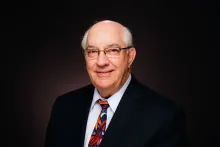
Mitchell Knapp is a graduate of Ambassador College with a BA in Theology. He has served congregations in California and several Midwestern states over the last 50 years and currently serves as the pastor of churches in Omaha, Nebraska, and Des Moines, Iowa. He and his wife, Linda, reside in Omaha, Nebraska.
