

C Mitchell Knapp
This sermon was given at the Wisconsin Dells, Wisconsin 2019 Feast site.
This transcript was generated by AI and may contain errors. It is provided to assist those who may not be able to listen to the message.
God welcomes us. The Holy Days are red-letter days to God. Just extra special family days. And He unknows so much more than we do. They mean more to Him than us. We're trying to catch up and learn and absorb and appreciate. So here we are at the last Holy Day in this year, this season, this cycle. And it's just a fabulous thing to be here, keeping the feast and now the last great day. This high honor that we have, with this high calling, to go before and be first fruits and make sacrifices and help out. And in our weakness and lack of ability, have God work through us and serve and help others. What a fabulous thing! It's just bigger than you can even imagine. We need to try to keep that in mind. And we never do completely. We just have to have to... We have a huge job of just keeping in mind how big and enormous this is. David said, it's just too big for me. I tried to think about this and it was just too big for me. Quote by David. And the Paul said the same thing, it's bigger than you can even think. You can't even imagine that big. So I can't wait to really find out. But it's what a pleasure it is to be here. Thank you for coming, honoring God. Thank us all. God appreciates us. That's another amazing thing. There are so many amazing things about our amazing God. And one of them is what the meaning of the last great day is. It was the eighth day and not much was known about it. Just an eighth day. And so the New Testament came along. And with so many other things, explained a lot more about it. We still don't know a lot. But it's the last holy day we have in the year. After that, they say we run out of holy days and so we don't know what's coming after. And we'll be able to find out a lot as time goes along. We know a lot about the last great day or the eighth day here. By the way, don't worry about the name. Both work. Both are fine. And we will not argue about this until we get the resurrection and God will tell us that's a small thing. If we learn the perfect truth on a particular point, we'll just be glad and accept it. And if we don't, they'll accept that. We've got so much good in God's way. As we move along forward, we're so blessed. So I'll quit saying that because I've said it several times and get on here. We have the main thing we tend to think about with the last great day is the resurrection. It's sort of the main thing that happens. It's actually everything that happens from then on. So by and by, that'll be history too. And we'll go on for there. Sure, we won't forget it. But I'd like to talk about the resurrection today. We know so many things about resurrection. There are several of them. There's some good and some bad. Some you don't want to have any part in. And we just, we're so knowledgeable. If we take a big test and everybody would write everything about the resurrection, we just have the whole thing in this room, in half the room, in a quarter of it. We just know a lot about resurrection in general and the resurrections.
The resurrection, one or any resurrection, is one of God's great saving acts. It talks about his great saving acts in the Psalms especially. It's spoken there especially in other places, of course. But the raising of a person from the grave is a holy and sacred act of God. And so, Mr. Sinhaus was hounding me for a title while ago. Sorry. I almost felt that way. He needed a title because he's got to put it down and so on. But I hadn't decided quite. I put down the holy resurrection. I said, no, that's not quite complete. Okay, the resurrection is holy. That's the title of this and it's a little bit bigger than that because holy means many things. But it certainly is. Resurrection is a saving act, a great saving act, a holy act that God does. That's one thing. Nobody else can do that. God can do that. And so, it's way more than just receiving life or a physical life again. Of course, everybody has that resurrection to a physical life. But, of course, after that, far greater, a spiritual resurrection to a spiritual life. I thought I would mention a sermon I heard on the last great day. It was about 1976 or seven here in the Wisconsin Dells. It was over in the large building that we used to own. And Mr. Bill Winter was giving that. I was a pup. I was just barely in the ministry and I was listening for all I could learn. You know, Mr. Winter came up and he talked about his grandfather. He had gone to visit the grave their family had. And he found this small grave. They found it in the bushes and whatever was growing there. And asked around town, I think. I don't remember his story completely. I hardly remember it at all, but I got the main point. And he just, almost nobody around there, it had only been 20 years, 25 since he had died. And just almost nobody knew him. The old folks, you know, that were in his generation were probably not out on the street doing business and hustling and bustling, where he asked. But he said, it just almost was nobody that knew his grandfather. And his reaction is what I remember. He said he was just offended. It just made him mad. He had noticed grandpa when he was young, a wonderful, giving man, you know, a real grandfather. That gave him so much just by being himself. And his reaction was that he was offended. I tried to put that in my mind and think about what he meant by that. And I haven't got it quite straight completely, you know, yet. But I think it's good. What is God's reaction when he gives life? He's more involved than we are with giving life to our babies. And somebody comes along and cuts that life off early and murders his life that he gave that still belongs to him. And secondarily, not just by creation, that Christ sacrificed and gave his life for. What's God's reaction to that? I think offense might be a good, you know, a good word for it. So I just remember that sermon. That's about all I remember. He went through the scriptures and so on of the Bible. And I remember that the resurrection. Very powerful. And I've kept that in my mind. What's God's attitude towards all this death? Because that's what has to happen, you know, in order to be resurrected.
Excuse me, please. Well, that's not the main part of this sermon. That's an introduction. The resurrection is driven and required by God's sense of fairness and his honesty, his value of truth, and his desire, his nature to be equitable. It's not like I want to be. He just is and wants us to be. So you can consider all of his commands about not being a respecter of a person, not sinning by being partial, as James put it. God wants things right. And it was mentioned earlier about God not losing any single detail. Just everything has to be straight as a string and in place as far as truth is concerned. Man isn't that way, you know. We follow up every day. I leave a path behind me of things not quite done or not quite done perfectly or whatever, and sometimes I don't even get it done. But God isn't. He is just perfect in every way.
So what we have in the resurrection is a redoing or a recreating of the sacred life that he gave in the first place. Resurrection is part two. Life, second part. And the first time, of course, it's holy. I'll mention that in just a minute. It's a holy thing that God does when he gives life. You know, you think of the blood on the altar that was sprinkled seven times with the finger of Aaron. Well, it's a symbol of Christ's blood, and that's a symbol of all of our blood. We're all accepted. It's holy. It was right in the sanctuary where the blood was brought. The life is in the blood, and the life is sacred. We have comments by God himself on like Abel's blood crying to me from the ground. Well, that was a metaphor. But it wasn't finished. It wasn't made right. He gave life to Abel, and Cain took it away. He took everything away because it was his life. God was angry at that and came to task. It talks about the saints being resurrected and reinvigorated by God putting breath into the saints in Revelation. As a matter of fact, it talks about that for everybody. Get ahead of myself here if you don't watch it. So the last great day, and specifically the resurrection, is a broad and deep doctrine touching many others with its symbolism. This Holy Day includes the timing and the explanation of all the other parts of God's plan, as Mr. Kubik brought out the other day, and on the Sabbath.
The general resurrection tells us what the end or the hope of the vast majority of mankind is. It's just a fabulous Holy Day that tells us how God is going to wrap things up.
And it's driven by God's character, his desire for goodness, perfection, honesty, fairness, equity, and most of all, his love. Just giving what he has to others. That's our God. He said, God is love. Just to describe himself, one word, love. Outgoing concern. How is it to have in your nature a desire to sacrifice and take what you have and give? That's God, which is what he's in the process of giving to us. So today, I thought I would not try to give a thorough explanation of the resurrection. I talked, actually, to Bill from Chicago that spoke last year. Bill Bradford on the phone and said, you know, I'm not going to do what you did last year. It was, I think, the best explanation of the resurrection, the best put I've ever heard. So he said, I'm not going to try to go up against that and compete. He did really a good job. So if you like that, get the tape or the recording, it's around, and it really is good. Or use the booklet. I'm going to speed through that part so we can take a look at what the resurrection is, what it means to God, the important aspects required for resurrection, and a few other of the aspects of the resurrection—the holiness, the equity, the justice, the kindness and love of the resurrection. This is truly—and you might say this about every single holy day—but this is the greatest holy day in several ways.
First part, let's just go over the history, prophecy, and overview of the resurrection. Like I said, I would like to speed through this part of it since you're so knowledgeable. I couldn't say anything that's new, and you have all heard it, so I don't have to. We certainly want to mention it, of course, and that's our focus. Genesis 3.15.
The first prophecy—and it is about Christ—that he would come back. There would be a Savior. It's not clearly delineated. It's kind of cryptic. He would put enmity between the seed of the woman and the seed of the snake, the serpent. And it shall bruise your head, and you shall bruise his heel. He's actually talking to the devil. And that's the first mention in the Bible. Chapter 3 is pretty early about a Savior, about a plan that would have to include a resurrection. So that's the first statement about the resurrection of the Bible. We go to Job 14, a leap of a few books, although it's the earliest book finished, apparently.
If a man die, shall he live again? All the days of my appointed time I will wait till my change come. This is Job 14, verses 14 and 15. I've read this many, many times because it's one of the main descriptions for funerals. And it just describes what God is doing. It's wonderful. Notice verse 15, you shall call. What's that? That's the seventh trump. And I guess there'll be trumpets, you know, in the general resurrection, too. You shall call and I will answer you. So Job knew about the resurrection, and he finds that all the prophets, all the writers, they knew about it.
There are hints, sometimes direct statements, but just very little, not too many details. You have to wait for the New Testament to get the timing and learn what the Holy Days mean and so on. You shall call and I will answer you. And here's why. This goes to God's motivation, and this is actually just the main point of this sermon.
And that is, just to quote, you will have a desire to the work of your hands. Let's say you and your wife, or you and your husband, produce a kid for the world. Another kid. Got lots of kids. God told us to make lots of kids. The prime directive. Fill the earth with kids. And then he repeated that to Noah. So you have a child. What's one of the greatest fears of parents?
That somebody will steal their child. We guard and watch, and we know that there are evil people who would steal a child, and it almost makes you vomit. Go and sell the child, and use the child for merchandise. That happens in Satan's world. And so we watch over our kids carefully and sometimes make them crazy because we watch them so much. You know, there's a balance in everything, but we want a righteously desire to have our children around us.
We don't want to ever lose them. We want to die before the children die. This doesn't always happen. We don't get our druthers in this life. And there are a lot of sadness and a lot of loss in this physical life, as we've been told, and as we have recently experienced. So this goes to God's motive. He earnestly desires to have us in His house, in His family. And Christ said the same thing. He said, with desire, I have desired to eat this Passover with you because I won't have the opportunity until the resurrection in the kingdom.
I was talking to my wife last night and trying to explain what I was trying to get over to you today, which is mainly the love of God and how much He desires to have us in His family. The resurrection is the culmination of everything He's done to prove that everyone ever born, every kid ever made, God wants to bring Him into glory, heaven and His kingdom. This is proof. This is the resurrection, which demonstrates that. It's the desire of God Himself, personally, just like we have.
He put that desire in us, too. So I said, all the prophets were aware of the resurrection. Job gives this wonderful Scripture here in verse 15.
There are two separate resurrections. They're not clearly delineated in the Old Testament. They're there, but it doesn't really separate the two comings of Christ that well. So you can't blame people who don't understand that. In Ezekiel 37, of course, we always go to that on the last great day, and Scripture is on the resurrection. I mean, the resurrection, the general resurrection. But this this sermon is just about resurrection, one or any resurrection. But it's the vision of the valley of dry bones of Israel and how they'd be put together, and God would raise Israel and fulfill everything He had said in the covenant and give them a new covenant since that failed.
But then you go to Psalm, well, I started to mention one Psalm. A lot of Psalms, a lot of other mentions in the prophets, Isaiah 42 and 56 and 66 and 73, and oh no, there aren't that many. They're just all over the place in Isaiah, so I won't try to... But chapter 42, verse 6, verses, a house of prayer.
Well, it says that the light in the gospel, in other words, will go to all nations, all the Gentiles, and then chapter 56, house of prayer for all people. Just very, very clear. All the commentaries can clearly see that. Let me come to Matthew, and in chapter 11 and 12, Matthew mentions, woe unto tourism, woe unto you, Bethsaida, for if the mighty works were done and you had been done and tire inside, and they have repented long ago. And it says, they will tire in Sidon, will at the day of judgment be better off than you.
That means tire in Sidon, the Gentiles are going to be resurrected. Christ mentions them. He mentions Sodom. In chapter 12, Nineveh, the queen of the south. In other words, and here's what it says of Nineveh and queen of the south, they shall rise up in the judgment with this generation, and that means resurrection. Old New Testament, the resurrection is well known if you study and know the Bible. I say it that way because you can read books by worthy men of great intellect and great study, and they cannot place the resurrection.
They don't know about the Holy Days. Big, thick books, books that sit on a shelf about this wide. I've read them. I had to in college. I had to study. Many books, they can't get the timing of it because they don't have the understanding of the Holy Days. But Christ just clearly says, and then, of course, we find out exactly when later. But there will be a resurrection.
There will be a judgment. The general or second resurrection will have everybody, all peoples. And we quote two verses together from Peter and Paul, where they both say that it's God's will that everybody be called into his family. They have an opportunity to be in family. We quote those a lot.
God makes a big point of it, in other words. Now, Jesus' resurrection was unique, but it was only the first of the first resurrection. It says, he was the firstborn among many brethren. Romans 8, 29. If you're a note taker and like me, if there's a scripture that mentions my hand, just starts writing. Don't even think about it. Get that scripture down. So Romans 8, 29. 1 Corinthians 15 and verse 20. But now has Christ risen from the dead and become the firstfruits of them that slept? So the church of the firstborn, it all goes together. Then three verses later, 1 Corinthians 15 verse 23. But every man in his own order, Christ the firstfruits, and afterwards they that are Christ that is coming, who are called firstfruits, also making him the first of the firstfruits. Although it doesn't say he's the first of the firstfruits. It says he's the firstborn among many brethren. So that was just the first installment. Then we come to when Christ returns again, two thousand years later. The last trump, the series of trumpets that just shake the world. They're so loud. And then the seventh trump and the saints rise at that point. Verse 52, 1 Corinthians 15, in a moment in the twinkling of an eye at the last trump. For the trumpet shall sound and the dead shall be raised. This is the first resurrection. And so they're raised incorruptible. And we shall be changed and explained into immortality and so on. He of course mentions this in 1 Thessalonians 4, which we already read this feast as well, and is mentioned other places.
Now we go to Revelation 20, verse 4. And I saw thrones and they sat upon them, and judgment was given unto them. And I saw the souls of them that were beheaded for the witness of Jesus. These are those people who are Christ's and will be resurrected at that seventh trump. And John saw this in vision. I saw the thrones and so on. Of them who are beheaded for the witness of Jesus and for the Word of God, that's what we are loyal to. We were baptized. We said, I'll keep your word even if it means my life. And of course, then God gives us a long time to prove it by how we live our lives. And so they didn't worship the beast, receive his image, didn't have his mark on their foreheads, or in their hands. We're not sure everything that that means, but forehead has to do with your will and your thinking, and your hand has with your actions. So there is some symbolism that we understand for sure. What else that might mean? I'm not sure. And they lived and ruled with Christ for a thousand years during the millennium, we find that described elsewhere. And we have just pictured that in the last seven days of keeping the Feast of Tabernacles. In verse 5, Revelation 20, for the rest of the dead lived not again until the thousand years were finished. This is the first resurrection, but it doesn't include the vast majority. It's just those that accepted Christ's sacrifice. We call it His because they are dedicated and devoted to Him. Now, verse 6, blessed and holy is He that has part in the first resurrection. And Paul talks about this, of course. Well, most everybody in the Bible talks about how blessed it is that in the end for those. So blessed, we've got that. I'd like to point out, just highlight the word holy. The resurrection is holy, and those people who have a part in it are holy. Now, these are the people who obey God. There'll be a resurrection where they're not converted at all and they've never heard of it, but they'll still be made holy. They're just not holy right away. He's going to restore everything. It takes over a thousand years to restore the restitution of all things. So it looks like that Satan just got God way off track. Boy, he just really, you know, he's having a rough off-road experience. You're bouncing along, trying to bounce over the wilderness area, back onto the road. Not so. It's a perfect plan because it brings everybody together in unity, just totally devoted and convinced and dedicated to God's way, even to the exclusion of and to the sacrifice of their own life, just like Christ. Most of us won't be required to be physical martyrs, but we're all required to lay down our life and be martyrs in that way. So blessed and holy are those who have a part in the first resurrection. It doesn't happen immediately with the general resurrection, but it will happen. So then the second or general resurrection, this is where Ezekiel 37 goes in terms of the chronology, the Valley of Dry Bones. Of course, that we find includes the Gentiles and all nations, all ye peoples, it says, all nations and all peoples, Psalm 117. So now let's skip down to verse 11 of Revelation 20. And I saw a great white throne and him that sat on it from whose face the earth and the heaven fled away. And there was found no place for them, no place to go, can't flee. You can run, but you cannot hide, the old saying.
And there was found no place for them, verse 12. And I saw the dead, small and great, stand before God. And the books were opened and another book was opened, which is the book of life. And the dead were judged out of these things which were written in the books according to their works. Well, what books? We've answered that. You know the answer. And we have booklets on it and you've heard sermons on it. And I know you're not bored. This is astounding. But these people are judged on the same, with the same standards, the same books as we are, the books of the Bible, the Biblia. That's the Greek word there. And so they're not just going to be risen and say, okay, down, up, down, up, left, right, sheep, goats, you know. No, no, no. They'll have a period of time. We don't know how long that period of time is. I've heard, of course, you probably have heard 100 years. There's a reference to 100 years. You look at that carefully and Isaiah doesn't say that, doesn't say. And by the way, I was president when Mr. Herbert Armstrong made the last official statement of our official belief on how long the white throne judgment lasts. And he says, you know, this is a feast 72 or 71. I was at Squall Valley both years. And he says, he was reading this, explaining it. And he says, you know, we've been saying that it's 100 years long, but it doesn't really say that. We better just say it's going to be as long as God needs to get the job done.
And so that is, it's never been changed since that moment. That's our doctrine. That's what he said.
And of course, that doesn't mean that's God's perfect doctrine. Mr. Armstrong says, and that's the best I know to report to you. So there's going to be a period. God is fair. He's going to give time for people. First of all, you have to unlearn everything, and then you have to start learning. And then practicing. It takes a while. How long? I don't know. But that's what's going to happen. It'd be judged according to the same standards we are because of God's justice and His fairness. That's the reason for the resurrection in the first place. And the sea gave up the dead, which were in it, the death. And death and hell were delivered up, delivered up the dead, which, which were in them. And they judged every man according to their works. They were judged. Every man according to their works. So God is fair and equitable. And same standard for everybody. And everybody gets to be resurrected. So the third, the third resurrection is the worrisome one. It's the one that is not holy. It's the resurrection to damnation.
Actually, I turned the page here and wasn't quite ready to say that. Verse 14 and 15 of Revelation 20. And death and hell were cast into the lake of fire. This is the second death. So that's referred to the second death or spiritual death. From that, there's no resurrection. And Paul makes that clear in Hebrews. Once, if you have your chance and you do knowingly reject the truth, or just put it off and put it off and put it off until it's irretrievable, because there will be weeping and gnashing of teeth. Two whole different ways to reject that. They'll both be present.
But there's no coming back from that, because that was your final answer. And Paul said it's like crucifying Jesus Christ afresh and creating that atrocity, the worst crime of all history in the universe. The worst crime of murder. That is, by the way, the basic crime that Satan had in mind in the very first place and drives us toward. Verse 15, and what, whosoever was not found written in the book of life, was cast into the lake of fire. And that's not something that burns forever, as you know, because you studied, you understand the doctrine. It lasts actually not long at all. Very quick. And we have a couple of parables. Don't have time to go into that, but people who are about to die, they know it. They see this wall of fire approaching across the world or something like that. I haven't had a vision, by the way. That's my imagination of what's going to happen. But there's a time when people know, they know who they followed, they know they can't live, and they're about to expire. You can just imagine the terror, the disappointment, the roaring rage of some people, and all the other horrible, evil emotions. But God is kind, and the punishment that must be is very quick and decisive. So this is called the resurrection to damnation, the lake of fire, also referenced in chapter 21 and 22. Amazingly, there are people who rebel and choose to follow Satan's way of death, even though they could see it, but they don't want to. Why do people rebel? Why would people reject life? Well, I can't answer that. I don't suppose you can. It's just the final outflowing of human nature and pride and all those other things. And I, you know, I don't even want to know. I think you probably kind of have to go there to some degree to know. I don't want any part of that. But that's what is called the second death.
And John the Baptist is quoted using the description of the baptism of fire.
Matthew 3, 11, I indeed baptize you with water unto repentance, John said, but he that comes after me is mightier than I, whose shoes I am not worthy to bear.
He shall baptize you with the Holy Spirit and with fire. So I've heard people probably have. I want that baptism of fire. That's what I want. They conflate that with the pillars or the tongues of fire at the day of Pentecost. That's not what it's talking about. You don't want anything to do with the baptism of fire. That's contrasted with the baptism of the Holy Spirit. So in the end, it's either conversion and being brought into God's family and glorified with life or losing your life completely and forever so that you're not even remembered. So you don't want that one, but it's called the resurrection to damnation. So that's a pretty serious thought, and that's a part of the lessons of the last great day.
Okay, part two. That was the resurrection. I did want to cover it, but I'd like to take a deeper look at some of the aspects of the resurrection, what it means to God. I've already sort of laid that out. If you have children, you know how much you wish to have them, and you wish for them.
If you have lost your children, I happen to know, especially in one state, not here, but we moved to one state, and we met several people in two churches or three churches there. And those churches, there were several people who had lost children. A horrible thing, and the people that don't have the hope we have. Just an unconsolable thing. But just knowing that we shall see them again.
Makes life so much easier and so much better. Still hurts. There's the sense of loss. So if you feel that way, and I feel that way even against my, about my dad, I miss him terribly, and then I think of my grandpa, and my grandpa, and all the others. Good friends that shouldn't have died too early. I miss them, and it hurts. But that's mitigated, because I know, well, in the first place, I think of God. How does he feel? Why do we have emotion? Because God does. He shared that with us, you know. He has deeper emotion. He loves. No matter who you love, God loves that person more.
And look how long he's having to wait, and for how many people that he loves, how many children he has. So that helps me move along. Perhaps it will help you, I hope. But, I lost my place. I wanted to make that point. And you know all this. I'm not saying anything new. I just want to review this, pull it together, and look at some of the big aspects of the resurrection. It's such a fabulous, wonderful doctrine, for lack of a bigger word I can't think of. It's just an expression of God's love, His greatness, His all-powerful abilities, and His desires to do good to the nth degree for everybody. Talk about outgoing concern and love. God exemplifies that in the resurrection and in other things as well. We see when you stop and think about everything that God does and must think. Just have your realization of God's greatness grows and grows. So a deeper look on some things, not everything. What's the resurrection based on? Well, it's based on the creation of man. Have to have a human before he can die and then be resurrected. That's how it works, as God has created. So we can describe the resurrection creation in many ways, but we can simplify it a little bit by looking at the foundation. It's based on the foundation, one of the great teachings of the Bible. We don't usually think of it as one of the fundamental doctrines. It certainly is, though, and we have that included in other wording. But it's based on the idea and the truth that human life is sacred and holy, just human life itself. It's called the doctrine of the sanctity of life a lot of times. That term is used, and it's absolutely true. So this goes back to the fact that God is holy. And I actually gave a sermon earlier this year and it went through all those scriptures, and so I'll refer to them all by not mentioning them a lot. But try that. Just go through and look for all the scriptures. It says that God is holy. He's just perfect. Nothing wrong. No mistakes. Nothing. Not the slightest hint. The smidgen, as people say. God is just holy and He's perfect. But the thing is, His children aren't perfect, but His children are holy because He is holy. Now, we do have a few things to mention here. Moses the burning bush had holy ground, Joshua 2, the Ark of the Covenant and Tabernacle, and many things. God's presence makes things holy. So if God is in you, you are holy. We used to have in high school this winter, maybe before high school, holy but not righteous. And that was usually in the locker room when somebody would take out of his shoes. Big old toe was sticking out of his socks. You know, harr, harr, harr, holy but not righteous.
A couple of meanings there not to conflate. But we have the Holy Spirit. It's the Spirit of God is holy. A holy nation, a holy people, holy ground, His holy church, holy habitation, holy house of God on a holy hill, the holy city, the holy angels, the Holy Spirit, His holy people. I think maybe I said a couple of those twice. Whoever and whatever God touches is holy has been made special and set apart to a special use, a godly use. That's the meaning of holy. Set apart, made separate from other normal things for a holy use. And you have had this happen to you. Paul said, you know, he wants to apprehend what is laid out for us as a reward. And he says, just like comes from the one who has apprehended me. We have been apprehended. Have you ever thought of yourself as nabbed? You know, like God reached down and grabbed you and picked you out and set you over here. That's actually quite true. Pardon my flimsy little example here. He takes us out. You've heard this probably. You can't join God's church. God must take you, nab, apprehend you, and place you in His church by giving you the Holy Spirit. You have been, you have experienced that. You've been nabbed. You've been apprehended, chosen not to be special and walk around and think, well, I'm really special, to realize we're not special at all, but God is doing special things through us. That's a good way to put it.
Samuel talked about this way back there. There is none holy as the Lord, and there is none beside you, neither is there any rock like our God.
Revelation 26 then, kind of skipping way ahead to the end, 20 verse 6, blessed and holy is He. It's in the first resurrection. So just tying those two together, the whole Bible talks about what we call it, the Holy Bible, and it certainly is, the holy books from God. He is in these words. They're inspired by Him. God breathed. And it's a living book in several ways, but one thing, when you read that, God is there, actually comes and helps you to read it and read it like it ought to be read. It's a living book for that reason. There's some other reasons you don't want to get off on that, but that goes back to God putting the breath of life, putting life into mankind early on in Genesis 2.7. I mentioned that in the Bible study and a couple of other things here, actually. But here is the big point. We find there's a spirit of man in the first two chapters and then following in Genesis. It's not just, we're not just the smartest animal, there's a spirit that makes us different. And it makes us, in a word, holy. That is mankind. Before you receive the gift of the Holy Spirit, the full gift as a permanent part of your mind. We have, and how do you say this? Is it a small part of spirit? It's spirit, so we can't describe it. But there is something, a spiritual element that we have that gives us intelligence. It makes us understand, quoting a couple of scriptures. It gives us what we call human intelligence. It makes us human. And so, by definition, and by God's description, God is holy and so are his children. Creation, then, was a holy, righteous, good, perfect act. It was one of God's great divine gifts. Now, time went right on from Adam and Eve's time, and from that first day.
And mankind rejected the whole idea, because Satan was behind it, and he hates God's creation, especially anybody that could be competition for him, and that would be us, humans. I'm sure that's what he thought about, you know, the angels. Pardon me, that's what he thought, being an angel, about when these lowly creatures, physical—God even had to invent a medium, you know, physical matter, and all the laws that go together, it's an astounding thing. And we see in the Bible that Satan himself just despises God in anything like him, and we're holy, we are part of him, we have part of him, that is the spirit. He hates us and would kill us if he could. That is all humans. That's just—that that hatred just emanates from Satan. That's his goal. And so, naturally, being subject to Satan's ideas, man just rejected this whole doctrine, and they created in the pre-flood world a world culture of murder and crimes against humanity. When you commit crime against humanity, life that belongs to God, that he created, that he put part of himself into, it's crime against God. And as I say, the worst one was Jesus Christ himself. So that's what's happened, and that continues to this day until we throw off or have the devil thrown out in his filthy, horrible hatred that spews out. We pictured that on the day of atonement. We come through the feast, symbolizing the millennium, and now to the last great day. We're getting close to the end, close to the denouement, the outcome, the wonderful resolution of the plan of God. So we have resurrection. So the resurrection is holy. We are holy because God is holy, and he has put himself into us. He's put life into us, and that, of course, has the potential of being increased to full conversion. It's the spirit of man that gives us the gateway to the Holy Spirit, converting us. Now, I've got to speed up here, because I think I had a list of 17 things that the resurrection is. So I won't trouble you with all of them, and you know a lot of them. It's a matter of just thinking about it, but we can highlight a few. One reason that God brought the flood, of course, is to rectify things. Rectify is a good word. It means restore and several other things. Let me read a couple of definitions. He's going to rectify the evil of man and the evil of murdered men, murdered humans. And he's going to rectify the damage that Satan did, the original murderer. So the definition of rectify, which isn't a word in the Bible, it's just to summarize these things that God does, means to put something right. In other words, bring justice. That's what God does say. He'll bring justice. To correct, to set, or make right. To put to rights. It has to do with right and righteousness. I'll try not to pronounce P into the microphone anymore. Sorry.
There are certain letters that don't go well with the microphone. Anyway, to make good, to resolve, to settle, to reduce, to fix. That's what God is doing. He's bringing justice and fixing and rectifying all this. And that's actually one reason for the flood, one of the main reasons. But things with God have to be just relationships. Anybody have a little glitch in any relationship in here?
Probably not with this group, but except for me. There are little things, and I've got to address them before I die. Things that come up between people. And they're getting fewer and fewer, I think. I've got a lot of them worked out with my wife, just so you know. Oh, poor excuse for a joke. Terrible. Now, I feel guilty, so I should give you many excuses and tell you how great she is. But I don't have the words to tell you how wonderful she is, so I can't. Sorry, shouldn't use my wife for poor excuses for humor. But it's the truth. I'm so appreciative for her and what she is to me. And that is the truth. But God demands truth of himself in his own works and among us.
And so that's why that's the reason for the resurrection, to set to write everything.
After the flood, did you realize that God made a big change in human government that basically wasn't a government before? Just man is up to himself. It was the law of the jungle, or it was basically organized under the gang system. Really was. You look at the pre-flood world, it was worse than the post-flood world. And he set up the idea of having governments. It's in Genesis 9. He instructed Noah as the father of all mankind that would follow, telling him how the human life is the highest value to God, like our children are to us, way above the animals. And so he set—you've heard of setting a price on a man's head in the old west. Reward such and such for so and so who did such and such terrible things. God set a price on the head of each human.
He ordained human life to be protected through capital punishment. That is, the only price that would be able to pay for—there's no fine—but the only price by which you could make up for a murder, taking somebody's life, would be the life of the murderer himself. And he said, I will hold you accountable. Go back and read Genesis 9, first few verses, verse 6, especially. I'll hold you accountable, he told man. And for the most part, we have set up governments that would involve the holding back of Satan. We have governments, and they generally will use capital punishment. If they get away from that, their governments start to disintegrate. Because capital punishment, the punishment and the taking of the life of the murderer, places such a high price on the life of a human. The people in general have seen that and respected it. Not that they have tried to obey God and do his will perfectly, but that's generally what's happened. So the earth was filled with violence before the flood. It's prophesied to fill back up with violence. Satan has sought to nullify everything good that God has created. Everything. He pollutes it and drags it down. But the biggest thing that Satan tries to do is work things so it hurts people. Anything to hurt them. The biggest goal of all is to murder God's children. That's what's been happening. One thing that Satan and his demons, and they are, I can say with a surety, just drives them crazy. And they are crazy and going worse, losing control. Is that every time they have a success in what they think is really hurting God's plan, it turns out to help God's plan. They've been successful in deceiving Eve, corrupting the whole world before the flood, the captivity of Israel, the corruption of their nation. The death of Christ was the biggest one. He just, I'm sure, thought, I've finally done it. He's dead. And the final destruction of earth falls in the same category and everything else you can think of where Christ has allowed Satan to have limited success in hurting. It always comes back to fold right in and support the plan of God. As I say, I know they're going crazy. You can see evidence actually that says that, but not in those words. But every time. And so, as I say, God gave the temporary solution to man in this world that's still ruled by Satan. But we have a spiritual solution. And, of course, that is that God is perfectly just. Another tabernacle's scripture, Isaiah 11, reveals God's holy and righteous character to be scrupulously fair. And we heard Mr. Kubik mentioned the 15th Psalm, where everything is just perfect in the character. He'll keep a promise even if it hurts him to his own hurt. Absolute truth. We're holding to that. And that's the way God is. He will rule with equity. He will reprove with fairness and equity for the make of the earth. And righteousness shall be the girdle of his loins and faithfulness the girdle of his reins. If you have a politician that makes a promise, it might happen and probably won't. But God has made promises. He is the real ruler, and every tiny detail is going to be right. He has a desire to mete out justice and make things right, and he is bound and determined that he will get this done. He said it has been done, and it shall happen. Quoting three or four scriptures, put it that way. So there are two choices in paying for murder.
On a spiritual level, the first is you can take the life of the murderer, but spiritually that doesn't cover the spiritual area. The first choice is for any murder or any sin of mankind, for Christ to pay that. He says, vengeance is mine, I will repay. Don't you take care of it, I will. Well, his preferred method of payment, if you prefer or if you please, is to pay with his own blood that he has done for us and wants to do for everybody in the whole, this everybody created. That's the first and best way to pay for the murderers and all those lesser sins that are actually the same idea. The other one, of course, if this grace that God offers is not accepted, is just the murderer's own life. If the grace and the sacrifice of Christ is simply not accepted, for whatever reason, and there are different ways of thinking, then there is just no other choice because the law has to be satisfied. It has to do with God's law and making everything straight as a string with no exceptions, whatever, because his word has to be perfectly true and honest and just. Not one tiny hint of an attitude that's wrong. How would you like that? That, by the way, is the streets of gold, which are spiritual gold. It's also crystal gold that you can see through, so you realize it's not physical gold. Streets of gold, the pathway that we will walk, having been totally cleansed by the resurrection. Perfect. Not one hint of a bad attitude or any kind of a glitch in any relationship or any thought. Paul said, bring every thought into captivity. Whew! That is daunting and it's exhausting and we fall down and have to go back and fight again. Well, solved by the resurrection, you know, to spiritual life. At any rate, comment about the law. I truly I say to you till heaven and earth pass not one jot or one tittle. Small marks, punctuation marks, or it's not actually punctuation, but I've forgotten the term for it. Tiny marks in the writing of a language can pass. Not just the words. Every tiny aspect of the law of God and His Spirit just has to be maintained. So, the law will be satisfied because that's His word. It's not just a law He made. His law is His word. And that we can stand on forever and if He would ever say, oh, well, just let that, don't worry about that. We'll just let that pass. We might say it with humans because we're so fallible and maybe they're a bigger fish to fry or something. With God as different and with us and God's law and His way and His Spirit attitude, everything eventually, with His help, of course, by His cleansing, must be absolutely straight as a string and right. And we can take comfort in that. We could just never achieve that, but God can through us, through this conversion process, how great is God.
Now, here's something that, and that's, of course, the resurrection, not just the or a or the first, but resurrection in general, will happen and it will set things right in terms of the lives of people, the sacred lives that God has given. There's another part of it. How about those who choose to pay for the sins with their own life and reject Christ's rulership and His sacrifice? Because there will be some, we hope there are few, but there will be some who will simply be killed and not live again. What about that? Is that glorious and holy? Yes, it is glorious and it is holy because it's the straightening out of things. It's the bringing pure justice and making truth out of, in this case, those lives. They rejected that. The law will be satisfied because God's Word is perfect and will last forever. So even that is a righteous act of God in His perfect justice. Now there are a lot of people that haven't really thought of that one and a lot of people who are actually against capital punishment and don't understand it is of God. And yes, it's bad, but what it produces for society is stability and raises the sanctity of life. And now if you notice, this always happens as as cultures go down, the sanctity of life and the level of the value of life goes lower and lower pretty soon. They're not just killing, you know, aborting, which is murder, but they are killing live babies which has been produced, proposed in certain state legislatures, the United States of America this past year. And eventually the idea is bump off the old people because they can't really produce and they're a big pain and they get, you know, God's idea is to honor age and care for because they deserve it even if they, even if it's not all their value or what they've produced, they have something given by God and that is life and God deserves it. As long as He gives life, we give honor. So that's another aspect, even the punishment of the death penalty by God, and that's what we call the third resurrection, the second death, is one of His righteous and holy, perfect, good acts.
In the end, we will reap the benefit and live in His peaceful, peaceful family. Actually, here's another question that goes with that. You may have thought of it.
Those who are guilty and hate God and are executed, what's the charge? If you're guilty, if you're executed, you have to have a charge. Christ even said that. John 8, in a different context. What are you charged with? What do you think the charge is? What are you guilty of? What law are you guilty of? Answer? The first one, the first crime, the big one, that's the foundation of all the others, murder. The murder of Christ. And Paul explains that when you don't accept Christ's sacrifice and you reject Him, you crucify Him afresh, or you just... it's like an animal that died. You lessen your... you lessen His value to lower than a human. He became human, which is pretty low, and you just let His life go and don't care about it. And that's murder. And so, around Passover's... you've stated this, we're all guilty of the murder of Christ. In that, we... He had to die to give us life, and we want life, and we accept it and desire it. And so that's murder. It goes back to... it's either life or death. It goes right back to the garden and what Satan did. And of course, Christ said, John 8, you know, he was a murderer from the beginning, 844. And secondarily, it's like he invented lying so he could get to the murder.
It's a very interesting analysis in John 8 of Satan's mind. But that's the charge. You either remain a murderer of Christ and never repent, or else you accept Christ's grace, His sacrifice, and you get to live in the resurrection. It's a fabulous, holy, beautiful, wonderful plan. It's God's righteousness and His goodness. His love is care for everyone. That's what resurrection is, whether it's the big one, one of the little ones, you know, there are a few scattered around that aren't named. Just resurrection is God's goodness. And of course, we're calling that to mind and celebrating that at this point. Now, if a person does accept the grace of God and repents, just a minute, I had to look at the time here. And somebody swiped 10 minutes from me. I thought I had more. So we'll wrap it up very quickly. Let's say you accept Christ's sacrifice, and you're forgiven, so you don't have to lose your life. That's what we want. Let's say somebody who has murdered somebody physically repents, receives eternal life like David, Uriah is still on the ground. That doesn't bring Uriah back, for example. That doesn't bring the murdered man back, the one who suffers the loss of his life.
And so to rectify that, not only must the law be satisfied and paid for by a death, but you have to resurrect the man and give him his life back. And so that's why I said resurrection, like the original creation of man, is the giving of life, a holy and righteous saving act of God, the act of giving life. That's what it does and did. I was, maybe God didn't want to say this because I'm going to not say it so I can quit. I don't know how I calculate, miscalculated. I thought so. Lucky for you.
I was talking with my wife last night and just explaining about the love of the resurrection, how it's an expression of God's care and love and his devotion to his family, how much he wants us in his kingdom. And I started blubbering and couldn't finish it. I had to catch myself several times, tried to explain it to her. Probably a good thing I didn't explain it to you. I'll just tell you about it. And you know it anyway. God loves us so much he gave us only. Son, Christ loves us so much he gave his life. The Father and the Son together have this plan. They love us so much they want us in their family, a habitation with God in the Old Testament, the family of God in the New Testament and other descriptions as well. That they developed this whole plan for us to be in that family. Just in what I was doing, I have a list of 17 or whatever it is. I didn't actually count them, all these things. But I was going to kind of give a few of them and just encourage you to define the resurrection. It's a reunion for sure. Certainly God's love in how many ways? It's the final defeat of evil. It is personal and that's what I was talking about. How in how many ways? It's our hope, the hope of the resurrection. Every individual to be in God's kingdom, the resurrection is called our hope because it's our hope of life, of being with God. So I hope that you will meditate on this. And some other time I'll give you this rousing conclusion that I might not have gotten through anyway. The point is, God loves us more than we can imagine and the resurrection is the proof of it. And so I think I'll quit with that. I wouldn't want to go over and now I'm down like the last half minute.
I wanted to say, though, it all goes back to what so many times back in the Old Testament it was said first. Job 14-15. This is a description of God that we can hang our hats on and have faith in. You shall call and I will answer you. We can each say this. It's written for us. You will have a desire to the work of your hands. And then it wouldn't be complete without John's comments to add to Job's. And that is, surely I come quickly. He says, just a minute, my Greek conclusion here, read the wrong verse.
Surely I come quickly. Amen. Even so, John adds, come Lord Jesus. This is the resurrection without the extra emotional appeal at the end. Give that next year or something. Happy feast to you. Happy, happy life. Happy blessings of God. On this last great day, the eighth day, picturing that which we don't know much about, but it's life and it's God's love forever. With that, I'll quit.
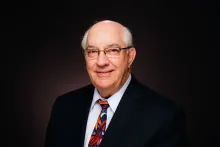
Mitchell Knapp is a graduate of Ambassador College with a BA in Theology. He has served congregations in California and several Midwestern states over the last 50 years and currently serves as the pastor of churches in Omaha, Nebraska, and Des Moines, Iowa. He and his wife, Linda, reside in Omaha, Nebraska.
