
John Elliott
This transcript was generated by AI and may contain errors. It is provided to assist those who may not be able to listen to the message.
We've had another year of corruption and scandals that have been plaguing leaders around the world. We've seen poisoning of critics. We've seen people get involved in misconduct with finances, with election, with various forms of fraud, sexual impropriety, theft of funds. See, the approval rating of Congress in the United States, as reported by NBC, is at a level of 16%. That's the approval rating. The current statistic for AIDS worldwide is around 40 million people.
And yet the leaders in the countries do not address the cause of AIDS. They don't really have the empathy and the concern for that blight that is troubling so many, that is killing 900 people a day in the country of South America only. And yet all of the people involved in the leadership throw some little band-aids at it. They're not really involved from the heart to get down and help the people who are suffering, who are dying.
There is poor leadership, and it's a worldwide pattern. As reported recently by the United Church of God, the number of countries that have suffered at the hands of cruel and corrupt tyrants is rising. It's not getting better. It's getting worse. The BBC reports that corruption is on the increase in a majority of countries around the world. One example it uses is that households in the countries of Cameroon, Ghana, and Nigeria spend 20% of their household income in paying bribes to their countries' leaders.
What does that say about the leadership of people who have nothing and yet get extracted another 20% by the leaders? Proverbs 29, verse 2, contains the statement, When a wicked man rules, the people groan. Now that statement is true for everyone, not just in politics. That statement is true for fathers and for children, for husbands and for wives, for employers, for employees, for pastors and those he is supposed to serve, etc., etc. When a wicked man rules, the people groan.
Now humans love to be an authority. Humans for some reason have, they're compelled, as it were, to have a status or a role or a job or responsibility for various reasons. Some are good, others are not. You'll remember the example in the Bible of James and John, who begged Jesus Christ to have the two seats on his right hand and on his left. They had a desire for self-promotion, and they wanted to be right there at the top. That carnal desire of self-promotion, putting them right at the top, would have just given them a greater range under which people would suffer with that mentality of self-promotion.
This lust or the mentality of self-promotion brings suffering for all who are being assisted, ruled, or whatever, led by a person who the Bible calls a wicked man. Whether it's a father with children or a husband and wife, or whether it's a Hitler and you've got World War II going on. Truly a global conflict with many tentacles that went out and killed some 70 million people and destroyed infrastructures around the world.
This attitude brings suffering to everyone underneath him. The question, I guess, is just how high the individual is, how many people get affected. But the converse is also true, and that is, a change is coming. And when you have a good leader, all under the good leader will be blessed. Ezekiel speaks of God's anger against self-sinder, self-promoting leaders who are interested only in empowering and enriching themselves. You can read of that in Ezekiel 34, verses 9-28. You might want to read that on your own. But God promises to send his son, Jesus Christ, the Savior, to save humanity from all of the trouble that he creates for himself and that others create under the guise of leadership.
Jesus Christ is going to return and remove corrupt leaders from their positions and replace them with proper leadership. I'd like to turn to Jeremiah 23, verse 4. A simple but profound statement tells us something about leadership. Jeremiah 23, verse 4. I will set up shepherds over them who will feed them. Now that should just be a big duh. But it's not.
As we know leaders today don't feed, they fleece. They see all the sheep and they see all the wool and they grab the wool and they don't care about the sheep.
But Jesus is going to return and set up shepherds, kings and priests over them, who will feed them, who care about sheep, who care about the people, who want to serve, who want to give, who want to become involved. And they will be fed. And they shall fear no more, nor be dismayed, nor shall they be lacking.
Between now and the return of Jesus Christ is prophesied to be a terrible time in which perhaps two-thirds of all human life will be erased off the planet. People dying. People their whole lives being chased and terrorized. And a large regime going after those who will not follow its particular tenets and erasing them. The pogroms of the past are nothing compared to what's coming. And yet this statement right here simply says, they shall fear no more under the new leadership, nor be dismayed, nor shall they be lacking. Everything is going to go very well for them. God has called and elect now. We are a people, in a sense, in training. I think God knows what we need when we're spirit beings, and He will fill us with that knowledge, the understanding, the wisdom, the power, the intellect, the perfect divine will. Those things will come in due time. But right now we need to be developing the leadership characteristics that will fit and be harmonious with the leadership that Jesus Christ is bringing to this earth.
So when we look forward, we see also this statement in Proverbs 29 and verse 2, another statement in the same verse, will be fulfilled when it says, When the righteous are in authority, the people rejoice. You know, the piece of tabernacles which portrays the millennial period, the thousand-year reign of Jesus Christ and the saints, those leaders who are leading in love, is a time of plenty, a time of rejoicing.
We are told to go to the feast and everybody is to rejoice. And so it is, as the Proverb says, when the righteous are in authority, the people rejoice.
Author Tim Blanchard has defined leadership as a process of influence, a process of influencing other people.
He says, any time you seek to influence the thinking, behavior, or development of people toward accomplishing a goal in their personal or professional lives, you are taking on the role of a leader who does not want to participate in enriching the lives of others. Well, the answer would be somebody who is self-centered, self-promotional.
But a person with God's Spirit who is called to love others, serve others, help others, this would be right down their alley, as we would say. It's what we want to be. It's what we want to do.
Taking on the role of a leader.
Jesus Christ talks about having leaders and appointing leaders over cities in the world tomorrow.
A government is coming, a good, righteous government.
With leadership, automatically comes following.
The term follow, as translated into English, appears 46 times in the New Testament.
Follow. Follow, follow, follow. 46 times.
Following is important for all of us. For you, for me, it's important for anyone to follow a leader.
It is really what you want people to do.
You want people to follow what you believe, what you feel, how you live, the things that are important.
You want to change behavior of children, of relatives, of friends, of co-workers, of neighbors, of people who right now are terrorizing the world.
You would love to see them follow. Follow God and follow you.
Following is the goal of a godly leader. That's our goal. We want to be followed. We need to be followed.
It's part of our calling. We're told to preach the gospel. Why? It's the good news of the kingdom of God that we are to obey and others should obey.
We want people to follow that. We're to teach God's way. Why? So people can know it? No. So that they can live it.
And their lives can benefit from it. We're to be an example, a light to the world that can be followed.
People can follow us to even more light, the perfect light.
We're told to be an example and to be ready to give an answer. Why others would ask us of the hope of our calling.
Our goal is to influence behavior. And today I'd like to talk about the principles of sound godly leadership.
What are the principles of sound godly leadership? How can we embrace them today?
Build them more and more into our life today so that we can be better leaders now as friends, as siblings, as parents, as mates.
As employers, employees, fellow citizens of the human race and future kings and priests in the family of God. How can we do that?
Do you want to do that? I think we all have to ask ourselves seriously, do I really want to be a leader?
Or do I just want to take that calling and put it in a napkin and sort of bury it? I don't really want to be a leader. I just want to get myself saved. I just want to be in the kingdom. I just want to close the doors around me and Jesus.
I don't really care about anybody else.
Well, I think all of us have the human tendency, if we're brutally honest, that yes, it does tend to be about me.
But we have to fight that, don't we? And have to love our neighbor as ourself. And love God more than all. So to ask the question again, how can we be more godly leaders in this calling that we've been given now? I'm not talking about leading in the world tomorrow. That will take care of itself. But being a godly leader, an example, a motivator, a behavioral change agent, how can we do that better now?
You might ask the question, as I did, where should we look for the keys of right leadership?
Well, there are some good places you can look. Cicero wrote about leadership. Aristotle wrote about leadership. You can go on to the Roman Empire. You can come down through all the great kings and leaders. You can come to people like Winston Churchill with his many volumes. You can look at military leaders. You can look at business leadership materials. And there are many, many books. I've read many through the years. You can look at seven keys of this or 21 irrefutable keys of that. You can take people in the church. You can look at Mr. Herbert Armstrong as an example. And maybe we can look for leadership there. But why look at any human being when there is one perfect leader? And if we look at his life, we can see the keys, at least some of the keys, of godly leadership that we can adopt. And so today I'd like to give you some points, five points actually.
Five points that we can use to grow in godly leadership. But before we go to those points, I'd like to talk just a little bit more about Jesus Christ, who was the greatest leader, the greatest teacher, the greatest behavioral influencer that has ever come to this earth, or ever will come to this earth. He is also wanting a team of others to assist him, to change the behavior for the better of the human race. You know, I look around at the various countries on this earth, and some of them are squabbling, and they're suicide bombers. And I'll tell you right now, these are some of the nicest, loveliest people you've ever met. They really are. We had dinner recently with someone who was around during the Third Reich years over in Germany. We invited them. They were camping next to us. We invited them to come over and have dinner with us. Lovely people. Lovely people, right from up in the core area of Germany, where so much was going on. Fabulous people. Spent some time over in the Middle East. Some of my favorite people are the Palestinians, yep, right there in the nation of Israel, the occupied areas.
Occupied Syria, Lebanon, and Jordan. Also down in the Gaza Strip area. Nicest people you can imagine. Same with the Arabs down in Egypt, Morocco. Very nice people. Some of the most friendly people you'll ever meet is if you ever get into the rural areas of Germany. Just do anything for you. Italy, traveled up and down Italy, have some Italian blood, been to Russia, yes, right there to Stalingrad, you know.
Very, very nice people. You think, what was all this? When you go to the East, what happened? What happened? How come you are such humans, such nice humans? Well, there are people who fall into a mindset that is not their own, that get stirred up by an invisible power, who get self-centered and whipped up to a frenzy. And anybody can do that. But Jesus Christ is coming to replace that with a team of people. We shouldn't look at anybody else and criticize them or think that we are any better than them.
We are not. We simply are not. If maybe you fought in Japan or the Japanese conflict in World War II, and then go back over to Japan and go through the villages of Japan. I've not done this, but my father has. He fought in that war and then he went back over there when I was a teenager. And very, very lovely people. Humble people, gracious people. You know, God created humans and he said it was good.
But then something else has come and gotten involved. Jesus Christ loved all humans. You and I should, too. Jesus Christ came and lived and gave himself for all humans. Why was he such a great leader? Let's take a look at a few things about Jesus Christ's leadership. I've got four points here that set him aside as the greatest influencer, the greatest leader, the greatest role model that we can draw the keys of right leadership from.
First of all, he was a master of godly leadership. He was a master of godly leadership. In fact, he wrote the book on it. You know? He understood it thoroughly. He understood the entire will of the Father. He understood all the keys, the things that were good for people, the direction they needed to be led. He was perfect at it in his understanding. And again, he was the one that wrote the book. He was the Word, the Logos, the spokesman. Secondarily, he spoke with confidence and authority on these matters.
Confidence and authority. Did he come down and say, when he was challenged by the Pharisees or the Sadducees, he said, well, you know, let's get together and talk this through. You know, I'll listen to what you say, and then I'll consider it, and I'll consider bending my position. No. Let me ask you. Would you? Or are you confident? Are you authoritative about the Sabbath, the Holy Days, clean and unclean meats, tithing, about living a way of love and giving, about military service and war, and all these other topics, about Easter and Halloween and Christmas, etc., etc., you see?
He sets us a fabulous example that he was confident and he was an authority on that which he taught. His most convincing teaching was by example. Everything he taught, he also lived, and he lived it powerfully. He came down and taught humility. He defested himself of the God being at the right hand of the supreme God of heaven in all of his glory, and he came down as an average, common-looking Jew.
That's what he chose for himself to look like. That was so average that he had to be betrayed for the leaders to find him on the day of the eve of his death. He washed the disciples' feet. He did so many things. He cared. He showed. He lived. He loved. He got involved. His example was the same as his words. They were identical. He was not a hypocrite in any way. And the fourth thing was he had an outward love and concern for people. He just really loved people. He loved everybody.
He had a deep desire to help them, to enhance their lives, to make things better. I want to give you life, and I want to give it to you more abundantly. I want you to have it more abundantly. I'm concerned about you. I want to upgrade you. It was Jesus' whole mission. He really cared about people. It wasn't about him. It was about those that he was serving.
So with those four things, I think it's important for us to recognize Jesus Christ is the supreme example of leadership. And from him we should draw all the keys of right leadership. The first instance of the forty-six instances of the word follow in the New Testament, the first instance of it is found over in Matthew 4 and verse 19, where he says, Follow me, and I will make you fishers of men.
Follow me. Here's the leader. He wants to be followed, and then he will make them leaders. If you follow me, I want to make you leaders. I want you to influence others. In 2 Timothy 3 and verse 10, I'd like to read what the Apostle Paul says here concerning one of those leaders that Jesus Christ taught, one of those fishers of men. 2 Timothy 3 verse 10 says, But you have carefully followed my doctrine, my manner of life, my purpose, my faith, my long-suffering, my love, my perseverance, my persecutions, my afflictions.
See how this works? Jesus Christ was followed, and he created leaders. Those leaders were followed, and they created leaders. Paul told Titus, I want you now to go and appoint leaders in every church. And so on and so forth, we come down till today. We still have leaders and we have followers. We have influencers, and we have those who benefit from that. It's a wonderful thing to be part of leadership. You are called to leadership. You are a leader if you choose to lead. If you choose to lead.
In other words, if you choose to influence. Whether you are stuck in a nursing home and can't get out, or whether you are a teacher formally, or whether you are ordained to preach. We all have the opportunity to influence others by our example, by the things that we say and do, just as the Apostle Paul did. I'd like to now give you five points for growing in godly leadership.
I hope these points will be helpful. There are things that I have been pondering after looking at the example of Jesus Christ, looking in the Bible, trying to find things that would motivate you and me together to be better teammates, as it were. Better helpers in this life. I'm not focusing on the next life. Jesus Christ will take care of that.
But for now, how can we be better leaders and influencers in those ways that God has allowed us to be involved today? The first point is to grow in a godly mentality. Not a self-centered mentality, not a self-appointed agenda, but to grow in a godly mentality.
Jesus Christ set us the example of doing the will of the Father and speaking the words which the Father gave him to speak. When we strive and desire to be a representative of godliness, we begin to fulfill this calling of a leader that God has called us to.
I'll give you an example. I am not a representative of the United States of America, and the United States of America does not represent me. I'll tell you that flat out. And this is more and more a strong statement as time goes on. The tenets which this country now holds, the conduct of which its officials and citizens conduct themselves, the morality, the beliefs, the teachings, etc., that this country is on a course, does not reflect me, nor do I reflect it. So, I kind of feel like you, I hope. You ever feel like that, a little more and more? A little more distant from what's going on?
Do you ever feel like you're a person who relates to a different country? Like we find back there in the Hebrews 11 group. You ever feel like, you know what? I really, I really represent the kingdom of God. And the kingdom of God represents me more and more, because that is the mindset that you have and I have through God, through His Holy Spirit, through the character that we are developing. We are witnesses of what goes on. We are observers of this world, but we are called out of this world. I love the country in which I was born.
I love the other countries in which I visit. But I don't represent them, and they don't represent me. You and I are observers from a different country. And with that in mind, we need to understand this first point, that we need to grow in godliness, the mentality of the real kingdom that we belong to. We need to grow in that mentality so that we can represent it better, that we can teach it better, that we can proclaim it's coming to all of mankind better.
To get excited about it is what this very Sabbath day is all about. This is our weekly celebration day of the country that you and I have declared that we are part of. This is the family day of the family of God, the kingdom of God. Jesus Christ came down, and He did not proclaim Himself to be a Jew.
He did not get involved in Jewish politics. He did not feel akin to the Jewish religious system, even though they used His very Bible. He was an observer on this earth. He was one who represented a different country. Let's go to Philippians 2, verse 3. We need to grow in the mentality of this kingdom of God, its government, its laws, its rules, its ambitions, what it purports to bring to humanity. These are the things that you and I can get caught up in.
Philippians 2, verse 3 says, Let nothing be done through selfish ambition. Leadership is not about me. It's not about you, selfish ambition or conceit, thinking that we are something. But in lowliness of mind, let each esteem others better than himself.
Let each of you look out not only for his own interests, but also for the interests of others. This fulfills one of the great commandments. Love your neighbor as yourself. We're not to just look out after ourselves, but rather, we're to certainly look after the things that we need and also that others need in an equal manner.
Going on. Let this mind be in you, which was also in Christ Jesus. See? The first point is to have more of the godly mentality, more of the godly mind. To grow in godly thinking. Let this mind be in you, which was also in Christ Jesus, who, being in the form of God, yes, he was exalted.
He was right up there in the very height of it all. Verse 7, But made himself of no reputation, came down, rolled up his sleeves, and got ready to serve, taking on the form of a bondservant. Now here's the key. The mind of God is that of a bondservant. Do you ever think about that? The mind which was in Christ Jesus was that of a bondservant.
A bondservant back in that time was one who voluntarily became a servant, an indentured, owned servant of someone else. You said, here's somebody, I'm going to go up to you, I'm going to make a deal with you, I have chosen to be your servant, and I will serve you, and I will do your will.
I will do what is good and helpful for you. In that sense, you see, Jesus Christ wasn't coerced into being our Savior. He wasn't threatened. He wasn't muscled down here by the Father. He came, made himself of no reputation, and took the form of a bondservant, one who wants to serve and help others. The mind of a leader, the godly mentality, is that of wanting to serve others, wanting to help them.
The second point is that we need to grow in godly character. Not just in godly knowledge, not in spiritual understanding alone. Character is the performance of godly understanding. We need to grow in godly character. Character is formed through a billion little decisions that we make, maybe more. Every little decision we make ends up being our character. It's the pattern of choices that we end up making. We are to make right choices in a godly sense, according to what the word of God, the mind of God, the kingdom of God, the mentality of the God family would choose.
And quit making them based on our own selfish, human nature, self-exalting, satanic mentality. That's human nature. That's bad character. So you and I need to grow in godly character. Those choices should become something that we want to do because of the first point, having the mind of God, the desire to love and to serve others.
Therefore, the second point is to make the choices to love and to serve others and put the self secondary, put the self aside and grow in the character of loving God first, making the choice to pray and study to God, to fast and humble the self, to see what the needs of other peoples are and care about those needs and actually go out and serve them. Instead of, well, would I do this for me or that for them? That for them would be one little choice, one little decision that if continued on as a pattern will form a character that is godly.
Do we want godly character? Do we want godly character? Or again, do we just want to have the mind of Christ but wrap it in a napkin, put that Holy Spirit, bury it, stick it on the shelf and say, just not going to use that, just keep it right there, really not going to grow in it.
In Philippians 1 and verse 9, Paul tells the church at Philippi, And this I pray, that your love may abound still more. We talked about love, we talked about growing in God's, in the performance of God's law, which is love for him and love for our neighbor. And he says, I hope that your love will abound still more. I pray for that. And I pray that you will abound more in knowledge, I want you to know more.
And I pray that you will abound more in discernment. Verse 10, that you may approve the things that are excellent. What does that mean? So that when you come up to a choice, you will approve that which is excellent. And you will disapprove that which is selfish. What he's saying here is, I want you to grow in understanding and knowledge and love, and then to discern and actually perform it. Godly character, approve the things that are excellent for yourself. You approve that and say, yes, this is what I need to do now. This is the decision I need to do now.
That you may be sincere, not a hypocrite, not saying, oh yeah, I'm all about love and the kingdom, but that's not the choices I make. It's all about me and myself. Now that you may be sincere and without offense till the day of Christ. God needs to see that. He needs to know who really from the heart makes the choices of loving and serving others. Being filled with the fruits of righteousness, which are by Jesus Christ through the Holy Spirit, to the glory and praise of God.
This is what it's all about. It's the glory, the praise of God, His kingdom, the support of that kingdom, the character, the leadership, the example. This is what we want to do. This is what we want to do. These are the choices we make. The third point is to grow in Godly service. To grow in Godly service, serving others.
It is one thing to say, be warm and filled. It is quite different to warm someone and fill them. How many times do we see ourselves in the light? I'll tell you how I see myself. I see myself sometimes in the light as a very generous, compassionate person. But how many times am I generous and compassionate? Well, you know, it's a busy time, busy life. There's a lot to do and a lot of responsibilities and things. So you might just not get to that. But in Matthew 25, you see the great shepherd, the great king, comes back and divides the sheep from the goats, the true flock, the true lambs from the ones who were self-serving. And it was the performance, wasn't it? It was the real service, the Godly service, that showed what was in the heart. In 1 Peter 5 and verse 1, we'll switch apostles now and take a look here at the epistle, one of the epistles that Peter wrote. And he's speaking to the ordained leadership, the ministry. But there's something we can learn here, because all of us, really, in a sense, are called to leadership. There are various structures within the body, certain roles that we play. But I don't believe that the characteristics, for instance, of 1 Timothy chapter 3 or Titus chapter 1 are only for the ministry, that they're the only ones that should be giving and not drunks and husband of one wife and various... All those things are the minimum requirements, really, of any Christian. So let's look at what is being said about leadership here. It says, the elders who are among you, 1 Peter 5.1, the elders who are among you I exhort. Verse 2, shepherd the flock of God, which is among you. Feed the sheep. Shepherd them. Go out and serve, be concerned, feed them, protect them, guide them. Shepherd the flock of God, which is among you, serving as overseers, not by compulsion, but willingly, not because you're told to, not because you have to, not because you had better, but from the heart. You love the sheep, you love the brethren, you love to be involved in serving and feeding and helping. It says, willingly, not for dishonesty, not for something you can get for yourself, but eagerly, eagerly, not as being lords over those entrusted to you, but being examples of the flock.
Godly service, something that Jesus Christ set us an example in, it's something that He has called shepherds to do and to be examples of, notice He just said they're examples of the flock, so that they will then be behaviorally motivated to also love and serve others. And so on and so forth. It goes until the body is edifying itself in love, by which all the members do the part. Ephesians 4 and verse 16. All the members do their part. It builds it up.
Godly service is something that every leader must have at its core or her core, whether you're a child, whether you're a lady, a man, young, old, whatever your responsibilities are, godly service needs to be there. The fourth point that we can learn from Jesus Christ is that we need to grow in godly grace.
What is that? That's a word you probably haven't used all week. But we do need to grow in godly grace. You receive the grace of God. If I were, I did not look up any definition of grace on purpose. I just want to tell you my feeling of the word grace, I guess you would say my definition, is to have compassion, love, concern, and action. You know?
To really care and love other people brings with it the joy of being graceful. God is graceful. Think about this. Not just gracious that he forgives sin. I guess that is a part, a small part actually, of what the Bible refers to as grace. In all of its many references to grace. But think of God in this way. He is a very gracious person. In other words, he likes you. God smiles on you. Yes, God wants the best for you. God speaks to you in wonderful terms. He's given you wonderful things. God looks fondly and favorably on you.
He speaks nice things of you. He calls you His holy, His elect, His beloved. He is also gracious in that He knows you make mistakes, but He is not focused on those. He is very gracious. He doesn't speak to you with bad language and, you know, arrogantly and toss you around or smack you around. No, He's very patient. He's very loving. He's very kind. He's understanding. Jesus Christ came and became our compassionate high priest.
He's compassionate. God is very graceful, gracious. He's full of grace. We need to grow in godly grace. We need to realize that God is full of grace, of favor, of kindnesses. That's part of being gracious. It's giving favor.
Giving good things. Doing good deeds. Responding well. How many of you know somebody who would be the epitome of grace or gracefulness? It might be a lady. It might be a man. You probably know somebody, though, don't you? We think of that person. Not too many people around, are they? That are really gracious. But, you know, they always have that kind smile. They look you right in the eye. They're so concerned. And they really are concerned. And they speak so kindly. And even if you really mess up or if you've done something dumb, that's not what they're dwelling on.
The way they form their words and the things they do, and maybe the note they send or the little gift afterward of appreciation. Wow! That person is a gracious person. A gracious host. A gracious hostess. Etc. etc. Now, that's just a human example. And that's not a perfect example, whichever one you may have seen or you might be thinking of.
God is perfect in grace. We can see that example and be motivated by it on the human level, but how much more gracious is God? It says in the Bible, out of the heart the mouth speaks. In Col. 4, verse 6, Paul says, Let your speech always be with grace. If you're speaking and you have grace, that means you have grace in your heart because it's from the heart that the mouth speaks. When we don't have grace in the way we conduct ourselves or the things that we say, we need to realize, I need to grow in grace, in graciousness, in gracefulness.
Yes, part of grace is forgiving, unmerited pardon to those who have transgressed against us, just like God gives us that. But there's so much more than that. So much more. Taking an interest in people, having the concern, the love, the action that goes along with it. Being kind examples. Being people that motivate others to change their behavior, to be more godly. Paul tells the Corinthian church during a time of famine in one of the other areas. He tells them in 2 Corinthians 8 and verse 7, But as you abound in everything, things like, he says, You abound in faith, you abound in speech, you abound in knowledge, in all diligence, and in your love for us, I want you to take it up a notch, he says.
See that you abound in this grace also. This grace of being kind to another group of people, somewhere else, probably don't even know them, but they're having a difficult time right now. I want you also to abound in this grace, this graciousness. We need to grow in godly grace.
It's a wonderful aspect of a leader. It's one that I need to grow in. You hopefully don't have to grow it anymore. You're probably just perfectly graceful. But I recognize in all of these points, areas in which I can grow, and I'm sharing them with you. And the fifth point, the fifth point is we need to grow in doing the will of God. It's not ambiguous at all.
It's very, very profound here. Grow in doing the will of God. What is leadership all about? What are we trying to lead people to? Again, does it become our own agenda? Does it become our own self-aggrandizement? Do we end up at the top of something that we now want to steer our own way? Or, as a leader, are we performing and encouraging those we are leading to fulfill the will of God? Jesus Christ said, my work is to do my Father's will. That then becomes our work. It's not my will, but Thy will be done. You and I need to grow in doing the will of God.
Otherwise, we will not be good leaders today. We won't lead our families right. We won't lead in the workplace. We won't be good examples. We need to grow in doing the will of God. Paul says again in Romans 12, verse 2, He says, and do not be conformed to this world. The world is doing its own will. It's pursuing its own self-centered objectives. Don't be conformed to that. But rather, be transformed by the renewing of your mind that you may prove what is the good and acceptable and perfect will of God.
Therein lies the challenge every minute of every day for you and me to determine and prove what is the good and acceptable will of God in that which we are doing, in that which we are wanting, in that which we are trying to lead others in. God doesn't just necessarily write it all down and say, Okay, here's what I want you to do today.
No, we all have a lot of opportunities, don't we? God doesn't have a will that says, All right, Joe, I want you to drive the blue truck. You'll pick that up at the Honda dealer. And Phil, I want you to drive the Ford, the red one. And Mary, I don't even want you to have a car. But I see you have one, so I'm going to do that one in. Now, we're not trying to divine and figure out and throw sticks on a table or rocks or dream or fast and figure out what God's will is.
No, we know God's will, and that is to love Him with all our heart, soul, and might and love our neighbor as ourself and therefore be in the kingdom. It's God's will that Jesus Christ doesn't lose any of us. But what is His will in regards to the decisions, to the choices that we are making, to the things that we are leading others in?
That requires a person who wants to seek what God's will is. And Paul is saying here, I want you to prove what is the good and acceptable and perfect will of God. When you go to buy something, is that in line with loving God and loving your neighbor as yourself? Does that support others? Does that influence, enhance them? When you purchase a house, when you purchase a vehicle, when you purchase whatever it is you're purchasing, for whatever reason, why are you doing that?
Why are you purchasing the clothes? Why are you deciding what to wear here today? Why are you deciding where to go and what you're thinking about? What is the perfect and acceptable will of God for my speech on the Sabbath? Or what I would say to someone, or do with someone, or encourage someone? Doing God's will is a part of our minute-by-minute thoughts, decisions we must make, and then we must discern what is good and what is acceptable and what is bad and what is unacceptable.
Then we must choose that. Once we do the will of God, if we begin to make patterns of choices according to the will of God, then we are following the will of the Father through Jesus Christ, and we are in concert with the leadership of the kingdom of God and therefore can be useful in the kingdom of God.
It is so important for us to be growing in doing God's will. Because if we are not, frankly, brethren, Jesus Christ cannot use us in leadership. We won't want to do the Father's wishes. We will want to do something else. Desire to learn His will. Understand it. Be challenged by it. Figuring it out. Sometimes you'll figure it out, sometimes you won't. Sometimes you'll figure it out, but you won't do it. I find that, like the Apostle Paul, that which I want to do, don't do that.
I end up doing something else. We need to grow in doing the will of God at this point, and then lead and encourage others to do the will of God. When we do the will of God, then we are actually fulfilling the law, because that's really what the law is. It is the will of God. To love Him, to love our neighbor as ourself, and to implement that in all of the decisions that we make, all the things that we do, all the things that we lead and are examples to others in.
I'd like to give you an example today of a godly leader, one who fulfilled God's will in a certain example. If you'll turn with me back to Nehemiah the first chapter, we'll begin in verse 3. I hope this will reinforce the point today. Nehemiah 1, we'll start in verse 3. Remember that the kingdom of Judah was taken captive for the most part in Babylon. A few captives were still remaining in Judea around Jerusalem. So we break into the story. And it's true to me that the survivors who are left from the captivity in the province are there in great distress and reproach.
The wall of Jerusalem is also broken down and its gates are burned with fire. And so it was when I heard these words, I sat down and wept. Nehemiah, who was there in Babylon, was very concerned. And I mourned for many days. Why did he care? He had good food, good lodging. Hundreds of miles away. Here he is concerned for people in this situation and for also the kingdom of God, as it was at that time, the physical kingdom.
And so I was fasting and praying before the God of heaven. And I said, I pray, Lord God of heaven, O great and awesome God, you who keep your covenant and mercy with those who love you and observe your commandments, please let your ear be attentive and your eyes open that you may hear the prayer of your servant, which I pray before you now, day and night, for the children of Israel, your servants. What kind of leader is this? Don't see anything self-serving here.
You see somebody who's compassionate about people. You see somebody who wants to fulfill the will of God and, as we'll see, has determined what that will is. He has determined what the acceptable will of God is through the Scriptures. And he rightly determines this, and I'm sure with some inspiration. He says, Your servants, and confess that the children of Israel, which we have sinned against you, both my Father's house and I have sinned, we have acted very corruptly against you, and we have not kept the commandments, the statutes, nor the ordinances, which you commanded your servant, Moses.
Remember, I pray the word that you commanded your servant, Moses, saying, If you are unfaithful, I will scatter you among the nations, and he's saying, Here we are. We did that, and you were right. But in verse 9, But you said, If you return to me, and keep my commandments, and do them, though some of you were cast out to the farthest part of the heavens, yet I will gather them from there, and bring them to a place which I have chosen as a dwelling for my name. That's what you said, God. That's what you said. And now I'm praying for this to happen, and I'm wanting to influence some people here to get involved if you'll support this is what is happening.
Let's go to chapter 2, verse 17 and 18. Then I said to them, You see the distress that we are in, how Jerusalem lies waste, and its gates are burned with fire. He's there now on the scene. He says to the people that are there who are in such disarray, and they're starving, and they're having all these problems, and the enemies are mixing among them. He says, Look, you see your situation.
Now, he says, Come and let us build the wall of Jerusalem that we may no longer be a reproach. Let's separate ourselves from the world with a wall, and have Jesus Christ in the temple living among us, in the midst of us. Let's come out from them and be separate. There's the whole concept here. That's the same concept that God wants from the church today. In verse 18, I told them of the hand of my God, which had been good upon me, and I also spoke of the king's word that he had spoken to me.
So they said, Let us rise up and build. See, he influenced behavior, didn't he? Godly behavior, according to the will of God, out of love and concern for others. He knew it was right. He was absolute on it, and he encouraged them, and they said, Let us rise up and build. And so they set their hands to this good work.
Nehemiah focused on the will of God, and he sacrificed for it. He put himself there in great danger. It wasn't about him. He didn't come to inherit anything. He didn't come there to get property. In fact, Nehemiah would go back to Babylon, and I believe die there.
He just came to encourage and motivate others. Obviously, Sanbalat, you read of in verse 19, was an agent of Satan fighting against, and they had to withdraw themselves. They had to fortify. They had to push away that influence so that God could be in their midst, and they had to return the worship of his church. In chapter 9 and verse 3, there was a time when he had to return, and another came, but it says, And they stood up in their place and read from the book of the law of the Lord their God for one-fourth of the day, and then for another fourth of the day they confessed and worshipped the Lord their God.
These individuals sought, or no, the leaders compelled the individuals to seek God and to be more godly. Let's see this in a better context. Let's go to verse 1. Now, the 24th day of this month, the children of Israel were assembled with fasting and sackcloth and dust on their heads. How did they get there? How do you think the children of Israel showed up fasting with sackcloth and dust on their heads if there was not leadership involved? To encourage that. In verse 2, then those of the Israelite lineage separated themselves from all foreigners.
They did come out and be separate, and they stood up and confessed their sins and iniquities, the iniquities of themselves and their fathers. God's will is the same for us today to confess our sins, to come out and be separate, even though we have to live in the world. And He wants us to build the wall, to keep Satan out, to have defenses, for us to encourage and motivate others and help one another to do the very same thing. In chapter 4 and verse 10, we see that Nehemiah was very concerned.
Judah came and said, the strength of the laborers is failing, and there is so much rubbish that we're not able to build the wall. And our adversaries said, they will neither know nor see anything till we come into their midst and kill them and cause the work to cease. Chapter 4, verse 13. Therefore, here's what Nehemiah did. He was a listener. He was a problem solver. So I positioned men behind the lower parts of the wall. I opened the openings. I set the people according to their families, with the swords, the spears, and their bows. And I looked to see the nobles, the leaders, and to the rest of the people. Do not be afraid of them, I said. Remember the Lord, great and awesome. And fight for your brethren, your sons, your daughters, your wives, and your houses. It's not about him. It's about God. Remember God.
In chapter 5, verse 1, we see that Nehemiah was a graceful person. There was a great outcry of the people and their wives against the Jewish brethren. For there were those who said, We and our sons and our daughters are many, therefore let us get green, that we may eat and live. We're starving here. We're working so hard. There are inequities here. Some of the people that are working here are exhorting usury, you know? And their personal gain over here, and others don't have enough to eat, and these things aren't right. You can read about that more, but verse 6, he says, I became very angry when I heard their outcry in these words. And what did he do? Verse 7, after serious thought, after serious thought, I rebuked the nobles and rulers, and I said to them, Each of you is exacting usury from his brother. So I called a great assembly against them. And notice what he said. Verse 9, What you are doing is not good. Should you not walk in the fear of God because of the reproach of the nations, our enemies? I also, with my brethren and with my servants, am lending them money and grain. Please let us stop that disusury. As a personal example, personal repentance. So they moved on to do things more properly. He promoted justice and godliness. He was quite an example, by the way. We look in verse 14. Moreover, from the time that I was appointed to be their governor in the land of Judah, I nor my brothers ate the governor's provisions. We did not take those things that the Babylonish governor sent for us, the leaders. No, we ate with the rest of everybody. Verse 15, The former governors who were before me had laid burdens on the people, who took from them the bread and the wine, besides forty shekels of silver, etc., etc. But I did not do so because of the fear of God. Indeed, I also continued the work on this wall. And we did not buy any land, and my servants were gathered there for the work. And at my table were one hundred and fifty Jews and rulers, besides those who came to us from the nations around us. I supported people. I fed them, etc., etc., etc., you see? He was quite an example.
In chapter 7, verse 1, Then it was when the wall was built, and I had hung the doors. Verse 2, That I gave the charge of Jerusalem to my brother Hana. Oh, wow, he gave it to his brother. Now, what was that about? Why would somebody do that? Oftentimes people will say, well, people in position in the church will often give favoritism to family members.
Mr. Armstrong once said, God works in families. That's very obvious. How many brothers were there in the ministry? How many families had generations serving in the church? God seems to work in families. Let's just look here and notice. I gave my brother charge of Jerusalem, and Hananiah, the leader of the citadel, for he was a faithful man and feared God more than many. It's not by person. It's not by personal choice. It's looking at the fruits, finding one who will also have the deep reverence for God in God's way.
He did this right and nobly. Even though it was a family member, it wasn't about him, and it wasn't about his family. It was about godliness. And so you read in verse 15 of chapter 6, the wall was finished. The job was done. In verse 16, and when it happened, when our enemies all heard of it, and all the nations around us saw these things, that they were very disheartened in their own eyes. Why? For they perceived that this work was done by our God. That's a fabulous example. Perhaps not perfect in every way, but here's an individual who uses all of these five points. And the glory goes to God, not by just the people involved, but even the nations around said it reflected on God.
And at that time, the physical kingdom of God that he had on earth in the nation of Israel. It's kind of a forerunner of the spiritual kingdom that was to come. Nehemiah was a good leader, but Jesus Christ was a perfect leader. How was Jesus Christ a perfect leader? Well, he had the perfect mind. He had the perfect actions. How can you and I have that mind and those actions? I'd like to just review with you Galatians 5, verses 21 and 22, the fruits of the Holy Spirit and see what leadership power the Holy Spirit of God gives to us.
We're going to take each of the words here and give you the Greek definitions of them. Galatians 5, 21, the fruits of the Spirit are love. Agape means brotherly love, affection, goodwill, and benevolence. A leader with goodwill, love and concern for others, benevolence, affection. This is powerful. This is part of the mind of God. This is the great power that God affords to leaders if we want to tap it, if we want to put it to use.
The second one is joy, and that's defined as gladness and the persons who are one's gladness. When you think about a leader having joy, we can read of the proverb of how children are the joy and the delight of a mother when things are right. So the children of God are a joy and a delight. So the children of any leader are a joy going both directions. We already read the proverb that when a righteous leader is in power, everybody rejoices. There's joy.
And so this joy should be both ways. God is joyful. We are His sheep. We are joyful. Those who are leading and encouraging others are joyful for the opportunity, and those whose lives are being encouraged are joyful. It's a wonderful, joyful thing. The next is peace. One of the definitions of peace is harmony. Harmonious harmony and unity. Long suffering. Now imagine this characteristic applied to your roles of leadership now today. Long suffering means patience, endurance, constancy.
You're always there. Never leave your forsake you. Steadfastness, perseverance. That's a fabulous trait of a leader. Not a cut and run. Not a pop in, pop out. Nope. Kindness means moral goodness, integrity, kind and gentle. That's part of that genteel gracefulness. The kindness, the thinking, the thoughts, putting yourself into someone else's shoes, the empathy. Faithfulness, the Greek word pistis, means the faith. The faith and the trust of God and in God. Not just to trust God and to believe that God exists, but to have the faith of God and the trust of God built into you.
Because that Holy Spirit, that little bit of the mind of God is in you. Meekness, the antithesis, is defined as the antithesis of self-directed actions. The antithesis of self-directed actions. A leadership of a righteous person is the opposite of self-directed action. Which is doing the will of God, isn't it? It's performing the will of God. Not my will, but thy will be done. And finally, self-control. One who masters his own desires and passions.
We're not real good at that. We have our desires, we have our passions, we see opportunities for the self, but we need to master that. We need to deny the self, we need to push it down. And especially when it comes to leadership opportunities, we must see the opportunity for self-promotion and then resist it. If you don't, you just grow into an egotistical, self-promoting leader who then begins to extract things from others for your own benefit and gain. That's wrong.
That's what's wrong with the leadership on this earth today. That's what Jesus Christ is coming to replace. I mentioned the term follow, used 46 times in the New Testament. At the end of the New Testament, it is used in Revelation chapter 14 and verse 4. I'd like to read that with you, Revelation chapter 14 and verse 4. Because this is what, again, leadership is all about. It's having people follow. It's having an effect on others' behavior. Jesus said at the beginning, remember, that, follow me and I'll make you leaders, fishers of men.
Well, now we see in Revelation 14 and verse 4, these are the ones who are not defiled with women, with women referring to religions, false religions. For they were virgins. These are of the true church. These are the bride of Christ, the virgin bride, who is going to marry Christ at His return, symbolically. These are the ones who follow the Lamb. There's the word follow. These follow the Lamb wherever He goes. These were redeemed from among men, being firstfruits to God and to the Lamb. How do we follow Jesus Christ? How do we get from that state of being called to the state here of those who have followed Him? Did Jesus Christ call you up on the phone and say, okay, here's what I want you to do? No, you stay home and you have your little personal following of Jesus Christ? It's me and the Lord. Me and Jesus. No, that's not how it works, is it? Romans 10.4 says, how will one call on Him who has not believed? How will one believe who has not heard? How will He hear without a preacher? How will He preach without being sent? So God has developed the system of the church through which leadership exists and people can follow Jesus Christ. In Hebrews 13, verse 7, we are told to remember those leading us. Remember those who rule over you. The term rule over you, perhaps if you'll notice in your margin, if you have one, means those who lead you. Rule over you is actually something we're not supposed to do in that sense because Christ said that. But this means remember those who are leading you, who have spoken the Word of God to you, whose faith follow? There's the word follow again. Considering the outcome of their conduct. Ah, you have to judge, don't you? Jesus said, by your fruits you will know them, those teachers, whether they're good or bad. But notice, Paul is saying this in the context of Jesus Christ. Whose faith follow considering the outcome of their conduct? Jesus Christ, the same yesterday, today and forever. This isn't the individual's conduct. It's not his own ideas, it's not his own philosophies. It is the reflection of the teacher, of the leader. God the Father, through Jesus Christ, through the leaders he's appointed and others are continuing to come to him. It's a wonderful thing for us to understand, for us to participate in.
Well, brethren, you are an elected leader. God calls you the elect. You're an influencer of others. You're called to be an ambassador, a light that shines. You're called to be one who is a behavior changer, a motivator for those who are willing. Whether you're a teen at school, or a mother at home, or an employee at work, we need to carefully consider the opportunities and roles that we have.
To be leaders now, today, in this life. Think about that when you get up in the morning, through the choices that you make during the day. Let's improve our efforts now, and ultimately we'll be able to take part in ruling over cities, under the kingdom of God, in the world tomorrow.
Realize this. Leadership is your only calling. You don't have another calling. You're only called to leadership. You don't want to lead. You don't have any other options. Because Jesus Christ is only calling kings and priests. He wants people who are godly leaders. He wants leaders of godliness.
You are one, whether you realize it before today or not. You are a leader of godliness, and therefore a godly leader.
Real godly leadership is about caring about other people, and a desire to serve and sacrifice gracefully for them, to help them.
I'd like to turn to Mark 10, verse 42. Mark 10, verse 42. To begin to wrap this up. Jesus called them to Himself and said, You know that those who are considered rulers over the Gentiles will lord it over them. And their great ones exercise authority over them. Now there's good authority and there's bad authority, but these had a self-centered, self-promotional type of mentality. Yet it shall not be so among you. Here comes the positive. We're not going to be leaders like that now. But whoever desires to become great among you shall be your servant. And that servant actually is the root word of what minister comes from, and deacon. Servants. And whoever of you desires to be first shall be slave of all. Do you desire to be first? Do you want to be first? You'll remember in the Bible that James and John came to Jesus privately and said, We want to be first. We want to sit on your right hand and your left hand. We want to be first. Do you want to be first? What do you think? Let's go to verse 37. Verse 37, Grant us that we may sit on your right hand and on your left in your glory. What do you think about that? What do you think about that? Oftentimes we write this off and we say, Oh, those self-centered guys. And they were. Those self-promoting guys. And they were. If they had been elected, if he had put them there with that attitude, they would have just been that much higher to create that much more misery for that many more people. And that's true. But do you want to be first? Notice verse 40. Notice what he says about this. To sit on my right hand and on my left is not mine to give, but it is for them for whom it is prepared. It is for them. There are those who will sit on his right hand and on his left. Do you want to be one? Would you like to be one? Why would you like to be one? Would you like to have that kind of influence, the opportunity to influence the behavior of people, to make it a better world, to make it a better kingdom forever? I'd like to close by reading to you Revelation chapter 3 and verse 21. Because actually, brethren, if we get caught up in this kingdom and the mentality of the kingdom and the desire to help others, we should want to sit on Jesus Christ's right hand and in his left. We should desire that for all the right reasons, because that is what Jesus Christ desires of you and me. To sit on his right hand and on his left is being prepared for some, and he defines them right here. He's actually talking to the Laodicean church, and he says in verse 21 of Revelation 3, to him who overcomes, you get rid of your selfish carnality, you get rid of your selfish focus. If you overcome and win, I will grant to sit with me on my throne. That is our destiny, brethren. Leaders, influencers, helpers, representatives, those who care about others and care enough to sacrifice themselves and love others and help them have a wonderful, fabulous future for all eternity. Let's grow in being godly leaders today, tomorrow, and forever.
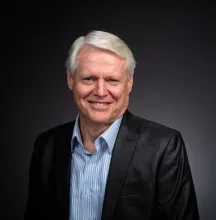
John Elliott serves in the role of President of the United Church of God, an International Association.
