

Robin S Webber
This transcript was generated by AI and may contain errors. It is provided to assist those who may not be able to listen to the message.
Good afternoon, everybody.
I know all of us appreciate the beautiful special music, and I think our young adults are really enjoying themselves, not only singing, but that kind of activity brings a church together. I know we have the same experience up in Redlands right now with our choir that really pulls people together and gets them involved in the church, and really appreciate that. Well, it's amazing that the Days of Unleavened Bread 2010 are almost over. And I hope that you, like Susie and I, have been able to experience God and Jesus Christ during this week with all the lessons that have come our way, the ups, the downs, the all-arounds, the journeys, the mountain peaks, sometimes the valleys. Because sometimes it's only when you've been in the valley that you can really appreciate the sunrise and the sunsets at the mountaintop. And I think God wants us all to experience that in the course of life. I can tell you a little story to begin this message that will allow us to all come to point. There was a man that was worrying all the time about everything. You know anybody like that? Just worried all the time. This gentleman was a chronic worrier. And then one day his friends looked over and they saw him whistling. And they said, can that be our friend? No, it can't be. Yes, it is. Well, they asked him, what happened? And he said, I'm paying a man to do my worrying for me. You mean you're not worrying anymore? No, said the ex-reward. Whenever I'm inclined to worry, I just let him do it. Well, how much do you pay him, they asked? Two thousand dollars a week. Wow! How can you afford that? He replied, I can't, but that's his worry. Oh, that life was that simple that we could push our worries off on someone else. Well, that's why we're here today, friends, to personally deal with our worries. Did you all realize that the Festival of Unleavened Bread is designed by God to be a divine time out, called by the Almighty, to help us deal with our worries? But wait a minute. You said, whoa, whoa, whoa, whoa, deal with our worries? I thought the Days of Unleavened Bread were about putting out sin. I thought it was about putting out Christ. Now you're worried about where this message is going, right? Some of you might be worried about when I'm going to end this afternoon. I might not. Now you're really worried.
Have you ever asked yourself what Mother Eve, Cain, Nimrod, Abraham, let's throw in Moses, and Judas Iscariot all had in common?
They were all worriers. Let's consider some of their actions for a moment. Mother Eve was worried that God was holding back some of the goods, some of the knowledge, some of the things that would make her a more complete being. Cain was worried, because he was worried about whether or not God was enjoying or appreciating Abel's sacrifice more than his. Later on, Cain would become worried about his punishment that he bore for his actions. He was worried that it might be greater than he might possibly be able to bear. What about Nimrod? Nimrod was a worrier. Nimrod was worried that God was going to go back, hadn't seen a rainbow for a while. He was worried that God was going to go back on his promise and that he was going to drown humanity again like a bunch of rafts. And so he built this tower, which was really a life preserver, on the plains of Shinar, that maybe he and his followers might survive God's wrath as he viewed it. Moses? He too was a worrier. We heard a little bit about the wilderness this morning and the story of Moses and the rock. And it was like the rock once and nothing happened. Well, what did he do? He got worried. It was kind of embarrassing. It's like having the coffee coming late this afternoon. Just teasing. You get worried. What are people going to think? They may fall asleep on the preacher's sermon. So what's new?
Moses got worried, and his worry led to an action, and he struck the rock again. What about Judas Iscariot? Well, there's a whole lot of thoughts out on him, but one thought was that he was kind of worried that Christ wasn't being handled correctly, wasn't really serious about what he was doing, that maybe he might help the action, might get ahead a little bit of Christ to get things going so that there might be an insurrection. He got so worried that he got his hands on God's divine business.
And look what happened. The reason why I bring up all of these classic cases of worry in Scripture is simply this. You can begin to see that worry, left to itself, begins to fester and does become the initial launch pad of sin. Worry, of and by itself, is not a sin, but it is a launch pad. It is that small piece of leavening that, going unchecked, can creep into something much more seriously.
3,500 years ago, there were a couple of million people with their backs up against a watery wall. We heard about that this morning, and by tradition, it was on this day that it occurred. You can bet, if you were a betting person, that they would have loved to give somebody else their job of worrying that day. They would have been more than willing to pay somebody.
They would have gone anywhere. They would have robbed the banks of Memphis or Thebes or Ramesses to help other people take the worry that was now upon them. Join me, if you would, in Exodus 14 for a moment. Let's open our Bibles for the first time this afternoon. Exodus 14. Let's just briefly look at what is spoken here in Exodus 14. Let's pick up the thought in verse 10. Exodus 14 and verse 10. And when Pharaoh drew near, the children of Israel lifted their eyes, and behold, the Egyptians marched after them, so they were very, very afraid. They might say they were worried. And the children of Israel cried out unto the Lord.
And this begins to be the story of their cries unto the Lord in the wilderness experience. Whether it was on that side of the Red Sea or on that side of the Red Sea, we begin to have that famous question that leaps out of the Scripture. Why? Why? And what happens so often when you look at the children of Israel and the story of their departure from Israel and their time in the wilderness, you basically have the whinies and the winnies.
Now, what is a whiny and what is a winny? People that are worried basically say, why, why, why? And if they're not saying why, why, why, they often sometimes say, when, when, when. So you have the whinies and you have the winnies. And we already had the whinies even before they got out of Egypt. And then they said to Moses, because there were no graves in Egypt, have you taken us away to die in the wilderness?
Why have you dealt with us so? To bring us up out of Egypt. Is this not the word that we told you in Egypt, saying, let us alone, that we may serve the Egyptians? For it would have been better for us to serve the Egyptians than that we should die in the wilderness. And Moses said to the people, don't be afraid. Stand still, see the salvation of the Lord, which He will accomplish for you today.
For the Egyptians whom you see today, you shall again no more forever. Now what happens so often when you run into a chronic worrier, they will often ask why and or they will ask when is the worry going to be over. But you notice one thing about an individual that is a chronic whiner. Asking why is they very rarely ask how. Because they're more comfortable in their insecurity, rather than looking for constructive measures to move out of the worry that they have found themselves in.
God supplies the how in verse 14. The Lord will fight for you and you shall hold your peace. And the Lord said to Moses, why do you cry to me? Now you're getting like them. Now you're getting worried.
Tell the children of Israel to go forward. Lift up your rod and stretch out your hand over the sea and divide it. And the children of Israel shall go on dry ground through the midst of the sea. Amazing story. Many of us are familiar with it. Well, God did perform that miracle. I'm not here to linger on the miracle. We are to proclaim the reality that Israel did go through the sea. And as the Apostle Paul says in 1 Corinthians 10 that on that day they were indeed all baptized unto Moses in the sea. But here's the point. Here we go. They were baptized in that sense. They got wet, but they were not converted. There is a difference between being baptized and being converted. When you're baptized, you get wet. When you get converted, you not only receive the Spirit, but you use the Spirit. And in there lies all the difference. Because nothing really changed on either side of the Red Sea with these folks. On one side, they were worried on the Egyptian side of the Red Sea. And they were just as worried, just as whiny, just as windy. On the other side, you might say that the children of Israel were equal opportunity providers. They were worried everywhere because they were chronic warriors. The bottom line is this. Mr. Miller brought this out some this morning, and I want to build upon his fine foundation. Their worries kept them in the wilderness experience for 40 years, rather than directing them to the Promised Land. Amazingly, Moses took all of their worries for 40 years. You sometimes find people like that in life. Not people that you pay off to take your worries, but because they love you. And they want to fill in the gap. Moses took all the worries and all the whys and all the wins and all the ifs, ands, and buts of Israel for 40 years. Sometimes, even when they foment rebellion against God himself, he would pray for them. He would stand in between them and the plagues which they so richly deserved because of their actions. He would plead with God not to give up on them. Moses was like the guy in the story that I began the message with. He did a lot of worrying for the chronic worriers. Finally, Moses was about to die. And the bottom line is that God told the children of Israel upon the near death of Moses, children of Israel, it's time to grow up. Moses wasn't going to be around too much longer to carry your burden, to do your praying, to do your pleading for you, to stand in between you and the results of your actions. Join me, if you would, in Deuteronomy, the fifth book of Torah, Deuteronomy. And let's pick up a thought here, because it is what we will build upon for the remainder of this message. In Deuteronomy 6, is that what I want? No, Deuteronomy 1. Pardon me, Deuteronomy 1. This is just before Moses dies. This is about just before they're going to cross river. And in that crossing of the river, God wants them to have a new experience and a new relationship with the God, the Delivering God, that delivered them from Egypt. Deuteronomy 1, verse 6. Let's pick it up in verse 5. Pardon me.
Let's pick it up in verse 2, a little bit higher.
This is what the day journey took them 40 years to accomplish. And what he was challenging me with at this point, and it's the same challenge I want to offer each and every one of us this afternoon, is simply this. Believe and take ownership of the promise rather than staying in the rut of your worries.
Now, I'm not going to ask for a show of hands today, but I would imagine being a fellow human being that some of you have some big-time worries out there. Worries that might be translated and be even given a stronger word, such as fear. And worry and fear, left of and by itself without the help of the Holy Spirit, can lead us into sin. We need to deal with worry.
We can't ask somebody else to worry for us. We can't buy somebody off to do that with money that we don't have. It's our own personal responsibility as Christians. Some of us that have been experiencing the Days of Unleavened Bread for 20 to 30 to 40 years, if I may be, oh, ever so blunt, are still on a mountaintop of worry, still on a volcano of fear. And your God tells you and me out of the Scriptures today, it's time to get off that mountain. And time not only to move towards the Promised Land, but to move forward with the promises of God in us, so that we can experience Him, so that we can enjoy Him, and so that He can grow and develop and experience us in the fullness of the children, those first-class individuals that Mr.
Sharp talked about this morning. We not only have been given a first-class opportunity, we have a first-class guide into the Kingdom of God. Not the first Moses that died and was buried in the sands of Sinai, but that greater Moses, that second Moses, the Moses today that lives at the right hand of God and waits for us to meet Him and to be with Him. Today's message is designed to help you toss out the leaven of worry. Maybe you've never coupled those words together. Worry is a leaven that we need to toss out for a few minutes, rather than being eaten up by our worries.
And worry can just worry you to death. It can just eat you up. It's like a cancer. We're going to chew on a few facts about worry and see where our proper concerns should be placed and in home.
There is a difference. You might want to jot this down, and you might want to start using this in your vocabulary. It'll begin to change your outlook in life. Many of us have things to rightfully be concerned about in our spiritual, our emotional, our physical, and our financial houses. Absolutely. I'm right there with you. You can have concerns. But there's a difference between concerns and worry. Worry does not look for answers.
Worry is the answer of and by itself. It's a dead end. To have concerns is rightful. As long as you and I experience this human tent that you and I find ourselves in, we're going to have concerns aplenty. But a person that has concerns is a person that's taking ownership and recognizing that they have given ownership of their life to God the Father and to Jesus Christ. As we begin to develop a proper stranglehold on this subject, as we do, we're going to be able to toss out the leaven of worry.
I'd like to give you some points. We'll make it very simple for you. Point number one. Here we go. Don't worry about details that are beyond your control. But God, you've given me so much to do. Come out of this world. Come out of Egypt. Live like Christ. Observe biblical truths that no one else is practicing in the neighborhood, much less the county. Put my hopes in a kingdom I can't see, rather than a kingdom that I feel all around me.
And besides this, I've got this boss. I've got this husband. I've got Damien, the poster child from... I'll let you fill in the blank. I think there was a blessing at the beginning of service. And it's raining today, on Monday, on the second high day.
Why didn't you put it off till tomorrow, God? Why didn't we have sunshine?
Yeah. Some of our collective life circumstances are challenging and worrisome if that's our sole focus. And we can join ancient Israel on either side of the Red Sea. You take your choice. They were doing the YYY on the Egyptian side.
They got baptized in the sea, got over here, but remember, they were only wet.
And they got over on the other side, and YYY, and win-win-win. We had the winnies and the winnies. But did you ever notice as you go through the book, nobody's asking how and what can I do to please you?
If you're still sitting on this mountain, let's look at an example that's a very good example. Join me if you would in Genesis 7.14.
It's profound, but it's not complicated. If ever there were an individual that had a boatload of possible worries, it was the patriarch Noah. He didn't have much of a job. Just a preacher of righteousness for 120 years. Only move from one end of a flood to another. And not only that, take the whole San Diego Zoo in the boat with him. You know, that could have gotten somebody... What's the word I want to use for a moment? Gotta make sure I use the right word. Constipate it. Befuddled!
I didn't think that other word. Could have gotten really confused and stuck in a rut.
Build a boat 600 feet long. Put the whole San Diego Zoo in there. Get Mrs. Noah, who's a little worried about me. She's worried too. She's a little worried about me and what I'm doing.
She has to put up with me for 120 years. Noah could have been a guy sitting on a mountain of worry, but he wasn't. Basically came to a very basic fundamental thing. Let's understand how the round-up of creation actually did occur. In verse 13, On the very same day Noah and Noah's sons, Shem, Ham, and Japheth, and Noah's wife, and the three wives of the sons with them, entered the ark. They and every beast after its kind, all cattle after their kind, every creeping thing that creeps on the earth after its kind, and every bird after its kind, and every bird of every sort. And they went into the ark to Noah, two by two, of all flesh in which is the breath of life. And so those that entered male and female of all flesh went in as God had commanded him.
Now what do we learn here? Now I was not a fly on the wall in the pre-noation world, but here's a thought I want to share with you to get to the point. Are you with me? It's simply this. There's nowhere in the Scriptures that shows us that God made Noah and the boys zoologists, insect lovers. You don't get any sense that Noah and the boys were roaming the world with nets and butterfly nets.
That was not their job. You don't find the instructions there other than the numbers. God gave Noah a job. He said, you're going to build a boat. And here are the details. Here are the materials. This is what I want you to do. Now you know how human nature runs. When you read Genesis 6 and part 7, you say, oh man, look at those blueprints. You would have thought that would have been enough to worry about. No, we would have started worrying about what? How are all the animals going to get there? But that wasn't the job that God gave Noah. What are we to learn by all of this? Let's have a few thoughts about this. When Noah stuck to the role and the job that God gave him, Noah did his job and God did his job. God delivered the animals to the boat. You've got to remember that we're the only part of the creation that's out of whack. Everybody else responds to the Creator other than humankind. He brought the animals there. Notice when Noah did his part as a boat builder and then left God to his job and gave to God what he was to do and not asked to do. God came in and did his part of it. Notice what happens here. Verse 16, So those entered male and female of all flesh went in as God had commanded him. And notice, And the LORD shut him in.
Noah had a job. You are to be a boat builder. Don't put your head over the hedge and worry about what I'm doing. I'll just take care of it fine. Noah did his job. God did his job. And then when in harmony, notice what happens. God sealed the deal. Blessed Noah. And that old trivia question about who shut them in, it says that God sealed the deal and put them in. Now what does that mean to you and to me? Think a few things. Likewise, God has told us that you and me to personally focus on our attitude, our relationships, and our responsibilities. He's given us a blueprint of being like Christ, of studying, of praying, of meditating, of fasting, of seeking counsel. Oh yeah, I'll throw in another part of the job. Of turning the other cheek. To let God take care of tomorrow and to take care of the wilderness that's inside of us. That's yours and my responsibility today. And let God take care of the other individual. But the reason why sometimes that we worry is we get off focus and we begin to get over in what God's job is with our boss, or with our mate, or with our neighbor, or with our pastor, or with that member in the church of, you're wondering why they're in the same service as you are today. And we begin to stick our heads over the roses and over the hedge and getting into God's business rather than our business. And we begin to worry about things that God has not given us to worry about. When we do our part, and God does His part, the example is here, He seals the deal. What am I asking of you today as a Christian communicator? What point do we get out of this? Do what God asks of you and allow Him to make up the differences in your life as He does His part, in His time, in His glory, to His glory for you and for the nemesis that maybe you're worrying about right now.
Give it to God. Know that you've got an assignment. Know that God is doing His part. Stick with the homework that He's given you. Stick with the heart work that He's given you. Don't worry about tomorrow. Deal with today, and God will seal the deal. And you will begin to move off your mountain of worry. Point number two. Worry can cause us to forfeit peace with what God is performing in us. When we worry, there is no peace. Just ask your pillow at 2 a.m. in the morning when you are worried and you're tossing back and forth to and fro. And you've been doing that so often that you've heated up your whole pillow and you can't find that nice cool part of the pillow to put across your cheek and try to get some comfort and get to rest.
Worry can cause us not to have peace with what God has promised and is performing in us. You know, Israel got stuck in the wilderness because they looked at God's promise as something yet out ahead, out of reach. The milk and the honey was far off. It was not necessarily in their grasp. I don't think that is something that God ever really intended totally for them to experience that way. Mr. Miller alluded to that a little bit this morning. The milk and the honey should not have been simply across the Jordan. The milk and the honey should have been inside of them because the great deliverer God had delivered them. The Israelites did not learn a basic lesson that all of us have to learn in life. That happiness is not a destination, but it's a way of traveling. Especially when the deliverer God has intervened in our life and offered us promises. They mortgaged their present because they didn't realize that God owns the future and wanted to bring it to them now. But they always thought it was over the next hill or over the next mountain or out of the wilderness. Until we recognize, friends, that the land of milk and honey is in us today by the revelation of God, and the promises are true and real and sure, then activate in us as much as the yeast that activates the kingdom of heaven, as mentioned in Matthew 13.33. We're going to stay on the mountain of worry. We're going to stay in the rut in the wilderness. We're going to be joining the winies and the winnies, and we are not going to be the first-class Christians that God wants to work with in His kingdom. Now, when I say that, why do I say that? Because I see so often over the years, in dealing with fellow Christians, that they're basically on a ration pack. They're not experiencing the fullness of the Scripture, the fullness of Christ living in us, the fullness of what the promises are. They treat the kingdom of God as if it's being rationed out or held off into some future time. Now, the fullness of the kingdom of God, Christ landing on this earth as the king of glory and setting up the millennial reign, yes, is indeed in the future, because I haven't seen it in Temecula today. But wherever Christ is, and the Spirit of Christ is in us, as the Scriptures say and through the Gospels, we have come to, in that part and in that plane and in that manner, come to experience the kingdom. We are citizens of the kingdom. That means now, not over the next hill, not over the next wadi in the desert, not past the next oasis just to get us by, not just the next high day, not just the next Sabbath, not just the next talk with the elder Smith or the elder Barr, but every day of our life we have come into contact with God Almighty. We have experienced His Savior. We are no longer having to be in the rut of sin. That's what all of these days teach us. And yet why do we forsake the promises of God and put them down? Israel was not alone. You and I are not alone. There were others. Abraham and Sarah, let's talk about them for a moment. Abraham and Sarah did not have the peace that God really wanted them to have. Let's think about that for a moment. In Genesis 12, join me there for a second. Genesis 12.
Now, I'm getting worried. I just saw the watch. Genesis 12, where God says, I'm going to make of you a great nation. I'm going to give you seed. Your seed is going to multiply. You're going to have an impact on this earth. God gave Abraham a promise. And I'm sure Sarah was an earshot of it. But even after he gave that promise, he got worried. Sarah, his wife, got worried. Got so worried that she said, look at her.
Hagar, my concubine. And you know where that worry went. Later on, Genesis 17, as we begin to move forward, promise comes again. A whole explanation of the promise of God wanting to work with Abraham and to produce marvelous and fantastic sedum and be a great nation.
Then we come to Genesis 18.9, and that's where I want to center. Genesis 18 and verse 9, where the two angels and the one that most likely was himself, a theophany or a God appearing, as it were, came to Moses and the plains of Mamre. And they said to him, where is Sarah, your wife? So he said, here in the tent. And he said, I will certainly return to you according to the time of life.
And behold, Sarah, your wife shall have a son. And Sarah was listening the tent which was behind him. And now Sarah and Abraham were really old and they advanced in age and Sarah had passed the age of childbearing. And therefore Sarah laughed, went after herself, saying, after I have grown old, shall I have pleasure, my Lord being old also? And the Lord said to Abraham, why did Sarah laugh, saying, shall I surely bear a child since I am old? And then the question comes up in verse 14, is anything too hard for the Lord? At the appointed time, I will return to you according to the time of life and Sarah shall have a son.
Verse 15, Sarah denied it, saying, I did not laugh, for she was afraid. And he said, no, but you did laugh. And then the three men rose. Now, it's very interesting that eventually Sarah did have that child. And it was one year later and there was a return. But here's the point I want to bring to you. He said, OK, tell me something new, Mr.
Weber. I know that Sarah had the kid and the name is Isaac and Isaac means laughter. But notice what it took. It took two major promises in Genesis 12 and Genesis 17. And she and Abraham still did not get it. It was that there were actually two angels that came and visited her, plus the theophany of the one that perhaps in a sense did actually become Jesus Christ later on.
And how much do you finally get to an individual to tell them that God Almighty has chosen you and is dealing with you and has given you a promise? You see, I know that Sarah. Can you believe that person? Well, I wish I'd been there. I would have been the first one to pick up on this. Oh, good. We're going to have a kid. It's kind of like that old story where the person wants the intervention of God and, you know, they're up on the rooftop with the stream going by and they're on the rooftop, the flood's going up.
And the person's calling out to God and saying, you know, God, deliver me. Well, you know, the canoe comes by. They don't hop into the canoe. And then, you know, the motorboat comes by. They don't hop in on the motorboat. And then finally the helicopter comes circling over, drops the ladder. And what's the person? No, thanks. I'm waiting for God. I pray to God.
What part of it, friends, leaving Sarah behind and helping us to come off the mountain of doubt and pass the love and worry behind as we leave the days of the love and bread, don't we get regarding the promises of God that have been rendered to us today in 2010? To recognize that God owns the future as much today as he did in Abraham and Sarah's day and the promises that he has given us.
I'd like you not to have to turn there, but let me just share a thought with you for a moment. I just want to kind of do a real quick whirlwind tour of Ephesians 1. God tells us all sorts of things about us that he wants us to experience from him that perhaps we don't think is happening today or is not possible, as much as Sarah at her age not having a baby.
When you go through Ephesians 1, and you might link this up with what Mr. Sharp was talking about this morning. I'm going to jot this down real quickly. Ephesians 1 and verse 4 says, we are chosen. Ephesians 1 and verse 4 again says, we are placed that we are secured in a holy state, no longer with a chain and ball linking us to our past. Chapter 1 and verse 5, Ephesians tells us that we are predetermined to be adopted as sons, that you and I are already on the birth registry of God Almighty in the books in heaven.
The announcement has been sent out. Like Isaac, we are children of promise. Verse 7 tells us that we are redeemed. We have redemption. We have forgiveness. No, you don't have to pay somebody else to do your worrying for you. Nobody could pay what Jesus Christ did for us. We were ransomed. We were redeemed.
When somebody is redeemed in the Greek, that means basically it was a slave that had no manner, no means, no how, no way to free themselves. That's the powerful sense of redeemed. We're redeemed. Verses 9 through 10, Ephesians 1 tells us that we've been given a revelation that humanity is headed towards a divine destiny and not just towards disaster. That is the powerful purpose of today, friends, during the Days of Unleavened Bread, that one of the greatest, if not the greatest event, of all times occurred during the Days of Unleavened Bread.
And that, simply put, is the resurrection of Jesus Christ from the tomb, from the dark spot, from the place that each and every human being goes, save him through the Father raising him up. And the power of the Days of Unleavened Bread, the power of the resurrection, reminds you and me that humanity, you, me, and everybody else are no longer headed for disaster, but there is a divine purpose that is occurring, that there is no stone too heavy that cannot be moved when God has his heart and his purpose and his plan and the eyes of his heart on you and me.
Verse 11, Ephesians 1 tells us, he's given us an inheritance according to his purpose and will. Now, may I ask you a question, or am I talking to the right group? How, then, do we wrap our worries around that? That should wrap itself around our worries. Not that we don't have challenges. Let's not be Pollyanna, Cher, okay? Are you with me?
But those challenges are no longer worries. They are concerns that, with God's help, that we will be able to deal with. With all of this said, can we learn to be more like Christ, less like Sarah, less like the Israelites, and learn to focus on God's promises rather than our human premises? It's very interesting that Jesus Christ, the very last thing that he said as a human being, is he said in Luke 23, verse 46, I commit my spirit into your hands. Question. Why could he do that? Because it was easy? No! Young guy, nailed to a piece of wood. Not easy, not good. About to die. He says, I commit my spirit into your hands. It's because he claimed the promise that God had said, oh so many years before, through the mouth of David, that you will not suffer your Holy One to rot in the grave. See, when we get worried, and it's natural to get worried, when you and I get worried, when you and I are sitting cozy on the mountain top of worry, that's when we need to grab the promises of God. And I'll share something with you. I'll share something with you. When you're stuck with the crazy glue of worry on the mountain top of worry sometime this year, I'm going to challenge you. Whether it's about your marriage, whether it's about your finances, whether it's about your job, whether it's about getting along with your pastor or your elders or a member. I challenge you. You open up the book of Ephesians 1, and you go down the promises of God. They're even much further and much longer than the promises that God gave Sarah back in the wilderness on the plains of Mamre. And you ask your heart to be changed by that prayer, that prayer and that epistle, and your life's going to start happening. Let's go to point number three, forsake of time, so you don't worry. Don't worry if you can't understand everything. Don't worry if you can't understand everything. Because God does.
You know, I was going to go through forsake of time, but I'll just paraphrase it. There's that old tongue twister that we used to use in Spokesman's Club or Graduate Club, and maybe some of you gentlemen will be familiar with it. Some of you ladies that have been in the Graduate Club will remember that Moses supposes and his toases.
Exodus 3 and Exodus 4 are all full of the Moses supposes. I mean, that guy was so worried. He was trying to he was trying to squirm out of that deal that God was making with him. You know, he was up on Mount Sinai, but it was the mountain of God. But for Moses, it was the mountain of worry. God had called him to be a deliverer.
And, you know, Moses goes through. He says, Yeah, but who am I to do this?
And then later on in the conversation, who are you anyway?
Because when I go back, they're going to ask who sent me. What's your business card?
Just three letters. I am.
But then he kept on going down the list. Wonder if they don't believe me.
This is not usually how most job interviews go.
And then finally, wonder if they don't like the way that I speak.
Because, you know, they've often said that there are two things that are in common. You know, public speaking and public execution. Wonder if they don't like the way I speak. I'm slow of tongue and maybe a little bit of wit. God says, I'll give you Aaron. Well, finally, he got it. But all the joy that God wanted him to experience is being frittered away. Join me in Psalm 37.8. Psalm 37 and verse 8.
Rest in the Lord, and wait patiently for him. Do not fret because of him who prospers in his way. Because of the man who brings wicked schemes to pass. Seize from anger. Forsake wrath. Don't fret. I know when I call Jackie Smith sometimes on her cell phone. She's got this song. Well, God was composed of song long before the song that you and I have heard. It's called Be Happy. Don't worry.
Don't fret. It only causes harm. What's that expression? They look worried to life.
No. Worried to death.
Yeah, but I want to fret. If I don't fret, who's going to do my fretting for me? Who else could have this face? I'm worried.
Oh, God says, Evil doers shall be cut off. But those who wait on the Lord, those who toss out the leaven of worry, they're going to inherit the earth. For yet a little while, and the wicked shall be no more. And indeed, you will look carefully for his place, but it shall be no more, no more. But the meek shall inherit the earth, and shall delight themselves in the abundance of peace. Why are they going to be able to delight themselves in the abundance of peace when that happens? Because they have come to recognize, friends, that it is not the wilderness, and it is not the enemies around them that needs to be dealt with. See, that was the whole problem with the children of Israel back those 40 years. The Winis and the Winis, they were always blaming their enemies, and or they were blaming the wilderness. They never took a hold of themselves and recognized that basically inside them was a desert of unbelief. The oasis of God's promises had dried up in them because they were talking to themselves more than talking to Moses. And we've got to recognize more than Moses did on the mountain of his doubt that no matter who we are, no matter what faces us, that God will make a way. It's a promise. I share this experience with you. I've shared it before, but I was a little bit like Moses at age 19. And I like sharing my own story because I think as Christians we need to share one another's stories. I had grown up in the church from the time I was 12, and I had looked forward to becoming baptized, as most young people do growing up in the church. And I'm not saying I was a Peter Perfect individual at all. I was all boy, all person, and all Robin. That can be a boatload. But I came to that point of wanting to be baptized.
But a scripture stuck in my mind that said that, if you deny me, I will deny you.
That really bothered me. You have to understand, I grew up in the church in the 1960s, and some of you will understand the cultural venue of our expectations at that time. I might face that challenge, in my mind at least, sooner than later, because of what we felt was a great persecution that was going to come upon the body of Christ at that time. Well, that really, really bothered me, because I didn't know if I had it in me to do. And I'd seen all these movies growing up, like Quovatus, Demetrius and the Gladiator, The Robe. All these movies where the Christians are always being fed to the lions, and you always see them going down the hallway. You don't always see them getting eaten by the lions. It kind of goes dark, and then there's clouds, and then there's the heaven music. All of that kind of stuff happened back in the 1950s and 60s. But I'd see the old man, and he'd take the boy and put him underneath his robe, and they'd go, and I'd say, Oh, I want to be like that! I just want to be like that! I just long to have that courage, and I just want to be like that!
But then I knew what I was like, too. And it really bothered me that would I be able to, at that moment of maybe as a Christian being persecuted, would I recant? Would I somehow, like Peter, turn my back on God when he needed me the most? And I thought about that for months. It really bothered me. You know what it did? It worried me. And then I recognized something that's really important. You know, I was up there on the mountaintop with Moses doing the supposes. And I recognized I'm leaving somebody out of the story, and I'm leaving a very cardinal point of God's promises that I'd like to share with you and some of you today that maybe need to have this promise reminded. Matthew 10. Matthew 10 is basically the verse that allowed me to go across my Red Sea and go across river and begin to hold on to the promises of God rather than my own human premises. Matthew 10.
Verse 19. You know, when you go back to the Old Testament, God said, Moses, I'll give you an errand, but God gives us something so much more, friends. But when they deliver you up, do not worry about how or what you should speak. And that's all I was worried about at that time with my kind of romantic, expansive, historical book reading mind. When you're kind of growing up reading Fox's Book of Martyrs for nighttime reading.
Wowzers! You're going to have, humanly, some worries.
Don't worry!
But we do! Just like Noah. God, I just know. How are you going to collect those animals? God says, go back to boat building. You'll do better. Don't worry about how or what you should speak for. It will be given to you in that hour what you should speak for. It is not you who speak, but the Spirit of your Father who speaks in you. When I saw this verse, and this is the verse that led me to baptism, other verses led you to baptism. I came to recognize that my baptism was not a solo experience. God gave me a promise. I would not be alone. I didn't have to stay stuck in my own wilderness. He promised me. It may be a word, it may be a sentence. He didn't say how much. Now, you say, well, this is kind of grandiose, Weber, because this is like being drawn before the magistrates. Let's bring it down to a principle. Wherever you are in your life, in your neighborhood, on your job, in your school, in your family, in your church, in your congregation. I still say the principle sticks that God will not leave us alone. He can't leave us alone. We're the apple of His eye. He gave His Son for us. And He promises us that even when we don't have the words, maybe we don't even have the courage, maybe we don't even have the right thing to say or to do, and or whatever, God says, you are not alone.
That's wonderful. That's fantastic.
Let's go to Colossians 3. I'm going to conclude. Skip over a couple pages. I'll give that in another sermon, another time.
I don't know about you, but I just got so excited thinking I'm not alone. And you're not all alone. I think I just said it. Sometimes you just need to sit down. Be like Mr. Miller. But I'll read one verse. And Skip, you inspired me today. I'm going to follow your example. I'm just going to read the verse. You hold me to it, everybody.
It's hard to keep Mr. Weber talking about God.
But you know what? I'm tossing out the leaven of words. Because we're going to hold on to the promises this year as Redlands and San Diego move forward. As vital, vibrant, first-class Christians. Because we have a first-class God. We have a first-class Savior. We have a first-class Spirit. We have a first-class promise. Incredible. Colossians 3, verse 14. This is that famous chapter of, put on, put on, put off, put on.
But let's finish it in verse 14. But above all these things, put on love. Which is the bond of perfection.
Let's put on God's love.
You'll worry less. And let the peace of God.
Not worry. Not worry. Let the peace of God rule in your hearts. To which also you were called in one body.
And while we're allowing the peace of God to rule in our heart, rather than the worry that comes so natural, be thankful. Take a big cup of Ephesians 1. And let the word of Christ dwell in you richly, in all wisdom, teaching and admonishing one another, in psalms and hymns and spiritual songs, and singing with grace in your hearts to the Lord. And whatever you do, in word or deed, do all in the name of the Lord Jesus, giving thanks to God the Father through Him.
And if we do, we will be able to toss out the leaven of worry.
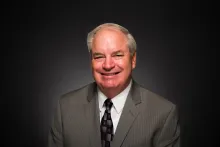
Robin Webber was born in Chicago, Illinois, in 1951, but has lived most of his life in California. He has been a part of the Church of God community since 1963. He attended Ambassador College in Pasadena from 1969-1973. He majored in theology and history.
Mr. Webber's interest remains in the study of history, socio-economics and literature. Over the years, he has offered his services to museums as a docent to share his enthusiasm and passions regarding these areas of expertise.
When time permits, he loves to go mountain biking on nearby ranch land and meet his wife as she hikes toward him.
