

Robin S Webber
This transcript was generated by AI and may contain errors. It is provided to assist those who may not be able to listen to the message.
Well, I hope you had a wonderful fellowship. During the noon and hour, we certainly did.
It's a part of the feast days, is to get together and to remember what draws us together.
I want to once again say hello to those that might be joining us on the webcast and want to bring you into this. I really appreciate it what Dr. Hoover mentioned about this song, the Hebrew Slave Course, about being about liberty, because that's certainly what this festival is all about, is because of what God the Father did through Jesus Christ, that we truly can be liberated.
And those chains that held us at bay at one time can be unshackled, are unshackled, and hopefully they can remain unshackled as we move ourselves away from the days of Unleavened Bread. I can share a story with you to begin this message, and then we'll build upon that.
I'd like to share a story about a man who was worrying all the time about everything.
He was indeed a chronic warrior. Then one day his friends saw the same guy he was whistling, and they said, well that can't be our friend. No, it can't be. And then they said, well yes it is.
And they asked him, they said, well what happened? He said, well I'm paying a man to do my worrying for me now. I mean you aren't worrying anymore. No, no, said the ex-worry ward. Whenever I'm inclined to worry, I just let him do it. Well, how much are you paying him to do this for you? He said $2,000 a week, and they said, wow! How can you afford that? He replied, I can't, but that's his worry.
Isn't it good to laugh during the feast days? Well, keep on laughing because I'm about to bring you a message. Oh, that life was all that simple, and we could push our worries off onto somebody else. Well, that's why we're here today. That's why God gives us these days of Unleavened Bread to learn how to handle our worries and to personally deal with them with the help of our Father above and Jesus Christ. Did you realize that these days of Unleavened Bread are, in a sense, a divine timeout called by God to help us deal with our worries?
But wait a minute, Mr. Weber. Excuse me. Worry? Where does that fit into the lexicon of sin?
Well, let's just talk about this for a moment because so often we say, well, during the days of Unleavened Bread we're supposed to get into the heavy tussle with the big sins of life, those things that we haven't left behind, and then we put on Christ. So, with all that said, I can probably imagine that some of you are already worried about where this message is going. And, or I know a number of you are worried about how long this message is going to go. Well, stop worrying.
Let's consider for a moment, have you ever asked yourself what Mother Eve and Cain and Nimrod and Abraham and Moses and Judas Iscariot all had in common? Allow me to get right to the point. They were all warriors. Just consider some of their actions, which I will not have the time to be able to go into one by one, but again, allow me to give you the cast of characters of warriors.
Eve, you go home and fit in the pieces. Cain, Nimrod, Abraham, Moses, Judas Iscariot, they were all classic warriors. The reason I mention these names, and you can fill in the rest of the blanks because you, by and large, are seasoned Christians, we come to understand simply this, that worry, left to fester, can be the initial launch pin of sin. Allow me to repeat that. Worry, left to fester, left alone, can slowly grow and grow to where it is a launch pad for sin.
During these days of 11 breads, Susie and I have had different talks. We have lots of talks all the time about the Bible and spiritual things, but I know some of the messages that you've either heard in Garden Grove or here or the ones that we've heard in San Diego and Redlands as we've traveled is simply this, and I will put it this way. You might want to jot this down. We'll build upon it. We're going to keep on building here a little bit. Pride, pride and worry are the handles by which most sins are embraced. You think of being in the kitchen and you have a potholder, and you you go to put that potholder on something that is very, very hot so that you can hold on to it.
Pride and worry are basically the potholders that fit any sin. Let's create a working definition so that we can all be on the same page so that you'll know where I'm going. Let's create a definition for worry. Worry, think about this for a moment, is a thin stream of fear trickling through the mind. And if encouraged and if indulged in, cuts a channel into which all of your other thoughts are drained.
It's a little trickle in your mind. And you know at first it doesn't do anything, but you know the power of water and the rhythm of water and the constancy of water, that as it goes it cuts away, it cuts away, it creates a channel. And everything in your life, all your thoughts, all your emotions, all your waking moments go into that which was initially a trickle, but you didn't deal with it. And it cuts into your mind, it cuts into your heart, and it just begins as a trickle. But is that not what these days of 11 bread are about?
And is that not what the Apostle Paul said in the book of Corinthians, that a little leaven, a little leaven, a little worry, leavens the whole lump. Let's understand that worry. I'm going to keep on going back to that word, worries. Don't worry about it because I'm going to keep on talking about worry until I step down today because it's so important because God doesn't want you to worry. And that's why I'm talking about worry.
Okay? It's a, worrying is a self-destructive yeast, and what it does is it spreads ultimately the fire of doubt, just like a Santa and a wind, just like that little trickle that slowly gets bigger and bigger and bigger. You know, we're Southern Californians.
We understand the power of fire, and we understand the power of wind, and we know what can happen. I know I go back to about 2004, 2005, when Southern California was encircled by about 18 to 20 fires at that given time from up in the Los Paredes National Forest all the way down to the Mexican border. I remember one fire in particular. It was down in San Diego, and it actually started up by the Quia Maccas, and I may, you may not know where the Quia Maccas are.
That's the big mountain range in San Diego. And a lot of people at first, you know, they were actually down by Escondido and Rancho Bernardo and down that way, and they went to bed thinking, well, that fire is way up in the hills. But because of the push and the dynamism of that when it literally was upon them by that next morning with actually a fire coming down the trying to think the name that was the San Pasquale River, that fire was coming down there at about 150 feet high, just right down the riverbed, knocking out everything that was in front of it, and actually went over to Rancho Santa Fe.
Now, that's a lot of names, and you might not know where all of those are in San Diego County. I know the Seagli family. They came very close to having a challenge down there, as did many, many others of our San Diego brethren. Of course, we have that up in L.A. County, Ventura, etc., etc. Well, that is what worry does. It's like lighting a match and thinking you can let it go and not deal with it, and then the fanning wind of doubt comes in, and pretty soon you've got problems here.
Allow me to put it this way. One more definition of why we want to deal with worry is simply this. Fear, fear, which the Bible speaks a lot about, and I believe Mr. Garnett addressed the other day, fear is worry on steroids. Fear is worry on steroids. So the question is, do you want to deal with fear, or do you want to deal with worry? No, so often in our lives we're confronted with challenges that come our way, and we've got to ask when and where and how do we want to deal with it.
Do we want to deal with it at just simply the action level, or the need level, or the hurt level, or does it become at the anger level, or does it become at the bitter level? Where would you choose to intervene and deal with that in your life?
But so often, because we do not deal with a need, that need becomes a hurt. That hurt becomes, after that, it becomes anger. Then it becomes bitterness. That's why we're talking about worry today, to deal with it before it takes up the steroids and becomes all and out of fear.
Let me share a thought with you, and I'll share a story with you. Some of you have heard it before, and if you've heard it, fine, and if you haven't, fine. I'm going to give you a word here. I'm going to give you a phrase in a moment, but it had a lefting impact in my life, and I always appreciate what I learned from the brethren. Many years ago, I went over, and I was called to anoint Garth Wardrob. Garth Wardrob was a longtime member of our Auditorium PM congregation. Some of you will remember him, but Garth had been blind since he was three years of age, but he asked me to come over and anoint him. And as I went in, he was in one of those famous bachelor pads that we had over here in the apartment district. Some of you will remember that over in the Pasadena area. He was probably living with five or six other guys, but he had his own room. And I knocked on the door, and I'd never been to that particular establishment, but I said, well, where is Garth's room? And they said, it's right around the corner. So I went around the corner, and over his door, up by the ceiling, was a sign. And I want to share that with you, and Garth speaks to you down through the decades. It impacted me, and it is simply this. Worry is a responsibility that God has not given me.
You might want to jot it down. Works for me may not work for you, but I'm sharing it with you anyway. Worry is a responsibility that God has not given me. He said, ah, that's one more bumper sticker. No, it's a bumper sticker that has meaning, because worry is not heaven-sent. God does not rain down worry upon us. It is earthbound. It is earth-grown. It is not of the Spirit of God. Worry is opposite God. Being a worrier is as if you're a Christian without your God, which is the loneliest species in the world. And so let's look at this. And the reason this had such impact, I mean, I'm looking up there, I'm reading this thing, I think, wow, if there's anybody that has to worry, it would have to be Garth. And some of you will remember how you used to see Garth down on Colorado Boulevard, or Green Street, or going up and down St. John, and he had the red and white cane tapping, tapping, tapping like this. And every day that he stepped out of his apartment, anything, anything could have happened to him. Later on, Garth would die of bone cancer in his back. And I remember visiting him in the hospital. And I remember saying, Garth, I remember what I learned from you.
Worry is responsibility that God has not given me. With that thought, I want to share you the title of my message today and move right into it. And that is simply this, passing out the leaven of worry.
Passing out the leaven of worry. You might say, well, at this point, I dealt with the crumbs, and I dealt with the bread, and I dealt with the yeast in my kitchen cupboards. But here I am on the seventh day, and I'm still kind of thinking, what might I work on? How can I restock those unleavened shelves as a spiritual unleavened shelf as I move away from the days of unleavened bread? Well, here's one to toss out right now and to keep out of your life. And that's why I call this Tossing Out the Leaven of Worry. Let's begin with this talk by thinking 3,500 years ago.
There were a couple of million people with their with their backs up against a watery wall. And they would have loved to pay someone else at that moment to be doing their worrying for them. And they would have paid whatever it took and find the money wherever they could to have somebody else do the worrying for them. But they were worrying on this same time, the same day, during the days of unleavened bread, which makes it so poignant to our discussion. Join me if you would over in Exodus 14. In Exodus 14, we find the story of the Israelites with their back up against the Red Sea. With their back up against the Red Sea. And we begin to center on verse 10. And it says, And when Pharaoh drew near, the children of Israel lifted their eyes, and behold, the Egyptians marched after them. So they were very afraid, and the children of Israel cried out to the Lord. And then they said to Moses, Because there were no graves in Egypt, have you taken us away to die in the wilderness? Why have you so dealt with us to bring us up out of Egypt? Is this not the word that we told you in Egypt, saying, Let us alone that we may serve the Egyptians? For it would have been better for us to serve the Egyptians than that we should die in the wilderness.
Now we look at this story for a moment, and we find people that were worried, and indeed they were. And humanly, humanly, they had every cause to pause and to be worried, humanly speaking.
There's two thoughts that I have out of this, and I'd like to share this with you.
There's kind of two different kind of worriers, and I call them the the winies, and I call them the winnies. You say, Mr. Weber, would you please explain that? Thank you for asking that question. And that is simply this. There are the winies. The winies are asking, Why, God? Why? Why, God? Why? They just go, Why and Why and Why? And it's like an old thirty-three, it's like an old thirty-three on a radio disc just going around and around in a rut. Why, why, and then there are the winnies. W-H-E-N. Win, win, win, win. You promised, you promised, you said, you said, win, win, win. Now, I know I'm not talking about any of us, are we?
We have all at one time or another been winies, W-H-Y, winies, and or winnies. And even Moses was chided. And Moses said to the people, Do not be afraid, stand still, and see the salvation of the Lord, which He will accomplish for you today, for the Egyptians, whom you see today, you shall see again no more forever, and the Lord will fight for you, and you shall hold your peace. And the Lord said to Moses, Why do you, Moses, cry to me, tell the children of Israel to go forward?
So he lifted his rod, and the rest is history. God said that He would be their champion.
You know, you know, and I know, that Israel went through the sea. We read the verses in Corinthians where it says that they were all baptized unto Moses in the sea. But you know what? There's a difference between being baptized, and that was a figurative sense with ancient Israel. But today, there's a difference between being baptized and being converted. In baptism, you get wet. You're immersed.
Conversion, you receive God's Spirit, and the converted heart, the converted mind, who has put their trust and their confidence in God Almighty through Jesus Christ, are going to do. Even as they stumble, they are going to do, and they are going to move forward just as much as ancient Israel did. Yes, the ancient Israelites, they just got wet, because they were winies, and they were winnies on the Egyptian side of the Red Sea.
And then, when they got on the other side of the Red Sea, as they marched towards the promise line, they were winies and winnies then. They had this spiritual disease. It's called benditis. You know what benditis is? Okay, that means you have to listen. Benditis is ancient Israel, they are in the wilderness, and God was only good on their side until they got around the next bend.
Every time they went around the bend, they forgot what God had done for them.
All of us at one time or another, confession is good for the soul. We have all suffered from benditis. We have forgotten what God did for us. We have forgotten what God did for us, and we put them on a dime. We want him to perform in the here, in the now, right now, and we become a whiny or we become a winning. Why God? Or win? And we'll talk about that a little bit later as we go along. The only thing about the Israelites is that they were equal opportunity providers. They complained on both sides to everybody. They didn't show favorites.
So what do we do, brethren, as the Israel of God, as the body of Christ, as the elect, as we keep these days as New Covenant Christians and learn the lessons from them? I want to give you three points. Sometimes people say, well, give us something to do. Well, thank you. That's what we're going to do right now. I want to give you some things to do. Number one, number one, don't worry about details. Don't worry about details beyond your control.
You say what? That means I have to let go. That means it's not going to be by my works, but faith in your grace, the sustaining grace that we heard about today. So often we can say, a little bit like a whiny or a whiny, we can say, but God, you've given me so much to do.
You've asked me to come out of this world. You've asked me to live like your beloved son.
You've asked me to observe biblical truths that nobody in my neighborhood is doing. You've asked me to put my hopes in a kingdom that at this moment I can't touch, I can't feel. And yet, there's the kingdom of this world all around me, and there's the kingdom of my own self pulling at me. And besides this, my wife, my husband, and Damien, the teenage child from... I'll let you fill in the rest. This is a G-rated audience. And there's my boss, and there's the neighbor, and there's the person down the row in the church. I don't know how we got on the same row on the second day of 11 bread, but here we all are. You've given me a lot to do, God.
And yes, life's issues and life's circumstances are challenging and worrisome if, if, that is our sole focus. And that is why God gives us these Holy Days, brethren, to bring our focus into alignment with what He is performing in us, rather than us focusing on our underperformance, and to bring that into alignment. So often we worry about details beyond our control. Reminds me of the story of Noah. Let's go to Genesis 716. In Genesis 716, very interesting story.
In Genesis 716, the story of Noah. God comes down to Noah. Out there in the desert there in the Middle East, it says, Noah, I'm going to destroy the earth. And you know what? Noah, at your young age of 600 years of age, whatever it was, hundreds of years of age, just when you think you're about to cash it in, you're going to do something new. You're going to build a boat. So we have this example of Noah. Notice Genesis 7 and verse 16, where it says, so those that entered the ark, male and female of all flesh, went in as God had commanded him. And it says that the Lord shut him in. Now, here's the bottom line. How did he round up all of that creation? Remember, he had to bring them onto the ark two by two. And he said, well, thank you very much. You would think that Noah would become a mess warrior. My question is simply to use this. For the 120 years during that time where he was a preacher of righteousness and building a boat, what were his boys doing? Were they running around the world with butterfly nets? Were they capturing things? Were they setting traps to capture something, to bring into the ark?
No, no. God brought the animals to the ark. There is no problem with it. See, the problem is with mankind. Creation is normal. Have you ever noticed that creation is normally in sync with God?
That it's only humanity you and me that are out of sync with the purposes of God? God has no problem with the beavers and tigers and all of that. You know, people often think of the ark.
That would be his responsibility. Noah's responsibility was to build a boat. Now, if you go to Genesis 6, you recognize he had a lot on his shoulders because God is also a god of detail. He laid out how he wanted that ark built. Tremendous detail. Noah obeyed because our obedience is in the details to what God asked us to do. But we find this story and wonder if Noah had put his focus elsewhere. What about those animals? You know, I just went to Wikipedia and I read this I'm not saying there's Wikipedia. It's just, you know, all examples of all. You know, we're missing this and we're missing this and boys get out those butterfly nets. We're going to have to capture this and this and this. No, that was God's job to bring the animals to the ark. Noah's job was to build the ark. And then you notice what happens at the end here. It says, and when the animals came in, notice what it says, and the Lord shut him in. It's very interesting. Out of the living Bible translation, it says, and then the Lord closed the door behind him. God expects us to do what we can do to follow his instructions and to give the rest to him. He wants us to personally focus on our attitude, on our relationships, on our responsibilities. He has given us the blueprint of how to live like Jesus Christ, to study, to pray, to fast, to meditate, to seek counsel, to turn, yes, the other cheek, and then to allow God to take care of tomorrow and also to take care of that wilderness that is inside of us and leave the rest to God. But, brethren, here's what I want to share with you when it comes to worry. So often we trespass into territories that God has saved for himself and worry about the details of his business while forsaking what he has specifically given us to do. Susan and I love to go out in the country. She loves to take pictures.
And I'll come up to a fence. I'd like to understand Isabelle, the way you're rolling up. Some of you have been down there after Julian's. It's a really nice ranch country. We're up around San Luis Obispo, with a woman here who is more careful. We'll come up to a ranch fence and you know what?
There's a really big chart about 500 feet beyond this fence.
No trespassing.
I'm going, hmm, where there's a will, there might be a way. But Susan, who is my help me, says, no, the sign says no trespassing. And if you know Susan who says no trespassing, she will not even breathe across the fence in the area that you're not supposed to trespass.
And yet, how often do we trespass on God's prerogatives in God's territory, and respecting that he said, go no further? This is mine. You do your part. You do your part.
Doesn't mean that we don't have legitimate concerns in life and we don't have trials.
We can have concerns, but we give them to God. We don't worry. We don't sit on it. We don't stew on it. We don't allow it to become worry on steroids. It becomes fear. It's all right to have concerns. You say, how do you know that, Mr. Weber? Because I can go to 1 Samuel 17 and verse 40, where David went out to meet Goliath. We know that story. In 1 Samuel 17 and 40, though, he picked up five stones. He picked up five rocks. He was going to do what he could do, whatever that missed to do, to bring him down to Goliath. He wasn't going to be one-shot built. Oh, I missed.
No, he's going to do what he's going to do. But he gave the battle to the Lord. He said, the battle is the Lord's. And by the way, Goliath, you're coming down and the birds are going to eat your carcass this day, just so you know what's about to happen. But he picked up five stones.
God asked us to do our part, and then he'll do his part. And that's what we need to learn about this.
Let's go to another point. Point two. Worry can cause us to forfeit peace with what God desires to perform in us. Worry can cause us to forfeit peace with what God desires to perform in us.
The other evening, when we were at the Passover service in Redlands, at the very end, I stated, may the peace of God be with each and every one of you as you go away from this room.
You cannot have the peace of God and be a continual worry-ward. Humanly, it can be very easy to be a worry-ward. Have you ever noticed that some people are just secure in their insecurity? Secure in their insecurity? They just worry.
And they're worried if they're not worrying.
They bring out their worries like a pet on a leash. They take them with them.
They walk them all around their home. They walk them through the aisles of church.
And they don't know how much people would love to know them beyond their worries, that there must be something about that individual. There must be something special about that individual beyond their worries. I just wish I could get to know them beyond their worries. I just wish that they would understand that they, especially as Christians, have been unshackled.
Wonderful message. Both messages were wonderful this morning.
Ted spoke about the aspect of guilt. That's a worry. That's something that we have not let go or we have not believed. See, when you worry, that diminishes your belief.
If we worry about where we have been once we have forgiven, and we're still carrying that, brethren.
If we're still carrying that, we don't mean to, but we do. We diminish the love and the grace of God and the sacrifice of Jesus Christ.
That just as much as those Italians wanted to be liberated from the Austrians in the north, that Jesus Christ, that great victor, who did not come down from the Alps but from the mountain of God above, liberated us, freed us. And it says that that love and that sacrifice cleanses our conscience. That is the great anthem that comes out of the book of Hebrews. That God not only deals with the wound, but He deals with the scar. And He justed scars. That never felt the wound.
And that's why God gave us Jesus Christ, so that you and I could be lifted from the burden of worry. We don't want to do that. I want to share a thought with you here for a moment. Join me, if you would, to Ephesians 1. I believe it was Mr. Budge that read out of Corinthians this morning. I'll read out of Ephesians. Remember what I said? When we put our focus on what God wants us to focus, that soul focus, things begin to happen. In Ephesians 1. And this is actually in Paul's Prayer of Praise to God. But notice some things that God says here. He wants us to know. Blessed be the God, verse 3, Father of our Lord Jesus Christ, who has blessed us with every spiritual blessing in the heavenly places in Christ. Now notice this. Just as He chose us in Him, before the foundation of the world.
The brethren, during these days of 11 bread, I am here to remind you on the authority of Jesus Christ, on behalf of His Father, you are chosen. You have been chosen, not because of who and what we are, but because of God's great love and mercy. How many of us today are chosen for this or that out in the world? I remember as a young boy, especially as a boy, we'd have different sports, you'd line up, and some of you remember we used to choose sides, I'll take you, and I'll take you, and I'll take you. And sometimes you were the last one on the line, like, what did I do? Do I have poison ivy? But what our Father did, are you with me? What our Father did for each and every one of us, before time, He said, I want you. Because I'm going to do something really special with you. I'm going to do something very, very wonderful with you. And it's not going to be to your glory, because it's going to be to my glory, so that everybody will know that I am God. I'm here to remind you today, as we move from the shore of slavery of human nature to the sure shore of freedom of God's promises, that you are chosen. Let's notice another one here, chosen from the foundation of the world, that we should notice be holy. Love singing that song today, be holy as I am holy. You have been called to be holy. We have not just been called to fill an assembly hall today. We have not just been called to be a bunch of people studying the Bible, being merely alone a study group. We have not been called for just socials. We have been called to be a holy people as God is holy. That means pure.
That means spiritually beautiful. That means unparnished. That means that one day we will be able to, by God's grace and invitation and the support of Jesus Christ, to be able to stand in the presence of God the Father forever. You've been chosen. You're holy. Having predestined, verse 5, or predetermined might be a better phrase, us to adoption as sons by Jesus Christ himself according to the good pleasure of his will. In ancient times, when Paul was writing, when somebody was adopted, you think of the story of Ben Hur, for those of you that have seen it, when the admiral adopts him, his past is forgotten. What he might have done in Palestine is forgotten.
He now becomes the son of a Roman admiral. He has new clothes. He is given a signet ring. He is given everything. His past is behind him. You and I now have the name of Jesus Christ placed upon us. We're Christians of the new covenant. Our past is behind us. And all of us, all of us in this room, even though we may have a different mama, we have the same Heavenly Father above. We're family.
Notice again what it says here. Why? To the praise of his glory and grace by which he made us accept it in the beloved. In him we have redemption. This is what we focus on. We've been redeemed.
We couldn't pay enough to have somebody worry for us. Sooner or later, we would run out.
And rather than worrying what we continue to do and do and do and do, God says, I'm going to send my son. And he's going to be a ransom for many brethren.
And he's going to pay a price that nobody else can pay. And you're going to be redeemed.
That is a really incredible word out of the Latin and the Greek. A person that was redeemed could not free themselves on their own. A gladiator, a slave, etc. That help, that support, had to come from a different angle and a different source. Have you ever seen a drowning person in a pool? And if you have, I don't mean to bring up ill memories. But if you see a drowning person in a pool and they're out there flailing, they don't know how to tread water, and there's just a drowning person who cannot save himself. Everybody's drowning. You have to, you have, there has to be an arm from somewhere else to help that individual. He can't save himself of and by himself. The support, the help, the ability to give that person life is about to lose it on his own.
That's what redemption means. That's where our focus needs to be. That's where, rather than our worries, is to remember that we have been chosen, that we are holy, and that we have been redeemed.
Notice what it says down here in verse 9, having made known to us the mystery of his will. We've been given a revelation. We read the end of the book and God wins.
Humanity around us doesn't know that by and large. It's pretty wobbly out there right now between Korea, North Korea, and Syria, and China, and Russia. Always has been and always will be as long as man is on this earth. But we've read the end of the book and we know the kingdom of God is going to come to this earth and God himself is going to rescue humanity from himself.
That's our focus. Verse 11, in him also we have obtained an inheritance, something that we could not dream. You know, people get excited about the lottery, but you know most people that somehow get a hold of the lottery and win it, if you read their stories, so many of them wind up in tears and sorrow. Because while they have the funds, they don't have the character to use it. When God gives us this inheritance of being in his kingdom, we are going to have his holy righteous character in us, by his grace, and by his love, and by his perseverance in spite of ourselves, and even through our stumbling, staying with us, that we're going to have that inheritance.
That's our focus. So he said with all of this said and how glorious it is, and how real it is. So how many of you out there are still worrying today? Let's ask ourselves that.
Like you go to Psalm 37.1. In Psalm 37 verse 1, allow me to read a scripture to you.
If you just want to sit back for a moment, I'll be happy to read it to you.
And just allow the words of God, the inspiration of God, to fall on your heart on this high day. In Psalm 37, it says, it's interesting, the subject of worry is right here in the Psalms. Notice what it says. Do not fret. That means don't worry.
I wasn't playing and speaking about this, but you know, some of you know I used to raise chickens with Susie. And I just, Susie, I just had a smile on my face thinking about a banty.
Chicken in the coop. If there's anything that frets and worries and clucks and clucks and has bothered about everything in life, it's a banny hen. Just cluck, cluck, cluck, cluck, cluck, cluck, cluck, cluck, cluck, cluck, cluck, cluck, cluck, cluck, cluck, cluck, cluck, cluck, and all the other chickens are looking at it. There's the worrier.
That bannock only has to worry if it lays a big, big egg, because it's a little, little bird.
Now, we're all laughing, brethren. But sometimes that can be Gallo's laughter, because how often do we cluck, cluck, cluck, cluck, cluck? Are you living in a problem more about ourselves and more about our problems than talking about God's promises? We get stuck in our human condition. We get stuck on our human premises rather than recognizing our position before God's throne, and focusing on His promises. You want to grow grace and knowledge this year every time you have a worry. Are you with me? Solution. Very simple. Every time you have a worry, you go stand and look for one of the promises of God in the Bible. And you put that promise of God in the Bible, from the Bible, His Holy Word. And you put that against your worry.
You know how sometimes we counsel people and you counsel people as grandparents and parents? Okay, we'll line up all the pros here, and we'll line up all the cons here, and then you make your decision. Here's what I want you to do. Now, if you want to keep on being a worrier and having somebody else pay for your worrying, which you know is just a story, but if you really want to create solutions coming out of the Days of 11 Bread and leave your worries on the other shore of this week and come up to the sure shore of freedom in Christ, if you have a worry, you just put down whatever you are worrying about right now. And then you go and you look for a promise that God makes about what you're concerned about. And you put your focus on that. And I'll tell you something I can guarantee you.
If you're an honest spiritual citizen and you really want to grow in Christ and you want to come up to the full measure of that greater Moses, that second Moses, Jesus Christ, you will overcome your worries. Let's remember something. We need to overcome our worries. You know, when God says, you know, in the book, he says that he that overcomes, the same shall be saved. He doesn't say those that undercome, those that skirt the issue, they shall be saved. Any worry that we have right now, are you with me? Any worry that we have right now, we cannot dodge. Any recovery from that worry that is spreading a little bit and you feel the Santa Ana wind coming on it and growing and growing, any worry that we have, you must go straight through it, but not alone. But with the Word of God, the Spirit of God, and the Spirit of God, and the focus of God on what he has done for us. And we need to understand that. Do not fret, verse 1, because of evildoers, nor be envious of the workers of iniquity, for they shall soon be cut down like grass. And wither as the green herb, trust in the Lord. Do good, dwell in the land and feed on his faithfulness. Notice, feed on his faithfulness. Feed on his promises.
Remember that when Jesus Christ came, he said, My peace I give to you.
And delight yourself also in the Lord.
Delight. Christians are to be the most optimistic people in the world. We are the people that believe that God opens seas. We believe that God opens tombs. We believe that God brings people back from the dead. And we believe that God can enter our hearts.
That we're ugly compared to the beauty of Jesus Christ and his heart. And yet, by his miracle, by his grace, establish his spirit in us. Christians are to be optimist.
But those that worry, they tend to look at life as looking at a mirror in front of them.
And all they see is their self-reflection. All they see is their self-reflection. All they see is themselves in it. I'm going to share something with you. I'm Robin. I'm your friend. You've known me for 40 years. Plus, smash that mirror. It's the days of Unleavened Bread. It's a time of action.
Smash that mirror. Move it. You put your focus on what God has called you to. You are chosen. You are holy. You are redeemed. You have an inheritance. Keep your focus on that. No man can serve two masters, for either he will serve the one and not serve the other. And brethren, some of us, some of us, those of us that are younger, like we that are on Medicare, we don't have too long to get this correct before our God.
I don't know how long I'm going to live yet, and neither do you.
The time is short. That's the great lesson of life. The time is short.
I've got too much yet to do in my life, and God has too much to do in me, God willing, and by His grace, to be burdened and weighted down by fears and worries.
You know, you can get rid of all the crumbs you want to in your refrigerator, in your shelf, and that's a fantastic object lesson, and God asked us to do that even as New Covenant Christians.
But for every crumb that you tossed into the garbage can, have you tossed a worry? Or are we just stuck on the physical, and not dealing with the greater laboratory session of dealing with those worries? Let me get to point three.
Most worries will seem trivial in our future. Most worries will, at the end of the day, seem trivial in our future. You know, when you think about the disciples, on that night of nights, that night of a trail, the night of the Passover of the New Covenant, what were the disciples thinking about? They were thinking about themselves. They were worried about who was going to be on the left hand, who was going to be on the right hand. They were a bunch of worry warts. Little did they realize that just around the bend was going to be the death of their friend, then the death of their Savior. Little did they realize within days that they would see, during these, the days of Unleavened Bread, Jesus Christ, rise from the dead. Little did they realize that somebody would run into that room and say, He is risen! Because they were consumed with themselves, they were worried.
Got another cure for worry. Join me if you would over in Matthew 6.
In Matthew 6.
It says, No man can serve two masters. Verse 24. For either he will hate the one and love the other, or else he will be loyal to the one and despise the other. You cannot serve God and mammon.
Can't serve two masters. Therefore I say to you, do not worry about your life. Does it mean not to be concerned? There is a dramatic difference between being properly concerned and spiritually worried. Therefore I say to you, do not worry about your life. What you will eat, or what you will drink, nor about your body, or what you will put on, is not life more than food, and the body more than clothing. Then verse 26. Look at the birds of the air. For they neither sown or reap or gather into barns, yet your heavenly Father feeds them. Are you not of more value than those? Which of you, by worrying, can add one cubit to his stature?
So why do you worry about clothing? Consider the lilies of the field. You know, we don't have lilies of the field, but this time of year, Susan and I just marvel as we go come into Los Angeles. All of those hills are loaded with mustard right now. Have you noticed the gold and the yellow?
Are we the only ones? It's beautiful! God has blessed us with rain in Southern California after all of these years, and has been glorious to see his handiwork in nature.
And yet, that mustard doesn't worry, just like those lilies in the Middle East don't worry.
So why do you worry about clothing? Consider the lilies of the, and how they grow, and they neither toil nor spin. And yet, I say to you that even Solomon, in all of his glory, was not arrayed like one of these. Now, if God so closed the grass of the field, which today is, and tomorrow is thrown into the oven, will he not much more clothe you, O you of little faith? Therefore, do not worry, saying, What shall we eat? Or what shall we drink?
Or what shall we wear? And I think you understand the balance of what is being stated here.
For after these things the Gentiles seek. For your heavenly Father knows that you need all of these things, but seek first the kingdom of God and his righteousness, first, and all of these things shall be added. I have a question for you to kind of make a common sense out of this.
Have you ever seen a sparrow hyperventilating?
They're so cute. A little sparrow. Now, I'm a robin. I don't know if I can actually imitate a sparrow.
You know, God must love sparrows because he made so many of them.
Kind of reminds me of what Abraham Lincoln said once. He said, You know, God must love the common man because he made so many of them. And I'm just common as mud. But to recognize, you know, here's a little sparrow. You know, a little sparrow. Here's his sparrow. Do that. No!
God says they don't. And we gotta understand that, brethren. We have got to deshingle ourselves from the weight of worry. We've cleared our refrigerators and our cupboards of bread and yeast and this and that. And that we ought do. That we ought do.
But that is only an object lesson of the greater matters that you and I need to take care of. Brethren, we have such an incredible future.
God just told us about it in the book of Ephesians. And he says he's taking care of us today.
If God did this for you and for me, don't you think we should let go of our worries?
Don't you think it's time to get rid of that old shoe of worry that's been so comfortable that you don't know how to live without it? Don't you think it's time to get rid of that that wallet, men? You know, after about 15 years, your padding back here has moved it into something very, very comfortable. But you take it out of that, you know, but it feels so comfortable.
It's time to get rid of that old spiritual wallet that's filled with worry.
It's time to get rid of those old shoes that you and I have been walking on, whose souls are worn down by by worry and to put focus on God. Let's go to the book of Colossians. Finish up here. In the book of Colossians 3, it's certainly written for this festival in a great sense.
In Colossians 3, verse 1, if you then who were raised with Christ, raised with Christ, seek those things which are above, where Christ is sitting at the right hand of God. Set your mind on things above and not on the things of this earth. Focus, focus, focus our lives and our spiritual lives, and our ability to glorify God and be a blessing to others depends upon that focus. Verse 14, but above all these things put on love, which is the bond of perfection. And then notice what it says, and let the peace of God rule in your hearts.
The peace of God. Jesus on that night in which he was betrayed said, my peace.
I leave with you. My peace. I leave with you. That does not mean a life devoid of conflict. You know that and I know that. But there is a peace that passeth understanding.
A peace that can be in our heart and push out that worry where neither man nor this world can touch or reach. That is assured. That is our confidence in what God Almighty is doing.
Out in Redlands this Passover, I was moved in the sense of reading the words in John where it says, Father, they believe. They believe. And it is through their belief that people will know that you sent me. See, the Father and the Son are always together. They're in harmony.
It's down here below where people want to separate them, put them in separate corners.
God, the Father, and Jesus Christ are in tandem. They are just an incredible, beautiful harmony.
Yes, the Father is preeminent, but the Son is right there. And there is a love that is eternal in scope. And they want us to have that. And when we understand their love for us, the worries will go. I promise you. I promise you. The worries will go. If you do your part, God will do His part. And sometimes when you're tired doing your part, you know what? God will just pick you up and carry you and give you peace. Because He knows that as human beings, we get tired and we get lonely and we get weary. And He'll pick us up. I know He's done that for me and I know He's doing that for you. And that's why you're here today.
Let's finish this then as we look at it, because what it says here, And let the word of Christ dwell in you richly in all wisdom, teaching and admonishing one another in psalms and hymns and spiritual songs, and singing with grace in your hearts to the Lord.
Well, we've sung a song this afternoon.
Remember that song from about 15 or 20 years ago?
Don't worry. Be happy.
I'll change that title. Don't worry. Feel, experience, live out, and witness for others the joy of God that He's put in each and every one of us.
So you don't have to worry. This is a 90-minute service. You know what I was thinking about today? I've got—can I have some fun for a moment now?
And that was, I was thinking somebody—my wife keeps on saying, you know, in all of our services, we just need to have splits, because, you know, the young people love splits because they're not so long. Is that yes or no? I'm looking at the young people. Okay, which is okay. What I was thinking about is I was going to actually do two sermons up here this afternoon, and that way we would have had two splits. But I didn't. So anyway, in all seriousness, I hope you've heard me today. I've shared my heart with you, brethren, as your pastor, as your former pastor, and always first and foremost as a friend. This is Susie's and my 53rd or 50—54th for Susie and 53rd for me.
And it has been the most wonderful days of love and bread that Susie and I have ever experienced. They have been just so spiritually rich and informative, and God has blessed us.
And I say that from the bottom of my heart, and I hope that God has blessed you as well and as good and as wonderful. And I believe that he has, because after all, with God, there are no favorites. We'll look forward to fellowshiping with you afterwards.
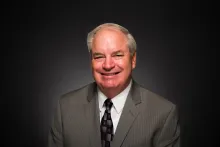
Robin Webber was born in Chicago, Illinois, in 1951, but has lived most of his life in California. He has been a part of the Church of God community since 1963. He attended Ambassador College in Pasadena from 1969-1973. He majored in theology and history.
Mr. Webber's interest remains in the study of history, socio-economics and literature. Over the years, he has offered his services to museums as a docent to share his enthusiasm and passions regarding these areas of expertise.
When time permits, he loves to go mountain biking on nearby ranch land and meet his wife as she hikes toward him.
