
Robin S Webber
This transcript was generated by AI and may contain errors. It is provided to assist those who may not be able to listen to the message.
I would also like to welcome all of those that are tuning in. I think all of us are aware that at this time we do have a link that does go out and is received by people in Arizona, Nevada, and California, many that are homebound, or maybe those that cannot make it to the services every week. We want to welcome you into the Los Angeles services.
I'd like to begin this message by reading from Acts, the story in Pentecost, where Peter speaks out and witnesses to the men that are listening to him there in Jerusalem. You need not necessarily turn over there. I'll just lay the foundation by reading from Acts 2 and verse 22. But it will set the foundation for this message. Men of Israel, hear these words. Jesus of Nazareth, a man attested by God to you by miracles and wonders and signs which God did through him in your midst, as you yourselves also know. Peter puts it out there and reminds that audience that Jesus did come to this earth and did perform miracles and wonders and signs.
And they knew it. And we also, in the 21st century, are also aware of those miracles and those signs and those wonders. And we know about many of them, but perhaps we don't fully realize how they impact us in 2015 and how real they are and that they're not just simply to be left in times past, but to be brought forward for us to understand, for us to be able to internalize, and for us to worship, to glorify God above, and to be a blessing to those that we come into contact with.
One such miracle I'd like to acquaint you with this afternoon, one that, as Peter said, you know. And we talk about it every so often, but we're going to go wider and we're going to go deeper, if you'll join me now, in Luke 17. In Luke 17, to set this up.
Normally, we hear this message when we hear sermonettes or we hear sermons dealing with the aspect of gratitude and or appreciation, and to be sure to be able to return thanks. And those sermonettes and those messages are valuable and they are needed. But what I want to lead you to understand this afternoon is that we are not just simply talking about a courtesy return.
We're not just simply talking about being grateful for an event and or something that you have experienced, but something that is to touch every fiber and every part of your being in worshiping God, in glorifying God, and being a blessing to every man and every woman and every child that you come into contact with. Because God has worked a miracle. He's worked a sign and He's worked a wonder in your life and in mine. As we open up here to this message, let's pick up the thought if we could, in Acts 17 and in verse 11.
In Acts 17 and verse 11, it says, Now, we need to understand how Luke is constructed. Much of Jesus' ministry is apart from Jerusalem, but in Luke 9 and verse 51, it says, And he set his eyes toward Jerusalem. He knew that he had to go there and be about his father's business for that which he had been sent to be our sacrifice and to be our Savior. And so he was, in that sense, moving toward Jerusalem. That was drawing him because that was the center of God's activity. And so, as he is moving toward Jerusalem, though, he passes through Samaria and Galilee, that area that is north of Jerusalem, up in the hill country.
There is Galilee, and you're familiar with Galilee. Jesus Christ was from Galilee. He was from Nazareth. I think many of us that are familiar with God's word also are familiar with the term of Samaria. And Samaria was a portion of the country of where there were people of a mixed heritage, people that had been mixed nearly 700 years ago, some that had remained and not gone into exile when Israel was taken into captivity, and some of the people of the east that came in there.
And so, there was this mixture of people. There was also this aspect of focusing on God, but in a different way and on a different mount. And so, those folks were looked down upon. They were looked at as cons by the people of Judah. They were looked at as others, people that were on the margins of life, people that, in a sense, really didn't count. In fact, in Berkeley's book, Berkeley's commentary on Luke, it says that the Jews basically looked at Samaritans as being fuel for the fires of hell. That was how they looked at such folk. And yet, here is Jesus moving in between Samaria and Galilee. And then it says, and then, as he entered a certain village, there met him ten men who were lepers who stood afar off.
And now we have contact. We now have the Personality of Jesus coming into contact with these ten lepers. Perhaps part of them were Jews, and perhaps part of them were Samaritans. But perhaps before they had leprosy, they had looked at one another from a distance and looked down on one another. But it's amazing what adversity and calamity will do, because now they are a band of lepers apart from society. Now, the first thing that I want you to notice as we move into this message and break it down.
It's very simple if you're taking notes. Two very key words that you want to look at. Number one is the word now. And number two is the word then. Now in verse 11 and then in verse 12. Very small words. One is three letters, one is four letters. Some of the most important introductory words when God is about to do something, you will notice the word now and or then. You see a transition and or you see an entrance of God's activity on earth. And so we need to recognize what's going on here. Because when you see verse 12 it says, then he entered a certain village and there met him ten lepers who stood afar off.
Now the question, and maybe you've never pondered it, what do you mean that they stood afar off? They will say, well, they were lepers and they needed to stay afar off. Many of you that are a little bit older will remember the 1960 movie, Ben Hur. And you're looking at me like, oh, I didn't say the silent movie Ben Hur.
I said it sure was. I'm saying the 1960 version with Ben Hur. Ben Charlston. Charlton Heston with the famous chariot. You'll remember perhaps those that, are you with me? We're alive then. We're seeing it on Netflix. Always know your audience. Try to get everybody in as much as possible.
But you remember, Judah Ben Hur's mother and sister had come down with leprosy. And they were in the caves outside of Jerusalem and they were apart. Now, what was happening? What was going on here? And why does it say, and they lifted their voices and said? It says that they were far off and it says that they lifted their voices.
What's that all about? Let's understand what leprosy is and what leprosy is not. We've all heard of it and sometimes we might, in a sense, humanly recoil because of our knowledge of it, perhaps having seen it in movies or know about it. Leprosy is an infectious disease. It's progressive in nature. It's deteriorating. It causes damage to the skin, to nerves and to limbs. And what it does is, when you have leprosy, it doesn't mean that your arm falls off all of a sudden or your leg falls off or your nose falls off. But basically what happens is the lesions that are on the skin, what they do is they just fester and they stay there in an atrophied state.
Now, the lesions that people see from the outside and, in a sense, back away because they think they're going to get it or they recoil, perhaps by the looks of it, to understand that those are just the external signs. What's happening is really happening on the inside. And what is happening on the inside ultimately boils out onto the outside, and that's what we see. But there's something going on inside, and that's why it spreads ultimately throughout the whole body in a progressive manner.
Now, the way that ancient societies handle this is like what we find in the book of Numbers. Join me, if you would, in Numbers. And let's pick up in chapter 5. Numbers 5. And verse 1, And so people that had leprosy were put outside of society and put outside of the camp. We're not quite sure exactly how that happens. They were put outside, but the Jews who had practiced this for so long often had a measuring manner.
And here's what I want you to think about. I'm going to ask you to look around for a second. Not if anybody has leprosy. Don't worry. That's not what I'm asking you to look around for. But the Jews had a standard that if somebody had leprosy, they had to be 150 feet away from another human being. 150 feet. You say, well, what is 150 feet? I'd like you to look over here to the windows to your right. And then I'd like you to go all the way across the building to the windows over there.
That's 100 feet. And then go again a half, 150 feet. That's how close you could approach your community, your loved ones, another person. Being a leper was a very desperate state. And it is no wonder that when you see in verse 13, and they lifted up their voice. Why? Number one, because they had to be 150 feet away. And number two, because of the desperate situation that they were in, they had no hope at all.
And they cried out, Jesus, have mercy upon us. And it says, and so when he saw them, he said to them, go and show yourselves to the priest. Now let's understand something here. We're going to back up into Luke, and then we're going to come back forward to understand something that I hope will be encouraging to you in your life today.
I believe, as I read the Scriptures, and I believe as God's Spirit inspires me to understand the Scriptures as a Christian, is to recognize that when it says so, or that when it says then, or when it says here in this verse that he saw them, this was not by accident.
This was not by accident. This was by God's design. Jesus Christ knew exactly what he was doing, exactly where he was. He was Emmanuel. He was God with us, and he knew what he was doing. Absolutely. Now, when you think about it, let's go back to Luke 1 and verse 52 for a second to set the stage. In Luke 1 and verse 52.
At the very beginning of Luke, it tells you what the book of Luke and what Jesus Christ was going to be all about. And this goes right back into the story of Mary in her praise to God. And in Luke 1 and verse 51, let's notice this. He has shown strength with his arm, and he has scattered the proud and the imagination of their hearts, and he has put down the mighty from their thrones, and he has exalted the lowly, and he has filled the hungry with good things, and the rich he has sent away. He reversed society. Those that were lowly and abased, those that were on the margins of life, he brought up, and those that were haughty and thought that they were something, and even God's chosen paths, he brought down. When you understand the book of Luke, the way it is written, Luke was a Gentile. Luke was one that came late to the game. Luke was, overall, to recognize that he did not have to be in the margins of God's story, but could be right in the middle of it. That's why, when you read the book of Luke, you see a lot of mention about Gentiles. You see a lot of mention about women. You see a lot of mention about lepers and sick people, because back then, to be sick, to be leprous, meant that you were cursed. The Jewish community of that day had 1 plus 1 equals 2. That if you had a disease, if you had an issue, if you were blind, if you were lame, you would sin. Either you would sin, or your parents would sin, and that was God's punishment upon you. But, of course, we know the story in John 9. In John 9, where the young blind man, and Jesus said, this is not because of what his parents did or he did, but that the glory of God might be shown.
That one of those wonders, one of those signs, one of those miracles that Peter talked about in the book of Acts might be. And that you and I might understand that as this story progresses, friends, that lepers all were we. Lepers all were... Wait a minute. Wait a minute.
They got the wrong church, they got the wrong people? No. That's the title of the sermon. Lepers all were we. And sometimes we forget the so, or the then, or when God the Father fixed his eyes on us and began working with our minds, began working with our hearts. And to be able to accomplish his wonder and his miracle in us as a new creation in his hands. Thus we see, and it says, and so when he saw them, he said to them, go show yourself to the priest. And so it was as they went, they were cleansed.
Now here, are you with me? Here we are. Here's the ten. Jesus says, they're crying out, help, help, help! He says, go! And you show yourself to the priest. Now what they were doing is they were following the model that you find in Leviticus 13, 45-46. You can jot that down and read it later. But what happened as a person was coming out of leprosy, is they would go to the priest. They would go to where the men of God were and they would take a check. And if they weren't ready, they'd stay out of the camp. Then take another check. They'd take another check. Until they were able to come back into society. Can you imagine what it's like to live alone 150 feet away from another human being and not have any contact? To be outside the camp and people yelling at you, screaming at you, belittling you, throwing stones at you, leper leper. Get out of here. Center. Makes the story a lot more real, doesn't it? Makes the story a lot more real. But did you notice something here? It says, you go and you show yourself to the priest. And I want to show you something here really powerful. And it says, and so it was as they went, they were cleansed. By the time they got to the priest, the healing had already occurred. They didn't need that checkup, as it were. But knowing the sight at the date, they would probably check. What does this have to do with you and me? Say, Weber, get to it. I'll tell you what it gets to you. When God enters our life, are you with me? When God enters our life and He begins working with us, and He will always continue to begin working with us every new day in our life, He's going to give us something to do. He's going to give you a job. Have you forgotten that as we read the Scriptures, that when God above is working with us below, He gives us things to do? He gives us a job. And sometimes it just begins with a little job. But He gives us a job when we encounter Him. Very quite honestly, when is the last time that you asked God, what is my job? And what are you telling me to do that I'm just standing still, kind of reading, kind of taking it in, but I'm not getting off my spiritual derriere? I'm not doing what God has asked me to do? And yet you expect God to do everything for you? Christianity 101 is very simple. It's not complex. When the great God begins entering our life with the so and the then and sees us, and begins to work with our leprosy state, spiritually speaking, He's going to give us a job. Now, why does He do that? Because He could just heal us by Himself, or offer us salvation without any response from us.
But that's not how it works.
Kind of interesting. When you go back to the story, back in Joshua, back in Joshua, after 40 years, Israel is allowed to move into the Promised Land. But they have to cross the River Jordan. They have to cross the River Jordan. And it is during the springtime because traditionally, they crossed the Jordan, they went up against Jericho, up against the Days of Unleavened Bread. But it is very important to understand why they crossed the Jericho in springtime, and not in summertime. Because in springtime, other than in Southern California, rivers are full. They're a brim. They're overflowing their banks. There would be no mistake of what was about to happen when God worked a wonder amongst those covenant people. And then He said, here's what we'll do. The priest will carry the ark, and they will walk into and walk down into the River Jordan. And I will open it up for you, and you will cross over on dry land. You see, Israel had a lot of occasion dealing with water, not only the Red Sea, but the River Jordan. Now, what happened is, as the priest went forward with the ark, that as they, I'm sure all of us have done this around a pool that has cold water, you stick your foot in ever so gently. But the water would only go down as far as their foot would go down in the water.
The account says that as they put their foot in the water, the water above obeyed it, but the water below kept on running. Which means they had to keep on going down. And then finally, when they went down and with the ark, they stood in the midst of the River Jordan. They stood in the midst on the dry land, and all of the people went before them onto the other side.
Simply put, it's this. God asked us to do things that we can do, even as we step out or step in in faith. There are things that we can do that sometimes don't even make sense, but God says to do them. He gives us a job. He gives us a job.
And then what we can't do, He takes care of the rest. He said, well, why is that? Because God wants partnership with us. He said, you will be my people, and I will be your God. And the same story from the Old Testament, the New Testament, to 2015 today does not change. God gives each and every one of us a job. What is your job right now that you're looking at, and are you responding to the job that God has given you to do?
Sometimes the job that God gives me to do is a prompting. It's a voice that's in my mind. It's a rhythm in my heart where God is saying, do this, Robin. Do this. This name comes to me. This name comes to me. It keeps on coming to me. And how often when a name comes to me, and maybe I have not talked to that person for some time, but then I called them, there was a reason for that call. They needed intervention. They needed comfort. They needed encouragement.
Never dismiss the job that God gives us, or the size of the job that God gives us. Now notice what it says. And one of them, in verse 15, when he saw that he was healed, returned, and with a loud voice glorified God, and fell down on his face at his feet, giving him thanks, and he was a Samaritan. He was one of those people that weren't supposed to believe in the God of Israel. One of those that were dismissed. One of those that were diminished. And yet that was the one that returned. Now, what is very interesting, because you notice over here, stay with me, verse 13, and they lifted up their voices. Oh, when we have problems, boy, can we pray a prayer, and can we lift the ceiling above us? But he was equally loud and lifting up his voice in thanksgiving. Notice verse 16, and notice verse 13. It says, they lifted up their voices.
You know, it's often been said the most effective prayer in the world is when you're 60 feet down in a well, hanging upside down by a rope and six inches from water. And it's a one-word prayer. Help!
Boy, we can be very emphatic with that. But when God does enter our lives, we need to be just as emphatic with thanksgiving. Now, notice verse 17. So Jesus answered and said, and the answer is in the question. Jesus is doing very typical Jewish inquiry here. And the rabbinical manner is to put an answer within a question. And the answer is there. Were there not ten cleansed? Were there not ten cleansed? But where are the nine? Were there not any found who returned to give glory to God except this foreigner?
And he said to him, arise, go your way.
Your faith has made you well.
Now, what did we learn from this so far in this message? Because this was an event that has come and has gone.
So how and what do we take away from all of this? Because it does move beyond an event. It moves beyond just simply an experience. But speaks to our existence brethren here in Los Angeles and those that are listening in. That lepers were we all. There was indeed a time when each and every one of us was and were outside of the camp. Because of that, which was not just simply on the outside, but that which was on the inside. And God in his mercy then and saw us and intervened. Now, nine out of the ten did not return. They got healed. They moved on.
They didn't do anything about it. That is not to be our experience as New Covenant Christians. I want to share a verse with you in Luke 19 and verse 10. In Luke 19 and verse 10, let's please notice what it says here. Because this is actually the specific, scriptural verse for all of Luke to speak of the theme of this Gospel. In Luke 19 and verse 10, For the Son of Man has come to seek, come to seek, and to save that which was lost.
I'm up here today, brethren, as a Christian, that understands that there was a time when I was lost. All Christians have got to understand that there was a time when they were lost and that they were outside the camp. They were outside God's camp. They, in that sense, were outside the boundaries of God's kingdom. I didn't say outside the boundaries of God's love, but that we, by our actions, not simply by what people saw, but what we were, cut us off from God. You say, wait a minute, what do you mean by that? Join me, if you would, in Isaiah 59. In Isaiah 59 and verse 1, let's go back, friends, and let's remember for a few minutes where God entered our life, where He picked us up and where we were apart from Him. In Isaiah 59 and verse 1, Behold, the Lord's hand is not shortened, that it cannot save, nor is His ear heavy, that it cannot hear. But your iniquities have separated you from your God, and your sins have hidden His face from you, so that He will not hear. For your hands are defiled with blood. And it goes on to talk about the different aspects of what's going on. This verse tells us sin, confrontation with God's love and God's law, separates us from God, cuts us off.
You say, wow, Mr. Weber, your voice is going up. Yeah, I want us to get the point.
Because there's times that we can forget God's intervention, and where we were, and think it was by our doing. That was everything that we did, rather than by God's design.
By God's design, each and every one of you that are in this room today are not an accident. Are you with me? Each and every one of us are not an accident. We are here by God's gracious design, His purpose, His foreknowledge, His determination, His determination, that He was going to enter your life and begin to work with your mind and your heart by His Spirit. As it says in Romans 8, verse 14, for as many as are led, not stumbled into this way of life, but are led by the Spirit of God.
If God does not have accidents, are you with me? If God does not have accidents, neither then should we live an accidental existence ourselves when God has healed us from our sins, when He's taken our sins away from us. You say, but Mr. Weber, you know I'm looking around, you're talking to everybody else but me. No, I'm talking to each and every one of us, and the echo is coming back to me. Just in case you think you're outside of this party or outside of this band, join me in Romans 3, verse 23. In Romans 3, verse 23, which is one of the initial concluding remarks in the first part of Romans to get across the plain. Because in Romans, Paul first of all deals with Israel. No, first of all he deals with the Gentiles in chapter 1. Then he deals with Israel and the Jews in chapter 2.
And in chapter 1, while he's chiding on the Gentiles, on the other side of the bleachers, he goes, yeah, yeah, yeah, go, go, go, the others. But then in chapter 2, he chimes in on Israel. You that had the truth did not take full advantage of it. So he deals with one segment of humanity. He deals with another segment of humanity. And then he closes with this argument, Romans 3, verse 23, For all have sinned and fallen short of the glory of God. I know some people like to divide one-syllable words. There's no way of dividing this one-syllable word. All means all. Everyone, every human being that ever lived was apart from God. Every human being that ever lived was more than 150 feet away from our Creator.
All of us were apart. Sometimes we forget that. That doesn't mean we need to think of ourselves apart at this point. Please understand. Let's rejoice. Let's be glad that we're not. But neither let us experience spiritual amnesia to think that we got here on our own, by our works, by our thoughts, by what we know, by what we did. We're only here by God's grace. We're only here because of His saving work in us, what He's performing in us, not by what we did. We didn't dip ourselves in a river and cure ourselves.
God, just as much as Jesus Christ, when He came into Galilee and Samaria, saw us, had mercy on us, began to work with us.
And that should affect our thinking today, when we look at every other human being that is around us and recognizing that their time is coming, and that God has a purpose for them. And God wants to heal them just as much as He has spiritually begun to work with us.
Join me, if you would, in Ephesians 2.
In Ephesians 2. This is a wake-up call, my friends, here in Los Angeles. Because we can only move forward by remembering where God picked us up, where we started this journey of faith in Ephesians 2.
And let's pick up the thought if we could. In verse 10, Notice what it says again. We're at work. We're in motion. But it's now, once our encounter with God Almighty, now we're created in Christ Jesus. But for good works.
Which God prepared beforehand, that we should walk in them. God didn't bump into us. We did not bump into God. There's a calling. There's a calling. It's exciting. It's wondrous. It's a miracle.
It is to glorify God and to be a witness to this earth of what He's doing, which I'll finish up with in a few minutes. Notice what it says. Therefore, in verse 11, Remember that you once Gentiles in the flesh, who were called uncircumcision by what is called the circumcision, made in the flesh by hands. That at times you were without Christ, being aliens from the commonwealth of Israel, and strangers from the covenant of promise, having no hope and without God in the world. Now, in Paul addressing this in Ephesians, it is specifically at this point addressed to those Gentiles that were being grafted into the body of Christ.
But let's move beyond that principle, that specific wording, and understand there's a principle that we were all in that sense at one time or another, spiritual Gentiles. Gentiles in the Bible were basically those that affronted God, were in confrontation with God, that had other idols in other ways and scoffed at God. Look down upon the things of God. Look at that as an example then to recognize that there was a time when we were on the outside of the camp with no hope and without God in the world. But now in Christ Jesus, you who were once afar off have been brought near by the blood of Christ.
I want you to think about this for a moment. You that were once afar off. Let's see how many of you have been listening. I'm going to call on somebody who wants... Oh, just... Oh, no.
How many feet? Did a leper have to stay away from community?
Thank you, Louise.
Bill, would you do me a favor? Would you go over by that window? This must be a part of the prayer, the blessing, because I hadn't thought of this until right now.
Okay, Bill? Bill, give us a shout-out for a moment. Say something loud. Hello, everyone! Okay. You can imagine Christ over here, hearing afar off. All of us in that sense were more than 150 feet away. Not from Israel, but from God. We were in different worlds. We were in a different spirit. We were in a different cosmos or culture.
And what God allows by the blood of Jesus Christ. He offers us not just the community of Israel, not a bunch of other human beings, but to have relationship with God Almighty and with His Son, and to be able to have our prayers and our existence go up before God. See how far off Bill is? But by the blood of Christ that he gave, and that his Father above sent to give, Bill, start walking, okay? But church isn't over. Don't go out that door. Keep on walking. You go all the way to the other side, please. And let's just, in our mind, or in our image for a moment, recognize that our prayers and our being is going to God the Father through Jesus Christ at His right hand. And then, because of that, now look at the community that Bill is in. He's no longer a spiritual leper. He's not any longer a physical leper, Brenda, wherever you are. It's okay. But notice the contact. Notice the community that by that blood, we are no longer outside the camp. But now we have full union. We have proximity. We have contact with the one that does not have accidents. He's Creator. And, Bill, you can come back. There's more. Have you noticed recently, just the last couple days, a story about they've discovered a planet gazillions of miles away. And it's in the same proximity of its soul. Thank you, Bill. Proximity. How is heaven? Just teasing. Okay, is that when you look at it, they're looking out here. You know why we have these space probes? Because they want to go into outer space and somehow find that nature itself has produced life by itself. And so they found this earth out there. They found a planet much like the earth, even though it's 60% larger. But it's basically at the same distance from its son as our son. You know what they want to know? They want to see that somehow all the chemicals by themselves came together. And that life was produced by something else than God.
Brethren, that's how we are sometimes when we forget where God picked us up and called us. We cannot create spiritual life. We need God's help. We need God's intervention. We need Him walking into our life. We need Him visiting us, seeing us, making things happen. And as He does, it is not evolutionary. It is by design. And it's not an accident. The spiritual creation that is invested in us by God Almighty, this new creation, not of the dust as Adam, but of that second Adam, Christ in us, is not an accident. It's by design. It's a purpose. And therefore, each and every one of us understanding that and remembering that, live our life with purpose. You say, what do you mean by that, Mr. Weber? I mean that in everything that we do, we live by purpose. But I'm going to save that for a moment because I want to cover one more thing with you. Then I'll get to that. Join me, if you would, in Hebrews 13. In Hebrews 13. And this is one of my favorite verses in the Scriptures. And maybe you've never seen this before. In Hebrews 13 and verse 10, we have an altar from which those who serve the tabernacle have no right to eat.
The altar that we partake of and feast upon is above, not below. It's not in a tabernacle, and it's not in a temple down here below. It is that heavenly tabernacle. For the body of those animals whose blood is brought into the sanctuary by the high priest for sin are burned outside the camp. Therefore, therefore, Jesus also, that he might sanctify the people with his own blood, suffered outside the gate. In 31 A.D. after that night of beatings, and he had to carry that piece of wood to Golgotha. It was outside the walls of that holy city. Because our sins are, as it were, leprosy, was placed upon him.
And as Paul said, he who knew no sin, knew no sin, became sin for us. And he was outside the camp. Verse 13, Therefore, let us, those that are reading this epistle, let us in 2015 go forth to him outside the camp, bearing his reproach. For here we have no continuing city, but we seek the one to come. Therefore, by him, let us continually offer the sacrifice of praise to God, that is, the fruit of our lips, giving thanks to his name. Where does this bring you and me towards the end of this message?
You see, those ten men of Samaria and Galilee were not the only ones that were outside the camp. God the Father loved you and me so very, very much, and so did the Word, that he that was the Word voluntarily came down to this earth in the form of a man, Emmanuel, God with us.
He was not only Son of God and God in the flesh, but he was all Son of Man. I cannot help but think that as he dealt with those men of Samaria and Galilee, who had been outside of the camp and 150 feet away from another human being, that he knew that he was also going to have to be put outside of the camp because of that which was going to be put on his shoulders.
Now, what does this mean for you and me? As you and I now go out this evening and into a new week, and we greet Sunday, and we meet our Mondays and Tuesdays and Wednesdays and Thursdays and Fridays. How does this affect you? How do we arouse ourselves, perhaps out of spiritual amnesia, that has gotten to us and we've forgotten where we were?
Now, one thing I want to remind you, that's where we were. That's not where we are. We are in that process of salvation. That's where God started it. God called us as the weak of the world, but he doesn't expect us to remain weak. He called us in a spiritually leperous condition, but through baptism by the receiving of the Holy Spirit, God has given us worth through Jesus Christ.
So, therefore, in this verse, when it says, now it says, that is the fruit of our lips giving thanks to His name, how do we give thanks to God? You see, those guys back there, a bunch of ingrates, can you believe that? Only one returned. And maybe today, some of you hearing this message are, in a sense, going to return and understand the fullness of your calling. What is that calling and why were you created? We used to have a booklet entitled, Why Were You Born? Why were you born? I'll give you three reasons why you were born.
And by understanding those reasons and putting them into your life, you will show God how thankful you are that salvation has entered into your life, and that He is working to you and towards you and with you towards the Kingdom of God. Number one, very simple, every man and every woman and every teen, every living soul that is in this building was created to worship God.
You were created to worship God. That's why Adam and Eve were created. That's why you draw breath. You were called to worship God. What does that mean? You know, glory, glory, hallelujah, what's that? You know? No, it's not what we're talking about. Don't minimalize it, please. I'm not. Worship just comes from the old Anglo-Saxon term, worth-ship. You give God His worth by returning in response. Not by your works. Your works don't save you.
But your response and your yieldenness to God's sovereignty in your life, that He is your Creator, your sustainer, your designer, your life-giver, your law-giver, the one who heals and the one who foretells the future and brings it to us. That we might have calm and peace in a world that is restless. And we worship God. You say, well, what am I supposed to do? Am I supposed to just get down on my belly and grovel and worship that way? No. Worship is with everything that you do. Worshiping God is bringing into check through the governor of His Holy Spirit everything that we do.
Every motive that is in our heart, every thought that is in our mind, every word that is in our tongue, every action that we do with our arms, with our legs, with our being. We worship God seven days a week. We do come together on His Holy Day, this appointed time. But worship is a 24-7 experience. I worship God by the way that I treat my wife. I worship God by the way that we, as a Christian couple, treat our three daughters.
We worship God by the way that we respond and interact with our seven grandchildren. Susie and I worship God as you, dear folk, do as well by every interaction with every human being that is alive, recognizing that every human being is created in the image of God.
That alone draws me back, makes me think. Therefore, I step forward and worship God, recognizing that He is the Creator and the Father of every human being. Thus, I treat every human being with respect and with dignity. How did we do last week on that one, folks?
And how will we do this coming week?
Number two. You were called and you were created to glorify God. You were called and you were created to glorify God, to give Him gratitude and to give Him praise and thanksgiving every day, in every way, in every thought, in every word.
You say, well, Mr. Weber, what's that mean? I just go around, glory, glory, glory. No, we've got hymns for that.
We give God glory.
By not simply what we know, but what we do and what we are.
We give God glory, recognizing that He has not only healed the lesions on the outside, but healed the wounds that are in our heart. You know, sometimes we think about people that are willing to take away a wound, but the scar remains. When we have surrendered to God Almighty, He not only deals with the wounds, but He deals with the scars. When He healed our leprous condition, He not only took that, which was on the outside, but it says that the sacrifice of Christ in Hebrews 10 says that it will be done. It will cleanse and clear and clean up our conscience. And therefore, we give God glory.
No. 3. You were created, first of all, physically, but much more so spiritually. I want you to think about it this way. Even some of you young folk out there that I'm looking at right now, they're smiling back at me right now. You were called and created to be a blessing.
You were called and created to be a blessing to every human being that you encounter.
Put it another way, you are to be a light in a very, very dark world.
And you maintain that light because you are so very, very appreciative. Because of what God did for you so long ago and entered your life and gave you worth. And said, you can come in now, you can come in outside of the camp of my kingdom. And you can be a citizen of my kingdom. And you can return into my fold just as much as that son returned to his father's fold, who got the cloak, who got the ring, who got the shoes, who got the feast. You are mine and I am yours.
You are a blessing when you look at every human being as a potential family member for eternity. I have a question for you right now as we move into the week ahead. Because knowing an audience is big, I can probably appreciate knowing the human condition, because to use that English, I use one.
Is to recognize that some of you right now have 150 people, you have people or a person, maybe a mate, maybe a child, maybe an employee, maybe somebody that is in this room. You have standing 150 feet off and you keep them there. When you were called to worship God, when you that were the walking dead, and I was the walking dead, apart from God's grace and God's miracle and God's wonder, do we somehow have somebody 150 feet off? If you do, you go to work worshiping God. You say, I can't do that. You can't do it by yourself. You ask God to show the way and to lead the way. And when you do, and you see that breakthrough, then you give glory to God. You thank God. You say, thank you, God. I couldn't do it by myself. And I knew that you would be there for me. And then just imagine being a blessing for that person. If there's anything that you might receive out of this message, it's simply this. The simple term, 150 feet. 150 feet. And what God and what Christ did to make all the difference in that 150 feet. Not only for these men of old, but for you and me today. And we have been created for good works. To do the same for the others. Those that we have issues with. Always remembering, always remembering, it is not our job to choose God's family. It is our job and it is our responsibility to embrace them. Because God already has. Let's go to work. Let's go to work. Let's worship God. Let's glorify God. Let's be a blessing to every human being that we come into contact. Starting right after the Amen.
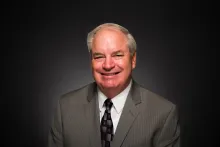
Robin Webber was born in Chicago, Illinois, in 1951, but has lived most of his life in California. He has been a part of the Church of God community since 1963. He attended Ambassador College in Pasadena from 1969-1973. He majored in theology and history.
Mr. Webber's interest remains in the study of history, socio-economics and literature. Over the years, he has offered his services to museums as a docent to share his enthusiasm and passions regarding these areas of expertise.
When time permits, he loves to go mountain biking on nearby ranch land and meet his wife as she hikes toward him.
