
Robin S Webber
This transcript was generated by AI and may contain errors. It is provided to assist those who may not be able to listen to the message.
If you'd be so kind, I do have a message. You were going to hear me one way or the other. I don't know if you were warned. We had a video of what I gave in Los Angeles a couple of weeks ago. But I think this will be more relevant and hopefully more powerful, at least more relevant, and perhaps needful, and that one will be for another day and another time. I do want to mention before we start that a lot of this is when I do go to scripture, it's going to be out of the New Living Translation because somewhere in the Colorado Rockies is my Bible.
That's the New King James Version, which we usually use. So I'm going to go off the New Living here and there. You'll know where here is there, and you'll know where there is there. If you join me, please, let's turn to Luke 17. That is going to be our main focus today. It's a story that I think all of us, to one degree or another, are familiar with.
We touch upon it maybe once a year, maybe every other year, especially when it comes to sermonettes and or sermons. Abmonitions to be thankful. But beyond that, I think there's so much more that we can glean and gain out of this. And thus, I look forward to sharing this message with all of you. If you'll join me in Luke 17, and let's pick up the story, if we could, in verse 11.
This is in the midst of Jesus' earthly ministry. And we notice in verse 11 a very famous word that you'll see pop out of the Bible. We're going to spotlight a couple famous words out of the Bible. And the reason why I say that, when you see those words after this message, I hope that you'll always notice them when you bump into them. And I'll tell you why in a moment. Now, it happened as he went to Jerusalem, that he passed through the midst of Samaria and Galilee.
For those that might be uninitiated, we're really talking about that area north of Jerusalem, more in the northern tier of what had been Israel. So he's going through Samaria. He's going through Galilee.
Now, the Galilee, all of us are very familiar with to one degree or another, is that's where Christ was. That's Nazareth, and that's where the Sea of Galilee was. Samaria was also in the north, and Samaria was that area that was infused with people from the east that came in. In the 700s BC, they kind of mixed with the local people. They had, in a sense, their own form of worshiping God. Very different than the Jewish community.
They were looked down upon by the Jewish community. They were what we might call the others. I think when you understand that term, those are the others. Those were the people that, unfortunately, were looked down upon. So it says here, now it happened as he went to Jerusalem, that he passed through the midst of Samaria and Galilee. Now let's notice the next word in verse 12. Then, as he entered a certain village, there met him ten men who were lepers, who stood afar off. And they lifted up their voices, and they said, Jesus, master, have mercy on us.
To be able to go any further into this story, we have to understand what is going on here. These were men that were lepers. Leprosy is something that we're not familiar with in this day and age, especially in America. There is still leprosy in the world. You'll often, not often, but at times hear about outbreaks in Africa, Asia, and in some of the islands. What is leprosy?
Let's talk about that for just a moment. Leprosy is an infectious and progressive, deteriorating disease that causes damage to the skin, to the nerves, and to the limbs. Now, what is interesting, we often maybe move leprosy beyond what it actually is, because the limbs and the appendages, even like your ears or your nose, do not fall off. They're not dropping as you walk, but they do deteriorate.
They become in what we might call an atrophied state. What happens is skin lesions develop over your body progressively. What those lesions are, then, are really external signs of what's happening within the body system. For we that are a little bit older, I think we'll remember the movie Ben Hur. I don't mean to date myself, but that was always a very graphic exposition of what leprosy was like. Remember, where Ben Hur's mother and sister were down there in the caves, and they were segmented, and they were set off.
Why is that? If you would join me for a second, join me if you would back in Numbers 5 and verse 2. In Numbers 5 and verse 2, let's pick up why these people would be crying from afar off. In Numbers 5 and verse 2, actually, let's pick up the thought in verse 1.
The Lord gave these instructions to Moses, Command the people of Israel to remove from the camp anyone who has a skin disease or a discharge, or who has become ceremoniously unclean by touching a dead person. This command applies to men and women alike. Remove them so that they will not defile the camp in which I live among them. And so the Israelites did as the Lord had commanded Moses, and removed such people from the camp. And so these were people that were outside the bounds of society.
And what is interesting, because the Jewish community would often take things a little bit further, that when you notice this verse, it says, "...and they lifted up their voices." They had to cry aloud, because in the Jewish community, a leper could not be within 150 feet of another individual. Now, let's think about this for a moment. I didn't have a chance to look at this room for a moment. This room is approximately 45 feet wide. Okay? Remember, I used to be an insurance inspector. It might be a little bit off. It might be 48 feet. How am I doing, Dave? I know. Okay. About 48 feet.
So you take this room's length, times two, and times three. And that was your life, away from other human beings, other than fellow lepers. In other words, you were secluded, and you were isolated. Let's also remember that in that day and age, the church of that time, the Jewish community, believed that if you were sick, if you were ill, if you were a leper, it was something that you had done to displease God. You had either done something to displease God, your parents, or your grandparents' disease was looked upon as a curse. Again, remember the story of the man that is blind when Jesus had to say, This man did nothing, neither did his parents, but that the glory of God might be shown.
It was not a matter of cause and effect here below, but because God was going to do something. So here were people that were cast off. These were people that were outside of society. And these would be the people that Jesus was going to deal with. This is the lesson that we want to learn. Now, why is this so important? That's a good question. Because we have to understand why Luke wrote the Gospel of Luke.
Luke himself was one that was on the outside and the margins of the religious society of that day. Most likely, he had been a proselyte or a God-ferer and or what we call a devout person. A person that could kind of come up to the synagogue but could not go in. A person that could come up to the window and peek in but could not go in. An individual that was basically on the margins.
And then when he came to understand what God the Father was doing through Jesus Christ and to recognize that everyone was now being included. He marveled. He was so excited himself being a Gentile. Thus, when you read the book of Luke, you'll understand the book of Luke deals a lot with women who were marginalized. It deals with Gentiles that had been marginalized up to that point. And it deals with lepers who themselves were marginalized. What do you mean marginalized?
They could not be within 150 feet of an individual that was healthy. I'm going to keep on coming back to 150 feet because that's going to be a very important point as we go through this.
Let's also understand with Luke. Join me if you would in Luke 1. In Luke 1 verse 52. We're going to go back, peek at Luke, then we're going to move forward back into this story to give you some background why this is so important in this example.
In Luke 1 and verse 52, this is what we call the song of Mary.
The angel Gabriel has come to her. She has been told that Emmanuel will be her son.
And she gives this wonderful song of praise. And we notice in verse 51 it says, His mighty arm has done tremendous things. He has scattered the proud and the haughty ones.
He has brought down princes from their thrones and exalted the humble.
This is typology that's coming out of the book of Isaiah regarding the aspect of Jubilee, regarding the aspect that when God returns and the ministry of Christ, that there's going to be a leveling of society, that all is going to be made square before God. Let's also pick up the thought then in Luke 4. Yeah, let's go to Luke 4 and join me if you would, because this is going to make sense of this story then, in Luke 4. And let's pick up the thought in verse 18. This is where Jesus is now with his hometown audience. He's in the synagogue. Notice what he says. The Spirit of the Lord is upon me, for He has anointed me to bring good news to the poor. He has sent me to proclaim that captives will be released and that the blind will see, and the oppressed will be set free, and that the time of the Lord's favor has come, or that appointed time has come. Again, this is an aspect, not the total fulfillment, but an aspect of jubilee, of new beginnings, of new starts, of a leveling in society where everybody might ultimately have access to God.
He rolled up the scroll, verse 20, handed it back to the attendant, sat down, and all the eyes in the synagogue looked at him intently. And then he began to speak to them, the Scripture you've heard this day has been fulfilled.
And everyone was amazed, and they offered gracious words.
And they said, How can this be?
And they asked, Isn't this Joseph's son?
And then he said, You will undoubtedly, quote me this proverb, Physician, heal yourself, meaning, do miracles here in your hometown like you did in Capernaum. But I tell you the truth, no prophet is accepted in his own hometown.
Now, very carefully, let's note the next verse.
Certainly there were many needy widows in Israel in Elijah's time, and when the heavens were closed for three and a half years, severe famine devastated the land. Yet Elijah was not sent to any of them.
He was instead sent to a foreigner, a widow of Zerapha, in the land of Sidon.
Verse 27.
And there were many lepers in Israel in the time of the prophet Elijah.
But the only one healed was Naaman, a Syrian, a Gentile, and other, somebody out of the scope of Israel.
The reason why I'm bringing this out is to recognize that Luke is carefully constructed as a book.
We start with what is mentioned to Mary, what Mary says about this leveling of society. We see what Jesus says in his initial hometown message, that he looks outside and beyond what the church folk of his day would have thought was right and proper. In other words, why would God be involved with them?
That now takes us, friends, back to Luke 17.
Because what we notice in verse 11, now it happened. Or in verse 12, then as he entered. This was not an accident. This was by design.
This was for a purpose. When Jesus was walking and talking and preaching and reaching and teaching and healing for those three and a half years, he was not bumping into people by mistake.
It was not an accident. And the reason I am so encouraged of sharing this message with you is to remind you on this Sabbath day, we do not worship and we do not follow an accidental Savior.
This was not a coincidence. This was not an accident. This was a design that God had in mind from the beginning of Luke to Luke 4 to this time as we walk through this story.
So now with all of that background of recognizing that there's a purpose that's being worked out here below, notice what it says.
These two men who were lepers stood afar off. Now from now on, whenever you read this story, when you understand you stood afar off, you can take your tape measure. They were at least 150 feet away. Three times this room, it's no wonder that they lifted up their voices because to speak to somebody 150 feet away, you have to lift up your voice.
And they said, Jesus, master, have mercy on us. And so when he saw them, and when he saw them, you've got to recognize that you can understand that he fastened his eyes on these 10 individuals. He just did not walk by them. These again, I remember, people that were taunted, they were scolded, that if people saw lepers, they would begin cursing them, they'd be running away from them, they'd even be throwing rocks at them.
But Jesus stopped. He saw them and he said to them, go show yourself to the priest.
Go show yourself to the priest. Now again, this goes back to the book of Leviticus 1345-46. You can jot that down. You can look at that yourself. That there was a process that if an individual who had been put outside of the camp seemed to be in the process or in progress of becoming well, they would have to go to the priest. And then the priest would kind of do a check on them every five or seven days. I'm not quite sure what it was. But as they got better, ultimately they might be able to return to the camp. Are you with me so far? Got it? But notice the difference in this verse. Let's look at it carefully. This is exciting. He said, so when he saw them, he said to them, go show yourself to the priest. And so it was that as they went, they were cleansed. The priest or the Levites and the compound were not going to have to do a further examination. Things were happening along the way.
But let's understand something. It's something that we have to understand in our own personal lives.
That when God is working with us, when He's calling us, and some of you might be being called right now, that when God is either calling us, talking to us, working with us, He's going to give you something to do. He's going to give you a job. And that's very simple, but understand that Christianity can be very simple. That when God is working with you, He's going to give you something to do, something to follow. He's going to see that you're going to obey what you understand and what He's given you today. Do today. He'll say, yeah, but He didn't ask me to do that. No, He's not asking you to do that today. But He's asked you a very simple request. Notice again what it says here, go show yourselves to the priest. Now at that point, I think they still had leprosy. But as they began to go to the priest, that leprosy disappeared. That's incredible. Reminds me of the story again of the priest and the Levites. As Israel was entering the land and remember that they've been in the wilderness for 40 years, and then now they're going to cross rivers, we say. They're going to go over Jordan and they're going to go to the promise. The promise is on the other side of the river, right? That's the promised land. But what does God ask the priest and the Levites to do? He says, Joshua, tell them to get to moving. Got the Ark of the Covenant, but here's what you're going to have to do. The priests are going to have to march towards that Jordan and keep on marching. The story there is that the priest and the Levites that followed them, they were in the River Jordan before it parted. Some of you may need to look at that story again to remember that it's not only the Red Sea that parted, but the Jordan River parted. But they first of all had to go down. See, I'm in my little minister suit today because we don't have a priest today except upstairs.
It'd be like all of a sudden I'm going to have to walk into a river like this in my garb and carrying the Ark of the Covenant, the Levites. The river had not parted yet. It's only when they did their part, it's only when they did what they could do, what God asked them to do, that then God would do the rest of it. And you know what, folks? That doesn't change to 2015. God will often ask us to do what only we are to do, that He's asked us to do. When we do what He's asked us to do, then God will do what only He alone can do. What does that mean? It's a partnership. It's a partnership. And God wants to see if we will obey Him. These people did. Now, one of them, and one of them when He saw that He was healed, returned and with a loud voice glorified God. And He fell down on His face, at His feet, giving Him thanks. And He was a Samaritan. And so Jesus answered.
Now, the answer is very interesting because to understand how rabbis taught, the answer was often in the question. That's Jewish wisdom. They don't answer directly. They answer with a question. And there's two questions here. Notice what it says. So Jesus answered and said, were there not ten cleansed? Question number one. But where are the nine? Were they not found?
Who returned to give glory to God except this foreigner? That is the Samaritan. And He said to Him, arise. Go your way. Your faith has made you well. The other, the individual that you would least have expected would be the one that came back. And notice what it says here. That He gave God with a loud voice glory. Susan and I were just talking about coming up the road here. Remember, as soon as you were talking about return. Return. That the Bible is a book about returns. And you notice here how important in verse 15. Let's take a look at a moment. We're going to examine one of them. A tithe of the individuals. When he saw that he was healed, notice he returned.
Keyword. Number two. And with a loud voice. That's going to be important. That's not just gesture here. We're going to be talking about your loud voice moving away from this room in a moment. And he glorified God. Do you know why each and every one of us was given life?
And why each and every one of us were given a new beginning and a spiritual beginning? It's really threefold. It's very simple. There's three things why you were created out of dust. And number two, given a birth from above to be a spiritual creation. There's three reasons why you and I continue to draw breath. Are you ready? Number one is to worship God.
Number one is to worship God. Number two is to give Him glory. By all that we do, by all that we think, by all that we say, by all that we do, by every deed, and by every act. Very simple.
And number three is to be a blessing to others. To be a blessing. You and I were created for those three purposes. Number one is to worship God. Number two is to give Him glory. And number three is to be a blessing, even in trying circumstances like this. Now, we often read this story. You've heard sermonettes like this, but sermons that we need to be a grateful people.
So always make sure that you at least return and say thank you. But friends, there is really so much more to this story, and that's what I want to build upon now. And I should have given you my title about 10 minutes ago, but it's never too late, and that is simply this. Leppers. Leppers are we all. Leppers are we all. This story is our story. And this is what we are about. I'd like to kind of build upon that and talk about that now as we go forward.
Great gratefulness was given by this one person. But what we need to understand is that this is not just talking about an event, but it's also talking about us. And our life before God, that we might worship Him, that we might glorify Him, that we might be a blessing to others, is to recognize that's not just an event. That's not just a one-time experience. That is an existence. But we have to remember where God found us and where God picked us up on this journey of faith in responding to the call of God the Father and following Jesus Christ. And let's talk about that for a moment. I want to go to Luke 19 and verse 10. Luke 19 and verse 10.
In Luke 19 and verse 10, we pick up the thought here.
Jesus responded, salvation has come to this home today. For this man has shown himself to be a true son of Abraham, speaking of Zacchaeus. For the Son of man came to seek and to save those who are lost. The Christ came to save those who are lost. This is a very important thing for each and every all of us to realize. And again, this is out of the book of Luke.
And at times we diminish our effectiveness to worship God, to glorify God, to be a blessing to people, because we all recognize or do not recognize at time or remember that we were lost.
That's very, very important. And recognizing that, very important, that Christ came to save the lost.
In other words, let's just simply put it this way. All of us in that sense had spiritual leprosy.
What did I mean by that? Would you join me if you would in Isaiah 59?
In Isaiah 59.
Listen, the Lord's arm is not too weak to save you, nor is his ear too deaf to hear you call.
It's your sins that have cut you off from God. And because of your sins, he has turned away and will not listen anymore. When we think of those individuals back in New Testament times that had leprosy, and they had to be 150 feet away from other people, is to recognize that we also were in that sense cut off. And sometimes we don't remember that.
And we need to. One of the most dangerous diseases that a Christian can get is simply this, spiritual amnesia. And that's to forget. To forget where God picked us up, and that we were all cut off. And we cut ourselves off by our own sins and by our own ways. And he said, but wait a minute.
What do you mean by that, Mr. Weber? Let's remember that these people that had leprosy in that day and that age, you might say that they were the walking dead. I think that's a series on something called Walking Dead. Isn't that a series on television or something? I've got anyway, Walking Dead.
These were back then dead men walking, dead women walking. These were the living dead. They had been given up by their families. They had been given up by society. And to recognize it the same way that when God began working and loving us is to recognize that we were in that same stead. And sometimes, friends, if I can make a comment, we forget that. When we look at others, when we look at people, and we might say, well, what are they doing here? Why are they so close? How do they happen to be here? We forget our own origins. We forgot how God began to deal with us. Join me, if you would, in Romans 3, verse 23. In Romans 3, verse 23, He said, you must be talking about somebody else. No. For everyone has sinned, and we all fall short of God's glory and standard. It says everybody dead. But sometimes we don't understand that about ourselves. And again, remembering that we were the walking dead. It's very graphic, but I don't know how else to put it. And to recognize that God, in His mercy, began working with us. Join me, if you would, in Ephesians 2. In Ephesians 2, in verse 10.
For we are God's masterpiece, and He's created us anew in Christ Jesus, so we can do the good things He planned for us long ago. But then notice verse 11, it says, don't forget that you Gentiles used to be outsiders. Now, I want to use this as a principle. Paul is specifically speaking to the Gentiles in the book of Ephesians, but the principle is broader in this because all of us, in that sense, whoever we are, were in a sense, at one time or another, spiritual Gentiles, apart from God. He says, you used to be outsiders. You were called uncircumcised heathens by the Jews who were proud of the circumcision, even though it affected only their bodies and not their hearts.
In those days you were living apart from Christ. You were excluded from the citizenship among the people of Israel, and you did not know the covenant provinces God has made to them. You lived in this world without God and noticed without hope. But now you have been united with Christ Jesus.
Once you were afar away from God, but now you have been brought near to Him through the blood of Christ. It says, once you were afar off each and every one of us. Now, I think 150 feet is a long ways away. You say, wow! But what the Scripture is telling us, whether it's in Romans 3.23, or the principle expanded in Ephesians 2, is that all of us were distanced from God by our own actions, by our own deeds.
And God in His mercy intervened and allowed us to have an intimacy in a way with Him.
Jeremy, if you would, in John 1. In John 1.
Did I say John 1? Pardon me, 1 John 1. 1 John 1.
It's not as verse 9.
It says, if we confess our sins to Him, He is faithful, and He is just to forgive our sins, and to cleanse us from all wickedness.
And if we claimed we have not sinned, we are calling God a liar and showing that His words has no place in our hearts. It says here, if we confess our sins, it says He is faithful, and notice what it says, cleanse us from all wickedness. Now, when God cleanses us from all wickedness, He does not just do an outside job, He also does an inside job.
I'm sure that some of those men that were healed were doubtful to a degree of what Christ had in store for them when He said, go and show yourself and appear. And I realize that sometimes even today in dealing with people, dealing with my own thoughts and where I'm at as a person, sometimes you can say, well, God can heal the wound but not take away the scar.
And that lingers with some people. Again, let's remember that leprosy was basically seen externally, that the effect was out here as to what was happening on the inside of the body.
And sometimes we can think even as Christians, well, you know, when we ask God for forgiveness of sin and it cleanses us from spiritual leprosy, He can deal with the outside.
What 1 John is telling us is basically this. God not only forgives our sins and cleanses us from the outside, but He can scrub our conscience clean. He not only deals with the lesions that are noticeable, but that our conscience, the lesions that are on our mind and in our heart, God can dismiss. God can heal. And again, that's incredible. That's what makes Him God.
And He gives us a new start. He gives us a new life. Join me if you would in Ephesians 1.
2. This letter is from Paul, chosen by the will of God. Chapter 1, verse 1, by the will of God to the apostle of Christ Jesus. He says, I'm writing to God's holy people on the Ephesus who are faithful followers of Christ Jesus, and may God our Father and the Lord give you grace and peace. He says, all praise to God, the Father of our Lord Jesus Christ, We are united with Christ, who has blessed us with every spiritual blessing in the heavenly realms, and we are united with Christ. He speaks about how God began this from the very beginning and chose us in Christ to be holy and without fault in His eyes. He decided to, in advance, adopt us into His own family by bringing us to Himself through Jesus Christ. This is what He wanted to do, and it gave Him great pleasure. And so we praise God for the glorious grace He has poured out on us who belong to His dear Son. God not only offers us spiritual and emotional and mental and physical healing, but He gives us gifts. Now, in sharing all of this, but for a few brief moments, let's understand something. God has granted us and given us spiritual healing. We're not a spiritual leper anymore. The point of this is to give thanks and to remember that there was a time when we were apart from God. We can only be effective in the present. We can only be effective in the future, in worshiping God, in glorifying God, and being a blessing to other people by remembering that we were no less, no more, than those lepers that were in seclusion, that were isolated, that were segregated from humanity, who had no hope other than to look at one another in the face, in a cave, or in a hut. And Christ healed them, just as much as He offers us healing today. Now, it's very interesting, though. Join me if you would in Hebrews 13.
Remember how it said in Numbers 5 that those that had disease had to be put outside of the camp. Remember that? It said they had to be put out. I'd like to share a verse with you out of Hebrews 13, and it's one of my favorite thoughts in the Scripture.
In Hebrews 13 and verse 10, and again, I apologize having to read in this translation about my Bibles in the Rockies somewhere, hoping it's going to come down. Maybe you've never seen this before. Now, stay with me. Are you with me? Remember how the lepers had to be put outside of the camp.
Remember how I said we were all lepers in one sense. Now, notice this. This is what makes it fascinating.
The author of Hebrews says, we have an altar from which the priest in the tabernacle have no right to eat.
Speaking of that which is above, that which was and is, and that which is below was copied after.
Under the Old System, the high priest brought the blood of animals into the holy place as the sacrifice for sin, and the body of the animals were burned outside the camp.
They were burned outside the camp.
Verse 12, So also Jesus suffered, and he died outside the city gates, to make his people holy by means of his own blood.
So let us go out to him outside the camp, and bear the disgrace that he bore.
Let us understand that when Jesus was sacrificed for our stead, that it was not in Jerusalem, but it was outside the walls, it was outside the camp.
And he took our lesions. He took that which grows in us, because sin tends to spread.
And he took that, our lesions upon him, outside the camp, because he became sin for us.
And all that we were, apart from God, not only what we did, but what we were, Christ took upon himself.
He might say in that sense, he took that leprosy upon himself, those lesions upon himself, and he was outside the camp.
Verse 13, So let us go out to him outside the camp, and bear the disgrace that he bore.
For this world is not our permanent home. We are looking forward to a home yet to come.
Now, what does this mean for you and for me? Why do I give this message today? And I'm about to conclude.
And that is simply this. The purpose of this message is to be grateful.
Grateful, which is more than a word, but our gratefulness to God with a loud voice and glorifying Him.
How can you and I, as those that were spiritual lepers, and that's where God picked us up and began working with us, and we're now moving in a direction, following Him who was outside the camp. More than 150 feet away from the walls of Jerusalem.
How do we glorify God just like that leper did?
Well, if you go back up here, let's just take a look here for a second.
It says, this leper fell down on his face at his feet, giving him thanks.
The one that returned that had a loud voice. That's basically talking about an event.
But you and I have been called to be participants of more than an event.
We're in a way of life. We're in an existence.
The way that we can show God Almighty how grateful and how thankful we are for having been cleansed is simply this. To take into captivity, to take into harness, to take a good look of every motive that is in our heart, every thought that is in our head, every word that comes out of our mouth, every action that comes forth by our body's energies, every deed that we do for every human being.
We'll show as to whether or not we speak to our God and to His Christ with a loud voice.
That we bow down before them. That we get it. That we understand what they've done for us.
Again, I want to share something with you. You and I have not simply been called to read words. We have not just simply been called to knowledge.
We have been called to do something with it, to become.
I want to ask you to do something very important for you. If it's important, you'll do it. If it's not important, you won't do it. That's fine.
But I know that when God asked Israel to be a very special people to Him, He gave them Ten Commandments.
He wrote it with His own finger, and He put it in stone. You know why?
Because, number one, they couldn't erase it, and number two, it wouldn't blow away in the Sinai where the desert winds.
I'd like you, if you would, to just write down three things. Very simple. Three things.
I want you to think about these three things tonight, tomorrow, Monday, Tuesday, Wednesday, Thursday, Friday.
Why was I born? Isn't that a book that we wrote for so many years? Why was I born? It's very simple.
Number one, you were born to worship God. You were born to worship God.
Adam and Eve were born to worship God, but they didn't. You and I are because we follow that second Adam.
Number one, you were born to worship God. Worship does not have to be a fancy word. Worship comes off the old Anglo-Saxon. It means worth-ship. You are giving God his due for what he has done for you by healing you of spiritual leprosy.
For lepers, all we were. Number two, we have been called to glorify God. All glory goes to God.
All glory goes to God. It's not about us. It's not by our might, not by our power, not by our spirit.
And number three, we have been called to be a blessing. We've been called to be a blessing.
If Jesus Christ is the Lord of our life, and if Jesus Christ is the head of the body, his body, if he is the head, then you and I have the unique opportunity to be the feet, to do his walking, to be the arms, to do his reaching, and to be the tongue that represents what he would say and how he would say it, and be able to say it to all, even those that others might not think ought to hear. That's why you and I have been called.
If you'll use that as a spiritual GPS this week, in just those three points, to worship, to glorify, and to consider that you have been called not just to simply be a depository of knowledge, but to be a blessing to others, I have been called to be a blessing to Susan. Call her next week, see how it's going.
I've been called to be a blessing to our, because I didn't have them alone, she did, our three daughters.
I've been called to be a blessing to our seven grandchildren.
I've been called to be a blessing, not because of me, but because of Christ in me, to five congregations.
That's a lot to live up to. And I will falter, and I will stumble, but that's the calling.
That my tongue, my heart, the motives underneath that are to edify, to lift up, to be a spirit of comfort and encouragement to others.
I've been called, and Susan have been called, we are to be a blessing to our neighborhood, to our community.
We're to be a blessing to everybody that comes into our life, because we recognize and are so very grateful that God called us, as He called you, who were the walking dead, who had spiritual leprosy, that was pervasive.
That came from below the skin, and we were healed of that. And if we're really grateful, and if we're really thankful, we will do what I've asked you to do today, and to give God glory. Just like this man did. He gave Him thanks. He was a Samaritan. That's our job. That's our calling. Let's go out and do it.
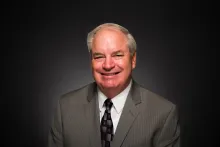
Robin Webber was born in Chicago, Illinois, in 1951, but has lived most of his life in California. He has been a part of the Church of God community since 1963. He attended Ambassador College in Pasadena from 1969-1973. He majored in theology and history.
Mr. Webber's interest remains in the study of history, socio-economics and literature. Over the years, he has offered his services to museums as a docent to share his enthusiasm and passions regarding these areas of expertise.
When time permits, he loves to go mountain biking on nearby ranch land and meet his wife as she hikes toward him.
