

Mario Seiglie
This transcript was generated by AI and may contain errors. It is provided to assist those who may not be able to listen to the message.
We have a PowerPoint sermon today.
And we'll just go right to the different slides here. It gives you also the title of the sermon, Lessons from the Feast. Most are back from the feast, and we have, as Graham Thomas mentioned in the first message, completed a yearly feast cycle. So we've gone through seven of God's feasts, yet God's kingdom has not arrived. And in prayer, when we say, Thy kingdom come, that's the category that we focus on the kingdom, where we visualize it. We desire it. And there is a work to do. Thy will be done here on earth as in heaven. So before we forget, let's see some of the lessons God wants us to remember about His feasts.
And we all had very intense eight days, but those memories begin to fade. But hopefully we wrote down some of the lessons that we have learned. So those will continue in time that it isn't just a fleeting experience, but a lasting memory.
God's feasts are designed to lead to a culmination, and each one fulfills a preliminary part. So they can be presented as ascending steps or stages. We see here Passover on leavened bread, Pentecost, trumpets, atonement, visa tabernacles, the eighth day, and then the coming of the New Jerusalem. So each year we go through each one of these stages. Justification, which reminds us what Christ did for us. Separation, days of unleavened bread, the Holy Spirit being given, transformation, the feasts of trumpets, the coming glorification, the feasts of tabernacles, the beautification of the earth. And the eighth day is the evaluation of all those who never were called and received. They never were called, and neither were they given the understanding of God's truths. And then, of course, the New Jerusalem, which the eternity dwelling with God and Jesus Christ as God's family.
Now God's plan of salvation can be understood by the choices God gave Adam and Eve with those two trees. Those two trees symbolize two ways of life. Would man choose to submit to God and his way of life, or would man choose experimentation and learn for himself what is right from wrong, good and evil? We know under Satan's deception that Adam and Eve chose the way of experimentation. And so we have this New Jerusalem, which is representing that tree of life that will prevail at the end. But before that, here we have the tree of the knowledge of good and evil through history. Now we can show this, and there are five basic questions behind every religion on this earth. And interestingly, just about every religion of this earth that isn't part of the true religion answers these five questions very similarly. The first one it says is, what is God?
There are different versions of that. Of course, the Muslims just believe in Allah. They don't believe in Jesus Christ. Then you have the Hindus, and they are God, Brahma, and all of these multiplications. It's all about cycles and reincarnation.
But none of them teach that God is a growing family, that Jesus Christ heralded that beginning of the family through what he went through in his life. So here they basically the answer, it's a trinity or a multiplication of gods, not a family. The second question, how is he adored? Again, these religions have in common a mixture of traditions, and some have Bible distortions mixed in. But it's a mixture of good and evil. Then you have the third question, when is he adored? Now they have their own days of adoration, day of the sun, pagan feasts. You go to India, you see there the Hindu religion has their days of worship and feast, pagan feast days. And then what is man is answered. He's an immortal soul. So again, in many versions, you have this afterlife where immediately after death you're judged because you have an immortal soul that continues consciously to live. And it has to be judged. Remember the Egyptians with the Book of the Dead, and you had that picture of that god with the head of a jackal, and he had scales, and good or evil. And the Egyptians had that type of idea that, well, the immortal soul, and that depending on what you did in life, either your soul was eaten by animals or you went to this nice place later on. And then the fifth question, what is his destiny? Heaven or hell?
Those are the five chief doctrines that religions have in common. And then you go up this tree, up until the flood, and you have everyone except Noah and family that follow this way of life. Cain and his worldly descendants, of course Adam and Eve take of the fruit. Its founder is Satan. He is the false god of this world. And then after the flood, Nimrod resurrects this false system, and you have the division of the languages in the Tower of Babel. And then you have the different empires, Babylonian Empire, Medo-Persian Empire, Greek Empire, and Imperial Rome. And you have branches of different variations. You have the Oriental religions, Hinduism, Buddhism, they're false religions based on false gods and false teachings. Islam is a false religion as well. Then you have, on the other side, primitive religions, like the ones that live in the forests of Congo, in Africa, or the forests in South America. They practice what they call animism, which is they worship trees and waterfalls, and everything has to be respected because everything is a type of a god. Then you have the Greek and Russian Orthodox religions that split off. And then you have the Protestant branches that split from the Holy Roman Empire. And it's seven resurrections allied with the Roman Church. We've had six resurrections so far. We are awaiting the seventh and last one. That's the one where Europe will again be dominated by a very powerful tyrant and also with a miracle producing false prophet. So that is still in the future. But its destiny, Babylon the Great and her daughters, will be destroyed at Christ's second coming. It will not be left with any root or branch. There will be no trace of these false religions when Christ rules the earth. As it says in Zechariah 12, there will be one God, one Lord, over this earth, and there won't be any false religions at all. Christ will rule with the saints. It's going to take some time. Nations are going to have to learn, but that is the ultimate result. What about the other tree, the tree of life?
Few have followed the principles of the tree of life. They also answered the five basic questions. What is God? He's a family. Right now, it's a father and son. Of course, angels are part of that family in the different stages, strata that they belong to. But we have righteous angels. They're part of the family. They talk with God. They have free will. But as far as a divine family, we have the father and son and many more that will be incorporated. How is he to be adored? You live by the Word of God. No mixtures. We don't have paganism. We don't have any extraneous doctrines coming in. When adored, the Sabbath and Holy Days, we just finished the feast as one of those times when he should be adored. What is man? He is a mortal soul with the right to a resurrection. So a person, when they die, they lapse into consciousness. Their spirit, with all of the contents of the person's mind, goes up and is stored by God. We're going to talk a little more about that. And then what is his destiny? The kingdom of God or the lake of fire? Depending on the resurrection that the person is going to be involved in. So few have followed the principles of this tree of life. Abel, the righteous, was the first one. Enoch, Noah, and then after the flood, Noah continues with the right way of God. Abraham, Isaac, and Jacob, Moses, and some Israelites that followed him. The judges, prophets, Jesus Christ, the apostles, and then the seven stages of the church, all the way up to the time of Jesus Christ. And as we can see, we are transitioning from the Philadelphia era to the Laodicean era, described in the Bible. There were some. We lived through that Philadelphia era with enormous amount of information and power going out. We still have a remnant of those ministers still alive that had the same instruction, zeal, and focus, but those are dying out. We have a new generation that is coming, and it's going to be very hard for them to sustain this work without falling into the Laodicean attitude. Well, what's the big problem? We go to church. Let's just be a little group and enjoy ourselves and just do what's minimum. That's where we see this coming. It's going to be very tough, but God will raise two witnesses to strengthen that period of time, to go to the world with power. But the church needs to be strengthened so we don't fall into a Laodicean attitude, a lukewarm attitude. I thought what Graham mentioned about showing up is very important, about the two sons mentioned there in Matthew 22, that one of them said, yes, Father, I'll do what you want, and he never showed up. And the other one, well, I don't really want to go, but he went and he did his part. And he said, who did the Father's will? So you might not have the best attitude, but just show up and do what God expects of us, and things will go well for us.
So we have these two different ways of life.
The book, The Tree of the Knowledge of Good and Evil, Man's Experimental Knowledge with Satan's Input, and The Tree of Life, God's Pure Knowledge Revealed by Scripture.
It's interesting, I was just reading a book called The Remarkable Wisdom of Solomon by Henry Morris. He's the one of the founders of that group in San Diego, the Creation Research Institute. And he says here, just talking about what's happening in our world, he says, the key scripture in Proverbs is Proverbs 1, verse 7, The fear of the Lord is the beginning of knowledge. Such a proverb is more relevant today than in Solomon's day or any period since. All this vast modern, quote, knowledge that we see not being founded on the fear of God is leading rapidly to an atheistic world government, utter amorality, exploding hatreds and violence, and final chaos. If God does not intervene soon with true knowledge, wisdom, and instruction. This was written probably 30 years ago. How much more relevant is that today?
Professing themselves to be wise, they became fools, says Romans 1-22. That was God's verdict on the pantheistic philosophers of the ancient world, and it surely applies more to the atheistic evolutionary philosophers of these last days. I thought that was a good description of what we're seeing today.
So we have these two trees. Which ones are we eating off of? In Matthew 7, verse 13, Jesus Christ talked about the two paths. You could really say the same about the two trees. He says, verse 13, Enter by the narrow gate, for wide is the gate, and broad is the way that leads to destruction, and there are many who go in by it, because narrow is the gate, and difficult is the way which leads to life, and there are few who find it, few who find that way of the tree of life. Thankfully, the two trees will not always remain. Only one will remain at the end, and that is the tree of life, as it mentions in Revelation 22, verse 2. The tree of the knowledge of good and evil is not going to be there. It says, In the middle of its street, talk about the new Jerusalem, and on either side of the river was the tree of life which bore 12 fruits, each tree yielding its fruit every month. So the tree of life is going to prevail. That's why when we go back here to the new Jerusalem, that's the way it's going to prevail in the end. Right now we have to deal with the tree of the knowledge of good and evil. We see man continually going forward with technology and increasing it, but not with the morality to control it. I was just reading the other day in The Economist magazine talking about these robots with artificial intelligence that the United States, China, Russia, they are building these robots to be able to go out, and that way you don't have any bloodshed. You're not having troops. You're not having burials. You just send them out, program them. They do the shooting for you. The same thing is being done with drones. Artificial intelligence is programmed into them so that they can go and they can select who to shoot according to what kind of rifle they're holding on to and a profile. These are called autonomous robots because they decide not a human being. This is the horrible world we're living as man is eating of this tree of the knowledge of good and evil. But in the end, the New Jerusalem will triumph.
So from there, God's physical creation was finished but not the spiritual creation. So all the universe was finished. All matter has been created. The first law of thermodynamics says matter cannot be created nor destroyed. It can only be transformed from one form to another. But physical creation, all the atoms that we have are the atoms that were created in that initial creation. Now, you have all kinds of things going on in the universe. You have the gas being compressed and actually creating more suns out there. But it's from the same matter. It was just dispersed and it was all concentrated. But physical creation was finished but not the spiritual creation. That's what God, the Father, and Jesus Christ are involved when He says, my Father and I work. They are working not only do they sustain the universe but they're working on the spiritual, finishing the spiritual creation. And you can call this the process of perfecting of the saints, those called out ones. Christ is the first one that went through the process. And although perfect was tested and learned from what He experienced—notice in Hebrews chapter 5 verse 7, Hebrews chapter 5—He voluntarily did this. He went through this testing without needing to do so. But He did it for us as our pioneer, our precursor. Hebrews chapter 5 verse 7 says, we'll talk about Jesus Christ, who in the days of His flesh, when He had offered up prayers and supplications with the vehement cries and tears to Him, was able to save Him from death and was hurt because of His godly fear. Though He was a son, He was a son. He was God in the flesh. Yet He learned obedience by the things which He suffered. And having been perfected, which means reaching full maturity of something, He became the author of eternal salvation to all who obey Him. So it's not just talking about Him. It's obeying Him, following through, as was mentioned in the first message today.
Let's go to another scripture to understand this a little further. In 1 Corinthians 15 and verse 45, it describes Jesus Christ as the second Adam. It says, And so it is written, The first man Adam became a living being. The last Adam became a life-giving spirit.
Verse 47, The first man was of the earth, made of the dust. The second man is the Lord from heaven. Talk about Jesus Christ. And so He brought a new way of life. Adam was physical. He made a choice that affected all of mankind. But Jesus Christ started a new way of life, a new race, in that sense, of people being led by God's Spirit. So He is our pioneer, our precursor that we follow.
And so we have this term perfected that I've covered before, telllios, which means bringing to full maturity or completion, the perfecting of the saints. It's a process to bring to full maturity or completion. And so we have an example, an analogy of a luxury automobile plant. Here's a Mercedes plant in Alabama. And now they have a new way of designing cars. But the old ways that one I want to deal with, which was that they would build the Mercedes-Benz in the main plant. And then afterwards, they would take it to a second plant nearby, where they had the best engineers and they fixed all the mistakes that the other ones had not caught. And so this was the way they perfected the automobile in two stages. First, they built it and then they took it to the second plant, where they repaired any flaws, any defects. So that when that Mercedes-Benz came out, it had very few mistakes. And in a sense, we also go through this twofold process. In this life, it's like the first plant we're being developed, but we have defects. We have things that we haven't been able to overcome fully. And when we die, our spirit goes up to God and he completes the process of perfection, so that when the first resurrection takes place, that person is ready. Notice in Hebrews 11, Hebrews 11, and verse 39 and 40, it says, and all of these, remember the 16 different persons mentioned by name in Hebrews 11, plus others that are not mentioned by name, it says, and all these, having obtained a good testimony through faith, their works showed their faith in action, did not receive the promise. They didn't go up to heaven. They weren't immortal. It says, God having provided something better for us, that they should not be made perfect apart from us. So they're not going to receive the promise until Jesus Christ comes back, so that we can also be perfected and all be resurrected at the same time. Notice in Hebrews chapter 12, this makes it even clearer, in verse 22 of Hebrews 12, it says, but you have come to Mount Zion and to the city of the living God, the heavenly Jerusalem. That's who we address when we pray to God.
The heavenly Jerusalem to an innumerable company of angels, to the General Assembly and Church of the Firstborn, who are registered in heaven. And their names are registered there. Their names are written in that book of life. To God, the judge of all, to the spirits of just men, which means actually people, made perfect. So those people who have died, who have been and died in the faith, their spirit has been made perfect. So when that first resurrection comes up, we don't have all of these flawed individuals that God has to work and somehow get them all ready.
No, they're all, every time they go there, God gets that spirit purified. So when the person wakes up, they're not going to have that old human nature. They're not going to have any bad habits. They're not going to want to sin. God has purged and perfected. Curiously or not, one person who got it right when he described his death and future resurrection was Benjamin Franklin.
Of all people, he was a very assiduous Bible reader, and he wrote his epitaph, which means what was going to be put on his tombstone. I'll read it to you. And he got it, I mean, right on what I'm saying about the perfecting of the saints he described about his future resurrection. This is what he wrote. The body of Benjamin Franklin, printer, like the cover of an old book, its contents worn out and stripped of its lettering and gilding, lies here, food for worms. And when they put, drop that coffin into the grave, that's what he said.
Yet, he goes on, the work itself shall not be lost, for it will, as he believed, appear once more in a new and more beautiful edition, corrected and amended by its author. Talking about God. And so, he understood that he would die, and when he was resurrected, that Benjamin Franklin would be corrected and amended. I don't know how much he understood about that future resurrection, but he was awfully close to what the Bible describes.
And so, as we covered during the feast, especially the last great day, the eighth day, people are going to have a chance, those who never knew the truth of being perfected, going to that finishing plant, starting from where they left off. And so, we have here the Queen of Sheba, which it tells us in Matthew 12. Matthew 12, verse 42. Jesus Christ talked about that future resurrection. He says, the Queen of the South, which is the Queen of Sheba, will rise up in the judgment with this generation, generation that lived there in Capernaum, that knew Jesus Christ and all the miracles and all the preaching, and condemn it because they did not obey, seeing such tremendous miracles and perfection in action.
She came from the ends of the earth to hear the wisdom of Solomon, and indeed, a greater than Solomon is here. Jesus Christ was greater than Solomon. He had far more wisdom. He was God in the flesh, and yet the people around very few obeyed and followed Him. And so, the Queen of Sheba will have a chance to wake up and say to them, how could you not have accepted Jesus Christ when I had somebody far inferior like Solomon, and I traveled all the way just to hear His wisdom?
So it's just an example of somebody being raised up from former generations. Then we have the great civilizations will arise to know who Christ was. If you ever go to Mexico City, just an hour's ride from Mexico City is this famous city here, Teclun, which you can still see the Pyramid of the Sun, which is the one to the right.
Of course, now you see the Pyramid with the steps, but the temple has been destroyed. And then on the far side, you have the Temple of the Moon. You have all of these other buildings that you can see. How many have been to Mexico City and seen that? Could I see? Okay, oh, about maybe eight. So these people never heard of Jesus Christ. They never heard of a Bible.
They just follow the God of this world, Satan. They will rise up. Great civilizations will arise that never heard of Christ, and they will have their opportunity. Again, the first stage they went through. Now they get resurrected, and it'll be the finishing stage. They will develop, and eventually they will be resurrected into a spirit being. If they accept, they repent, they follow God's way of life.
Now God's glory is reflected in stages. Just like in the Bible, first you have the tabernacle. Then you had the temple where God's Spirit was in. In the New Testament, the body of the believer becomes the temple of the Holy Spirit. And when Christ comes back, that'll be the millennial temple where He will reign, and eventually the New Jerusalem. So we see here, eventually we will have total access to God the Father. This is why in Hebrews we are warned not to neglect such an opportunity for such a great salvation. Notice in Hebrews chapter 2, Hebrews chapter 2. And you don't have to worry, this is going to be a shorter sermon. Everybody's heard enough sermons for a while, and so it'll be short and sweet, but important. Don't ever underestimate what you get from a sermon and the length of the sermon. Hebrews chapter 2 verse 1.
Again, it's important to keep with the program, keep developing this godly character throughout our life. It's interesting in Revelation chapter 22 verse 14. This is one of the last promises that God gives in His Word. We're at that very last chapter, and what does He say in verse 14? He said, "...blessed are those who do His commandments, that they may have the right to the tree of life, and may enter through the gates into the city." It is a reminder at the end of the Bible that we have to do His commandments, that we have to obey God's commandments, and also that this is sort of like the final conclusion of the entire Bible. Just like in the last two verses of Ecclesiastes, it says, this is the sum. This is the conclusion of the whole thing. Fear God and keep His commandments, for that is the whole duty of man. And it's interesting that at the end of Revelation, it says this same thing. Blessed are those who do His commandments, that they may have the right to the tree of life. I don't see the commandments being done away with. It's a reminder and a warning that just because you pay lip service to the commandments, if you don't apply them, you're not going to have access to that tree of life.
Now, in Puerto Vallarta, we had a very interesting experience. We've done it. This was, I think, the fourth time we did it, which is the release of sea turtles. So I talked to the activity organizer, and what they do is they bury these eggs so that they will hatch at a certain period of time, usually September, October. And Puerto Vallarta has one of the few beaches where these sea turtles will come to breed and to lay their eggs. Six out of the seven marine species of sea turtles actually go to Puerto Vallarta for laying their eggs. And so the activity coordinator told me, yes, during the feast at dusk, I'll let you know. And sure enough, in the middle of the feast, he said, tonight or in the evening, please show up and we'll give you a little baby turtle, just recently hatched, maybe an hour old. And so we were there. And this time around, there was still quite a bit of light because it was a bit overcast. And so the problem is you can't have it when predatory birds are around, because they will come and they will, you know, have their all you can eat. And so it was overcast. No birds were there. So we were able to do it a little earlier. And this marine institute has men and they came in one of these little ATVs, or called, on the beach. And he had a big kind of a barrel or a wheelbarrow full. They had a thousand baby turtles just recently hatched. And so we probably had 500 brethren on the beach there. And each one was given a baby turtle, just like the one you see here. And then you have to lay it carefully on the ground. Everybody does it at the same time. And then the little baby turtles have the instinct to head to the ocean. Now if you turn it around, that baby turtle might never see the ocean. But you put them and you can't step. You have to stay immobile. And all of these baby turtles head to the water. And although they grow to great length, they are becoming now threatened with extinction because people eat these turtles. They're actually part of God's cleanup crew. Sea turtles eat a lot of the algae. They are actually vegetarians. They don't eat meat. But they're part of the crew that eats all the seaweed and all of the algae out there. And what happens? Without these sea turtles, you have more and more red tides that are intoxicating the oceans. And only one of these sea turtles, as an average, out of those every hundred that go out, when it comes back in its mature form, only one has not been eaten or destroyed. And it comes to the same beach to breed. That's why this is an ecological project, to keep it from becoming extinct. Some people said that was the most memorable thing they had at the feast, had this little turtle that they actually helped get into the water. Once they're in the water, they have a much better chance because they're natural swimmers.
Now, these turtles are docile, timid. Have you ever done some snorkeling in some of these areas? My wife and I in Hawaii, there were some sea turtles, and you could actually grab the shell, and they would just swim and flap and lead you around. They are very docile. They're timid.
Their only defense is the shell. They can't bite, hit, claw. What they do is they get in their shell by their time until the danger goes away.
Now, we are being released back into the world after the feast. And how many are going to make it back to the feast next year? The kingdom has not come yet. Every Sabbath is like an oasis, where God forces us to rest from our work, from not becoming a workaholic, to focus on the spiritual, to gain the balance. Like Ecclesiastes, where Mr. Kubik in his film talked about, we shouldn't lose our balance between the physical and the spiritual. We have to renew our strength. We're pilgrims. We're back in the world, but we're not of the world's false values. And to be able to make it back to another great oasis of the feast. Don't let the post-feast blues prevail. We need to be close to God in prayer. And to have a reminder every day when we pray, thy kingdom come. We've glimpsed it. We're consoled by it. It has strengthened us and given us determination to continue in our pilgrimage.
Brethren, we are in a process of being perfected. Let us humbly yield to God as the Master Potter, for He knows what He is doing. I'd like to end with two scriptures.
This coming world tomorrow is what we're looking forward to. We have glimpsed it. We're consoled by it, strengthened and determined. And here are the last two scriptures. Isaiah 64, verse 8, says, O Lord, you are our Father. We are the clay, and you are Potter, and all of us are the work of your hand. Let's be docile in God's hands. Let him lead us. And the final scripture, Jeremiah 18, 6, you are, says God, in my hands, just like clay, in the Potter's hands. It's a good analogy, and we have learned a lot from this feast. Let's keep remembering these very powerful lessons that God wants all of us to learn.
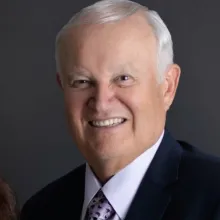
Mr. Seiglie was born in Havana, Cuba, and came to the United States when he was a child. He found out about the Church when he was 17 from a Church member in high school. He went to Ambassador College in Big Sandy, Texas, and in Pasadena, California, graduating with degrees in theology and Spanish. He serves as the pastor of the Garden Grove, CA UCG congregation and serves in the Spanish speaking areas of South America. He also writes for the Beyond Today magazine and currently serves on the UCG Council of Elders. He and his wife, Caty, have four grown daughters, and grandchildren.
