

Jorge de Campos
This transcript was generated by AI and may contain errors. It is provided to assist those who may not be able to listen to the message.
Many physical things that God has created are a shadow of spiritual things.
We only learn through our five physical senses, right? So God teaches us spiritual lessons through our physical senses. And God uses many symbolisms in the Bible, throughout the Bible, to highlight those spiritual lessons. If you and I turn briefly to Colossians 2, verse 16 and 17, Colossians 2, verse 16 and 17, we read, let no one judge you in regarding to food or drink.
So food and or drink, so it does not just imply directly clean and unclean foods, because it's food and drink. So it's more than that. So it's a manner of how you observe, how you have these festivals and feasts, because then it says regarding a festival, you know, God's festivals or the new moon. And as it is in the Bible, it's just in the Greek is a word which basically just implies the festival of the new moon.
And the festival, the only festival that falls on a new moon, is the Day of Trumpets, which points to Christ's coming and or Sabbaths, which also point to a time of rest. So let no one, no man judge you how you observe these days, these festivals, which point to things in the future like trumpets, like the Sabbaths, because they are only a shadow of things to come.
You know, the real the real rest, the real promised land to come for us is the kingdom of God. And the wall tomorrow as an interim step of a thousand years, but beyond that, the real rest is the kingdom of God. So those holy days point to things to come. And so let no man judge you but the body of Christ. The word substance is better translated because the word is Selma, which means body, and the word is, is not in the Greek manuscript. So it was added, and if you look at it, it's in italic, in the King James Version, in most versions that you would have, because it was added.
So let no man judge you but the body of Christ, which is the Church of God, regarding how you observe God's festivals. And so what do we have here? God's festivals are a shadow of things to come. And so today, brethren, I want to talk to you about lessons from duality, the shadow of what is to come. There are many lessons from duality. For instance, the Sabbath itself, when you look at Exodus, points to the creation week. But when you look at Hebrews, chapter 4, verse 9, it's talking about there, it reminds the Sabbatism of a Sabbath, a Sabbath rest, a Sabbatical rest for the people of God, which not only points to the weekly Sabbath, that remains, but also to the meaning of that Sabbath for mankind.
Brethren, we live in a world today that it's no rest for mankind. You could say that 50% of the population in the United States, and probably in the whole world, is suffering from anxiety. And why such an enormous, an enormous number? It's because the world is a disaster. There's no rest. And the only hope we have for rest is when Christ will come, symbolized by the Day of Trumpets, and will bring peace in the world tomorrow, a true Sabbath rest.
So these holidays represent shadows of things to come. The promised land that Israelites went into. It was a physical, but the ultimate dual duality, dualism of that, is that it's going to be the millennium, and ultimately, the kingdom of God. The bread. You remember when Israelites went into the wilderness and didn't have food, and they moaned and groaned, and then God gave them manner, right? Bread from heaven. But Christ said, I am the bread from heaven. So Yahweh see a duality, and whoever eats of the bread will never die. So there is a duality, physical to spiritual.
If we just look at our human body, you have fingers, you have nails, you got eyes, you got toes, knees, stomach, liver, etc. You have many members in the body, and they all perform their function together as part of the body. For instance, if your back is quote-unquote killing you, particularly your lower back, you can't do much. The body can't function properly. So physically, that is an analogy or a duality to the spiritual body, which you, we all are, which is the church of God, the body of Christ.
And so we all got to do our part together as a unity so that we as a body can do a work. As we heard in the first split sermon, if there are factions, if there are divisions, if there are different ideas, I have a bad idea, instead of God's idea, there's problems. And the work cannot be done effectively. There's the vision, the church gets split, and that's not what God wants.
Oh, that's what Satan wants, but we have to look at that carefully. So there is another duality. Give you example, the fathering process. In other words, the process of a father implanting a human seed in the womb of his wife and she becoming pregnant is a wonderful spiritual analogy of receiving God's Holy Spirit into us and we being begotten a second time. So all this are dualities. God teaches many things through duality.
Turn to Romans chapter 1 verse 20. Romans chapter 1 verse 20.
In Romans chapter 1 verse 20, we see a very powerful statement here, written by Paul to the Romans, which says, for since the creation of the world, obviously talking about the physical world, the one that we see, God's invisible attributes are clearly seen. Through duality. You see, through duality, the physical things point to spiritual things. Being understood by the things that are made, even God's eternal power and Godhead and divinity, so that people in the world are without excuse. And so, seeing that I want to talk about the shadow of things to come, lessons from duality, I want to focus on one which is related to physical sacrifices, as they are described in the Old Testament, pointing to the ultimate sacrifice, which is our Lord's Passover and its spiritual symbolism. When we turn to Exodus 25, Exodus 25 follows a section where they are instructed how to build a tabernacle, and then Exodus 25 states in verse 40, right at the end of that section, and see to it that you make them, you know, it was all these things to build up the tabernacle, according to the pattern which was shown you on the mountain. God gave Moses a pattern, like a design of what he should do, and that was a pattern of what? Look at Hebrews chapter 8, verse 4 and 5. Hebrews chapter 8, verse 4 and 5.
Hebrews chapter 8, verse 4 and 5. For if he were on earth, that's Christ, he would not be a priest. Now, because it's talking about he is now a priest after the order of Melchizedek, he's a high priest, but if Christ was on earth as a physical human being to die, he would not be a priest. Why? Because he was of the tribe of Judah, and Levites, more specifically the children of Aaron, were the ones and only ones that could be priests.
So, Christ could have not been a priest as a physical human being, since they are priests who offer the gifts according to the law, and the law says that they had to be children of Aaron. Those children of Aaron who serve, what? The copy and shadow of heavenly things. As Moses was divinely instructed when he was about to make the tabernacle, we finished reading that in Exodus 25. He was divinely instructed according to the model that was given him according to the pattern, and he built that according to a heavenly tabernacle, a spiritual tabernacle. That is very powerful, brethren, because those physical things were only a model. It's like when you, your little children, you make little models and things like that, to teach them little lessons. They do arts and crafts and do little things to teach them lessons. They're just a model of something else. God was teaching the Israelites spiritual lessons, and in fact us, through those physical models. And continue reading. As Moses was divinely instructed when he was about to make the tabernacle, for he said, see that you make all things according to the pattern shown you on a mountain, which we finished reading there a moment ago in Exodus 25. So what do we have? We have an altar. We had a Holy of Holies. We had a mercy seat. We had high priests. A high priest that could only go to the Holy of Holies when? When he felt like? No. Only on the day of atonement, and only the high priest could do it.
So all these things point to a heavenly tabernacle.
Shadows of things for us in the heavenly domain. And so they are lessons from duality for us. And specifically, I'm talking about lessons of the sacrifices, which these sacrifices they did pointed to whom? Jesus Christ, of course. The ultimate sacrifice. He's sacrifice, specifically at the Passover. And so let's just reconsider this carefully. We had a lower, earthly, physical tabernacle, and priests, which were a shadow of a heavenly, higher, spiritual, eternal, with the fathered wells tabernacle. Now continue reading in verse 6 of Hebrews chapter 8. But now he, Christ, has obtained a more excellent ministry inasmuch as he is also the mediator of a beireh covenant, which was established on beireh promises. So we had an old covenant. The law was written on tablets of stone. We got a new covenant. The law is written in a heart of flesh, and in your mind, and in our hearts and minds. We had a promised land that was physical. Now in the new covenant, we have eternal life in an eternal promised land, which is the new heaven and the new earth, ultimately. We had physical Israel. Now we have spiritual Israel. Can you see dualism throughout this whole story and lessons that we can learn from dualism? The whole sacrificial system was an earthly model, a shadow of the real stuff, the real image, which is in heaven. Now jump to Hebrews chapter 9 verse 1. Then indeed, when the first covenant, that's what we call the old covenant, had ordinances of divine service and an earthly sanctuary. For the tabernacle was prepared, the first part in which was the lampstand, the table, the showbread, which is called the sanctuary, and behind the second veil, the part of the tabernacle, which is called the holiest of all. You see, this is a teaching opportunity. It's a teaching moment. Physical sacrifices shown in the first part of the tabernacle, they were done daily, morning and evening, they were done weekly, they were done monthly, they were done at annual festivals, they were done continuously, they only shadowed the real sacrifice, which is Christ's.
The priests of the Aaron line, the sons of Aaron, they only shadow the true high priest, Jesus Christ, our high priest. The Holy of Holies, behind the veil on earth, was a shadow of God's throne in heaven.
Let's now continue reading in Hebrews 9, verse 13 and 14. For if the blood of bulls and goats and the ashes of a hifer, sprinkling the unclean, sanctifies for the purifying of the flesh, only a fleshly thing, but not the heart and mind and spirit, how much more shall the blood of Christ, who through the eternal spirit offered himself without spot to God, cleanse your conscience? Cleanse us mentally, clear our conscience. When we have guilt feelings, he cleanses it. At Passover, all those past sins are forgiven, cleansed, cleansed from dead works, which means that we're not going to continue doing dead works, because they're dead. We killed them. They did. To serve the living God. So that means we're to become a new man.
So what we have here is that Christ's sacrifice is so much more than those physical sacrifices. Consider this. The one eternal being of the God form, as you read, he was in the form of God, Philippians chapter 2 verse 6. He died for us. He gave up being of the God kind. He gave it up voluntarily and became of the humankind. And furthermore, he died on a cross, on a tree for us.
And obviously he did this under the delegated authority of the Father.
Can we therefore grasp that the one being under the delegation of the Father, who created us, he is the one to whom the Father delegated us all action plan of creating sons and daughters in his kingdom. He died for you and I. And it's not just dying, as a human being, he died as a Spirit being.
You and I cannot even begin to understand what being a Spirit being is like, the joy and the happiness and the glory. He gave it all up.
Because he had a wonderful and he has a wonderful trusting relationship between him and the Father, and that's what they want us to be, to have a trusting relationship with them. We've got to be faithful. Faithfulness builds trust, and trust builds a healthy relationship.
So can we grasp the shadow of the Passover sacrifice that he did, the deep significance of the sacrifice of Christ for you and I?
And now let's jump to Hebrews 9, verse 28, just the first part, Hebrews 9, verse 28. And he says, and so Christ was offered once to bear the sense of many.
His sacrifice was offered once. That's it. Once. They were doing these sacrifices of bulls and goats and sheep, whatever, symbolizing the actual Passover lamb, because they pointed to the Passover lamb, and the Passover lamb points to Christ, of course, our Passover lamb, but they were doing these daily, morning, afternoon, every Sabbath, every month, every annual holy day. But Christ did it once. Finished. As I say in, I guess, in German, clar. Clar. It's finished. That's it. Once and for all.
And so let's now read in chapter 10 of Hebrews, verse 1. For the law, obviously the law of these sacrifices, the ceremonial law of sacrifices, having a shadow of good things to come, these sacrifices were only a shadow of the good thing to come was our spiritual, eternal sacrifice, which is Christ, and not the very image of the things that can never, with the same sacrifices which they offer continuously year by year, day by day, month by month, Sabbath by Sabbath. Those things can never make those who approach them perfect. Those physical sacrifices can never make a person perfect. Could not make these realites perfect. Cannot make us perfect. There was just a shadow of the reality which is Christ. Christ's sacrifice.
Look at verse 14 in chapter 10. You see, those things cannot make us perfect. But now look at verse 14, and it says, for by one offering, he, Christ, has perfected.
Christ's single one offering has perfected.
You and I. It is a profound, joyous meaning. It is joyous that gives you goose pimples. It gives me goose pimples. We probably have never really considered he has perfected us. Oh, well, I'm not perfect. No, because it says he has perfected us. That, for God, that sacrifice is enough to complete the job. That ultimately, you and I will be perfect.
You know, as Christ said, I think it's Matthew 5, 48, says, Be you perfect as my Father in heaven, he's perfect. That is our goal. And you and I know that in this physical earth, you and I will never be perfect. But provided we make our effort and our hearts a right to go that way, when we are resurrected, God will make up the difference. Wow! That is amazing, Breyron. That is amazing. So, but then it continues. It is perfected forever. Those who are being present, continuous, who are being sanctified.
We are being sanctified. We are in the process of being made saints. Sanctified made saints. Made like God. Obviously, not out of his statue, but he wants us to be in his family. And the children are like the parents. So, we have a physical shadow, a teaching opportunity that Christ sacrifices as the true Lamb of God. He is the true Passover that passes over our sins. And that is important when we keep the Passover to discern the Lord's body. We need to discern the Lord's body. Turn with me to 1 Corinthians chapter 19, and we'll come back to Hebrews in a moment. So, 1 Corinthians chapter 11. Verse 29.
1 Corinthians chapter 11 verse 29. For he who eats and drinks in an unworthy manner eats and drinks judgment to himself, not discerning the Lord's body.
Wow!
Are we drinking and eating the Passover in an unworthy manner? That's why it says, examine yourselves. In verse 28, we need to examine ourselves and then take the Passover. It doesn't say examine ourselves and then don't take the Passover.
But it means that we've got to look at ourselves and identify what we need to change and then make a change. Otherwise, it says, if we don't do that at the end of verse 32, we then could, if we don't do that, at the end of verse 32, says we could be condemned with the world. Do we get it? Do we get it?
If we don't examine ourselves, if we have a problem with somebody else because discerning the Lord's body, it's dual. It's another duality because it's the physical Lord's body. We discern Jesus Christ, the Word, the Creator, the value of His sacrifice, and we've got to take that in a manner which is worthy, which was, in a way, very well described in the previous message.
But the duality is that the Lord's body is the Church of God. It's God's people. It's God's brethren.
And are we discerning each other's brethren in the Church? Are we discerning our brothers and sisters? Are we treating them with cold shoulder? Are we just, and we know we're doing it. Are we taking the cup of our blood?
We've got to do that.
If we harbor any bad feelings against somebody, we better fix it. We better fix it.
Other law, otherwise, we're taking the Passover in an unworthy manner spiritually, and then we may end up being condemned with the world.
That's serious stuff. That's not a joke. And so, going back to Hebrews chapter 10, and we now read verse 16. We read verse 14, we are being sanctified. How? Through the power of God's Holy Spirit. God's Holy Spirit sanctifies us. And it says, but the Holy Spirit, verse 15, is a witness, and it says, and it says, verse 16, because this is the new covenant that God will write His laws in our minds and in our hearts, and their sins will remember no more.
And then, continuing in verse 19, therefore, brethren, this is so encouraging, brethren, because the Passover is an encouraging time.
It's a joyous ceremony. Yes, it's a solemn ceremony, but it's a joyous ceremony, because you have been perfected. But your conscience has been cleared of those sins, but you and I have to stick to the road of being sanctified, continuous present tense. And therefore, brethren, verse 19, having boldness, have courage, have strength to enter the holiest. That's the Holy of Holies. Remember, only the high priest could enter the Holy of Holies. You enter it by the blood of Jesus, which is He, our high priest. But you remember, the high priest could only enter on the Day of Atonement. Christ is now there all the time.
And when you appeal to the Father through Christ, Christ is your advocate. Ultimately, yes, He'll be your judge. But now He's your advocate, your defensive advocate, because you have an accuser of the brethren, Satan, Revelation 12, verse 9. And so you and I have now a defense attorney. And you and I can enter the holiest of Holies. We could not enter the Holy of Holies. We can now enter the Holy of Holies by a new and living way, which He consecrated for us, which He Christ consecrated for us, through the veil. Remember that veil, that thick veil that was torn? That is His flesh.
And therefore, having a high priest over the house of God, let us draw near with a true heart full of assurance of trust, trust for what we don't see, which is faith. Having our hearts sprinkled from an evil conscience, and our bodies washed with pure water. And what is that pure water?
Titus chapter 3 verse 3 through 8 tells us what that pure water is. Titus chapter 3. Titus chapter 3 verse 3 through 8.
For we ourselves were also once foolish, disobedient, deceived, serving various lusts and pleasures, living in malice and envy, hateful and hating one another. But when the kindness and the love of God, our Savior, the kindness of God was exemplified, He is exemplified to us by Christ's coming. That's when Christ appeared. That's the kindness of God the Father, our Savior. Yes, Christ is our Savior, so is Christ, so is the Father. They're both working together as a team. And therefore, when the kindness and the love of God, our Savior, toward man appeared, and it was when Christ appeared, not by works of righteous, in which you and I have done, because you and I have done nothing good, but according to God's mercy, He's done everything to save us, to make us perfect, ultimately, through the washing of regeneration and renewing of the Holy Spirit. The Holy Spirit regenerates us, begets us again, and washes, renews our mind, the sanctification of the Spirit, whom He poured out on us abundantly through Jesus Christ, our Savior. And so, brethren, as we approach the Passover and the Days of Unleavened Bread, yes, we go through trials, but there are enormous lessons from duality that you and I can learn, which are shadows of what is to come. And we have a wonderful opportunity to learn through these physical models or examples, because you and I need to look to Christ as our Passover Lamb, which takes away all our sins, that takes away us away from slavery of sin.
So what? So what? For your good and for my good, for your glorification, and for my glorification in the Kingdom of God with eternal life.
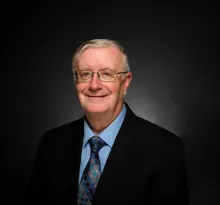
Jorge and his wife Kathy serve the Dallas (TX) and Lawton (OK) congregations. Jorge was born in Portuguese East Africa, now Mozambique, and also lived and served the Church in South Africa. He is also responsible for God’s Work in the Portuguese language, and has been visiting Portugal, Brazil and Angola at least once a year. Kathy was born in Pennsylvania and also served for a number of years in South Africa. They are the proud parents of five children, with 12 grandchildren and live in Allen, north of Dallas (TX).
