

Jorge de Campos
This transcript was generated by AI and may contain errors. It is provided to assist those who may not be able to listen to the message.
Sit, yeah. Well, before the sermon, or after pleasure of hearing from Heidi, Heidi Brown, she's going to sing a song called A Believer's Prayer. And it's been written, the song by Sally the Fourth. So, I'm looking forward to that, and then I'll follow up with the sermon.
I love you, heaven. Teach me, I pray, to walk as my witness on you. Strengthen my spirit, confront me, love, fame, cheer, snore, let me linger one day. Let me be the day the water my guide, come and guide you to the sweet garden, let me be the light of the night, let me take you to be like the bottom of a river. Where there is sorrow, let me impart the hope and the comfort of you. Where there is suffering, open my heart to turn to, and they won't be too. Let me be the eternal one who brought my guide, come and guide you to the sweet garden, let my love find it, teach you to be the light of the love of the believer. Where there is hunger, I know I have to give the behavior I give. Where there is fear, give me courage to live, and never the famous or grandest love. Where there is fear, give me courage to live, and never the famous or grandest love. Where there is fear, give me courage to live, and never the famous or grandest love.
Where there is fear, give me courage to live, and never the famous or grandest love. Where there is fear, give me courage to live, and never the famous or grandest love.
Thank you, I.D. That was beautiful. Thank you. Appreciate it. Let's see. Jim, you're getting through his technology.
Dear brethren, this past week, I saw a little clip on TV that really touched me positively. And it was not because in that clip I saw a red convertible in space.
But it was because behind it, it was a beautiful picture of planet Earth, like a beautiful, beautiful blue and white ball. Just was so beautiful. And brethren, it just made me think about God's creation. It's just awesome. It really is awesome. As you look at it, it's just fantastic. Now turn with me to Romans chapter 1 verse 20. Romans chapter 1 verse 20.
Romans chapter 1 verse 20. For since the creation of the world, his invisible attributes are clearly seen, being understood by the things which are made, even his eternal power and Godhead, so that they are without excuse.
The invisible attributes, characteristics of God are clearly seen.
In other words, even God's power and Godhead and divinity are clearly seen by the things that are being created. In other words, the physical things that we have around us are, in a way, a very, yes, poor, but it is still a shadow of things which are the reality that we don't, we can't see, but they are far greater and awesome.
You see, because, as I mentioned, for instance, last week, there's this spectrum of knowledge from as far as left or to the east or as far as to the west, but you and I can only see a certain quote-unquote frequency of knowledge or limit, which is physical, but there's knowledge beyond the physical. So we can only see one thing, and God, in this physical world, created things that give us an idea, an inkling, a shadow, a simple way of seeing things through a glass darkly, but seeing the real things which we, one day, will indeed see.
So, putting in other words, physical things that God created are a shadow of the spiritual.
Turn with me to 2 Corinthians chapter 4. 2 Corinthians chapter 4. You can also read two verses there, 17 and 18.
2 Corinthians chapter 4, verse 17 and 18. For our light affliction. Now, think about the sermon that we had today. Our sufferings, our light affliction, even though our sufferings for us may be huge, sometimes overwhelming, sometimes we think, how can we cope with this?
But it says, our light affliction, which is but for a moment. But for a moment, you know, what is, you know, maybe we got pain for a few days, maybe got pain for five years, maybe you got pain for seven years.
But what is that compared to a thousand years, or a million years, or eternity? It's but a moment.
So, our light affliction, which is but for a moment, is working for us back to that point of thinking of it from a point of joy, is working for us a far more exceeding and eternal weight of glory.
A far more exceeding and eternal weight of glory. And that's why, in the sermon, it so very aptly was described, that we can have long suffering with joy, because we need to pray for the things of God and to look positively for those things that ought to come. And yes, pray with thanksgiving, but also pray for the things of God. While we do not look at the things which are seen, so these physical things we see, it's not really what we should be looking at, but at the things that are not seen, we should look through beyond to the reality. For the things that are seen are temporary. What we see, it comes and goes. It's like a beautiful flower. It's lovely to have flowers, but it's a beautiful flower. It blooms, and then a little lighter. It's gone. It's temporary.
But the things which are not seen, because there's a whole different world, let's call it that way, a whole different area of knowledge that our limited physical environment just cannot see. And those are eternal. And there waits for us glory, glorification through Christ. You know, as it says in Romans, if we suffer with Him, we will be glorified with Him. So, why? Why? Because this is merely... think of it like a gymnasium. You just got to jump to exercise. In other words, it's a training ground. It's just a training ground. It's a training ground for us to be kings and priests in the kingdom of God. You know, it's a training ground for us to have the mind of God, to have the character of God. It's for us to be glorified, for us to be glorified like God, like the Father, and like the Son.
And so, these physical things are just a training ground. For instance, simple things like the Sabbath. We are every Sabbath. It's only an image. It's only a shadow of a bigger rest to come, which is the millennium. But that itself is also only a shadow of the reality, which is spiritual, which is the kingdom of God forever, the real rest. Look at Hebrews chapter 4. Hebrews chapter 4.
For the Israelites, the Sabbath, for them was a shadow of the promised land. But you know, many of the Israelites have not inherited the promised land. They've actually gone to captivity because they did not obey. Look at Hebrews chapter 4, verse 4 and 5. For he has spoken in a certain place of the seventh day, and you and I know, obviously, it's a Sabbath, in this way. And God rested on the seventh day from his works. And again, verse 5 in this place, they shall not enter my rest. Now, Israelites didn't. Every Sabbath, go, you know, to synagogue or whatever, you know. But God said, they will not enter my rest. In fact, many of them do not even enter the promised land, but the real rest is the kingdom to come. And therefore, you and I understand, as you read in verse 9, there remains therefore a rest, or as some Bibles put it, a Sabbath rest. In the Greek, it's a sabbatismus, which means there's a Sabbath keeping. Therefore, it remains a Sabbath keeping for the people of God.
So, Yah is Paul, in the New Testament, saying that you and I need to keep the Sabbath.
Think about it. Yah is Paul, in the New Testament, saying that we need to keep the Sabbath. Because it says the Sabbath, the keeping of the Sabbath remains for the people of God.
But, as being Yah today on the Sabbath, it's only a shadow of things to come. Yes, you and I stop our daily activities, and we have a different activity. Yes, being with God, being with these people, enjoying the Sabbath in a different way. But this is only a shadow of things to come, of the Kingdom of God. And so, God uses many physical things to teach us spiritual lessons. A training ground, a teaching, an educational opportunity, an educational opportunity. For instance, the Promised Land. For Israelites was a physical thing. For us, what's the Promised Land? It's spiritual. It's God's Kingdom. You know, for instance, about the bread, they had the manna.
But the real manna, Christ said, I'll give you the real manna, which is Christ in us through God's Holy Spirit. That's the real bread. You think how many... you look at the human body, fascinating. I mean, you studied the human body, how intricate, how complex, how one thing affects another.
Mankind doesn't even begin to cope. We already comprehend certain things, but just so complex. When you talk to people with different theories of illnesses, or things like that, and you see how complex it is, and you go even how they can do certain analysis and certain tests, and look at certain things, just how complex the human body is.
But you know what? Paul uses it to compare it to Christ's body, the spiritual body, in which Christ is the head, and that every member is supposed to work together in unity. Again, as we are in the sermon, it's in unity.
It's just amazing, because now we have the human body with its members, arms, fingers, cells, liver, whatever, other parts. They all perform a function for the well-being of the body. If one part of our physical body is not functioning properly, the whole body suffers. So, the spiritual lesson is we all need to do our part for the spiritual body, and if one of us are not doing the part, it affects the church, which is the spiritual body of Christ.
We look at another physical example, the begettle process, the fathering process, and the growth process of a baby in a mother's womb. Amazing miracle! Amazing miracle! Really, it is amazing. Until that old baby grows to maturity, to a certain maturity that's ready to be a human being by himself or by herself. And if it's premature, you know how problems could happen, incubation, etc., etc.
So, it needs to reach a certain maturity to be ready. Therein itself lies a wonderful spiritual analogy. I understand it's only an analogy, but when we are begotten by God's only Spirit after baptism and receiving the Lion of Hands, we are now begotten as a child of God, growing to maturity. And at the end of that maturing process, and the end of that maturing process is when Christ comes or we die and then will be resurrected, changed into a new spiritual body, mature, glorified body, no longer a baby, but now a glorified body in the kingdom of God.
That is just an amazing analogy. And so God uses physical as a shadow to bring profound, profound spiritual lessons. Now, today, brethren, I want to look at two other shadows besides some of the examples I've mentioned already.
I want to look at two physical shadows and the spiritual image of what they represent and how they are interconnected and how they are so meaningful. And this is particularly important as we are starting to prepare for the Passover and the leavened bread. We're going to look at two physical shadows, namely offerings and sacrifices and unleavened bread. And now they tie together because they are only shadows of something bigger, spiritually speaking. And therefore, in the end, these two are spiritual opportunities for us to learn about the very image of what they represent.
See, because the shadows is not the real stuff, but they give us an idea of what is the real stuff. It's like if you have an object and then you have some light and then there's a shadow. The shadow gives you an idea, but it's not the reality. The reality is the object.
That is the real image. And therefore, we're going to use those two examples. One is sacrifices and the other one is unleavened bread. That's what we're going to cover them today. So let's start with sacrifices and we're going to start by looking at Hebrews chapter 8. Hebrews chapter 8.
And we're going to read verse 4 and 5. Hebrews chapter 8 verse 4 and 5. For if he were on the earth, that's talking about Christ, he would not be a priest.
If Christ, for instance, was today on the earth, he would not be a priest. Why? Because he is not of the tribe of Levite, because in fact he is not a tribe of Aaron, because the priests had to be of descendants of Aaron. Right? It's Abram, Isaac, and Jacob. They had 12 sons, which is Judah, Reuben, Simeon, Levite, etc. And they had to be sons of Levite, and they had to be specifically sons of Aaron to be priests. And they did not go there if they were, otherwise they'll be, you know, you know what happened. They will not be breathing much longer after that.
So if Christ was a physical human being now on earth, and obviously this was the time that the temple was still there, all right, then he could not be a priest because he was not of the tribe of Levi, but he was of the tribe of Judah. So he could have not been a priest.
Since there are priests who offer gifts according to the law, and the law said you have to be of the Aaron line to be a priest. But look at verse 5, who served the copy and shadow of the heavenly things. Those priests of the order of Aaron served in a tabernacle until the time of Solomon, and after Solomon, in the temple, right, because they built a temple after the time of Solomon. So before that they were serving in a tabernacle, and then later they were serving a temple. But anyway, they served in that holy of holies and on that holy place. They served there, but those were only a copy and shadow of the reality which is in heaven, which is lost throne. We would just think of it as just a little model, just kind of a role-play model, not the real stuff, just something physical as a teaching opportunity of the reality. To serve the copy of shadow of heavenly things, as Moses was divinely instructed when he was about to make the tabernacle. For God told him, for he said, See that you make all things according to the pattern shown you on a mountain. So let's go back and look at that instruction.
We're going to come back to Hebrews, but we're going to look at a few things in Exodus. So you're going to need a couple of fingers today if you want to keep tabs. So let's look at Exodus chapter 24. Exodus chapter 24. Now you know, Exodus 24 is soon after Exodus 20, right? And you know Exodus 20 is when the 10 commandments were given. So you know what we've got here. So let's look at it. Verse 9. Exodus 24 verse 9. Now, then Moses went up. Now who went up with Moses? Moses went up, also Aaron, Nadab, and Abayu, and 70 of the elders of Israel. So they went up towards the foot of the mountain, let's call it. It was not really at the end, at the top of the mountain, as you will see a little later. So they went up to a certain area. And what we had here is 74 people. The way I count was Moses, Aaron, Nadab, Abayu, and 70 elders of Israel. So if Mark maps is correct, that's 74. Right? And they saw, they, they all saw the God of Israel. They all saw God.
And it was under his feet as it were a paved work of sapphire, stone, and it was like the very heavens in its clarity. So they, they, they had, like, they saw, as they call this is a theophany, it's, it's God presenting himself to mankind. And then continuing reading in verse 11, but on the nobles of the children of Israel, he did not lay his hand. So they saw, and they ate and drank. So they saw, and they ate and drank. In other words, they had a meal with God, God of Israel.
Now, you and I know there's only one God. There's only one God. We also know there are two beings in the divinity God, yet family. So let's, to explain this clearly, let's take a little side trip very quickly to explain that. So we're going to come back to Exodus, so that's where you can put the other finger there. But now we're going to look at John. John chapter one.
John chapter one.
Verse one. In the beginning was the Word. Now, you know the Word. When you read verse 14, the Word became flesh and well amongst us. So the Word is the being, became Christ. So in the beginning was the Word, just to make it simple, just call it Christ. It was not yet Christ. It was the Word. It became Christ after the human birth, after he became flesh. But he has the Word. And the Word was with God. And the Word was God. So it kind of, as human beings, sometimes finds it difficult to comprehend.
But think of it as an example. Yes, this example we've been using in the Church, yes, a family. It's a family. For instance, husband and wife. They are the Smith family, for instance, the Smith. They are the Smiths. Smith, right? So he is Smith, and she is also Smith. But the head of the family is the Smith. You know, the head of the family is Mr. Smith, is the Smith. But the other member of the family is also Smith. I know it's a bad analogy, but it is a simple example of trying to explain. So what are we saying?
And it says, look at it in verse 2, he was in the beginning with God. Here was the Word that was who became Christ, was in the beginning with God.
Now, you read a little bit later in verse 18, no one is seeing God. Here was the head of the family. No one has seen God at any time, but only the begotten son, which is the Word, which is Christ, has seen Him. And that is backed up by others' statements, like in John 5.37 and John 6.46. It says the same thing. So no one has seen the Father. So, yeah, we have God. The God had divinity, but it is two beings.
I know it's difficult to explain because it's a spiritual thing and we are physical, but that's what it is. And look how Christ explains this a little bit further in John chapter 14. John chapter 14. John chapter 14, verse 7 and 8. John 14, verse 7 and 8. It says, For if you had known me, you would have known my Father.
Also, from now on, you know Him. You know, He was the Father, and you have seen Him, the Father. So He's talking to His disciples. He's saying to them, if you know me, you're not a Father. In fact, you're seeing the Father because you're seeing me.
Obviously, it's a different being, a different, let's call it, person. It's not person, but being, right?
But when you see one, you see the other one because their mind, their way of thinking, their way of acting, their goals, their attitudes, their kindness, their loving kindness, they're the same. So if you see one, you see the other because they behave the same way of love.
Take a part. And Philip said, Lord, show us a Father, and He's sufficient for us. So he's still going to get it. But look a little bit further in verse 11. Believe me. Now Christ is answering Philip. He says, believe me that I am in the Father and the Father in me.
It's like Christ is in us, and if you and I are indeed being a good example of Christianity, of a true Christian, our conduct will show what Christ is like. But it also says, we will come and live in you. The Father and the Son are also living in us. So that's what it is through God's Holy Spirit. And he says, yeah, I am in the Father and the Father in me. Or else, believe me for the second word. So if you see the Son, you see the Father, if you see the Father, you see the Son, because they are one. They are one. They are one in mind, in spirit, in intent, and in goals.
Look at Christ's prayer. Just one or two pages that you have in your Bible in John chapter 17.
And look here in his prayer, in front of the disciples, he prays in verse 20 of John 17, I do not pray for these disciples alone that are with me, but also for those who will believe in me through the word. In other words, Christ there was praying for you and I. He's praying for you and I. And he's saying that they, in other words, us, we all, may be one.
I can only be one. We are different people. But he says that we may be one, as you, Father, are in me and I knew that they may be one in us. That the world may believe that you sent me.
And the glory which you gave in me, I've given them. That they may be one, just as we are one.
See, the Father and the Son are one, but you and I are to be one with them as well, if we have that spirit of unity, that mindset. As we have, for instance, an example in the sermon, of long suffering. We have that same attitude, that same spirit, that same, then we are one. We are one within. And therefore, like Christ said, if you've seen me, you've seen the Father. Look at verse 23. I in them and you in me, that they may be made perfect. And they is not talking to us, remember, it's praying to us, for us. That they may be perfect in one. That you and I may be mature enough to be one. And that the world may know that you sent me, and that love them as you have loved me. So, Brethren, here is Christ explaining what one is all about. One in God is not one being. You and I are to be children of God, so we are to be part of the God family. We are to have the name God in us. We are to be God under the God, which is the Father, under Christ as the head, and we are the same family. And we are to be one. This obviously is difficult for us to comprehend, because quite often when we talk about God, we immediately relate to one person.
And so, that's where we can get confused. When we talk about God, particularly before we are glorified, at the moment there's only two beings that are God. God, the Father and the Son. When you and I are resurrected, there will be more beings. God willing, that will be there.
At the time of the Old Testament, there were two beings. You read in Genesis, let us make man in our means according to our likeness. But God is one. Is one God. They won, like he says, that Christ says, we are one. They won. But there's two different beings.
What do we fail to understand, quite often?
Is this a simple example or analogy?
For instance, for instance, there's this man, I don't want to mention the name, but you know the name, but this man, that put that convertible car in space. Right? Now, I asked you, do they literally do that?
No. He had a team of engineers and technical staff. He had idea. He had a thing. He's like the CEO. The brains behind it. He says, this is what we're going to do. And he delegated to people to do the work.
And he used tools like electricity and whatever it is, and gas and whatever it is to do that. But the man that did it, he actually didn't do it, literally speaking.
He delegated it. But he worked as a team in that organization.
And that's the same thing with the Father. He's delegated everything to the Word, which is now Christ. He delegated. He delegated all executive duties to the Word, which is Christ. So he studied in heaven and said, the Word you do. You speak. You create everything.
Delegated. To the point that even the judgment and the resurrection is being done by the one that's been delegated to which is Christ. Look at John chapter 5. John chapter 5. John chapter 5.
For as the Father raises the dead, and yes he does, he raised Christ from the dead, and gives life to them, and them he's in italics, and even so the Son gives life to whom you will. All the Son does what the Father tells him to do. For as the, he says, yeah, for the Father judges no one. John 5.22. For the Father judges no one, but has committed all judgment to the Son, has delegated all judgment to the Son, that all should honor the Son, just as they honor the Father.
And he who does not honor the Son, does not honor the Father who sent him. This means, brethren, that honoring the Son is not dishonoring the Father.
If you honor the Son, you're automatically honoring the Father. And if you are a parent, you can understand that. When people say, look at what your Son has done, and he's such a good citizen, he's done with us, such a good act, or whatever it is, man.
Is that putting you as a dad in a bad position? Is that a dishonor to you as a dad or as a mom? No! It makes you feel good, because it's your son. Right? So when you have people that say, oh well, if you are honoring Christ, you are putting the Father on a corner by no means. That's not what Christ is saying. That's what Christ is saying. Let's go back to John chapter 1. We are reading in verse 1 and 2. So let's read again verse 2. And he says, John chapter 1 verse 2, he was, that's the word, was in the beginning with God, which the Father, so the Son was with the Father, the two were there. And look at verse 3, all things, all things, and all things means all things. You can read in Colossians chapter 1 that it says that he even includes spirit beings. It says, all things were made through him, the Word, through Christ. He was the executive director, let's put it that way, that actually did all the creating. And without him, that is, without Christ, nothing was made that was made. All.
That means everything, everything. That includes also the spiritual world. Look at John chapter 3 verse 35. John chapter 3 verse 35.
The Father loves the Son and has given all things into his hand.
Put it another way. God the Father trusts the Son so much that He's delegated everything, all the executive power in modern language, let's call it that way. He delegated all executive chief, executive work to the Son. He's the chief executive officer of all the creation. Let's put it this way. But the Father is the owner. Do you follow that? He's above that. He's above that. And look at 1 Corinthians 15. 1 Corinthians 15. That's the resurrection chapter. 1 Corinthians 15.
Verse 25. It says, For he, let's Christ, must reign, till he has put all the enemies under his feet, under Christ. In other words, he as the executive officer must reign, and the last enemy is death.
And then it says, verse 27, for he has put all things under his feet.
Then was the Father has put all things under Christ's feet.
And it says, when he says, all things are put under him, it is evident that he put all things under him, he is accepted. Obviously, the Father is accepted, because the Father put all things under Christ, so the Father is accepted. Now, when all things are made subject to him, that's the Christ, Christ, then the Son himself, that's Christ, will also be subject to the will also be subject to him, that's the Father, who put all things under him, under Christ, that God may be, that the Father may be all in all. It's just the way it is, and that's why it says, in verse 24, then comes the end when he delivers, that's Christ, delivers the kingdom of God to the Father, to God the Father, when he puts an end to all rule and all authority and power. It was the chief executive officer has completed his mission that the Father has given him to do, to create, mission accomplished, and he says, your Father, you the owner, it's all yours. That's what it is.
Therefore, and I said this is a little detour, so let's go back. Quite a long detour, but it's important to understand. Exodus 24. Let's go back to Exodus 24. Exodus 24, where it says, Moses went up and 70 elders, they says they saw the God of Israel.
That was the chief executive officer, the Word, because now man has seen the Father. But if you've seen me, you've seen the Father Christ there, and we are one, and there it is.
And therefore, continuing in verse 12, then the Lord, who's the Lord, is the being, which is God, that was the Word that interacted with man, that everything was delegated to him, everything was put on the subject under him. That's the Lord, that's the Y-H-W-H in this instance. That's the Word, that's what now we call Christ, said to Moses, come up to me, said to Moses, on the mountain and be there, and I'll give you tablets of stone, and the law and the commandments I have written that you may teach them. The Word, the being, is only one God, with these two beings. And the Word was the one that interacted as the one that is the chief executive officer, then, interacting with mankind. And so we read a little bit further in the next chapter, Exodus 25 verse 40. Exodus 25 verse 40 says, and see to it that you make them according to the pattern which was shown you on the mountain. In other words, the Word spoke to Moses, took Moses up on top of the mountain, and the others then went back, and you know what shadangans they made afterwards, right? No wonder God was crossing them, right?
But Moses went up for 40 days and 40 nights, and there he gave Moses a model, and Moses could see that model, could see it, and therefore wrote down exactly how to bow the tabernacle and the areas for sacrifices, which are a pattern of the heavenly things.
So the Father was in heaven, the other being the Word was speaking to Moses and interacting with his creation.
And I mentioned to you, keep a tabs on Hebrews 8, so let's go back to Hebrews 8. Hebrews 8.
And we were reading in verse 4 and 5 of Hebrews 8, and it said, particularly verse 5, who served the copy and shadow of the heavenly things. So it's talking about here that the priests were serving in the tabernacle or in the temple, and this was only a copy and a shadow, a physical model, a physical, let's call it prototype.
Well, I like for instance, when you, I don't know if you've ever seen a place where they're going to be building, some big building, or they're going to build a big airport or something like that, and then they have a little model showing, yeah, this is what it's going to look like. And you come and look and see, oh yeah, you can start seeing, getting a vision of that. And that's what it is. It's only a model. That physical temple was only a shadow of the reality, which is in heaven. And then we continue reading here in verse, verse he says, verse 5, 4, he said, see that you make all things according to the pattern shown you on the mountain. That's what it was. And these relics served there.
So they made everything according to that pattern. And they had that old covenant, and they had promises and things like that. That old covenant was just a physical pattern of a better covenant to come, which is the new covenant. The old covenant was, it had the law written on tablets of stone. The new covenant has the same law written away in our hearts and minds.
You see, so the old sacrificial system was a shadow of the reality in heaven as a teaching opportunity. Look at chapter 9, verse 1, and then indeed, even the first covenant had ordinances of divine service and the earthly sanctuary for the tabernacles prepared. And they had the lamp stand, and the table, and the showbread, which is called the sanctuary. And then there was a veil, and there was the Holy of Holies. All this was just a shadow of the reality which is in heaven. You see, the physical sacrifices, bulls and goats were only pointed to the reality which is the real sacrifice, which is Christ.
The priests of the Aaron line, they only pointed to the reality which is Christ's priesthood after the world of Melchizedek.
The Holy of Holies on earth was only a prototype, a model of the reality which is God's throne in heaven.
And therefore, Christ said, I am the way.
I am life. I am the way. So, it shows that reconciliation to God, which was on that prototype of the temple which the priests took the offerings, and they burned the offerings, and the Aaron priests took it there and took it to the sanctuary and to the Holy of Holies on the day of atonement and all that, was only a prototype, a little sample, a little teaching opportunity to show that the real way to get there is the real sacrifice, which is Christ. And that's how we get there. We're just a little teaching model.
Nothing else. Look at Hebrews chapter 9 verse 13.
For if the blood of bulls and goats and the ashes of a hifer, sprinkling them clean, sanctifies the purifier of the flesh, how much more shall the blood of Christ, through the eternal Spirit, offer himself without spot to God, cleanse your conscience from dead works to serve the living God? And you see, so it all pointed to Christ.
Look at verse 28. So Christ was offered once to bear the sins of many, and to those who eagerly wait for him, you'll appear a second time away from sin for salvation. Look at chapter 10 verse 1. It says, for the law, what law?
Having a shadow of the goodly things, the law of the ceremonies, the law of sacrifices, the law that said the priests were Aaron, the ceremonial law was only a shadow of the things to come, which are the heavenly things, and not the image of the things that can never, with these same sacrifices, which they continually offer year by year, make those who approach perfect. Those sacrifices they did, they're just a shadow. They could not make anybody perfect, because the real sacrifice is Christ.
So the real sacrifice is what makes us perfect.
So, yeah, is this analogy. I know I took a long time, because I want to bring out a very crucial, important point, and that is in 1 Corinthians chapter 11 verse 29. 1 Corinthians chapter 11 verse 29.
It's talking about the Passover. 1 Corinthians chapter 11 verse 29.
And you know, it's a section we read around about the time of Passover, talking about it, we need to examine ourselves, and it says, For he who eats and drinks in an unworthy manner, he's talking about the Passover, which we do at once a year, at the right time, as we read in the New Testament, Christ did it at the right time, but he says, Who eats and drinks in an unworthy manner, he eats and drinks judgment to himself, not discerning the Lord's body.
Do we discern the Lord's body?
Now, there's a dual meaning here. There might be others, but there's two, two important meanings. Number one, the Lord's body is Christ's physical body. The real sacrifice, the real Passover, the Lamb of God.
Now, Christ, who was he? He was a word.
He was the one that created you and I. He was the one that everything was delegated to. He was the one that is the chief executive officer. I'm using this terminology a little bit loose, so please forgive me if it's not. Don't take it the wrong way, but I'm just using it to help you understand. He is the one that created the moon, the earth, this beautiful ball that we saw in the sky. We see the sky blue and white and all the other planets and the cosmos and angels. Even the angels that rebelled, they were created by him. This being of the God family, let's call it that. Now, this being became a human being, emptied himself of his power. He stole that being. He stole God.
But as a human being, he took as if he'd take a jacket off, and he took that power off, and he did not have that power because he was not a human being.
And he died for you and I.
So, when we take the Passover, do we discern what that sacrifice is? What that sacrifice is?
If we don't discern that, we could be taking a Passover in an unworthy manner. We could be making a sham of the sacrifice that the Word made for you and I. That's one meaning.
The other meaning is that the Lord's body is the Church, and he's the head of that spiritual body. And if we don't discern our brothers, and that ties in very nicely with the sermonette, because there is sin, and which one of us does not do wrong things? And because we all do wrong things, there's going to be suffering. And we all have to suffer patiently, long suffering, quietly, and be long suffering in love for our brethren. And if we don't discern that, if we start hitting back, if we start retaliating, if we start saying, well, he treated me bad, or she treated me bad, therefore I'm going to start a new church, or whatever, or I'm going to be separated, or whatever I'm going to do, what happens?
Look at verse 30. For this reason, many are weak and seek among you, and many sleep.
The outcome of this division, of this separation, of this people turning one against another, the end result is some people do get sick, some people do get heart attacks, and some people do die, and I do personally know people that have died because of splits to the church.
So, here we have a process of the Passover, a physical shadow, but the spiritual meaning is so important, which is Christ, and what is done for us, and the surname that body, one, his physical body, and two, his spiritual body.
That is so important. So, going back to Hebrews chapter 10. Hebrews chapter 10.
Hebrews chapter 10.
We see, starting in verse 14, for by one offering, he has perfected forever those who are being sanctified. By one offering, that's Christ's offering, is perfected. That offering is perfected.
Yes, that's perfected, but this action of perfection, of making perfection, which that offering does in one time, once off, you don't need to do it again, but those that are being sanctified, it's a process over a period of time, while we repent and change and make a mess, and then we've got to go back to the throne and say, please forgive me, and we are being sanctified, and as we be made holy, we are changed. We're becoming better people. We're becoming like God, we're becoming mature. It's a process. And then he talks about how this is part of writing the law in our hearts, and then in verse 19, his therefore brethren, having boldness to enter the holiest by the blood of Jesus, by a new and living way. Beautiful scripture. A beautiful scripture that we through Christ's blood, the real sacrifice that the physical Lamb just pointed to, we now are being perfected by coming to that throne by this new and living way which these relights of all never had.
You and I can pray and get on our knees, and we know that we can get through the veil by Christ's blood and talk to the Father thanks to the sacrifice of the Son. And that's a new and living way, which he consecrated for us through the veil that he is his flesh.
So brethren, that is the first shadow. And that is the first shadow. Christ's sacrifice, that Lamb is so important. Then the Israelites, after the Palsalva, left Egypt, and then they were told to keep the days of a living bread.
Egypt made them slaves. They were slaves in Egypt. Then they had a living bread, and they had to live a new life, and a new way.
Likewise, as we take and we go out without living, which means without being puffed up, without being arrogant and full of ourselves, we need to take that leaven in our lives, which Christ talks about being the leaven of the Pharisees, which is Matthew 1611, or Luke 12, verse 1, talks about the hypocrisy of the Pharisees.
And we are told, keep the feast with the unleavened bread of sincerity and truth. In 1 Corinthians 5.
So, brethren, what have we got here? We got a lesson that the physical, because of Christ, we are forgiven. Now, we gotta live a new life.
We have been liberated from slavery. And you say, well, I'm not a slave. Well, we all are. We all are. We all are slaves of sin. You just read Romans. You read Romans continuously, it says, we are slaves of sin.
Sin keeps pouring us down, keeps pouring us back to the same problem.
How do the Israelites leave Egypt? How do they leave Egypt?
By a miracle, by a strong hand. How did that strong hand happen?
Because of the Passover. The firstborn died of the Egyptians.
That said, okay, guys, you can go.
But then, they had to cross the Red Sea. They were stuck. They couldn't get out. God miraculously opened the sea and let them out. They could only leave slavery by a miracle.
You and I can only leave slavery of sin by a miracle. You and I cannot do it by ourselves. I can't do it. You can't do it. We can't. None of us can do it. If you think you can do it, you're going to fight. No. We need the help of God's only Spirit.
We need to ask for that daily bread. We need to get Christ in us. And we need to live the unleavened bread of sincerity and truth for every day. Turn with me to 1 Corinthians chapter 5. 1 Corinthians chapter 5. 1 Corinthians chapter 5.
It says, well, starting in verse 8, Therefore, let us keep the feast.
Talking about the feast of unleavened bread. It's talking about, this is Paul, talking to Gentiles, saying, let's keep the feast of unleavened bread, not of the old leaven, nor with the leaven of malice and wickedness.
See, not of the old leaven, not with the old spirit of leaven, but with, nor was the leaven of malice and wickedness. In other words, you don't keep the feast with wrong attitudes, wrong thoughts, etc., but with the unleavened bread of sincerity and truth.
See, brethren, that is so important, because he's definitely talking about today's unleavened bread, because you just have to read verse 7, says, Therefore, purge out the old leaven. It was take out that old leaven, that old self, old man, full of sins that you may be a new lump. Since you are unleavened, physically you are unleavened. Why? Because you are keeping the days of unleavened bread, so physically you are unleavened. But that is only a shadow of the reality of what we need to do.
And so today I gave you two examples.
The first example is the sacrifices, and those sacrifices, particularly Christ's sacrifice, they pointed to Christ's sacrifice, the reality. And we've got to understand and discern the value of that sacrifice. And the second example is that now, because of that sacrifice, we can now go on in a new and living way.
And we now have the miracle, the miracle of leaving Egypt. The blood, which is the blood of Christ, the red sea open up, God open up ways for us to leave sin.
Those are shadows of the reality, which is Christ and us leaving sin and recognizing that only through God's help can we do it. As we approach unleavened bread, let's take these learning opportunities to learn more, to look at Christ as our land, and to take sin of our lives. It was to leave the slavery of spiritual Egypt, which is sin. So what? So that you and I may be glorified, and therefore this long suffering that we have temporarily now may actually need turning to joy, the joy of glorification. In the kingdom of God.
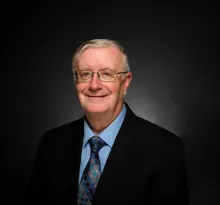
Jorge and his wife Kathy serve the Dallas (TX) and Lawton (OK) congregations. Jorge was born in Portuguese East Africa, now Mozambique, and also lived and served the Church in South Africa. He is also responsible for God’s Work in the Portuguese language, and has been visiting Portugal, Brazil and Angola at least once a year. Kathy was born in Pennsylvania and also served for a number of years in South Africa. They are the proud parents of five children, with 12 grandchildren and live in Allen, north of Dallas (TX).
