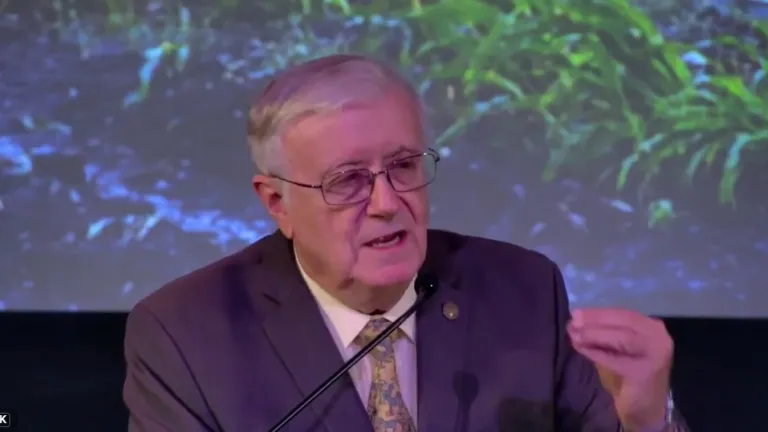
Jorge de Campos
Lessons from Pentecost. Why count 50? We are the firstfruits of those that have first received God's Holy Spirit. Pentecost's full meaning is the receiving of the Promise of the Father to regenerate and renew our minds. We must use God's Holy Spirit by bearing fruit.
God's early days reveal God's plan of salvation for mankind, for all of us. They're so beautiful, they're so meaningful, they're so important. And they revolve around the harvest seasons in the Middle East, basically over three seasons. The first two seasons are actually in the spring, early spring and late spring. And the third season is at the fold. The very first season is Passover and 11 Bread in early spring. And as we know, it symbolizes Christ, Christ dying for our sins, giving his life, so that you and I could be forgiven and redeemed from death.
Then immediately after that, we must remove and avoid all sin, which is symbolized by unleavened bread. It means that we are to obey God, and that applies to our attitudes and actions. And then we need to count 50, which basically ties the second season, which is at the latter part of spring. It basically ties to Christ's first coming, right? Because you count 50 from the wave sheath, which is basically tied to Christ's first coming. And so today, brethren, I want to talk a little bit about Pentecost and cover three basic and very important lessons for us from this holy day of Pentecost.
Now, as we know, the disciples were to wait. If you turn with me to Acts, chapter 1, this was Christ's first coming, and then he talked to the disciples. And we know at the end of 40 days, he then ascended to heaven. But before he did that, he spoke to disciples, and we can read that in Acts, chapter 1, verse 4. And he says, And being assembled together with them, he Christ commanded them not to depart from Jerusalem, but to wait for the promise of the Father. And so this is all, as I mentioned, tied to Christ's first coming. They were to wait for the promise of the Father, which he said, you have heard from me. For John truly baptized with water, but you shall be baptized with the Holy Spirit not many days from now. And so, in fact, it was about 10 days later, because this was towards the end of his 40 days after his resurrection. And then we have here that he's telling them, wait for a few more days. And they did wait. And the promise of the Father, we really need to understand what that promise is.
The promise of the Father is to make you and I his children. That's what the Father wants. That's his will. That's his promise. He wants you and I to be children of God. And he's promised that he will do that. That he will make you and I his children. And for him to be our Father, he has to beget us.
Right? Just like for you to be fathered from your physical dad, the oven in your mother's womb had to be fertilized. In other words, you had to be begotten by your physical dad to then at the end of that nine month period being born. And so the promise of the Father is to beget us. So one of the things that God's Holy Spirit does is begets us. And we'll get onto that a little later. And so they had to wait till their promise. And as we heard in the sermon, in chapter 2, starting in verse 1 through verse 4, they were there on the day of Pentecost.
They're all united with one accord. And it says, when the day of Pentecost had fully come. And I want to go onto that a little bit more in a moment, because a very simple way of looking at it is to say, well, it's when the 50 days had arrived, but there is a deeper and more profound meaning on that as well. But we'll come to that in a moment. But as we read here, is that we're all together and we're all filled with the Holy Spirit as you and I read in verse 4. And so the lesson number one, the first lesson, is that Pentecost symbolizes when God fulfilled his promise and is given to mankind, his Holy Spirit.
Yes, it's the foundation of the church in the New Testament, but it's also that he is now fulfilling that promise whenever you and I are baptized and through the laying on of hands, you then receive God's Holy Spirit, which is given to us through Christ, because it's Christ that baptizes us with the Holy Spirit. And so they had to count 50. So that's one simple reason. And you and I can read in Leviticus 23, verse 9 through 11. That was the time of the barley harvest. And then they had to do the wave sheath offering on the day after the Sabbath.
And then on the day after the Sabbath, when they did the wave sheath offering, they did it for us to be, in other words, they did it so that we could be accepted. In other words, in our behalf. You read that in Leviticus 23, 9. It's done on our behalf, so we are accepted. And so when we read these ceremonial laws and principles, sometimes the meanings go a little bit over our head, but it is proper for us to just take a moment and see how these ceremonies pointed to something very spiritual.
First, Christ's sacrifice, and second, the giving of God's Holy Spirit, because these ceremonies pointed to that. So let's look at Hebrews chapter 10 very briefly. In Hebrews chapter 10, we're going to start reading in verse 1. Hebrews chapter 10 verse 1. And it says, for the law, now what law? It says having a shadow of good things to come. That's the ceremonial law. That's the law of these ceremonies of offerings, sacrifices, wave sheaf, all these ceremonies and meaningful ceremonies, but they were a shadow of good things to come.
In other words, they were physical analogies, let's put it that way, of the reality, which is Christ, and the reality which is us receiving God's Holy Spirit. You see, quite often we just focus in saying, well, the ceremonial laws pointed to Christ, true, but also pointed to us receiving God's Holy Spirit. Very important. And it says, and says of things to come, and not the very image of the thing, and not the very image of the things can never, with these same sacrifices which they offer continually year by year, make those approach perfect.
These sacrifices, these ceremonies, they cannot and could not make the people, the Israelites, perfect. In other words, godly. You and I know they did all these things and they were a disaster as far as being an example to the world, and they ended up being enslaved.
And so they can't make anybody perfect. First too, for then, they would have not ceased to be offered. Yeah, if you did those offerings and they made them perfect, then if they're not offering, you don't need to do the offering anymore, because you're perfect already. And so they could not make anybody perfect for the worshippers once purified, if they made them perfect, would have no more conscious amount of sense, and they would not need to do the offerings again.
Morning, evening, weekly, monthly, annually, they had to keep doing them. They had to keep doing them.
Verse 3, but in those sacrifices, there's a reminder of sins every year. Not just every day, every week, every month, every year, a reminder. For, verse 4, it is not possible that the blood of bulls and goats could take away sins. That's it. Those sacrifices were just an analogy of what Christ would do, Him dying for us, Him resurrecting, He becoming a high priest, He then sending us the Holy Spirit, which is the helper, which then, through the power of God's Holy Spirit, you and I can be sanctified. In other words, be made perfect.
You and I need Christ's sacrifice to redeem us, to pay for our sins, and you and I need God's Holy Spirit, God's power, to help us to change. Therefore, verse 5, when He came into the world, that is when Christ became flesh, He said, Christ said, sacrifice and offering you do not desire, but a body you have prepared for me. Christ said, God the Father, you don't want all these bulls and goats and all these sacrifices, but God, You gave me a body, a physical body. The Word became flesh. As you read in John 1, verse 14, you got a body. So in burnt offerings and sacrifices for sin, you had no pleasure. Then I said, Behold, I have come. Christ came and became a human being. In the volume of the book is written of me, to do your will.
Christ came to earth voluntarily to do the Father's will. What is the Father's will? That you and I become children of God.
That's His promise. And for you and I to be children of God, we have to be forgiven. In first place, we have to have free moral agency. Otherwise, we just be robots, not children of God. We have to have free moral agency. We have to be given the opportunity to learn by our own mistakes. And those mistakes are sinful. And so we need a Redeemer, which is Christ, to pay for our sins with His blood. He then needs to be our High Priest, intervening for us. And He needs to send us the Holy Spirit, which is God's power, that works in our minds to actually prick your conscience to change and become better people.
And so He says in verse 9, He said, Behold, I've come to do your will, God. In other words, God the Father. He takes away the first, then He may establish the second. He takes away the first, which with the ceremonial sacrifices, so that He will establish the second, which is Christ's very own sacrifice.
Verse 10, By that will of the Father, which ultimately is for you and I to be children of God, we have been sanctified. We have been made holy, set apart, saints.
How? Through the offering of the body of Christ once for all. Once for all. Verse 14, For by one offering, by one offering, Christ has perfected you and I forever.
Well, of course, you and I are not quite perfect yet, because it is those who are being sanctified. So it's actually two stages.
Christ's sacrifice has sanctified us, made us clean, right, just with God. But you and I still have to keep on trying and working and becoming better with the help of God's Holy Spirit. In other words, we are being sanctified with the help of God's Holy Spirit, so that ultimately, at the end, at Christ's Second Coming, we will be His children in the kingdom of God. And that's why we count 50. We count 50 because that is the period in which those two wave loves were to be offered. You can read that in Leviticus 23, 16, and 17. They were baked with 11. Two wave loves. People have kind of speculated what those two wave loves represent. I seem to be inclined that represent Jews and Gentiles. Both Jews and Gentiles will have will be accepted by God, right? But I can't prove it's that. And the Bible doesn't say that for sure. But that could be it. But it's baked. That means going through trials.
Which one of you and I are not going through trials? We are baked. Trials. The fiery trial. Whatever yours or my fiery trial may be, we are being baked.
Today. And those two loves are accepted to God with living. That means you and I with living are being accepted in God's throne today.
That's why a little later, still in Hebrews chapter 10, it says, Therefore, brethren, having boldness to enter the holiest by the blood of Jesus, by a new and living way, which He consecrated for us through the veil that is His flesh, and having a high priest over the house of God, let us draw near with a true heart in full assurance having our hearts sprinkled from an evil conscience and our bodies washed with what? With pure water. And what is this pure water? It's God's Holy Spirit. It's that living water that will flow out of us because we receive God's Holy Spirit and as we exhibit and live God's way, we are being washed and we bear fruits.
You see, so now, today, you and I are today the first fruits.
We are the first fruits.
But we are the first fruits of the Spirit. We are the first few that have received God's Holy Spirit. That's what we are. We have the first fruits of the Spirit. We're not yet Spirit beings, incorruptible as the first fruits to the Lord when we resurrect or change at the time of the end at Christ's company, which is symbolized by the day of trumpets. But today, symbolizes, is the day of Pentecost. And when we read in Acts 2, verse 1, it says, when the day had fully come, as I mentioned to you earlier, there's an additional subtle meaning on it. It's not just that fully come to count 50. The Greek word is sumplei raou, which means to fall completely, to complete entirely, be fulfilled.
So when the day of Pentecost was completely fulfilled, by what? Because the meaning that's of giving God's Holy Spirit, the day of Pentecost was completely fulfilled. That day is fulfilled. That is the day of Pentecost. And we can read as in between brackets there, that we're in the temple at nine o'clock in the morning, because it says it's the third hour, and the temple area for you, just as some little point you have between brackets, the temple area is about 30 acres, which is about approximately 30 football fields. Kind of an easy way to remember for people that live in the town and not in the field. It's like 30 football fields. And the temple itself was about three or four acres. And today they've done excavations in almost all of the southern area. They've also done a bit of excavations on the west side and a little on the north. There's no excavations on the east side, because there's a Muslim cemetery there. But as they've done these excavations, they found over 100 mikvot. What is that? It's little... think about it's like pools for cleansing, for washing. Think about it's like little swimming pools all around the temple area. Mikvot, therefore, is a man-made pool for ritual washing. Why? Because around the temple area there were no lakes, no rivers, no ponds. So they made these pools around there. And they've done excavations and they found them today. And also on the way to Jerusalem, they found on the road various mikvot. Mikvot is the plural from mikvah, which is one.
And that's why you read in Acts 2 41, on that same day, they baptized around 3 000 people.
How? Because they had all those pools around there. Okay. So God's presence then was in them, they received God's Holy Spirit. We know that you and I are the temple of God's Holy Spirit. You can read that in 1 Corinthians 3 verse 16. We are the temple of God's Holy Spirit and God's Holy Spirit is living in us. You remember the story in the time of Moses? Then he went to Mount Sinai and there was a fire. And also when God's Holy Spirit went into the tabernacle, there's this cloud and this fire, which represented God's presence, which the Jews called it the Shekinah glory. It was there.
At this time on the day of Pentecost, the Shekinah glory moved onto God's people when they received God's Holy Spirit. And so when you were baptized and you have received God's Holy Spirit, you are now the temple of God. Not a building, but you and I. And so as we see God's Holy Spirit is in us, God's Holy Spirit works in you and I. In Romans chapter 7, Paul describes how God's Holy Spirit works in his life. Romans chapter 7. You can see towards the end of Romans chapter 7 that Paul is describing what wretched man I am because I want to do what's right, but I do what's wrong. I think you and I, we all can say that. I think you and I all can say, I wish I was better. I wish maybe this wrong thought hadn't come. And maybe this word I said that hurt and offended somebody. I shouldn't have said it. We all like that. And that's what Paul was saying at the end of chapter 7 in Romans. You see, he says, for the good I will to do, verse 19, I do not do, but the evil I will not do, that I practice. So I have these, sometimes the wrong words come out. I don't want them to come out, but they came. Why? Because our heart is still not clean.
And that is the work of God's Holy Spirit, purifying our heart. And then Paul says in verse 22 of chapter 7, for a delight in the law of God according to the inward man. Inside, I love God's law. I love God's principles. And brethren, that's not just the 10 commandments. It's God's principles. It's what pleases God, which is more than just the 10 commandments. And so he says, but I see another law in my members.
You see, you and I see the struggle between kind of two laws struggling in your mind. And that's what Paul was saying, warring against the law of my mind, which is God's law, and bringing me into captivity to the law of sin, which is in my members.
And so you and I are captive. We are prisoners. We are enslaved to this carnal mind.
And then Paul says, verse 24, a wretched man that I am. And I think you and I, we all can say that.
Who can deliver me from this body of death?
I thank God through Jesus Christ our Lord. So then with the mind, I serve the law of God, but with the flesh, the law of sin. How do I serve the Lord God with the mind? Because you and I have God's early spirit, and God's early spirit is freeing, is liberating your mind from that carnal mind.
And you know what?
Why do we count 50? Because 50 means Jubilee, 50 means Liberty, and you and I are liberated from the carnal mind. We are in that process of being liberated from that carnal mind with God's early spirit. What a beauty that God's truth all just jowls together, and it's just so powerful and encouraging to you and I.
You see, so Jubilee, or Pentecost, which is count 50, is a thanksgiving to God, because we've received a helper that helps to change our carnal mind, our carnal nature, to divine nature.
Therefore, Paul says in the very next verse, which is chapter 8 verse 1, there is now no condemnation to those who are in Christ Jesus, who do not walk according to the flesh, but according to the spirit. There is no condemnation on you and I, provided you and I are striving and trying our best to use God's early spirit. Yes, you and I fail. And yes, when you and I fail, as we read in Hebrews chapter 10, by a new and living way, you and I can get on our knees, get to God's very frown, the holy of holiest, in this life, as physical human beings, as corruptible flesh, like the two wave loves. Now, we are the first fruits that have God's early spirit, and we therefore have access to God's very throne today, today, by a new and living way, through the flesh, which is his body.
That's why it says there's no condemnation. Look at verse 23 of Romans chapter 8.
Not that, not only that, but we also who have the first fruits of the spirit. We are the first fruits because we are the first few that have received God's early spirit. We have the first fruits of the spirit. The whole of mankind will receive God's early spirit in the world tomorrow, and in the second resurrection, once they repent. But today, you and I have been specially called, John 644, to receive God's early spirit.
What a blessing that is! God's calling for you to receive God's early spirit. What spiritual blessing from above that is? That you and I need to be grateful.
You see, so we are the first fruits because we have the first fruits of the spirit. Even we ourselves ground within ourselves eagerly waiting for the adoption that is becoming really children of God, being placed in a position of being sons of God for the sonship, which is when? It's the redemption of our body. When is our body going to be redeemed? At Christ's second coming. Christ's first coming gave us Christ's death, redeemed from us from our sins. Christ ascended as our high priest on our behalf. He sent us the Holy Spirit, which is the helper to help us, and we have the first fruits of the spirit. Now you and I have to overcome until the end, and the Christ's second coming will then be resurrected. Our bodies will be redeemed. And so the second lesson from Pentecost is that God's early spirit begets us as God's children and renews our mind. God's early spirit begets us as His children and renews our mind.
Begets us again and again now, as it says, we are begotten again. Begets us as His children so that we are children of God. God in the mother's womb, which is the church, but we're not yet born again, which will be born again at Christ's coming.
Let's first look at Titus chapter 3. Titus chapter 3. I'm going to read first, starting from verse 3. But we were ourselves, we were once foolish, disobedient, deceived, serving various lusts and pleasures, living in malice and envy, hateful and hating one another. In other words, we were the old man until God the Father called you and I and said, wakey, wakey! And you and I had to, hey, I've got to change. I've got to repent. We've got to believe that Christ has done it all for us. I'm not going to be made right with God because of my own faith.
It's Christ's faith that justifies us. But yes, we've got to believe in that fully. And then we've got to repent of what we are and what we've done. It's important for us to understand that we are repent of what we are, not just of what we've done.
We are sinful, carnal people. We are repent of that. But, verse 4, when the kindness and the love of God our Savior towards man appeared, what or who is the kindness and the love of God our Savior towards man that appeared? The kindness and love of God the Father. Yes, God the Father is also our Savior because He gave the instruction to Christ come and die for us and He did it willingly. So yes, Christ is our Savior, but the Father is also our Savior because He gave the instruction, the command for Christ to do it, and He did it voluntarily. He wasn't forced. And so the kindness and love of God the Father, our Savior towards man, it's Christ. And when Christ appeared, verse 5, not by works of righteousness which you and I have done. Christ didn't come because put your name there, I'm such a goody-goody boy or goody-goody girl. He didn't come because of that. Not because of works of righteousness that you and I have done. But Christ came according to God's mercy.
And Christ came and saved us, redeemed us from our sins. We're not ultimately fully saved yet, but it's this process of salvation that we are in.
He saved us through what? Through the washing of regeneration and renewing of the Holy Spirit.
Do you get it? It's the Holy Spirit that does the washing by begetting us again, regenerating, in other words, begotten again a second time, and renews our mind.
It's the Holy Spirit, and this is the second lesson of Pentecost. Again, God's Holy Spirit begets us as His children, makes us fertilizes that spiritual ovum, which is the spirit of man in man, fertilizes that with the heavenly seed, which is God's Holy Spirit, and that heavenly seed, the seed from above, fertilizes the spiritual ovum, and you and I become a new spiritual, let's call it, little baby in a mother's womb. And the mother of us all is the church. And you and I, as a baby, need to be connected to the mother, just like a little embryo growing in the mother cannot live separated from the mother. If you cut that cord in that little baby when maybe it's three weeks old, or three months old, or six months old, that baby will die. The baby must stay in the mother.
And the mother of us all is the church of God. And there is a danger to those that have an independent spirit, a very big danger.
We've got to be humble and submit.
And so continuing, it says, the washing, and at the end of verse 5 of Titus 3, the washing of regeneration and renewing of the Holy Spirit, whom or which he, the Father, poured out on us abundantly through Christ. God's Holy Spirit proceeds from the Father. John 15 proceeds from the Father, and it's Christ that baptizes you with the Holy Spirit. It's not God's minister. When he lays his hands on you, he prays after the baptism, he prays and asks the Father to fulfill his promise to give you his Holy Spirit through the laying on of hands. At that moment, you receive the Holy Spirit, which proceeds from the Father, and it is given to you through Christ. In other words, Christ that baptizes you and I with God's Holy Spirit. As you read in Matthew chapter 3, when John the Baptist said, someone greater than me will come that will baptize you with the Spirit and with fire. You don't want to be baptized with fire because that's the second death, and it's Christ that does that. So, but you want to be baptized with God's Holy Spirit.
And so, brethren, continue reading here in Titus chapter 3. Verse 7, that having been justified by his grace, you and I made right with God because of his gracious kindness, we should become heirs according to the hope of eternal life. We should become heirs. When? In the future. When Christ comes at the redemption of our bodies, which is symbolized by the Day of Trumpets, the Day of Pentecost symbolizes as receiving God's Holy Spirit, and the Day of Trumpets symbolizes Christ's Second Coming, receiving the redemption of our body. And he says, yeah, this is a faithful saying, and these things I want you to affirm constantly that those who have believed in God should be careful to maintain good works. These things are good and profitable to men. I want you to affirm constantly that you believe that you remain faithful to the end. These things are good and profitable. We need to remain faithful to the end. There's another beautiful structure, which is in 1 John chapter 3. 1 John chapter 3 that discusses that in a little bit more detail, and I want to turn to it now, which is starting in verse 1 and 2. Behold, what manner of love the Father has bestowed on us that you and I should be called children of God? How is it that you and I are called children of God today? Because the Father has begotten us with His Holy Spirit. You and I are children of God.
Like the mother, which has a baby in a womb, that baby is the child of that dad. He's not born yet, but he's already the child of that dad. He's already been fathered by that dad. We are the children of God because you have been fathered from above by God's Holy Spirit that begets us a second time. Therefore, the world does not know us because He does not know Him. Beloved, verse 2, we are now the children of God, but it has not yet been revealed what we shall be. It has not been revealed what you and I will be as spirit beings, but we know that when He is revealed, when is Christ going to be revealed? At the Second Coming.
We shall be like Him. We'll be changed from physical to spirit.
And we shall see Him as He is. Everyone that has the soul-pinning purifies himself, just as He is pure. We gotta be purifying ourselves. We gotta be changing ourselves.
You see, today, you and I are corruptible, aren't we? Just turn with me to 1 Corinthians 15. 1 Corinthians 15. 1 Corinthians 15, verse 15.
1 Corinthians 15, verse 15. Now this I say, brethren, that flesh and blood cannot inherit kingdom of God. Or you flesh and blood.
Just have an accidental cut in the kitchen or whatever, and it starts bleeding. I think you'll recognize that you are flesh and blood. Nor does corruption mean editing corruption. You and I are corruption. In other words, you and I sin. We have leaven, like the two loaves have leaven. The corruption, the corruptible. Behold, I tell you a mystery. We shall not all sleep, but we shall all be changed. In a moment, in a twinkling of our eye, when? At the last trumpet.
At the last trumpet. For the trumpet will sound, and the dead will be raised incorruptible, and we shall be changed. When are you and I going to be changed from physical to spiritual? At the last trumpet.
I don't think it can be any clearer. For the trumpet will sound, the dead will be raised incorruptible, and we shall be changed. For this corruptible must put on incorruption. Today we're corruptible. We have leaven. We will have incorruption. No leaven as spirit beings. So the two-wave loaves cannot represent spiritual beings.
Because they have leaven.
This corruptible must put on incorruption, and this mortal must put on immortality. That happens at the last trumpet. Revelation 11. Revelation 11 verse 15 says, and then the seventh angel sounded. Which is the seventh angel? The seventh prophetic trumpet, the seventh angel? It's the last trumpet. It's the last trumpet. And it says, and there were loud voices in heaven, saying, the kingdoms of this society, of this world, have become the kingdoms of God.
When will the kingdoms of this world become ruled by God and Christ?
At the last trumpet, at the seventh trumpet. And it says, and he shall reign forever and ever. But Christ's coming. At Christ's coming. You read in verse 18 of the same chapter, Revelation 11. The nations were angry. Your wrath has come. The nations will be angry and will want to fight Christ because they see Christ coming. You see the signs resurrected and changed going up in the clouds. And the nations are saying, there's invasion from outer space. They're angry. You can see they gather together to fight. And this doesn't take months. This is just a few days. Just a few days. And they'll come to fight. And it says, that time of the dead, that they should be judged. What does that mean? That means that those people are dead. Some are judged to be resurrected in the first resurrection. And some are judged to wait until the second resurrection. And that you should reward your servants, the prophets, and the saints, and those who fear your name, small and great. In other words, there'll be the marriage supper, and there will be the reward and the crowning of those that will have rule over 10 cities, rule over five, etc. All that will be organized. All that in a short period of time, in the spirit context, that can be done very quickly. And it says, and should destroy those who destroy the earth. And so we meet Christ in the clouds. On the other side of the clouds, whatever happens, there's the sea of loss, or whatever it may be, there's always activities that happen underneath. The nations get together, as you read during the period of that seven lost plagues. That's a short period, because the seven lost plagues happen in a short period. Mankind would not survive with those degrees of no water and no food, etc., and extreme heat. That'll be a short period. Then again, they get together at Armageddon, and then they want to fight Christ, and Christ will come and destroy them, vaporize them, as you know, their eyes will disappear in their sockets and all that. That's within a short period, probably during the period of trumpets and atonement. And then Satan is put away, as you know that. But the resurrection, when you and I will be changed to spirit beings, will be at trumpets. Today, the authentic cost is when you and I have the first fruits of the spirit. We are first fruits, because we have the first fruits of the spirit. And so what are we going to do now? What are we going to do now, brethren, is use God's Holy Spirit. We got to use God's Holy Spirit. Look at Ephesians chapter 4. Ephesians chapter 4. I therefore, the prison of the Lord, in verse 1, Paul says in Ephesians chapter 4, beseech you. Paul is saying, please, I beg you, I plead with you, please, walk worthy of the calling. You and I have been called by God to be the first fruits, the first to have the Holy Spirit, the first that can have the power to overcome, the first that will be in the kingdom, the first that will rule forever. Walk worthy of this calling with which you are called. How? Verse 2, with all lowliness. That's humility, brethren. With all lowliness and gentleness. What is gentleness? It's meekness. You and I need to walk worthy of this calling with all lowliness and gentleness, with all humility and meekness.
Bear in with one another. And it was with long suffering, being patient. When you go through trials, and it says you're going to go through fiery trials, you've got to be long suffering. You've got to stick to it regardless. Long suffering. Bear in with one another in love. And this is where we fail quite often. We are not long suffering. Sometimes we're not humble. We're not meek and teachable. We can't suffer long, and we don't bear with one another. In other words, we don't forgive one another. That way we endeavor to keep the unity of the Spirit, as we heard in the sermon. The unity of the Spirit in the bond of peace. The outcome, the glue of this, is that there will be peace. You look at the beatitude, starts with humility and repentance and being teachable, and it ends you being a peace-maker. The final outcome is peace.
And it says there is one body and one Spirit, as you call in one hope of your calling, one Lord, one faith, one baptism, one God and Father of all, who is above all and through all and you all. Brethren, we have to renew our minds with God's early Spirit. We've got to use God's early Spirit. Look at verse 23 of Ephesians chapter 4. And be renewed in the Spirit of your mind. How? With God's early Spirit, working with the Spirit of your mind, which is the Spirit of man and man, and you become renewed. And you look in verse 22, it says, you put off the old man, and verse 24, you put on the new man. In the middle, the catalyst is God's early Spirit.
And so, brethren, we've got to bring fruits of repentance. We've got to use God's early Spirit. Christ said, you stay close to the vine, because I'm the vine, and you've got to bear much fruit. John 15. We read that after a Passover every year. Look at John, James chapter 4, when he says, why are there fights and troubles amongst you? James chapter 4, verse 1. Why are there fights amongst you? And you is in the church! You is in the church! It's not in the world! Do not come from desires for pleasure, that war in your members. You lust, and you murder and covet. Oh, you don't murder? Well, when we say wrong things, we are murdering other people. We've got to be careful. We've got to repent. We all do it. And he says, you ask and do not receive, because you ask and miss, that you may spend it in your pleasures. And then he says in verse 5, the Spirit dwells in us, he earns jealousy. The Spirit of man in man, that is in you and I, is jealous, is carnal. You and I need God's Holy Spirit to change us. That's why it says, resist the proud. God resists the proud, but gives grace to the humble. Therefore, submit to God, resist the devil, and he'll flee from you. Draw near to God, and he'll draw near to you. Cleanse your hands, your sinners. Purify your hearts, double-minded. Lament and mourn and weep. Brethren, we've got to use God's Holy Spirit.
And that's got to be done in meekness and humility. That's why just a little bit before, in chapter 3 of James, in verse 13, says, Who is wise and understanding among you, let him show by good conduct that his works are done in meekness of wisdom.
You know, brethren, we're reading scriptures like in Luke 21, verse 36, that it says, watch and pray that you may be counted worthy to escape and stand before the Son of Man. And you and I just read in Ephesians chapter 4, verse 1. Let me turn back to it so we emphasize it again. Ephesians chapter 4, verse 1, it says, I beseech you to walk worthy of the calling. And so you tie those two. Watch and pray that you may be counted worthy. And how can you and I be counted worthy to escape and stand before the Son of Man if you and I walk worthy of the calling with all lowliness and gentleness, with all long suffering, bearing with one another in love, endeavoring to keep the unity of the Spirit in the bond of peace.
God's early days reveal God's plan. Pentecost, as we went through three lessons, that it symbolizes the giving of God's early Spirit, that symbolizes us to be begotten again and our minds being renewed, and it symbolizes that He's the helper that helps us to change our minds.
We need to use God's early Spirit, brethren, to be accounted worthy to escape. Let us, therefore, let's walk worthy of the calling and let us always pray and ask for more of God's early Spirit that we may please Him. And my prayer is that you may be richly blessed today on the day of Pentecost with an extra portion of God's Spirit, that you may be uplifted and encouraged, and internally may be full of joy and encouraged to strive more to become more and more like God and like Christ.
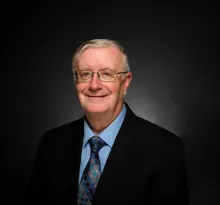
Jorge and his wife Kathy serve the Dallas (TX) and Lawton (OK) congregations. Jorge was born in Portuguese East Africa, now Mozambique, and also lived and served the Church in South Africa. He is also responsible for God’s Work in the Portuguese language, and has been visiting Portugal, Brazil and Angola at least once a year. Kathy was born in Pennsylvania and also served for a number of years in South Africa. They are the proud parents of five children, with 12 grandchildren and live in Allen, north of Dallas (TX).