
Roy Holladay
This transcript was generated by AI and may contain errors. It is provided to assist those who may not be able to listen to the message.
Today I want to continue. I've been doing a series of sermons on the life of Abraham, and I have this. It'll be part five, but I have this one and then one more after this to complete the series. But previously covered Abraham's early years, and then in the last two sermons we covered the aspects of what I call his formative years, or the years that formed him and made him into what he became. One important point. Abraham left a legacy, and we all know him being called the father of the faithful.
And I want to begin, I was going to say before I do that, I'm going to miss a new paragraph here. Last time we left off in Genesis 1420, the last sermon I gave part four with Abraham being blessed by Melchizedek, to whom he gave a tithe of all. And of course, as he was identified in the New Testament, as we covered last time, as the Messiah. One important point I want to mention here, because it's brought up, I think, in the question and answers afterwards. And I'm just not believing a legacy being the father of the faithful, but given a tithe of all, he showed he wanted to honor God, forgiving him who he had in the victory, and overshadowing the honor of the other nations and the kings. And so God, Abraham, I should say, by giving a tithe of all of the boot he took in that battle, he showed he wanted to honor God by forgiving him, because he knew the victory really came from God in his battle to rescue a lot. And he illustrated his faith in God by tithe of all. He showed his faith in God as being his provider, one who provides his victories and so on. Of course, God does the same for us. He gives us victory in our spiritual battles. It's not ours. We don't win the battle on our own strength. It's God who gives us the victory. And also, he's our provider. He always provides what we need. Today, then, we want to conclude that the formative years of Abraham's life and take your story to where a major turning point in his life occurs. We'll get to the end, the turning point which directly relates to all of us today. So the title for my sermon here, then, this afternoon or this morning, I should say, is the Life of Abraham Part 5, the Conclusion of this Formative Years.
But before we begin, I want to go back and just comment on Genesis 14, verse 18. Because I think this came up last time in the question period. Where Mephyzadek, as king of Salem and as the priest of God Most High, says he brought out bread and wine to a wrong. Now, I looked up that scripture went through all kinds of different churches of God and what they had to say about that particular scripture. And no one I could find gives much comment on that particular scripture. The United Bible Reading Program simply states that then this may have been around the time of Passover.
I'm trying to explain the bread and wine. And it very well could have been. But to me, here's the point that's inner sign. I analyzed the thought about it. To me, the interesting point is that someone with the title of king, their kids are called the king of Salem, and someone with the title of a king, would then be the one doing the service. He served Abraham, bread and wine. Normally kings don't serve, they are served. It's the other way around, normally. So what does that tell us? What happened? The king of Salem is called here, and my kids said that because he served bread and wine to Abraham.
But I got to thinking about that. What did Christ do for all of us at the Passover service? What did he do with all of his disciples? He said he served them. He served them. Why? Because, as it says in Mark 10.45, I've given you an example that you should do as I have done to you. And also John 13.15. And Christ said in Mark 10.45, this other man did not come to be served, but to serve, and to give his life a ransom for many.
Christ came to serve. So that's what we're called to do. We're called to be servants. So in my view, that is why Melchizedek served bread and wine to Abraham, to teach us better to serve, and to be served. Thus, the teaching that's better to serve than to be served, I think, goes all the way back to Melchizedek, serving bread and wine to Abraham. And that teaching, of course, indirectly relates to Jesus Christ.
I want to pick up the story as we go through the life of Abraham from where we left off last time in Genesis 14.21. And there's a lot to cover just in the next few chapters, so I'm going to highlight most of that. The first question I want to ask is, what did Abraham do with the spoils of his victor? When God gave him the victory, or the chivalry of the kings of the other nations, what did he do with the spoils?
Let's begin. And we're just going to—you haven't just looked around much today. I want to quote several scriptures, but we're just going to basically stay in one place. And that's in Genesis 14 through 21 and 22. So let's begin in Genesis 14 and verse 21. This is why I have to read—I gave him the tithe of all. Verse 21. Now, the king of Sodom said to Abram, Give me the persons that they won in his victory, taking slaves. But take the goods for yourself, he said.
But Abram said to the king of Sodom, said to Abram. But Abram said to the king of Sodom, I have raised my hand to the eternal, the God most high, the resistor of heaven and earth. So I will take nothing from a thread to a sandal strap, and I will not take anything that is yours, but as you should say, I have made Abram rich.
Verse 24. Sift only what the younger men have eaten, and the portion of the men who went with me. He gives their names there. I'll let them take their portion, those are with me and about. So, out of what these verses are telling us, that after giving a tithe of all that he had taken in battle to Melchizedek, Abram then returned the remaining goods to the king of Sodom, refusing to take anything for himself.
This shows a lot about Abraham. So you have to ask, why did Abraham do that? Because they wanted to make sure that any additional wealth that he accumulated, he was already wealthy, they wanted to make sure that any additional wealth he had accumulated would not be attributed to his victory in battle. Because he knew that only God could give him the victory in the first place. So he wanted to make sure, or not to get any credit, he wanted to make sure that all the glory and all the credit went to God.
He couldn't get any credit for himself. So he wanted to take anything for himself. So he said, well, yeah, you want that value, why not there? So he could get all these goods. No, he says, no, I'm not going to take anything.
What happens after this? What happens next in the life of Abraham?
And we're going to get to this right away, but in a few verses here we'll get to it. But he receives a remarkable vision. Like it's almost to be saying unbelievable vision, strange vision. Let's go to chapter 15 now and begin in verse 1 and chapter 15. We'll get up to this vision right here a little bit later in a few verses. Chapter 15 verse 1, after these things, the word of the Lord came to Abram in a vision, saying, do not be afraid of Grom. I am your shield. I am your exceedingly great reward. How did Abraham respond to that? Verse 2, when Abram said, Lord God, what will you give me? I don't need children. How can you give me a great reward? I already have no descendants. I have no children. Sarah's been barren. What will you give me seeing I have no child, unless seeing I go childless and that the heir of my house is the Eleazar of Damascus? Then Abram said, look, you have given me no offspring. A servant that's been born in my house, he's my heir. Then God gives him a remarkable demonstration. Think about this. He gives him a demonstration. He shows him something to make the point that Abraham would never forget. A tremendous demonstration, beginning here in verse 5.
He brought him outside. It must have been night. He took him outside. He looked now toward heaven and he said, count the stars if you're able to number them. He said, so shall your descendants be. You look at any children? You're going to have so many children, you won't be able to count them all. Just like you can't count the stars of heaven. Wow!
I mean, too bad today we live in big cities, lots of lights. You can't look up at night and see the stars. They're all obliterated by the lights of the big city. But if you ever lived outside the lights of the city and looked up on a clear night. When I was younger, my mom's older sister, Ray, had a cabin on Lake Chelan. It's in eastern Washington, the eastern side of the lake. It's a beautiful, beautiful lake and they had a cabin there. We spent a lot of summers there when I was touring up. It's about 20 miles from a little small city Chelan. It only has a population of 1500 people. It's not much life from there. But it was upstate. There were no cities around, no lights around where her cabin was. 20 miles left away. Just mountains, no lights. Just a scattered cabin here and there. In a clear night, you can look up and you can see the milking white. You can't do that too much anymore, can you? And you can see millions of stars.
That's what Abraham saw when God took him out that high and told him to look up.
And when you look up and see those millions of stars, he stood there and looked at that.
What does that impress on your mind?
It impresses on your mind that it must be a creative God. That could not have all just happened by chance. There's got to be a creator who can all believe in. But Abraham, what he did is to get... When he looked up there, he saw that he then believed the same thing. He said, Kevin, there's a creator. Couldn't happen by chance. Chapter 15, verse 6. When he looked up and saw that, what does it say about Abraham? Is it any, he believed in the Lord. He believed it. Yeah. God's got to be real. And he found it to him for righteousness.
What does God then tell Abraham to do right after this?
Or, excuse me, what does Abraham then say next? Verse 8. He said, Lord God, how shall I know? I'm going to inherit it. Yeah. You're telling me I'm going to be like all those stars of heaven? How do I really know that, though? We've been trying to have children for years. We don't have any.
How am I going to know that? How I know I will inherit it. What does God then tell Abraham to do? Verse 9. I mean, this is strange. You look at this verse and say, what? What does this have to do with anything? Why would God tell Abraham to do this?
So he said to him, God said to Abraham, he said, bring me a three-year-old heifer, a three-year-old female goat, a three-year-old ram, and a turtledove and a young pigeon.
And after bringing him to God, what then does Abraham do? First hand. So he brought all these two of them, and then he cut them in two down the middle. It implies each piece off of the other, but he did not cut the birds in two.
Now, why in the world would Abraham do that? Why would Abraham cut these animals in two? It doesn't make any sense. I mean, what does that have to do with anything? Why in the world would you cut animals in two? Well, it doesn't make any sense to us, but it would have made sense Abraham, because in those days, back at that time, that is how covenants were ratified. Back at that time, that's how a covenant was ratified. Verse 12. Now here we come to this weird and strange vision. Now when the sun was going down, a deep sleep fell upon a brom. Behold, horror and great darkness fell upon him.
So he has this vision. This is horror and great darkness fall upon him. Why? Why did horror and great darkness fall upon him? Well, because, as you'll see in the few verses, he got a glimpse of what would happen to descendants in the future. He said, yeah, you're going to have all these descendants, but I want to tell you what's going to happen to them to begin with. What else can I, what they're going to have to go through?
What are they going to have to go through? Verse 13. Then he said to Abraham, no, certainly that your descendants will eventually be strangers in a land that is not theirs.
And they're going to serve them. Basically, what you say, they're going to become slaves of these people. They're going to go on a foreign land and become slaves. He said, what? You're going to make my descendants at the start of the heaven. They're going to be going to captivity and become slaves.
And they will, and they're going to be afflicted by this strange land for 400 years.
Wow, that doesn't sound too big, no wonder. He says, your descendants are going to become slaves. And they're going to be in servitude 400 years in a foreign land.
Verse 13. They're going to be descendants to serve them. And not only that, but that are not a part of that. First, they will afflict them for foreign. They're going to be afflicted. They're not going to be treated well. So when you see that, you can understand why horror and great darkness don't bother you. What's going to happen to the animals who were cut in two? Verse 17.
And it came to pass when the sun went down and it was dark. Behold, there appeared a smoking oven and a burning torch that passed between those pieces for the cut animals. What was that? Isn't this all strange? You cut animals in two and then there's this burning torch that passed between them? What did the smoking oven and burning torch represent? Well, they represented God's presence. The sky's presence passed between those cut animals. Even as God was in the burning bush that Moses saw, and as God was in the burning oven or fiery furnace that Daniel saw. Remember that? He looks into this fiery furnace and he says, wait a minute, I see, I see, I see a man in there. All the way to the side of God walking around, the flames aren't bothering him. God was in there. Our furnace. So what this indicates, the smoking oven and burning torch, indicates God was passing through the cut piece of the animals.
What happened next on the same day? Verse 18. And on the same day, the Lord made a covenant with the brawn. Now, the Hebrew words translated made a covenant are karat brit, k-a-r-a-t, b-e-r-i-t, which slowly means he cut a covenant. Cut a covenant. And Hebrew covenants are not, are cut rather than made. They don't make a covenant, you cut a covenant. So, and Hebrew covenants are cut rather than made.
That, stop and think about it. That Hebrew phraseology has been passed on down to our English language. Today, we still use the expression cut a deal. Let's cut a deal. Or let's strike or cut a bargain. We still kind of use that same phraseology. But in ancient times, covenant promises were ratified by walking between the cut carcasses of animals.
So what did that then indicate in regards to the one making the covenant promise? Which was in this case God making the covenant promise to Abraham.
It would indicate that the one making the promise was in effect guaranteeing the fulfillment of that promise with his own life. He was guaranteed, this is gonna be fulfilled, I'm gonna lay down now, I'm gonna show you a guarantee by my own mind. So if God was here making a note to Abraham, he would lay down his own life to make sure this covenant promise would be fulfilled.
And as the author of Hebrews later confirmed, when God made a promise to Abraham because he could swear by no greater, no greater, he swore by himself, Hebrews 6, verse 13. That is, he offered his own life as a guarantee of his covenant promise. Of course, Jesus Christ has done for all of us, hasn't he? He laid down his life, he gave his life to ensure us that his covenant promise he's made with us will be fulfilled. It's guaranteed, guaranteed by his life. Which now brings us to Genesis chapter 16. Now let me ask this. Do any of us ever kind of become impatient, waiting for God to fulfill his promises? You know, we've been waiting for God's Kingdom for many years. If you're getting impatient, say, well, I don't think that's ever going to happen. It's supposed to happen only back many years ago and supposed to happen back in the 70s and the 80s and still hasn't happened. Do you ever do an invasion? Have any of God's people been decided to set out on their own? Wait a minute, this isn't going to happen.
Kind of moving ahead of God? So that's what happens here in the life of Abraham. Abraham was 75 when he left Heron, Genesis 12 verse 4, when God told him his decisions would be like the stars of heaven and multitude. As we just read, Sarah would have been 65. She's 10 years younger than Abraham. So the question is, is it now too late for her to conceive? She's got this promise they've been trying to have children for decades, and they're getting older. Wait, 75, 65. How much more years is she going to have children? She said, wait a minute, you know, I think God probably wants us to work it out another way. Because I don't think it's ever going to happen. It's getting too late. Maybe we should find another solution.
Genesis 16 verse 1.
Now Sarah, Abraham's wife, had warned him no children, but she had an Egyptian maid servant whose name was Hagar. So Sarah's statement, you know, maybe God isn't going to go through it a lot. Maybe he wants us to fill through Hagar.
So Sarah said to Abraham, see now the Lord has restrained me from burying children. Please go into my maid and perhaps I shall obtain children by her. And Abraham heeded the voice of Sarah, his wife. Now, it doesn't say this here in the text, but I have to say at the end, God would have talked about this ahead of time. He'd been thinking because the fact that she couldn't have any children and they're getting on in their years, it's probably a sign that she tried to find their own solution. I'm sure God wants us to find our own solution. We need to act.
We all know the story. Sarah suggests Abraham have a son by her handmaid Hagar. Now, that might seem strange to us today, but it was a common custom back at that time. And we know the story Hagar bears Abraham Ishmael, who today is the father of the Arab peoples of the Middle East.
What did God say that their descendants were the father of the Arab people? What did God say that their descendants would be like? Just the 16, verse 12, He shall be a wild man. His hand shall be against every man, and every man's hand against him. But he shall dwell in the presence of all his brethren. They do. On the air of the world, they lived. It was called Proximel, one of the other countries of the Middle East. They still lived among themselves, among their own brethren. A wild man, haven't they? What result do we see today, as a result of Abraham and Sarah working out their own solution? In the Middle East, we see congenial strife, the never present threat of war in the Middle East.
We stop and think. The world geopolitical scene today might be much different if Abraham and Sarah had continued to exercise faith, even though it seemed hopeless. If they wait on God to fulfill his promise. Knowing that God cannot lie, even though it doesn't look like he's ever going to fulfill it, God cannot lie. If he said he made a covenant promise, he's going to fulfill it. Even though it's impossible.
That brings us down to Genesis 17.
First over, and that's what it tells us in the very last verse of Genesis 16. Let's start with the last two verses, verses 15 and 16. So Hagar bore a Brawn a son, and a Brawn named his son, whom Hagar bore, named him Ishmael. Now verse 16 is interesting. A Brawn was 86 years old when Hagar bore Ishmael to a Brawn.
So I have to ask a question here. Why does it tell us how he was at this point? What difference does it make? Why is that important? It's important because I want you to read next. In chapter 17 verse 1.
Genesis 17, 1, when a Brawn was 99 years old, when he was the great university of 86, now he's 99.
When a Brawn was 99 years old, the Lord appeared to a Brawn and said to him, I am Almighty God, walk before me and be blameless.
Be upright.
What happens between Genesis 16, 16 and Genesis 17 verse 1? Well, we don't know.
Then he simply jumps forward 13 years. He's 89 and 13 years. There's 13 years between those two verses, but it says nothing. Silent. When was the last time God spoke to Abraham that we have a record of in Genesis? It's back in Genesis 15 verse 5, when he took him outside and told him to look up into the heavens at night and count the stars.
So what we have here is 13 years of silence with no communication from God. You know, after that longer period, would you think as Abraham did that God was not going to fulfill his promise? I mean, now it's in the 13 years. He still hasn't fulfilled the promise. Now he's 99. Hagar's 79.
Ha! No way! No way did God fulfill the promise!
But then God prostrated himself before God, showing that he would submit to whatever God's will was. I don't understand this. It doesn't make any sense to me, but I'm going to submit to your will. Genesis 17 verse 3. Then Abraham fell in his face, and God talked with him, saying, As for me, behold, my covenant is with you, Abraham. It's not with Hagar. It's not with Israel. It's with you. And you shall be a father of many nations. And we say, wait a minute. How can that be? I'm 99. Sarah's 79. She can't have children anymore. It's too late.
So after a longer period, would you know, I think, as Abraham did, that God was not going to fulfill the promise? So, but then he pounced at himself, surely he would submit to God's will. Then Genesis 17 verse 3.
Then Matthew was facing the thought, say, behold, my covenant is with you. It must do with you. Then God does something He's only done with very few individuals in the Bible. Very few. What was that? Genesis 17 verse 5. He said, no longer should your name be called of wrong. I'm going to change your name. There's very few people in the Bible where God actually comes down and He changes their name. But this is extremely inspiring. Because of the directory that I teach in every one of us.
No longer should your name be called of wrong, but your name shall be Abraham from now on. For I have made you a father, and I will be your father, and I will be your father, and I will be your father, for I have made you a father of many nations.
And I will make you exceedingly fruitful, and I will make nations of you, and kings are going to come from you, and I'm going to establish my covenant between me and you. Not through Agar. Through me and you and your descendants after you, in their generations, for an everlasting covenant to be God to you and to your descendants. And also, verse 8, I will give to you your new descendants after you the Lamb in which you are stranger. And all the land of Canaan is an everlasting possession, and I will be their God. I'm going to be... You're going to recognize me as God. You're going to worship me as God. I'm going to be their God.
So what do God do? He keep from a new name. So why would He do that? Why would God change His name?
He did that. He changed His name because His new name is going to reflect expanded promise, and the expanded destiny God would give to His descendants. See, Abraham meant exalted father. Well, Abraham means father of a multitude. Abraham's ascendance, he says, your sons are going to become a multitude of nations, which has been fulfilled through Great Britain, Australia, the nation of Europe, and the United States of America. Did God also give Sarah a new name? Just as 17, verse 15, then God said to Abraham, As for Sarah, your wife, you should not call her name Sarah anymore, but Sarah shall be your name. Now, Sarah and Sarah, they both mean princess. Or Sarah indicates an even higher position or station than that of being a princess. The name Sarah is derived from the same Hebrew word that's translated queen in Isaiah 49 and 23. If you look that up. Sarah is going to become a wilder princess. She's going to become a queen. God gave the new names and it reflect the expansion of what they would now become. But that ties into each and every one of us. What about us? Is God going to give us new names? Because of destiny He's going to give to us.
According to Revelation 3, 12, He who overcomes, I'll make Him a pillar in the temple of my God, and I will write on Him the name of my God, and the name of the city of my God, the new Jerusalem, and I will write on Him my new name. We're going to be giving new names. And we're going to give new names and reflect our future destiny, which will be a part of God's family and to live with God and His realm. So He's going to change our names to reflect that destiny. He's going to give to us.
There's a sign of the covenant. God instructs Abraham and all the descendants to be circumcised on the eighth day. Genesis 17, verse 10.
And he's going to be circumcised. You know, I have to think back. Abraham is pretty up there in years. And at this point at that time, I think he would just soon skip this part of it.
It was a visible sign that they were part of a family to whom God's going to have a special relationship, from here on out.
God's people today have... today we have what? We have took a position of the heart today. We've betrayed His conversion. And it's something we should all display by the fruits of our lives that we show a lot of people, showing we're converted, that we have our hearts circumcised. But it is something that should be done on the eighth day. You think about this. This is a long time ago when God told Abraham to do this. Abraham probably would not have known this, but vitamin K, which is our blood clotting agent, it peaks at its highest level on the eighth day after birth. So that's by far the best time to circumcise a male baby. But back at that time of Abraham, probably God was the only one who would have really known that. Unless you're a lot more advanced than you think they were. But then proves that this was God's inspiration, because God probably the only one who would have known that that was the best time, the eighth day. There are other factors and reasons as well, which we'll get into. But then something amazing happened.
It was a hot day. Abraham's out there relaxing on the shade of a tree.
When suddenly out of nowhere, three men, quote unquote, appeared. Two of which, as you read on, find out are angels, and the other is God. And all three appear in human form, and just by human attributes. Which includes sharing a meal with Abraham. This is amazing. Here's two angels and God, they appear as men, and they go in and they share a meal with Abraham and Sarah. Did Abraham know who they were? I don't know. Maybe not at first, but he would soon find out, because they knew things that no one but the spirit of the world would have known.
Did the author of Hebrews have this incident in mind when he wrote what's recorded in Hebrews 13 verse 12? What does Hebrews 13 and 12 say? It says, Then after running out of his tent to greet these two men and this other angel, who is not being God, Abraham then hurried into the tent to Sarah, Genesis 18, going forward, just 18 verse 6. So Abraham hurried into the tent to Sarah, and he said quickly, and ready three measures of fine meal, a need and made pick. That's quite a bit, actually. Look it up. So this would have been no small task. Then Abraham went to his herd and had a serve of a pair of calf, as it tells us in verse 7.
So this was an elaborate and sizeable meal, which would take a good deal of time to prepare. But Abraham and Sarah worked together as a team. I didn't see how there was any conflict here. They made a good team. Now, apparently, the visitors had not yet seen Sarah because they then asked Abraham this. They said, Where is Sarah? Your wife. Verse 9. Now, you look at that and you read it and think, well, that's a simple question. But I'm sure it probably startled Abraham. When they heard these angels, so cute like men, suddenly they said, Well, where is Sarah? Your wife.
When Abraham heard that, he's probably pretty certain now that these aren't just men. There's got to be something more to it. These have to be angels or they have to be from the spirit of the world. But what do you think of that? Because God had just changed Sarah's name to Sarah. It just happened. Her name was Sarah. And everybody around them would have known her by Sarah. They wouldn't have known her name had changed to Sarah. Probably. If possible, it could have gotten out. It's just happened. But they knew her name was Sarah. And it's very likely that only God would have known that. So that probably stalled him when he heard that. He then realized, Wait, if these aren't normal men, there's something more going on here. Now we then learn something truly amazing about God.
This is amazing. You think about what this attribute to God has. God Himself is... Now I was pondering what He's contemplating. God's pondering about what He's going to be thinking about doing. Let's go down to verse 17. In Genesis 18 verse 17, the Lord said, He's thinking to Himself here, He's thinking about Abraham. He says, Well, He said, Shall I hide from Abraham? What am I about to do? Since Abraham shows you'll become a great and mighty nation, and all the nations of theirs shall be blessed in him, I've known him in order that he may command his children in his household, and that they keep the way of God to do righteousness and justice.
The Lord may bring to Abraham what He has spoken to him.
Shall I hide from Abraham what am I about to do? If I was about to do something, maybe I'd better let Abraham in on this.
Does this still apply to all of us as the descendants of Abraham? What did Amos say? Amos said, as recorded in Amos 3 verse 7, Surely the Lord does nothing unless he reveals his secret to his servants. God's going to do something He reveals it to His servants. Because Abraham was His servant. He said, I better be over here to let him know I'm thinking about doing it.
We're all His servants today. And God has revealed His future plans to us, opening our minds to His Word, hasn't He? We're our new group. We understand God's plan and purpose. He's opened our minds to it. He's shown us what He's out to do. We don't realize how it's all going to play out or win, but we know what's coming.
I think God reveals His thoughts in regard to Solomon and Gomorrah to Abraham. Genesis 18, verse 21. And He said, I will go down now. Now when you read that in English, you don't think too much about it. I'll explain a little bit. That's very meaningful. We understand Hebrew. He said, I will go down now and see whether they have done altogether according to the outcry against it that has come to me. And if not, I will know. And if you look at that analyzed thing, it's kind of strange.
I mean, if I didn't know what was taking place, if I go down there and find out? I mean, God, obviously, He knows what's going on. God knows all things. He knows what's going on in the world right now. He knows everything's taking place in our lives and everybody else's lives.
So when He said, I will go down now and see, that's what that is. That's a Hebrew expression, which means God is about to bring judgment on them. Whenever you read the Bible where God says, I will go down, that means that God is about to bring judgment. That's what Hebrew expression means.
Genesis 18, verse 22. Then the man turned away from there and went toward Sodom, but Abraham still stood before the eternal.
Adam Clark's commentary on this verse says this. The two angels were now sent toward Sodom, or the third, who was called the eternal, the Lord, remained with Abraham for the purpose of teaching him the great, useless importance of faith and prayer.
In other words, Abraham is so important to God that God would not lead before He revealed to Abraham what He's about to do. So I'm not going to leave until I let Abraham know. Because he's my servant.
And since God will also do nothing less for He reveals what He's about to do to His servants today, as we just read, also shows how important each and every one of us are that God has called today. I'm not going to do it unless I reveal it to my servants.
And something amazing happens, which reveals Abraham's personal relationship that he had with God, and how deep it was, how personal it was.
What does Abraham do? He begins to reason with God.
As we read in verses 23-35, and I'll just paraphrase it, he came here to God and he says, Wait a minute!
He could go down there to Sodom and bring judgment and destroy it. Would you also destroy the righteous with the wicked? What if there's some righteous people in there? Are you going to destroy them too? And then he says, Suppose there were fifty righteous, would you destroy it for the sake of fifty? Then he keeps reasoning, he says, What about if there were forty-five? What about if there were forty?
Suppose there were twenty?
Then he finally gets down to Genesis 18, verse 32.
Genesis 18, verse 32, then he says, Let not the Lord be angry, and I'll speak, but one more time. What are the reasons why you just wanted to talk further here? Suppose you only find ten there, if you're righteous. Would you destroy it for the sake of ten?
And what did God say? In verse 32, he said, I will not destroy it for the sake of ten.
What does that tell us about God? Well, number one, it tells us not only okay, but it's good for all of us to reason with God. And that was good for us to express our deep thoughts and concerns to God in prayer.
God wants us to express our thoughts and concerns to Him in prayer. He wants to know what's in our hearts. He wants to know how we feel about things, about people, and what's going on in the world. He wants to know how we feel. Then Genesis chapter 19 reveals God's warning and judgment on Sodom and Gomorrah. Where we find out that's where Abraham's nephew Lot and his family lives.
I won't go through that, but to ask this, how does God's judgment regarding Sodom and Gomorrah relate to all of us today and to the nation we're now living in, and God's people? Well, at least just a lot of ways. More even in the last few months than I really even thought a manageable child would go into. But for what sin were the cities of Sodom and Gomorrah destroyed? You know, many might ask that they were destroyed by the sin of homosexuality. But it goes deeper than that. Notice what Ezekiel 16 says in a prophecy for us today. I'm just going to quote it. This is from Ezekiel 16, verses 48 through 15. As I live says Lord God, neither your sister Sodom nor her brothers have done as you and your daughters have done. Look, this was the iniquity of your sister Sodom. Of course, this is directed towards God's people today. The people of the world today, I should say. And your daughters have done, as your daughters have done. Look, this was the iniquity of your sister Sodom. She and her daughter had this, they had pride. They had fullness of food. They had abundance of idleness. Neither did she strike in the hand of the poor and needy. And they were haughty and committed abomination before me. Therefore, I took them away as I saw fit. Again, Ezekiel 16, verses 48 through 15. That was the real thing that was going on that God destroyed Sodom and Gomorrah.
See, Sodom and Gomorrah had to address the basic boundaries of morality. They had gone so far that there was probably no return. Here's what the United Bible-reading program adds. Consider for a moment, on these particular verses, Ezekiel 16, verses 48 through 15.
Consider for a moment our modern societies never have we been wealthier, more secure in our daily needs, with so vast an array of leisure options. And it goes on and says, but at the same time, we are plagued with poverty, homelessness. I mean, the racist nation on the Earth, we still have poverty and homelessness. We have corrupt politicians, unjust laws, courts that are more concerned with procedure than the rights of criminals. Excuse me, they're more concerned with procedure and the rights of criminals than with justice.
And we have social systems and customs that violate God's instructions. Even many churches' popular religious practices are nothing more than a recycling of ancient pagan customs that got repeatedly condemned from the Scriptures. That's comments from our Bible-reading program. But that raises a question. Was God going to come down soon again in judgment?
Have we gotten to the point of no return?
Now we come to Genesis 21 to the birth of Isaac. Finally, after 25 years of waiting, God finally reveals His promise to provide Abraham and Sarah with the Son.
By the time Isaac is born, Abraham is 100 years old and Sarah is 90 years old.
Now, what does where Isaac became Isaac mean? Means laughter. Because Abraham had laughed at the thought of burying the Son in his old age and in Sarah's old age. As we were told back in Genesis 17 and 17, where after Abraham had been told God was going to give him a son in his old age, He says, Then Abraham fell on his face and laughed, and said in his heart, Shall a child be born to a man who is 100 years old? And shall Sarah, who is 90 years old, bear a child? That's impossible, so they thought. Again, that's in Genesis 17, verse 17. What happened?
Did God visit Sarah as He had said, and did He do as He had spoken?
Genesis 21. Genesis 21, verse 1. Then the Lord visited Sarah as He had said, and the Lord did to Sarah as He had spoken. Or, verse 2, For Sarah conceived and bore Abraham a son in his own age, and I'd say in her old age, she's 90. And Abraham called the name of the son who was born to him, when Sarah bore to him, Isaac.
So, never laugh at God's promises, no matter how in trouble they may seem. God's going to keep every promise He has ever made. He's never going to renege on a promise.
I'm sure this greatly helped Abraham go in faith when this happened. I think that was a big leap of faith for Abraham when he realized God could do things that are impossible for us to do humanly, speaking.
Because Abraham now knows the absolute certainty that God can keep all of His promises.
But there's a problem here. This does not bring total joy and peace to Abraham and Sarah. Why not?
Because Abraham now also has another son in their household, who's now becoming a teenager.
Abraham now has in his household the son he produced by his handmaid Hagar. And that's causing tension.
So Hagar and Israel are then sent away, just as 21, verse 9. And Sarah saw the son of Hagar, Egyptian, whom she had born to Abraham. Therefore she said, verse 10, she said to Abraham, Cast out this bond woman and her son, for the son of this bond woman shall not be here with my son, not with Isaac. You've got to send them away and get rid of them. So it's causing tension. Is there a lesson here for us? What bag the lesson can we learn from this? We can learn that whenever we try to work things out for ourselves, contrary to God's instructions, we're going to have problems to deal with down the road. That's what happens here. But God did love Hagar and Israel, and he fulfilled his promise to also make their descendants into a great nation, which tells us what? It kind of tells us that God must have blessed all people, even those who are not yet converted.
It also tells us that because of our common relationship that we have with God, that our family members also are going to have that opportunity to be blessed by God, even though they're not yet converted and don't understand. What did the Apostle Paul tell us in 1 Corinthians 7, verse 14? He wrote that the unbelieving husband is sanctified by the wife, even though she's not called now to sit and understand, but she said apart she's special. And the unloving wife is sanctified by the husband, otherwise your children would be unclean. But now, they're considered to be holy, because I've sipped your whole family apart there, and your family is sanctified, and I want to bless your whole family.
It tells us God's grace extends to our family members, even as it did in the case of Abraham.
Now we come to a puzzling chapter. Genesis 22 is a very puzzling chapter, especially after you read all this leading up to it, and you understand all what Abraham's done here and all the growth and faith he must have had at this point.
But now we come to Genesis 22 and the sacrifice of his son Isaac. And yet, to what? Why? Laying aside all this foreshadow of God sacrificing his only begotten son, why would God ask Abraham to do that? Go back to that time period and say, why back at that time, this is long before he had a bottle of Christ coming to the earth and dying for us, why in the world would God ask Abraham to sacrifice his son? He's waited for all these years. It's a miracle he was finally born, and now he's going to be a young man, and the promises will fail. And he says, how much of... sacrifice? Does that make any sense? That makes no sense at all. Why in the world would God do that? Why at this point would God want to test Abraham in this way? It seems absurd. But there's an extremely important lesson here that God wants all of us to learn. It's kind of below the surface. You have to think about it. The lesson is that, do we only obey God when it makes sense? Do we only obey God when it looks like God's going to work out in our favor?
Do we only obey God when it's prudent or to our advantage? What if obeying God might seem detrimental? What do you think it's going to harm us? It's going to lose something for the way God... It's going to be to our disadvantage to obey God. Can we still have faith in God at those times? And no matter how disadvantageous it may seem at the time, it's going to work out for the better. Can we have that kind of faith?
What if it means, for example, this happens all the time to happen with me?
What if it means giving up a very advantageous job? Can we still have faith in God while working out? And that obeying God is more important than holding on to that important job and having a great salary?
Can we still obey God and believe in His promises? Even when maybe what He wants us to do doesn't make any sense? Genesis 22 verses 1 and 2. And Abram stayed in the land. See, you go... Tempton 21, verse 1. Now it came to pass after these things that God tested Abraham and said to him, Abraham, and he said, here I am. And he said, verse 2, I want you now to take your son, your only son Isaac, who was born miraculously in yours and Sarah's old age by means of a miracle. I want you to take your only son Isaac whom you love and cherish. Make me a way of heart for us to imagine after everything Abraham went through to finally receive the promise. I want you to go to the land of Moriah, and I want you to take him up the top of the mountain, and I want you to offer him his abern offering. And one of the mountains which I alternated.
Amazing! But what does Abraham do? What's Abraham's response?
How does he respond to these instructions to sacrifice his son Isaac? I mean, this is amazing! Listen, we've learned about Abraham. How he's going in faith. How much is he going in faith by this time? Exodus, or should be Genesis 22, verse 3. So what does Abraham do? Why don't you take your son out there and sacrifice him on the mountain? So Abraham rose early in the morning, he settled his donkey, he took two of his young men within, and he took Isaac his son, and he split the wood for the burned off in a rose, and went to the place which God had told him. And then on the third day Abraham lifted his eyes and saw the place afar off. Verse 5, near him said to his young men, now listen, this is amazing. This is an amazing verse. You've got to mark it. And he says, stay here with the donkey. He tells his young men, stay here with the donkey in the land, and I'm going to go yonder in worship. And then notice a lot of part of verse 5. And we will come back to you. We. Not me, but we. I'm going to come back with Isaac. How can he come back with Isaac? Because I want you to come up there and take his life. But he says, we will come back with Isaac.
Then what did Abraham tell his son? Just as 22 verse 6.
So Abraham took the wood of the burnt offering, the lad, and he laid it on Isaac his son, and he took the fire in his hand and a knife, and the two of them went together. There's got everything there to kill him with a knife and a sacrifice. They were the wood and everything. He got all there. He's a tenet coming out of God's instructions. But he says, we will come back to you. How can he carry out God's instructions if they have them both come back? He doesn't seem to compute.
Verse 7, when Isaac spoke to Abraham his father, he said, My father, and he said, Here I am, my son. He said, Well, look, the fire in the wood. Where's the lamb for the burnt-off for reigning? How are you going to give a burnt-off for your God if you don't have a lamb?
Now notice Abraham's response. This is a fantastic response. It shows how much he's ruined in faith.
But everyone said, My son, God will provide for himself the lamb for the burnt offering. So the two of them went together. God will provide for himself the lamb for the burnt offering.
Then Abraham gave a special name to that place. What do you call it?
He called it, The Lord Will Provide. Read that in verse 14.
Will God still do that for us today? Will he provide for us today, no matter how I'm hostile, might say?
Bookings 4.19. I'm just going to quote it. And my God shall supply all your need according to the riches of his glory in Christ Jesus. Bookings 4.19. He may not provide all we want, but as he will provide all we need. No matter what it is, what our situation might be. So to what extent was Abraham's faith at this point? What did the author of the book of Hebrews say? He said this is recorded in Hebrews 11 verses 17-19. I told you his quote. By faith Abraham, when he was tested, offered up Isaac, and he had received the promise, offered up his only begotten son, a Pullman was said, and Isaac your seed should be called, concluding, this is Abraham who was born on Abraham's mind, concluding that God was able to raise him up even from the dead, from which he received him in a figurative sense. Again, Hebrews 11 verses 17-18-19. See, Abraham's faith had grown by that time to the extent that even if Isaac died, even if Isaac died, he had the faith that even if Isaac died, God would do us a recommend to life. That's why he said, we will come back to you because even if I kill him, God's going to raise him back to life, because God can do that. That was the kind of faith Abraham had by this point.
Do you and I have that kind of faith today?
You know, many of us have lost all of us, but God has promised to bring them all back to life, and God's promise has never failed. He proved that with Abraham.
See, all of us, we all bless today, all of us because of Abraham's growth and faith, to where he is willing to sacrifice his only son. Is that the best thing that passed on to us today? Genesis 22, verse 15. Did the angel, and angels capitalize here, mean this is probably when it became Jesus Christ? The angel, the Lord called to Abraham a second time out of heaven, and he said, By myself I have sworn, says the Eternal, because you have done this saying, Have not withheld your son, your only son, Isaac. In blessing, I am going to not only bless you, and I multiply, and I multiply, your descendants and stars of heaven, and as the sand of the sea is on the seashore, and your descendants also are going to be blessed, not just you, but your descendants, because your descendants shall possess the gates of their enemies. And in your seed, in your descendants, all the nations of the entire earth are going to be blessed someday, because you have obeyed my voice to sacrifice your only son, because you have that kind of faith.
The many personal blessings we have today stand for Abraham's faith to obey God, to obey God's voice.
But why did God test Abraham in this way, at this particular point in his life?
We often ask ourselves, we've been in God's church for many, many years now, most of us. We've gone through all kinds of trials and tests, some very severe, losing children or whatever.
So you have to say, are the trials ever going to end? Why do we still have trials when we've had our faith get to the hill for decades? See, why did God test Abraham this way, at this particular point in his life, after all that he's proven to God? Does God still test us who have been in God's church and who have been in God for many, many years? So why, after many, many years, did the faithful find God? Do we still have major trials and tests? Did God test Abraham here so God could see if Abraham had grown in faith? Or, by this particular point in Abraham's life, did God already know his faith?
I think he probably already knew his faith.
Because you think after all these years, after all these trials, God would certainly know his faith. He'd exercised it over again many, many times. He'd watched it for years. He'd seen him grow in faith.
What did the Apostle Paul write to the Church of Corinth in his first epistle? He said, God is faithful who will not allow you to be tried beyond what you are able. First Corinthians 10, verse 13. Now, you stop to think about that. He's not going to test you beyond what you are able to endure. What does that then imply? It implies that God knows what we're able to endure. If he can't test us beyond what we're able to endure, he must know what we're able to endure. And he took a point in our life. And if God knows what we're able to endure, why would God continue to test us throughout our life?
If he's not testing us for his sake, then why is he testing us? So I have to ask the question, could he be testing us for our sakes? Why would he do that? Or he would do that so we could realize how much we've grown in faith. Because we're going to get to a point in the rest of our life where it's going to be very difficult. We're going to have to lay down our lives. And if you think back and think, all you've gone through in all these trials that God has given you, and how you have trusted in God and relied on God and been faithful to God through all these years of trials, you can say, yes, I'm willing. I can lay down my wife. I know God's going to keep his promises. I know he's going to give me eternal life in his kingdom. Understanding that can help ensure our faith so that nothing will ever cause us to ever turn away from God. We will never get discouraged at the end of our life no matter what happens. And then we never lose over calling.
So with that, then, we'll conclude the formative years and life of Abraham. Up to this point, he's spent a remarkable life, many trials and tests as he's had, all of which I'll never have to go and fade.
And it's a life from which all of us can learn some very valuable lessons in our journey that we have in our journey of faith.
Our next Abraham is going to come to a major turning point in his life. He's going to come to a turning point which every married couple eventually come to.
Everything we have covered so far, primarily, was recorded in about eleven chapters of Genesis. And Abraham is now, as we end here, he's 137 years old, but he's going to live for another 38 years, before dying at the age of 175.
Those final 38 years are covered from Genesis 23, verse 1, through Genesis 25, verse 8. But even in those final 38 years, there are still some very valuable lessons that all of us can learn. We'll cover that next time, and we'll conclude this series of Sermons on the Life of Abraham, which I think is going to be scheduled here in about five weeks, I think, because on July 17th. I haven't seen it scheduled yet, but I think that's going to be because that's when Chris was scheduled. I'm kind of...I'm going to fill in with Chris right now, Chris Schutte. So I think it's going to be scheduled for July 17th. So one year for now, I'll pick it up next time in five weeks. I'm going to include it in five weeks.
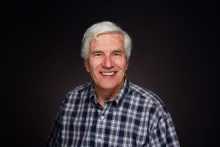
Steve Shafer was born and raised in Seattle. He graduated from Queen Anne High School in 1959 and later graduated from Ambassador College, Big Sandy, Texas in 1967, receiving a degree in Theology. He has been an ordained Elder of the Church of God for 34 years and has pastored congregations in Michigan and Washington State. He and his wife Evelyn have been married for over 48 years and have three children and ten grandchildren.
