


John Elliott
This transcript was generated by AI and may contain errors. It is provided to assist those who may not be able to listen to the message.
If there's anything those that are alive take for granted, it's living.
Living is what we do. It's all we know. Living is actually a very interesting state when you come to think about it. It's kind of like fire. We take it for granted. We experience it, but it's very difficult to define exactly what it is. And when you think about life, it is also very difficult to know exactly what life is. We have life. We are living. And yet some things push that a bit. When a heart stops and blood ceases to circulate, the person still has life. Or if the lungs stop breathing and the person goes unconscious, they still have life for about seven minutes or so before things start to begin to deteriorate. They can be revived. The curious thing about that is that it's kind of like one of the animals over in Africa. A certain frog over there lives in a muddy swamp. And when the drought comes, the swamp dries up. The frog goes down into the wet ground. And as that earth dries, the frog kind of dries up with it.
And you would think it's dead. You go dig it up, and it's just kind of a, you know, not much there. Sort of a dry-looking, old, dead frog. But when the rains come again, that frog will come back to life once the mud comes up. Now, the frog never lost his life. He just goes into a hibernation state where he breathes very irregularly and the heart will beat very irregularly. And before the mud goes dry, he blows little bubbles and keeps blowing them to make a little air channel, a tiny little air tube up to the surface. So it's kind of like humans. We can push that, and the frog can last up to about 10 months doing that. But at some point, actually a death can take place. Now, once the person dies, you would think all you have to do is restart the heart and get the person breathing again, and they'll come back to life. But that's not so. There's something called life that is a miracle that only God can give. And that is a precious thing. In Genesis 2 and verse 7, we see how life was given to the first man, Adam. We don't know how life exactly is given. It seems like there's life in a father and a mother, and an egg is fertilized, and the egg is dividing. You know, there's living things all the way through, and a baby comes out, and the baby is alive. And so in a sense, there is a transfer of life or living organisms that results in a human being.
But here we see in Genesis 2 and verse 7, And the Lord formed man of the dust of the ground. So there he was, a human being, but he didn't have any life in him. See, there's the missing miracle.
And God then breathed into his nostrils something called the breath of life. Only God can breathe that. In CPR, you can breathe. You can keep oxygen being pushed to the brain, even if the heart isn't beating. There are ways in order to force air to, or sorry, oxygen into the blood and get it to the brain in very small quantities until an electrical shock can restart that heart. But that individual still has life. We're talking about something here that's different. It's an individual fully there, but just shocking that individual wouldn't give them life. God breathed into the nostrils the breath of life, and then man became a living being. So we have this thing we call living, and it's something we take for granted, and yet it is a God-given gift that only he alone is able to provide. We see that breathed into his nostrils life is associated with oxygen, but that's not what gives the spark of life. If we go over to Leviticus in the 17th chapter in verse 11, we see a little bit more about where life is through God's description. Leviticus 17 verse 11, it says, For the life of the flesh is in the blood. God knows where he puts life, right? And he knows what perpetuates life. And he says it's in the blood. Well, blood is a combination of several things. There's food in the blood, there's blood cells, red and white, there are other things in the blood, but there is oxygen. That breath perhaps is part of what that blood contains. And he says here that the life of the flesh is in the blood. And at the end of the verse it says, For it is the blood that makes atonement for the life. And so that was the important part, or one of the most important parts of Jesus' sacrifice was the giving of his blood, the giving of that which held life.
All humans are living, but no humans have real life. Oh, now I'm messing with the yearning. We talked about being alive, and we talked about life, and we talked about God having given us life, but now we find me saying at least humans don't have real life. What about real life? Let's examine this paradox today as we ask the question, what is life? How can I maximize my experience of living now, and how can I make it last forever as God has put into our hearts? The title of the sermon today is The Light of Life.
Human life is a wonderful gift, and it is a gift. I've spoken before on how the mind, the gifts of God, are miracles, living miracles. Well, life itself is a living miracle, and one that God controls. This life that you and I have been given, the opportunity to live now, is filled with potential, and the potential is just amazing. You can look at a young child and just see the possibilities for that child in their life, and you can look at an older person, and you can see what that individual has done with those possibilities, what potential was realized or not realized. And as an old song says, what's in between the two is up to you, whether you laugh or cry. That's just one of the lessons of life, is that we're responsible for the choices we make and the things that we do. But it is filled with incredible potential for fulfillment, to make this a very fulfilling time. At the same time, stacked against us is a nature that wants us to ruin that potential, to erase and erode fulfillment that could be part of our life. And it will tend to have us and encourage us to make wrong choices, poor choices, that erode the potential, erase the potential, that bring in a lack of fulfillment, and a certain negative quality of life. In Deuteronomy 30, verse 15, we're familiar with the statement where God tells Israel, I set before you this day blessing and cursing. Choose. You have to choose what you want to fill your life with. But God encourages us to choose life.
Choose a life that's rich and full. And to that end, He's given us this book, His Word, from the Logos. And in it are things like the book of Proverbs and the Law and many principles that teach us ways in which we can maximize the fulfillment that is possible in our human life.
There's more. There's more than just this life. We find over in Psalm, chapter 72, verses 12 through 17, there's a better quality of life coming to humanity in the near future.
Psalm 72 will begin in verse 12.
This is referring to the Messiah, the Second Coming of Christ, the beginning of the reign of God's kingdom on this physical earth over physical people. For when He will deliver the needy, or He will deliver the needy when He cries, the poor also, and Him who has no helper, He will spare the poor and the needy and will save the lives of the needy. He will redeem their life from oppression and violence, and precious shall be their blood where life is in His sight.
He shall live, and the gold of Sheba will be given to Him. Prayer will be made for Him continually, and daily He shall be praised. There will be an abundance of grain in the earth on the top of the mountains. Its fruit shall wave like Lebanon, and those of the city shall flourish like the grass of the earth. His name shall endure forever. His name shall continue as long as the Son. And men shall be blessed in Him, and all nations shall call Him blessed. There is a time when humanity will lose the current God of this age, the one that encourages and deceives them into a way that makes this life less than honorable and less than enjoyable. And by opening their eyes to godliness, the human life will really be a blessed experience for all peoples.
It's quite an exciting time of what's coming. But there's more. There's more than that. Jesus said in John chapter 10, to those who are already alive, He said this, I have come that those who are already alive may have life and that they may have it more abundantly.
It's not just the physical life, not even in the millennial period, not even in the second resurrection, when all humanity will stand on its feet and live and know God and be blessed when they obey Him. But He came to this earth as a physical human being and He let His blood run. He let His life out for you and me. He died for us so that we could have something called life and that life more abundantly. I wasn't talking about giving us life. We already have life. I wasn't talking about giving life to the people who had come before Him or were there or that came after Him, but a different type of life. There are a couple of concepts of life, and one is when God looks at us as physical, He says the blood of His people are very, very precious. And yet, we're like grass. We wither and we will blow away. It's very temporary. And Jesus came so that we could have something called life. He makes a statement in Matthew 8 and verse 22. He said to an individual, follow me and let the dead bury their own dead. That's how God looks at those who are not in a process of obtaining what Jesus came to live and die and be the giver of. And that is life with a capital L. For those who are not even in that process, well, it can only be an existence you would call dead, kind of like zombies walking around. No purpose, no fulfillment. It's kind of life's the pits and then you die kind of existence. And He says, let the dead bury the dead. It also refers to those not in the process of seeking life because all they have is death. They're going to die and there's nobody to resurrect them to life with a capital L. And so it's a dead-end road.
Well, life is a process. And to teach us about life, God created the Holy Days. And the Holy Days are all about life with a capital L. And God uses the analogy of agricultural products, crops growing, to teach us about life. And in fact, what God is telling us in the Bible is, you have to live and then you have to die and then you have to live and then you have to die in order to live. You got that? It's straightforward. We're going to see it in a moment, but you have to be alive in order to die so that you can live, so that you can die, so that you can have life. And that's God's plan. And that's what God shows us through the Holy Days.
We have to be alive in order to die. Let's deal with that first. In 1 Peter chapter 1 and verse 22, 1 Peter chapter 1 and verse 22, 1 Peter chapter 2 and verse 22. Peter shows us something here about a life that needs to be in us that we don't have as human beings.
Without it, we're just going to have one life and one death, and that's pretty much it.
But here to the church that Jesus is working with at this time, he says, Here are individuals who are taking on a nature, taking on growth, taking on fulfillment of life that's not human. Where did this come from? What's the source of this? Well, he goes on in the next verse. It says born, it means engendered. Having been engendered anew, not of perishable seed, but incorruptible through the logos of God who lives and abides forever.
There is something in this human flesh, then, that must be impregnated from above. It must be inseminated. It must have life put into it, as it were, an egg, something that will grow and ultimately produce a different type of body, a different type of composition, one that can live forever. In 1 John chapter 3, a few pages further back, in verse 9, it says, whoever has been engendered of God has had this spirit, the seed with a capital S, put into us, does not sin. It's referring to habitually. It doesn't have the nature of a sinful man. Why? Because his seed remains in him. This engendered spirit of God has put something else in us that needs to grow.
And this person, it says, cannot sin habitually because he has been engendered of God.
God puts a seed within us, just like in the agricultural festival season. We know that we're to grow and produce fruit. But, you know, that's not fruit of us. It's not fruit of the carnal human nature. It's not fruit of a human being. It is actually what Jesus said in a parable was a mena, a talent, a seed, various things that he used that were given and then needed to be watered and fertilized, fed with the bread of life. And those were intended to grow into a green, tender plant that ultimately produces a crop, something that's harvested, something of God's type that can be harvested. We see this in the holy days. We find that in Passover, God provides us with the ability to die, just like Jesus Christ. We die, us who are alive, get to die to our old human nature. And then we are given God's Holy Spirit like seed. And then throughout Unleavened Bread, we cleanse out the unprofitable, the sin that's in us. And growing towards the harvest of the first fruit, we let that tender green plant grow and it's watered, it's nurtured. Somewhere along the way, it will die and then ultimately fruit will be ready for the kingdom. Let's look in Matthew 13 and verses 18 through 23. Matthew 13, beginning in verse 18.
Here we find the parable of the sower and the seed and the soil. Three elements that are defined here, described, and they're explained this way. Therefore, hear the parable of the sower, when anyone hears the word of the kingdom and does not understand it, then the wicked one comes and snatches it away, what was sown in his heart. So God can put a spiritual understanding, He can put a seed with a capital S in our mind. And what happens to that is really up to us, to a degree.
In this case, there was not a fertile mind. The individual didn't really understand it, it says. And then Satan came away and snatched it away. We'll see this. People become intrigued. It's kind of interesting. It's sort of a biblical discussion. You know, you can debate religion, etc., etc., but it doesn't stick. In verse 20, he who received the seed on stony places, this is he who hears the word and immediately receives it as joy. I found the truth! And how many times do people find the truth? They get all excited. They may come here, or they may go somewhere, and they say, yeah, I'm really, really excited.
I found the truth. I know the truth. I've been looking for this. I recognize it. I haven't internalized it. I haven't started living it, but I know it's there. And I know this is it. Well, verse 21, yet he has no root in himself, but endures only for a little while.
For when tribulation or persecution arises because of the word, in other words, this is in the church, there's always going to be persecution. There's winds of things that are always blowing around. It rocked the first century church. Most of the last half of the New Testament was written at a time when the church was just being ripped apart, and that was the true church. And down through at the ages, the church has been rocked and really oppressed and people within. And by the time Jesus returns, He says, there's going to be great deception. There's going to be a falling away in the church. People are going to have the love that's in them grow cold.
It's going to be a mess. The power of the holy people will be completely shattered. And guess what? That's the proof of the true church. Is that what you came looking for? It's not exactly the standard by which we thought we would be able to identify the true church, is it? But you see, when this persecution comes because of the word, immediately He stumbles. You know, there are various stresses that happen to plants. There are winds, there are rains, there's floods, there's drought, there's sun, there's animals stepping on you. There's all kinds of things. But some plants will produce fruit no matter what. And it seems that some plants, no matter what you give them, they just won't produce fruit.
I don't know why. It's just one of those things. They just don't grow right. Two plants side by side, two bushes. And one does well, and for some reason the other doesn't. Well, there's another one, verse 22, He who receives seed among the thorns, is He who hears the word and the cares of this world and the deceitfulness of riches.
That's the push for employment in a tough economy. I think I'll work two jobs. I think I'll work, you know, maybe long hours. I think we'll really push here. We'll all be career-oriented. We'll all, you know, just really push, push, push. And we'll push God out of our lives.
We'll push Bible study. We'll push prayer. We'll push relationships. We'll push family. We'll push everybody out so that we don't love God with all our heart, soul, or might. And we don't love our neighbor as ourself. We simply don't have that focus. And therefore, the deceitfulness of riches choke the word, and He becomes un-fruitful. But that doesn't happen to everybody. I know some people that are, I would say, very poor in very difficult circumstances, and they always put the needs of others first. It's amazing to watch those kinds of examples. It doesn't matter what they don't have. They'll make sure that others' needs are filled, that others are taken care of, that others are helped, that they're encouraged.
It's just like that plant. Sometimes you'd say there's no way this plant should be producing fruit. It doesn't have the opportunity to. It's not convenient. It's like the tomato plant that needs full sun, but it's in full shade. But why does it have tomatoes on it? It's just going to do it anyway. But he who received the seed on the good ground is he who hears the word and understands it, who indeed bears fruit and produces.
So the sea that God gives now is germinating. It's being filled with water. It's being filled with food. The plant is growing and it produces some 100-fold, some 60, some 30-fold.
God has life. He is the one that creates life. He gives life. And He puts a new type of life within us, that seed, and He sees, is there an interest in it? Is there a desire? Is there excitement about it? That's why the Scriptures say we have eternal life in us now, not because we are guaranteed eternal life or we have immortal souls, but we have the eternal God in us now. It's His seed. It's His Spirit. And we have eternal life in us. One aspect of life is that one must die in order to reproduce. That's an agricultural concept. You have to die in order to reproduce. Let's go to 1 Corinthians 15, verse 35 and 36. 1 Corinthians 15 and verse 35. But someone will say, How are the dead raised up? And with what body do they come? Foolish one, what you sow is not made alive unless it dies.
You cannot receive the seed from God unless you die. And you cannot receive eternal life unless you die. There is an aspect of death that is involved in living. We find in places like Romans 6, that we have to die to our old self, our old man, the old man or the old woman. They have to be crucified. We have to bury them. We have to go into baptism and bury, symbolically, the old self. We have to continue to put it down. We have to die to that way of life in order to receive the living eternal seed from God. And that's our first death.
We are in a process here right now of going seven weeks from the wave sheaf offering during the Feast of Unleavened Bread to the First Fruits Festival, which is coming up. And those seven weeks can teach us that we have a life to live. We need to grab the source of life. We need a diatorial way of life, Passover. We need to live and walk the way Christ leads us, unleavened bread. We need to make this journey of our lifetime growing and producing a lot of wheat for the harvest. But then, along the way, we die. Literally. So there's two deaths. Your life now, you die spiritually to the old self. You get new life from God, you grow it, you develop fruit, and then your body will die. Just as Paul teaches us there in 1 Corinthians 15, verse 36, we die.
In John chapter 12 and verse 24, let's notice what Jesus tells us on this topic.
It's a very difficult thing to think about death. It's a very difficult thing to think of us to live to leave either of our lives behind. You know, when you came up to baptism, you didn't want the old person to die so much. It's like, I don't know, I kind of like my old self. I like that image. I like promoting me. I like getting all the toys. I like the focus, the adulation. Why would I want to die? You kind of drag your feet towards baptism. It's like, I don't know. And then someday, God moves you more and more closely than you really say, you know what? It's time to go. The old man's got to go. We're done here. This thing is just not good.
Well, notice what Jesus said in John chapter 12 verse 24. Most assuredly I say to you, unless a grain of wheat falls into the ground and dies, there you go, at some point in time, you and I will produce wheat. But unless we fall to the ground and die, it remains alone. But if it dies, it produces much grain. You can use that for both of the scenarios. If you die to your old self, you can produce a lot for the kingdom. At the end of your physical life, if you die, you will be something 100-fold better than the life you're living now. You know, the eternal life that we have is so much greater. Verse 25, He who loves his life will lose it. If you want to hang on to the old man and the old selfish nature, you'll lose it. But he who hates his life in this world will keep it for eternal life.
Jesus came to give his life for us. It was submission to the will of his Father as an example of serving, of love, and then going on to the resurrection to real life. When Jesus Christ was resurrected, he didn't just come back to life. He came to life with a capital L. He came to life huge and glorious at the right hand of God, shining like the sun with a voice like roaring waterfalls. His life also has the ability to give the miracle of life, physical and spiritual, to others. Now that's real living. We don't know much about it from any personal experiences. But you and I must have two deaths. We must die to our old nature. Again in Romans 6 and 2, let's just notice, how shall we who died to sin live any longer in it? Or do you not know that as many of us as were baptized into Christ Jesus were baptized into his death, therefore we were buried with him through baptism into death? You and I need to die. Now you might say, well, I was baptized. I was baptized a long time ago, whatever a long time ago was. Well, great. Good. Are you still dead? I don't know about you, but I drowned that old man. At least I thought I did. He got right out of the pool. He's been hanging around ever since. He dogs me like a shadow. And I have to keep sticking his head under the water of the pool.
You know, it's a constant battle. Yes, we started dying with Christ, but are we still dying with Christ? You see? We have to get that old nature and wrestle that old nature. In the following verses, it talks to verse 4, we were buried with him through baptism into death, that just as Christ was raised from the dead by the glory of the Father, isn't talking about us being now glorified with Him. No, it's in comparison. He lived such a different life now in heaven with the Father, from human to divine. Even so, he says, we should walk in a newness of life. Not like the old John Elliott, but like the new one, who has got a different seed, a different plant, growing a whole different plant. It should be a very fulfilling life. The potential should really be developing well. It should be a great experience, as well as one that has the promise of eternal life with it. In Colossians 3, verses 3 and 4, let's notice what Paul says. Colossians 3, verse 3, For you died, and your life is hidden with Christ in God. And when Christ, who is our life, appears, then you will also appear with him in glory. So there's a life that we're looking forward to when he returns. But in the meantime, notice verse 5, Therefore put to death your members which are on the earth. The sinful nature, he goes on to describe. We need to be about that. That's what the lesson of Pentecost is about. That's what the lesson of the seven weeks leading up to Pentecost and the harvest of that godly fruit. So we must die to our old nature. The second death is, our physical body must also cease to exist. The Bible says that we are dust, and to dust we shall return. It's given unto man once to die. We are all going to die. Now there is a small group Paul talks about in 1 Corinthians 15 that simply saints will be alive at the time Christ returns, and they will just be changed. Which will be nice in one sense. But just what they will have to go through during that three and a half year time of tribulation in wherever they are, even if it's in a place of safety, it's not going to be as good as just being asleep. Those who are sleeping have no worries, no fears, no cares, there's no thoughts, there's no sorrow. There is definitely a blessing to the end of a physical life when there is the prospects of eternal life in the next breath.
The principle is, again, the seeds that are ready for the harvest have to die. It's okay, it's natural, and yet it's sad. It's sad, it's difficult, it's an enemy. None of us want to die, none of us want to go through the process. It's an enemy. It says in 1 Corinthians 15 that it's the last enemy that God will destroy. There's nothing wrong with hating death or thinking of it as an enemy. It is.
Just like there are two deaths, we've seen that there are two seeds. Jesus is the seed. He's the first of the first fruits. He is perfect, sinless, the perfect example.
1 Corinthians 15 shows that He came first, He died first, He was resurrected first, and became the first fruits of those who God is developing as children. It says in 1 John, I'm sorry, it says in John 1 and 4, in the Gospel of John 1 and 4, in Him was life. There is the source of life.
Life is a miracle, whether it's the life you're living now, whether it's the engendering of eternal life that comes from the Father into you now through the Spirit, whether it is the life that you receive once you're resurrected. All of those come from God through Jesus Christ. John 1 and 4 says, in Him was life, and the life was the light of men.
The title of the sermon is The Light of Life. This isn't about you and me, it's about Jesus the Christ. It's about the wonderful Son of God and His Father who have created this process of life for us. They've created a plan. They've given us Holy Days to celebrate it. They've given us examples of how to maximize it both now and in the future. And they're offering us the prospect of living real life with a capital L with them forever. The second seed is our fruit. It reminds us of our deacon, a husband, a father, a grandpa who served right here in this middle aisle for years and served in other churches here in Phoenix. His life played out during these seven weeks that remind us about our lives that are lived with God's Spirit developing fruit for the harvest of the first fruits, but we don't live to the harvest of the first fruits. At some point our lives expire along the way. He showed me an interesting example of this process during these seven weeks of time. I talked with him about it. We talked about the whole process of life, of aging, winding down, preparing his wife, preparing his family, preparing his house physically. We talked about God's view, the plan of God, strengthening family relations. There were hospice, there were medications, there were funeral arrangements, there was going to be a bagpiper, there was going to be a sermon. We discussed it all out, he and the family, and even right down to the pine box and the folded flag.
He was involved in all of it, and we discussed it, and we talked about it.
And then he said, when that happens, then it will be out of my hands.
And we thought about that. We all thought about that. He says, you know, you can plan up to a point, but when you actually get to the service itself, he says, I guess it's out of my hands. You're just going to have to do it and go on from there. That's interesting because that's exactly what this period of time, this process of pursuing life is all about. Let's go over to 1 Corinthians chapter 15 and verse 22.
1 Corinthians 15 verses 22 and 23. It says, for as in Adam all die.
Even so in Christ all shall be made alive. It is through him that life can take place, and everybody at some point will have life again in some form.
Verse 23, but each one in his own order, Christ the firstfruits and afterward those who are Christ's at his coming.
So we have fruit to develop. Just as he was a seed, we need to be developing seeds, the seeds that God has placed within us.
In 2 Timothy chapter 4 verses 6 through 8, we will all come to this point in life where we have done it. We've done what we can. We are what we are. We've been what we've been. And now things are pretty much finishing up. Paul said to Timothy in 2 Timothy 4 verse 6, For I am already being poured out as a drink offering, and the time of my departure is at hand. There's nothing wrong with coming to that point. We all will.
But he says in verse 7, I have chosen to fight the good fight.
And I have finished the race. You know, some people are just bullheaded. Paul was bullheaded.
We know individuals, including hopefully yourself, that are real bullheaded about this. I'm going to fight the fight. I'm going to bury that nature. I'm going to, you know, fight Satan. I'm going to win. I have kept the faith.
That's one thing I kept reminding our deacon about. If there were any questions or whatever, you know, you are resolute. You're a pillar. You're rooted and grounded, and you have just been stubborn as an old ox when it comes to anything else. You know, anything that was not of God, you just wouldn't stand for it. So Paul says, finally, there is laid up for me the crown. What he's probably referring to is back in his days was the Olympics, and it was the wreath that was given to the one victor that ran the single race at the original Olympics. There is laid up for me the crown of righteousness. It's a victory, which the Lord, the righteous judge, will give to me on that day. Not now.
Nobody has received it yet. Hebrews 11. All the faithful died having not received that promise yet. And he says, and not to me only, but to all those who have loved his appearing. And that will be life with a capital L.
Let's look back in 1 Corinthians chapter 15.
A few more verses. Verse 37.
1 Corinthians 15 verse 37. 1 Corinthians 15 verse 37.
And what you sow, you do not sow that body that shall be.
You don't sow a wheat plant. Rather, you sow mere grain, perhaps a weed or some other grain. Verse 38. But God gives it a body as he pleases, and to each seed its own body. And he talks about the various types of seeds that create bodies associated with that seed. Now humans will have a certain seed that impregnates an egg, and that will have a human body that comes out. He says in verse 42, So also is the resurrection of the dead. The physical body is sown in corruption, but it's raised in incorruption. It's sown in dishonor. It is raised in glory. It's sown in weakness. It is raised in power. Why? Because it's not the human sperm that's being used. It is the seed with a capital S. It is godliness. It is that eternal life that is now raising us up to a member of that divine family. Verse 44, It is sown a natural body, but it is raised a spiritual body. And that is real life. That's the life God wants us to achieve.
There is a natural body, and there is a spiritual body.
And so it is written, The first man Adam became a living being, and the last man Adam, Jesus Christ, became a life-giving spirit. He is now the Spirit. He is the life-giver. God has given him the authority and the power to give life, that miracle of life, to any and to all. And he said, I come that they may have life, and that they may have it more abundantly. However, verse 46, the spiritual is not first. We have to wait for that. But the natural, and then afterward, the spiritual.
The first man was of the earth, made of dust. The second man is the Lord from heaven.
As was the image, I'm sorry, as was the man of the dust, so are also those made of dust. And as is the heavenly man, so are those who are heavenly. So we are really going to have this seed transform us in a sense that we will then be recreated according to the seed of Jesus Christ. We'll be according to the God family, not like our father and mother first created us.
Verse 49, as we have borne the image of the man of dust, we shall bear the image of the heavenly man.
This tells us about life, and it gives all the credit and all the glory to God. And actually, he's not asking that much from us, is he? He's giving us the seed. He's giving us the inspiration. He's the power that we are to draw on. He is the way, the truth, the light. He's the one that's living in us to help us do it. It's a wonderful, wonderful gift. Let's look in 1 John, chapter 3, verse 1. This is our last scripture. 1 John, chapter 3, verse 1. Because this really sums it up. Behold, what manner of love the Father has bestowed upon us.
We're not asked to do a smidgen compared to what God has done for us. Yes, we're to love God with our heart, soul, and might. We're to love our neighbor as ourself. And that doesn't even begin to scratch the surface of what God has done. The love that the Father has bestowed on us is just overwhelming and just keeps growing bigger and bigger. That we should be called children of God.
The actual embodied spirit children of the God family is what he is producing.
Beloved, now we are children of God because we are engendered from the Father. We are his children, as it were, like an embryo if we want to continue developing. And it has not yet been revealed what we shall be. Nobody's seen a spirit being. Nobody's seen God or Jesus Christ in the spirit form to know what that's like. But we shall know that when he is revealed. In a very short time, Jesus Christ is coming. And the firstfruits are going to rise and meet him in the clouds like he is. Bright and white and powerful with life with a capital L and God's name written on them. For we shall be like him, for we shall see him as he is in his glorified state, and we will be glorified like him. In conclusion, life and death and life and death bring life. It's a process that God has created.
It's reviewed every week. There are six days in which you and I live our life. And during that life, we are to die to our old self. We are to put to death the works of the flesh. And if we do that, we continue to be engendered from above with an eternal spirit. And we have eternal life in us. And if we grow and develop that through love and good works, then we will die physically and be resurrected to immortality. The Seventh-day Sabbath today represents a time when the saints will be glorified, when Christ and the saints will rule over the physical world for a thousand years, followed by a second resurrection. That typifies to you and me, because of our calling, a successful life in the six days, and the wonderful blessing of eternal life with a capital L on the seventh day and then forever. So the lesson for us is to die to your way of life. And then after you die, God will give you life with a capital L on a different plane and a different dimension. He puts new life within you, the prospect of that eternal life. And that life in you needs to grow. You need to water it. You need to feed it. You need to give it every opportunity to grow and to develop fruit. For now, death is an enemy. But Jesus Christ is going to replace that enemy forever with life, because He is the light of life.
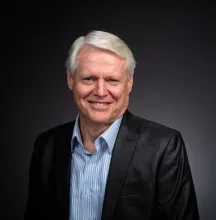
John Elliott serves in the role of President of the United Church of God, an International Association.
