

John Elliott
This transcript was generated by AI and may contain errors. It is provided to assist those who may not be able to listen to the message.
We are blessed to have the truth, and one of them is the truth about baptism. Baptism upon repentance, which indeed is an outward sign of our belief in Christ as our Savior, about His blood justifying us, forgiving us, and cleansing us. And that is taken further with the symbolism of the older man dying, being baptized in Jesus Christ's death, being forgiven, the sins being forgiven by Christ's blood, and the new man being resurrected out of the watery grave, which represents a commitment of living a new life.
Basically, the baptism is the signature of this new contract that you sign with God, personally, individually, called the new covenant, that you've signed, that you've committed to live a new life. And God therefore blesses us upon the laying on of hands with the gift of His Holy Spirit that helps us and makes it possible for Christ to live in us. This new covenant agreement is renewed annually at the time of the Passover, which is the anniversary of His suffering and death.
And at that anniversary, we are restating that belief of Christ's death and the meaning and the significance thereof and of His blood, and we're renewing that commitment with God. And so the Passover has two significant symbols, which we'll quickly look at it in 1 Corinthians 11. The Passover has two important symbols, one being the bread and the other one being the wine. That we are going to be talking of about today. We're going to be specifically spending the time talking about the bread, because two weeks ago, we talked about the meaning of the wine, which basically represents the blood of Christ.
And so let's look at 1 Corinthians 11, verses 23 through 25, which says, This is my body, which is broken for you to this in remembrance of me. And at the same man, it also took the cup of the supper, saying, this cup is a new covenant in my blood. This do as often as you drink it in remembrance of me. And as often as we do it, it is in a memorial, as is instructed at the same night that he was betrayed. And so we have these two symbols, the bread and the wine, representing, respectively, the body and the blood of Christ.
And in those two symbols, it is also stated that it is a new covenant being, let's call it, signed and sealed and renewed, because it says here in verse 25, it says, this cup is a new covenant in my blood. So it is the new covenant in his blood. And a covenant basically is an agreement, and an agreement has always two parts.
It is an agreement between two entities or two parties. In this case, it's between us and God. It's an agreement. God's part symbolized by the blood. This is the blood, and that's why it says the blood of the new covenant. That's God's part. And obviously, the body as well, which is how Christ suffered, and he suffered for us.
But today we want to look at that meaning of the bread in a little bit more detail, because the bread representing the body of Christ means us obviously coming out of sin and not going back to it. The body of Christ, think about it, is the provision for us to stay out of sin. The body of Christ is the provision for us to stay out of sin, which is symbolized by the bread.
And that's what we're going to look at, how it does that. And then furthermore, we're going to look at two areas of which we can put to practice certain areas of characteristics. Now, in the earlier split sermon, we heard of a number of characteristics. And what we're going to do is we're going to look at two additional characteristics that are very important besides the ones that we heard early on today. And those two characteristics are related to the body of Christ, related to the body of Christ. Because the body of Christ shed his blood, and therefore he died, and the blood's got a certain meaning as we went through it.
But what remained is a body of flesh and bone. And so we want to talk about, then, the flesh and the bones. So let's start by going to Hebrews chapter 10. Hebrews chapter 10 verses 16 and 17. Because it's talking about this new covenant. And it says, This is the new covenant that I'll make with them after those days, says the Lord, I'll put my laws into their hearts, and in their minds I'll write them. So it's talking about the new covenant writing God's laws into our minds and into our hearts, which is done through the power of the Holy Spirit when we receive the Holy Spirit.
That's how it's done. But there's something else also in the new covenant, which is in verse 17. And then he adds, Their sins and their lawless deeds are remembered no more. So there's two aspects of the new covenant. One is that we will have to obey God's laws because they've written in our hearts, in our minds, and therefore we want to. Secondly, their sins and lawless deeds are remembered no more. In a sense, one represents the blood, and the other one represents the body.
The blood, the sins will remember no more, which is symbolized by the wine at the Passover, and the body, which is symbolized by the bread at the Passover, which is what we have to live and obey God. Because the body of Christ is a provision for us to stay out of sin.
Now, note, the old covenant did not have those two aspects. In other words, the old covenant had no provision for us to stay out of sin. The old covenant did not write God's laws into the people's hearts and minds. There is a provision through the Lord's body, Christ's body, living Christ's body, Christ Himself, living in us through the Holy Spirit. Secondly, the old covenant, the sacrifices under the old covenant did not forgive sins.
Well, that might come to use a shot, but we're going to show, we're going to read it from the Bible. I'm not just saying, we're going to read it from the Bible. The sacrifices under the old covenant did not forgive sins. So, let's look a little bit more at what Paul is talking about in context, in Hebrews 10. And we're going to start reading in verse 1. For the law. So, what is he talking about? Obviously, the law of sacrifices. The law of the ceremonial sacrifices that were represented in that old covenant.
Not God's law. The law of sacrifices, the law of rituals, the law of giving sacrifices and offerings and sacrifices and offerings day in the morning and in the evening and every day and at the new moon and every time of the season and every year they were doing those sacrifices. That law of rituals. That law having a shadow of things to come.
What was the shadow of what? Of Christ's sacrifice. That law was a shadow of things to come. And not the very image of the things and not the very image of the things. In other words, that old covenant was an image, a shadow, a pointer to the new covenant. Those old sacrifices were a pointer to Christ's sacrifice. And not the very image of things. They were just a shadow. Can never, with these same sacrifices which they offered continually year by year, not just year by year, day by day, those sacrifices can never, never, with those sacrifices which they offered continually make those who approach perfect. It did not make them perfect. In other words, did not forgive their sins, did not make them right with God, did not make them justified with God. For then, they would have ceased to be offered, right? I mean, if they'd been forgiven, then why offer it again? For the worshipers, once purified, would have had no more conscious and subsets. The sins would be forgiven, so they would not have to do it again. But in those sacrifices, there's a reminder of sins every year, every time you're doing it, every time you're doing it. For this, for it is not possible that the blood of bulls and goats could take away sins. It's not possible that the blood of bulls and goats could take away sins. It's not possible that the sacrifices under the old covenant could forgive sins. Thanks. That's complete. Therefore, when it came into the wall, they said, sacrifice an offering you did not desire, but a body you prepare for me. In other words, those sacrifices of the Old Testament, of bulls and goats, that's not really what God desired. God desired a sacrifice of the body of Jesus Christ that was prepared for him. And therefore, by the body prepared for me. In bird offerings and sacrifices for sin, you had no pleasure. God was not pleased, and because he was not pleased with those sacrifices, they did not forgive sin. Then verse 7, then I said, Behold, I have come, in the volume of the book it's written, to do your will, O God. Therefore, I have come, I Jesus Christ have come, to do your will, O God, God the Father. Jesus Christ came, to do God's will. So, we can see, we can see, yeah, that it's, it's the point, yeah, it says, in bird offerings and sacrifices for sin, I had no pleasure. So, those sacrifices had no pleasure. And the sacrifice, remember, requires always two things. Requires a body and a blood bean shed. You think about how the lamb was killed. The lamb was slaughtered. How? The lamb, the mauve they went there, they were slaughtered, the blood poured out, and the lamb died. So, two aspects are to pass over, the wine and the bread. The wine representing the blood. Jesus Christ's blood, paying with his life for us. Then, we're not going to be focusing on today. We did that some weeks back. And then there's the bread, which is the body. And the body of Christ has two meanings. See, God does everything in duality. The body of Christ has two meanings. First, the body of Christ means the suffering that Christ went through. It represents the suffering. It represents being broken for us. Yes, his flesh was torn for us. Yes. And that's what normally we think of first. Now, I am not going to focus on that component today, because that is what we normally focus on. And therefore, I assume that you are going to keep that in mind. And I'm not by any means putting the value there off lower. But I just want to focus on the second meaning of the body today as well. Because the second meaning of the body of Christ is that it's the church.
The body of Christ is the church. It's you and I. It's Christ living in us. So, I'm going to concentrate on the section of the bread of the body of Christ, but in that component that it is a church. By not concentrating on the other side, which is the suffering that Christ had, I'm not minimizing that. I'm just saying that we pretty well have it in our minds. But I want to focus on the other side as well, which is equally important, and quite often we don't think of as the body of Christ being the church.
So, when it says, yeah, in verse 7, at the end of verse 7, it says, to do your will of God, which says, I have come to do your will. We are often reading it to say Christ came as a body, and the body has been prepared, and we look at it physically as Christ's body, quite correctly, that He came to do God's will, and normally in our minds that's where it ends, so stop. What I want to take us to think beyond that is that the body also applies to the church, and it says, I have come, He's prepared a body, which is the church, and He has come to do your will as the church is the body, and the church, we as a body, ought to do God's will as well, just like Christ's body did God's will. So really what I'm trying to do is elevate it or add to it, not to minimize the other, but to add to it the spiritual dimension thereof of the body of Christ. Now, clearly, Christ knew the pain that He was going to go through, because He said, as you may remember, O Lord, O God, let us cut past from Me! He knew the pain, He knew the suffering, He knew the mental anguish, He knew the emotional stress He was going to go through, but He did it for us, for you and I.
In that that He did it for us, for you and I, is because He loves you and I.
And it's because you are worth it. We are worth it. Now, of course, when we pray, we say, God, come useless, I'm worthless. Of course we are. But God was looking at our ultimate potential. Not what we are, but what we can become with Christ living in us as the ultimate potential. That is worth to God. And that gives us great hope because God sees that we can change and is giving us the Spirit and He wants us to be in the Kingdom. Not that we are anybody special. No, we're not. But with God's help and with His Spirit, we can become somebody that is worth it for God. God. So that's why He said it. And so therefore we are to do His will. So continue reading in verse 8 and 9, previously saying, sacrifice and offering, burnt offerings and offerings for sin, you do not desire, nor do you have pleasure in them. That's obviously the Old Catholic offerings, which were offered under, according to the law. Obviously the ritual law. That's the law that's talking about, the ritual law. Then He said, Behold, I've come to do your will, O God. And I've explained that in great detail already. And He takes it first, away the first, then He may establish the second. He takes away the first covenant, the Old covenant, to establish the New covenant. By that will, we have been sanctified through the offering of the body of Jesus Christ once for all.
Now the word sanctified is important for us to understand. Because we quite often read this, and we don't see what it's written there. You see, our sins are forgiven. We wash away by the blood of Christ. No, it's not talking about the blood of Christ. It's talking about the body. So sanctified, here I was talking made, the word sanctified means to make holy, consecrated, set aside, being separated by the body of Christ. By Christ living in us through the power of His Spirit, we are sanctified. The body of Christ gives us the capability or the provision for us to stay out of sin, to put sin away, and therefore to become sanctified. Let's continue, verse 11. And every priest stands ministering daily and offering repeatedly the same sacrifices, which can never take away sins. The sacrifices of the old covenant can never take away sins. That's what it says.
Show me the Bible. Well, it's right there. But this man, which is Christ, offered one sacrifice for sins forever, sat down at the right hand of God. From that time, waiting till His enemies are made His footstool. So we have to wait. So we have to wait. The right time, when He's going to come back again, at the Second Coming. For by one offering, He has perfected forever those who are being sanctified.
Do you get what it says in that verse? Again, two things. Can you see two things? Two aspects. One is perfected forever. Past tense. Perfected forever. Two, those who are being sanctified. Continuous present tense. Still happening.
Can you see two things? Perfected forever. How? By the blood. The sins are forgiven forever. One sacrifice. Being sanctified is a process of Christ living in us over time, of us living the way, having Christ living in us over a period of time, and therefore being sanctified over a period of time. That ties in with verse 10. Because in verse 10 it says, We have been sanctified, and we are being sanctified.
We have been sanctified. Yes, we've been set aside. We've been separated, and we've been developed in being separated to become more and more Godlike, more and more in God's nature, through the power of His Spirit living with Christ in us. So that is the first point that I really wanted to emphasize, is that we need the body of Christ living in us through the Holy Spirit so that we can be sanctified over time.
Let's continue reading. We read verse 15 through 17 already, which is basically saying, but the Holy Spirit is also witness for us, and then He's talking about the New Covenant, what it represents, so we've read through that. But then I want to read verse 19. Therefore brethren, because we know this, because the New Covenant has got these two aspects. One, it's forgiven our sins, gone, the blood, and two, the body of Christ, Christ living in us, which is the church, but Christ living in us through the power of the Holy Spirit being sanctified, having this understanding, brethren, says, therefore brethren, having boldness to enter the holiest part of the blood of Jesus.
When we pray daily, instantly, in prayer, at any time, we can be bold. If we have God's Holy Spirit, then we can come boldly before the throne of God, the holiest, through the blood of Jesus that has forgiven us, that it's made us cleanse, we can come there.
So that's part one. And part two is by a new and living way, verse 20, which He has consecrated for us through the veil that is His flesh. You see, there's these two elements. One is the blood.
The blood perfected us, quote unquote, forgiven all our sins, we can come boldly to God's throne. But at the same time, we have a new and living way, a new and living way, through Christ's body, specifically the flesh, of what we need to be doing. What is this new and living way by flesh?
It's a way of life never understood before. And that I'm getting now into my second point, in a sense. Because the first point is that we need God's Spirit to live in us. And through God's Spirit, we are sanctified. We are, have Christ living in us. But there is a new and living way by His flesh.
Then we need to be living. Christ lives in us through His Spirit. How is this new and living way? Turn with me to John 6, verse 48. John 6, verse 48. I am the bread of life. Your fathers ate the manna in the wilderness and are dead.
This is the bread which comes down from heaven, that one may eat of it and not die. I am the living bread which came down from heaven. If anyone eats of this bread, he will live forever. And the bread that I shall give is my flesh, which I shall give for the life of the world. That's the new and living way, Christ's flesh. Then the Jews would quarrel amongst themselves, saying, how can this man give his flesh to eat? Then Jesus said to them, most assuredly I say to you, unless you eat the flesh of the Son of Man and drink His blood, you have no life in you.
It's a new and living way. Whoever eats my flesh and drinks my blood has eternal life, and I'll raise him up at the lost state. For my flesh is food indeed, and my blood is drinking meat, and he who eats my flesh and drinks my blood abides in me, and I eat. As the living Father sent me and I lived because of the Father, so he who feeds on me will live because of me. This is the bread which came down from heaven. Not as your Father's ate the manna and are dead. He who eats this bread will live forever. Basically, he says Christ is going to live in us.
God's Holy Spirit living in us through the symbol of the bread, which is symbolizing His flesh, is our provision to come out of sin. It's what helps us to come out of sin. The Old Covenant never gave us that.
And so the body of Christ, through His flesh, it helps us to stay out of sin, indeed, through His Holy Spirit.
Let's look at it again in Ephesians chapter 5.
Verse 25 through 30. Ephesians 5, 25 through 30. I'm going to start in 17 and 18 and then 25 through 30. 17 and 18, this says, Therefore, do not be unwise. Ephesians 5, 17 and 18. Do not be unwise, but understand what the will of the Lord is. What is God's will? Obviously, Christ came to do the will of God. We as God's Church ought to do the will of God. What is the will of God? He says, Do not be drunk by the wine in which there is dissipation, but be full of the Holy Spirit. God wants us to be full of God's Holy Spirit. That's God's will, because the Holy Spirit is what is going to help us to live a new life. And then in verse 25 through 30 describes this new living way, very neatly. Husbands, love your wives just as Christ also loved the Church and gave himself for it. Then you might sanctify and cleanse them. Yes, the word again sanctify the Church. Make the Church separate, sick, aside, holy, living in a different way. You might sanctify and cleanse them with the washing of water by the word.
Why doesn't it say with the washing of the blood?
Because it is not talking about the blood. It's talking about the body. It's talking about the flesh. Remember? The blood makes us perfect, forgives us sins. And then there is the other component which sanctifies, which is the body of Christ through the flesh, that we need to be sanctified. And we sanctify the body, which is ours, through the Holy Spirit living in us. Isn't the symbol of the Holy Spirit water? The waters? We are sanctified by the washing of the Holy Spirit in us. By the Word of God, which is, we hear through reading the Bible, studying the Bible, applying it, and we get more of God's Holy Spirit. That's what it is. That he might present her, that's the Church to himself, a glorious Church. Not having a spot or a wrinkle or any such thing, but that he should be holy and without blemish. So husbands ought to love one's wives as their own bodies. He also, he who loves his wife also loves himself. For no one ever hated his own flesh, but nourishes and cherishes it just as the Lord does the Church. For we are members of his body.
We, as God's people, are members of the body of Christ, of his flesh and of his thumbs. Ah! So there's meaning in the flesh and there's meaning in the bones. See, everything is stated for a reason.
You see, this is the New and Living Way. That Christ is sanctifying the Church by the washing of the water, which is the Holy Spirit, through the Word, which is the Bible. And therefore we are being sanctified, living a New and Living Way. It's a New and Living Way. So through God's Spirit we've got this commitment to come out of sin, not to get back into it. And we have this principle of the flesh. Because what Christ does, the flesh, he suffered. His flesh was torn apart. The flesh was broken. Yes, the flesh was broken. Just like we read in Hebrews 10, verse 20, where we're reading just now.
Hebrews 10, verse 20. You see, by a New and Living Way, which He consecrates for us through the vial.
Through the vial, what happened to the vial? Was torn. So that we can go through the Holy of Holies. And what is a vial? It's Him's flesh. So we have the capability of entering God's throne, yes, by the blood of Jesus, because we've been forgiven, our sins have been forgiven. But we can get through that vial to the Holy of Holies, which is through the flesh, through the sufferings of Christ. And that's a New and Living Way. So what is the New and Living Way? It's the body of Christ, the flesh, that Christ suffered for us, and He gave us an example to do the same. As we know the Scripture, John 3, 16, I'm not going to turn to it, For God so loved the wall that He gave His only begotten Son, that whoever believes on Him should not perish but have eternal life. That is genuine love. That is genuine love. But that is exemplified by suffering.
So, obviously, we have to really love God. We really have to love God. And last week we had a split sermon, giving us some good practical examples how to love God. But sometimes we say, do I really know how to really love God? Do I really know how to love God? Because what I want to do the most is I want to really love God. Now, how do we demonstrate and love of God? How? The Scriptures don't leave us in the dark. 1 John 4, verse 20 tells us how to. 1 John 4, verse 20. If anyone says, I love God. I really want to love God. I love God. And he hates his brother. He is a liar. Now, that's not a mild statement. That's powerful words. For he who does not love his brother whom he has seen, how can he love God who has not seen? And this commandment we have from him, from Christ, that he who loves God must also love his brother also. So the same love that we need to show that we love God, that's the same love we ought to show towards other people. Love for the brave. And so, that's what we're going to do. Now, that's not easy. When somebody says unkind words towards you, or says certain things beyond your back that you year afterwards, which we're all guilty of. And then what do we do? Ha ha! Matthew 18. I've already sorted it out with him, oh yeah. That's not the purpose of Matthew 18. The example that we have from Christ is that we suffered like he did. That is the example of the flesh of Christ. 1 Peter 4. 1 Peter 4. Just a few pages back. Verse 12 and 14. 1 Peter 4, 12 and 14. Beloved, do not think it's strange, concerning the fiery trial, which is to try you, as though some strange thing happened to you. For instance, you have a real trial. You have a trial, for instance, with a person. And there is a little bit of clash of personalities and just things are not going well. And you think, oh, I have this big problem, big problem with this person. As well, some things strange happened to you, but rejoice to the extent that you partake of Christ's sufferings. That means swallow it and take it like Christ took as a suffering. That when his law is revealed, you may also be glad with exceeding joy. Just turn maybe one page back or maybe the same page. 1 Peter 2, verse 19. Says, for this is commendable. If because of conscience towards God, one endures grief, suffering wrongfully. So you believe this person's done something wrong against you. The verse is commendable, says, yeah, because of conscience towards God, because we love God. And therefore, loving the brethren is the proof of loving God, is like the acid test. It says, endures grief, suffering wrongfully. Not seeking justice, not seeking, I want to make it even and I want to show a proof to him and until he repents or she repents. That's not what it's saying yet. They say it's commendable to suffer wrongfully. It's like Christ suffer wrongfully. That is the way, the new and living way, the way of his flesh.
And then it goes on. You can read from 18 through verse 24 here, where it says, you know, we got to be submissive. We got to take it even from when people are not good to us. And then in verse 21, it says, verse for verse, you were called because Christ also suffered for us, living as an example that you should follow his steps. Example of what? Of suffering wrongfully.
That is the new and living way by his flesh. It's not the way of seeking justice, but it's the new and living way. It's a way of you read other places that says, don't seek revenge. Don't do evil for evil, but do good for evil. In Romans 13, I think that's what it is. And other places. So it's a whole new way. I mean, Christ in the Seminole amount in Matthew 5 43 to 48 talks about, you know, if somebody hates you and you feed your enemy, treat him nicely.
And it concludes that, be your perfect like your father is perfect in heaven. That is a new and living way. Oh, it's tough. Sure, it's tough. Sure, it's tough. But it's a new and living way through the flesh. And that's the meaning of the bread and Passover. Yes, we are Christ's body. Yes, we've got a new and living way. First, we've got God's early spirit that gives us the strength and the help to obey and keep God's laws. But we have to love the bread and that's how we love God through a new and living way, which is Christ's example of suffering wrongfully through his flesh.
Like he did. And then obviously we read, as you remember, in Ephesians 5 verse 30, that he says, we are members of his body of the church through the flesh and bones. And I just want to touch on the bones very briefly because, as you know, the bones were not broken. You can read in John 19, the bones were not broken. Christ's bones were not broken. That tisine was pulled when you're talking to Corinthians saying, is Christ divided? Because if you broke the bones, you know, separate one part of the body from another one and it will be separated or ripped apart, not just the flesh, but the bones.
Christ is not divided, but we are one. The body of Christ is one. The spiritual body of Christ is one. The bones were never broken. The body stayed as one entity. Even though it was torn, the flesh was torn through suffering, the body stayed one. Even though we have to suffer for others, we are not to split the body of Christ, which is the meaning of the bones. I mean, you can read in Revelation 2 and 3 how we can see there are different congregations of the God's Church.
Some had different ideas which were not so complementary, and therefore they were stated repent. Others had other characteristics that were praised. And we can say they were in different areas, but you can also say they were contemporaneous. They're happening at the same time. So there are different congregations, but even though they are different congregations, as a spiritual entity, we are not to cause the vision with those brothers and sisters.
And so that's what Paul said in 1 Corinthians 11. Now that we have liked this, to this understanding and meaning, in 1 Corinthians 11, we'll pick up in verse 18 and 19 first. 1 Corinthians 11, verse 18 and 19, For first of all, when you come together as a church, I hear there are some divisions among you, and in part I believe it.
For there must also be factions amongst you, for those that are approved may be recognized amongst you. So, regrettably, there are divisions, but they shouldn't be so, because Christ's Father is not divided. And then in verse 28, he's talking about, he says, But let a man examine himself. You see, as we come to the Passover, there's many things that we need to examine ourselves. In the first split sermon this morning, we saw a number of items to examine ourselves.
In addition to all of those, we've looked about the need of us having God's Holy Spirit. We looked about the need of living a new and living way, of following Christ's example of suffering wrongfully, for our brothers, rather than seeking justice now. Christ did not come in his first coming to bring justice to the world. There's been no justice in the world since the Garden of Eden, and there won't be justice until Christ comes back and established justice in the world. But his first coming was not to establish justice. He was an example of how we need to live in a new and living way.
So, we've seen various ways of examining ourselves. But there is also another way of examining ourselves, which is related to the bones. As I mentioned, they were not broken because the body was not divided, or cut apart. Because they were wanting to go, they had cut the legs and separate the body, one part from the other. And that was not done. Christ is not divided.
And so it brings that example. And now thinking about the Lord's body as the Church. Obviously, we need to think about the Lord's body as his physical body. But as I mentioned, bringing it to the spiritual content beyond that. Let's see. But let a man examine himself, verse 28. And so letting eat of the bread and drink the cup. Doesn't say examine yourselves, and therefore because you examine yourselves, don't eat. No, he says, examine yourselves and eat. For you eat and drink in an unworthy manner. So it's the manner, it's the approach.
He eats and drinks judgment to himself, not discerning the Lord's body. What is the Lord's body? It's the Church. Are we discerning the Church of God during the Pausama? That brings your whole thinking of self-examination to a different level. And that's why then it goes on to say, for this reason, many are weak and seek amongst you in many sleep. There's a lot to meditate about that and to examine ourselves about that. A lot.
So, Brett, the Pausauver, as we are approaching, shows many things. But I just showed to you three things today. Christ living in us through his Holy Spirit, showed you a new and living way through his flesh. And remember, the body of Christ is also the bonds which are not to be divided. The body is to be one, just as the Father and Christ are one.
And this, brethren, is the meaning of the bread of the Pausauver, in the words of Christ, living in us. And this is a new and living way.
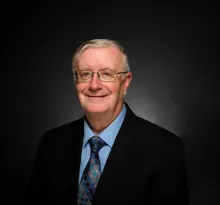
Jorge and his wife Kathy serve the Dallas (TX) and Lawton (OK) congregations. Jorge was born in Portuguese East Africa, now Mozambique, and also lived and served the Church in South Africa. He is also responsible for God’s Work in the Portuguese language, and has been visiting Portugal, Brazil and Angola at least once a year. Kathy was born in Pennsylvania and also served for a number of years in South Africa. They are the proud parents of five children, with 12 grandchildren and live in Allen, north of Dallas (TX).
