

John Elliott
This transcript was generated by AI and may contain errors. It is provided to assist those who may not be able to listen to the message.
A following message is presented by John Elliott, a minister in the United Church of God. Right around 2,000 years ago, Jesus Christ ate his last meal on earth with his disciples. After the meal, he told them to remember him in a special way. And he set out the symbols of the Passover. The disciples were there with him, and they really didn't understand what was about to happen. But in less than 24 hours, Jesus would be dead, and he would be sealed away in a stone tomb. His disciples and followers were then shocked. They were confused, and they were scattered. Things had changed so quickly. They saw, or they heard about the crucifixion. They saw the darkness. They saw miracles, heard about them, the tearing of the curtain and the holy of holies. But none comprehended what had happened. And the big question in their mind was, what happened and why? As you and I approached the Passover, the memorial of Jesus' death, we too can ask the question, why? Why did this have to happen? Why was it necessary for God to come down to earth, live as a human, and die in this terrible way? The answer is that sin is the violation of God's holy law. And through disobedience, every one of us has earned something called a death penalty. In other words, the termination of the life that we've been given. We fall short of the mindset of God, the glory of God represented by His Spirit, by His mind, by that agape love, and all that God stands for. So we really are destined to a final disillusion, a death, a removal without the intervention of someone else. Because if we have to pay the penalty for our own sins, then we have nothing to look forward to. However, Jesus Christ substituted His death for ours, and His sacrifice following baptism and true repentance becomes a payment for the penalty of our sins. He lived a sinless life, and He was a marvelous individual and one to respect and admire, and all of a sudden, in a short period of less than a day, He was looked upon, He was spat upon, He was crucified and hurt and destroyed as a physical human being as some kind of sinner, and it left everyone bewildered. But Jesus Christ took on our sins so that we could have life with Him forever. Today, let's look at the Passover service and the symbols and come to understand what the New Covenant Passover really is about for you and for me. And as we anticipate partaking of those symbols, let's make sure they are deep and rich in meaning and relevance to this covenant that we are walking with God. Let's look at some elements of Christ's sacrifice that we are preparing to celebrate. Only then can we really begin to appreciate exactly what God has given mankind through His Son. In Matthew 17 and verse 12, we see Jesus Christ beginning to talk in advance about what was going to happen from His perspective. Matthew 17 and verse 12, But I say to you that Elijah has come already. That's John the Baptist, and they did not know Him, but did to Him whatever they wished. John the Baptist was treated horribly as he announced the Messiah, and he had his head cut off. Likewise, Jesus now says, the Son of Man is also about to suffer at their hands. That is something that was occupying some of his thoughts. He would really have to bear down on doing everything very, very carefully, very precisely, holy, and right through this very difficult period ahead. He said in verse 22, The Son of Man is about to be trade into the hands of men. Verse 23, And they will kill Him.
The others around Him were going about life, enjoying the miracles, appreciating the teachings, appreciating that their master, their rabbi was above all other rabbis. In Matthew chapter 26 and verse 2, Jesus also tells them more about what's about to happen. Matthew chapter 26 and verse 2, You know that after two days, Jesus Christ is counting down to this tragic end of physical life on earth. You know that after two days is the Passover, and the Son of Man will be delivered up to be crucified.
Crucified. Everyone knew what that was because the Romans did so much of it, and it was carried out in a way that created fear of doing anything against Rome.
Now, let me share something that the Bible says that you may not hear somewhere else. Jesus Christ's sacrifice. Your sins did not require Jesus's sacrifice.
Let me say that again. Your sins did not require Jesus Christ's sacrifice.
My sins aren't so important that when I sinned, He had to come down from heaven. I forced Him to. My sins required Him to come out of heaven, come down here, and go through a crucifixion. No, my sins did not require Jesus Christ to come and be sacrificed. Rather, here's what my sins and yours required. Go back to Ezekiel chapter 18 and verse 20. Ezekiel chapter 18 and verse 20. Here's what scriptures say our sins require.
Ezekiel 18 verse 20. The soul, the person who sins, shall die. That's what it requires. My sins, your sins, require our death. The Son shall not bear the guilt of the Father, nor the Father bear the guilt of the Son. In other words, my sins require my death. End of story. You know, when we think about what my sins require, we need to realize my sins require my end, my death, period. That's exactly what it is. Nothingness forever. Not being there.
Zippo. Not a flicker. Not a trillionth of a second remnant of a quark inside a hadron from an atom inside my body remains. Just not even there. We need to realize that. That is the result of sin. That's what we earn. The wages, what you earn from sin, is death.
But wait a minute. Wait a minute. Something else is offered in the next verse. It says in verse 21, But if a wicked man turns from all his sins in which he is committed, notice this, turns, keeps all my statutes, and does what is lawful and right, he shall surely live. He shall not die. Verse 22. None of the transgressions which he has committed shall be remembered against him. Jesus died so that you can live. Our life requires Jesus's death, but our sins required our own death.
Somebody has to die for a sin. The rule always applies. The question is, who will die for your sins? Who will die for my sins? Will it be me? Will it be you? Or will Jesus's death be applied to you? And who will die for your sins? The ceremony that we observe at the Passover maybe doesn't have a lot of meaning if we just hurry up to it. Oh yeah, we need to take the Passover because that's something we have to do in the covenant. But how important is the meaning of this Passover? How deep does this go into our opportunity to actually have life? Let's go to Matthew chapter 20 and verse 18. Matthew the 20th chapter beginning in verse 18. I'll read down through 21.
Jesus said, Behold, we are going up to Jerusalem, and the Son of Man will be betrayed to the chief priests and to the scribes, and they will condemn him to death. Verse 19. And they will deliver him to the Gentiles, to the Romans, to mock and scourge and crucify. Now, that's what Jesus Christ is thinking about. Where he's going, who's going to turn him in, where he's going to be sent, and what they're going to do to him. Now the next verse, verse 20. Then the mother of Zebedee's sons came and said, kneeling down, and he said, What do you wish? Verse 21. And she said, Grant, the two sons of mine may sit one on your right hand and the other in your left in the kingdom.
That's often where humans are when the Passover shows up. Oh, yes, that's something. Yes, it's important. People will come out of the woodwork, as it were, and come to church or come to the Passover every year. But in reality, how important is this covenant, living this covenant, as we read, living it, doing it? Like Jesus Christ is going about doing, paying the penalty for our sins. How busy and how much effort do you and I put into getting sin out of our life and putting righteousness in? We find in 1 Corinthians 11 and verse 21 what was happening in the Passover there in the church. 1 Corinthians 11 and verse 21. You know, once again, we have busy lives, and the human mind tends to be a little self-focused and looking at ourselves. And we can often look at the new covenant. Even Christ sacrifices, What does it do for me? What can I get out of this? 1 Corinthians 11 and verse 21 here at Passover, people are selfish. They're thinking about themselves, what they're eating, what they're drinking. Paul says, For in eating, each one takes his own supper ahead of others. One is hungry, another is drunk.
The point is here is not to condemn anyone, but to stop and say, Wait a minute, this is the great sacrifice of Jesus Christ. He is fully focused. He's fully fulfilling everything carefully, precisely that's been given to him to do. Are we responding carefully, precisely in our lives?
Dilevening is taking place. I don't know about you, but we have choices in dilevening. Some of those crooks and crannies in the car and under the seats, there you can see some stuff down there. Say for sure what it is, but getting added is more than just inconvenient at times. And so we can look at that stuff and say, Do I really need to get that out?
Come on, I'll never get all the scent out of my house anyway, so I just leave that. I can't get it all out of my car anyway, so I mean, what's the big deal? I'll do a light cleaning, etc. etc. Is that how we approach sin in our life? Is that how we approach righteousness? Or do we do it like Jesus? Everything, very, very careful, everything precise, going to any length it takes to get known sin and get it out.
Let's examine our relationship to the New Covenant. It's vital that we understand it. In chapter 13 of 1 Corinthians, and verse 4, 1 Corinthians chapter 13 and verse 4, For though he was crucified in physical weakness, yet he lives by the power of God.
For we also are weak in him, but we shall live with him by the power of God toward you. Verse 5, Examine yourselves as to whether you are even in the faith.
Put the word even in there. Examine yourself to see if you are really in this covenant. Or is it just a game, just sort of, well, I'm not really into the details. I'm not really trying to be right and righteous in God's eyes. I keep the Sabbath, whatever that means, but we talk and think through the Sabbath on our weekday thoughts and activities, projects, work, etc. And on the Sabbath, many people don't even know when it begins or when it ends. Is that what we do? And if so, are we in the faith? Are we even in the faith? We should examine ourselves as we come up to this Passover and say, Jesus Christ was fully committed. Now let me examine myself. Am I in the faith? Test yourselves, he said. Do you not know that Jesus Christ is in you unless indeed you are disqualified?
Now, we can't say enough in encouraging one another that we need to be alert and awake to our spiritual condition. Jesus talked about that throughout his whole ministry, and even said, you know, the times at the end, people are going to be just doing what they normally do, and like a trap, boom! There it is, caught on a wares. And he gave the parable of the ten virgins, indicating half of them were basically not part of that covenant, not part of actively pursuing righteousness, developing the character that could be harvested. So in 1 Corinthians 11 and verse 26, 1 Corinthians 11 and verse 26, For as often as you eat this bread and drink this cup, you proclaim the Lord's death till he comes. Now we're proclaiming a death that is shed for those who repent and overcome, and that will cover the death penalty for them. But we also proclaim the Lord's death, and if we're not worthy, then those sacrifices do not cover us. Jesus Christ's single sacrifice, do not cover our sins.
So once again, verse 27, Whoever eats this bread and drinks this cup of the Lord in an unworthy manner will be guilty of the body and blood of the Lord. He will have shed it in vain for that individual. So again, verse 28, But let a man examine himself, and so let him eat of that bread and drink of that cup. We don't have an option if we're the new covenant. We need to come back up to full speed. We need to be focused. We need to eat the bread. We need to drink the cup. We need to have our sins forgiven. But in order for them to be forgiven, we have to truly be repenting and overcome. Verse 29, For he who eats and drinks in an unworthy manner, eats and drinks judgment to himself. In other words, God is going to judge us, and we'll be convicted to the death penalty by our own sins, not discerning the Lord's body. Remember, somebody is going to pay for your sins. Is it going to be me paying for my sins or Jesus Christ? Now, dropping down to verse 31, this is relating to the examine yourself. Verse 31, For if we would judge ourselves, in other words, if we would look into God's law of liberty, and we would see his commandments and ask for his help through fasting and prayer to see our sins, and judge ourselves and then identify the sin, put it away, and replace it with righteousness, then we would not be judged by God. We would not be judged or condemned by God.
So it's vital that we understand this New Covenant Passover. Before we just sort of stumble in and take the symbols and think we've accomplished something, let's realize it's not about us. The Passover is not about you or me. It's a memorial. It's a remembrance of what Jesus did.
Jesus said that unless we symbolically eat his flesh and drink his blood, that we have no life in us. He said that in John 6 and verse 53. So in other words, we are in a death state or situation if we don't have his bread and his blood. If we don't have his sacrifice covering our death penalty, then we have no life in the kingdom of God. Let's go to Ephesians chapter 5 and verse 2. Ephesians chapter 5 and verse 2.
And walk in love as Christ also has loved and given himself for us an offering and a sacrifice to God as a sweet-smelling aroma. So he has done that part for us. That's one of the gifts, the favors of God. This is Jesus Christ's gift as one of his graces or one of his favors.
Now he speaks to us, but fornication, mental, physical, and all uncleanness or covetousness, let it not even be named among you as fitting for saints, neither filthiness or foolish jesting, talking, coarse jesting, which are not fitting, but rather giving thanks. For this you know that no fornicator, no unclean person, no covetous man who is an idolater has any inheritance in the kingdom of God. So we have to come out of sin. We have to be washed from these sins in order to have a life in God's kingdom.
Let no one deceive you by empty words. There's a lot of smooth things out there. People will get involved even religiously and in other ideas and concepts and focusing on what's going to happen in the future or this picky thing or that. Don't let anybody deceive you. You're going to die forever unless Christ's blood and body pays the penalty for your death. So the Passover service then commemorates something that's huge, something that you and I really need. It's something that only through it can we have eternal life. Only through it can we have a resurrection into God's kingdom. We acknowledge that the Passover commemorates the death of Christ. So as we come up to the Passover, we need to be thinking about Him. We've gotten rid of our sins before. We do that every day. We've gotten the leaven out before. We're now going to spend a week building righteousness, unleavened bread into our life. We're now going to be picturing our life walking, a newness of life.
So these things need to be behind us and coming to Passover fully repented so that we then acknowledge and recognize the great gift that we are being given through the death of Jesus Christ. The first element of the Passover service is foot washing. Foot washing reminds us of James chapter 4 and verse 6 that says, God resists the proud. So just coming up and acknowledging the great sacrifice of Jesus Christ requires us to be humble and not be resisted by God. Not to be some sort of a person who thinks highly of himself, kind of the social peacock, etc. Jesus Christ came humbly. God is humble. He served us humbly. Now it says, but gives divine favor to the humble. Those who are humble receive the divine favors, the grace of God. Let's go over to John chapter 13 and verse 3. John chapter 13 and verse 3.
This Passover service is a little out of character for our day and age, but we can certainly transport ourselves back in time or to other cultures that have sandals and dirt roads, gravel roads, and feet get dirty. In John chapter 13 and verse 3, Jesus knowing that the Father had given all things into his hands and that he had come from God and was going to God.
I haven't really stopped and looked at those words before, but I did in preparation for this. Here Jesus knows that he had come from God. So here's an individual knowing that he was God at the right hand of God in heaven, a God being, a majestic being, full of glory. That's who he was. And he was now going to God. He was going back to the throne to sit on the throne. He was from the heavenly throne. He was going to the heavenly throne. This person of majesty, of royalty, the Creator through which the Father had created all things, rose from supper, verse 4, and laid aside his garments, took a towel, and girded himself. See, this is the humility that God through Christ has expressed to us. The Great One, who knows he's great, knows he's going back to greatness, now lays aside his garments, takes a towel, kneels, verse 5, He poured water into a basin and began to wash the disciples' feet, and to wipe them with the towel with which he was girded. There's nothing here about personal superiority, nothing whatsoever. And even though he's about to make the landmark great gift that humans will be allowed to have eternal life through, he takes the role of a servant. Dropping down to verse 14, he says this to us, Dropping down to verse 14, he says this to us, If I then your Lord and teacher have washed your feet, you also ought to wash one another's feet.
See, that's why we do this at the Passover. We strive to imitate that humility of service, a humility of mind that is part and parcel of the God family, and to serve one another. In verse 15, For I have given you an example that you should do as I have done to you. The reason why we include foot washing in the Passover service is because of that statement. That he said, I've set you an example that you should do as I have done to you.
So we strive to do that as part of the Passover service. And we should strive to do this in our daily life, just as he continues to do that for us, to serve us, to encourage us, to wash our feet, as it were, to clean us from sins as we go through life and pick up more sins on our feet, if you want to use that analogy. Even though we've been baptized and washed and clean, we still continue to go through life and bump into things that we shouldn't and need more forgiveness. Verse 17, If you know these things, blessed, supremely blessed, are you if you do them. This isn't about just watching Christ. It's about doing what Christ has done for us. Happy are we if we do them. I'd like to go to 1 John chapter 3 and verse 16.
1 John 3 and verse 16, By this we know love, because he laid down his life for us. And if what we do at the Passover is merely say, oh, that's nice, and that's good, that's what we should do. But if we go no further in our life, we miss the next part of this verse.
And we also ought to lay down our lives for the brethren. So at Passover, we commemorate him laying down his life for us. Unleavened bread commemorates us now, doing the same, living life, humbly, serving God, serving our neighbor.
So God provides divine favors for the humble, and the humble serve like God. They're obedient. They are striving to be right in God's eyes. And we're to follow Jesus' example of humility as we do the same. And so Passover begins with a godly attitude, which is humility of self and service for others. Next in the Passover service comes the bread and the wine.
The bread and the wine, or the blood and the body, or the body and blood of Jesus Christ, refer to the same sacrifice. He died once. But they show two elements, and those elements each have let's say associated lessons with them as well. Let's examine the special significance of the bread and wine in the Passover service. Let's look first at the bread. In 1 Corinthians 11 and verse 24, here the Apostle Paul says that he received from the Lord the instructions of what happened at that Passover, the first Passover with the disciples. And in verse 24 of 1 Corinthians 11, when he had given thanks, he broke the bread and said, Take, eat, this is my body which is broken for you. This do in remembrance of me. Now, if we're going to remember this, let's look at a couple of words here. It's one word used twice. When he had given thanks, he broke the bread. And he said, Take, eat, this is my body which is broken for you. It's interesting, the word broke and the word broken are the same Greek word. And that particular word has only one meaning, just one. You know, sometimes you can look in a lexicon and you'll see all the meanings and applications of various words in the Greek and the Hebrew. This one has one, and it's simply, it means about bread. It's the breaking up of bread. It can't refer to any other breaking of any other kind. So he did that to the bread, and that's what that word broke mean. And then he says, Take, this is my body which is same word, can only be used for bread, which is for you. When was the last time you snapped a piece of fresh bread? You know, fresh bread tears.
He said, My body is broken, but that word only refers to bread. And bread, the word bread, if you don't have a, say, when you have an 11 bread, if you don't have a mechanical slicer, you take a loaf and you pull a piece off. When it's unleavened bread, it can be firmer, for sure. But historically, the Jews' leavened bread was soft, and it was torn. Now, where does the cracker style matzo originate from? Well, doing some research a few years ago, I found that a thousand years ago, 97% of all Jews on earth were Sephardic. They were the Sepharim faction or Jewish sort of sector. The Sepharim made soft unleavened bread. Now, 3% at the time were Ashkenazi Jews, and these Ashkenim baked it until it was hard. So you have 97% had a soft bread, only 3% have it hard. Now, fast forward to today. The Ashkenazi comprise 80% of Jews worldwide, thus the matzo. Let's join these two factions in their online debate of soft versus hard unleavened bread for Passover. And online, I was going through and watching a debate. One says, is it permissible for Ashkenazim to eat the soft matzos made by the Sephardim for Passover? And the answer is yes, it's not leavened.
But one person said, but I feel most Ashkenazim would still feel uncomfortable eating soft matzo. But in truth, why shouldn't we? Another said, well, I have considered marrying a Sephardi just for the sake of being able to eat those soft matzas. I don't like our Ashkenazi matzas.
Someone said, I read somewhere that the first matzo made by the Jews leaving Egypt were probably soft. If they were baked so fast, they didn't have time to crispen up. And finally, someone says this, this is about Jewish traditions. Desecrating a Jewish tradition is a serious thing. So while it would not be a sin for me to eat a soft matzo, it would be very much the wrong thing.
So when we look at Jesus Christ and the bread, it's important for us to look at this symbol of Christ's body as to what happened to his body. In John chapter 19 and verse 36, we notice something here. Now it's not important as to what kind of unleavened bread we eat, but it is important that Jesus Christ's body was not snapped. It says in John chapter 19 and verse 36, For these things were done, that the Scripture should be fulfilled, that not one of his bones shall be broken. Ah, there's the word broken again. But this time it is the Greek word suntribu, to shatter or to break. It has nothing to do with bread. So his bones, his body, would not be snapped or shattered. It would be bread. It would be torn. It would be pulled apart like bread was. Going on to verse 37. And again, another Scripture says, they shall look upon him whom they pierced.
So he would be shredded, as it were, almost like you would take bread, pull it apart, and he would be pierced. Kind of like really what we do when we take a leavened loaf, we pierce it with a finger and pull a piece off. John chapter 19 and verse 1. Back up to verse 1. So then Pilate took Jesus and scourged him. Now let's keep this broken, the bread concept here. The IVP Bible background here talks about scourging. Severe scourgings often preceded crucifixions. Severe scourgings often preceded crucifixions. Crucifixion is bad enough, but a severe scourging? Flogging and severe scourging were part of the death sentence.
For despised non-Romans, they used whips whose leather thongs enclosed sharp pieces of metal or bone. Roman law allowed the scourging to continue until the soldier grew tired, and bones or intros were sometimes bared. So when we think of what Jesus Christ went through and what he going up was very concerned about being able to go through in a proper and right way, which he did perfectly, you see that there were elements here that Satan really wanted to try to break him. In verse 2, and after this scourging, the soldiers twisted a crown of thorns and put it on his head, and they put on him a purple robe, and they said, Hail, King of the Jews, and they struck him with their hands. Our Lord willingly consented to suffer an excruciating death for us, and his blood did not flow quickly. It was slowly shed across the time of a long day, and Jesus endured intense suffering for our sake. This was prophesied back in Isaiah 53, Isaiah 53, and the one who became Jesus was definitely involved in this and the prophecy and involved in the planning of what it would be required for you and I to have our sins forgiven. Isaiah 53 and verse 4, Surely he has borne our griefs and carried our sorrows, yet we esteemed him, stricken, smitten by God, and afflicted, but he was wounded for our transgressions. He was bruised for our iniquities. The chastisement for our oneness with God was upon him, and by his stripes, with those lashes and metal hooks in them, we are healed. We are healed. All we like sheep have gone astray. We have turned every one to his own way, and the Lord has laid on him the iniquity of us all. The bread symbolizes the smitten, the afflicted, the wounded, the bruised, the chastised body of Jesus Christ for our sins. It also reminds us that we are to live a new way of life. That unleavened bread was pure, and it's something that we come to desire and yearn to be Christ-like. It reminds us that we have a close relationship with Jesus Christ through this new covenant, and this new way of life is something that we need to be fully committed to. And in eating that bread, we are recommitting, as it were, to have a strong relationship with him and a full fulfillment of that covenant. In John 6, in verse 32 through 35, John 6, and verse 32, Jesus speaks of this.
John 6, verse 32, breaking into that verse, "...my Father gives you the true bread from heaven." He is that true bread. So as we eat that bread, we think literally of Jesus Christ and wanting to be like him. For the bread of God is he who comes down from heaven and gives life to the world. Moving on, I am the bread of life, and he who comes to me shall never hunger, and he who believes in me shall never thirst. So the bread we eat at the Passover demonstrates our faith and our conviction, our commitment to live in Christ, to allow him to live in us, to be one with him in the body. In Galatians chapter 2, in verse 20, the Apostle Paul clearly shows this relationship. Galatians chapter 2, and in verse 20, "...I have been crucified with Christ." That's at baptism. You can find that in Romans 6, in the first six verses. It is no longer I who live, but Christ lives in me. Not my old way of life. See, now Christ and his mindset and God's mindset and that spirit, that lives in me. And the life which I now live in the flesh, I live by faith with works in the Son of God, who loved me and gave himself for me. Now that's a beautiful description of what you and I are given in this covenant. The old life is gone and we have this new life available to us if we will live it in faith with works. So our relationship to Jesus Christ with surrendering our life to the one who willingly gave himself is what matters. The Apostle John described this relationship very succinctly in 1 John chapter 2 and verse 3 through 6. 1 John chapter 2 and verse 3.
Now by this we know that we know him if. We just talked about knowing him and having that relationship, but if we keep his commandments. We have to build that righteousness, that unleavened bread of sincerity and truth, that mindset of God and develop that right character, the right choices habitually to make that character. He who says, I know him and does not keep his commandments is a liar and the truth is not in him. But he who keeps his word, truly the love of God is perfected in him. And by this we know that we are in him. How do we know that we're in him? By keeping his word.
He who says he abides in him ought himself also to walk just as he walked.
So the Passover again reminds us that Jesus Christ, the true bread of life, that true bread of life must be alive in us, making it possible for us to follow, to walk in a newness of life, just as he lived.
And also an aspect of that bread is the body of Jesus Christ was given as a sacrifice for sins. Let's notice this in Hebrews chapter 10 and verse 10. Hebrews chapter 10 and verse 10.
We have been sanctified through the offering of the body of Jesus Christ once for all. Verse 11, and every high priest stands ministering daily and offering repeatedly the same sacrifices, which can never take away sins. Verse 12, but this man, after he had offered one sacrifice for sins, you see, it's sacrifice for sins forever. He offered through his body a sacrifice of sins forever. Now, dropping to verse 14, for by one offering he has perfected, wrong word actually, he has accomplished is what that Greek word means. It doesn't mean perfected. It means he has completed or he has accomplished the necessary sacrifice forever for those who are being sanctified. So in the context here, he did it once and his sacrifice accomplished forever, that which is needed for those who are being sanctified. He doesn't have to do that again.
We're not perfected. No, that's not what it says. He didn't do the sacrifice. Oh, therefore, I'm perfect. I don't have to worry about anything. No, he has accomplished that necessary sacrifice for those who are being sanctified. So you and I then can look at this bread and really deeply appreciate what he did, how much he went through, how it links us with him, how motivated we need to be in being like that bread. And now we come to the wine. The meaning Jesus gave to the wine using the Passover Memorial is found in Matthew chapter 26 and verse 27. Matthew 26 and verse 27 and 28.
Then he took the cup and gave thanks and gave it to them, saying, drink from it all of you. Now, why do we take a little sip of wine at Passover? Why don't we all get a glass of wine? Well, simply because there was one cup, one cup and 12 disciples. And he took the cup, he gave thanks, he said, drink from it all of you. For this is my blood of the new covenant, which is shed for many for the remission of sins. The word many in the Greek talks about many lots. So he shed his blood for as many as will repent, as many as will come under the covenant where their sins can be forgiven. And it will be for the remission of sins. What does Christ want us to understand about his shed blood?
When we sip that red wine, that's the color of blood, we sip that red wine. It should impress on our minds the death that he gave for the forgiveness of our sins, the shedding of his blood. You'll recall in 1 Corinthians chapter 11 verse 25, it says, this do as often as you drink it in remembrance of me. Wine has nothing to do with you or me. It is a memorial. It is an appreciation. It's a deep, deep recognition on our part of what he did for us. We drink it and we remember what he did for us in shedding his blood. We also know, as it says in 1 John chapter 1 and verse 7, the blood of Jesus Christ, his son, cleanses us from all sin. When we drink that wine, we have faith that his sacrifice indeed does cleanse us from all sin, from every sin we've ever committed that we've repented up. There is no sin that's too big that we say, no, I'm going to keep that one, or he didn't suffer enough, so I still have to feel guilty about that. Nope. He washed us from our sins, and he cleans us from our sins.
Revelation chapter 1 and verse 5. Jesus loved us and washed us from our sins in his own blood, and those things go through our mind as we in faith take that wine. Now, you might ask, well, how does that work? How does it work that blood cleanses me of sin? Well, let's go to Hebrews chapter 9 and verse 22. Hebrews chapter 9 and verse 22.
According to the law, almost all things are purified with blood. This is what God has established, and without shedding of blood, there is no remission. So, anciently, animal sacrifices were types of the real sacrifice that Jesus Christ would make, and his blood would pay the sins of everyone, once and for all, who had repented. Now, in verse 11 of Hebrews 9, But Christ came as high priest of the good things to come. Verse 12, Not with the blood of goats and calves, but with his own blood, he entered the most holy place once for all, having obtained eternal redemption. For if the blood of bulls and goats and ashes of a heifer sprinkling the unclean sanctifies for the purifying of the flesh, as it did as a type under the Sinai covenant, then how much more shall the blood of Christ, who through the eternal Spirit offered himself without spot to God, cleanse your conscience from dead works to serving the living God? And for this reason he is mediator of the new covenant, by means of death, for the redemption of the transgressions under the first covenant, that those who are called, one of the graces, gifts of God, may receive the promise of the internal inheritance. So when we take wine at the Passover, we express our confidence, our faith, our trust, that the blood of Christ totally forgives past-repentant of sins. It also needs to remind us and convince us, if not convict us, that we are free from the guilt of past sins.
In God's eyes, no matter what you've done, who you are, how you feel emotionally, notice in verse 19, we are told this, therefore brethren, having boldness to enter the holiest by the blood of Jesus. No, we come right before God the Father, through the blood of Jesus Christ, by a new and living way which He consecrated for us, that is, through the veil. His flesh, verse 21, and having a high priest over the house of God, verse 22, let us draw near, let us come in, let's come right up to God with a true heart in full assurance of faith, having our hearts sprinkled from an evil conscience and our bodies washed with pure water.
So that blood that sprinkled the Holy of Holies on the Feast of Atonement that cleans the temple and cleans the people, that blood lets us come to the Holy of Holies, right before God the Father. Where does that boldness come from? Do we simply say, oh, Jesus died, I'm saved, therefore I'm good to go? Well, in Ezekiel chapter 33, and verse 14, we find a very clear statement about sin and the penalty for sin. Again, we need to come to the Passover appreciating the covenant that we have, appreciating our part of the covenant, but appreciating Christ's part of this covenant at the Passover. It says here, Ezekiel 33 and verse 14, again, when I say to the wicked, you shall surely die.
Well, if he turns from his sin and does what is lawful and right, see, it's not, oh, yeah, well, I like right. No, he said, if he turns from sin and does what is right, verse 15, and then he describes the effort here on our part, if the wicked restores the pledge, gives back what he has stolen, walks in the statutes of life without committing iniquity, he shall surely live, and he shall not die. None of his sins which he has committed shall be remembered against him. He has done what is lawful and right, he shall surely live. You and I need to come to the Passover in that state, doing what is right and appreciating the sacramental elements that we partake of at the Passover. And if these things are performed on our part, then we have great boldness before God. As David said in Psalm 103 and verse 12, as far as the east is from the west, so far he has removed our transgressions from us. So before Passover, it's very important to de-leaven our home and de-leaven our lives.
We need to rejoice when taking the wine at the Passover. The blood of Christ has given you an intimate relationship with God the Father. It has given you hope of eternal life. It has given you a relationship with Jesus Christ as a bride. So many wonderful things. And drinking the Passover wine celebrates our being bound to Christ by covenant. It's our betrothal to our Lord. It's our covenant relationship within the body of Christ. Covenants of God are established by blood. Let's go to Hebrews chapter 9 and verse 18. Hebrews chapter 9 and verse 18.
Therefore not even the first covenant was dedicated without blood.
For when Moses had spoken every precept to all the people according to the law, he took the blood of calves and goats with water, scarlet wool and hyssop. He sprinkled both the book itself and all the people, saying, This is the blood of the covenant which God has commanded you. Then likewise, verse 21, he sprinkled with blood both the tabernacle and all the vessels of the ministry. And according to the law, almost all things are purified with blood, and without shedding of blood there is no remission. Verse 23. Therefore it was necessary that the copies of the things and the heavens should be purified with these, but the heavenly things themselves with better sacrifices than these. For Christ had not entered the holy places made with hands, which are copies of the true, but into heaven itself, now to appear in the presence of God for us. And Jesus establishes wine as the symbol of his blood for the new covenant and for the new covenant Passover. We find this in Matthew chapter 26 and verse 27. It's a very, very necessary component of our covenant and of taking this Passover. Matthew 26 verse 27. Then he took the cup, he gave thanks and gave it to them and saying, drink from it, all of you. Verse 28. For this wine he's referring to is my blood of the new covenant, blood of the new covenant, which is shed for many for the remission of sins. So as we take this wine, we can deeply appreciate that one of the favors God has given us is a calling now with faith and the gift of repentance. And after repentance, baptism, the washing clean with Christ's blood, and the receipt of God's Holy Spirit, once all of our sins are removed and our ability to come right before the throne of God, be part of the body of Christ, be part of the bride of Christ. It's exciting, really, really wonderful.
Now, what exactly is the covenant? Let's wrap this up by asking the question here as we partake of the Passover and we look at the symbols of this new covenant that he has given us. What exactly is this covenant? God gives favors. I've just mentioned them to you. Some of them include a calling, which none of us can obtain ourselves. Faith, we can't get that. We can't earn repentance, that gift of God.
We can't earn forgiveness of our own sins, as we clearly see, that can only come through the blood of Christ. We can't somehow endow ourself with the Holy Spirit and be led by God. God's favors, plus our faithful application of those favors, constitute the new covenant. In Hebrews chapter 10 and verse 16, we find the covenant described for us.
Hebrews chapter 10 and verse 16. It has God and it has us, and we together are bonded by a covenant through Jesus Christ. This is the covenant, Hebrews 10 verse 16, that I will make with them after those days, says the Lord. I will put my laws in their hearts. They'll actually want to do them. It'll be their heart. They'll want to be right and do right.
And in their minds, I will write them. And then he adds, their sins and their lawless deeds, I will remember no more. Dropping down to verse 23, let us hold fast the confession of our hope without wavering, for he who promised is faithful. So in verse 23, let us hold fast the confession or the profession or the living of our hope without wavering, for he who promised is faithful. So we have this wonderful covenant and we owe it all to God the Father through his Son Jesus Christ, the gifts, the great sacrifice, all the effort they've put into it.
And now Passover becomes a very, very meaningful event to remember as part of our salvation. It's vital to understand and appreciate these things as we prepare to participate in the memorial of the Passover of the death of Jesus Christ. In conclusion, when we have an awareness of the meaning of the death of Christ and all that went into it, it pricks our conscience to desire to obey God more, to strive harder.
And that's why these feasts come around every year. They renew that conviction, that awareness within us. It awakens our conscience once again and helps us be focused on the things that we are to be doing in this covenant on our side. Let's go to Romans chapter 7 and verse 20. Romans chapter 7 and verses 20 and 21. He says, Now if I do what I will not do, it is no longer I who do it, but sin that dwells in me. We do have a limitation in our life.
It's not an excuse. It's not something we can say, oh well, it doesn't matter. No, what Paul is saying here is, now if I do what I will not to do, you and I sometimes have that. Sometimes we do things that we shouldn't do. And afterward, we say, I am so, so sorry. He said, I find a law then that evil is present with me, the one who wills to do good. As we come up to the Passover, don't get in your mind that, well, because I'm not perfect yet, or because I have made a mistake, or sometimes I err that I can't take this Passover and suddenly make everything about you.
Now, this is the time for us to get on our knees, to apologize to God, to reconnect with our part of the covenant, and to, with great effort, dig in and find that leaven in our life and put it out and do it quickly.
Now is a great time to fast and ask God to cleanse our thoughts and cleanse our hearts and cleanse our minds and really establish a strong relationship with Him in advance of the upcoming Holy Day season. And finally, let's go to Romans chapter 6 and verse 4. Romans chapter 6 and verse 4. Therefore, when we repent, we remember we're baptized into His death. Therefore, we were buried with Him through baptism into death, that just as Christ was raised from the dead by the glory of the Father, even so also we should walk in newness of life.
Let's take the Passover as a symbol of His dedication for us and our dedication to walk in that newness of life with a clean conscience. We can be confident that all the guilt of repentant of sin has and will be erased by our loving Savior.
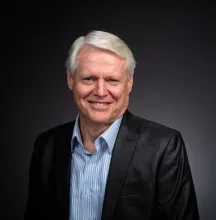
John Elliott serves in the role of President of the United Church of God, an International Association.
