

Steve Shafer
This transcript was generated by AI and may contain errors. It is provided to assist those who may not be able to listen to the message.
Well, good afternoon again. That was beautiful special music. Very, very well done. Very inspirational. I want to really thank the French Well, I forgot to mention as well, of course, as all of you know, but Corral is led by Mr. Michael Rose. So we thank you very much. I thank Anna for her special music and thank you for the Corral for that very, very, very inspiring piece, Emmanuel Come. Emmanuel Come. We sure are certainly as a part of this day and the meaning of this day, and we certainly look forward to that day when he will come. I was accepted to Ambassador College in Pasadena, and this seems like ages, and was ages ago, actually. It doesn't seem like it actually was, but it was way back in August of 1964.
In the first annual Holy Day I ever observed it, I didn't know anything about the Holy Days when I went to Ambassador College. First thing they asked me, did you have second time? What's that? They said, deserved the feast in Holy Day. What's that? So I was pretty, pretty green under the years when I was a student, started there. But the first Holy Day I ever observed was the Day of Trumpets, which in 1964 I went back and looked it up on the calendar. It was actually observed on Monday, it was on a Monday like today. It was on Monday, September 7th, a little bit earlier.
So this then is now my 53rd observance of the Day of Trumpets. But as a student of Ambassador College, we probably, as I recall, I think we didn't have our own hall at the campus, and they built the gym in an auditorium there towards the end of my freshman year, 65. But we didn't have our own hall then, so I think we probably observed it at the Pasadena Civic Auditorium, which we, it's about a mile walk from the campus. And that's probably where we observed it. I don't remember who gave it, whether Mr. Armstrong did or Mr. Robert Merida, who was. I don't remember who gave that sermon. I don't remember exactly what was covered. Going back, it'd be interesting, I still had my notes, to see what they covered in that particular Day of Trumpets, but they probably covered the meaning. And I know I was all ears, because all new to me at the time was very exciting.
But I do know this. Back on that Day of Trumpets, in 1964, there was no one in that audience who thought we would still be here observing the Feast of Trumpets in 2016, 53 years, 52 years later.
What about today? What should the observance of the Day of Trumpets mean to all of us today, at this particular time? And I'm thinking back. I didn't start giving sermons, you know, until I've been in the Church for many years, before I even got the opportunity to give sermonettes, or then eventually sermons. I probably give them, over the years, probably 20 or a little over 20 sermons on the Day of Trumpets. Most of you've heard many sermons going through the meaning of this Day, over the years. A lot of you've been in the Church for many, many years, as well. So you might say, what more can we learn? Or should we just rehearse the meaning? We certainly do need to rehearse the meaning. It's so important to do that. And it was done somewhat in the sermonette. I appreciate the sermonette. It was a good sermonette to help rehearse the meaning and bring that into focus. But it always is good to rehearse the meaning. And as time goes on, this Day becomes even more relevant and takes on deeper meaning. Not only for all of us, but it takes on deeper meaning as time goes on for all the people of the world, as well. Because it has to do with the people of the world, as we know very much, as well. But let's look at all this today. Let's rehearse the meaning of the Day of Trumpets. And let's see what more we can learn. And then let's look at the relevance and some deeper meaning that this Day now has for all of us in God's Church. And not only all of us for God's Church, but all of us who are citizens of this nation, the United States of America as well, and eventually for the entire world. The title for my sermon here on this Day of Trumpets is, A Loud Voice as of a Trumpet. A loud voice as of a trumpet.
And that's actually a quote from a verse, which we'll get to a little bit later.
Well, let's take a look at just the basic meaning of the Day of Trumpets. It's from two perspectives. One, from the perspective of the Old Testament, and also then from the perspective of the New Testament.
Which was also touched upon in the sermonette. Let's go back to very familiar Scripture to all of us who often read on Holy Days. Let's go back to Leviticus 23, which of course summarizes all the Holy Days. Go back to Leviticus 23. I just want to pick up on what it says about trumpets. Leviticus 23 will begin in verse 23. Leviticus 23 verse 23 says, Then the Lord spoke to Moses, saying, speak to the children of Israel, saying, in the seventh month, on the first day of the month, which stay is on the Hebrew calendar, you shall have a Sabbath rest, a memorial, a blowing of trumpets, a holy convocation. And you should do no customary work on it. You shall offer an offering made by fire to the Eternal. Again, on the Hebrew calendar, the first day of each month begins with a new moon, as we know. And God here appointed trumpets to always occur at the time of the new moon, which is interesting and has meaning. It's always to occur at the time when the moon reflects no light back to the earth whatsoever at night. It's the darkest night of the month.
So, trumpets, in a sense, can depict a time of darkness. If you think about it spiritually, what it ties into. It's also called here a memorial, a blowing of trumpets. It is to memorialize and commemorate events associated with the blowing of trumpets. What is the first event in the Bible, the very first event in the Bible, that's associated with the blowing of trumpets?
Well, let's turn and read it for ourselves. It's in Exodus chapter 19. Exodus chapter 19. Just going back a little bit before the book of Leviticus. Exodus chapter 19 and beginning verse 1. Because a lot of you know where I'm meeting with this time frame is here. This is just prior to when God came down to give the Ten Commandments and Mount Sinai is recorded in Exodus 20. But in Exodus 19 verse 1, in the third month that the children had gone out of the land of Egypt, on the same day they came to the wilderness of Sinai. Verse 3. And Moses went up to God, and the eternal call to him from the mountain, saying, Thus you shall say to the house of Jacob, and tell the children of Israel, You have seen what I did to the Egyptians, and how I bore you on eagle's wings, and brought you to myself. Now, what did God mean by that? What did he mean when he said, I bore you on eagle's wings? Well, what it means is he delivered Israel out of Egypt supernaturally by the power of God in a way they could never have imagined, and they could never have delivered themselves. But he did in a way they could never have imagined. He did supernaturally.
Can God still do that today for his people? Well, I'll just quote Hebrews 13.8, Jesus Christ the same yesterday, today, and forever. Now, to where did God supernaturally deliver them? He said, I brought you to myself.
As we will see, when this day of trumpets is fulfilled, that is also our destiny.
Exodus 19, again, verse 4, You have seen what I did to the Egyptians, and how I bore you on eagle's wings, and I brought you to myself. Now, therefore, if you will indeed obey my voice and keep my covenant, then you shall be a special treasure to me above all people, for all the earth is mine. Dropping down to verse 10. Then the Lord said to Moses, Go to the people and consecrate them today and tomorrow, and let them wash their clothes. You ever notice that? It's interesting to look at some of the details in the Bible. Why did God tell them to do that? Why did God tell them to wash their clothes? You know, think about it. I want you to think about it. Put yourself in their position back there at that particular time where they were. That would not have necessarily been an easy task. They left Egypt in the great haste, as we know, middle of the night, with only what they were wearing and what they could carry. They didn't have a wardrobe of clean clothes they could go to. They couldn't like, you got to go through the closet and see what I want to wear today, clean and pressed and all ready to go. They didn't have a wardrobe of clean clothes, and they've been traveling for nearly 50 days. They had no laundromats, didn't have any washers or dryers. They didn't have a lot of water. They were in the Arabian desert.
Probably only had a few springs and some wells, most likely. They were a little bit of waste from the Mediterranean Sea, so it wouldn't mean a lot of water to be accessible to that many people.
And there are probably about three million of them. And he tells them to wash their clothes. That might have been a little challenging.
Why? What does that have to do with all of us? And what does that pretend for us today as we observe the day of Tumpkins? What's the spiritual aspect of that today? Wash your clothes.
And this verse tells us why God wanted all them to wash their clothes.
If we think about it, it's just 19 verse 10. Then the Lord said to Moses, Go to all the people and consecrate them today and tomorrow, and let them wash their clothes. Then verse 11 gives us the answer as to why, and let them be ready and let them be ready for the third day. Why did they have to wash their clothes?
So they would be ready. They had to be ready. Ready for what? Ready to meet God. What does that wash their clothes have to do with them being ready to meet God?
Well, we don't want to meet God wearing dirty clothes. If you're going to meet God, you want to have clean clothes. But of course, the spiritual reason behind that, of course, we all know. Clean clothes represents the righteous of the saints. You want to have the righteousness of Jesus Christ in you when you come to meet God.
So this also has something to do with all of us. Well, what is the first event in the Bible? My original question was, what is the first event in the Bible that is associated with the blowing of a trumpet? Verse 12, And you sit bounds for the people all around the mountain, saying, Take heed to yourselves, you do not go up to the mountain or touch its base. Whoever touches the mountain shall surely be put to death.
Not a hand shall touch it, but he shall surely be stoned or shot with an arrow, whether man or beast, he shall not live. And when the trumpet, here's verse 13, the first refuse of a trumpet here, and when the trumpet sounds long, they shall come near the mountain. So here the sound of a trumpet was given to gather them together to the base of Mount Sinai. And to call to assemble them together. So the purpose of this trumpets to summon them together at the base of Mount Sinai, and from what it says here, it appears at least that this was a supernatural trumpet and not a trumpet instrument making this noise here.
That's what would appear from the context. Verse 14, So Moses went down from the mountain to the people, and he sacrificed, and excuse me, and sacrificed, and sanctified the people. He sanctified them and sent them apart, and they washed their clothes. So they did what God told them to do. They were all standing there before God with clean clothes, as they had been instructed. Verse 15, he said to the people, be ready for the third day and do not come near your wives. They wanted their full undivided attention to be focused on meeting God.
Their whole attention needed to be focused on meeting God, not on anything of the flesh. They had to be focused on meeting with God. Verse 16, Then he came, came to pass on the third day in the morning that they were there were thunders and lightnings, and the thick cloud on the mountain and the sound of a trumpet was very loud, so that all the people who were in the camp trembled. This obviously is a supernatural sound of a trumpet, not a normal trumpet.
This is the trumpet of God to get their undivided attention. In this case, one was assembled and now this to get their undivided attention. Verse 17, And Moses brought the people out of the camp to meet with God, and they stood to foot the mountain. Now, Mount Sinai was completely in smoke, because the Lord descended upon it in fire. His smoke ascended like the smoke of a furnace, and the whole mountain quaked greatly. And when the blast of the trumpet sounded long and became louder and louder, Moses spoke, and God answered him by voice.
So these then are the first events in the Bible associated with the sound of a trumpet. And here at Exodus 19 then, the sign of a trumpet had three overall purposes. Number one, to assemble them and gather them together at the base of Mount Sinai. Two, to get them their undivided attention, obviously. And three, to warn them that they're about to meet with God, and that they better be ready for that. In addition to that, there's also other uses of a trumpet in the Bible.
A little trumpet was blown by a priest to signal the time of the new moon each month, and to signal the day of trumpets. It was also sounded to the camp of Israel as an alarm, as an alarm of impending danger or that an enemy was approaching. It could also be sounded as a possible alarm of war, which ties in with that. And if some might interpret it, it could be an alarm that God's judgment is approaching or is near as well. Let's jump forward now to the New Testament.
In the New Testament, it's the sound of a trumpet tying with the return of Christ, as we'll see. Obviously, most of you realize that it does, but let's just read a few scriptures to show that very clearly. Matthew 24. Matthew 24 verse 29. Immediately after the tribulation of those days, the sun will be darkened and the moon will not give its light.
The stars will fall from heaven and the powers of heavens will be shaken.
Of course, that can be taken literally, as I think a lot of us have taken it literally. It certainly can be taken that way, but it can also be taken in a figurative way when applied to the time of the return of Christ. I'll show you in just a moment. Verse 30. Then the sign of the Son of Man will appear in heaven and all the tribes of the earth will mourn. And they will see the Son of Man coming on the clouds of heaven with power and great glory. And he will send his angels with a great sound of a trumpet. There's a sound of a trumpet now. And they will gather together as he elect from the four winds. Again, to gather together. The top was to gather them together.
From one end of heaven to the other. And this, of course, tied him with verse 29 to the very return of Christ. Verse 29 can be taken figuratively, which would then indicate what?
It would then indicate the time leading up to the return of Christ will be one of the darkest periods in human history, if you take it that way. It's going to be a very dark period of time in human history, spiritually speaking. But here the sound of a trumpet is directly related to the return of Christ. It's also noteworthy that here, as was the case in Exodus 19, the sounding of a trumpet here, and you've analyzed more fully. It has three overall meanings. One, to assemble and gather them together. In this case, to assemble and gather together his elect. Two, to get their undivided attention. To get their attention, in this case, of the entire world. It's going to get attention not just to God's people, but the entire world. And three, to warn them they are about to meet with God. That they better be ready for that. Going on Matthew 24 verse 32, learn this parable from the fig tree. When his branch has already become tender and put forth leaves, you know that summer is near. So you also, when you see all these things, know that it is near, even at the doors.
Verse 44, therefore you also be ready for the Son of Man is coming, an hour you might not expect.
Be ready. Let's go to 1 Thessalonians 4.
Very familiar verses here for most of us. 1 Thessalonians 4 verses 13 through 18, where Paul wrote, I do not want you to be near brethren, considering those who have fallen asleep, lest you sorrow as others who have no hope. For if we believe that Jesus died and rose again, even though God will bring with him those who sleep in Jesus. For this we say to you by the word of the Lord, that we are alive and remain until the coming of the Lord, by no means proceed those who are fallen asleep. Then verse 16, for the Lord himself will descend from heaven with a shout, with the voice of an archangel, and with the trumpet of God, and the dead in Christ will rise first. Here again, the trumpet is associated with the return of Christ. Then we, who are alive and remain, shall be caught up together with him in the air, and thus to meet the Lord in the air, and thus we shall always be with the Lord, therefore comfort one another with these words. So here, the trumpet of God also is directly tied into the return of Christ, and to the gathering together he's elect for the first resurrection. One final and let's go to Revelation chapter 8. Revelation 8 verse 1. Then he opened the seventh seal, and there was silence in heaven for about a half an hour. And I saw the seven angels who stand before God, and then were given seven trumpets.
Oh, seven trumpets, and would signal subsequent events that would then lead up to the seventh trumpet and to the return of Christ. Verse 6. So seven angels allowed the seven trumpets to prepare themselves to sound. The book of Revelation, of course, then reveals the events surrounding the blowing of the first six trumpets, bringing us to the sounding of the seventh and last trumpet that was covered here in the sermon ep. Let's read it again. Revelation 11 verse 15. Then the seventh angel sounded, and there were loud voices in heaven, saying, The kingdoms of this world have become the kingdoms of our Lord and of his Christ, and he shall reign forever and ever. Again, tying the sounding of a trumpet directly to the return of Christ. So that then covers the basic meaning of the day of trumpets, both from the perspective of the Old Testament and from the perspective of the New Testament. So what is the meaning of the day of trumpets? Well, it means that when that trumpet sounds, God will assemble and gather together his people. It means that when that trumpet sounds, God will get our undivided attention and we'll get the undivided attention of the entire world. God will even get the attention of atheists and those who are non-believers. It will get their attention. Everybody's going to get the attention when that's how it sounds and the whole world hears it. And it means that everyone is about to meet God and that we better be ready for that.
So that normally covers the meaning of the day of trumpets. It also covers maybe a little bit of the deeper meaning as well. And now we can prepare to meet God by washing our clothes, for example, having clean clothes, spiritually speaking. And by learning the parable of the fig tree, that when his branch has already become tender and puts forth leaves, you know that summer is near.
So you also, when you see all these things, talked about there in Matthew 24, when they all happen at once and build up and come to a climax, you know that it is near, even at the doors. So what relevance and in deeper meaning does this day of trumpets now have for all of us who are in God's church today? See, has the fig tree already become tender? Is it already putting forth leaves? Is summer not only near, but is summer nearly over? Has fall already begun? Instead, we end the season of fall now. Is it now time for fall and to begin and for the fulfillment of the day of trumpets? How far away is that? We don't know, but you look at everything going on in the world, it's building to a climax. Is it now near? Is it even at the doors? To address the relevance and even deeper meaning of the day of trumpets that it now has for all of us who are still a part of God's church, I want to stay here in the book of Revelation for the remainder of the sermon.
Let's go back to Revelation 1. Not only for us, but many of the people of the United States as well.
Let's go back to Revelation 1. Revelation 1, verse 1. The revelation of Jesus Christ, which God gave him to show his servants, sings things which must shortly take place, and he sent and signified by his angel to his servant John. Verse 4. John, to the seven churches which are in Asia, grace to you and peace from him who is and who was and who is to come, and from the seven spirits who are before his throne, and from Jesus Christ, the faithful witness, the firstborn from the dead, and the ruler over kings of the earth. Wow, isn't that great? Jesus Christ is ruler over all the kings of the earth. They may think they have a lot of power and control, but they're under the sovereignty of Jesus Christ, and they'll only reign as long as he allows them to reign.
And to him who loved us and washed us from our sins in his own blood, and he has made us kings and priests to his God and Father, to him be glory and dominion forever and ever. Amen.
Behold, he is coming with clouds, and every eye is going to see him. Every eye. People don't think there is a God. They don't believe in Jesus Christ, but they're going to see him, and they're going to know something's happening. Something very supernatural, very powerful. Every eye will see him, and even they who pierced him, they're going to be resurrected later to see him as well, their own time and place. God asks for them, for that. And all the tribes of the earth will mourn because of him. Even so, amen. So the time frame for this entire book is given to us right here in verse 7. Actually, I don't think that's the right verse, but anyway, it's given to us right here.
The time frame eventually up to the return of Christ the Day of Trumpets and the sound of a voice of trouble plays a key role throughout this entire book. Verse 8, I am the Alpha and the Omega beginning in the end, says the Lord, and who is and who was and who is to come, the Almighty.
Verse 9, I, John, both your brother and companion in the tribulation and kingdom and patience of Jesus Christ, was on the island which is called Patmos, for the word of God and for the testimony of Jesus Christ. In the 90s AD, when John wrote this, the book of Revelation, most of you wrote sometime in the 90s AD, the Isle of Patmos was a Roman penal colony. He was a prisoner of Rome.
Evelyn and I were there in 1989 with the Mediterranean crews. It's a very beautiful island right now. It's a beautiful island, very peaceful island, but John was there as a prisoner of Rome.
I want you to think of this. Why was he there? What crime had he committed? I, John, was on the island that is called Patmos for the word of God, for the word of God, and for the testimony of Jesus Christ. That's why he was a prisoner.
John's only crime was being a follower of Jesus Christ and being a follower of the word of God. That became unlawful. I mean, that's amazing. Could that ever happen to us?
Read Matthew 10. I'm not going to turn there, but just you can write it down later. Read Matthew 10 verses 17 to 22 and read Matthew 24.9 and wonder, could this ever happen to any of God's Christ followers today? Revelation 1.10. This is what I wanted to get to. I mentioned verse 7. I meant verse 10. I was in the spirit on the Lord's day, and I heard behind me a loud voice as of a trumpet. That's where I got my sermon title. I heard a loud voice as of a trumpet.
Now, what is the entire book of Revelation about? It's not about worshiping God on a particular day of the week.
That's why some people interpret this. This is always on the Lord's day on Sunday. They never called it the Lord's day back then. That wasn't called then back when John wrote this.
And the book of Revelation doesn't talk about a day of the week, worshiping God on any particular day of the week. It's all about the time when God is going to directly intervene into the affairs of man and the time leading up to Christ's return. It's about what the book of Joel calls the day of the Lord, the day of God's interventions in the affairs of mankind to prevent man from destroying himself, which Joel also connects to the blowing of a trumpet. I'm just going to quote Joel 2, verse 1.
Blow the trumpet in Zion and sound alarm in my holy mountain. Let all the inhabitants of the land tremble, for the day of the Lord is coming for it is at hand. Joel 2, verse 1. The book of Revelation rejects us into that time. It rejects us into the time of the day of the Lord, as prophesied by Joel. Again, verse 10, as I should read, I was in the spirit into the day of the Lord and heard behind me a loud voice as of a trumpet, saying, verse 11, I'm the elf and the omega, the first and the last. And what you see right in a book and send it to the seven churches which are in Asia, to Ephesus, to Smyrna, to Pergamos, to Thyatira, to Sardis, Philadelphia, and to Leo, to Sia.
Now we can come to a deeper meaning and a more personal meaning on the day of trumpets.
Not a trumpet instrument, or not even the sound of a trumpet. Something much more personal.
But, phenomenal. A loud voice as of a trumpet, verse 10. A loud voice speaking directly to God's people.
And a voice speaking to God's people is far more personal than a mere trumpet or just the sound of a trumpet.
And today we have the messages of this loud voice recorded for us here in Revelation chapters 2 and 3.
As a message to the people of God, as given through seven angels or seven messengers. And I want to expand on this as well.
We're the Church of God. Church, Greek word for church is a ecclesia. We all know that. It means called out once.
But you want to think about that and more deeply and expand on a little bit.
Who are the people of the United States, prophetically speaking? We are the descendants of Abraham, Isaac and Jacob and all who became a part of that nation of Israel from other races as well. They became part of the nation of Israel physically. And God made a special promise to those people.
He said, I'm going to call you out and give you a substitute aside to bless you in a way. I'm going to fulfill all the promises of Abraham through you. I'm going to give you a great nation that is preserved for you, tremendously well there to take out of its soil.
So you can become a great nation to an example to the rest of the world as my special people, as a special treasure.
So we have these seven messages that can only apply to God's spiritual people, but to God's physical people as well as the United States of America.
And we have applied these seven messages to these seven churches in three overall ways. Three, not five, but five fingers. Three overall ways. Number one, as a message to each of these seven congregations as they existed 2,000 years ago when John wrote it. The second way to apply it is as a message pertaining to seven eras of time during the past 2,000 years.
In that application, each of these seven cities represents a church era, with each message describing historical aspects of that particular church era.
In the case of the Philadelphia era and the Laodicean era, those would be the last two eras of the church leading up to the return of Christ, looking at it from that perspective, as we have in the past, and some still do.
Incorporating that, many now think we're in the Laodicean era. Many take a look today and think we're probably now in the Laodicean era if they look at it from that point of view. The third way of looking at it, that all seven of these messages describe strengths and weaknesses of God's people at any given time down through history.
And I say probably all three of those have some relevance.
But using this third application, each message has meaning and relevance to all of us today.
Now, all three applications may be relevant, but the third is most relevant and is what I think is most applicable to all of God's people today.
No idea of God's spiritual people, to God's physical people as well.
Each of these seven messages applied to God's people today, as we'll see.
And as we search for deeper meaning and broader meaning, more personal meaning for this day of trumpets, I want to read portions of this loud voice given here in Revelation 2 and 3. What this loud voice is, because what this loud voice proclaims is recorded for us in Revelation 2 and 3. So, let's go through that.
With a little more personal meaning, this applies to all of God's people today, and even to God's physical descendants as well, people of the United States of America.
Let's now look at seven messages to the people of God.
Revelation 2, verse 1. Ephesus.
To the angel of the church of Ephesus write, "...these things as he who holds the seven stars in his right hand, who walks in the midst of the seven golden lampstands." Of course, all that's the description of Jesus Christ, but he says he walks in the midst.
Jesus Christ today walks in the midst of his church.
And I could also say today that Jesus Christ, he knows everything that's going on in his nation of Israel. Great Britain with Abba, Great Britain and the United States. He knows, he walks in the midst of the physical nation of Israel as well. He knows everything that's going on in this nation. He knows what's happening. He walks in the midst of his church and the midst of his nation, the United States of America. Revelation 2, verse 2. I know your works. I know your labor. I know your patience, as we talked about in the sermonette. And that you cannot bear those who are evil. And you have tested those who say the apostles that are not, and you found them liars. You know, all the people of God's church all went through that in 1995, didn't we? And they're also worldly Christians today in our nation who are struggling with that today as well. Verse 3, and you have persevered and you've had patience and have labored for my namesake and have not become weary.
You know, that applies to a lot of God's people today, doesn't it? We've been through a lot in the last 20, 25, 30, 40, 50 years. And many of us today have done that. Many of us are still doing that today, holding on, still trying to hold be fast, not become weary, laboring for God's name and for Christ's name. Even though we get older and we're getting weak physically, we're struggling spiritually to hold on to that and not let anything let us let loose of that. And some in our nation are doing that as well and struggling with that as well. Verse 4, nevertheless I have this against you that you've left your first love. Do we all remember the excitement we have when God first called us? Do we maybe need to try to recapture some of that today? But I want to apply that to the United States as well. What about patriotism today? You know, there's one that long ago, we used to have a lot of patriotism in the United States. People are proud to be Americans. They're proud to stand up for their country and say, I'm an American. I'm a citizen of the United States of America and reach out and help other nations, but now it's all being torn apart. It's all being changed.
What about patriotism today in the United States of America?
Have any left that first love for our nation they once had and for our freedoms?
Well, I see that's eroding rapidly. People are letting loose of that. There are people who are thinking we're an evil nation. It's amazing to watch what's happening historically right now before our very eyes. But the point I'm making is this. These messages very much apply to all of us today, both as spiritual Israel and as physical Israel. And they give deeper meaning and more relevant meaning to this day of trumpets. Because these messages are the loud voice of a trumpet, as the loud voice as of a trumpet for all of us today. Revelation 2, verse 7, He doesn't hear, let him hear what the Spirit says to the churches. If you haven't heard it here, listen, if I digress, what does it say?
To whom there overcomes I will give him to eat from the tree of life, which is in the midst of the paradise of God. Then we come to verse 8 to Smyrna. And to the angel of the church of Smyrna, right. These things says, the first and the last who was dead and who came to life. This says Jesus Christ. These words says Jesus Christ, who is the head of His church, and along with His father, made us into the United States of America, gave us those blessings that He promised Abraham in the latter days to make us the greatest nation on the face of the earth, to fulfill that promise He made to Abraham so many years ago. Verse 9, I know your works. I know your tribulation.
I know your poverty, but you are rich. I know the blasphemy of those who say they are Jews and are not, but are the synagogue of Satan. You know, we as members of God's church have gone through tribulation. Many of God's people today struggle financially. But we are rich in the knowledge of God, aren't we? We are extremely rich. Rich in the knowledge of God, rich in having God's love and God's mercy and God's forgiveness. Those things make us very, very rich. You take a look at this from the point of view of the United States of America. The United States of America is still the richest nation on the face of the earth. But spiritually speaking, we are in poverty. And also, we'll look at the other side of the coin on that. Many people in the United States of America today are in poverty, and they're struggling financially on the physical side of that coin. Many are on welfare. Many live in deplorable conditions, especially in large inner cities. And they are just looking for answers, looking for leaders who have answers on how to help them. For the immediate future, it looks very troubling for the people of the United States, with riots taking place all over the place. I've never seen this many riots over some things. So much division today. So many battles between citizens and the police.
It's almost you wonder, are we on the verge of a revolution?
Sometimes you wonder.
The future could also be very troubling for the members of the church as well, because secularism is on the rise. We are beginning more and more to become a socialist nation. More a socialist nation than a Christian nation today. Things are changing.
Do we need to fear what might happen? Well, yes and no. As a nation, yes. As the people of God, know. Verse 10, do not let any of those things which you are about to suffer, or excuse me, do not fear any of those things you are about to suffer. And indeed, the devil is about to throw some of you into prison that you may be tested and you will have tribulation in 10 days. That is for a relatively short period of time. But be faithful into death and I will give you the crown of life. I don't know how many God's people will die before it's over with, one way or another.
Don't worry about it. God says, don't have to fear death. Don't fear what man can do to you.
Because I'm going to give you the crown of life. If you die holding on to what you believe and only fast, I will give you the crown of life. Verse 11, he was a near to here, let him hear what the Spirit says to the churches. He who overcome shall not be hurt by the second death. You don't have to worry. You're going to be in the first resurrection and be given the gift of eternal life when Christ returns. Verse 12, and to the angel of the church of Pergamos, right, these things says, he who has a sharp two-edged sword. I know your works and I know where you dwell, where Satan's throne is. And you hold fast to my name and did not deny my faith, even the days in which Antipas was my faithful martyr who was killed among you where Satan dwells. The point is this. Christ here is telling us to hold fast to his name and do not deny our faith in Jesus Christ no matter what happens. Even if some faithful members of God's church may be martyred or may die tragic premature deaths, as happens sometimes, don't let that diminish your faith. Verse 17, he who is near let him hear what the Spirit says to the churches. To him where comes I will give some of the hidden manatees and I will give him a white stone and I'm the stone of new name written which no one knows except him who receives it. Verse 18, to the angel of the church in Thyatira write, these things as the son of God who has eyes like a flame of fire and his feet like fine brass. Verse 19, I know your works, I know your love, I know your service, I know your faith, I know your patience. Wow, think about that. And then positively, think about that. These are all positive things.
And Christ knows everything we do. He notices how we handle every situation. If we exercise faith and put it in God's hands, he knows that. He makes note of that. Nothing we do on behalf of serving others goes unnoticed by God. Nothing. Verse 19, I know your works, I know your love, I know your service, I know the faith that you're exercising under very trying circumstances. I know your patience. And as for your works, interesting statement here, as for your works, the last are more than the first. How could this apply to us today? Both as the people of God and as the people of the United States of America. What's happening right now before our very eyes? As God's people, we're diminishing in numbers, aren't we? And we're getting older. Our physical strength is waning.
And we're having more and more trials as time goes on, which means we must then be striving to get stronger spiritually. As we get weaker physically, we have to try to get stronger spiritually. And I think because of all the years we've had in the church and everything we've been through, we are stronger spiritually. I think God's church is much stronger spiritually. We've weathered so many trials and so many things. We know how to put our faith and trust in God, and you can see us through. He's saw it done so many times. It means we must be here striving to become stronger spiritually, and so we can all be here for one another. We all need to hold one another up, to help one another, and to strengthen one another. So as for our works, our last works are going to be even greater than our first works, because we're stronger spiritually. And we know what to do to help one another. We've been training on that for years. What about our nation? You know, secularism is increasing and becoming stronger and stronger, a stronger and stronger influence. At the same time, the Christians of our nation are having less and less of a voice. Their voice is being silenced to a large degree. And if they're going to have a voice to try to check our nation's fall, their last works are going to have to be more than their first works as well. They're going to become stronger and make sure they can try to get that voice out and move where they can.
Now, the next few verses speak of an increasing and almost univosive teaching and seduction of much of our youth toward sexual immorality. I'm not going to go through those verses.
But those who fall for that are recasting to a sick bed. It says in verse 22, and their lives are going to be destroyed, severely damaged. And all will eventually come to know that I am he who searches the minds and the hearts. Verse 23. Verse 24, And not to you, I say unto the rest, and thigh a tire as many as do not hold this doctrine, or not give in to all this seduction to the world's throwing at us, to try to get us to fall for all these false things that they're showing throwing at us.
Many do not have this doctrine who have not known the depths of Satan, as they say. I'll put on you no other burden but to hold fast what you have. Hold fast until I come. Don't let go. Don't let anybody fool you. Don't let anybody go off in the wrong direction to fall for all this stuff, this new morality, so to speak, they have today. Hold fast to God's word, and hold fast to God's Christian values. Verse 29. He was a near to here. Let him hear what the Spirit says to the churches. Revelation 3, verse 1. And to the angel of the church of Sardis, right, these things says he who has the seven spirits of God and the seven stars. I know your works. Do you have a name that you are alive but you are dead? Some have slipped back into the ways of the world because a lot of pull there, a lot of pull towards all of us in that way. Some have, to a degree, but they still are trying to hold to the name of Christ in their own way.
But they may not want to be fully engaged in what Christ teaches and taught. Some then are becoming Christians in name only. And there are, of course, a lot of them in the world who are Christians in name only. Verse 2. Be watchful therefore and strengthen the things that you still have that remain that are ready to die. For I have not found your works perfect before God.
Remember therefore how you have received what you've received and heard and hold fast and repent. Therefore, if you will not watch, I will come upon you as a thief and you will not know what hour I will come upon you. Verse 5. He will overcome, and shall be clothed with white garments, and I will not blot his name out from the book of life. But I will confess his name before my father and before his angels. Then Philadelphia. He goes near to here, let him hear what the Spirit says to churches. And the angel of the church of Philadelphia, all right? These things says, He who is holy, who is true, who has the key of David, who opens and no one shuts and shuts and no one opens. I want to just pause there for a moment. I gave all the sermon this number years ago, but just to review. What is the key of David? It is not as many have believed, simply a key to understanding prophecy, or a key to having a door open to do the work of God. It could be applied that way, but that's not really what it means. What does the key do? How is the key used? A key either opens a door that is locked or unlocks a door so no one else can get in, no one else can open it. That's what a key does. Who has this key of David that talks about here? Christ does. This is referring to He who is holy and who is true. That's going to be Jesus Christ. He is the one who holds this key. It's referring to Christ. Now, if you go into the accordance, the key of David is only mentioned in one other place in the Bible. It's mentioned in Isaiah 22, where it talks about my servant Eliacom as having the key of David, Isaiah 22, verse 20.
The only way someone would be allowed to have an audience with King David, if you go back and analyze Isaiah 22, the only way they could get in to see King David would be through this faithful servant Eliacom. He had the key as to whether they wanted to get in to see the king or not, go into the king's presence. If the Eliacom said, no, you can't get in to see the king, there was no way you'd get in to see the king. If he said, yeah, you can go in to see the king, there was no one who could stop that person going to see the king. And here in Revelation 7, 3, Christ is the faithful servant who has the key of David, who opens and no man shuts and shuts and no man opens. Christ not only has the key of David, Christ is the key of David, have been a descendant of David. What do you say in John 10, verse 7? He said, I am the door of the sheep. A key opens or unlocks or opens a door or shuts it. I am the door of the sheep. If you're in John 10, 9, I am the door. If anyone enters by me, he shall be saved. If I allow that person in that door, he will be saved. See, if Christ opens the door to the kingdom of God, to you, no one can close that door. You will be admitted.
And if Christ shuts the door, says you can't come in, no one can open that door for you.
Revelation 3, verse 7. In the Church of Philadelphia, write, these things, says he who was the holy was true, has the key of David, who opens and no one else can shut, and who shuts and no man can open. I know your works. See, I've said before you an open door. I have a door open to all of you. You that are called now, I know your works, your faith, your love, your service, that there's an open door for you to God's kingdom, because I want you in there. I want to welcome you as faithful servants. I know your works. I've said before you an open door, and no one can shut it. No one can close that door to you other than Jesus Christ.
For you have a little strength. You've kept my word to many years of trials and tests and struggles and poverty sometimes, and you've not denied my name.
And Christ notices that, which means to every one of us. And if we keep God's word and refuse to deny Christ's name, we will be given an open door to God's kingdom, and no one will be able to close that door. Verse 10, because you've kept my commandment to persevere, I also will keep you from the hour of trial, which will come upon the whole world to test those who dwell on the earth.
Behold, I am coming quickly. Hold fast what you have. Don't let any man take it away from you, that no one may take your crown. Verse 13, he who has a knee or two here, let him hear what the Spirit says to the churches. Verse 14, finally, into the angel of the church of Laodicea write, these things as the Amen, the faithful and true witness, the beginning of the creation of God, I know your works, that you are neither cold nor hot. I could wish you were cold or hot, but because you are lukewarm and neither cold or hot, I will spew you out of my mouth.
Because you say I'm rich and have become wealthy and have need of nothing, and do not know that you are wretched and miserable and poor and naked. So I counsel you to buy me gold refined in the fire, refined in trials, that you may be rich, and white garments that you may be clothed, that the shame of your nakedness may not be revealed. Note your eyes with eye salve, salve, salve, excuse me, that you may see.
So what is the loud voice of a trumpet telling us here? What might it be telling the citizens of the United States of America, which is the richest and wealthiest nation on the face of the earth still at this time, is telling all of us in and out of God's Church that we had better wake up before it's too late, we'd better stand up for what is right, we'd better be a loud voice for what is right, and that voice is needed in the United States more than ever, but it's being diminished.
There are people trying to silence that voice, and they will try to silence it in God's Church as well.
This is not a time to be lukewarm, it's a time to be filled with zeal. Verse 19, as many as I love and rebuke and chasten, therefore be zealous. Behold, I stand at the door and walk. I want you to open to me.
If anyone hears my voice and opens the door, I will come in and dine with him and he with me.
To him overcomes, I will grant to sit with me on my throne, as I also overcame and have sat down with my father on his throne. He was near to here.
Let him hear what the Spirit says to the churches.
Now, John said I was in the Spirit on the day of the Lord.
He says I was prophetically projected into the time leading up to Christ's return.
And he said, and I heard, behind me, a loud voice as of a trumpet.
We are now at the time when this loud voice is crying out to all of us, in God's Church and to all the people in the United States of America.
And the messages of Revelation 2 and 3 are the messages of that loud voice, which give deeper and more relevant meaning to this day of trumpets, not only for all of us in God's Church, but for everyone here in the United States of America as well, and to people around the world, if they would only listen, if they would only listen to a loud voice as of a trumpet.
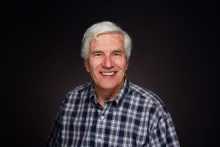
Steve Shafer was born and raised in Seattle. He graduated from Queen Anne High School in 1959 and later graduated from Ambassador College, Big Sandy, Texas in 1967, receiving a degree in Theology. He has been an ordained Elder of the Church of God for 34 years and has pastored congregations in Michigan and Washington State. He and his wife Evelyn have been married for over 48 years and have three children and ten grandchildren.
