

Rick Shabi
This transcript was generated by AI and may contain errors. It is provided to assist those who may not be able to listen to the message.
Last week we had Pentecost weekend. Enjoyed a double Sabbath. And of course, we also were celebrating the receiving of God's Spirit during that day of Pentecost back in 31 A.D. I'd like to start with an example of the New Testament church and show you the contrast before and after. And as the first message brought out about the using of God's Spirit, let's see an example here of what happened. Let's go to Acts 2. Acts 2, verse 41. These were people who had been transformed through receiving God's Spirit. Notice some of the results of this. Starting here in verse 42, it says, They continued steadfastly in the apostles' doctrine and fellowship in the breaking of bread and in prayers. So they had coffee socials then too, because that's what breaking bread was all about. They would get together, and of course the apostles' doctrine meant the teachings as they had received them from Jesus Christ. So they weren't involved in rabbinic teachings or what the high priest had talked about, that last Sabbath. No, it was now the teaching that the Jewish leaders had rejected. They basically ostracized the church. They did not want to accept Jesus Christ as their Messiah. So here we have now set up a church where it's Jesus Christ, the head of it. You have to believe in Jesus Christ. You have to believe in His teachings, because that's what the early church did here.
It says, and a fellowship. It's always been part of...we are God's family, a spiritual family that God's Spirit unites us. Maybe not everybody's baptized here, but the Spirit is with them, and then it can be in them once they go through the process of baptism and the laying on of hands.
Then in the breaking of bread, because they didn't use spoons and knives and forks in those days, they used pita bread. That's what Arabs still use today, and they just have a kind of a big flat bread, and they would dip it in the broth, and that's the way they would eat.
So they would break the bread, hand it out to another person. They would take a piece of bread. You would have a piece of bread. So that was the symbol of it. It wasn't some type of special mass or a Eucharist where you got this host. No, no, this is breaking bread. It was a common way of eating, and you see that throughout the New Testament, where they sit down and they're eating what would be their meal at that time, or a snack. And in prayers, they were close to God. Notice then in verse 46, it says, So continuing daily with one accord, God's Spirit did that in the temple. So certainly they would go there. They had all kinds of different places they could meet outside. They had colonnades, which were roofed areas that you could meet in the temple, and breaking bread from house to house. So they would get together, eat at other people's houses. They ate their food with gladness and simplicity of heart. That's part of God's fruits of the Spirit as well. There's joy. There's humility. There's that open-minded of wanting to learn more about God's truths, and conversing with others that can share the joy, the understanding that they were receiving. Praising God, because they were so thankful for what they had received of God's Spirit, as Ricky Vidal gave maybe two weeks ago. He said the greatest gift that God can give us is His Holy Spirit. So they were praising God and having favor with all the people. They gave a good example of being respectful. They weren't out there being brash, arrogant, not at all, with simplicity and with humility. And the Lord added to the church daily, not men. Wasn't there new marketing success or anything? God is the one that added to the church daily those who were being saved, that they were having their minds open. They were receptive to God's truths.
At that time, people were so enthused and overjoyed. Everyone had a role. They would do anything to support the church, the apostles, the membership. There was that enthusiasm for it. And of course, we still have that enthusiasm. We get together.
What do we talk about? Well, we talk about God's truths and what's going on in the world. What's ahead? All of these things should fill us with enthusiasm. That's a term that comes from the Greek, which means God in you. Because when the Greeks saw somebody so happy and so emphatic and happy about things and joyous, they said, oh, that's like God is inside. Entheus. Entheus is the term for God in the Greek. There is an analogy about how God's truths begin to change us. Let's go to James 1. And I'm coming to the main subject here in a moment, but this is more of an introduction to it. James 1, verse 21. James says, Therefore, lay aside all filthiness and overflow of wickedness, and receive with meekness, which is another word for humility, the implanted word which is able to save your souls.
But be doers of the word, and not hearers only, deceiving yourselves.
And so he's saying that when we receive God's truths, it's like a seed is planted in our minds and hearts.
And as we irrigate, as we cultivate it, that seed starts growing, and eventually it produces fruits of God's spirit. But it starts very small. You're receptive to it.
One of the best analogies we find in Scripture about the way God's word grows in us is the parable of the sower.
Let's go to Luke 8.
And see how it works.
Luke 8, verse 11. Of course, we also have Matthew 13. It has the same parable. Mark does too.
Luke 8, verse 11. This is where it explains best what that seed is.
Let's start in verse 11. It says, Now the parable is this, that parable of the sower. The seed is the Word of God. So that's what starts the process of conversion.
It's receiving the understanding of God's word.
Verse 12. Those by the wayside are the ones who hear, talking about God's truths.
Then the devil comes and takes away the Word out of their hearts, lest they should believe and be safe.
There's this open window for Satan. When somebody's called, he's an expert at trying to block the person from developing it, from growing.
There might be persecution in the home, persecution at work. There can be temptations, all kinds of things that can distract the person. As Satan believes in that saying, strike the iron while it's hot. Because later the person gets stronger, it's harder to dislodge that seed from his mind and heart.
Verse 13. It says, but the ones on the rock are those who, when they hear, receive the Word with joy.
At least they didn't dismiss it outright.
How many times do we have the magazines, the Beyond Today programs? Somebody turns it on, watches it for a while. There's the seed of God's Word ready to be implanted in the person. But all of a sudden they get distracted.
And as the first message brought out, it takes a while sometimes. You sort of reject it at first.
But here, the ones on the rock receive the Word with joy. And these have no root who believe for a while and in time of temptation fall away.
So these are enthusiastic, but they don't persevere in time. They don't sink the roots deep into the soil to strengthen it.
How many of us have planted all kinds of seeds and you see it starts sprouting but doesn't have a root and it dries up very quickly under the sun.
The same thing can happen to us.
It says, it withered away because it lacked moisture. So on the rock, the plant is not going to grow very long.
Verse 7, And some fell among thorns, and the thorns sprang up with it and choked it.
So this person didn't remove themselves from all the false teachings and values of the world.
He tried to live, as they say, with God and the devil at the same time.
Well, devil usually wins real quickly. This is what happened.
And verse 8 says, But others fell on good ground, sprang up, and yielded a crop, a hundred full. When he had said these things, he cried, He who has ears to hear, let him hear.
Let him understand what it's about.
And so God's Word will produce fruit as long as we allow it to.
But it takes work, takes cultivation, and examination of how we're doing in God's way of life.
Now, what is the overall result of following God, of letting that seed implanted grow?
You receive the love of the truth. See, at first it's just an introduction. It's just an acquaintance.
But eventually there's a deep relationship based on love.
The love of every one of God's truths, because they are the reality of things.
They are based on spiritual principles that govern all of us.
And so that's so important. And the early church certainly had it.
And we have that love of the truth. But we need to cultivate it.
We need to weed out false teachings. Or don't let it dry up because of the trials that come and persecutions that come.
All kinds of things can happen to that tender seed.
Of course, as it becomes a tree, it has fruits, it has deeper roots, and it's more firm.
That's what we all want to happen in our lives.
So let's go to 2 Thessalonians 2, which talks about this love of the truth.
2 Thessalonians 2, verse 9.
Paul says here about the end time period, says, The coming of the lawless one is according to the working of Satan, with all power, signs, and lying wonders.
It's going to be a lot of deceit in the world.
And with all unrighteous deception among those who perish, because they did not receive the love of the truth, that they might be saved.
So here you need to have the love of the truth to maintain that healthy spiritual condition.
And for this reason, God will send them, talking about humanity, a strong delusion that they should believe the lie.
God is going to allow Satan to do this. It has happened before.
In World War II, in particular, that whole empire, based on the Axis powers, the main ones were Germany, Italy, and Japan.
And they weaved this type of delusion around the world, and they got pretty close to winning.
And it caused people to be deceived. Well, this is going to be much bigger than what happened under Hitler in World War II.
It says, verse 12, it says that they may all be condemned who did not believe the truth, but had pleasure in unrighteousness.
A lot of crimes were committed, and people just looked the other way during World War II in these countries.
They knew there was a lot of evil going on, but it was the popular thing.
It was kind of a wonderful thing that was going on, prosperity and other things, but they didn't see all the vicious crimes happening underneath.
Verse 13, Paul now turns to the brethren. He says, But we are bound to give things to God always for you, brethren, beloved by the Lord, because God from the beginning chose you for salvation through sanctification by the Spirit and belief in the truth.
So that's the way we are blessed. We're set apart as God's people.
And so, the receiving the love of the truth is a true separator of mankind and a true uniter of the brethren. That's what unites us.
Now, first, we have to do it individually in our lives. Are we going to accept the love of the truth individually? Is that something that is going to guide us throughout our lives or not? That's the first decision that needs to be made. But then, secondly, it's not only accepting the truth individually, then it's collectively, because we're a body of believers.
And we have to all be united in this love of the truth, which has to do with God's word. Of course, the seed that I mentioned being implanted.
So let's look at how this love of the truth was applied in the early church, as well as today, and the lessons we can learn from it.
The first big test of that early church was in regard to how they could go to all the nations of the world with the gospel of the kingdom, and then have disciples and all this conversion process because for basically the first ten years of the church, it was composed all of Jews. They were in Jerusalem.
Slowly, over the years, they made it maybe to Antioch and other parts, but it was still a Jewish religion as such because there weren't any Gentiles.
There weren't any that were converted into what was Judaism at that time, and that the church basically didn't have converts from the Gentile churches.
Well, this had to do with the new wineskins that they had received in the book of Acts during the day of Pentecost, and God was moving the church as He was going to reveal more truths to them.
And the disciples, for a while, while they were with Jesus Christ, He said, I can't reveal all the truth to you right now. You're not able to receive it. Your minds are still closed. They still don't have that pliable, that soft and adaptable mind that God's Spirit is going to work on you. Let's go to John 16, verse 7, where Christ told them, Look, I can't reveal many truths to you right now. You still haven't received God's Spirit at that time, although it was with them.
So in John 16, verse 7, He says, Okay, let me get that right chapter here, verse 7. He says, Now again, unfortunately, in the Greek, that term helper, paracletus, is in the masculine gender, but it doesn't mean necessarily that it's a person. If you read this in Spanish, it's just saying, the el consolador, the helper, and we just used masculine or feminine for objects.
We talk about la... let's say el microfono, this is a microphone, but it's not a masculine microphone, but we use the masculine term. We use here el agua. Well, agua is a masculine. Everything has either masculine or feminine, or a neuter, as it is. And so in the Spanish, it doesn't indicate that it is a person, whereas in English, you have that disadvantage. So I'm just going to use it for it.
It says in verse 7, For if I do not go away, the helper will not come to you, but if I depart, I will send it to you. And then he says, verse 12, I still have many things to say to you, but you cannot bear them now. However, when he, it should be it, because it's referring to the helper, the paracletus, the spirit of truth. Notice it's not a person. It's a spirit of truth has come. It will guide you into all truth. And so he said, once you receive God's Spirit, then God can reveal more things to us. So it's a process of spiritual maturing. And so in the early church, they went with this major hurdle they had to face, which was, how is it that Christ said, go into all the world? And in Mark 16, 15, he said to them, go into all the world and preach the gospel to every creature.
Well, this was all the Gentile world. How are you going to go in and preach something and that they're all uncircumcised? They do not have a biblical background. And this was a big impediment until Acts chapter 10. This was about approximately 10 years after the beginning of the church in Pentecost, that God said, the church is ready now to receive more truth. And so that happened. Let's go to Acts chapter 10, where God is ready to reveal more truth and break the logjam of the difference between the Jews and the Gentiles. In Acts chapter 10, verse 18, it's a fascinating history. You can tell these poor apostles and others, their minds are reeling with this new truth. And God makes sure Peter follows instructions, because it is so counterintuitive. It is so paradoxical, opposing what they had believed. It would take a lot of reasoning. So then in Acts chapter 10, in verse 18, it says, And they called and asked whether Simon, whose surname was Peter, was lodging there. So these were men that were Gentiles. They were from the household of Cornelius. And it says, while Peter thought about the vision, which he had had, where God was using also an analogy about the Gentiles are going to be called, not to consider them unclean. So he was perplexed about the vision. The Spirit said to him, Behold, three men are seeking you. Arise therefore, go down and go with them, doubting nothing, for I have sent them. This was the Spirit of Jesus Christ. It was communicating with Peter. Peter, this is from me. Don't you dare question what is going to be going on. In verse 28, after he meets Cornelius and others, verse 28, then talking about Peter, he said to them, You know how unlawful it is for a Jewish man to keep company with or go to one another nation.
But God has shown me that I should not call any man common or unclean. That was the purpose of the vision that he had. Therefore, I came without objection as soon as I was sent for. So he knew how to be obedient to Christ. There was a great moment of revelation about to happen here. I asked then, for what reason have you sent for me? So Cornelius said four days ago I was fasting until this hour, and at the ninth hour I prayed in my house, and behold, a man stood before me in bright clothing, and said, Cornelius, your prayer has been heard, and your alms are remembered in the sight of God.
Send therefore to Joppa and call Simon here, whose surname is Peter. And that's the way they meet. And then in verse 34, then Peter opened his mouth and said, In truth I perceive that God shows no partiality, but in every nation whoever fears him and works righteousness is accepted by him. So he was getting the point here. It's very important. Verse 44 says, While Peter was still speaking these words to them, the Holy Spirit fell upon all those who heard the word.
And those of the circumcision who believed were astonished, as many as came with Peter. These were all brethren. They'd all been circumcised. They'd been following the laws. And they did not deal with Gentiles directly. They always had intermediaries and whatever, but they were astonished. As many as came with Peter, because the gift of the Holy Spirit had been poured out on the Gentiles also.
For they heard them speak with tongues and magnify God. So God allowed these miracles to happen as evidence of having received God's Spirit. God doesn't do that every time a person is baptized and has hands laid upon him. But he can, on occasions, intervene in this way. Then Peter answered, Can anyone forbid water that these should not be baptized, have received the Holy Spirit just as we have?
And he commanded them to be baptized in the name of the Lord. Then they asked them to stay a few days. And of course, this news gets out. Oh boy, are they mad at Peter. Again, the wineskins, they needed to stretch. They needed to open. They needed to be flexible. If you have God's Spirit, you will examine things. You will not have that type of obstinate or prideful attitude. You're going to have a humble attitude.
In chapter 11, verse 1, Now the apostles and brethren who were in Judea heard that the Gentiles had also received the word of God. News spread fast. And when Peter came up to Jerusalem, those of the circumcision contended with him. Those who insisted, know these men have to be circumcised first before we can talk with them and deal with them. Saying, you went into uncircumcised men and ate with them. That was a big problem. You went inside the house. These people were ritually impure.
Their food was impure. How dare you eat these without going through all the prescriptions? But Peter explained it to them in order from the beginning. And so then he explains the whole meeting with Cornelius. And then in verse 17, Peter concludes, If therefore God gave them the same gift as he gave us, when we believed on the Lord Jesus Christ, who was I that I could withstand God? No way! See, we have to have that same attitude and spirit. We can't withstand God because of our old beliefs that we don't want to give up or that we are not just yielding to God's spirit as he reveals truth to us.
Verse 18, And when they heard these things, they became silent. They were still astounded. Their mouths were wide open. What is this thing? All this time, since the time of Moses, 1400 years before with the circumcision and Abraham, even before then, that was basically around 2000 BC. And a person who was converted needed to be circumcised.
And so they were shocked, and then they glorified God, saying, Then God has also granted to the Gentiles repentance to life. See, that's a converted spirit. Sometimes it's hard, sometimes you don't understand everything, but you have a yielding spirit. And the rest of the book of Acts shows how the church leaped and crossed that hurdle. They jumped over it because of God's spirit working in them. And of course, in Acts 15, I don't have time to cover it there. That's when they have the big meeting, and they realize this is from God.
See, our church is not governed by humans. It's governed by Jesus Christ as the head. And He guides, and He opens our minds, and so there's more truth that He can reveal in time. And now, before I finish, I want to go to our great test of the love of the truth. We had a great trial in 1995. The question was, are we going to keep these biblical truths or follow heresy? Satan knew we had an Achilles heel in the church. Yes, there was this flaw in our system of governance. It's almost like in some of these movies.
There's always this Achilles heel. Remember, the legend Achilles was dipped by his mother in this supposed special sacred lake, and everything that touched the water, he was impermeable. He could not be hit with arrows or spears. Nothing could penetrate him, but she took him by the heel, and so she left the heel outside and didn't dip.
So that was the heel that then, according to the Iliad, it was Paris who shot a poison arrow and it hit Achilles in the heel, and it killed him. So that was the weakness. And we had a weakness which was we didn't have checks and balances at the top of the church. The top man had all authority and power.
As long as he followed God, everybody was happy, things were going well. But when he died and his successor took over, well, within three years or so, he had strayed from some of the truths, and he continued to do that to the point where it all reached critical mass in 1995. He could become corrupted, this person at the top, and deviate from the truth. And that's what happened in 1995. And so then the church broke up, some following the teachings of the Catholic and Protestant and Evangelical churches, and the other part said, no, we're going to keep God's fundamental truths in the Bible.
We're going to continue keeping the Sabbath day, feast days, and all these fundamental beliefs. And so, as the church reorganized, this time we had checks and balances. We weren't going to let that Achilles heel appear again. And so we have the 20 fundamental beliefs. This is the booklet we have here, which are based on the Ten Commandments of God. And this is part of the Constitution. This is what we uphold. If we would have had that back before 1995, that top man could have been ousted. He could not have changed these truths. But since we didn't have it and he had total authority, that happened back then.
Like I said, these fundamental truths are based on the Ten Commandments and the rest of the Bible. The first of the fundamental beliefs has to do with God the Father, Jesus Christ, and the Holy Spirit, that they are not a trinity. That they are a family, God the Father, Jesus Christ, and they are bringing many children to glory in the future.
The second fundamental belief has to do with the Word of God, the Bible. This is all part of the First Commandment, how to love God, how to follow His Word.
And of course, you can go through every one of these fundamental beliefs, and it has backing in the Ten Commandments and the rest of the Bible.
So, brethren, that spirit of Pentecost is still with us. This love of the truth is so valuable. Let's finish with Revelation chapter 3.
In verse 10, he tells the Philadelphia Church, and this is before Christ returns, he says, Because you have kept my command to persevere, and this has to do with persevere in the Word, I also will keep you from the hour of trial, which shall come upon the whole world to test those who dwell on the earth. There's going to be a trial that's going to shake the whole world up. And he says, Because you have persevered in the Word, I will keep you from that hour of trial that comes. And so again, just like the early church, we need to have these new wineskins of God's Spirit yielding and letting God work in us and be able to reveal more of His truth within God's laws, within God's Word, but we need to always be growing in grace and knowledge.
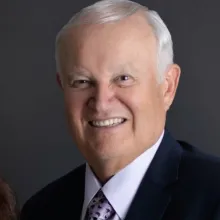
Mr. Seiglie was born in Havana, Cuba, and came to the United States when he was a child. He found out about the Church when he was 17 from a Church member in high school. He went to Ambassador College in Big Sandy, Texas, and in Pasadena, California, graduating with degrees in theology and Spanish. He serves as the pastor of the Garden Grove, CA UCG congregation and serves in the Spanish speaking areas of South America. He also writes for the Beyond Today magazine and currently serves on the UCG Council of Elders. He and his wife, Caty, have four grown daughters, and grandchildren.
