


Mario Seiglie
This transcript was generated by AI and may contain errors. It is provided to assist those who may not be able to listen to the message.
Thank you again. So this afternoon, we're going to finish this graph that I gave to you last week. Now, if you don't have the graph, we have extra copies, so raise your hand if you need a copy, because this is very important to have this graph so we can follow along in the sermon.
After some 40 years in the ministry and always having this question asked, just like Ray Roberts mentions, when you ask a question, you usually try to find the answer for it. And that is the way it works also about God's laws. Why do 99% of all mainline Christianity don't keep God's laws, as mentioned in the Ten Commandments?
That has always been a puzzle. You would think the Ten Commandments, which were given by God and written with his finger, where in the Bible does it say those Ten Commandments were ever changed? And yet, the Fourth Commandment is not kept by 99% of Christianity. Very strange, indeed. So I posed this question, why don't we keep Christmas and New Year's?
Here are some basic reasons why we don't. It's mainly because God's laws don't allow it.
Yes, they were to be applied differently in the New Testament, but not to be abolished. So this is part two. We're going to go into the New Testament. But it's important to understand that God's laws are inclusive of his will. He says don't add to them and don't take away from them. And so for Christ's birth, which certainly is an important moment in man's history, basically we even date our calendars by the supposed birth of Christ. Of course, the man who calculated this Dionysius the Small around the fifth century was the one that set it up and he was wrong for around four years.
So actually the calendar is about four years off because Herod the Great died around 4 BC. So Herod was the one that sent the troops to kill the infant Jesus in Bethlehem. So he had to be alive at that time. Well, in 4 BC, you have to say four years later, Herod was already dead by four years. And so actually Christ's birth is honored in the Bible through the Feast of Trumpets, which is when the sound of the trumpets and the coming of the Lord, his first coming and the second coming.
So we don't need to add a pagan feast at the lowest point of the sun, December 24th at the time that that was set up, which now is the 21st because some of that time has moved, but it used to be the 24th. And so then on the 25th, they said that the sun god was born. That would be the beginning of a new year and everything else.
And the Romans had their Saturnalia and had all of this celebration. And of course, that was when instead of the god Saturn, it was Jesus Christ who was substituted in. You can look at any encyclopedia. They will explain to you that the Christmas Day has nothing to do with the Bible. And as Ray Roberts mentioned, it wasn't until about 300 years later that finally they set it up at that time of December 25th.
So it's important for us to understand that God's word is sufficient. We want to recognize Christ's birth. Keep the Feast of Trumpets. That's when it talks about the coming of the Lord. And so it has an additional advantage, and that is that you don't have to go out and buy all of these presents for people that you'd rather not buy it for. And you're in debt for almost the rest of the year if you can see the mad, frenetic rush and all the tension that you see in people's faces because they've got to do this or people will get offended.
Well, the Bible doesn't have that type of imposition. Feast of Trumpets is a wonderful feast, and it does cover the first and second coming of Christ. So let's go through this graph because here we see how God works through mankind in a series of covenants. He works with Adam and Eve, the covenant at the Garden of Eden, and he said to them, this is what you should do, and this is what you should not do. It was based on obedience. Adam and Eve broke that first covenant, and as a result, we had sin, we had curses on the ground, on many things. So there was a law that was broken.
Sin was a result, but also God promised there would be a Redeemer, a Messiah, that would come. And so there is grace and redemption as well. So it's always a covenant of grace, whether it's in the Old Testament or the New Testament, just a matter of how much is it expanded upon. We look at the New Testament Church, the covenant made through Jesus Christ, the seed, it's through His sacrifice that makes available the Holy Spirit, law, and grace.
So we see the Old Testament Church was incomplete. That covenant wasn't going to cover everything, but there would be a new, a renewal of the covenant and the New Testament. The second point, there was a covenant with Abraham and his descendants and the promised seed. So now God chooses Abraham as the one that would be the father of the faith and his descendants. God would work through them and there would be a promised seed, a Messiah, that would come out of the descendants of Abraham.
And so in the New Testament, we see the seed Christ coming and through baptism, there is salvation available to all nations. So He said, in thy seed all nations will be blessed. So that would be extended. It wouldn't be just Abraham's descendants, but now anyone who has the faith in the sacrifice of Christ and in the teachings of Christ that have salvation available to them.
That takes us to the covenant at Sinai, which is an expansion of the covenant with Abraham. Now he's not dealing with individuals. He's dealing collectively with a nation, a nation that people, many of them, do not have the right attitude. They don't obey God. And so it's still a covenant based on obedience. But sacrifices are now added in a formal way. You have a priesthood. You have a tabernacle that is constructed. And so you have the Levites, which are separated to be the ministers.
And from the Levites a group would be the priests. In the New Testament, you see how this is amplified with the ceremonial law. No longer necessary, but you still need to keep God's commandments based on those Ten Commandments. None of them are ever abolished.
And what was the problem? Point 4, Deuteronomy 5.29.
He said that Israel lacked the Holy Spirit, so did not have an obedient heart. That's why it talks about the covenant. And with the hardness of their heart, it wasn't going to expand any further, because you had to have a change in a man's nature. And they did not have access to the Holy Spirit except for those specially chosen prophets and servants of God. So, in the fourth point under the New Testament Church, members do have the Holy Spirit and have an obedient heart, though they still are imperfect. I see this as a minister all the time, because in a sense, people come and they are not yet receiving God's Holy Spirit. God's Holy Spirit is not given at birth. It's only given at baptism and with the receiving of the laying on of hands. And so, here we have a group of people that make that decision to follow God, to obey His laws and commandments, and desire that Holy Spirit, which enables them and changes them in a gradual way. So, we're all babes in Christ and you just grow slowly into maturity, but at least you have God's Holy Spirit, which was needed in the Old Testament. That takes us, even in the Old Testament, God said that there would be a better covenant in the future through the coming of the access to God's Holy Spirit. He promised that would be the case. So, it wasn't a matter of just staying in the Old Testament with the Old Covenant. He already said there is going to be this new covenant that is coming. And then, Hebrews 10 explains that the new covenant begins to be applied, but not fully realized. So, we receive a portion of the Holy Spirit, but we are not transformed into spirit beings at that time. So, it's a process, but the new covenant is the beginning. It's what you call in biblical times, before you were married, you had a period before that which was called the betrothal period. Today, it's called the engagement period, but the betrothal was far more serious because it was a wedding. It was a formal promising of each other. You had to have witnesses. For instance, Joseph and Mary, it says that they were betrothed. That means that they already were husband and wife, but they had to wait one year until the wedding fees would come and the whole marriage was consummated and in that way realized. But the betrothal age, you were not to engage in intimate relationships. You had to wait until the wedding feast. And so, that's a similar way. We are betrothed to Christ. Yes, we are part of that, but the marriage ceremony won't take place until Christ comes back and we are all transformed. Then the bride will have that wedding feast, but we are already in the first stage, the betrothal stage of this relationship. And so, in Deuteronomy here, the sixth point, Deuteronomy 18, Moses knew there would be a coming prophet. He said, I am the one that God is using, but there will be a coming one. You listen to him, which would be the Messiah, a much more important person than Moses. And Hebrews 3 tells us Christ was superior to Moses. We went over that last week.
And then, what would the role of Christ be? In Isaiah 42, it describes the role of Christ as the coming servant that would magnify God's law. So, he would add the spiritual dimension that was lacking because people did not have God's Holy Spirit. In John 1, it says that Christ would add the spiritual dimensions and grace to God's law, but he wasn't going to abolish God's laws. And so, last week we concluded in point 8, Matthew 5, 20 through 48, which had to do with the Sermon on the Mount, and where it talks about that the Old Testament law was distorted through oral and rabbinic ruling. People were not keeping God's law in the proper way.
The rabbis and the Sanhedrin and priests had added more burdens to the law and actually distorted its application. And so, Christ came and said, this is the proper way of applying God's laws. And that is called in the Bible the law of Christ. The beatitudes show the spirit of the law, not to abolish, but to fulfill it, or as the word playroom means, to fill it to the fullest. One example of the use of this verb is when Christ told the disciples to cast their nets on this right side. And they said, well, we've been fishing all night. There hasn't been anything, but they went ahead and did it. And Christ caused a miracle. And the fish filled those nets to the point where the nets were breaking. There were thousands of fishes, and they all were trying to get out. And the fish were about ready to break the net. Well, there it said that the net was playroom, was filled to the fullest. It could be. It doesn't mean that then they were going to cut the nets and abolish all those fish. No, it just means that they were filled to the maximum capacity. And now we come to the next point. Again, as Christ develops this new covenant, which is based on the Old Testament law, but now filling it in the spiritual dimension to the fullest. In Matthew 23, we read about the problems of the application of the Old Testament law under Judaism. Matthew 23, verse 1. 1. Christ says to the multitudes and to his disciples, the scribes and the Pharisees sit in Moses' seat. So they had been given a certain authority. This is the same authority that the priests and the elders had in the Old Testament in order to properly interpret God's laws. And so they had that authority to do so, but what did they do? Verse 3 says, therefore whatever they tell you to observe that observe and do. So they had the authority, but he goes on to say, do not do according to their works. For they say, and do not do. So they were hypocrites and they added many burdens. Verse 4. For they bind heavy burdens, hard to bear, and lay them on men's shoulders, but they themselves will not move them with one of their fingers. So they found all kinds of loopholes for them not to apply. So they threw the book at the people with all of these regulations, but they themselves found ways to avoid applying it for themselves. Verse 5. But all their works they do to be seen by men. So not only did they have their own standard of getting away with not keeping it, but they also their attitude It wasn't genuine. They tried to impress others. They make their phylacteries broad and enlarge the borders of their garments. They love the best places at feasts, the best seats in the synagogues, greetings in the marketplaces, and to be called by men a rabbi, rabbi, which is a term of very high and impressive sounding like my great one is what the term means.
But you do not be called rabbi, for one is your teacher, the Christ, and you are all brethren. Do not call anyone on earth your father, for one is your father, he who is in heaven. So here you have all of these religious titles that men love to have. Your excellency and rabbi, you know, my great one. So here in the church we don't have religious titles.
And we don't call anybody as our religious father. As some Christian churches, they have their maximum in charge. They call them father, papa in Italian, which is the same word which means father. So they are violating that. And do not be called teachers. Now again, we do have certain titles that people can be teachers of God's word, but don't put them in such a way that they are your ultimate standard. For one is your teacher, the Christ. You can see some people might say, well where is that in the Bible? Well, let's go to Ephesians chapter 4. Ephesians chapter 4, where you can be as a minister a teacher, but you don't have this highfalutent title of being like the maximum authority. Ephesians chapter 4, it mentions here.
Verse 11, it says, and he, talking about Christ himself, gave some to be apostles, some prophets, some evangelists, and some pastors and teachers. So yes, but Christ is here comparing and contrasting what the rabbis did. They were the ultimate authority. And that's not the right way of setting up. So anyways, here the point is that it was Judaism was a church that didn't have God's Holy Spirit guiding them. They're dealing with a spiritual word, but they don't have God's Spirit in them. So of course they're going to interpret things and they're carnal-minded, and that's why it became so distorted up to today. Now in Matthew 16, let's go there, Matthew 16.
In verse 15, you might not have seen this scripture in quite this light before. Matthew 16 and verse 15. Then Peter answered and said to them, let's see, Matthew 16 verse 15. He said to them, But who do you say that I am? Simon Peter answered and said, You are the Christ, the Son of the living God. So he recognized Christ had that spiritual dimension. He was the Word.
Jesus answered and said to him, Blessed are you, Simon Bar-Jonah, for flesh and blood has not revealed this to you, but my Father who is in heaven. And I also say to you that you are Peter, and on this rock I will build my church, and the gates of Hades, for the grave, shall not prevail against it. So Peter is one of the ones that Christ would use. Christ would be the foundation. The apostles would then continue teaching Christ's doctrine and also as the foundation. So Christ is the foundation. We'll see that in a moment here. But the point is that here you had Judaism, you had the Sanhedrin, you had an established religion. And what did Christ say? Not that he was going to build upon that Judaism. He says, I will build my church. It's going to be a different group of people than those being governed by Judaism and the rabbis. So that's what's so important here, that these people would have God's Holy Spirit. And you can't mix oil and water. You can't mix people that have God's Holy Spirit with the leadership of another religion, which of course Judaism is part of the Old Testament, but they don't have God's Holy Spirit. So you're not going to have harmony. One has the spiritual dimension, the other one is just the physical application of the law. Notice also in Ephesians, chapter 2, there's another scripture you can write down there if you'd like.
It says in verse 19 of Ephesians 2, Now therefore you are no longer strangers and foreigners, but fellow citizens with the saints and members of the household of God, having been built on the foundation of the apostles and prophets, Jesus Christ himself being the chief cornerstone, in whom the whole building, being fitted together, grows in a holy temple in the Lord. So yes, the apostles would be part, but it was Jesus who'd be the foundation, the cornerstone. So he says, I will build it. And he wasn't going to build it on fragile and imperfect Peter. He was going to build it on himself. But Peter would be part of that new spiritual building called the church. That's what he's getting to right here. So Christ would build his church, not upon Peter, but himself. That takes us to point number 10. Judaism depended on animal sacrifices, which had a limited effect. So again, some things had to change. Notice in Hebrews chapter 9.
I actually have Ephesians 2 right here. I didn't see that at that moment. But Hebrews chapter 9, verse 7.
Paul says here, But into the second part of the high priest, the high priest went alone once a year, not without blood, which he offered for himself and for the people's sins, committed in ignorance. The Holy Spirit indicating this, that the way into the holiest of all was not yet made manifest while the first tabernacle was still standing. It was symbolic for the present time in which both gifts and sacrifices are offered, which cannot make him who performed the service perfect in regard to the conscience. You don't erase spiritual sin through an animal sacrifice. And it concerned only with foods and drinks, various washings and fleshly ordinances, which had to do with the animal sacrifices, imposed until the time of Reformation. So yes, the law was going to be applied differently, but it's not abolished. Instead of an animal sacrifice, you have Christ's sacrifice, substituting for that, making it needless to have animal sacrifices.
Continuing on, it mentions here in John chapter 19 verse 28.
This is when the animal sacrifices were substituted for Christ's sacrifice. John chapter 19 verse 28.
Jesus is here being crucified. He says, after this, Jesus, knowing that all things were now accomplished, his sacrifice would do this, that the Scripture might be fulfilled. He said, I thirst. Now a vessel full of sour wine was sitting there, and they filled the sponge with sour wine, put it on hyssop, and put it to his mouth. So when Jesus had received the sour wine, he said, it is finished, and bowing his head, he gave up his spirit. So it's done.
But the animal sacrifices pointed to, it's now fulfilled in Christ's sacrifice. So that's part of this new covenant that we are all part of. At the time of Jesus' crucifixion, no Jew had God's Holy Spirit. John the Baptist had the Holy Spirit, but he was already dead for quite a while. In John 7 verse 39, it tells us this very thing. In John 7 verse 39, he said, But this he spoke concerning the Spirit, whom those believing in him would receive, for the Holy Spirit was not yet given, because Jesus was not yet glorified. So it wouldn't be available until Jesus' sacrifice and him being resurrected and rising up to the Father and being accepted as a sacrifice for all of us. That's when this takes place. This is when we no longer need animal sacrifices. So his sacrifice changed how God's law would now be applied.
The new church would receive the Holy Spirit, Acts chapter 2. After Christ's death, this is when God sends the Holy Spirit into these people that become the New Testament Church.
Acts chapter 2 verse 1.
It says, When the day of Pentecost had fully come, all the fifty days had been counted, they were all with one accord in one place, and suddenly there came a sound from heaven as of a rushing, mighty wind, and it filled the whole house where they were sitting. And there appeared to them divided tongues as of fire, and one sat upon each of them, and they were all filled with the Holy Spirit, began to speak with other tongues as the Spirit gave them utterance. So miracles happened, and this is the beginning of the New Testament Church. What Christ said, I will build my church. He didn't build it on top of Judaism. Judaism rejected Christ. The cornerstone, they could have repented. They could have accepted Christ, and then they would have been part of this New Testament Church. But the great majority of them rejected Him, as up to this day, Jews have a prohibition to accept Jesus Christ as a Messiah. You cannot be a practicing Jew in Judaism and accept Christ. Now, you have Messianic Jews, but they're not formally recognized as part of Judaism. They had to separate. They had to form their own churches to do so, because no rabbi is going to go and preach in their churches. And so, once Christ's sacrifice is accomplished, then we have this very important 2 Timothy 1. What does the Holy Spirit comprise of? 2 Timothy chapter 1. This is what you receive. 2 Timothy chapter 1 in verse 6.
It says, Therefore I remind you to stir up the gift of God, which is in you through the laying on of my hands. Notice it didn't say through your baptism. Now, the laying on of hands is a separate ceremony, which most Christian churches do not apply. And frankly, I've seen people that have received God's Spirit, but they've had to have baptism and the laying on of hands. Might be other groups. I have seen some, but I've never seen one that just received God's Spirit without the laying on of hands. People can be baptized, but you need the laying on of hands. Now, that's not some rule that I make up. That's a rule that God set up, and He respects His own laws. And so it goes on to say, For God has not given us a spirit of fear, but of power and of love and of a sound mind. So God's Spirit gives us courage. It gives us God's love and a sound mind, a way to reason. It means a balanced mind, a mind that knows how to discern properly spiritual things. And that takes us to the next point, which is number 12.
So up to that time, the New Testament church was made up of Jews.
They didn't have any Gentile that could come into the church because they weren't circumcised. They couldn't participate of it. But God would open up this opportunity to all nations. And when He did it is in Acts chapter 10, the first Gentile to be baptized and receive God's Spirit. Let's go baptize in Acts chapter 10.
We see throughout the book of Acts baptism and accompanied by the laying on of hands. Now here, because it was such a monumental moment, God intervenes and sends His Spirit. Acts 10, in verse 28, Peter visits the Gentile Cornelius. And God tells him, I am calling Gentiles into the church now. That was shocking for Peter. He said in verse 28, Then He said to them, You know how unlawful it is for a Jewish man to keep company with or go to one of another's nation. So Peter was doing that. He didn't visit Gentiles in their homes because they were considered that these Gentiles were ceremonially impure. They were unclean. If you went in there, those spoons and the food and everything had not been properly prepared and they had not been circumcised. And so they looked upon the Gentiles as unclean people. You could deal with them. You could have business relationships with them, but you couldn't socialize with them. You had to keep that separate. And so Peter says, you know how unlawful it is?
But God has shown me that I should not call any man common or unclean. Therefore I came without objection as soon as I was sent. For I asked then, for what reason have you sent me? So Peter obeyed God because God intervened and told him, go into the house of this Gentile and don't question. Don't doubt. I'm sending you there. Well, Peter didn't really know what it was all about. He was shocked, but he had learned as a good dolus. He was a here I am servant. Yes, sir. I'm not going to question you. And so then, going further, verse 34, then Peter opened his mouth and said, in truth I perceive that God shows no partiality, but in every nation, whoever fears them and works righteousness is accepted by him. And so God does this miracle, and he opens up the Holy Spirit now to the entire world as it is today. Today, we have all the different races and genders and nationalities, and we know if a person submits, decides to obey God, he has access to baptism and the laying on of hands.
So, the new church, now the uncircumcised Gentiles receive the Holy Spirit. Now, this really threw the church into a loop. It really confused the church at that time. What do you mean? They don't have to be circumcised anymore. We can go inside their homes now. So, they were shocked, and you can tell how shocked they were, because when Peter went to Jerusalem in chapter 11, it says, verse 1, Now the apostles and brethren who were in Judea heard that the Gentiles had also received the word of God. And when Peter came up to Jerusalem, those of the circumcision, these were some converted Pharisees to the faith, because of course all Jews were circumcised at that time. But this was the circumcision party. This one day insisted that in order to get salvation, you had to go through the ritual of circumcision, being under the ritual law, and everything else. So, this is where they were coming from. And they said, verse 3, You went into uncircumcised men and ate with them. How dare you do that? Don't you know they're ceremonially defiled? And then what did Peter say? Well, he said, the boss upstairs told me. That's basically, he said, but Peter explained it to them in order from the beginning, saying that he went to Joppa, and then he goes through the entire thing. Verse 17 is a conclusion. He says, If therefore God gave them the same gift as he gave us when we believed on the Lord Jesus Christ, they are back at Pentecost, who was I that I could withstand God? Who was I to say, God, you're wrong because you forgot about the need for circumcising this man. Well, he didn't say that at all. And when they heard these things, they became quiet. They couldn't argue. It was God's will.
And they glorified God, saying, Then God has also granted to the Gentiles repentance to life. So, this is a revolutionary moment in the church.
And then Paul is the one that is made the apostle to the Gentiles. And he, he being a rabbi, Pharisee of Pharisees, had to go through a whole lot to get that out of his system. But he did. And so in Acts chapter 13, in verse 38, Acts 13 verse 38, this is the first time someone goes to the Gentiles as a nation and begins preaching this new message. Acts 13 verse 38, Paul says, Therefore, let it be known to you, brethren, that through this man, talking about Christ, is preached to you the forgiveness of sins, and by him everyone who believes is justified from all things from which you could not be justified by the law of Moses. If you weren't circumcised, if you didn't become a Jew, you can be justified. And here, he says, by Jesus Christ, you don't have to go through circumcision. You don't have to be subjected to Judaism and that entire system. Verse 42, So when the Jews went out of the synagogue, the Gentiles begged that these words might be preached to them the next Sabbath. So that's where the new churches begin.
And so, things come to a head in Acts chapter 15. Acts chapter 15 verse 1, we still have this circumcision party. They're not happy. Some of them, frankly, were not converted. Yeah, they came into the church, but they had their own ideas about things. Notice in Acts chapter 15 verse 1, And certain men came down from Judea and taught the brethren, unless you are circumcised according to the custom of Moses, you cannot be saved. You have to go through this ceremony. Therefore, when Paul and Barnabas had no small dissension and dispute with them, they determined that Paul and Barnabas and certain others of them should go up to Jerusalem to the apostles and elders about this question. So it wasn't going to be resolved until they had a ministerial conference in Jerusalem. Verse 5, But some of the sect of the Pharisees who believed rose up, saying it is necessary to circumcise them and to command them to keep the law of Moses. Now, they're not talking here about the Ten Commandments. That was obvious. But were they going to keep all of the oral law, the ritual law, all of these things, they wanted the Gentiles that were converted to be under that system. And so, the next part is in Acts 15.8. It says, let's start in verse 7, And when there had been much dispute, this is when they already came together, Peter rose up and said to them, Men and brethren, you know that a good while ago, God chose among us that by my mouth the Gentiles should hear the word of the gospel and believe. So, yes, Peter went to Cornelius. Not Paul. Peter was the first one that preached, and there was a converted Gentile.
He said, So God, who knows the heart, acknowledged them by giving them the Holy Spirit, just as he did to us, and made no distinction between us and them, purifying their hearts by faith. So he says, you no longer need to be circumcised. Now, therefore, why do you test God by putting a yoke on the neck of the disciples, which neither our fathers nor we were able to bear? All of those ceremonies, sacrifices, the oral law, all the things that the Pharisees insisted upon.
Verse 11, But we believe that through the grace of our Lord Jesus Christ, we shall be saved in the same manner as they. That now, Christ fulfilled the need for sacrifices. There's a new church that is developing. Then all the multitude kept silent, and listened to Barnabas, and Paul, declaring how many miracles and wonders God had worked through them among the Gentiles. And after they had become silent, James, who had been Jesus' half-brother, answered, saying, Men and brethren, listen to me. Simon has declared how God at the first visited the Gentiles to take out of them a people for his name. And then he quotes here one of the scriptures that the Gentiles one day would be called. Verse 19 is the important point. He says, Therefore I judge that we should not trouble those from among the Gentiles who are turning to God, but that we write to them to abstain from things polluted by idols, from sexual immorality, from things strangled, and from blood. For Moses has had throughout many generations those who preach him in every city, being read in the synagogues every Sabbath. And the term here synagogues just means assembly. So let's talk about the church, where he says the Gentiles are going to learn more about God's laws and how to apply them. But the point is God's laws are still binding. Yes, they can't eat meat strangled with blood. The food laws are still binding. And he says there that you don't fornicate, and also you don't marry your sister, because that's a type of fornication as well, sexual immorality.
And so this is the decree that eventually went out.
Verse 24, he says, Since we have heard that some who went out from us have troubled you with words unsettling your souls, saying you must be circumcised and keep the law, to whom we gave no such commandment, it seemed good to us, being assembled with one accord, the elders, the apostles were all together in this, to send chosen men to you with our beloved Barnabas and Paul, men who have risked their lives for the name of our Lord Jesus Christ. We have therefore sent Judas and Silas, who will also report the same things by word of mouth, for it seemed good to the Holy Spirit and to us to lay upon you no greater burden than these necessary things, that you abstain from things offered to idols, from blood, from things strangled, and from sexual immorality. If you keep yourselves from these, you will do well. So what James did was he made the line of demarcation between the spiritual and moral law and what the ceremonial law is below this. He didn't say, well, you got to be circumcised, you've got to go to the temple, offer a vow, you can't go inside the temple, you're not circumcised, you can't offer a sacrifice. Those things you don't have to worry about. But he did distinguish these points, which is that you have to abstain from things offered to idols. This is, you had to even be aware of any food that had been offered to an idol before you ate it, from blood. So that's, it's not talking about, oh, you can eat pork, and you can eat shellfish, but just don't eat blood. No, blood was the minimum food law. It was not ceremonial. It was above the line of demarcation. Below the line of demarcation was the ritual and ceremonial law. And so then we have a very important here that the Sanhedrin was in charge this point 15 until the church established by Christ. You don't have to worry about the authority of the Sanhedrin. Christ is the head of the church, not the Sanhedrin. He chooses his servants. And in Acts 16.4, you see what the church should be administered by, what it should follow. It says in Acts 16.4, and as they went, talk about Paul, Barnabas, and others, went through the cities. They delivered to them what? The decrees to keep, which were determined by the apostles and elders at Jerusalem. Notice that it was a far more government of consensus. You had the apostles, but they also consulted with the elders. They came to an agreement. It wasn't Peter who made the decrees. It was the apostles and elders. So it was quite a broad group of men who had authority. Well, today, to protect the church from one person just deciding everything, and many times can lead the church off into the wrong area, as we have seen in the past. We have the general council, the general conference of elders, and they select the council of elders, which are just the men that they see by the fruits, and these are the men that represent, but we're all under Jesus Christ. And some men might not be faithful for a while.
So it doesn't guarantee anything. We don't have this one man that you have to depend on that stays close to God, that is guided by God, because we know every man can leave the faith. And so all the way from Lucifer, one of God's right hand angels, he rebelled. And from then on, we have seen men without any checks and balances many times will go off the deep end. So that's point 15. Let's go to point 16. Acts 21. This is an important one because Paul went off on his missionary trips, and then he came back. In Acts 21 verse 20, he came back to Jerusalem. And in verse 18, it says, on the following day Paul went in with us to James, and all the elders were present. So yes, elders had a voice. It wasn't just James. There was humility in the government of God. And when he agreed with them, he told in detail those things which God had done among the Gentiles through his ministry. And when they heard it, they glorified the Lord. And they said to him, you see, brother, how many myriads of Jews there are who have believed, and they are all zealots for the law. So see, Jews, they were circumcised. If they wanted to, they could go to the temple. It was no longer a matter of salvation. But they could still respect the ritual law. They could still go. And Paul went ahead and did that to show that the believing Jews could still do this. Verse 21, but they have been informed about you that you teach all the Jews who are among the Gentiles to forsake Moses, saying that they ought not to circumcise their children, nor to walk according to the customs, which had to do with the ceremonial law. What then? The assembly must certainly meet, for they will hear that you have come. Therefore do what we tell you. We have four men who have taken a vow, take them and be purified with them, and pay their expense, so they may shave their heads, which would finish the vow, and that all may know that those things of which they were informed concerning you are nothing, but that you yourself also walk orderly and keep the law. Well, certainly it's not talking about the Ten Commandments, but okay, you can still go to the temple. You can still offer your vows. But concerning the Gentiles who believe we have written and decided that they should observe no such thing. They don't have to worry about being circumcised, going into the temple, because they couldn't. It was the penalty of death. If a Gentile that was uncircumcised went inside the temple.
And so he says, except that they should keep themselves from things offered to idols, from blood, from things strangled, and from sexual immorality. So again, they should keep the food laws. They should keep the commandments. They can't have idols. And they have to have a correct morality, keeping the seventh commandment. Verse 26, then Paul took them in, and next day, having been purified with them, entered the temple to announce the expiration of the days of purification, in which time an offering should be made for each one of them. So he did. So again, God's laws were going to be applied differently, but they were not going to be abolished. And in point 17, Galatians 6, verse 12 through 15, we see those Judaizers were not quelled. They were not satisfied. They still accused Paul. He says here in verse 12, as many as desire to make a good showing in the flesh, these would compel you to be circumcised, only that they may not suffer persecution for the cross of Christ. For not even those who are circumcised keep the law. Again, they're not converted. They don't have God's Spirit. But they desire to have you circumcised, that they may boast in your flesh. But God forbid that I should boast except in the cross of our Lord Jesus Christ, by whom the world has been crucified to me and I to the world. For in Christ Jesus neither circumcision nor uncircumcision avails anything but a new creation, a new person with the Holy Spirit. So we see God's laws being applied at point 18. I'm not going to belabor it because it's getting a bit long, but Hebrews 7, the Levitical priesthood and animal sacrifices were temporary. In Hebrews 7, 12, 26 through 27, you see the change from the Levitical to the Melchizedekian priesthood. There's a change in the priesthood. We're not under Judaism anymore. We're not under rabbis and high priests. Jesus is our high priest. He has his ministry for his church. Point 19, Romans 8, 7 through 9, tells us that he that does not have God's Spirit is none of his. You need God's Spirit. Without God's Spirit, you can't truly keep God's laws.
And the church keeps God's laws, and you can't detach that agape love from God's laws. You cannot unhitch it. You cannot remove the two. That's what this world and mainline Christianity, they don't understand it. They decouple love from God's commandments. Notice in Romans chapter 3, verse 8, Paul was very clear about this. Romans 13, verse 8, it says, Oh, no one anything except to love one another. For he who loves another has fulfilled the law. For the commandments, you shall not commit adultery, you shall not murder, you shall not steal, you shall not bear false witness, you shall not covet. And if there's any other commandment, which would of course include the Sabbath and the rest of those first four, are all summed up in this saying, namely, you shall love your neighbor as yourself. Love does no harm to a neighbor. Therefore, love is the fulfillment of the law. You can't separate them. If you're keeping God's laws properly, you are loving your neighbor and you're loving God.
And so finally, in verse point 20, in man's kingdom, the law of Christ is only kept by the church. It is the pillar. Notice 1 Timothy 3 verse 14.
1 Timothy chapter 3 verse 14.
It says, These things I write to you, though I hope to come to you shortly, but if I am delayed, I write so that you may know how you ought to conduct yourself in the house of God, which is the church of the living God, the pillar and ground of the truth. So here's where—I'm not saying this is the only church of God that does this, but I'm saying this is one. This is here. We are keeping God's laws as they were taught by Jesus Christ. And in God's kingdom, the law of Christ will be kept universally. People will come up, they will learn God's laws, they will receive God's Spirit, and in that coming millennium, there will be peace and righteousness on the earth.
So with that, hopefully it helps you to understand how God's laws, through the entire Bible, were to be changed in its application, but they were not going to be abolished.
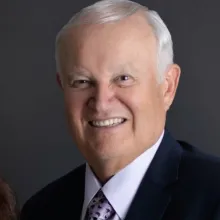
Mr. Seiglie was born in Havana, Cuba, and came to the United States when he was a child. He found out about the Church when he was 17 from a Church member in high school. He went to Ambassador College in Big Sandy, Texas, and in Pasadena, California, graduating with degrees in theology and Spanish. He serves as the pastor of the Garden Grove, CA UCG congregation and serves in the Spanish speaking areas of South America. He also writes for the Beyond Today magazine and currently serves on the UCG Council of Elders. He and his wife, Caty, have four grown daughters, and grandchildren.
