

Greg Thomas
This transcript was generated by AI and may contain errors. It is provided to assist those who may not be able to listen to the message.
Well, happy Sabbath again! What I thought I would do is I would take some of the material that we're doing now at ABC that can be helpful in a sermon, and that I would discuss some of that today to give you a little bit of a taste of what the students are receiving at ABC. One of the things with the module that I was asked to create that I think is so helpful is that ABC is very good with being a Bible school. It's great in teaching and going through the Bible verse by verse and teaching the students about the Word of God and the writings and the prophets. All of that is wonderful. But we also have to learn, as Mr. Erswope, I believe it was in his last sermon, said it's important to have understanding, not just to understand God's Word, but to be able to apply it to our daily lives. So the program that I'm teaching is to help these young people to apply all this wonderful knowledge they're getting from the Word of God into usable daily applications to their lives, literally to build productive lives. Many of them are in their early twenties that are there, as I told them. If Christ does not return in their lifetimes or in our lifetimes, if time should go on, some of those sitting in that room would yet have another 80 years of physical life. And that's a long time to live. And obviously we want our lives to be productive. We want to grow and we want to develop the gifts and the talents and develop the fruits that God has given us. So as we begin today, I have a question, and here's the question for you. A close friend has just given you the gift of $86,400. Congratulations! But there's one important condition. You have to spend it all tomorrow in one 24-hour day or the remainder is forfeited. It's gone. You have to use it up, or any dollars left over is forfeited gone forever. So how much of it would you spend?
As for a show of hands, how many of you would probably find a way to spend all of it? Wow! Okay. What would you spend it on? Typically I ask this question and I get great answers. I get answers like, well, I would pay off my home. Or I've heard people say, first thing I would do is I would give a tie to the church and then I would help my elderly parents.
There are just lots of great things that people would spend the money on. And usually they're very noble. You know, I would get a car, I have an old car, I would buy a new car, I would pay off my home, or I'd give the money to help other people. Virtually everyone has a wonderful reason that they would spend on those activities or those items. But you know what? Aside from the little fairy example I gave you, tomorrow you are going to be given a real gift. You and I, every one of us, are going to be given a real gift. We're going to be given the gift of 86,400 seconds as a gift tomorrow to proactively live your life. And once tomorrow is gone, it's gone forever. So you can choose to either focus on spiritual growth, you can choose to focus on family and friends and spend time with the people that you love and other high priority items, or you can choose to focus on unimportant items. And you can waste that time away, but you know something? Once it's gone, it's gone forever. You cannot reclaim that time. So I encourage you to choose wisely. Maximize your calling. Maximize the days that God gives you on this earth. And enjoy your gift of 86,400 seconds today and tomorrow. Let's take a look now. If you'll turn to Titus chapter 3, verses 3 through 8. Just because I flash it on the screen doesn't mean that we don't know how to use our Bibles anymore.
So, Titus chapter 3 gives you a few seconds to turn to verses 3 through 8.
And see what Paul wrote to Titus regarding our calling, the beauty, the magnificence of this great calling that God has given us.
Paul wrote to Titus beginning chapter 3, verse 3. He said, And we were all like that before we were called. Even Frank mentioned it, by the way, a very excellent sermonette that before God called him, he did some things that he might not be proud of today. Because he acted like all of us. He lived carnally. He was someone who grew up in the world.
And then Paul says, But, he says, So Paul says, And he calls it here, a washing of regeneration in other places. He says, We became a new creature in Christ. We now had a new reason to live, a new purpose for life. We now had a new attitude, new thoughts, new desires. Picking it up here in verse 6.
He says, In God's eyes, people continue to get the cart before the horse. He says, In verse 8, he says, He says, In other words, those good works don't do anything about saving us. They don't do anything about making us just in God's sight. That's putting the cart before the horse.
As a result of our conversion, we should have a byproduct naturally. That's a result of spiritual conversion. And that byproduct is good works. And not just good works, but to maintain those good works. He says, These things are good and profitable to men. I want to take a look at this in another translation, Titus chapter 3 and verse 8, from the new century version. He says, You see, that's how we maximize our calling. We use our lives no longer just to serve our own wants and needs and selfish desires, but we are careful to use our lives for doing good. He says, These things are good and will help everyone. So when we do good, it has a ripple effect. It helps everyone. When you treat someone with kindness and dignity and encourage them, they in turn talk to someone else, and they treat people the way they were treated. And they treat people with kindness and dignity. And when, as a congregation, we're doing the kind of things that we should be in fellowshiping and encouraging one another, there's a ripple effect. It radiates and affects all of us in a very beautiful and a powerful way. So when we talk about maximizing our calling, put it in a nutshell. Here's what Paul's saying about our calling in the verses that we just read in Titus. And we need to understand this because it is so important. We are saved by the kindness, love, and grace of God, not by works. And I understand that there are people who still have obsessive compulsive disorders regarding good works and judging everybody who isn't just like them, but the truth is, according to God's word, is that we are saved by the grace of God, not by works. The second point is that our lives are washed and renewed by the Holy Spirit, and it is offered abundantly. And that's a good thing to pray for every day. For years, part of my prayer virtually every day, almost to the point where it's probably too routine, but one part of my prayer that I've had for many, many years is each day I ask for a full measure of God's Holy Spirit. I pray for a double portion like the Prophet Elisha had. Because we need God's Holy Spirit, and the more of God's Holy Spirit we have working with us, within us, the greater our fruits can be. Again, it's just a natural byproduct of possessing abundantly God's Spirit. And Paul said that we are offered it, we can be offered it, abundantly.
Number three, we are justified in God's eyes by His favor. That is by His grace. Paul used the word grace. Number four, we are spiritual heirs to the hope of eternal life. We are all heirs, just like Jesus Christ. We are heirs of everything that God has, because of our faith in Him and because of our commitment to be His disciples and to grow into the children of God.
And the fifth thing is our calling is to do good works as a result of salvation. Obedience and good works are a byproduct of a converted mind. If we are truly converted, we do not live a lifestyle of sin. If we are truly converted, people should see fruit developing in our lives. They should see us changing. They should see us growing, especially our family members and those who are close to us.
They should notice a difference going on in our lives. It may be slow, but they should be able to notice a change occurring in our lives as a result of having a converted mind. Let's take a look now at Philippians. We'll go there, chapter 3, verse 13.
This is a scripture that I read a lot because dealing with many of the brethren, I believe personally that one of the greatest struggles that a lot of God's people have is discouragement. Discouragement and mild depression are often times a feeling of melancholy in their lives.
I understand that, and there are times when I also struggle with discouragement. That's why I'm kind of sensitive to those issues.
This is an important key and a very important key in maximizing our calling.
Paul wrote to the congregation in Philippi, he says, He says, He said, He says, Those things which are behind and reaching forward to those things that are ahead.
And one of the things that causes discouragement is when we are not letting go of the past.
And far too many individuals and far too many of us, brethren, keep reliving the painful incidences of things that we did or things people said to us or things that we saw. And we continue to rerun those old movies in our heads.
And when you rerun something painful, what's it going to produce? It's going to produce the same old feelings it originally did.
It's going to produce the same old fears and anxieties and aggravations that it did when it happened.
And the key to maximizing our calling is truly to process it as an adult and let it go.
And one of the keys of the Passover, the reminder of the annual Passover every year, that far too many of us allow to slip by, the meaning of the Passover is forgiveness.
Just like we want God to forgive us of all of our sins and transgressions, not just 99% of them. So too, we have to let go of the past. We have to get rid of, after we process, a mature way of processing those and dealing with the fact that it's history, that we can't change the past. We can do nothing to change the past.
But beginning right now, you and I can change our futures.
We can literally alter the future right now by the decisions that we make, by the attitudes that we have, by the things that we do each and every day, we can change the future.
So we have to learn to forget those things that are behind, especially those painful things, and we have to reach forward to those things that are ahead.
And that includes the promises that God gives us as His people.
Let's continue here in verse 14. He says, I press toward, notice not behind, I press toward the goal for the prize of the upward call in Christ Jesus.
Notice how positive that statement is. He says, Therefore, let us, as many as our mature, have this mind.
What mind? The mind that lets go of the past.
The mind that reaches forward to those things that are ahead.
The mind that reaches toward the goal of the prize that we are offered because we are disciples, and we accepted the calling from our great Father. That is what we should think.
He says, and if anything you think otherwise, God will reveal even this to you.
So He says, if you have your own agenda, if you think there's something else that's more mature than that, He says, in time, God will straighten you out. God will help you to understand what this is all about and how powerful it is to understand this. So again, Paul boldly states that the spiritually mature should not live in the past, but they have to be forward thinking, press toward the goal of the prize of the upward call that we have in Christ Jesus.
So how can we become spiritually mature? I'm going to rephrase this. How can we maximize our calling? We can do it by living purposeful lives, meaning living lives on purpose.
That means planning and organizing our days and our weeks and our future, rather than allowing time and chance to determine our future.
You see, most people in the world, they allow time and chance to determine all their decisions and their future. And time and chance is a harsh taskmaster. Usually, the decisions and the time and chance has made in my life when I haven't been proactive, usually I didn't like its decision, but had to live with it anyway.
So we can avoid that and we can live purposeful lives, lives on purpose, rather than allowing time and chance to control who and what we are. I'd like to bring you just a basic principle here. If you turn to Genesis 1, and we'll take a look at verses 1-3. Genesis 1, verses 1-3.
And through the very first words of Scripture, we learn that God has some incredible qualities. And we can have some of the same qualities He does, because, after all, we were created in His image. I find it rather amusing. I was reading something recently, and someone was describing a man being made in God's image.
And his whole definition was, well, we have a head, we have eyes, we have hands, we have feet. And then he moved on. And I thought, well, an ape has those things, big deal! I mean, that's fine, but there had to be more to God creating us in His image.
We were created to be builders, designers, philosophers, to create things, to develop civilizations and languages. That's what it means to be made in God far more than just the physical applications of the things that we have on our bodies. Genesis 1, verse 1, says, in the beginning, God created. He's the Creator. The heavens and the earth, the earth was without form and void, and darkness was on the face of the deep. Of course, we know this is really more like a recreation of the earth, because there had been a, we can say, heavenly catastrophe and a war in the heavens. That had rendered the earth that we live on destroyed. And God here is refashioning the earth. It says, and the earth was without form and void, and darkness was on the face of the deep. And the Spirit of God was hovering over the face of the waters. And it's almost like a hummingbird, if you look at the original Hebrew. It's like a bird, something literally hovering. And God said, let there be light. And there was light. That Spirit of God, God into action, and literally did at the command of God, because it's the power of God. And by the way, think about the fact that this very same Spirit dwells in you. The very same Spirit, the Spirit of the command of God, fashioned, all matter, that we understand and see. That very same Spirit resides in each and every one of you who are converted and who have received God's Holy Spirit. Then God said, let there be light, and there was light. Dropping down to verses 21 through 24. So God created great sea creatures and every living thing that moves with which the waters abounded according to their kind, and every winged bird according to its kind. And God saw that it was good. And God blessed them, saying, be fruitful and multiply, fill the waters of the seas, and let the birds multiply on the earth. So the evening and the morning were the fifth day. Then God said, let the earth bring forth the living creature according to its kind, cattle and creeping thing and beast of the earth, each according to its kind. And so it was. And as we look through these scriptures, if you read the entire context of verses 1 through 31, you'll discover a number of important qualities of God as Creator that you and I need to have if we want to maximize our calling. First of all, God, the earth was created according to a systematic plan. God is a planner. How good are we at planning? Are we planning our days? Are we planning our weeks? Are we planning our months? The creation of each day supported the needs of the next day. God created veggies. First of all, He created light and heat so that life on earth could survive. Each day supported the needs of the next day. There was vegetation in the earth. So by the time He created mammals, they had something to eat. The animals on the earth had something to eat. And that was supported, that vegetation, because God had created before light and heat so that it could survive. It's a building block principle. But God is a planner. He's organized. God didn't create something the first day and say, Oh wow, day two! What am I going to do now? Yet that's how a lot of people live their lives. There's no plan. There's no orientation. There's no organization.
God is a goal-setting creator. He set goals. He knew exactly in each stage in advance what He was going to do to make the earth habitable for man so that His ultimate creation, whom He would nurture in the becoming part of His family, could have a wonderful world to live in.
God is a goal-setting creator who plans in advance for what He does. He is proactive. God does not allow time and chance to control what He does. He's proactive and He plans. And brethren, so should we.
Take a look at another example. Exodus chapter 25 verses 8 through 9. Exodus 25, 8 through 9. They are preparing for the tabernacle. And this is the instruction that God gives Moses.
Exodus chapter 25 verses 8 through 9. God says, And let them make me a sanctuary, that I may dwell among them, according to all that I show you. That is, the pattern of the tabernacle and the pattern of all of its furnishings, just so you shall make it.
So you see, again, God gives a detailed plan to Moses. He is a planner. Even something like the tabernacle itself was organized and planned in advance.
You know, I have rooms in my house that there was no planning. You know, over here is early American, over here is early big lots.
I mean, there was no planning. There was no organization regarding the furniture matching each other or looking like anything that was related to one another. But in contrast to that, God is a planner. He's an organizer. And that's a gift that He offers each and every one of us. And if we want to maximize our calling, we need to stop allowing just time and chance to control our lives. And we've got to seize the moment, and we've got to be proactive and plan to grow, plan to change, plan to do those upgrades around our house or in our lives, whatever needs to be done. It's a very important biblical concept. Psalm 33, verse 10. And I'll read this from the new century version because I just think it makes it a lot clearer.
Mankind, for thousands of years, has had, the nations have had plans. What's the plans of the nations? The plans of the nations are simple. I want to become strong, and I want to eat you up. I want to become strong, and I want to control and take away everything you have. My fellow nations, I just want to rule the world.
Those are the plans of the nations that's written throughout history. It says, the Lord upsets the plans of nations. He ruins all their plans, but the Lord's plans will stand forever. His ideas will last from now on. What is the Lord's plans? Well, for a period of time, He's going to let the nations pretend like they actually can control something.
But then He's going to return to earth, and He's going to intervene, and He's going to establish one kingdom, the kingdom of God. The beginning in Jerusalem is eventually going to encompass the whole earth, and through that plan, He is going to continue His long-term plan of developing children for His family.
Those are His ideas. Those are His plans from the foundation of the world. So again, God's a planner, and it is important for us to live according to God's will for our own plans to be successful. So we have to understand that whatever we plan has to be within the confines of God's law.
We have to be in concert with God's will. Our values have to match His values if we want our goals and our plans to come true, to be fruitful, and to be completed. Let's take a look at a couple of scriptures here in different translations. Ephesians 3, verses 9-10. The reason I use the New Revised Standard Version and the New Century Version is, frankly, that King James Version does not do a really good job of translating what Paul's intention was. What Paul is saying here is that God has a plan. That God is a planner. God doesn't do things by time and chance, by circumstances. That God has a plan. And this plan has been around since the foundation of the world, probably before that. Here's what Paul says. I'll read from the New Revised Standard Version. And to make everyone see what is the plan of the mystery hidden for ages in God who created all things. And what is the plan of the mystery? The plan of the mystery is that God is building a family. That's the mystery. That this human life is nothing more than a training ground. It's a preparation through trial and testing, through maturing, and through spiritual development. It is intended as part of His plan so that we can be prepared. It will be literally a part of the family of God and to share His family name. How wonderful that is, the New Century Version says. And God gave me the work of telling all people about the plan for His secret. It's not a secret to us. We take it for granted. But for 99.9% of the people that live in the world, they don't understand what God's plan is. They just don't get it. They've never heard it in most cases. So God's plan is for humankind to become part of His family. And we are one of the few people that understand the rich meaning behind the Holy Days and the fact that one reason we observe the Holy Days, aside from the fact that God commands them, a better reason than the fact that God commands them is that it is an invitation for us to understand God's plan. Each Holy Day represents something that God has done, is doing, or will do regarding His plan for mankind. This plan of mystery, this secret plan that God has, that's what the Holy Days remind us every year of that plan. Each step-by-step part of that plan. John Rump, to the congregation, and we don't know exactly where the congregation could have been located, but he did write this. It's 3 John, verse 1, he says, the elder, referring to himself, to the beloved Gaius, whom I love in the truth. Beloved, I pray that you may prosper in all things and be in health just as your soul prospers. You see, even though our highest priority in life should be spiritual, and it should be, seek you first, the kingdom of God.
And that's certainly true. And our highest priority is to grow in character and prepare for service in the kingdom of God. However, our life consists of other valuable assets, like our career. And if you have a physical job, you have a career. If you're retired, your career now is the positive things you're going to do in your retirement years.
If you're a mom, your career are to raise those children, the begot-fearing, responsible human beings who are productive members of our society, and whom God can call when it's his time, when he calls them, that can respond to his call. And that's God's decision when he decides to do that. But that's your career. And we have other valuable assets. Again, I want you to notice, he said, I want you to prosper in all things.
He doesn't say, I want you to prosper in Bible study. That's a good thing. But life is composed of more than just Bible study. He doesn't say, I want you to prosper in your prayers. That's a wonderful thing. We should do it every day. But life is composed of more than just praying. We have other talents. We have things that we have been given, that we were given as a gift. And those things need to be developed. We need to take care of our physical health. We need to grow our relationships, our personal relationships with our spouse, and children, or parents, or co-workers, or brethren. I mean, life is all about relationships. And we have individual goals. And that's a good thing. To achieve your goals requires planning and effort. Just like God, the example God set forth at the creation, just like the planning and the organizing God that we know and understand and call Creator, we, too, need to have lives that have planning and effort. And what is one of the first things we need to understand in order to begin to become proactive about our lives and not allow time and chance to just take control of us? The first thing I'd like to mention is that whether you know it or not, we all have a personal mission statement. Now, if you've never even thought of the term, you don't have to worry, because one has already been designed for us. It's kind of the default mission statement. You know what default is, especially if you work around software computers. Default is what happens if you don't intervene and do something naturally. Default is what is natively written into the program. And what is natively written into the program has been created by the God of this world that we know of as Satan the Devil. And here's some of his personal mission statements. Number one, conform to society and its values. So when something becomes a fad, something becomes hip, a value changes, and marriage now suddenly includes same-sex couples, that you say, okay, that you just row with the flow. Whatever society is and whatever the values of society are, you just conform to them, because you want to feel like you're a part of the masses. Another thing is to choose an addiction to cope with life. Life is hard. I think we know that. Life has its challenges, and the default mission statement is, try booze, try drugs, try sex, try religion, just try anything, create some type of an addiction in order to cope with how hard life is. That's part of the default mission statement that already exists for us if we don't have our own. Another one is seek power and money, toys and control. Be materialistic.
And again, that is part of our culture, isn't it? Ever heard the saying that he who dies with the most toys wins? Of course, that's an absolute lie. Because, as I've said before, death is the great equalizer. The very day that Steve Jobs died, he was a billionaire, very gifted and talented man. He was put into the earth. I mean, if he wasn't cremated, he was put into the earth.
And he now is at the same station as some homeless fellow who died in Cleveland that day that might have been buried in Potter's Field. Death is the great equalizer. Now, Steve Jobs may have a prettier box. But aside from that, he has no advantage anymore over the other person who died. It's not true that he who dies with the most toys wins. He who dies with the most toys just leaves very happy children.
Another part of that default mission statement is, of course, use other people and blame them when things go wrong. Because I can't be wrong. I'm not to blame for any of my problems. I'm not to blame for anything around here.
So people blame other people. And then part of it is also that the center of the universe is me. That I am the center of the universe. In other words, selfishness. And that's the default mission statement that already exists in the world. So I want to encourage you, if you'd like to maximize your calling, to create your own personal mission statement. And I have samples for you to look at that you can take with you after services. It's a template that you can begin to write your own.
And it's a sample personal mission statement on the other side to get you started, to help you to write your own personal mission statement. Because you need to know where your core is. You need to know what you value and where those values come from. Do they come from the Word of God? Do they come from, you know, Inc.
magazine? Do they come from something the grandma taught you? Or do they come from the Bible? You need to know what you value and where your values came from. It should be our moral compass. It should be our true north. It should define what you stand for. It should decide and help you to understand what is your essential mission in life. Yes, seek you first the kingdom of God.
But what about all the other things that would be added unto you? What is your unique, essential mission in life? And then it should remind you what are your responsibilities in life. We all have accountabilities. We should accept our accountabilities. As husband, father, mom, child, coworker, brother, brethren. We have responsibilities. And if we create our own personal mission statement, we will be sure, sure-er, that we don't go to the default. We don't fall back into the default mission statement that's already been created for us.
And again, there's a sample on the information table. And when you've written it, and I encourage you to take some time to do it, if you need some help, let me certainly let me know offline. It should be written and made public at home. I've done this for many, many years. And you know what? When a crisis occurred in the church almost two years ago, I knew immediately where I stood because it was all on my personal mission statement, hanging on the wall in my office at home. And whenever I go through life and I have doubts, maybe I'm discouraged, maybe I'm just going through something that I don't understand, that personal mission statement, when I read it, says, oh, this is, Greg, what you said you stand for.
This is what you said you believe in. This is what you said your mission in life is. And it helps you to keep, like a compass, true north, it helps to keep your life oriented, especially during times of trial and crisis. It should provoke humble self-analysis and self-examination as you read it. And of course, it should be allowed to be rewritten and grow as we age and mature. Things that are important to me now, we're not important to me at age 25. And the things that were important to me at 25 that I now look back on, I think were really quite shallow and immature.
So as you age, your goals change, your mission is reoriented. Kind of like the GPS, it reroutes you as you go through life, and you make a few wrong turns like a good GPS, it reroutes you and helps you to get back on true north. And there's one thing that I want you to understand that I think is so important about any mission statement that you write for yourself. And we'll see this example again from 1 Samuel chapter 17, verses 37. 1 Samuel 17, 37, if you'll turn there with me. We're familiar with the story. David is about ready, he's a boy, he's about ready to go out and fight Goliath the Giant.
And Frank mentioned, you know, the Goliath in his life. We all have Goliaths in our lives. And he's ready to go out and fight the Giant. And what does Saul do? Saul does what anyone would do, who doesn't really know where he's going or what he's supposed to be doing.
He falls back on the default mission statement. Moreover, David said, the Lord, who delivered me from the paw of the lion and from the paw of the bear, he will deliver me from the hand of the Philistine.
And Saul said to David, Go, and the Lord be with you. In other words, I'm not going out there, but hey, God bless you, son. Go for it. That's basically what Saul says. Go and let the Lord be with you. And here's what Saul tries to do. He says to David, David, you have to be like me, because that's what the default mission statement says. Here, boy, put on my armor.
Here, put on my helmet and be a mini me. Be just like me when you go out there and fight that giant. So it says, and Saul said to David, Go, the Lord be with you. And Saul clothed David with his armor, and he put a bronze helmet on his head. He also clothed him with a coat of mail, and David fastened his sword to his armor, and he tried to walk. For he had not tested them the first time he ever wore this too large of...
Remember, he's still young. He's still growing. Too large of armor and helmet that he's been told that he needs. And David said to Saul, I cannot walk in these, for I have not tested them, and David took them off. And then he took his staff in his hand, and he chose for himself five smooth stones from the brook, and he put them in a shepherd's bag and a pouch which he had, and his sling was in his hand, and he drew near to the Philistine.
We know it's a story. One shot, he took that sling stone, he put it right in a giant's forehead, and killed the giant. But there's a moral, a spiritual principle behind what we just read, and that is, within the boundaries of God's law, is great room for diversity and individual talent. God didn't create David to be another Saul. God created David to be himself. God is not creating the worldwide church of yellow pencils. He wants us to develop who he meant us to be.
You have unique talents and abilities that the person sitting next to you doesn't have. And I encourage you to maximize your calling to discover them and to grow them. David could sling a stone at 60 miles an hour, which is, they have tested people who are very skilled at sling stones, and they have actually tested the velocity of a sling stone, and it's 60 miles an hour.
That is pretty incredible. David could do that. Saul could not do that. That was David's unique talent. He had to be who God intended him to be. Within the boundaries of God's law, God wants you to be what he created you to be. By the way, why did David take five stones? Because when you look at Samuel and you put together a verse in Chronicles, you will find that Goliath had four brothers. And it was quite common at that time, due to family bloodlust, that if you killed someone, you would also have to deal with their angry brother.
So he went out there thinking that he may have to fight Goliath and his four gigantic brothers. One of them must have been incredibly good-looking, because he had six fingers and six toes. He not only was huge, he had six fingers and six toes.
Try buying a pair of gloves for him and see how far you get. But he took five stones because, not because he lacked faith, but because he knew that there was a chance that he might also have to take out, through the Spirit of God, he might also have to take out the four brothers of the giant Goliath. My point is, don't let other people define who you are. Other people can't define your own personal goals. That's your decision. That's your choice. You've got to do that.
It is the Word of God who should define what and who you are, not just other people.
Let's take a look at Ephesians 5, verses 15, something Paul says to the church at Ephesus, the brethren there.
Again, it ties in so much with the fact that we need to live lives on purpose, rather than just allowing time and circumstance to make all decisions for us and to control everything that happens in our lives. He says, so then, be very careful how you live. Don't live like foolish people, but like wise people.
Now he's going to define what it means to be wise, compared to being foolish. Make the most of your opportunities, because these are evil days. So don't be foolish, but understand what the Lord wants. The Lord wants us to develop our fruits. The Lord wants us to be productive.
The Lord wants us to grow in faith and to serve one another. I think we all understand what this discipleship we've been called to is all about.
The original New King James Version says there, on verse 16, redeeming the time. In other words, reclaim or redeem the time.
It's a good principle that I think will serve all of us very well.
So how can we do these things? How can we continue to maximize our calling?
First of all, I encourage all of us, brethren, to develop and maintain good habits like daily prayer and Bible study.
Make these solid, routine habits. If your lifestyle allows, I encourage you to get the habit of doing it at the same time every day, simply because it's easier.
And after a while, it becomes so part of your daily habit that if you don't do it, you feel odd.
If you don't get in prayer one day, you say, something's wrong, I tried, I missed prayer this morning.
I had that doctor's appointment, and boom, broke up my routine, or broke up my schedule.
And that's a good thing, because that's God's Spirit trying to work with us to remind us that we've got to make that connection.
Remember, communication's a two-way street. In our prayers, we talk to God, and studying His Word, He talks to us back.
And what communication is, it's a two-way street. So let's make these solid routine habits.
Another thing I encourage everyone is to use a personal organizer to list your commitments.
And items we need to follow up on, on phone calls we need to make, etc.
Again, we have to live lives on purpose, and not allow simply time and chance to make decisions for us.
I encourage you to use something similar to a daily or weekly organizer. And again, I've put a template of one for an entire week, so that you can, if you haven't used one of these, you can begin using something like this.
And if you need a copy of it, a fresh copy of it, if you can print off your printer, I can send you a Word document.
But learn, we need to live life on purpose to maximize our calling.
And if you write things down, you don't forget them. You don't forget the phone calls that you need to make. You don't forget the cards that you need to send. You know, when we mentioned in our bulletin, some good intentions don't help anyone.
Actually mailing that card helps someone. Because if we mail it, the odds are, even with the U.S. postal system, they'll probably receive it.
The duties and the tasks we need to perform, we need to write them down. Items that we need to follow up on, we need to write them down. We need to maximize our calling. We need to use our opportunities. We need to live life on purpose.
And I think that would help us very much. Sometimes I'm asked by the brethren, they say, how do you balance all the stuff that you do?
How do you balance your life? How do you balance everything? And it's really, I don't want to make it sound more complicated, it is. It's just basically, I make two lists. This is important, these things are not important to me.
And I just have to make those decisions. And I separate the high-importance activities from the low-importance activities, and I don't feel guilty for stuff that's low-importance.
I'm sorry. I just can't. It would kill me. It would gnaw at me. I'd go around feeling guilty 24-7.
I separate the important from the unimportant, and the unimportant just has to wait until I have the time to do it.
Part of it is learning to eliminate some of them, and learn to kindly say no to yourself and no to other people, and not feel guilty for the things that are on the low-importance list.
Now here's the trick. There are lots of people in life who think that what you put on your low-importance list, it should be high-importance. To them, it should be high-importance.
You just learn to say, with a smile on your face, no thank you. It just can't fit. It just doesn't work.
We cannot redeem the time that Paul used by looking for large blocks of time, but we can reclaim time by looking at small pieces of wasted effort that we all do.
For example, a couple of examples here. If you save 30 seconds every five minutes, some habit, some obsolete thing that you're doing, and we acquire these habits as we grow up, and maybe they served us well 20 years ago.
But they no longer really serve any genuine purpose. If you can save five or 30 seconds every five minutes, by the end of the day, you will have saved an hour. What could you do in an extra hour each day?
Here's my favorite. Reclaiming 15 minutes a day. That's not really a whole lot when you think of all day. Maybe you should pass on that second episode of Friends, right?
Watching something on television mindlessly for an hour after hour, whatever it is. Because we all have things that we can reclaim. We all have bad habits.
But reclaiming only 15 minutes a day, doing something that is not productive, something that is not an opportunity, something that is no longer adding anything to our life, will give you an extra two and a quarter working weeks a year.
That's a lot of time. So we can maximize our calling. The last thing I would really like to talk about today is dealing with our disappointments in life. Because we all go through times and we go through periods in which we feel disappointment. We feel discouragement.
First of all, I think we need to understand that disappointment is a natural cycle of being human. Everyone experienced times of disappointment. Even God has experienced times of disappointment.
After he created the world, he destroyed it at Noah's time. And what did he say? He said, I have repented of the fact that I've made man. They have messed things up so bad, so fast. I am discouraged by the fact that I made man. And through Noah and his family, I'm going to start all over again. God was disappointed in what man had done. It is a natural feeling.
When you go through periods in your life of disappointment, obviously, doing the right things, staying close to God through prayer and Bible study and fasting and the things that we know to do, it's also a good time to review that mission statement. There was one thing that I've done for many, many years when I'm going through a difficult spell, is to reread my mission statement.
We oftentimes assume that these feelings will last forever, and they should depart in a few days. And if it's ongoing, or if a deep depression occurs for more than a couple of weeks, then I encourage you to please seek medical treatment.
You know, I'm not trained to deal with someone if they are literally clinically depressed. I'm not a doctor, and I don't play one on television, so I'm not going to pretend to be a doctor.
You know, I can provide spiritual ministerial counseling. I am not a doctor. And if you have a deep depression that occurs for more than two weeks, you should see a medical professional. That doesn't mean, by the way, that they're going to put you in some type of powerful drug immediately. There are herbs, there are lots of things that they can try first to regulate perhaps a chemical imbalance or something else going on in your life.
Oftentimes, the symptoms of disappointment are a lack of energy, disrupted sleep, little joy, lacking concentration, upsetting thoughts, irritable, emotional for little reason, and a general feeling of melancholy.
The contributors to having a feeling of depression or discouragement, oftentimes it follows or during an illness.
It might be the result of a lack of sleep or guilt or chemical imbalance or lack of exercise or lack of sunshine. That's one thing that I know that I'm affected in wintertime by lack of sunshine and also poor diet.
So we will have those disappointments. I want to encourage you to understand that some of the greatest leaders in human history suffered from despondency and, at times, depression.
The British wartime, Prime Minister Winston Churchill, had great periods of his life that he suffered depression. He called it the Black Dog, and he would be melancholy and be depressed for long periods of time. Thomas Jefferson often went through times of depression and discouragement. He had very severe migraine, headaches. It's recorded when his wife died, and he was either in his late 30s or early 40s. He was so despondent, his family was truly afraid he was going to kill himself.
So there are periods of time in which we go through discouragement or despondency, but some of the greatest leaders in human history have endured it and have suffered it as well. Remember, the feelings will not last. They should not last. If they are clinical, then please go and get the help that you need. And, of course, maintaining a strong value system, knowing who you are, knowing that God has called you and that you have a purpose, and maintaining that deep sense of spiritual purpose helps to sustain us during these periods, like a farmer storing up for the winter. So while things are good in life and you're in the mountaintop and you're on high ground, that's the time to make sure that you've fixed your values, that you know who and what you're all about and what your purpose is in life. Time has a way of turning a lot of perceived failures into successes. I often hear brethren talk about some failure, or something that they did that was a failure. And as I like to say, don't be too quick to judge, because God can turn our biggest failures into something positive, into something useful. I may have told you the story before, how many years ago in the 1800s, there was a crop failure in California, and all of the grapes shriveled up in the vines. It was a catastrophe. It drove into bankruptcy many farmers. It was a complete crop failure. Well, one innovative farmer picked all these shriveled up little grapeskins, and he put them in the box, and he took them to a vendor, and he marked on the box Peruvian delicacies.
And they sold for even a higher price than the grapes would. And we've all been eating raisins ever since, because of that crop failure.
So, when we're going through the tough times in life, take a long-term perspective on your life and on events. Don't view things for right now, because that is an incomplete and distorted view. You have a total life. God is working with you. There's a plan there. So don't get locked into just the way I feel right now, as if it will last forever. Because it won't. Again, that is an incomplete and a distorted view. Remember that God sees you from the perspective of your potential and your future. As Paul wrote in Romans, God looks at us, you know, He looks at us from the prism of the way we will be in His family. He says, God calls those things that are not as though they are. So this is an important thing to realize. Look at the long-term perspective of your life. Just don't focus on the hurt or the discouragement right now. And personal struggle and overcoming self-doubt is the fertilizer of achievement. If you're going through a tough time, take a little bit of a mental break. But don't get discouraged. Remember, I told you the story of Edison in a light bulb. The young smart-elic reporter called him a failure because he had tried for 9,000 times to create a light bulb and it failed. And his response was, young man, he says, I now know 9,000 ways that a light bulb will not work. Notice his perspective. Notice his attitude. A little over 10,000 times, he finally found something that he could market. Another thing that's helpful when we're down and discouraged is to get ourselves out of ourselves and feeling sorry for ourselves. Do something good and positive for another person. Sometimes the best way to stop feeling discouraged is to get up, get out, and to do a wonderful act of service for another person. Get ourselves out of thinking about ourselves. There are going to be tough periods in life.
Dr. Randy Pausch, who unfortunately died very young of pancreatic cancer, knew he was going to die. He was given a diagnosis and he gave something you can find on YouTube. It's actually very good if you've never seen his presentation of the last lecture. He was at Carnegie Mellon. He might have had a doctorate in information science or something of that nature.
Here's something that he said and it ended up in a book. It's about the things in life, the obstacles. He said, The brick walls are there for a reason. The brick walls are not there to keep us out. The brick walls are there to give us a chance to show how badly we want something. The brick walls are there to stop people who don't want it badly enough. So, half that approach towards life. When I was a young man, I applied for Ambassador College and was soundly rejected two times in a row.
That was a brick wall. It was a test to see if I wanted it bad enough. When Mark Graham wrote hymnals that we all sing today that he sent into the church that were soundly rejected, that was a brick wall.
You see, that was a test to see if he wanted and had enough love and respect for his own abilities and music that he wanted it badly enough not to give up. And we all face those brick walls in our lives. So that's the way that we should look at problems as they occur in our lives.
They're brick walls. Do we want it bad enough to fight for it? To struggle against the obstacle? To overcome the obstacle? Or are we just going to get angry and bitter and give up? Don't get discouraged when a setback occurs. One of my favorite quotations from Winston Churchill himself, he said, success is the ability to go from failure to failure without losing your enthusiasm. We all make mistakes.
We all start out things sometimes with the right intentions, and they blow up on us, don't they? Well, then we need to get up, and we need to shake ourself off, and if it's a sin, we need to repent of it, and we need to start going and moving forward again, as Paul would remind us, to move forward, leaving those things that are behind. So we absolutely will run into rough spots in life, and we're going to have seasons of obstacles and challenges.
Don't give up on your goals, and don't give up on your chosen path. So the conclusion for today, I'd like to give you some things to ponder. What unique challenge does God want you to develop in your life? The talents you have are not there by accident. They're there because God wants you to develop those things. Why? Because He wants you to use those skills and abilities to serve other people for all, and for all mankind for eternity. That's why you've been given the talents that you've been given. If they remain undeveloped, they don't help anyone.
They have no use, God, they have no use in your life. If those talents remain undeveloped, what strengths do you have that can serve others in your family, in the Church of God, and in your community? What habits have you acquired that waste your time right now, that need to go, that just need this? You need to say, I'm going to stop doing that, I'm going to stop wasting so much time on that, I'm going to stop thinking about that so much. What new habits could you develop that could expand your potential and help you to maximize your calling, to be all that God wants you to be through the power of His Holy Spirit?
As Paul said, I can do all things through Christ. One final scripture. It doesn't matter whether you're eight years old or ninety-eight years old. God is still working with you. God still has a plan. He's still working in your life. Let us never forget what this almost wrote in Psalm 92, and we'll begin in verse 12. This is talking about God's people because it says, The righteous, and it's Jesus Christ that is our righteousness, and it's Jesus Christ that is the righteousness within us. The righteous shall flourish like a palm tree. That's what God wants us to do.
He shall grow like a cedar of Lebanon, strong and tall and true. Those who are planted in the house of the Lord shall flourish in the courts of our God. God wants your life to flourish, as John said, to prosper in all things, spiritual things and physical things. And here's the encouraging part, verse 14. It's encouraging to me. God just had a birthday a couple of weeks ago. And they shall still bear fruit in old age.
They shall be fresh, not stale. They shall be fresh in flourishing. To declare that the Lord is upright, He is my rock, and there is no unrighteousness in Him. So, brethren, let's use the principles that God teaches us. Let's stop allowing time and chance to control our lives. Let's live lives on purpose. And let's develop ourselves, through the power of God's Spirit, to develop the character and the fruits and the growth that God would like to see in each and every one of us. Have a splendid Sabbath day.
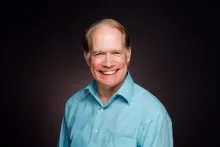
Greg Thomas is the former Pastor of the Cleveland, Ohio congregation. He retired as pastor in January 2025 and still attends there. Ordained in 1981, he has served in the ministry for 44-years. As a certified leadership consultant, Greg is the founder and president of weLEAD, Inc. Chartered in 2001, weLEAD is a 501(3)(c) non-profit organization and a major respected resource for free leadership development information reaching a worldwide audience. Greg also founded Leadership Excellence, Ltd in 2009 offering leadership training and coaching. He has an undergraduate degree from Ambassador College, and a master’s degree in leadership from Bellevue University. Greg has served on various Boards during his career. He is the author of two leadership development books, and is a certified life coach, and business coach.
Greg and his wife, B.J., live in Litchfield, Ohio. They first met in church as teenagers and were married in 1974. They enjoy spending time with family— especially their eight grandchildren.
