

Ben Light
This transcript was generated by AI and may contain errors. It is provided to assist those who may not be able to listen to the message.
Well, thank you once again, Happy Sabbath. Again, brethren, it's always wonderful to see those smiling faces on God's Sabbath face, even brightening up outside. Look at that, the sun is shining. Last Sabbath, we talked about proper planning and budgeting and organizing to be able to attend the Feast of Tabernacles next year. Today, I'd like to extend that discussion that I had about planning and organizing and how we live our daily lives. We'll spend a lot of the time in the Book of Proverbs, and we'll look at some New Testament scriptures, but I wanted to take the message that I had from Last Sabbath. It kind of expanded to our daily living. A close friend has just given you a gift of $86,400. I want you to pretend that that's happened. A close friend just gives you a check, and the check has written on it, $86,400. Now they're smiling, $86,400.
But your friend says there's one important condition. Do you have to spend this check all tomorrow in one 24-hour day or the remainder? Anything you don't spend is forfeit. It goes back to me, your friend says. So you have to use it up, or it's gone forever.
I often ask this question when I do seminars with some of my clients. I ask the question, how much of it would you spend? And I've never had anyone say to me, well, I'd only spend like half of it. I've never had anyone say to me, well, I'd only spend a portion of it. Usually the kind of answers I get are, well, let's see, Kohl's is even open until 9 o'clock at night, and this store. So usually when you say, how much of it would you spend? The answer is, you would spend it all. And what would you spend it on? I always get some very interesting answers, and most of them good ones. I've had audiences when I've done this in seminars, people raise their hand and say, well, the first thing I would do is I would tithe off of that $86,400, and then they proceed to tell other things they would do with it. Some people would pay off their house mortgages. Some people would, people say, buy a car from my mom. Usually very noble, very great ways on what they would spend it on.
The problem with it is the odds of you and I getting a check tomorrow for $86,400 is probably pretty slim, isn't it? But you and I are going to be given a gift tomorrow. We're going to be given a gift of 86,400 seconds to proactively live your life. And once that day is over, it's gone forever. You can choose to spend those 86,400 seconds on important things. You can choose to spend it on spiritual growth, extra time with family, maybe hanging out with one of the brethren, talking to them on the phone, exchanging emails. You can spend it on high priority items or you can choose to focus on unimportant things. You can even waste that time away. But the key is that once it's gone, it's gone forever. So in our Christian lives, a thing I think it's important for us to focus on is we want to choose wisely. We want our decisions primarily to be good, we want to live our lives proactively. Much like I discussed last week regarding the feast, we want to make sure that we are organizing our lives, that we have a plan, that we're working the plan, that we're prioritizing things. We've decided in our heads, these are my priorities in life and this other stuff are not priorities. I'm not going to worry about them. I'm not going to feel guilty if they don't get done because I have decided they are not a priority. And all of that is about living, Christian living. So let's go to the book of Proverbs and see a few things that we can learn from the Proverbs. We'll go to chapter 21 and verse 5. Proverbs chapter 21 and verse 5. Let's turn there as we continue our discussions today about the importance of planning, of organizing, of establishing priorities.
Proverbs chapter 21 and verse 5. It says, the plans of the diligent lead surely to plenty. In other words, someone who says, I have a plan, I have created a plan and I've created a systematic step-by-step way for me to get from here to here. And I'm going to follow that plan. And I'm going to follow that plan. And when you diligently follow the plan, you get there. It leads to plenty. But the other half of this verse, but those of anyone who is hasty, surely or leads surely to poverty. What the scripture is saying here, those who have plans, again, and take a systematic step to work the plan that they have created for their lives, tend to be successful in life. And those who lack purpose, those who lack discipline tend to make knee-jerk decisions. Their decisions are hasty. They're not well-fought out. They're reactionary. And eventually that leads to ruin. That leads to pulling us down. It can lead to debt. It doesn't take many poor decisions to derail your life. Now, most of us can make a poor decision. And if everything else is in balance, we can recover from it. I've certainly made a lot of poor decisions in my life. I make decisions financially that were pretty poor, and other decisions that, thankfully, because most of my, the rest of my life was in balance, I was able to recover from making some poor decisions. And the same is true, certainly, of all of us. But if we make a series of poor decisions, bad decision about our relationship, poor decision about our use of money, a poor decision in which we compromise in our values, and what we know is the difference between right and wrong, a decision to lie, and say, wrong. A decision to lie instead of tell the truth. Maybe a decision to be deceitful instead of being a person of integrity and being upfront. Maybe being selfish instead of being a giver, being generous. When we make a series of these kinds of poor decisions, it can put us in a very deep hole that is very hard to dig out of. So again, the plans of the diligent lead the plenty.
We want to make sure that we understand where we're coming from, what we're about. So I always encourage people to have a personal mission statement that you've written that confirms and states in writing from your heart what you're all about. That you have a plan, that you work the plan, and that we systematically work our way through life as we grow and change and draw closer to God and not allow ourselves to begin to make hasty, needier-type decisions that are only eventually going to bring us down. Again, it can put us in a deep hole that is hard to dig out of. Let's take a look at a scripture that's related to this in a similar way. Back a few chapters. Proverbs chapter 24 and verse 3. Proverbs chapter 24 and verse 3.
We're talking about the importance of planning.
Proverbs chapter 24 and verse 3.
It says, through wisdom a house is built, and by understanding it is established, by knowledge the rooms are filled with all precious and pleasant riches. A wise man is strong, yes, a man of knowledge increases strength. What is the individual who wrote this proverb trying to help us to understand here? First of all, drawing a metaphor, a beautiful home is not an accident. If you walk into a beautiful home and it takes your breath away, oh man, this is really nice, that was not an accident. It was the result of careful planning.
It was the result of someone who had knowledge of building methods. It was the result of someone who had a vision. The vision was determined by the architect. You know, the day that workers came in here and they laid the concrete on this floor and they started taking those mason blocks and they started building this building, most people would say, oh, well, that's when that church building was built approximately 50 years ago. But you know what? It was actually created earlier.
It was created in the mind of someone who had vision. In that case, he was an architect and he created blue prints that said where the walls would start, where the walls would end, how high the ceiling would be, the kinds of building materials that could be used and I can prove it, because we have the drawings that show what the architect had planned. And brethren, the same is true in our lives. If we want to have a house that is built with wisdom and understanding, if we want our lives to be filled with knowledge, then it can't be built in a haphazard way.
No one would build a beautiful home. It certainly wouldn't look beautiful if you started out with one room and then when that room is done, then you just kind of added on another room and then that room was done and you just kind of add what you're going to have is it might be a lovely home, but it's going to look haphazard. It's going to look like it was built piecemeal rather than from a grand plan that laid it out from the very beginning. So again, the architect had vision. It was a blueprint so that the house is functional and beautiful and the rooms of the house are carefully decorated to add value to the home and our lives, in a way, are like little boxes.
We have a relationship with our spouse. It's kind of like one box. Every child that we have, we have a relationship with that child. That's like another box. Every cousin, that's another box.
Church members, that's another box. Work, co-workers at work where we work, that's another box.
And these are like rooms in our house, and we want them to be beautiful. We want them to be something that is pleasant with all precious and pleasant riches in all of those boxes of our lives.
And they can only be that way if it's part of a grand plan. And part of that grand plan is knowing why God called you, who you are, what your purpose is in this life. And if we have come to that understanding, then we can get all of those boxes to fit together in harmony, and they can all be beautiful. They can all be something that is wonderful. Many years ago, I heard Dr. Stephen Covey say something that I thought was pretty perceptive. He said that everything is created twice. And the more I thought about that, the more sense it made. I've already given you the analogy of a building and the architect, what he did before the building was built, but the same is kind of true of our lives. Goals, when we set a goal for ourselves, that's our vision of some place we want to go. So it has to happen in our heads first. We see that change. We want to be that change. And then in time as we work on it, sure enough, we do become that change. But it happened first in our heads, and then it came to be. God looks at us and he doesn't see us as the weak people that we are today. He sees us as we can be. He has a vision for us. He envisions us in his kingdom as part of his family with all the glory and honor and status that comes from being part of the family of God. And that's how he sees us. And throughout our lives he puts us through the experiences, whatever it takes to get us to develop that kind of potential and being that God wants us to be. So it's a very beautiful proverb here. I'd like to take a look at this in another translation. Here's the same verses, 3 through 5. Here's a translation called the New Century Version.
This translation refers to our families. It takes wisdom to have a good family, and it takes understanding to make it strong. It takes knowledge to fill a home with rare and beautiful treasures.
Wise people have great power, and those with knowledge have great strength.
You have a family, a physical family. You perhaps have a spouse. You have brothers and sisters, relatives. We're a spiritual family. We are a family, all of us together as part of God's Church.
We want to have a good family. We want to have a family that is a family with knowledge, that is a family filled with wisdom, in which we as individuals are rare and beautiful treasures, because we're all contributing in some way to the family, maybe a small way. Maybe all we can do is pray for someone, depending on our age or our situation, but that's a major contribution. That's a way that we can serve. That's a way that we can be a rare and a beautiful treasure in the family of God. Let's take a look at another scripture here. Proverbs chapter 24 and 27.
It says, Prepare your outside work, make it fit for yourself in the field, and afterward build your house. I'm going to read this from, again, the translation of God's Word today. Prepare your work outside and get things ready for yourself in the field. Afterwards, build your house.
Here's what Henry's commentary says on this particular verse. We must prefer necessities before conveniences and not go in debt. You see, the wisdom here is regarding having the right priorities and establishing the right order of things. I'm going to talk to our young people for just a minute.
For young people here in the congregation today, what this scripture tells you is, do the external things right to prepare to have a good life. For example, first, get a good education and take that education as far as it will take you. Then, get a good, solid job, a job in which you can take care of yourself and take care of others.
Then, plan on marriage and starting a family and gaining material possessions. You see, there is an order that works. But if we get out of that order, we will struggle and probably be in debt for a good part of our lives. So, prepare your outside work. Have priorities in your life. Know where you're headed and the steps that you need. This is so rare today. Most people lack patience and they lack self-discipline. They want instant gratification. They want it now. It's like the girl that I overheard say one time, my checkbook can't be overdrawn. I still have checks left. Most people want it now. They want instant gratification. They don't want to do things in order. Whatever their passion or their urge, they do it. And then they wonder why their life blows up. They wonder why they're guilty. They wonder why they have relationship issues. They wonder why they can't find a job. Or now they have obligations that they never pay. Or how they have obligations that they never planned on having. Young people, things are easier in life when your life has order. And when you work towards your goals, step by step. So prepare your work outside. Do the external things to prepare inside to be happy and fulfilled. And that includes, again, getting a good education and taking that education as far as you can take it. And then getting a good job and spending some time in the workplace and moving up in your career from one position to another to earn a good income. And then when you've settled and done those things, got those things in order, you'll be ready to become married and have a wonderful family. And, as Jesus said, if you seek the kingdom of God first, all these other things, like having a nice home, having a nice car, all the things that you desire God will bless you with as a byproduct of having the kingdom of God first in your life. So prepare your work outside. Get things ready for yourself in the field afterwards. Build your house. Proverbs chapter 25 and verse 28. Let's take a look at this. Proverbs chapter 25 and verse 28.
What the Scripture basically tells us is a dimension of the human personality that really wasn't even discovered or appreciated until about 1995. And I'll explain what I mean in a minute. Proverbs chapter 25 and 28. It says, "...whoever has no rule over his spirit is like a city broken down without walls." I'll read this from the New International Version. Same verse. "...like a city whose walls are broken down is a man who lacks self-control." Our prisons and our jails are filled with people who lack self-control. People who lack self-control are destructive. They're destructive in their homes. Their home environments are a mess. They're destructive on the job. Usually, they're negative and they're the first one to jump up on gossip, and they're the first ones to keep problems going on at work. And they're typically self-destructive. They're like a ticking time bomb, and it's only a matter of time. Tick, tick, tick, until a situation arises that they say or do something that causes serious problems. One of the so-called discoveries of modern psychology began when a book was written in 1995 called Emotional Intelligence. It was written by a gentleman, an author, a psychologist, Daniel Goldman. And many psychologists now feel that there are two very important components that make up our lives. We've all heard of IQ. We know that as your intelligence quotient. Our IQ is determined by test, and it's designed to measure our general ability to solve problems, understand concepts. It includes the ability to reason, problem-solving, ability to perceive relationships between things, space and time, and the ability to store and retrieve information. But there was always a tremendous gap with that because you would think that if that's all there was to human beings, that people with high intelligences would have happy lives be all of the CEOs and presidents and have all the wealth. And that's not the case at all. Some of them, though their intelligence may be brilliant when it comes to functioning, they are highly dysfunctional. But psychology has discovered, this ties in with the scripture that I just read, that there is a second important component that makes up our consciousness. And they have termed that emotional intelligence. It's also referred to as emotional quotient or EQ. So you have IQ, intelligence quotient, EQ, emotional quotient. And this has become a big buzzword in the medical community in psychology and in business. I even have clients that ask me if I can test for EQ for employees they're about to hire. So it's a big buzzword in the business community. Emotional intelligence or EQ is defined as an individual's ability to identify, evaluate, control, and express emotions. Research shows that EQ might be more important than IQ when it comes to your health, happiness, and life success.
Emotional intelligence is the ability to identify and manage your own emotions. It's the ability to say to yourself, stop! Calm down! Don't say that! So it's the ability to identify and manage your own emotions and the emotions of others. It is considered to generally include three skills. Number one, emotional awareness, including the ability to identify your own emotions and those of others. So identity. Number two, the ability to harness emotions and apply them to tasks like thinking and problem solving. Are we able to harness our emotions? Or do we just pop off? Do we just let the floodgates open? Do we get angry? Easy! Or have we learned to harness our emotions?
The third thing is the ability to manage emotions, including the ability to regulate your own emotions, to say to yourself, calm down! Stop! Don't say that! Or sometimes, even to say, lift yourself up a little bit! Smile! Get with the program! Stop! Smell the roses! Enjoy life a little bit! Stop taking yourself so seriously!
So it's the ability to manage emotions, including the ability to regulate your own emotions, and the ability to cheer up or calm down another person.
So when the proverb says that whoever has no rule over his own spirit is like a city broken down without walls, what it's saying is that a city without walls is vulnerable. That city can be easily taken over. It has no defenses. And without emotional intelligence, we too are easily controlled and manipulated by our own emotions, or by events, or by the actions and what other people do. And that's not a good thing, is what the proverb is saying. That doesn't serve us well at all. That causes lots of problems in our relationships.
It can cause us to lose a job. If you do it in the workplace, it can cause difficulty in your marriage relationships, your child-rearing relationships, virtually everywhere and anywhere.
So it's very important for us to learn to identify our emotions, to harness our emotions, and to manage our emotions.
Proverbs 27-23. Let's take a look at another proverb. Proverbs 27-23. This particular scripture can be taken a couple of different ways. We'll mention both of them.
Be diligent to know the state of your flocks and attend to your herds. If we want to take a look at the flocks and herds as our wealth, as what we might say our assets, then this is the biblical way of saying, be aware of where your money goes and your spending habits.
As I mentioned last Sabbath, I hope that we all have a budget. I hope that we all have a spreadsheet or something that has our monthly expenses and even little buckets for things that we want to do. And every time we're getting paid, we're dividing up that large amount of dollars and we are putting it away, budgeting it in these categories. And if we do that, then we don't have to live under the burden of constant debt. I have known a lot of people in my lifetime that made well over six figures and were constantly in debt because they didn't budget. And every time they got a raise, their standing a living automatically rose. They just went out and bought more stuff. So they didn't plan, they didn't budget, they didn't discipline themselves to say that when I take the money out of this category that it's gone.
Every couple of weeks, my wife and I give each other allowances out of our income. And that allowance isn't cash in my case. And you know what? When I run out of allowance, I quit spending because it's gone. It's a budget. I stop and I wait until the next allowance cycle when I can start all over again and spend it in the first five minutes. No, I don't. But we need to know where the money goes. We need to be diligent to the state of our flocks, our wealth. We need to know where the money goes, know how the money is coming in, know where the investments should be, and to make sure that there aren't holes in our lifestyle in which huge amounts of money are siphoning through. Another way that you can look at this, we can glean from this proverb, is to focus on our own lives, on our own business, on our own issues, not being nosy and getting involved in other people's business or issues. And that comes from saying, be diligent to know the state of your flocks and attend to your herds rather than everyone else's. So take care of your problems, take care of your issues, focus on your life, and don't interfere or gossip or get involved unwisely in the lives of other people. Psalm 39, verse 4. Look at another psalm here.
The psalmist understood that life is short and our days are numbered. And why is that important? Why should we come to grips with that? Lord, make me to know my end and what is the measure of my days, that I may know how frail I am. Indeed, you have made my days like hand-breaths. My life is only about as wide as a hand. You measure it. Short is what he's saying. And my age is as nothing before you. Certainly every man, at his best, is but a vapor. Selah. If you have a word to mean stop and just pause on that thought for a moment.
Surely every man walks about like a shadow. Some translations say like a phantom. Surely they busy themselves in vain. This talks about people's quest just for material gain. More and more and more bigger and bigger and bigger. He heaps up riches and he does not know who will gather them. Well, the federal government will gather some of it.
And your relatives will all gather the rest. Probably have it spent before sunset. Verse 7, And now, Lord, what do I wait for? My hope is in you. So again, the psalmist understood that life is short and our days are numbered. So what's the point? He's saying, don't put off until tomorrow what you need to do today. You need to tell someone you love them.
Don't say, well, six months from now I'm going to tell that person that I love them. It might be too late six months from now. Tell them today, do the things that you need to do today, whatever that may be. Prayer and Bible study and a hug or whatever. And don't put it off until tomorrow. Don't be like the billions of people who live like they are entitled to ten thousand tomorrow. They refuse to think about their own mortality. And they work and work and they busy themselves and they work and busy and busy until the day they drop. And everybody says, oh, how sad that so and so passed. Don't be like most of the human race. Tomorrow is promised to no one in this physical mortal life. It isn't promised to any of us.
So, therefore, acknowledge that. Understand that we have mortality facing us. And that should encourage us. It should inspire us to get on to do those things that we wanted to do. Let's stop saying that someday, let's eliminate the word someday out of our vocabulary and let's start doing it now.
At least, taking the steps to do the things we want to do that are important to us, that we have established as our highest priorities, let's begin to do them now. Have you ever taken something called the Tombstone Test? The Tombstone Test is just, you ask yourself a question, what would you like written on your tombstone? That's the Tombstone Test. Or more simply, what do you want people to say about you when you pass from this world? And if we want people to say about us, a person of integrity, then are we living a life? Is every way that we conduct our business, is every way that we live our life showing that we are a person of integrity? If we want to say, people will say about us, very generous, a benefactor, a philanthropist, very giving person. Well, the only way they're going to say about us is if we truly are. If we live that as part of our character, as part of our lifestyle. So that's what the Tombstone Test is. I'd like to read these verses in another translation, God's word for today.
Teach me, O Lord, about the end of my life. Teach me about the number of days I have left, so that I may know how temporary my life is. Indeed, you have made the length of my days only a few inches. My lifespan is nothing compared to yours. Certainly, everyone alive is like a whisper in the wind. Silla.
Verse 6, each person who walks around is like a shadow. They are busy for no reason. They accumulate riches without knowing who will get them. And that's what most people do on our planet today. Billions of people get up every day and have spent their entire lives busy, busy, busy.
And their priority hasn't been the kingdom of God. Their priority has been grabbing stuff. Again, that old delusion that I've talked about often, that delusion of he who dies with the most toys wins. And that certainly isn't true. As I've said before, the problem with the rat race is even if you win it, you are still a rat. Steve Jobs said something that I thought was pretty profound. And I give him credit for this. I sometimes seem to be very critical of his management style and the way he treated people. But he said this, and I agree with him, because I have the same personal philosophy, and I hope you do too. He said, quote, being the richest man in the cemetery doesn't matter to me, going to bed at night saying, We've done something wonderful. That's what matters to me. I thought that's pretty profound. His fulfillment is in growing things, not controlling things, not how much wealth he could amass, not the cameras and the red carpet and the conferences and the introduction of the newest product in front of thousands of people and flash bulbs popping and people wanting to interview him. It was all about going to bed at night saying, today, we continue to do something wonderful. We helped to change the world. You know that you and I have been called to do something wonderful. We have been called to change this world. And I know it's imperceivable at this point. There are so few of us, and it seems like the truth of God is just overwhelmed by the constant negativity. I understand that. But slowly and surely, God is preparing a people. A people right now, each and every day, no matter how mundane you may say, your life is Mr. Thomas, I don't see it. I get up every day. I eat. I work hard. I come home. I'm tired. I spend a few hours with my family. I go to bed. The next day, I seem to do the same thing over again. I don't see the change. And my response to that is, there's more going on inside of you than you realize. Because God has a plan for your life. I've talked for two weeks now about organization and planning. And I hope by now we get the fact that you are part of God's plan. Jeremiah said that God knew me before I was in my mother's womb. He knew who and what I would be. God has a plan for your life. You're not here by accident. God is organized. He's doing everything he needs to do to get you, to get me, to where we need to be to serve him for eternity. Do we understand that? Do we appreciate that? Let's take a look at Psalm 90, verse 10. Psalm 90, verse 10.
Psalm 19, verse 10. The psalmist wrote, The days of our lives are seventy years, and if by reason of strength they are eighty years. And sure enough, the average life expectancy is, I think, in the mid to late seventies. Maybe for females now it might have dipped real close to eighty years. But it's amazing thousands and thousands of years later how well that fits for average life expectancy. Yet their boast is only labor and sorrow.
So what did you do most of your life? You ask an eighty-year-old person, they'll tell you, I worked like a dog and I'm tired. And life had its joys, but boy, it had a lot of frustrations too. It was a struggle, and at eighty years old, everything that I have aches and the aches ache. So it's a lot of labor and a lot of sorrow to grow old. As Mrs. Roko once told me, old age is a train wreck, which she said to me. Yet their boast, the only thing they can say about it is labor and sorrow, for it is soon cut off and we fly away.
Who knows the power of your anger? I wouldn't want to be someone who doesn't have the shed blood of Jesus Christ covering my sins on Judgment Day. Who knows the power of your anger? For as the fear of you, so is your wrath. Some translations with that end of that verse this way. God's anger of sin is as great as our fear of Him should be. In other words, we can understand that God is everything and we are nothing.
That His righteousness, His purity, we are sin, we are evil. It's only by His grace and His mercy that we are able to avoid His wrath and His anger. Verse 12, so teach us the number of our days that we may gain a heart of wisdom. Again, talking about our own mortality. Understanding our own mortality should guide us to focus on the truly important things in life. What this does, if we do that, is we no longer get wrapped up in issues that we have no control over.
We no longer get upset. We no longer get distracted. We no longer get frustrated with other people's agendas. Because their agendas aren't part of our priority system. So we don't let those distract us from the things that we need to know that we should focus on in our lives. Let's take a look at some New Testament scriptures regarding personal planning and organization and productive living. Let's go to 1 Corinthians 16, verse 1. Paul was a very organized individual. Obviously, you could not have done what Paul did unless you were extremely organized.
He would go into a strange city. He would preach the gospel. He needed organizational skills. If he preached in a synagogue and the number of people accepted who and what Jesus Christ was, he had to organize a congregation. He had to train people before he left to go on to another city. He had to communicate between believers in multiple cities in his travels. He had to be very organized, a very planful person, in order to do what he did. Here's something that he says to the Corinthian congregation. He says, "...Now concerning the collection for the saints, as I have given orders to the churches of Galatia, so you must do also." So here's his instruction.
"...On the first day of the week," that's Sunday, "...let each one of you lay something aside, storing up, as he may prosper, that there be no collections when I come." Now, if you went to Romans 15 and verse 28, you would see that that Greek word is figs. That's what he was taking to the famine victims in Jerusalem. Dried figs, which are very common in that part of the world, keep for a long time.
You can come away in barrels, you can go months and months and months, and then you can eat a dried fig. You can't do that with a lot of other foods. So, the point that I want to bring out here is that the Gentile churches, including Galatia and Corinthians, Corinth, at Paul's instruction, were gathering collections of food, and perhaps money, to personally take to the brethren in Jerusalem to relieve a famine. Notice his instruction. Notice how he says, I want you to gather the fruit on a work day, not on the Sabbath, because you don't want to be sweating and carrying boxes of fruit and picking trees and doing all of those things on a day that is holy to God.
So, you don't want to do it then. You don't want to be gathering together and loading all this stuff up in a central location on a day that you would think about God and his Sabbath. You do it on a work day. He says, and I want you to have it stored and ready to go when I arrive. Paul was encouraging them to be organized. He didn't want to be delayed in Corinth waiting for them to gather fruit after he arrived.
He wanted it done beforehand. So, again, another example of someone who was organized, who had a plan. He had it all mapped out in his head how he was going to get these fruit and this food to the brethren in Jerusalem who were hungry. Matthew 25, verse 14. Matthew 25, verse 14. A parable of Jesus Christ himself that I want to highlight to all of us. Matthew 25, 14. He says, For the kingdom of heaven is like a man traveling to a far country, who called his own servants and delivered his goods to them.
It's like he gives you talents, he gives you abilities, he gives you skills. He gives you his good. They all come from God. All those things, by the way, come from God as a gift. And the one he gave five talents to, another two and another one, and each one according to his own ability.
So we were born, depending on where we were born, the educational level that we've had in our lives, whether we come from a stable home or a bad home, or whether we came from a good neighborhood or had to run for our lives every day when we got out of school, and peers and friends and educational opportunity. All of those things make up us having different abilities.
According to his own ability, he immediately went on his journey. Then he, who had received five talents, went and traded with them, and he made another five talents. It's no secret that this person had five talents, said, hey, I've got these five talents. I'm going to plan, I'm going to organize, I'm going to invest, and I'm going to make these talents more than they were given to me.
If I have a musical talent, I'm going to use that talent. I'm going to expand that talent. I'm going to develop that talent for the benefit of other people. If I have the ability to encourage others, I'm not going to stay home and suck lemons on the Sabbath. I'm going to go to church, and I'm going to encourage everyone that I see, and give them a bright smile and say, how are you doing this Sabbath day? Because that's the ability that God gave me.
For us, it may be different, but in this case, this person was given five, and he made another five. Verse 17, and likewise, he had gained two more also, but he who had received one talent went and dug it in the ground and hid his Lord's money, his Lord's gift.
Now, I don't want to go into a deep detail today about the parable of the talents. What I do want to emphasize is that God didn't expect five or ten talents from the person who only had one talent. He only expected growth. All of us have been given different talents and abilities and opportunities in this life, and some of it may be related to our DNA and how bright we are, or what our temperament is, and a lot of it, you know, they say, is it nurture or nature?
It's a combination of both, have made up who and what we are. As good stewards, we need to proactively grow and develop whatever we've been given. What God expects of us is to expand the gift, the abilities, the talent skills that he has given us. A person who has given two talents and grows them is just as loved and valuable in God's eyes as someone who was given five talents. Do we realize that? A person who has given only one talent and grows it is just as loved and valuable in God's eyes as someone who has given five talents or two talents, because they took whatever ability God gave them, and in some way they used it.
And they grew, and it expanded, and it developed. And why is this so important to God? Because we're going to be using these abilities for all eternity. As part of his spiritual family, these are going to be magnified, and we're going to be using them to serve the people of this world for a thousand years and then in the kingdom of God, beyond. This illustrates the tragedy of wasted opportunities. The one given five talents said, hey, here's an opportunity. I'm going to plan, I'm going to organize, I'm going to take it, grow it, expand it, and invest it.
The person who had two said the same thing. Sadly, the person who had one said, you're not me, I'm just going to stay at home, I'm just going to sit back and think happy thoughts. But I'm not going to get involved in anyone's life.
I'm not going to actually talk to people. I'm not actually going to serve someone. That might make me vulnerable. And you know what? Yeah, it might make you vulnerable. That's the price we pay. Love people. To serve people. To have relationships with people. So again, the key point is to take ownership and responsibility for whatever it is, no matter how small, whatever it is we've been given in this life as an ability, a skill, a talent. Let's go to Mark 6, verse 29. I've talked a course a lot about planning, organizing, doing.
Let's talk more action. Put it in another way. But I also want to emphasize that God understands Himself, the importance of rest, the importance of quiet time. My wife could tell you that as energetic and verbose as I may seem to be at times up here, I'm a person who needs quiet time. I need my tank refilled. I can be with people so long, and then I need to get away for a while and fill up my tank all over again.
I do not have the kind of personality that is constantly outgoing, constantly extroverted. That just exhausts me. It wears me down. It's not how I'm wired. It's how she's wired. She thrives off of that. But that's not how I'm wired. So I understand my limitations, and I understand what I need to do, the talents and abilities God has given me, and how I need to refresh myself.
Here in Mark 6, an interesting statement by Jesus Christ, this is right after the beheading of John the Baptist. It says, when His disciples heard of it, that's the beheading of John the Baptist, they came and they took away his corpse and they laid it in a tomb. Then the apostles gathered to Jesus and told Him all things both of what they had done and what they had taught.
And He said to them, Come aside by yourselves to a deserted place and rest for a while. For there were many coming and going, and they did not even have time to eat. So they deser- deserted- try it again, Greg- so they departed to a deserted place in the boat by themselves. See, there's more to life than just doing. And I realize I spend a lot of time talking about achieving and growing and doing.
Let's talk more action. I realize that. But I also acknowledge that the answer isn't just to be doing all the time. This is one of the reasons God gave us a weekly Sabbath. It is great to be active. It's great to have a strong purpose in your life. But you have to have a balanced life. Don't be a workaholic. Don't be like some people I've known who stay too busy in an effort to avoid really facing their problems.
That's a characteristic of people who have a certain temperament. Rather than facing who and what they are in the ugly reality, they just remain busy all the time. Busy, busy, busy, busy. Because the more busier they are, the less they have to think about how messed up their lives are. So don't be that way, please. It's important to stop. It's important to rest and to ponder the direction that we are headed in life. It's important to take that course correction. Of course, God helps us with the Holy Days. The entire purpose of the Spring Holy Days is a course correction. God says, look at your life. Examine yourself. Is there sin that's still there? Do you need to reconnect with your Savior? Is it your Savior? The Passover? So it's a way for us to reboot, to look at our lives. And that's one reason God gives us His Holy Days. Ephesians 5 and verse 15. Just a few more scriptures. Ephesians 5 and verse 15. Ephesians 5 and verse 15. Paul writes to the church at Ephesus. See, then, that you walk circumspectly, not as fools, but as wise, redeeming the time, because the days are evil. Read this from the translation, God's Word for today. Make the most of your opportunities, because these are evil days. And they're more evil than they've ever been, I think, in probably 2,000 years. The ancient we're living in now. It has really gotten bad. So are we leaning the most that we can out of each and every day? Are we making the most of that 86,400 seconds that we are given every day? Or are we great time-wasters, spending too much time on things that don't really matter or don't benefit us? Can we recite the people every word said in every episode of Gilligan's Island? Or have we memorized some Scriptures? Have we taken the time to separate the high-priority items in life from the low-priority items? Have we learned to say yes?
You know, the great thing about learning to say no, I learned this a long time ago, is saying no to some things gives you the ability to say yes to the important things. Otherwise, your plate is too full. Otherwise, you're overextended. Otherwise, you're making too many commitments. And it's hard to keep up on all of those commitments. So if something is not a priority, it's okay to say no.
Colossians 4, verses 5 and 6. Colossians 4, our last Scripture today. Colossians 4, verses 5 through 6. Make the most of our time. Make the most of our lives. Make it count.
We shouldn't be majoring in the minors. And that's what our enemy wants us to do. Our enemy wants us to focus and be distracted on all of the silly, unimportant things in life. And totally lose sight of. Focusing on what's really important.
Colossians 4, verses 5. Walk in wisdom towards those who are outside, redeeming the time. Let your speech always be with grace, seasoned with salt, that you may know how you ought to answer each one. I'm going to read what the Believer's Study Bible says to have about this verse.
The Greek word redeeming is literally to purchase out of the marketplace. As Christ with his blood purchased Christians off of sin's slave block, so they are to make the most of the time spent with non-believers. Grace denotes undeserved favor. Salt suggests that one should allow the Holy Spirit to convict others of sin, righteousness, and judgment to come. The salt that stings and pricks the conscience of the non-believer should be accompanied with undeserved favor and unconditional love. And I think that's important because a month from now, hopefully, God hears our prayers, we're going to have a lot of people visiting us during the Kingdom of God seminar. They are not going to be where we're at. Some of them may not even know the Sabbath.
Some of them may keep the Sabbath, but they haven't accepted the Holy Days. Some may show up with a lunchbox and a pork chop inside the lunchbox. Who knows? My point is, is let's give them, like God gave us, undeserved favor and unconditional love. The knowledge will come. The understanding will come.
Let's do what He says here. Let's walk in wisdom towards those who are on the outside, not trying to offend them, not coming across as a no at all, not being pushy, not trying to force truth down their throats. But let us walk in wisdom towards those who are on the outside and let our speech be filled with grace, seasoned with salt, that you may know how you ought to answer each one.
Well, that's the conclusion of my two sermons. If you think about our lives, we are just so different. We are different genders. We are different skin colors. We are different ethnicities. We came from different backgrounds. We have different DNA. There's no two of us in this entire room that have the same DNA.
But there's one way in which we are all equal. We all have 24 hours given to us in each single day. And those 24 hours and how we use them has a tremendous impact on our life and on the lives of our loved ones.
So in conclusion, just to recap a few things that I talked about the past two Sabbaths, let's get out of our personal ruts. And if you feel that you're in a rut, and frankly, brethren, some of us are in ruts so deep that I think if we looked straight up, we probably couldn't see daylight. Let's get out of our personal ruts, shake things up a little bit, change the patterns of our lives, create a new personal schedule, get back to doing the things we know we need to do. Let's use our time wisely, not waste our time on idiotic sitcoms, spending hours and hours on the Internet from one empasal's blog to another. Let's use our time wisely because time is precious. Let's have the right priorities. Let's look at everything we're doing in life.
Are we continuing to hang on to a priority that was important to us 20-30 years ago and no longer is? Then why are we doing it? Let's separate the high priorities from the low priorities and focus on the high. And let some of the low priorities go and don't feel one second's worth of shame if you do that. That was a decision that you made. You only have 24 hours in a day. Let's take the time to have personal goals. And day by day, step by step, let's be moving towards those goals. In some way, even a small way, making movement towards our goals. I encourage you to create a personal mission statement for your life. And then work the plan. Every day, get up and work the plan and move closer towards the kind of person that God wants you to be. As a placard I saw, I thought it was pretty good. I think it was in PetSmart. It said, become the kind of person your pet thinks you are. Now that'll inspire us to growth. Pets have unconditional love. They don't see your faults and weaknesses. They see you as perfect, as beautiful, as wonderful. And take the tombstone test. Start doing the things that will leave a legacy in your life, a legacy for your family, and a legacy in the Church of God. Have a wonderful Sabbath.
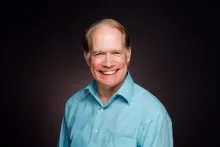
Greg Thomas is the former Pastor of the Cleveland, Ohio congregation. He retired as pastor in January 2025 and still attends there. Ordained in 1981, he has served in the ministry for 44-years. As a certified leadership consultant, Greg is the founder and president of weLEAD, Inc. Chartered in 2001, weLEAD is a 501(3)(c) non-profit organization and a major respected resource for free leadership development information reaching a worldwide audience. Greg also founded Leadership Excellence, Ltd in 2009 offering leadership training and coaching. He has an undergraduate degree from Ambassador College, and a master’s degree in leadership from Bellevue University. Greg has served on various Boards during his career. He is the author of two leadership development books, and is a certified life coach, and business coach.
Greg and his wife, B.J., live in Litchfield, Ohio. They first met in church as teenagers and were married in 1974. They enjoy spending time with family— especially their eight grandchildren.
