

Don Ward
This transcript was generated by AI and may contain errors. It is provided to assist those who may not be able to listen to the message.
The title today, The Meaning of the Footwashing Ceremony. The meaning of the footwashing ceremony. Footwashing has, for the most part, disappeared from the churches of the world.
When I was a boy, I brought up John 13 to my parents and to others, and I was told it was no longer required of New Testament Christians. They said the hard-shelled Baptists do that, but we don't need to do that.
You can Google the history of footwashing among Christians and come up with a host of articles with regard to it. Most all of the articles will say that it was a symbolic act that is no longer required.
They contend that the understanding of what the spiritual meaning of footwashing is is what's essential. That's what's important, not the actual literal washing of feet.
And even there, they generally miss the meaning. They focus on the water and its symbolism, talking about baptism and many other things with regard to water and being cleaned up. The so-called spiritualizing way of literal events has made Christianity in a maze of convoluted and confusing and confused thinking.
With this kind of reasoning, for example, by saying understanding the symbolism is what is important, one could say the eating and drinking of the Lord's Passover is a physical act, and there's no need to partake physically if you understand the spiritual symbolism. With that kind of reasoning, one could spiritualize away the Sabbath and contend that every day is the Sabbath, which some have, including some in our former association.
However, the fact is Jesus exhorts believers to keep the Sabbath day, to keep it holy, just as Christ and the apostles did, and ample evidence that they did so in the New Testament.
The fact is Christ commanded us to observe the New Covenant Passover, and the fact is Christ instructed us to wash one another's feet. A few days from now, we will be kneeling down to wash each other's feet and then take the Lord's Passover.
Are you prepared to wash your brothers or your sisters' feet from the heart?
Once you kneel, it will be too late to prepare your heart. Now is the time to prepare. We need to discuss some essentials that will help us to be ready to wash each other's feet and take the Lord's Passover. Let's note the essentials.
The most essential state of heart represented by the foot washing is just as Christ laid down his life for us, we must be willing to lay down our lives for one another.
Once again, just as Christ laid down his life for us, we must be willing to lay down our lives for one another.
That is the deep meaning and symbolism in a nutshell of what foot washing is all about.
Jesus Christ knew, as you heard in the sermonette, the exact time of his betrayal, death, and all of that, the mock trial being turned over to the Roman authorities to be crucified.
He knew what was before him, and he wanted to prepare the heart and mind of his disciples, those who would come later, to understand what true Christianity is all about, what humility is all about.
The most essential state of heart, spiritual condition represented by the Passover, are, we'll quickly review that, discern the body of Christ that was given for the sins of the world.
We must be reconciled to God and Christ, must be reconciled to each member of the body of Christ. We are one bread and one body. That's what we're affirming is, it says in 2 Corinthians chapter 10 verses 15 through 17, we're affirming that we are one bread and one body.
And we must live by every word that proceeds out of the mouth of God, must live by the unleavened bread of sincerity and truth. So in this sermon, we will discuss the essentials for making these things a reality in your life.
Incredibly, just before Christ instituted the foot-washing ceremony, the disciples were in an argument as to who was the greatest and who will be the greatest. You look at Luke 22 verse 15. Luke 22 verse 15, each one of the gospel writers adds something to the whole scenario. If you don't have a harmony of the gospels for years at ambassador, I don't know if they've changed now or not, but Robertson's harmony of the gospels in which you can see all of what all four gospel writers wrote about a particular event with each adding some detail that the other didn't.
As the time approached for this Passover to be preceded by washing the disciples feet and the fact that Christ, knowing that His time was come, that He would be offered on the stake for the sins of humanity, for the sins of you and I, in Luke 22 15, He said unto them with desire, I have desired to eat this Passover with you before I suffer. For I say unto you, I will not eat I will not eat any more the Passover until it be fulfilled in the kingdom of God.
And then He instituted the symbols the new covenant.
And you get this order and you read one gospel account, especially Luke, and you might be confused on the order, but before the meal, the custom in the East was to wash the feet before the meal. Of course, the rich people would have servants in the house and wash the guest's feet, but Jesus Christ came as a servant, came to serve instead of being served. And so He set an example, as we shall see in John 13. But here, Christ wanted so desperately to keep this Passover with Him to institute the new symbols of the new covenant Passover, the bread and the wine.
And then the apostles, in the midst of this time, and they began, this is verse 23, they began to inquire among themselves which of them it was that should do this thing, that is, betray Him, verse 22.
And there was also strife among them, which of them should be accounted the greater. And He said unto them, the king of the Gentiles exercised lordship over them, and they that exercise authority upon them are called benefactors. But you shall not be so, but he that is greatest among you, let him be as the younger, and he that is chief as he that came to serve.
So even at a time like this, a very sobering and sacred time in which Jesus Christ knew that He was about to be crucified, His apostles got into a discussion and argument over who was the greatest.
They had not learned the meaning of foot washing. So now let's turn to John 13.
John 13, John is the one, only one of the gospel writers, gives the details of the foot washing.
In John 13, verse 1, in the prelude leading up to Him washing the feet, Jesus Christ makes it clear that He had been given all authority in heaven and in earth, but yet He was going to wash their feet. Now before the Feast of the Passover, when Jesus knew that His hour was come, and sinned through the hourglass, that He should depart out of this world into the Father, having loved His own which were in the world, He loved them until the end. We gave this sermon recently on the Lord's Prayer for the Elect. I pray not for the world, I pray for those whom you have given Me. And supper being ended, the devil having now put into the heart of Judas of Carrot, Simon's son, to betray Him. Jesus, knowing that the Father had given all things into His hands, and that He was coming from God and going to God. And we will read from Philippians 2 a little later about coming from God and going to God. He had been given all authority that all things that He had been put under Him. Jesus, knowing that the Father had given all things into His hands. He rose from supper and laid aside His garments, took a towel, and girded Himself. After that, He poured water into a basin and began to wash the disciples' feet, and to wipe them with a towel wherein He was girded. Then came He to Simon Peter, and Peter said unto me, Lord, do you wash my feet? I can't believe this is taking place. I mean, this is what the servants are supposed to do. You're not supposed to do this. You are the Messiah. You are the anointed one.
Remember in Matthew 16 where Jesus says, Who do you say that I am? Peter said, You're the Christ. You're the one that was prophesied to come. Paraphrasing. Jesus said, flesh and blood is not revealed this to you, but my Father, who is in heaven. Peter was absolutely floored by this. And Jesus answered and said unto him, What I do you know not now, but you shall know hereafter. And of course, they still did not get it why Christ was going to come and suffer and pay for the sins of the world. It was only after He was crucified and resurrected, and appeared to them, and He talked to them, as in the last several verses of the Gospel of Luke, that they came to really understanding what Christ's mission was all about and what the Gospel was all about. The eyes of understanding were opened, as it says in Luke 24. Peter said unto them, You shall never wash my feet. And Jesus answered him, If I wash you not, you have no part with me. Now that is a verse that is laden with much meaning. You have no part with me. If Jesus Christ had not laid down His life for Peter and for the sins of everyone who has ever lived or ever will live, then there would be no inheritance. There would be no eternal life. So if I don't do this, Peter, you can forget it.
Verse 9, Simon Peter said unto him, Lord, not my feet only, but also my ends and my head. Wash me all over. Of course, he still didn't get it. Jesus said unto him, He that is washed needs not save to wash his feet, but is clean every whit, and you are clean but not all.
Now later in John 15, we'll see that they were clean by the word that he had spoken. It was not the washing of the feet that cleans them from the inside. Remember in Matthew 23 where it talks about the scribes, Pharisees, hypocrites, that they are quick to wash the cups and the platters and everything and make sure that everybody washes their hands before they eat, and on and on it goes. But you won't wash, you won't clean up the inside. Verse 11, for he knew who should betray him, therefore said he, you are not all clean. So after he had washed their feet and had taken his garments and sat down again, he said unto them, Do you know what I have done to you? Do you understand what is taking place? And they, of course, didn't understand, and much of the world still doesn't understand the significance of this. This is very significant. He's saying, look, if I don't do this, if I don't do what this symbolizes, then you have no part. There will be no eternal life. There will be no cleansing of everyone. You call me master and Lord, and you say, well, for so I am. If I then, your Lord and Master, have washed your feet, you also ought to wash one another's feet. How clear can you be? You ought to wash one another's feet. And you can say, obviously, oh, it's just a physical act. We could say many things are just a physical act, but you do the physical act along with the spiritual significance of it. You can say, whoa, well, I'm just going to spiritualize away the Sabbath. Every day is a day of rest. For me, Christ has set me free. I don't have to keep it.
If I then, your Lord and Master, have washed your feet, you also ought to wash one another's feet. For I have given you an example that you should do as I have done to you. You should do it. Barely, barely, I say unto you, the servant is not greater than his Lord, neither he that is sent greater than he that sent him. If you know these things, happy are you if you do them. If you do them. If you know these things, happy are you if you do them. Now, can you imagine verse 18 there that Judas, Jesus washed Judas's feet. You're clean, but not everyone. He knew who would betray him. How his, as they say, his ears were burning or whatever, he was blushing. He was on fire, being burned up by what Christ was doing, knowing that shortly thereafter he would betray the Messiah, the Son of God, the one who came to pay for the sins of the world. The Word of God is the spiritual water that cleanses a person. We turn now, we reference this a moment ago, John 15 verse 1. I am the true vine, and my father is the husband. So the father is the one who prunes the vine. Every branch in me that bears not fruit, he, the father, takes away. Every branch that bears fruit, he purges it. Even if you're bearing fruit, he trims it. Did you trim your roses? Well, I was glad that I trimmed them when this snowstorm came in the ice. And now they are coming out, as they say, and beginning to bush up again. Now you are clean through the Word, which I have spoken unto you. He's clean through the Word. How are you clean through the Word? Let's look further at this in Hebrews 11 and verse 26. Hebrews 11 and verse 26 with regard to cleansing by the Word. In Hebrews 11 and verse 26. I think I want 10 and 26. In Hebrews 10 and verse 26. Well, my eye doesn't fall on what I want, so I'm going now to Ephesians 5.26. In Ephesians 5.26, the washing of the water by the Word. Ephesians 5 and verse 26. That he might sanctify and cleanse it with the washing of the water by the Word. That he might present it to himself a glorious church, not having a spot or wrinkle or any such thing. The Word or the blood in and of itself does not cleanse us from our active participation. We have to participate in it. So now we go back to John 15. We read the first three verses. Verse 3 said that we are clean by the washing of the water of the Word. And we have read it from Ephesians 5 and verse 26. Now in John 15 and verse 8. How will the Word cleanse you? How will the blood of Jesus Christ cleanse you? Herein, this is John 15. Herein is my Father glorified that you bear much fruit so that you shall be my disciples. As the Father loved me, so have I loved you, continue you in my love. If you keep my commandments, you shall abide in my love, even as I have kept Jesus Christ speaking, I have kept my Father's commandments and abide in His love. These things have spoken unto you that your joy might remain in you, that my joy might remain in you, and that your joy might be full. In 1 John, you'll see several times where John writes about joy being full.
This is not my commandment that you love one another as I have loved you. How much did he love us? Well, verse 13, greater love had no man than this than he lay down his life for his friends. So, the washing of the water of the Word depends upon our response, our active participation in it. Let's go to James 1, 22. We're admonished, as we come up to foot washing and Passover, to examine ourselves, whether we be in the faith. The examination is through the Word of God. Remember Hebrews 4, 12? The Word of God is sharper than a two-edged sword, dividing us under the thoughts and intents of the heart of man. It lays everything bare. It is like your spiritual mirror. So, James 1, 22. But be you doers of the Word, and not hearers only, deceiving your own selves. See, there are people who have read the Bible through several times, and they boast of it. There are people who have memorized basically the Bible. Some have memorized it going backward.
For if you be a hearer of the Word, and not a doer, he is like unto a man, beholding his natural face in a glass. For he beholds himself, goes his way, and straight away forgets what manner of man he was. But who so looks into the perfect law of liberty? And that's what especially the Passover is about. It's about freedom. The first Passover freed Israel physically from slavery in Egypt. But the Passover, Jesus Christ, frees us from the death penalty that could and would lead, unless we repent, to eternal death.
But who so looks into the perfect law of liberty and continues therein, he being not a forgetful hearer? But a doer of the work, this man, shall be blessed in his deed. So be doers, not hearers only. It is the water of the word washes, but you have to do what the water of the word says. Christ wants us to be happy year-round, have a foot-washing attitude year-round, and just as the bread and wine have very deep symbolic meaning, so, as we've already noted, so does the foot-washing ceremony. Foot-washing and a foot-washing spirit and attitude are essential for happiness.
That's what Jesus Christ says. If you know these things and do them, happy are you. If you know these things and do these things, happy are you. Those are the words of Jesus Christ. People are in search of happiness today, but as long as they refuse to do the things that develop a foot-washing attitude, they will remain in search of happiness and the peace of God which surpasses all understanding.
Now, let's emphasize the keys necessary for developing a foot-washing attitude. It begins with Hebrews 11.6, the first article of faith, He who would come to God must, first of all, believe that He is, that He exists, and that He is a rewarder of those who diligently seek Him. So, believe that God exists, and so, when we say that He is a rewarder of those who diligently seek Him, how do we put that in everyday language?
Everyday language would be like this, that He always has our best interests at heart, whatever may come and go in our life. Believe God in the record of His Son. Believe that He is God, Creator, Lawgiver, Revelator, Teacher, Sustainer, Redeemer, Lord and Master, and always has our best interests at heart. That is a difficult one to really internalize and always see it as God having our best interests at heart.
So, another key is to understand that everything God does stems from love, outgoing concern for those whom He has created, and grace, divine favor, and mercy, and God has the right to expect our surrender, submission, and service. We use the term, holy righteous character. What does that mean? Anything that is holy and righteous has God's active involvement in it. When we do our part, God, through His Spirit, creates holy righteous character within us. We use the term also developing character. I'm developing character. God is giving us opportunity to develop character. Well, there's a certain amount of that that is necessary that is self-discipline and will. So, there's a character, a type of character that can be exercised through willpower and self-discipline.
When I was five years old or so, my dad came home. He was a PA man. That's Prince Albert. Prince Albert was a smoking tobacco in a can. He rode your own with good PA and take a puff or two. So, he would have five or six cigarettes, maybe a day. He said one day when I was about five, I think I was a little younger, he said, I'm not doing this anymore. I don't want my son to grow up in a house in which the father smokes.
That day on, he never touched another cigarette. Now, I have counseled people for baptism who said, I would ask, are you ready for baptism? Well, I'm not quite yet ready. I've cut down the two cigarettes. I've cut down the one, or whatever it is. I need the Holy Spirit to help me stop smoking. A lot of people stopped smoking and didn't have the Holy Spirit.
So, there's a type of discipline and self-will. Up to a certain point is a good thing. And you need that. You need order. You need structure. You need discipline in your life. And the body functions much better in overall biological, physiological, and psychological sense if there is pretty much a set schedule. Get up at a certain time. Eat breakfast, eat lunch, eat dinner, and so on and so forth. When we do our part, God, through his Spirit, creates holy, righteous character in us.
So, let's look at this in Romans 5. See, we're talking about keys to having a foot-washing attitude 24-7, and understanding the total meaning and significance of the ceremony. So, we're going to start in Romans 5, verse 1. Chapter 4 gives the example of Abraham, who was the father of the faithful. Now, chapter 5, verse 1, therefore, being justified by faith, so you confess your sins, you repent, you exercise faith in sacrifice of Christ for remission of sins that are passed, baptized.
We have peace with God through our Lord Jesus Christ. How? Through our Lord Jesus Christ. By whom also we have access by faith into this grace divine favor wherein we stand and rejoice in hope of the glory of God. And not only so, but we glory in tribulations. Now, James writes, chapter 1, my brother, and count it all joy when you fall into different trials.
We glory in tribulations, also knowing that tribulation works patience. And James adds, let patience have its perfect work. You go through it in faith knowing that you will be delivered. And patience proof testing. The old King James says, experience means proof testing. And patience. In that waiting period, you are approved, you're tested. And the proof and the testing, during that time, you have hope.
Hope that God will intervene through His Spirit. And hope makes us not ashamed because the love of God is shed abroad in our hearts by the Holy Spirit, which is given unto us. The love of God, the very character being of God, is shed abroad in our hearts through the Holy Spirit. Yes, self-discipline and willpower are involved in it, but self-discipline and willpower will not produce a new creation. It is through God and the Holy Spirit.
You know, this surrender and obedience oftentimes comes through suffering. The Scripture states, we'll go to Hebrews 5.8, Hebrews 5.8, Though he were a son, yet learned he obedience, speaking of Christ. The Scripture states that Christ, as we'll see here, from Hebrews 5.8, Christ learned obedience through suffering. How so? How was it that he learned obedience?
He remained faithful and true to his mission, regardless of the situation or the circumstance. There's no way, no thing that could throw him off track. As long as you are in the flesh, probably mentioned this toward the end, there is a possibility of sin. But once you are resurrected and take on the glorious radiant spiritual essence of God as a spirit-born person, of course, there is no more sin.
So Hebrews 5.8, all of it, Though he were a son, he learned obedience by the things which he suffered. And being made perfect, he became the author of eternal salvation unto all of them that obey him.
He was made perfect. This robe of flesh was put off. He became, remember that in that prayer in John 17, he prayed, restore unto me the glory that I had with you before the world began. And so, as a glorious radiant spirit being, you do not sin. Now, Jesus Christ never sinned, but there was the potential, because he was tempted to try to test it in all the ways that we are. And that's why the Scripture says he learned obedience through the things which he suffered. He stated on one occasion, Think not that I could call legions of angels, and they could deliver me, or would deliver me, but to carry out the Father's commission that he had been given, to carry out his love, care, and concern, he was willing to give his life in our place. I could call for legions of angels, but I'm not going to do it, because if I did, I would not be able to carry out my Father's commission. What I came to earth to do. Christ came to reconcile us to the Father. Now we go back to Romans 5. We'll start in verse 6. We left off in 5. So we go to Romans 5 and verse 6.
For when we were yet without strength in due time, Christ died for the ungodly. For scarcely, for righteous men will one die, yet for venture from the good of the good of the good, for a good man some would even dare to die. And you read about almost every month or so, you hear about, well, this person was in dire need of a kidney, needed a kidney transplant, and some person heard about it, heard and found out that he, she was a match and gave her a kidney. So this person could live. Or some person in battle. The grenade is being thrown out there about to explode, and they throw their body over the grenade and save their comrades, their buddies.
For scarcely, for righteous men will one die, yet for venture from a good man some would even dare to die. But, in contrast to that, God commends his love toward us, and that while we were yet sinners, Christ died for us. Much more than being now justified by his blood, we shall be saved from wrath through him. For when we were enemies, see, we all walked according to the prince of the power of the air, the spirit that now works in the children of disobedience. That's the first verse of 2 there in Ephesians chapter 2. See, we walked according to the prince of the power of the air, when God so graciously called us into his marvelous light. It is a sacred calling, as we have heard today. For when we were enemies, we were reconciled to God by the death of his son. Much more being reconciled, we shall be saved by his life. It was necessary that Christ be resurrected. As he told the apostles in John 16, he said, If I go not away, the comforter will not come to you, but if I go away, I will send it to you, the Holy Spirit.
So we were reconciled to God by the death of his son. We are saved by his life. He is living. He is sitting at the right hand of the Father. Please turn to 1 Peter 1. Now, sitting at the right hand of the Father, making intercession for us. So let's go now to 1 Peter chapter 1, verse 17. And if you call on the Father, who without respect of persons, judges according to every man's work, no matter who you are, what your social status, what your ties are, socially, economically, or anything else, pass the time of your sojourning here in fear, for as much as you know what is that fear consist of, the understanding of this, that you were not redeemed with corruptible things as silver and gold from your vain conduct received by a tradition from your fathers. That would tie in with the Ephesians, too, where you all once walked according to the Prince of the power there, the spirit that now works in your children with disobedience.
God speaks of God raising Christ from the dead and gave him glory, and your faith and hope might be in God. Seeing you have purified your souls in obeying the truth through the Spirit, the love of God is shed abroad in our hearts by the Holy Spirit, God creating his holy righteous character in us, the truth through the Spirit unto unfeigned love of the brethren. There is no pretense, there is no ulterior motive. It is what it is. Unfain love of the brethren, see that you love one another with a pure heart fervently. Being Anagonao, being born again, and Anagonao means being begotten again. We were begotten once by a human father. Now we are begotten again, not of corruptible seed, but of incorruptible by the word of God, which lives and abides forever.
Humans have an all-consuming need for validation. Satan deceives us into believing the worst, and we tend to remain in bondage. But we must believe God. Remember now that Passover is to a large degree about freedom. Freedom from the past, being rescued from slavery, being rescued from sin and death. Psalm 103, verse 1. If you read Psalm 103 every week, I should do it. I'm not doing it right now. Everybody should do it. If you read Psalm 103 every week, your life will probably be different. Psalm 103, verse 1.
Satan deceives us into believing the worst, and we tend to remain in bondage oftentimes. But we must believe God. Do we believe what we just read? We'll pick it up in 10. He has not dealt with us after our sins, nor rewarded us according to our iniquities. For as the heaven is high above the earth, so great is his mercy toward them that fear him. So far as the east is from the west, and that is infinity, so far has he removed our transgressions from us. Like his father pities his children, so the Lord pities them that fear him. And of course, this is conditional, as is verse 18 and 19.
We now have the spirit of God. The angels are created beings. We too can do the same thing. So let's emphasize again the fact that you cannot lay down your life or your neighbor unless you are reconciled to your neighbor. We want to go now to Leviticus 19, verse 15. Leviticus 19, verse 15. A lot of people give sermonettes or sermons, and apparently they never read Leviticus 19.15. In Leviticus 19, verse 15, You shall do no unrighteousness in judgment. You shall not respect the person of the poor nor honor the person of the mighty. But in righteousness shall you judge your neighbor. You know, when Cain killed Abel, God came to Cain and said, Where's your brother, Abel? And Cain replied, He didn't know. Am I my brother's keeper? And the resounding answer from Genesis to Revelation is, Yes, you are. You are your brother's keeper. Of all the lessons that we have not learned, or humanity has not learned, this is perhaps the greatest one. Verse 16. You shall not go up and down as a tale-bearer among your people, and neither shall you stand against the blood of your neighbor. I am the Eternal. You shall not hate your brother in your heart. You shall in any wise rebuke your neighbor, and not and the correct translation there is, Not bear sin for him. You can look it up. Not bear sin for him. Which means if you don't do it, then you are bearing sin for him. What does it say? You shall not hate your brother in your heart. Now, what is hatred equated to in 1 John? So let's go to 1 John. See this part about reconciliation that I've mentioned a few times in the sermon recently and now. In 1 John chapter 3, I think we'll begin in verse 8, He that commits sin. Now this word here for commits is one that can be translated as commits. Practice is sin is a better translation. He that practices sin is of the devil. For the devil sins from the beginning. For this purpose, the Son of God was manifested that he might destroy the works of the devil. The principal work of the devil is that he seduces you to sin, and then you have the death penalty on your head. Whosoever is begotten of God does not commit sin, for his seed remains in him. And once again this word commit practices sin for his seed remains in him, and he cannot sin because he is begotten of God. Now obviously as long as we're in the flesh, please understand this, I taught general epistles for many years. As long as you're in the flesh, there is potential for sin.
And 1 John chapter 1 says, He that says he's without sin is a liar. So what does he say? Obviously, those who are begotten of God must repent and exercise faith in the sacrifice of Christ for their mission of sin. He's faithful and just to forgive us of all unrighteousness. Now when we are actually born of the Spirit and become Spirit beings, we cannot sin.
As long as Jesus was in the flesh, he was tested and tried to the very last instant when he cried out, It is finished, and to your hands, Father, come in, I you my Spirit.
You know, once again, he said, I could call for allegiance of angels, but he didn't. So when he's born of God, in the ultimate sense, Jesus Christ is the firstborn from the dead, resurrected as a glorious, radiant Spirit being.
Verse 10, And this is the children of God, our manifest, and the children of the devil, Whosoever does not righteousness, is not of God, neither he that loves, nor his brother. For this is a message, as you heard from the beginning, that we should love one another. Now, remember, we read that scripture from John 15 that says that you love your brother as I have loved you. And how much did he love them? Once again, to the meaning of the foot washing. He loved them so much. Greater love had no man than this that he lay down his life for his brethren. Verse 12, Not his cane, who was that wicked one, we've referenced him, and slew his brother. And why did he slay him? Because his own works were evil, and his brother is righteous. Marble not my brethren, if the world hates you, we know that we have passed from death unto life, because we love the brethren. He that loves, not his brethren, abides in death. Whosoever hates his brother is a murderer. Now, we go back to this Leviticus 19.17, which says, You shall not hate your brother in your heart. You must in any wise rebuke your brother, and not bear sin for him. If you hate your brother, this says, this equates hatred of a brother with murder. You killed him. These are not my words.
I'm calling to attention what it says in the Bible. Whosoever hates his brother is a murderer, and we know that no murderer has eternal life abiding in him. Hereby perceive we, the love of God, because he laid down his life for us. We ought to lay down our lives for the brethren. We ought to wash one another's feet.
The key word in all of this is humility. You're willing to give up yourself. Reconciliation with neighbor requires a great dose of humility. We're often quick to reconcile with God. We think that we can be reconciled to God without being reconciled to our brother. Somehow we believe that we are justified before God concerning our attitude toward our neighbor as long as we are talking to someone else about the situation. That's how the Church of God has functioned from time that I've known it, and I've known it since the sixties.
Of course, there are exceptions to that. People will talk to somebody else. Well, do you know what he's been saying up there? Do you know what he's doing? How do you feel about this? Well, I think I'll just write the Home Office. I think I'll just do this. I think I'll do that. But don't tell him, of course not, because he should be the last to know. Guess what you're supposed to repent of? However, in 1 John 4, we have a remedy for all of this. 1 John 4 and 16.
In 1 John 4 and verse 16. And we have known and believed the love that God had to us. God is love. And he that dwells in love dwells in God, and God in him. Herein is our love made perfect. We may have boldness in the day of judgment, because as he is, so are we in the world. There is no fear in love, but perfect love casts out fear, because fear hath torment. He that fears is not made perfect in love. We love him because he first loved us. If a man say, I love God, and hates his brother, he is a liar, for he that loves not his brother, whom he has seen. How can he love God whom he hath not seen? And this commandment have we from him that he who loves God, loves his brother also, who so believes that Jesus is the Christ, is begotten of God, and everyone that loves him that beget loves him also that is begotten of him. By this we know that we love the children of God, when we love God and keep his commandments. For this is the love of God, that we keep his commandments, and his commandments are not grievous. So the situation between brothers and sisters will not change until they speak with their brother or sister. And we certainly believe, hopefully we believe, that the blood of Christ can cover the sins of the brother, the sister, that we might perceive that is inflicting harm upon us. If you do not follow the example of Christ, humble yourself, and go in an attempt to be reconciled to your brother, who has the greater sin? Simply ask, are you laying down your life in a foot-washing attitude thoroughly discerning the body of Christ, so that your brother might be in the kingdom of God, not willing that any should perish?
Remember, discerning the body of Christ, you must not only discern the physical body that was given for your sins, but you must discern the spiritual body of Christ, the members of the body. The key word in the foot-washing attitude is humility. It's not the kind of humility that the world thinks of, it is the humility of Jesus Christ.
In Philippians, if you go there, Philippians is a prison epistle. Paul was in prison when he wrote Philippians. In Philippians 1, verse 12, But I would you should understand, brethren, that the things which happen unto me have fallen out, rather, for the furtherance of the gospel. Okay, I'm in prison. That's a terrible thing. And some might say, whoa, if Paul were really an apostle, he wouldn't be in prison. God would not let that happen to him, but he was. And he said, look, it's for the furtherance of the gospel.
So that my bonds in Christ are manifest in all the palace and in all other places. And many of the brethren in the Lord were actually confident by my bonds, and my bonds are much more bold to speak the word without fear. Some indeed preach Christ even of envy and strife, some also of goodwill.
The one preached Christ of contention, not sincerely, supposing to add affliction to my bonds. See how low can you get? But the other of love, knowing that I am set for the defense of the gospel. What then, understanding every way, whether in pretense or in truth, Christ is preached, and I therein rejoice, yes, and will rejoice.
So Paul was one of the most humble men that ever lived, but Christ exceeded Paul's humility. You look in Philippians 2.5. Let this mind be in you, which was in Christ Jesus, who, being in the form of God, thought it not robbery to be equal with God, but made himself of no reputation, took upon him the form of a servant, washing disciples' feet, and many other things, was made in the likeness of man, we can't even imagine, going from the God-kind to the humankind.
And being found in fashion as a man, he humbled himself and became obedient unto death, even the death of the stake. Wherefore, God also has highly exalted him and given him a name which is above every name, that if the name of Jesus every knee should bow of things in heaven, things in earth, and things under the earth, and that every tongue should confess that Jesus Christ is Lord to the glory of God the Father. Wherefore, my beloved, as you have always obeyed, and here's the key point, from time immemorial, God has always pointed us, his people, to look to him as their king, their master, their savior. If you do the things that he has set forth in this Word, you don't have a need of someone being there lording over you.
See, Paul, human beings, you know, when Moses died, was about to die, he went, Moses went to God and said, you know, I'm about to die, you know how these people are, you need to appoint someone in my stead, or they'll go AWOL, and so God appointed Joshua.
But when they came into the Promised Land, he didn't appoint anybody. He wanted them to look to him as their king and live by faith. And Paul, in essence, is saying, wherefore, my beloved, as you have always obeyed, not as in my presence only, but now much more in my absence, work out your own salvation with fear and trembling. So Paul exhorts them to remain faithful in his absence, which is one of the overriding themes of the Bible. Even though there's no human leader, always look to God and trust him in faith. Humility and surrender to God are essential keys for spiritual survival. Anything that we get above death is a gift, for the wages of sin is death, but the gift of God is eternal life through Jesus Christ, our Lord. So foot washing sets the tenor for taking the Passover. As we have seen, it has deep spiritual significance. So let's be prepared to lay down our lives for one another as Christ laid down his life for us. Greater love has no man than this than to lay down his life for his friends.
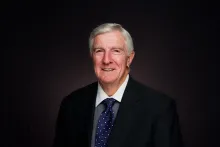
Before his retirement in 2021, Dr. Donald Ward pastored churches in Texas and Louisiana, and taught at Ambassador Bible College in Cincinnati, Ohio. He has also served as chairman of the Council of Elders of the United Church of God. He holds a BS degree; a BA in theology; a MS degree; a doctor’s degree in education from East Texas State University; and has completed 18 hours of graduate theology from SMU.
