
Don Ward
This transcript was generated by AI and may contain errors. It is provided to assist those who may not be able to listen to the message.
Our title of the day is Footwashing Attitude. What do we mean by the word attitude? What does the word attitude mean? The word attitude really has to do with your view of things, how you feel about things, what is your opinion of things, do you have a positive view, do you have a negative view? The Bible, to some degree, would equate attitude with spirit. It says in Proverbs that he who controls his spirit is mightier than he who takes a city. One of the things that's talked about at the prophet Daniel was that he was of an excellent spirit. He had a great attitude. He had a wonderful outlook on life. So a footwashing attitude, of course, a footwashing attitude would be, to a large degree, saturated with humility. In about five days, well actually in five days, in about five hours from now, we'll be kneeling down to wash each other's feet and then take the Lord's Passover. Are we prepared to do it from the heart? Do we have a biblical footwashing attitude? And once we kneel down to wash our brothers' or our sisters' feet, it'll be too late to prepare our hearts. Now is the time to prepare. We gave a sermon here three weeks ago today on essentials for keeping the Passover preparation. The footwashing ceremony sets the tenor in tone for the Passover. And we follow Jesus Christ's example of washing feet before He instituted the symbols of the New Covenant. So what are the essentials for preparing to wash your brothers' or your sisters' feet? Let's go to where this is explained in John chapter 13. Now before the Feast of the Passover, when Jesus knew His hour was come that He should depart out of this world unto the Father, having loved His own which were in the world, He loved them unto the end. Supper being ended, the devil having now put into the heart of Judas Iscariot, Simon's son, to betray Him, Jesus knowing that the Father had given all things into His hands. This verse here in this sentence here is very important as one of the essentials with regard to the attitude. In other words, Jesus Christ understood that He had been given all authority in heaven and in earth. And in view of all of this authority that He had been given, how was He going to exercise it? What kind of example would He set before His apostles' disciples just before He was betrayed and then crucified? Knowing that the Father had given all things into His hand and that He was come from God and going to God. He rose from supper, laid aside His garments, took a towel, and girded Himself. And after that, He poured water into a basin and began to wash the disciples' feet and to wipe them with a towel wherewith He was girded. Now this act, of course, of washing feet in the Middle East at this time was not the duty of the head of the household. The head of the household would never, quote, stoop, kneel to do this kind of thing. It was the duty of servants to wash the guests' feet. So in an act of great contrition and humility, Jesus Christ girded Himself, kneeled down, and began to wash the disciples' feet. Now this example here of what happened with Peter is sort of a theme that runs all the way through this Passover service, and for that matter, unleavened bread and the Bible. And sometimes it might escape us. Then He came to Simon Peter, and Peter said unto him, Lord, you wash my feet. I mean, are you going to wash my feet? I don't think you ought to be doing this. Remember, Peter was very rambunctious, boisterous, and at times he often put his foot in his mouth. And I couldn't quite get it there probably right now, but anyhow, he did put his foot in his mouth. Do you wash my feet?
Jesus answered and said unto him, What I do you know not now, but you shall know hereafter. Peter said unto him, You shall never wash my feet. And Jesus answered him, If I wash not, you have no part with me. Peter mispersees what's going on, and Simon Peter said unto him, Lord, not my feet only, but also my hands and my head. The point here of this is that it's not so much the act of the foot washing in that you wash the feet to get the dust off, to get them clean. The point here is what is symbolized by it, and that is the act of contrition humility that Jesus Christ displayed in doing this. Notice what Jesus said. Jesus said unto him, He that is washed, needs not save to wash his feet, but is clean every whit, and you are clean, but not all.
For he knew who should betray him, therefore he said, You are not all clean. So after he had washed their feet, and had taken his garments, and sat down, again he said unto them, Do you know what I've done to you? Now hold your place there and look at John 15 where Jesus says in verse 10, I'm going to read verse 10 in John 13 again while you're turning there, Jesus said unto him, He that is washed, needs not save to wash his feet, but is clean every whit, and you are clean, but not all. Now this is part of what's running through here with regard to being cleaned, and also with regard to water and what it symbolizes. John 15.1, I am the true vine, my father is a husband, but every branch in me that bears not fruit, he takes away every branch that bears fruit, he purchases it that it may bring forth more fruit. Now you are clean through the word which I've spoken unto you. So it wasn't the cleansing part of the water to wash the dirt off the skin and the feet. The cleansing part from the inside out would be the water. So we go back to John 13.
Now verse 12 again, so after he had washed their feet and taken his garments, was sat down again, he said unto them, Do you know what I've done unto you? You call me master and lord, and you say, well, for so I am, if I then, your lord and master, have washed your feet, you also ought to wash one another's feet. Now we do it once a year as a physical ceremony of what we actually do in carrying out the physical act, but the example that is set here is something that is to be lived 24-7, 364, 365 and a fourth days out of the year. It is an attitude, a state of mind. So another definition, if you would, for attitude would be a state of mind. How do you view this? How do you view your brother? How do you view service to him? I have given you an example that you should do as I have done unto you. Verily, verily, I have said unto you, the servant is not greater than his lord, neither he that is sent greater than he that sent him. If you know these things, happy are you if you do them. Jesus is teaching them here that the foot washing symbolizes laying down his life for them in sacrificial love, and it is through faith in the sacrifice of Christ that we can have our sins remitted and made spiritually clean and pure and be washed by the water of the word. Now we'll see from Luke's account, so let's go there to Luke 22. We'll see from Luke's account that the disciples just didn't get it. Luke 22. Luke 22, and we'll start reading in verse 7.
It has come to be the tradition and custom of the church over the years that on Passover evening we read John's account of the Passover service. And as we just started there in chapter 13 through 21, John is taken up with the foot washing ceremony, the Passover, the betrayal, the crucifixion, and all of that, and his resurrection and ascension. In Luke 22 and verse 7, He sent Peter and John saying, Go and prepare us the Passover that we may eat. And they said unto him, Where will you that we prepare? And he said unto them, Behold, when you are entered into the city, a man will meet you bearing a pitcher of water, follow him into the house where he enters. And you shall say unto the good man of the house, The master says unto you, Where is the guest chamber where I shall eat the Passover with my disciples? And he shall show you a large upper room furnished there and make ready. And they went and found it as he had said unto them, and they made ready the Passover. And when the hour was come, he sat down and the twelve apostles with him. And he said unto them, With desire have I desired to eat this Passover with you before I suffer. This is one of the great monumental pivotal points in human history, one of the greatest transitions of all time. Whereas they had been under the old covenant and the way to approach God was through the sacrifice of animals, through the blood of bulls and goats. But now this was to be changed, and it was to be through the blood of the living Son of God who would be crucified for the sin to the world. And Christ says, With desire have I, I just have looked so forward to this before I suffer, to be with them one more time in this particular setting, and all the implications, all the implications of this evening, the evening in which Jesus instituted the new Passover symbols. It cannot be overstated. For I say unto you, I will not any more eat thereof until I be fulfilled in the kingdom of God. And you took the cup and gave thanks and said, Take this and divide it among yourselves. For I say unto you, I will not drink of the fruit of the vine until the kingdom of God shall come. And he took bread and gave thanks and broke it and said unto them, This is my body which is given for you, this due in remembrance of me. Likewise also the cup, after supper, saying, This cup is the New Testament, and the word is diathake, it is covenant. This is the new covenant in my blood which is shed for you. But behold, the hand of him that betrays me is with me at the table. And truly the Son of Man goes as it was determined, woe unto him unto whom that man is betrayed. And they began to inquire among themselves which of them it was should do this thing. And now notice this, in the very midst of this most monumental event and all that it symbolized. They just didn't seem to get it.
And there was also strife among them, which of them should be accounted the greatest, after he had washed their feet and said, I've set an example that you should follow in my steps, happy are you if you do these things. It's amazing how woodheaded sometimes we can be. We just don't get it. Sometimes we can go for a long period of time. And then finally, a little peephole comes and then a greater opening and we get it.
And he said unto them, the kings of the Gentiles exercised lordship over them, and they that exercise authority upon them are called benefactors. But you shall not be so, but he that is greatest among you, let him be as the younger and he that is chief, as he that does service. For which is greater, he that sits at meat or he that serves? It's not he that sits at meat, but I am among you as he that serves. You are they which have continued with me in my trials, and I point unto you a kingdom, as my father has appointed unto me. Don't you get it? Don't you realize what is before you? So even on that evening in which he instituted these symbols and washed their feet, they still didn't get it. Jealousy and envy continues to be a problem among the people of God. It has been Satan probably, the main motivating factor behind his rebellion, was not wanting to take a back seat to anybody, realizing that God was going to create humans and that they would be greater than he in the kingdom of God.
Luke, I'm sorry, in James chapter 3 verse 18, and then after human beings were created, said James 3 verse 18, then after human beings were created, the first offspring of Adam and Eve, Cain fell into this very trap of jealousy who would be the greatest when Abel's sacrifice was accepted and his was not.
In James chapter 3 and verse 18, we're going to begin in verse 13. Who is a wise man and a dude with knowledge among you? Let him show out of a good conduct his works with meekness of wisdom. But if you have bitter envy and strife in your hearts, glorify not and lie not against the truth. So you surely don't come to the foot washing ceremony and to the Passover with the kind of attitude that some of the apostles had after having been taught by Jesus for three and one half years. And after just experiencing the foot washing ceremony in which he said, as I have done unto you, you do unto others. I have set you an example, happier you if you do these things. But if you have bitter envying and strife in your hearts, glorify not and lie not against the truth, this wisdom descends not from above but is earthly, sensual, devilish. For where envy and strife is, there is confusion and every evil work, non-excluded. But the wisdom that is from above is first pure than peaceable, gentle, easy to be entreated, full of mercy and good fruits without partiality, without hypocrisy. And the fruit of righteousness is sown in peace of them that make peace. Blessed are the peacemakers, one of the beatitudes.
So do we get the lesson of the foot washing ceremony. The lesson of the foot washing ceremony is one of sacrificial service, laying down our lives for the brethren, just as Jesus Christ laid down his life for us. Now we go to Philippians, and we get a little bit of insight in Philippians as to how monumental this sacrifice of Jesus Christ really was and is. You're going from a plane of existence on the God plane to a plane of existence of flesh. Philippians, one of the prison epistles written by Paul, was in prison, is an epistle about humility. And if you read it from that point of view, it's a great book to read in preparation for Passover. Paul in prison writing this epistle. In verse 5 of Philippians 2, let this mind be in you, which was also in Christ Jesus. Now this mind is described. That's what Paul does in the next three or four verses. It's described that mind that was in Christ Jesus, which is a reflection, I guess you would say perfect reflection, of the proper foot-washing attitude or the proper state of mind. Who being in the form of God, a more faith form of God, thought it not robbery a thing to be seized, to be equal with God. He didn't have to seize it because he was already on that God plane, so thought it not a thing to be seized to be equal with God. Then you get into the question of quality and quantity. God and Jesus Christ had over a period of time, who knows how long, had planned out this great plan of salvation where we'd bring sons and daughters to glory in his family. And that would require a redeemer. The main reason here, and this could pass over you, is that in order for God the Father to beget us with his spirit, we have to be viewed as sinless. No sin. Sin as far as the east is from the west, and when that is accomplished, then God can dwell in us through his spirit. And so it is his very divine essence that is in us, and that places us as sons of God, and eventually born sons of God into the family of God. Being in the form of God thought it not robbery, thing to be seized, to be equal with God. So in this working out this plan, they decided that the son, the word, the one who became Jesus Christ, would be in subjection. They're on the same plane of existence, but one had authority over the other.
But made himself of no reputation, and took upon him the form of a servant. So you saw in verse 6 who was in the form of God, and now he takes on the form of a servant, showing very clearly that he went from that state of existence on the God plane to that state of existence on the human plane.
And was made in the likeness of men, nailing it down, and being found in fashion as a man. He humbled himself and became obedient unto death, even the death of the stake. Now we can get an idea of why the God the Father so honors the son, because to make that kind of sacrifice, that has never been done before, and it'll never be done again.
Wherefore God hath highly exalted him, and given him a name which is above every name, that at the name of Jesus every knee should bow of things in heaven, things in earth, and things under the earth, and that every tongue should confess that Jesus Christ is Lord. May not do it now in this age. You may fight against Jesus Christ at his coming, but this verse will be fulfilled. Every tongue shall confess that at the name of Jesus every knee should bow in heaven, and things in earth, and things under the earth. Every tongue should confess that Jesus Christ is Lord to the glory of God the Father. In John 15, back where Mr. Stewart read about friends, let's look at that again. In John 15, so when Jesus Christ takes on the form of a man, his life essence, remember just before he died, he prayed to the Father and he said, Father, into your hands, commend I you my spirit. In other words, my life essence is now in your hands, and Jesus Christ was resurrected from the dead by the Father.
Jesus Christ, in the form of a man, gave all he could give. As we note here in John 15 verse 13, John 15 verse 13, greater love had no man than this, that he lay down his life for his friends. He gave all he could give.
Now we go back to the symbolism of the water, no foot washing. We see here, we get inside into the foot washing attitude, let this mind be in you, which was in Christ Jesus, and then Paul describes to us what that mind was like, that he went from the God stage, God plane of existence, to the human plane of existence.
So water is a symbol of being made clean, and like bread, we shall see it as a symbol of the Word of God. The unleavened bread symbolizes the Word of God, and water, in many places in the Bible, symbolizes the Word of God. So we have to be made clean and learn to walk according to the Spirit as revealed by the Word of God. So once again we quote John 6, 63, the flesh profits nothing, it is the Spirit that quickens, makes alive the words I speak. They are Spirit in their life. The Matthew 4, 4, man should not live by bread alone, but every word that proceeds out of the mouth of God. So we look in God's spiritual mirror, the Word of God, to examine ourselves and to cleanse ourselves. Now there's a duality to this, and one other aspect which we will get to. So now I want to go to James 1, verse 19.
Steps to take in getting to that point that we would be like Jesus Christ, which one of us could go from being the Godhead, the glory of God, take on the form of a servant, of a man? Very difficult to deal with demotion. I've dealt with it a few times. And so have you. But the only one that really can promote us in the sense that we really want to be promoted. It's like he talks about in Psalm 75. Promotion comes neither from the East nor the West, but from the throne of God. I think it says specifically the North, and it is theorized the throne of God is in the North. In James 1.19, Wherefore, my beloved brethren, let every man be swift to hear, slow to speak, slow to wrath, for the wrath of man works not the righteousness of God. Wherefore, lay apart all filthiness and superfluity of naughtiness, and receive with meekness, here's this word I pointed out so often, préutés in the Greek p-r-a-u-t-e-s. Préutés means perfectly teachable heart. Receive it with a perfectly teachable heart, and receive with meekness a perfectly teachable heart, the engrafted word, which is able to save your souls. Now the word in and of itself does not give life. Paul says in Galatians 3, if a commandment had been given that should give life, then there would be no need for Jesus Christ to come on the scene. The word is given to help sustain life. It does not give life, per se, but it can help save your life.
Be you doers of the word, and not hearers only, deceiving your own selves. For if any be a hearer of the word, and not a doer, he is like unto a man, beholding his natural face in a glass. In other words, a mirror. For he beholds himself, goes his way, straight forward, forgets what manner of man he was. But whoso looks into the perfect law of liberty, and continues therein, he being not a forgetful hearer, but a doer of the work, this man should be blessed in his deed. So the spiritual mirror of God is how we examine ourselves and come to more clearly understand this foot washing attitude. Now back a few pages to Hebrews 4. In Hebrews 4 and verse 12, it shows what this spiritual mirror can do. Here the analogy is not a mirror, but a sword.
In Hebrews 4 verse 12, The word of God is quick and powerful and sharper than any two-edged sword, piercing even to the dividing asunder of soul and spirit and of the joints and marrow, and is a discerner of the thoughts and intents of the heart. Now the marrow reminds me of knee replacement. What they do in knee replacement, for those of you who want a little gore, you got two condyles here on your tibia, that's the bone below the knee, and they clip those off, saw them off. And then with the femur coming down, you got two condyles on the femur, they saw those off, then they glue plastic surfaces to those bones. And that's why it hurts so much.
Good. Anyhow, dividing asunder of soul and spirit and of the joints and marrow, and is a discerner of the thoughts and intents of the heart. You've heard the saying, it cuts to the quick, or it cuts down to the bone. Well, that's what the Word of God does. It cuts to the quick, it cuts down to the bone, down to the marrow, to the innermost part of the bone. Neither is there any creature that is not manifest in its sight, but all things are naked and open into the eyes of Him, with whom we have to do. Seeing that we have a great high priest that has passed into the heaven, Jesus, the Son of God, let us hold fast our profession. But we have not a high priest which cannot be touched with the feelings of our infirmities, but with all points tempted as we are, yet without sin. Let us therefore come boldly under the throne of grace that we may obtain mercy and find grace to help in time of need. So the Word of God will reveal to us exactly what we are. Now notice in Hebrews chapter 10, all of the few pages, this is what I said, that the water symbolizes the Word of God. In Hebrews chapter 10, verse 22, "...let us draw near with a true heart and full assurance of faith, having our hearts sprinkle from an evil conscience, and our bodies washed with pure water." Now follow up on that immediately. We're coming back to Hebrews. If you want to hold and raise your ear, okay, go back to Ephesians chapter 5. And Ephesians chapter 5, verse 26, "...that he might sanctify and cleanse it with the washing of water by the Word." So the Word of God, God's spiritual mirror, it is a way whereby we can be washed and cleaned up. Remember Jesus said, you're clean through the words which I've spoken. Now there's another element to this. This might be a little bit off track in a sense, but if you go back now to Hebrews 9, we were in 10, so let's go back to Hebrews 9.
Hebrews 9.20 says, "...this is the blood of the covenant which God hath enjoined unto you. Moreover, he sprinkled with blood both the tabernacle and all the vessels of the ministry. And almost all things are by the law purged with blood." And this phrase, without shedding of blood, no remission. There is no remission apart from shedding of the blood. Now some have gotten into discussions in the past with regard to water baptism and being baptized in water as if the water baptism washes your sins away. Water baptism does not forgive sin. Okay?
See, the wages of sin is death, and the only way that that death penalty can be removed and that wage paid, and the only way you can be redeemed and bought back, is through death of the Son of God, faith in the sacrifice of Christ. And it is through His blood, His life essence, that our sins are remitted. Now, water baptism, we go into the watery grave of baptism signifying that we have repented, that we have exercised faith in the sacrifice of Christ for the remission of sins that are passed, and that we are going to crucify the old man and keep those sins under the watery grave, buried henceforth and forevermore, and then raise the newness of life to serve the living God.
So it is not the act of baptism that washes away the sin. Now, we have just been dealing with this symbolism of the water of the Word. The water of the Word can show us ourselves from the inside out and also cleanse us from the inside out if we obey it. Now, you look at Romans chapter 3 verses 23 through 25 summarizes what I've just said. In Romans 3, 23, all have sinned and come short of the glory of God. Thus, the death penalties on everybody's head, all have sinned, come short of the glory of God. Romans 6, 23 says that the wages of sin is death, but the gift of God is eternal life through Jesus Christ our Lord.
So we know that because we've sinned, the death penalty is on our head. Being justified freely by His grace. In other words, somebody had to pay that wage for sin, which is death penalty, by His grace divine favor through the redemption, that is the buying back power that is in Christ Jesus. Now notice this, whom God had set forth to be a perpetuation through faith in His blood, His life essence. It is not the act of water baptism that washes away sin. See, the only thing paid for sin is the sacrifice of Christ to declare His righteousness for remission of sins that are passed through the forbearance of God. In other words, God has been faithful.
He has kept His Word on us, and the Word of God continues to cleanse us and to nourish us so that we can bear much fruit. So we can ask ourselves, do we take a spiritual bath every day? A spiritual bath every day would be to wash in the water of the Word. Of course, you know about a physical bath, and that is to wash in the physical water to take away the physical dirt and whatever else might be there.
The Word or the blood, even both of those, we have to actively participate in it. It is not just axiomatically. So in summary, the foot washing ceremony symbolizes Jesus laying down His life for us, and through faith in His sacrifice, His shed blood, we can be made clean spiritually. In light manner, Christ wants us to be willing to lay down our lives for the brethren, especially in the spiritual sense, especially in those areas that can make the difference between death in the eternal sense or life in the eternal sense.
Now we go to 1 John 3.12, which tells us this. We covered it essentially three weeks ago, and in a little more detail, we're going to cover this right now and today. But as something that should be continually, we should all continually be reminded of. 1 John 3 and verse 12 will begin.
1 John 3.12, Not as Cain, who was of that wicked one, and slew his brother, and we've talked about his jealousy, and why did he slay him? Because his own works were evil, his brothers righteous. Marvel not, my brethren, if the world hates you.
We know that we pass from death and the life, because we love the brethren. He that loves not his brother abides in death. Whosoever hates his brother is a murderer. And we read that verse from Leviticus, 19-17, says, you shall in any wise rebuke your neighbor, not bear sin for him. We read that three weeks ago, and it says, you shall not hate your brother in your heart.
You shall in any wise rebuke your neighbor, and not bear sin for him. In other words, if you don't rebuke him, you're hating him, and hate is equated with murder. Whosoever hates his brother is a murderer, and you know that no murderer hath eternal life abiding in him. Hereby we perceive the love of God, because he laid down his life for us. We ought to lay down our lives for the brethren. Once again, what the foot-washing ceremony symbolizes. But whoso hates this world's good and sees his brother have need, shuts up his bowels of compassion, how dwells the love of God in him?
My little children, let us not love in word, neither in tongue, but indeed and in truth. And hereby we know that we are the truth, and shall assure our hearts before him. I mean, if the word doesn't condemn us, as it continues to say, one of the great things about the word which we read in Hebrews 4, 12, and 13 is that it is sharper than a two-edged sword, and it has this convicting power.
It is God's spiritual mirror to show us. And so after we read the Word of God, and we're not convicted, we don't feel guilty, then hereby we know. It says here, verse 20, if our heart condemn us, God is greater than our heart, and knows all things. Beloved, if our heart condemns us not, then we have confidence toward God. We know we're in there. We're on the right track in doing the right thing.
As we mentioned three weeks ago, the great essentials for taking the Passover is also for washing feet. Be reconciled to God. Be reconciled to one another. Discerning the body of Christ that was given for us. Discerning the body of Christ in whom God and Christ dwell through His Spirit.
That is the spiritual organism, the Church of God. So in all of this, there's also this other dimension, and that is us being willing to forgive one another. The Bible is very clear that if we're not willing to forgive one another, then God says He is not willing to forgive us. So let's notice this in Matthew 6.
Matthew 6, where we have what's called the Lord's Prayer, the model prayer given.
Let's notice the elements of this prayer. In Matthew 6, verse 9, After this manner, before, therefore pray you, our Father who art in heaven, hallowed be your name. I recognize that God is our Father, He's our Creator, that He is to be revered, and His name hallowed, your kingdom come. Your will be done in earth as it is in heaven. Give us our daily bread, and forgive us our debts as we forgive our debtors. Lead us not into temptation, but deliver us from evil, for yours is the kingdom and the power and the glory forever. Amen. Then it adds to this and embellishes the Lord's Prayer. For if you forgive men their trespasses, your heavenly Father will also forgive you. But if you will not forgive men their trespasses, neither will your Father forgive your trespasses. So in one sense, there's no need to come to Passover if you're bearing a grudge against your brother. You know, one of the things we'll do before we wash one another's feet, I'll have a short introduction with regard to this is for baptized members only. That is, the actual partaking of the bread and the wine for baptized members only. And it should only be done after you have thoroughly discerned those various essentials. Reconcile to God, reconcile to your brother, discern the body of Christ that was given for our sins, the body and blood, his life essence, and that you recognize that, number two, I've reconciled to your brother that each member of the body of Christ should be reconciled with each one of them, and that you have forgiven them to take the Passover and not having done this, then the blood is on your own head. And so that's why we emphasize so much doing this in the right manner and doing it in the way that Christ told us to do it.
Reconciliation requires forgiving your brother even as Christ forgives you. We've just read it, and it even says, if you don't do it, God won't forgive you.
So as someone mentioned to me after I gave that sermon on the four great three-word sentences, we should add another one which says, I forgive you. Remember Jesus Christ, during this great ordeal, the author ordeal of being crucified, one of the things that he uttered to the Father was, Father forgive them, for they know not what they do. So there was no malice in his heart at all. Brethren, to come to this point in spiritual maturity is where it really is. It's where I would like to be. I know it's where each one of you would like to be, but it really requires giving up self. That's what it amounts to. And it is, as we have seen through our lives and our experience, it's difficult to do. But I am encouraged myself in my own life and in the lives of all of you, that I think that we are beginning to get it. I hope that that is the case. So let's go down to Psalm 103, a couple more scriptures here. Psalm 103 is such a great place to read and to be reassured by. In Psalm 103, verse 1, Bless the Lord, O my soul, and all that is within me. Bless his holy name. Bless the Lord, O my soul, and forget not all his benefits. Who forgives all your iniquities? Who heals all your diseases? And it goes on and on with the great benefits that God provides for us. We pick it up in verse 10. He has not dealt with us after our sins, nor rewarded us according to our iniquities. For as the heaven is high above the earth, so great is his mercy toward them that fear him. As far as the east is from the west, so far as he removed our transgressions from us. For like as a father, pities his children, so does he pity those that fear him. For he knows our frame. He remembers that we're dust. As for man, his days are as grass as a flower of the field, so he flourishes. For the wind passes over it, and it is gone. And the place thereof shall know it no more. But the mercy of the Eternal is from everlasting to everlasting, upon them that fear him, and all his righteousness unto children's children.
So God has made those promises to us, and his forgiveness is predicated on us having the heart and will to forgive one another. To have this foot washing attitude to be properly prepared in the right state of mind. So the answer to our question is, are we prepared? Well, I believe we are. We've got still five days and maybe a couple of hours to prepare. And I believe we can say that we are ready to wash one another's feet and lay down our lives for the brethren.
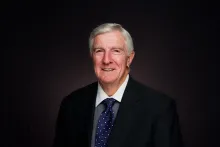
Before his retirement in 2021, Dr. Donald Ward pastored churches in Texas and Louisiana, and taught at Ambassador Bible College in Cincinnati, Ohio. He has also served as chairman of the Council of Elders of the United Church of God. He holds a BS degree; a BA in theology; a MS degree; a doctor’s degree in education from East Texas State University; and has completed 18 hours of graduate theology from SMU.
