

Greg Thomas
This transcript was generated by AI and may contain errors. It is provided to assist those who may not be able to listen to the message.
If you listened to the words closely, it tied in very well with our sermonette. Besides that, Marissa and Wesley looked like they're dressed to attend a zebra convention. So, it was very beautiful. Thank you for your contribution today.
Well, good afternoon. I'd like to talk about a topic that's been on my to-do list for a long time because it's very important. It was actually something that was mentioned on the congregational survey we did a few months ago every spring. We have a congregational survey. It was one of the items someone said they wanted to hear about. It also happened to be something that Cliff has asked about recently. So, I thought it was indeed time to talk about this very important biblical tool. So, let's discover what this tool is by going to Genesis, chapter 24, and verse 54. We'll begin there this afternoon, Genesis, chapter 24, and verse 54.
To kind of give you the background here, before we jump into verse 54, Abraham had sent his trusted and faithful servant to find a wife for his son Isaac. And indeed, God's providence prevailed, and his servant from the old lineage, the family that Abraham came from, he was able to find the perfect wife for his son Isaac.
And he gave the way at the dowry, gave them all the goodies, all the jewels, and gave them gifts. And now we'll pick it up here in verse 54. And he, that is Abraham's servant, and the men who were with him ate and drank and stayed all night. And they arose in the morning, and he said, send me away to my master. But her brother and her mother said, let the young woman stay with us a few days, at least ten. After that she may go. So they were kind of stalling, they're hedging the bet. Now that they got the dowry from him and all the good stuff, now they're trying to slow things down.
And he said to them, do not hinder me, since the Lord has prospered my way. God is behind this, and I shouldn't linger here, as what he's saying. Send me away so that I may go to my master. So they said, we will call the young woman and ask her personally. And they called Rebecca and said to her, will you go with this man?
And she said, I will go. So they sent away Rebecca, their sister and her nurse, and Abraham's servant, and his men. And they blessed Rebecca. This is not only a blessing, it's a prophecy. And they said to her, our sister, may you become the mother of thousands of ten thousands, and may your descendants possess the gates of those who hate them. Then Rebecca and her maids arose, and they rode on the camels, and followed the man. So the servant took Rebecca and departed. And then there's a transition here in verse 62.
Now Isaac came from the way of Bir Lehi Roy, where he dwelt in the south. And Isaac went out to meditate in the field in the evening. And he lifted his eyes and looked, and there the camels were coming. What's Isaac doing? Isaac is at a crossroads in his life. He's still mourning the loss of his mother. He's thinking about his mom. He knows very well that it's time for him to get married, and his father has sent a trusted servant, defined a wife for him.
In those days you didn't get to choose your own wife. Your parents chose your spouse for you. So he's meditating out in the field. It's near sunset. It's quiet. God's creation is all around him. He's thinking about life. He's pondering. Will she be beautiful? Will she be smart? Will she be kind? Will she make my dreams and my goals come true in this lifetime? These are the things that he's meditating on. And he looks up and he sees camels coming.
Verse 64. And Rebecca lifted her eyes, and when she saw Isaac, she dismounted from her camel. For she had said to the servant, who was this man walking in the field to meet us?
And the servant said, it is my master. So she took a veil and she covered herself. So he's still asking himself, is she pretty? Because he doesn't know yet, does he? Verse 66. And the servant told Isaac all the things that he had done, the whole history of Laban and meeting her family and all the things that transpired, then Isaac brought her into his mother's tent and took Rebecca and she became his wife.
Now, the reason he took her to his mother's tent is because it was elegant. It was one of the best tents that were available. His mom had stayed in it, which means it had, for its day and age, the finest in luxury and quality. So he took her to his mother's tent and he took Rebecca and she became his wife and he loved her. So Isaac was comforted after his mother's death.
So the biblical tool that we would like to discuss today is meditation. This is the first place in the Bible where the concept and the idea of meditation is mentioned. We see that Isaac is privately meditating in the field around sunset. He's still dealing with the loss of his mother. He knows that soon he'll be expected to marry and he's pondering the kind of wife that will be there for him, that's been chosen for him.
Brethren, spiritual meditation is a powerful biblical tool and it's a form of personal worship. Today I'd like to discuss meditation as a way to develop a deeper relationship with God and to discover his will. Holman's Bible dictionary defines meditation as this way and then we'll expand upon it. It defines it as, quote, the act of calling to mind some supposition, pondering upon it and correlating it to one's own life.
Again, this is from Holman's Bible dictionary, the act of calling to mind some supposition, pondering upon it and correlating it to one's own life. In the Old Testament there are two different Hebrew words that are used for meditation. One is haga, which means to murmur. Now normally we think of murmuring as something negative, but murmuring is just uttering something in a very low tone. So that's one Hebrew word. It means to murmur and by extension to meditate. The second Hebrew word that is often translated meditate in English is sia, which means to muse or to rehearse something in one's mind.
The best definition of biblical meditation is this. It is concentrated focused attention and thinking. It centers more on reflection and analysis than vocal prayer does. Where vocal prayer is a supplication, vocal prayer is explaining to God our needs, our hopes, maybe sometimes our frustrations. Meditation is based on reflection and analysis and coming to conclusions, coming to an understanding of things, including perhaps a situation that we're facing in life. The spiritual tool of meditation can have many benefits, including the development of concentration, because I guarantee you if you learn to meditate, you will learn to concentrate more deeply on things that are said or done.
Compassion, correct understanding, patience, humility, perseverance, or just good decision-making. As a pastor, I have found that 95% of the problems that we all have is because we have poor decision-making skills. We don't think things through. We don't realize that A and B will lead to C.
We make emotional decisions, not based on wisdom, not often based on knowledge, not often based on common sense. We make decisions based on our emotions. And those usually lead to great pain and serious mistakes and problems in our lives. Unlike Eastern or New Age versions of meditation that you might read about, Biblical examples do not include mantras. They don't include prayer beads or special postures.
Looking around our congregation today, I think that many of us, if we were to try to sit on the floor with our legs crossed or something like that, we would probably be frozen in that position for the rest of our lives. So Biblical meditation does not require any special postures except to be comfortable. Here's what the Mayo Clinic says on their website about meditation. This is the Mayo Clinic.
You can find it at meoclinic.org. Quote, Meditation produces a deep state of relaxation and a tranquil mind. During meditation, you focus your attention and eliminate the stream of jumbled thoughts that may be crowding your mind and causing stress. This process results in enhanced physical and emotional well-being. So that's even recognized in the medical field. Continuing the next paragraph, again, this is from the website of the Mayo Clinic. Meditation can give you a sense of calm peace and balance that benefits both your emotional well-being and your overall health. And these benefits don't end when your meditation session ends.
Meditation can help carry you more calmly through your day and can even improve certain medical conditions. When you meditate, you clear away the information overload that builds up every day and contributes to your stress. So for no other reason, even if it isn't for biblical qualities, and it should be for spiritual reasons that we meditate, but there is a side benefit, and that is that it can have a positive aspect on our physical health. Let's go to Joshua 1, verses 1-8, scripture that Mr. Howson stole from me during his sermonette. But I love him and forgive him, anyway. I just emphasized something different in these verses that he read.
They are very good verses. Very powerful. And he read them in the context of having courage to overcome fear and hesitancy to do the things we need to do. I'm going to read them in the context of the fact that someone very important encouraged Joshua to do these things. And what is one of the things that God told Joshua to do?
So let's read it. Joshua 1, verses 1, After the death of Moses, the servant of the Lord, it came to pass that the Lord spoke to Joshua.
So the one doing the speaking is the Lord, the Son of Nun, Moses' assistant, saying, Moses, my servant is dead, now therefore rise, go over this Jordan, you and all this people, to the land which I am giving them, the children of Israel. Verse 5, And you know, Jesus Christ said that He would not leave us orphans. Jesus Christ is with every one of us throughout the day, throughout our lives.
Because it was the same God who said these words who later became known as Jesus Christ. I will not leave you nor forsake you, be strong in good courage, for to this people you shall divide as an inheritance, the land which I swore to your fathers to give them, only be strong and very courageous. That phrase is repeated here the second time. It's that important that you may observe to do according to all the law which Moses, my servant, commanded you, do not turn from the right hand or to the left, that you may prosper wherever you go.
So, appreciate God's law, don't make it more rigid than it was ever intended to be, don't water it down and make it more liberal than it was ever intended to be. Appreciate it for what it is, and walk down the center of that lane of life, not rushing to the left or to the right, or being led there by other people. Verse 8, this book of the law shall not depart from your mouth, but, and this is God saying this, you shall meditate in it day and night.
Meditate in what? Meditate in the words of God. In this context, the book of the law. Again, this is that Hebrew word haga, which means to murmur. That is translated into English, meditate. But you shall meditate in it day and night, that you may observe to do according to all that is written in it, for then you will make your way prosperous, and then you will have good success. Meditate, and then good things will happen to you. Think about the balance of God's law, not veering off to the left or to the right, and think it through, and apply it to your life, and then wonderful things will happen.
I want you to notice that, again, this is God talking to Joshua, the Son of Nun, is going to soon be under a lot of pressure, just like Moses was. He's going to have a lot of responsibilities and stress on his shoulders. He's going to be under tremendous pressure. He's going to face criticism, just like Moses did. And what does God tell him to do to prepare?
God tells him to meditate on the words of God. A very important principle. You know, regarding meditation, there are more comments about meditation in one book than all the other books in the Bible combined. Do you know what that one book is? Can you think of what one book in which the words meditate and meditation? There are a lot of. My wife has it correctly. It's the book of Psalms. That's absolutely right. In the New King James Version, there are 19 references to the words meditate and meditation in the book of Psalms, more than all the other books of the Bible combined regarding that word.
And we're going to look at a few of the Psalms today for the sake of time. We certainly can't go through all of them, but we're going to look at a number of the Psalms today. And I want you to realize this as we read the book of Psalms, that much of what David is going to say here is the result of his meditations. The things that he says about his relationship with God and how he praises God and the things that he has learned about God are the reaction, the reflection of his habit of meditation.
As a matter of fact, he wrote them down in his personal journal. Now, we know it as major sections of the book of Psalms, but it was David's personal journal. This was meant for David for his own benefit, for his own personal growth. So if you are the kind of person who likes to write, who likes to write poetry, who likes to keep a diary and those kinds of things, certainly I encourage you as you meditate to write down the things that you are learning and understanding and pondering in a journal, because that's exactly what King David did.
Let's begin with Psalm 19 and verse 7, if you'll turn there with me. Psalms 19 and verse 7.
Psalm 19 and verse 7.
David was inspired to write, The law of the Lord is perfect, converting the soul. That verse always amazes me, and yet some people say that Jesus Christ came and did away with this law that's perfect and results in converting people. But it says, How did David come to these conclusions? He came to this understanding and these analogies and these rich word pictures through meditation, because he was an individual in which meditation was a major part of his life.
Verse 10. More to be desired than gold, yea, than fine gold, sweeter also than honey, and the honeycomb. Moreover, by them your servant is warned. You know, if we love God's law and if we study and meditate in God's law, when we're on the verge of doing something dumb, something inside of us goes, halt, stop, stop, we're warned. I mean, if we feel uneasy about something, that's usually a pretty good indication that God's spirit within us is saying, Whoa!
Wait a minute! Stop! Think long and hard before you do this. So he says, Moreover, by them your servant is warned, and in keeping them there is a great reward.
When you keep God's law, you become more like Jesus Christ. You begin to have the same approach and attitude that Jesus Christ had. You begin to develop your life in a greater way to reach the full potential that God wants us to by respecting the values and the law of God.
Verse 12. We can see some very powerful benefits of meditation. Who can understand His errors? Cleanse me from my secret faults. Keep back your servant also from presumptuous sins. Let them not have dominion over me. Then I shall be blameless, and I shall be innocent of great transgression. Let the words of my mouth and the meditation of my heart be acceptable in your sight, O Lord, my strength, and my Redeemer. You see how it ties together God's law and prayer and meditation, analyzing the benefits and how we can apply them to our life and how we can receive a deeper understanding.
They all work hand in hand. Again, in this case, the word meditate is that Hebrew word haga, again, meaning a murmuring sound or a sigh. David understands that a daily focus on the values of God is the best way to live a productive and successful life. And it hasn't changed any time since David's time because the very being that he is talking to here was the very one who later came to earth and is known as Jesus Christ.
How did David learn to understand his errors? Well, he meditated on who and what he was. He thought about his life. How did he discover his secret faults and desire to remove them from his life? Well, it was meditation that was the tool that helped him to analyze and see things clearly, to have a deeper level of understanding about who and what he was when he thought about his actions and he thought about the things that he did, including certainly some things that he did that were quite wrong, that we know are in Scripture.
Let's go to another psalm, Psalm 63, beginning in verse 1. Psalm 63, beginning in verse 1. We're going to see here a good example of David's daily worship routine. And it's a good example for all of us. I'm not saying that we all should emulate this. It's a good one. Worked for David. Maybe some of us have schedules in which this wouldn't work as well, but indeed, it's still a good example and something we can learn from. Let's say that this is perhaps ideal. Psalm 63, verse 1. He says, So one of the first things he did when he got up in the morning as each day began was early.
Before he did much of anything else, he went and he sought his God to make a connection with God. My soul thirst for you, my flesh longs for you, in a dry and thirsty land where there is no water. You see, he did it because he was excited about his relationship with God. He didn't do it because he was shamed into doing it. He didn't do it because he felt guilty. He didn't put a timer on it and do it because he knew he had to pray for 15 or 30 minutes. He did it because he wanted to. It's something that he looked forward to. Talking to his spiritual father.
Verse 2. So I have looked for you in a sanctuary to see your power and your glory because your loving kindness is better than life. My lips shall praise you. So he would, in his prayers, he would obviously praise his father. Verse 4. Thus I will bless you while I live. I will lift my hands in your name. My soul shall be satisfied as with morrow and fatness. It's like eating a T-bone steak. It's satisfying eating a T-bone steak. And my mouth shall praise you with joyful lips. Again, this is something that he looked forward to every day.
He didn't do it out of a sense of obligation. He did it because it brought great joy to him. When I remember you on my bed, I meditate on you in the night watches. So in the case of David, it wasn't being alone in the field. It was nighttime. When the temple kind of quieted down, all the hubbub of things going on in the temple and the things going on in his own home where he lived.
When the family would kind of quiet down, at the end of the day, he said, I meditate on you in the night watches. Because you have been my help, therefore, in the shadow of your wings, I will rejoice. My soul follows close behind you. Your right hand upholds me. So again, this is a great group of scriptures to learn about David's personal relationship with God. First of all, he sought God early in the morning, probably soon after he arose.
He thirsted to begin his day with a connection with his Creator. He wasn't satisfied just like you're satisfied when you have a nice cold glass of water. He was satisfied when he would make a connection with his God early in the morning. And he would talk to him through prayer. He would praise God with his lips. He sang hymns and he praised. He used his phrases, my lips praise you.
He says, I will bless you. In the same verses, he said, I will praise you with joyful lips. And then we see, later in the day, he ended his day with a period of meditation upon his bed. He started his day connecting with God and he ended his day by connecting with his God, by reflecting on the events and the activities of that day. Many years ago, I worked for someone who was a mentor of mine when I was a young man, and he would always ask me something about every day at 4 o'clock.
He'd say, so what did you learn today? I thought that was a good principle. Meaning you had another day of life, you had another day of doing things. What new thing did you pick up on about life or work today?
It was kind of a challenge because it forced me to kind of look for things, to analyze and to think about the day and things that I have learned, and maybe things that had made me wiser. And that's what he did. He reflected on the night watch on the activities of the day, and he thought about God. He thought about his life. Psalm 104. Let's turn there. Psalm 104.
This is a remarkable group of scriptures because it very well could be delineating the difference between the very beginning of the Bible. Genesis 1.1 says that God created the heavens and the earth, but we know that something must have happened because it says in the next verse of Genesis that the earth became form and void, meaning devastation occurred on the earth. And God does not create things in devastation, so something happened.
And actually what we read about in the rest of the first chapter of Genesis, what we call the days of creation, were actually the days of re-creation. When God fashioned the earth to prepare it for his ultimate creation, mankind, to be able to live in that environment. And these groups of scriptures could very well be delineating that original creation from what we read in Genesis.
Let's pick it up here in Psalm 104, verse 24. It says, O Lord, how manifest are your works in wisdom you have made them all. The earth is full of your possessions, the great and wide sea, in which are innumerable teeming things, living things both great and small. There are ships, there the ships sail about, there that leviathan, which you have made, to play there. Of course, the word leviathan has a reptilian origin in the Hebrew.
Some think it's talking about a large fish, like the kind of swallow Jonah. Some think it was the Nile crocodile, but it could very well have been one of those dinosaur sea monsters that our dad, thankfully, in our age, because we wouldn't want to tangle with them as mankind, but we see their fossils, and they existed millions of years ago. Verse 27, he says, These all wait for you, that you give them their food in due season, and God created a natural life cycle, didn't He?
The big fish eat the little fish, the little fish eat smaller fish, the small fish eat the algae, and there's just kind of a natural cycle. The algae eat the bacteria, and there's just kind of a natural life cycle that God ordained, and they all have food in due season. Verse 28, What you give them, they gather in, you open your hand, and they are filled with good.
They hide your face, they are troubled. You take away their breath, they die, and they return to the dust. And as a side note, as I mentioned, this could be describing the original creation of the earth, where dinosaurs and prehistoric animals existed.
And we discovered their fossils today. They're millions upon millions of years old. There was some kind of oblivion that occurred to that area of life on earth. And even science agrees with that. Now, they may think it was the result of a meteor striking the earth, and there being a nuclear winter, and all life died out. But even science agrees that there was a tremendous catastrophe on earth that destroyed that era of life. And the original creation became without form and void, and we read that in the book of Genesis.
And when we read the creation of the earth to make the world suitable for humankind in Genesis chapter 1 and verse 2, this is as recent as 6,000 years ago, and that's implied when we go to the very next verse. Think about this. Verse 30.
You sent forth your spirit. Genesis chapter 1 and verse 2 says that the spirit of God was hovering upon the waters when he recreated the earth. And you renew the face of the earth. That's what the great psalmist says. May the glory of the Lord endure forever. May the Lord rejoice in his works. He looks in the earth and it trembles. He touches the hills and they smoke. One touch of God's finger. Wow! A volcano exists. I will sing to the Lord as long as I live.
I will sing praise to my God while I have my being. May my meditation be sweet to him. How in the world did David come to an understanding of the creation of the earth, the original creation, and the re-creation of the earth? Through meditation.
Through a deeper understanding. By connecting with God. By developing a relationship with God. Combining with his word, the words of God, and prayer. And it all came together and he began to understand, have a deeper level of understanding than other people did. And it was his goal that meditation would be sweet to God. The things that he thought about would be like an incense to God. He says, I will be glad in the Lord. May sinners be consumed from the earth and the wicked be no more. Bless the Lord, O my soul.
Praise the Lord. So he looked forward to a time when there would come a judgment day and there would no longer be evil in this world. So again, the psalmist desires that his meditation be pleasing to God. And anything that is good and wholesome and positive that we think about, that we ponder, including the fruits of the Holy Spirit, is pleasing to God.
Let's go to another psalm. Psalm 119. We have a hymn that has these words in it in our very own hymnal. Psalm 119 verse 97. Psalm 119, 97. Psalm 119 was inspired to write, O how I love your law. It is my meditation all the day. The law of God is so rich and it's so all-encompassing and it can affect so many various areas of our life. It can be a check valve so we don't do dumb things. It can give us a greater sense of wisdom. It can help us to become more like Christ.
It can give us the ability to teach others the ways of God and the things of God. It can influence our life in many, many different ways. Verse 98. You, through your commandments, have made me wiser than my enemies, for they are ever with me. I have more understanding than all my teachers, for your testimonies are my meditation. You know, I had some good high school teachers. I had some good college instructors. But when you have an understanding of God's law, you actually have greater understanding than your secular teachers.
Because all they have is worldly knowledge. They may have theory. They may have book knowledge. They may be highly educated people. But when you add to that a spiritual dimension, you have a greater understanding than your teachers. Again, for your testimonies are my meditation, I understand more than the ancients, because I keep your precepts.
And indeed, usually with each generation, wisdom is added upon wisdom for most generations. Verse 101. I have restrained my feet from every evil way that I may keep your word. Verse 99 in the translation, God's Word for Today, it says this. It says, I have more insight than all my teachers, because your written instructions are my thoughts.
The Word of God, this book we call the Bible, Old and New Testament, is our instruction. And it gives us greater insight than any secular wisdom, any wisdom of the world, any great professors might have, simply because it adds a spiritual dimension to the things that we learn. Let's take a look now in Psalm, I'm sorry, verse 102. Let's drop down to verse 102. He says, I have not departed from your judgments, for you yourself have taught me.
How is that possible? How sweet are your words to my taste, sweeter than honey to my mouth, through your precepts I get understanding. Therefore I hate every false way. Your word is a lamp to my feet, and a light to my path. I have sworn and confirmed that I will keep your righteous judgments. So how could someone like King David say that God himself taught him?
How could he find God's words sweet to his taste? Well, God speaks to us through his Holy Spirit. David had God's Holy Spirit. He even prayed after his terrible example that he set with Bathsheba, killing her husband Uriah Hittite. He said, please don't take your Holy Spirit from me. I think that's Psalm, chapter 51. Whatever you do to me, please do not take your Holy Spirit from me. And the way that God teaches us, one of the ways that God teaches us is through the mentoring and the coaching that comes from his Holy Spirit.
Jesus said in John chapter 14 and verse 26, on the eve of his death, he told his disciples that I'll give you a helper. I will give you a comforter and it will teach you all things. It will reveal to you all the things you need to know. And this helper and this comforter is given to us to guide us and teach us the deeper wisdom, the deeper understanding that we need to have of God.
Reading God's Word regularly and meditating on what we are learning is an environment that God uses to teach us through his Holy Spirit. Now let's go to Psalm chapter 143. Last Psalm we will look at today, Psalm chapter 143. And we'll pick it up in verse 5. 143 verse 5.
Psalm 143 verse 5. He says, I remember the days of old. I meditate on all thy works. I muse or ponder on the works of your hands. So he thought about past events. Now he didn't do it in a negative way to relive them. And that's something that we certainly should not do. He didn't relive the past in negative ways to torture himself or think about I should have, could have, or I should have reacted this way.
He looked at past events in his life as learning markers so that he wouldn't repeat the same mistakes over again. So that he could glean from what he could from every experience in life and become a better king, become a better person. And that is a good thing to do. The Hebrew word translated here as muse in the English is that second Hebrew word that I spoke about. It's called sia, and it means to converse with oneself. Verse 6. I spread out my hands to you. My soul longs for you like a thirsty land. A phrase that's used earlier. Verse 7. Answer me speedily, O Lord.
My spirit fails. Do not hide your face from me, lest I be like those who go down into the pit. He might have been, he might have had an illness, or he might have been under just so much pressure from his enemies that he felt like he was going to die. But he was concerned that that would happen. Verse 8. Cause me to hear your loving kindness in the morning. And what did he do in the morning? He prayed to God. He had a relationship with God. And he looked forward to his loving kindness.
For in you do I trust. Cause me to know the way in which I should walk. For I lift my soul to you. Deliver me, O Lord, for my enemies. In you I take shelter. Teach me to do your will. For you are my God. Your spirit is good. Lead me in the land of uprightness. Revive me, O Lord, for your name's sake. And for your righteousness' sake, bring my soul out of trouble.
In your mercy cut off my enemies and destroy all those who afflict my soul. For I am your servant. So he thought about his life. He thought about past experiences, again, not to relive them, but to learn from them. So it is that his past mistakes wouldn't be repeated. He would be prepared if a similar event would occur in the future. A very difficult thing happened to the church about two and a half years ago.
And I have to tell you in all honesty that I knew that certain things were going to happen in advance. Well in advance. And I meditated and thought long and hard about events that were soon to occur. And I spent a lot of time doing that. And I have to tell you that when the events occurred, I knew exactly what I needed to do. I knew exactly what I needed to do because I had thought about those things and pondered them and considered the consequences of where everything was leading in advance.
And that's what meditation can do in our lives. It can prepare us for situations. It can prepare us for experiences that we know are ultimately going to happen in our lives. And if we've made mistakes in the past, it can be a check valve in order to help us to learn from those mistakes so that we don't live those mistakes over again. So here again, the psalmist learns from the past. He doesn't want his mistakes to be repeated.
He meditates on everything that happens and he understands that everything in your life has meaning and value. Even the negative things you experienced. If you approach them from the right perspective, a godly perspective, even the negative things that happen have value because they can teach you something about your response. They can teach you something about your character and how you dealt with it. Let's go to the New Testament, Luke, chapter 21.
I'm only reading this scripture because the King James translators and the New King James translators chose to use the word meditate in this scripture, and it's actually a very poor translation. The word meditate should not be here. But because it is, I felt I needed to address it.
We need to see what Jesus Christ was truly saying so we don't confuse it with what I have been talking about thus far. Jesus is talking to his disciples about the persecution that will occur at the end time. This was fulfilled in a small way around the time between the death of Christ and the fall of the temple. Many of those who accepted Jesus Christ as the Savior were persecuted in a great way in Jewish culture and by the Romans.
But this is primarily talking about prophecies yet to occur in the end time. Here's what he says. And he said, And there will be great earthquakes in various places and famines and pestilences, and there will be fearful sights and great signs from heaven. But before all these things they will lay their hands on you and persecute you, delivering you up to the synagogues and prisons. And this was the part that was partially fulfilled a few years after the death of Christ.
You will be brought before kings and rulers for my name's sake, but it will turn out for you to be an occasion for testimony. Even when you're persecuted, God is going to turn lemons into lemonades so that you can tell them about Jesus Christ and the kingdom of God. And here's what he says in the word that's mistranslated. Therefore, settle it in your hearts not to meditate beforehand on what you will answer. Now the word here from Greek, it means prepare in advance, not to prepare in advance for what you will answer. And again, the King James, the New King James, uses the word meditate here. It's not a good choice of words. It's actually a very poor translation.
A better translation would be worry, not to worry about what you're going to have to say in advance, not to prepare in advance for the words that you're going to say. What Jesus Christ is saying is not to pre-plan a script on what you're going to say for the time that you're persecuted. Allow God's Spirit to inspire your words. You see, we live in a world today, whether you're watching Fox or CNN, we live in a world of talking points.
Everyone that's on cable TV today has their talking points and their sound bites. And before the camera even goes on, they have rehearsed every litany of sentence, of phrase in advance that they're going to say. It's all staged. Very little of it is spontaneous or from the head. They're just rehearsed talking points that you hear over and over again. And what Jesus Christ is saying, in contrast to the world, allow your answer to be inspired and authentic and spontaneous through the power of the Holy Spirit.
Don't prepare in advance what you're going to say when you're under pressure, when you're in persecution. Verse 15, He says, For I will give you a mouth and wisdom, which all your adversaries will not be able to contradict or resist. You will be betrayed even by parents and brothers, relatives and friends, and they will put some of you to death. And you will be hated for my name's sake, but not a hair of your head shall be lost.
Because when you're resurrected as a spirit being, everything is going to be restored plus. So you're not going to lose anything. By your patience, possess your soul. So when you're under pressure, when you're under heat, don't need jerk in this making some dumb decision to leave the church or to quit or to become critical and become a blogger or whatever people tend to do these days when they become upset or disenfranchised with life.
He says, By your patience. And what's one of the fruits of God's Holy Spirit? It's patience. And I can assure you, what are one of the qualities that you learn as you develop the art of meditation? You learn patience. Now let's go to Philippians 4 and 6. There are not many scriptures at all in the New Testament that talk about meditation, but we'll look at both of them in Philippians and 1 Timothy. We're going to look at Philippians 4 verses 6 through 8. And in both of these cases, they're given by the same author.
The author is Paul, who was trained as a rabbi. He understood the Psalms. He understood the history of biblical and spiritual meditation and how valuable it was and in different ways he's giving advice. One to a congregation and another one to his beloved friend Timothy. 1 Philippians 4 and 6.
We've read this scripture many times, and it's a very beautiful and powerful scripture. Be anxious for nothing, meaning don't get worked up over virtually anything. Because in hindsight, it really doesn't have any meaning. I remember, and I know I brought this story out many years ago, but it's been so long ago since the Browns had a winning team. Many years ago, the Browns were in the playoffs and they lost a playoff game. And Sam Retigliano was their coach, and it was the locker room scene after the game.
And Coach Sam drug himself out there, and he was a kind of philosophical guy anyway. He later coached at Liberty University for a while. And all these cameras went, Coach Sam, what about the big game? All these cameras pointing, you know, Cleveland was stunned. They lost a playoff game. And Sam Retigliano said, you know what? He said, there are a billion Chinese who couldn't care less.
And the key is, is sometimes we also need to put things in proper perspective. We get all anxious. We get fired up. We get angry over things. And if we just step back and meditate and think about it for a while, we realize that I am overreacting greatly because my emotions have kicked in. I am greatly overreacting to this situation. So be anxious for nothing, but in everything by prayer and supplication with Thanksgiving, let your request be known to God. Something bothering you? Talk to God about it. Go to prayer. Let your request, your needs, your frustrations be known to God. And here's what will happen. This is the opposite of being anxious. And the peace of God. I want you to notice the counterpoint. Anxiousness versus the peace of God. The peace of God, which surpasses all understanding, will guard your hearts and minds through Christ Jesus. Finally, brethren, whatever things are true, whatever things are noble, whatever things are just, whatever things are pure, whatever things are lovely, whatever things are of good report, if there be any virtue, if there be anything praiseworthy, meditate on these things. You see, Paul gives sound advice on the kind of things to meditate upon. Notice the positive subjects that he mentions. He's talking about truth, nobility, being just, being pure, things that are lovely and good report and virtue and praiseworthy. I want you to notice what he doesn't say. Meditate on all the murders listed on the front page of the plane dealer. Meditate on all the violence that you see on cable television, all the news reports. Meditate on gossip. He doesn't say that. Meditate on celebrities and who's pregnant and who was stopped for driving while intoxicated and who did this and who'd... No, he doesn't say meditate on celebrity. He doesn't say meditate on condemnation, on judgmentalism, on bad life experiences. Meditate on all of those who hurt you in life and get angry all over again. He doesn't say that. You know, Stephen Covey once said that reliving the past is failure reinforcement. Reliving the past is failure reinforcement because you reinforce all those negative feelings and experiences all over again. You relive them again and again and again. And we have been called as God's people to rise above that and allow the past to be the past because it's gone. And it's forgiven, and we need to learn to move on and walk forward. Let's now go to 1 Timothy 4 and verse 8. Our final scripture today, 1 Timothy 4 and verse 8. Again, Paul is going to give some advice, in this case, to the young evangelist Timothy who was struggling with a few things in his ministry and his life. 1 Timothy 4 and verse 8. He says, You know, you do, you work out with weights and you'll get a little definition. You'll look pretty good. You might even be buff. A hundred years from now you'll be dead. So much for buff. Right? It profits. It profits a little. I mean, in the realm of eternity, big deal. But godliness is profitable for all things. Because that lasts for eternity. When you develop godliness, when you develop the mind of Christ, it stays with you forever.
Continuing here. But godliness is profitable for all things. Having promise of the life that now is and that which is to come, this is a faithful saying and worthy of all acceptance. Now verse 10.
He's saying, Timothy, this is what the ministry is all about. Because we trust in the living God who is Savior of all men, especially to those who believe, God has stages planned. He wants everyone to be saved. Some are being called now in this lifetime. Some, as we know, the doctrines and the truth of God will be called later on after the kingdom of God. Those who have died and never had an opportunity to hear the word of Christ in their lifetimes will be resurrected again and have that opportunity. That's what he means when he says that we trust in a living God who is Savior of all men. Verse 11.
This will be a good example. Be an example in conduct, in the way that you demonstrate love, in the way that the Holy Spirit is within you, in faith, in purity. Till I come, and he hoped to come and visit soon, give attention to reading, to exhortation or encouragement, to doctrine, and do not neglect the gift that is in you, which was given to you by prophecy with the laying on of the hands of the eldership. That gift happened to be the gift of the Holy Spirit. He says in verse 15, meditate on these things, the things that he just mentioned. Give yourself entirely to them. That's your progress. That means your personal growth. Your growth as an individual may be evident to all. Take heed to yourself and to the doctrine. Continue in them, for in doing this you will save both yourself and those who hear you. So this is more sound advice from Paul to the young evangelist, Timothy. He told him to meditate on a number of things. What were the topics that he mentioned? Godliness, trusting in the living God, being a good example, reading the Scripture, reading the Word of God, demonstrating love in his life, possessing the Spirit and abundance of God's Spirit, purity, encouraging others, teaching doctrine. He said these are the things that you should be meditating on. Again, think of all the things he did not say. He doesn't say violence. He doesn't say what's important to this world. He doesn't say the things that everyone else seems to get so wrapped up in our culture today. But they know so much about the stupid things in life, and they can't even tell you what happened in Genesis 1. It's just absolutely amazing. It's staggering the number of high school students who don't know the year that the Declaration of Independence was signed. Just what you would think to be common sense things. They can't tell you that, but they can tell you the latest rock star who was put in jail over the weekend because they were drinking while driving or something like that. It's very sad the kind of world that we live in today, and it's because people do not have a relationship with God. So what are some of the keys to developing the ability to meditate in our lives? I'd just like to mention a few of them as we wrap up the sermon today. Again, I'd like to recap the definition. The best definition of biblical meditation is concentrated focused attention and thinking. It appears more on reflection and analysis than vocal prayer does. It's different than prayer. It's related to prayer, and it works hand-in-hand with prayer and Bible study and fasting. And oftentimes I will meditate immediately when my Bible study has ended because you're kind of in the mood. It prepares you for a period of reflection. Here's the trick and the difficult part for many of us. Like any biblical tool, prayer, Bible study, fasting, it takes discipline to be effective. You are best to purposely set aside time to do it, because if you don't set aside time to do it, you probably won't. It's like my favorite old saying that people who wait until midnight to get something done usually die at 11.59.
So you have to set aside time and be determined to do it. The best approach is to make it a habit. It's only ten minutes a day is all that it takes, and if you learn to do that, it will be very beneficial. If you don't do this, then I'll tell you what happens. It's because we're all human.
If we don't make meditation an important part of our life, then our entire day is filled either with daydreaming or scattered, unrelated, spontaneous ideas or self-talk, which usually ends up being negative. Usually we tell ourselves, I'm not good enough. I'm a loser. I'm a failure. That's why Satan is trying to influence us in a negative way through our self-talk. There's a way to get beyond all that chatter in life, and that is to learn to take a certain amount every day and dedicate it to meditation. Meditation, to be most effective, needs to be in a quiet environment. Remember the example of Isaac?
He was alone in the field near sunset, just him and the crickets. If they have crickets in that part of the world, I assume that they do. But he was in a beautiful, natural environment that God provided. David, late at night in the late watches, when all was quiet, and finally his household quieted down from all the hubbub of the day, that's the time that he chose to get his meditation. It was a quiet environment. It says he meditated upon his bed. The human mind does not multitask very well.
And in spite of the fact, as a teenager, that I lied to my parents, this is repentance, by the way, and I told them, Oh yes, I can do my homework while having the radio on. My homework stank. The quality of my assignments were terrible because I wasn't focusing on the job at hand. We do not multitask well, so we really need to get in an environment that doesn't have loud music, that doesn't have something else that will distract us from focusing, and to get in a comfortable position, whatever comfort means for you, because it's hard to focus if you're uncomfortable, if you're distracted, that that is the best kind of environment to be in.
I want you to remember that meditation is the opposite of daydreaming. Daydreaming is spontaneous, pinball thinking, in which our thoughts go bing, bing, bing, bing, bing, bing, bing, bing, bing, from one thing to another without any rhyme or reason. That's what daydreaming usually is, and it oftentimes just leads us into trouble. Whereas meditation is focused thinking. Choose a theme or a topic and drill down that theme or topic to analyze the who, what, where, when, and why of that subject matter.
Don't ever forget, even beyond the spiritual benefits of meditation, and they are overwhelming, and the health-related benefits of meditation, there's a third advantage, and that is just in our daily decision-making, to be a good decision-maker. That great American philosopher Forrest Gump once said that stupid is as stupid does. And if we don't take the time to meditate and think things through, then we're going to lurch throughout our lives into making a lot of unwise choices.
And we're going to make a lot of bad decisions. So that's another additional benefit of meditation. Meditation is most effective when it's combined with prayer and Bible study, occasional fasting, and often when concluding your daily reading of Scripture. Spend a few minutes, this is something I do often, asking yourself this question, what did I learn today?
If you read a section in 1 Samuel, you'll read a few chapters, close it up and ask yourself, what did I learn from this today? And think and focus on what you read and how you can apply it to your life, the lessons that are there and the meaning that is there. If you're the kind of person who likes to write, keep a personal journal of your meditation.
That's exactly what King David did. If it was okay for King David, it's certainly okay for us. And to get us started, what are some ideal themes to meditate upon? If you have no idea where to even start. Well, you can meditate on some themes like this. Things that I am thankful for. If our attitudes are right, that should keep us very busy for a long time.
The benefits of being a child of God. The spiritual application of God's law. God's promises for his people. What it will be like in the kingdom of God. What spiritual gifts have I been given to serve others? How can I demonstrate God's love in my life? So again, meditation is very powerful. In our world today, the concept of meditation, as we've been discussing today, has been kind of lost. A lot of folks with new age, a lot of people are into the eastern forms of meditation, which includes either having your mind totally vacant, or breathing, thinking about your body parts as you're breathing, and prayer beads, and special positions of which I guarantee you most of us could not get into without a chiropractor.
Those are the kinds of things in which people, when they hear the word meditation, think about today. But meditation can be very beneficial for us. We, here's the problem, we who live in the 21st century think we need to be busy or active every minute of the day in order to be productive. And as the Scottish novelist George McDonald once wrote, work is not always required.
There is such a thing as sacred idleness. And that sacred idleness we can call meditation. I encourage you to spend some valuable time developing the powerful tool that has revealed us in God's word known as meditation. Have a wonderful Sabbath!
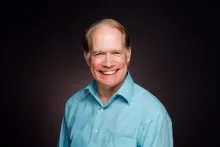
Greg Thomas is the former Pastor of the Cleveland, Ohio congregation. He retired as pastor in January 2025 and still attends there. Ordained in 1981, he has served in the ministry for 44-years. As a certified leadership consultant, Greg is the founder and president of weLEAD, Inc. Chartered in 2001, weLEAD is a 501(3)(c) non-profit organization and a major respected resource for free leadership development information reaching a worldwide audience. Greg also founded Leadership Excellence, Ltd in 2009 offering leadership training and coaching. He has an undergraduate degree from Ambassador College, and a master’s degree in leadership from Bellevue University. Greg has served on various Boards during his career. He is the author of two leadership development books, and is a certified life coach, and business coach.
Greg and his wife, B.J., live in Litchfield, Ohio. They first met in church as teenagers and were married in 1974. They enjoy spending time with family— especially their eight grandchildren.
