

Ben Light
This transcript was generated by AI and may contain errors. It is provided to assist those who may not be able to listen to the message.
Ladies, thank you, thank you. Beautiful music, beautiful message. Very much appreciate it. Been in the church my whole life. Turns out that the sermon always follows the special music. I don't know where my brain's at today, so thank you for knowing how the format goes, and thank you for knowing what's coming next. Had a moment. Mr. Storrs had a second of middle hymn. I don't have a middle hymn. He'd have figured it out. He'd have gotten it taken care of. He'd like to keep him on his toes. Got to keep him on his toes now and again. Keep myself on my toes, too, it turns out.
Well, brethren, we have just concluded one of the most encouraging and edifying times of the year for God's people. You know, all of us have returned back from the Feast of Tabernacles, and as we kind of progress through and we symbolize and we commemorate the events that those fall holy days represent, we have the opportunity to really catch the vision of what it is that God is doing in our lives. What it is that God is doing with mankind here on this earth. What it is that he has in mind as we picture the fulfillment of his plan for mankind. It's an incredible time of year, and while we're at the Feast, we have opportunities to experience a millennial setting. You know, we have a chance to experience beautiful millennial settings. We kept the Feast this year in Estes Park, Colorado. You know, it's a city that is ringed by these just beautiful mountains. You know, the elk are practically cats. You know, they're wandering through the streets and in people's front lawns, and it's incredibly millennial. God gives us a bit of a respite from Satan during this week. There's that hand of protection that he puts on us. You know, we have that opportunity to experience a bit of a respite. We get to experience powerful messages. We have incredible opportunities, regular opportunities, for edifying fellowship. I don't know about you, but for me, the Feast is a spiritual highlight of the year. It's a spiritual highlight of the year.
Now, depending on the year, depending on levels of responsibility, the Feast can be more stressful than others, but this year was nice. I didn't have anything to do, really, aside from coordinating special music, I suppose, but it makes it worthwhile to be able to be together, to be able to receive instruction, to be able to strengthen our relationship with God and with one another.
It makes it all worthwhile. I truly hope—and we'll find out because we're going to have our Feast social here tonight—but I truly hope that your Feast this year was a wonderful experience. I hope that the messages that you heard in your various places where you went—and I know everybody kind of went to different locations—I hope those messages have energized you. I hope those messages have prepared you to be able to come home and to have the zeal and the strength and the energy to be able to face these coming winter months as the days get a little bit darker, as our energy begins to wane a little bit.
As many of you know, before I was working in the ministry, I taught middle and high school science for a number of years. One of my favorite subjects was physical science, and one of the reasons that I love physical science so much is because it's so practical, it's so real world, it's so tangible. You can experience it in your life. You can experience it in a variety of ways, but what it does is it enables you to be able to see the effects of the various physical laws that God has put in place to govern the universe in real time.
You can see them happen. You know, you take and you drop a pen. It always falls to the ground. Gravity always is going to work in the way that it works, right? I could do this half a billion times. It's always going to fall. If I put a little bit of extra oomph on it, I can overcome the force of gravity for a period of time until eventually it catches back up and brings it back down.
But all of these things work, and they always work. It's incredible the way that God built the world. It's incredible the way that he put all these things in place. I can take this pen again. If I could throw it hard enough, I could make this pen reach escape velocity. I could put it into orbit, but I would have to get it going quickly enough and far enough with enough oomph behind it, so to speak.
We'll use those terms. Oomph. Enough oomph behind it to be able to overcome that gravity for a long enough period of time for it to reach where that gravity could no longer act on it. These laws, again, they're tangible, and when you can see them in action, they're easily understood. There are a number of scientists over the years that did work in this particular space. Galileo, for example, Descartes, Newton, who was largely credited with describing the laws to which all objects are governed. We call his regulation, or the laws, I should say, of the description of regulation and object and motion, we call those Newton's three laws.
What they really are is they are an observation and a description of how forces act on objects and how ultimately the motion of those objects are going to be impacted by those forces that act on them. Brethren, when we leave the Feast of Tabernacles each year, we come out of that feast with possibly some of the greatest spiritual momentum that we will have for the year. We come out of the feast on fire, excited, zealous about God's way. We are in motion, and we are moving when we come out of the feast.
We have a significant amount of zeal. We have energy. We have focus. And brethren, the big question that we all need to ask ourselves as we come out of this year's Feast of Tabernacles is what are we going to do with it? How will we allow that energy and that zeal and that focus to impact our lives? To make sure that that fire stays lit. To make certain that we don't grind to a halt, begin slowing over time as we come back into contact with our regular lives.
As we come into contact with work and school, and we begin to interact with society as a whole. How can we ensure that we can keep this momentum that we have? The title of the sermon today is Momentum. What I'd like to do today is explore this concept of motion, explore the laws that govern it a little bit, and try to consider some spiritual lessons that we can take away in order to give us a very practical, very tangible thing that we can do in our lives to be able to maintain this spiritual momentum.
So the first law that Newton described is the law of inertia. Inertia, if you've ever watched Bill Nye, is a property of matter. Bill, Bill, Bill, Bill, right? It's right in the tagline of the song. It's right there. Inertia is a property of matter. What inertia is at its core is a tendency to do something, or I should say of something, to do nothing. Or, for that something to remain unchanged. It's actually not an active property of matter, interestingly enough. It's something that resists active agents such as force or torque. Every object has inertia, whether it's at rest or whether it's in motion. And what that inertia is going to do is that inertia is going to resist change.
It's going to resist change. And for change to occur, a force has to be acted upon that object. The law itself, in Newton's own words, states that an object at rest remains at rest. An object in motion remains in motion at constant speed and in a straight line, unless acted on by an unbalanced force. If you want to change the motion of an object, it requires you to act a force on that object that is unbalanced. All of the excessive forces, they all have to be in place.
I don't know if you can see this or not because of the angle of the podium. I've got my little pen up here. This pen is being pulled downward by gravity. You can't see it because this podium is providing a force that is equal and opposite, which we'll talk about in a minute. But that is enabling this pen to remain in place. There are no forces acting on it this way. There are no forces acting on it this way. If I walked away from this podium and if we closed this building down, if there were never any earthquakes, if nothing ever happened, no wind gusts, no unbalanced forces ever, someone could come into this room 3,000 years later and that pen, theoretically, would still be there.
Because nothing has acted on it to cause it to move. Nothing's acted on it to cause it to move. For me to change that, I have to unbalance the forces. I have to put a force on this side that is not balanced. I have to move this this way. There's nothing pushing against it. If I push equally, it doesn't go anywhere. But for me to do that, I have to exert a force that is unbalanced on this particular object. Now, Newton's First Law also states that if this were already in motion, if it were already moving, that the object would continue in that motion until something else acts on it.
Maybe a force that pushes it in a different direction. Maybe a force that stops its forward momentum. Maybe a force that speeds it up, just like the tetherball with each hit as it goes around the pole. Right, kids? Brother in the Feast of Tabernacles provides us with an incredible opportunity that is commanded by God. Turn over to Deuteronomy 16. Deuteronomy 16. Deuteronomy is a retelling of the law.
You know, the law was provided to Israel. 40 years later, there is a retelling of that same law. Moses is providing Israel with a reminder of the things prior to their entering into the Promised Land and prior to Moses not being able to go with them. So Moses is providing this incredible reminder. He's providing this retelling of the law. Deuteronomy 16, and we'll go ahead and pick it up in verse 13. Deuteronomy 16 and verse 13. Deuteronomy 16 and verse 13 reads, it says, You shall observe the Feast of Tabernacles seven days when you have gathered from your threshing floor and from your winepress, and you shall rejoice in your feast, you and your son and your female or and your daughter, your male servant and your female servant and a Levite.
The stranger and the fatherless and the widow who are within your gates says, Seven days you shall keep a sacred feast to the Lord your God in the place where the Lord your God chooses, because the Lord your God will bless you in all of your produce and in all of the work of your hands, so that you surely rejoice. Now, prior to the feast, Israel brought their crops in. Ultimately, it would have been some late summer fruit. Early fall period would have been figs, pomegranates, grapes. Beginning of the olive harvest, they would complete that after they returned with the rest of those olives. Interestingly, we don't think of this as necessarily a grain today, but there would have been a small grain harvest, actually, right at the end of that, too, which is millet.
We just use that for birdseed these days, but it's actually looked it up. It's one of the sixth most popular nutritious grains worldwide for food sources. We don't use it much here in the States, but millet.
Actually, if you look at the Ezekiel bread recipe, it's in there. So it's part of the Ezekiel bread. But it's interesting from that standpoint, both their threshing floor, both their winepress. Those crops were to be taken. They were to rejoice before God after they had gathered those things. But in that particular passage, God provides a principle. He says, if the journey were too long or they were unable to carry the tithe on that journey, that ultimately they can take their crops, they can exchange it for money, they can go to the place where God placed His name, which is a principle that we use today.
But, brethren, what I want us to note in this section is that in this section, through God's command, He is putting His people in motion. He is putting them in motion. He's commanding them to get up and go, to get out of the daily routine, to leave their homes, to leave their jobs, to travel to the place where God places His name, which required Israel to be in motion.
It required them to be in motion. The Feast of Tabernacles is a pilgrimage feast. From the outset of this Holy Day, God's people are in motion. The other thing that we can notice in this passage that's kind of interesting is that no one in Israel was left out of this motion. No one was left out of this motion. There's no one who's left at home, so to speak, in that sense. Deuteronomy 16, verse 14 states that them, their son, their daughter, their male and female servants, the Levite, the stranger, the fatherless, the widow within their gates, all were expected to be there.
All were expected to be there. All were put into literal motion by God. Now, you know you've been to the Feast. You know there's a lot of motion while you're at the Feast. A whole lot of motion. Sometimes maybe a little too much motion, it feels like. As you're zipping out the door to make it to choir practice, or you're doing this or doing that, or you got this with these people, and then this with these people later, and you want to get it all in.
In the seven days that you've got, we laughed this year a little bit. We spent so much for our housing, and we were basically only there to put our head down and go to sleep. And then ultimately we were just everywhere. We were everywhere, ultimately. You go to services each day. You attend the activities, the Bible studies. You run around town to see various things. You do various things with other people. There's just not a lot of sitting still while you're at the Feast. But not only that, there's a great deal of spiritual energy that's being provided through the messages.
There's a great deal of spiritual energy and momentum that is being provided through the Bible studies and the fellowship as God's people come together. Why is that? Why is it that we feel more energized? Why is it that we feel more in motion when God's people are together? Let's turn to 2 Timothy. 2 Timothy 1. 2 Timothy 1. 2 Timothy 1. We know, based on this particular passage, that the Apostle Paul, from what we can tell, baptized Timothy.
We know that he served as his mentor. We know that he ultimately was likely the one who ordained Timothy to the role that he served as the pastor in Ephesus, as the work that he did with Paul in a variety of ways. We know that Paul worked with him, he mentored him. We know that he admonished him, and he encouraged him. 2 Timothy 1 and verse 6, Paul tells him, Therefore I remind you to stir up the gift of God which is in you through the laying on of my hands.
For God has not given us a spirit of fear, so he's speaking very specifically here to the spirit of God dwelling in him, but of power and of love and of a sound mind. As part of that admonishment, as part of the work that Paul did with Timothy, he likens his spirit of God that's dwelling in him through the laying on of his hands as something which must be continually stirred up. Similar to a fire, in that sense. Similar to a fire. In fact, you look at Pentecost, Acts 2. Came down on them like divided tongues of fire.
That's not a symbolism that is outside of the realm of what God has used for his Holy Spirit. Verse 6, he says, I remind you to stir up the gift of God which is through you, or in you, through the laying on of my hands. You've all sat around a campfire before. You've all sat around a fire at one point in time, and been out camping.
That fire begins to die down. Smaller pieces of that fire begin to wink out. They begin to cool off. They start to no longer provide light, no longer provide heat. And you know that if you get with that fire in a stick, and you stir it around a little bit, you take those embers that are on the outside, and you move them into the inside. What happens?
Fire takes right back off again. Those embers, those coals brought together, cause the fire to catch and roar back to life. It's a collective process. God calls us all to come together before him. These coals are brought together from far-flung areas. And we gather on the Sabbath. These coals, they're brought together. Some literal coals are brought together, right? But the coals are brought together. We can all be spiritual coals. But we come together, and that fire invigorates. That fire takes off. That fire gives us that spiritual energy. His spirit is being brought, piece by piece by piece by piece, into the same place. Just like a fire. And the result is a spiritual fire. It's a spiritual energy that catches and roars and ignites each of those coals more effectively.
In physics, when you put energy into a system, the molecules in that system begin to increase their kinetic energy. They start to move faster. They collide with one another. They collide with the walls of the container that they're in, especially in a closed system. But as you provide heat in the form of energy, or energy, I should say, in the form of heat, they become energized. They're able to move more quickly. But, as the first law that Newton described states, as unbalanced forces start to act on that object, it eventually comes to rest. As all of that motion and all of that energy is scrubbed, little by little by little, with each and every one of those interactions. It's almost like, really truly, it's almost like each of those forces as it passes reaches out and grabs it and slows it down just a little bit. It's like you have somebody running past a whole bunch of people in line, and they reach out and they grab their arm real quick as they go past. Eventually, that person's going to come to a complete stop. All those air molecules that they run into, all the friction from the ground, gravity, all those things act upon those objects, and they scrub a little bit of that energy with each interaction, until eventually that object is slowed and it comes to a stop.
Brethren, what are the things in your life, what are those unbalanced forces in your life that slow you down spiritually? What are those things that are grabbing as you go back into your life, as you go back to work, as you go back to school, as you go back into society, as we leave the feast? What are some of those things in our life that reach out and they grab us? Cares of the world? Distractions? Our own sin? Which ensnares us? Mark 4, if you'd like to turn there, Mark 4 talks about a number of things that can slow us down. Talks about a number of things, actually, in this case, in Mark 4, that can bring us to a stop completely, spiritually. Things that can prevent us from being able to even move at all. Mark 4. See this particular parable? This is one of the parables that we have in which Christ explains it, which is wonderful. I always like those parables, for Christ gets to provide the meaning for us so that we understand exactly what it is He's saying. But Mark 4 lists a number of these things. Mark 4 will pick it up in verse 13. Mark 4 and verse 13, as He explains this parable that He just provided to the multitudes and to His disciples. He said to them, do you not understand this parable? He says, how then will you understand all the parables? And then He goes on to explain it. He says, the sower sows the Word. The sower sows the Word. He says, these are the ones by the wayside where the Word is sown. When they hear, Satan comes immediately and takes away the Word that was sown in their hearts. He goes on, He says, these likewise are the ones sown on stony ground, who when they hear the Word, immediately receive it with gladness. They have no root in themselves, and so they endure only for a time. Afterward, when tribulation or persecution arises for the Word's sake, immediately they stumble.
Then He says, now these are the ones sown among thorns. They are the ones who hear the Word and the cares of this world, the deceitfulness of riches, the desires for other things entering in choke the Word. He says, and it becomes unfruitful. But these, verse 20, are the ones sown on good ground, those who hear the Word, accept it, and bear fruit, some thirty-fold, some sixty, and some hundred. So we see Christ list out the various things that can act on us if we are not careful, if we're not on guard, if we're not doing everything that we can to counteract those things, those unbalanced forces which act on us in our lives. We see Satan. We see his temptations. We see the words and the arguments in the back of our heads as he sows doubt, as he sows disbelief. We had a Bible study at the Feast in Estes where we were talking about, you know, a person that wants to come out and try to counteract the Bible, they don't have to actually disprove anything. All they have to do is sow enough doubt and enough disbelief. The people just wander away from it. Talks about this lack of root in us, maybe a superficial understanding and a trust of God, such that when things become challenging, we can't fathom why these things are happening to us. And we wither. He talks about the cares of this world. He talks about our worries. He talks about our anxieties. He talks about a misapplication of wealth, our desire for other things, and not putting God as the priority in our life. All of those things will choke out the word of God and cause us to become unfruitful.
Each of these things can act on that motion that we have. It can slow that motion that we have. In reality, there are a lot of different things that can act on an object to reduce its motion. It's actually extremely challenging to keep an object going perpetually. There are so many things that act on it to eventually bring its energy down to zero. But for us to keep an object moving, it requires a regular input of energy. It requires us to put an unbalanced force in place in the direction of the motion. In that straight line of the motion. It requires a force to be placed on that object in opposition to the forces that work to slow it down. How many of you have ever seen the International Space Station as it goes across the sky? A couple of you have. You can see it. There are certain times, there are certain ways, website you can look at, show you where it's at. That space station was launched in November of 1998.
Twenty-five years that that ISS has been in orbit. Sometimes, again, you have a clear night, you have a right place to look, you can see it. That thing is traveling around the Earth at a speed of 17,000 miles per hour.
17,000 miles per hour. And its forces are almost balanced. Almost. Not perfectly. Almost balanced. Its speed and its orbit balance out gravity. For the most part, it goes. But as time has gone on, it's been subjected to a minimal amount of atmospheric drag. It's been subjected to a little bit of gravity here and there. And it has slowed. And it began to lose altitude. And it's done this multiple times. Periodically, they have to do what is called a reboost. They fire the thruster engines, and they provide it with energy to kick it back up into a higher orbit, where eventually it will continue to go around and slowly decline again, until they have to reboost it again. Otherwise, had they not done that, it would be in the Pacific or the Atlantic Ocean right now. Because it would have been eventually brought into Earth's orbit, and it would have crashed.
Brethren, spiritually, we need regular reboosts, too. We need regular reboosts, too. We need times when we can recharge. The feast is one of those times for us. The feast is one of those opportunities. But how do we continue to do so as we go through the year, and the world pushes back against our motion, pushes back against our momentum? I'm going to give you a couple of quick things here that can help us to do this. Tangible things. Number one, Sabbath services. Sabbath services. We have the opportunity to reboost once a week. Every seven days, we have a chance to fire that thruster and get us a little higher up in orbit, as the world tries dragging us back down into the depths. Eventually, the analogy breaks down. We'll stop there. But it gives us the opportunity to come together to increase our collective energy, to re-instruct, to re-energize, and to have that time together. We have activities. We have activities. We have scheduled regional weekends. We have planned socials. We have one tonight. We have activities. We have Bible studies. We have one tonight. Fellowship opportunities, all of which are chances for us to come together, to be with one another. We have to use these opportunities. Fellowship. Fellowship outside of services, even. We have the chance to fellowship with one another outside of services. With a little bit of work, we can put together ways to have get-togethers, provide each other with strength as we talk about our common faith. And then, of course, individually, we recharge each day through being in God's Word, connecting with Him in prayer, meditating on His way. That recharges us. That boosts us. Because, again, if we don't take that time, if we don't take that time, eventually those forces work against us and will grind us to a stop. In short, brethren, we have to be involved. We have to be involved. We cannot isolate ourselves. We need one another. In order to be able to come together and have that fire take back off again, we've got to be here. We've got to be connected. As we come out of this piece of tabernacles, we need to take some time to reflect. We need to take some time to consider the things that act on us, that slow us down, that prevent us from having that level of spiritual energy throughout the year and what it is that we can do to counteract those things, to push back against those things, to provide an input of energy that will overcome those forces working against us. Because if we don't, we will slow. And if we slow, we will eventually come to a stop. Newton said an object at rest will remain at rest, an object in motion will remain in motion at a constant speed, and a straight line unless it's acted on by an unbalanced force. We have to do everything that we can to counteract those unbalanced forces that will bring our motion to a stop. The second law that Newton described is the law of force and acceleration. The law of force and acceleration. Newton's second law describes the relationship between force and an object's acceleration as a result of the force that is applied to it. What Newton noticed was that it took less force to accelerate a smaller object than it did a larger object, an object that had more mass. And he tried to explain the relationship between these things. This is what he came up with. The change in motion of an object is proportional to the force impressed and made in the direction of the straight line in which the force is impressed. In other words, the more force that is applied to something, the more it accelerates. The harder you hit something, the faster it goes. It's kind of generally what it's saying. But he also noticed that the mass of the object was a factor as well. What I want you to imagine for a moment is playing soccer. I imagine you playing soccer with a bowling ball.
I don't advise this, by the way. But to accelerate that bowling ball to the same velocity that a soccer ball would be accelerated to requires a significantly higher amount of force to be placed on the bowling ball to match the acceleration of the soccer ball. In fact, it requires so much force that the structure of our human leg likely could not take it. And we would likely break our leg, our foot, our tibia, all the bones in the bottom of our leg. Which is not wise, which is why I don't advise it. But there are two relationships that are established by this law. First off, heavier objects require more force to accelerate them. Heavier objects require more force to accelerate them. And the second relationship is more force equals more acceleration. Those are the two relationships he described. Brethren, as we move through life, we collect weights. We collect weights as we move through life. We collect burdens that are placed on us in various ways. They come from our past. They come from our doubts. They come from our fears, our worries, our anxieties. And as time goes on, they cause us to be encumbered. They begin to weigh us down that we cannot move. Can't even fathom moving because they're so heavy. Sometimes these weights come from other people, but brethren, frequently, we put them on ourselves. Frequently, we put them on ourselves. I'm going to give you three passages real quick. We're not going to turn to them. Luke 21, verse 34, warns us to be on guard so that we're not overcome with dissipation and drunkenness. So that we are not wasting our lives, wasting our time, spending them in dissipation, spending them in drunkenness, so that our hearts are not weighed down, the Scripture says, weighed down, Luke 21, 34, with the carers of this life. 2 Timothy 3, verses 6 through 9, as well, Psalm 38, 4, talks about how our sins and our iniquities weigh us down, that we can be weighed down in life by our sin and by our iniquity. Proverbs 12, 25, says a man's heart can be weighed down by worry. It can be weighed down by worry, by anxiety. When we think about how mass and weight affects motion, the heavier something is, the harder it is to move. The harder it is to move. An object at rest, remember the first law, will remain at rest until an unbalanced force acts on it. The amount of force necessary to get a heavy object moving, especially initially, is significant. Sometimes, depending on the size of the object, the size of the weight that's involved, it could be next to impossible to get it moving. If you don't believe me, go try to push this building after we're done. Go push against the wall and try to move this building. You don't possess the amount of force capable to push this building physically.
It can be near impossible to get moving sometimes. So, because of the second law of motion, the relationship that Newton recognized was, if you reduce the weight of the object, it reduces the amount of force necessary to get it moving.
Brethren, those burdens, those weights that we collect in life, we cannot carry them. We have to give them to God. We have to give them to Him. We have to provide them to Him. Matthew 11, verse 28. Speaking of these weights and these doubts and these things that we pick up as time goes on. Matthew 11 and verse 28, we see Jesus say, Come to me all you who labor and are heavy laden, all of you who are inundated with weights, with burdens. Christ says in verse 28, I will give you rest. Where does the rest come from? It comes from Him. It comes from being in relationship with Him. It comes from giving these things to Him. Verse 29, it says, Jesus says, in Him we will find rest. He is capable of being able to remove those weights. He can and He will unencumber us. He has called you and sees your worth, whether you do or not.
All He asks is that you trust Him and that you trust that He knows what He is doing. And what that requires of us, that requires us to give Him our sins. It requires us to repent of our sins, to work, to overcome them with His strength. To give Him our worries, to give Him our anxieties, to give Him the things that we are concerned with. To trust in Him that He will resolve those concerns with us. The relationship requires us to not allow ourselves to be weighed down with the cares of this life, with dissipation, with drunkenness, but instead to take on His yoke, serving Him. You want to follow the analogy? It means we're yoking ourselves to His plow, or His cart, so to speak. And that's what we're going to pull. He says that that burden is light. But when we're unencumbered, when that burden is light, it takes a lot less force to get us moving in the first place. And we are not as quickly slowed once we're in motion. While we're at the feast, we have the opportunity to set down the burdens of life for a bit. Hopefully, as you came home from the feast, hopefully you were able to pick those things back up without too much burden. But during the time you're at the feast, you've got to put those down for a little bit. Hopefully. Not always. Sometimes work beckons. But hopefully you were able to provide your full attention to the feast, to everything that it symbolizes. Frequently, you don't have to necessarily worry about doing dinner, necessarily worry about keeping up with the dishes. We don't have to always worry about school. We don't have to worry about the homework. We don't have to worry about some of the things that we do regularly during that period. But we know that the feast ends. These things have to be picked back up when we come home. But brethren, don't let them weigh you down. Don't let them weigh you down. Give them to God. We all can use making Him a much greater partner in the process. There are times in which I have realized I am trying to carry everything myself. I'm trying to carry it all. And there are times where I have realized I am simply not strong enough to do it.
Whether I want to believe that or not, it's true. I'm not strong enough to carry it all myself sometimes. You have to be able to give it to God. We all need to be able to be better at doing this. Let's turn to Philippians 4, verse 6. Philippians 4. In Philippians 4, God is described as the one who gives us peace. God is described as the one who ultimately removes these burdens from us. He is described as the one who quiets our hearts, quiets our minds, ultimately guarding them against these concerns and these worries. Philippians 4. Philippians 4, verse 6. God says, Be anxious for nothing. Don't create and put these worries on yourself. He says, In everything, by prayer and supplication, with thanksgiving, let your requests be made known to God. And the promise that we see from God in verse 7 is, The peace of God, which surpasses all understanding, will guard your hearts and minds through Christ Jesus.
God says, Be anxious for nothing. Be anxious for nothing. Trust in God. With thanksgiving, with gratitude, let your requests be made known to Him. It says, Everything by prayer and supplication. We have to stop trying to carry everything ourselves. So, brethren, if you find yourself collapsing under your burdens, if you find yourself weighed down to where you don't feel like you can take another step, it's a very good sign that it's time to hand some of those to God. It's a very good sign that it's time to hand some of those to God and stop trying to hold on to them ourselves. God says, He will give us peace. And without those burdens weighing us down, without those things slowing down our motion, it enables us to be able to carry on that momentum and carry on that motion from the feast more effectively. God put His people into motion through that commanded assembly. Ultimately, it's up to us to maintain that motion for as long as we possibly can. Newton's Third Law.
Actually, I don't want to go to Newton's Third Law just yet. I want one more thing. The other aspect to this that was mentioned, remember he talked about how you impress that force in a certain direction. If we find ourselves moving in a direction that we don't love, moving in a direction that we don't really want to move, what it says is a strong enough force applied in the right direction will help us change the direction of that motion. In that sense, we have the ability to course correct. We have the ability to course correct. If there's motion in the wrong direction, if we're moving away from God in certain aspects of our lives, it might take a significant force to get us moving in the opposite direction. But brethren, the impetus of that force is within our control. We have the ability to come to core God. We have the ability to come to Him. Let's turn over to the book of James real quick. One of the themes at the feast this year in Estes was this, you know, each feast that you go to has certain themes that crop up and certain themes that come out. And they're not always the same themes. You know, the general principles are, but sometimes for whatever reason, they come out of certain areas. In Estes this year, one of the themes that kind of popped out was this restored relationship with God through the sacrifice of Jesus Christ. You know, a couple of the messages we talked about, the veil of the temple that was torn, we talked about that around-the-clock access that was provided to God the Father as we come before His throne to obtain the mercy and grace in time of need. But we have the ability to draw near to God. We're not helpless in that sense. It is fully within our reach. Depending on where we are in life, depending on what it is that we are doing that might be contrary to God, the amount of force or effort that it might take for us to go in the other direction depends. It really does, depends, but it is entirely within our reach. James 4, we'll pick it up in verse 8. Actually, I want it in verse 7. James 4, verse 7 says, Therefore submit to God. Go in His direction. Submit to God. Resist the devil, which is the direction going the opposite direction from God. Resist the devil and he will flee from you. It says, Draw near to God. Exert the force that will draw you near to God. And God says, He will draw near to you.
He promises it. You make the effort. He will follow through. He promises it. He says, Cleanse your hands, you sinners. Purify your hearts, you double-minded. Submit to God. Apply the force in His direction. Resist the devil. Resist the direction and the force that He applies to cause us to go astray and draw near to Him instead.
It may take work. It may take some extra force, so to speak, as we work to cleanse our hands, as we work to purify our hearts and our minds, and as we overcome any motion that may be in the wrong direction and turn the ship, so to speak. But it's within our reach. We just need to make the effort and rely upon Him. The feast provides us the zeal and the energy to be able to make the change in our lives, to be able to come to God, to lay our burdens on Him, and to then go out from there lightened and focused.
The final law that Newton described as we begin to draw to a close here today is a law of action and reaction. And this is probably the most famous of Newton's laws, but for a reason that you might not suspect. Partly because this law I have heard quoted as justification to why a person should be punched in the face after they run their mouth.
And the shrug of, for every action, there's an equal and opposite reaction. If he didn't want to get hit, he shouldn't have said what he said. That's the justification that I've heard used. It's an amalgamation, I suppose, of Newton's third law. But the law states for every action, there is an equal and opposite reaction. Now what this law does is describes the way that forces interact with each other. If you've ever fired a rifle, you've experienced this firsthand. You've experienced this firsthand. Bullet leaves the barrel of the rifle with a specific force.
That rifle kicks back with an equal but opposite force. Now, in that example, it's mitigated by the weight of the stock, some other factors, but generally it's equal and opposite. I can push down on this podium with weight. The podium exerts an equal and opposite force to what I exerted in the direction of the ground. Because if it didn't, then this would collapse and I would fall flat on my face. Because it is no longer providing the necessary force. I would very suddenly and rapidly be accelerating to the floor, so let's not do that.
Law of action and reaction describes what each of us are capable of doing as we come before God and as we come together in holy convocation. That is what the law of equal and opposite reaction helps us understand spiritually. In a closed system, molecules bounce around. If you close off the system, actually this room is kind of a closed system. Doors are closed, etc. You know, it's not perfectly closed.
Obviously, air is getting in and out, which you're probably thankful for. But inside of a closed system, molecules don't have anywhere to go. They're moving. They can't help but move. There's energy in the system. They have to move. So where do they go? Well, they bounce into the walls. They bounce into each other as they cross paths with one another. And in each of those collisions, the molecule exerts a force on the other molecule, which is then exerted back on the molecule that hit it, like billiard balls.
When you hit the pool ball, it bounces off the ball you hit it to. And so you provide action and reaction in these circumstances. Energy is transferred to both objects. And as we mentioned earlier, you increase the energy of a system. You start heating that system up. Those molecules start bouncing around a lot faster. That increases the number of molecules or increases the number of interactions, increases the number of collisions, increases the number of force being applied and force being applied in return.
One of my favorite passages in the New Testament is Acts 2, verses 41 to 47. If you would turn over there real quick. Acts 2, verses 41 to 47.
What we see in Acts 2 is we see the Church of God at its most energetic that we will ever see it.
It's before the world got a hold of it. It's before the heresy got a hold of it. It's before people got mad at each other. It's before all those little forces started slowing it down. And what do we see? Acts 2, verse 41 says, Then those who gladly received his word were baptized, and that day about three thousand souls were added to them. They continued steadfastly in the apostles' doctrine and fellowship. In other words, they kept doing what the apostles taught. They continued in those things. That day about three thousand souls were added to them. Sorry, I went back. They continued in the apostles' doctrine and fellowship. In the breaking of bread and in prayers. It says, Then fear, that deep awe and that wonder and that respect for God, that fear came upon every soul. Many wonders and signs were done through the apostles, and now all who believed were together. They had all things in common. They sold their possessions, their goods. They divided them among all as anyone had need. And continuing daily with one accord in the temple. And breaking bread from house to house. They ate their food with gladness and simplicity of heart, praising God and having favor with all the people. And the Lord added to the church daily those who were being saved. Brethren, that is a system that is full of energy. The Spirit of God came down on that group of people at Pentecost. They responded to it. They came out of that day fired up. They were zealous. They feared God. They continued steadfastly. In doctrine and fellowship, they ate their meals together. They prayed together. They were of one accord in the temple, together. Daily, not just on the Sabbath.
They connected with each other. They lived their lives together. And I think sometimes, as a modern church, we become so disconnected, so isolated. Sometimes it's a result of circumstances. Sometimes, you know, you live far away and churches far. There are circumstances. Sometimes it's purposeful because we don't want to let people in.
Each of us has a responsibility toward one another as members of the same body. Brethren, we need each other. We need each other. Sabbath services are a holy convocation. They are a sacred, commanded assembly by God.
It is a sacred assembly. It's essential that we're here. This calling that we've been provided, it's not solitary, and it's not in isolation. The congregation is the method by which God has called us to be able to connect with one another. It's not the only method, certainly, but it is during these convocations that we have the ability to supply one another with some energy and some encouragement through our interactions and our collisions. And not only do we supply energy to others, that force is equal and opposite. As we provide energy and encouragement, we receive energy and encouragement, if it's done properly. If we're both working to edify one another, if we're both working to strengthen and encourage one another, then both of those objects are acted upon. Let's turn over to Ephesians 4. We see an analogy this put forth in Ephesians 4 by the Apostle Paul. Of our congregations and of the importance of those congregations and of the church ultimately as a body, we see this analogy in other places as well. 1 Corinthians 12, for example, is one spot. Romans 12 is another. But the idea, essentially, that's being put forth here in Ephesians, is that Christ is fit, the parts of the body, together in very specific ways. None of those parts are less than any others. Every single one of those parts is essential. Ephesians 4, verse 11. He says, He Himself gave some to be apostles, some prophets, some of angels, pastors, and teachers for the equipping of the saints for the work of ministry, for the edifying of the body of Christ. His roles, these service opportunities exist to edify and support the body of Christ. Till we all come to the unity of the faith and to the knowledge of the Son of God, to a perfect man, to the measure of the stature of the fullness of Christ, that we should no longer be children tossed to and fro and carried about with every wind of doctrine by the trickery of men and the cunning craftiness of deceitful plotting. But verse 15, speaking the truth in love, may grow up in all things into Him who is the head Christ. Verse 16 is where we see the analogy, from whom the whole body joined and knit together by what every joint supplies, according to the effect of working, by which every part, every part does its share, causes growth of the body for the edifying of itself. In love. God provided individuals for the equipping of the saints for work of ministry, and we're learning to serve one another. We're learning to serve others by being connected in this body. And in that process of learning to do those things, as we go through that process, we are grown. We are edified in that process. It's a maturation process. It's a perfecting process as we submit ourselves to it. The whole body is joined and knit together by what every joint supplies, with every part doing its share, which causes growth of the body for the edifying of that body in love. Brethren, what would happen if your elbow just didn't show up for work one day? You get out of bed, and this is what you've got. No bend. Nothing. Your elbow is like, I quit! I'm on strike! Button your shirt. Go ahead, give it a shot. You can't do it, right? You can't do it. What would happen if your knee didn't show up for work? Both of your kidneys didn't show up for work.
There are no non-mission critical parts of your body. It is knit together in such a way that every single piece is critical to the operation of the body itself. Even the stuff in us that science used to think was useless, they are finding, has incredible value to the body. They realize how important each of those parts are. Brethren, the only way the body functions properly is if all of its parts show up.
That's the only way that it works. If all of its parts are working in pieces, working in concert with the rest, if we choose to remain home, we rob the other members of that body of an opportunity for edification and for growth of the body. An opportunity to have one of those equal and opposite reactions, one that, quite frankly, that person that is there may have desperately needed on that day. They may have been looking for you to bounce off of, and you're not there.
You are needed. You are wanted, and you are loved. I realize, and we recognize, there are health issues. There are challenges. There are conditions that make it incredibly challenging, but I'll be frank. The reality is, too, that today it has just become really easy to stay home. It's really easy. It's comfortable. The Church has become convenient.
It's online. We can listen to whatever preacher we want. We can listen to the messages that we want to hear. We can connect to several services. We can receive multiple messages in a day. And, brethren, those aren't inherently bad things. Those are not inherently bad things. But the Sabbath and our Convocation is not just spiritual instruction.
That is a very important part of it, yes, but it's about the interactions. It's about the collisions. I say that in a nice way. The collisions between objects in the system that energize the system. For every action, there's an equal and opposite reaction. Brethren, we need to ensure that we're doing our part. Frequently, as we come out of the feast, we have an increased zeal. We have an increased energy for God in His way.
And as we go through that year, we come out into these cold, dark winter months, we frequently see that energy get zapped. We see the world. We see society. We see work. We see school. We see all these concerns that we have out there, grabbing a hold and slowing down that motion with every little bit. And when we begin to slow, we begin to lose our spiritual momentum due to the multitude of those forces that act on us in opposition and begin to bring our motion to a stop.
We allow the cares of this world to pile on. We experience the weight of various burdens that we've placed upon ourselves that grind our motion to a halt. We miss out on the opportunities for these interactions that keep us energized and moving. How can we maintain this zeal? How can we ensure that we keep this energy going forward? I'm going to leave you with three very brief points.
First, we have to do our part to continue to supply energy, to counteract the unbalanced forces trying to bring us to a stop. If you notice, the world is reaching out and grabbing and slowing, and it's harder and harder to pick that Bible up in the morning.
If you notice, it's harder and harder to get down on your knees and pray. That's when it's time to add the energy in the other direction. It's time to recharge. It's time to reboost. Whether that's individually or whether that's collectively. If we do not, the forces of this world will slow us, eventually stop us. And it can be incredibly challenging to overcome the inertia and get started again. Secondly, we have to give burdens and the weights that we have collected over the years that have slowed us, we have to give them to God. His burden is light, His yoke is easy.
We have to let go. We have to stop hanging on to them. We have to stop being worried about whatever said, whoever said what 20 years ago. Doesn't matter. Does not matter anymore. None of it matters. Except for ultimately what God is doing in your life. We have to stop hanging on to these things. And allowing them to stop our momentum. We have to give them to God so that we have the ability to go forward, unencumbered.
Lastly, brethren, we have to be involved. We have to be present. We have to be here for the interactions. We have to be present for the opportunities to provide energy, not just at services, but outside of services. To give energy and encouragement to others. To receive that equal and opposite force in return. And that requires us to be involved. Brethren, it requires us to show up. Feast of Tabernacles is a highlight of the year. Spiritually, we have got more energy right now than we will have in three months.
I guarantee it. From a standpoint of where we are coming out, brethren, let's focus on maintaining that spiritual momentum. Let's focus on coming out of this feast and making this coming year, between now and next year's Feast of Tabernacles, spiritually, our best year yet.
Thank you.
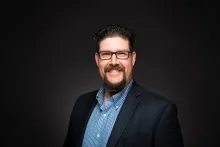
Ben is an elder serving as Pastor for the Salem, Eugene, Roseburg, Oregon congregations of the United Church of God. He is an avid outdoorsman, and loves hunting, fishing and being in God's creation.
