

Gary Antion
This transcript was generated by AI and may contain errors. It is provided to assist those who may not be able to listen to the message.
If there's a word in the English language, if I asked you, what is a word, or THE word, as some people would say, in the English language or in any language that is the most important for us, what would you say? What would you say it is? There's actually a famous quote that says this.
Let me preface it, though, by saying we all know that Jesus Christ, God the Father, the Bible, are the most important things in our lives. Without them, nothing happens. There is no future.
We know that what we learn from the Bible is the most important thing that we do. We know that as God calls us, we must repent. So, apart from those words and what we understand of what God calls us to do, even with His Holy Spirit, even with the repentance that He gives us, even with the knowledge that He gives us, what would you say is the most important word that we might want to keep in the center of our minds as we go through life. It's a word that you've heard, certainly in your childhood, probably when I say the word, you're going to think, oh yeah, I remember my mom and dad saying this and that with that word. Maybe even in your adult life you've heard some of those things that people said you need to blah blah. It's in the Bible. It's in the Bible, and we learn that when we have this, things go well. If we don't have that, things can go bad. If we have a good one of these, life can be very enjoyable, very pleasant. If we have a bad one of these, life can be very difficult. Let me give you, well, let's first turn to a verse here. In Philippians 4, Paul talks about this. When he's talking about the prayers that we offer to God, we should all pray.
We should all come before God daily. But in verse 6 of chapter 4 of Philippians, he says this.
He says, Be anxious for nothing, but in everything by prayer and supplication, with thanksgiving, let your requests be made known to God. When you pray to Him, speak to Him, let your requests be made known to Him, talk to Him, but come before Him with an attitude of thanksgiving. When you come before Him, have yourself in a frame of mind that everything you have is because of God. Your future, your job, your health, your calling, the knowledge that you have, the peace that you have, everything is from God. Come before Him with thanksgiving and let that mark your prayer. Paul is saying this there, come before Him with an attitude of thanksgiving.
Talk to Him about anything. Tell Him your troubles. Ask Him for His guidance. Ask Him for His help. But be thankful and keep that in your mind so that your prayers come before God as a pleasant aroma before Him. And in that word, that all-important word, according to many people, is the word attitude. The way we approach life, the attitude that we have. If we have a good attitude, you know, things that confront us don't seem to be as bad. And we can get through them and we can learn from them. But if we have a poor attitude, then the things that trouble us in life are even worse. They become even more of a problem and they tend to hold us down and they cause us to have despair, depression, lack of energy, lack of motivation, lack of focus. There have been books written on attitude. There have been research studies done on attitude. Here's a quote from a man by the name of Bob Proctor, who's a consultant, author, lecturer, and motivational speaker. He said this, and you can buy posters with this. He says, attitude is the most important word in any language. Your attitude controls every aspect of your life. And there's more to it in the concludes with, your attitude can always be improved. Well, we all have attitude.
We all have something that's there. And in fact, we go through life and our natural attitude is to be resistant to God. Our natural attitude is to be at enmity with God. We're told that in Romans 8, 7, the carnal man, the natural man, is enmity against God. Is not subject to God's law, nor indeed can be. So we all have in us inherently a bad attitude toward God.
It's our job to change that attitude. God can call us. God does call us. He does give us repentance. He does give us His Holy Spirit. But we have to watch our attitudes. We have to control what we think and how we react to things. And our attitude will dictate how well we do as a Christian or how not so well that we do as a Christian. Mr. Proctor was actually mentored by a man by the name of Earl Nightingale. And many of you have heard of Earl Nightingale. He was a motivational speaker and quite a prolific writer, if you will, back in the day. And I remember decades ago when I was starting my career when audiobooks were beginning to come out and be available. I learned about Mr. Nightingale, Earl Nightingale, and I bought a couple of his audiobooks that I played when I was driving around. And in times, one of them was called Lead the Field. And it had to do with the career path people could have. And it's a classic. I learned a lot from what he said. And a key component of Lead the Field was the attitude that you have toward your work, the attitude that you have for your career, the attitude that you have in anything that you see. The other one I bought was called, I believe it was called the magic, that magic word, attitude. And in it he had six tapes full of attitude and what it means to you and how it can affect your life, how it affects your outlook, how your life is dictated by your attitude, your moods, what people think of you, how you go through life, and the success that you may achieve physically. And as you listen to those, one of the things that always impressed me was that I could read, I could see the Bible and the words that he said and the principles that he said. Let me give you a couple of quotes that he said. He said, a great attitude does more than turn on the lights in our world. It seems to magically connect us to all sorts of serendipitous opportunities that were somehow absent before we changed. You know, you can look at two people and give them the very same opportunity. Two people with the same educational background, the same socioeconomic status, and they can go in and they can look at a job.
One person may look at it and say, that's below me, that's below me, I'm better than that, I don't want to do that. They may look at it and say, you know, those are menial tasks, you know, I didn't really like the people that I came in contact with. And they can look at it in a totally different way and they can talk themselves out of that job. Another person will come in and see that job. And what they do is, as they come into an attitude, they're just glad they have an interview, an opportunity to do something. And they may say, yes, it's less money than what I made it wanted to make, it's not exactly where I want to be, but I understand that I have to climb the ladder, I have to do the things, you have to pay the price in life. You just don't automatically jump from college into being a CEO, but you have to do the things in life and climb those ladders and do those jobs. And they see the opportunity that's there and they see that there's a way that they can get in there, work hard, and the job can be a tremendous asset to them. Two different people. One's going to ride it off and it might be the best opportunity that they ever had. The other one's going to take it and it will turn in to a very good opportunity.
You can look at a few people who look at church the same way. When Sabbath comes and it comes time to Sabbath services, one person might come and say, I have to get up awfully early that day, I'm probably not going to hear anything that I haven't heard before, I have to smile and be friendly to people, and this may happen and whatever. When they come to church, are they going to get much out of it? No. They're not going to get what God intended when He set up the Sabbath and told us to see it as a delight and gave us the way to keep it that would please Him. Another person wakes up and the Sabbath is. They're eager to go to church. They're eager to do that and they say, I will. I will learn something from them. I'm eager to see this and that person. I'm eager to have the fellowship and feel the Spirit of God with me. It's the highlight of my week. It's not something they say just that morning. It's the way they live their life. That person, when they come, they're going to learn something. They're going to be there. They're going to want to be there. They're going to feel what God had done.
Same Sabbath service, same baptism, same Spirit, different attitude. Different attitude because attitude can dictate the way we see things, the way we handle things, whether we benefit from it or whether we give it away. As Mr. Nightingale said, when we improve our attitude, when we feed it and train it, we'll all of a sudden see opportunities and benefits there that we didn't see before and wondered what we were missing. Through God's Holy Spirit, He will give us the ability, but we have to control our attitude and not let the natural enmity against God or the things that might come against us dictate what we are doing. Another quote from Mr. Nightingale, he said, our environment, the world in which we live and work, is a mirror of our attitudes and expectations. If you're down and out and you're depressed, you might want to look at your attitude toward life. If you're happy even in the face of trials and health problems and financial problems and things aren't exactly the way you want, but you're still hopeful and you have that outlook in life, you keep your attitude up, things go much better. But if you dwell on the problems, people will see it. We wear our attitudes, we wear our expectations, it's up to us.
Whether we go through life happy and joyful and expectant, or whether we go through life and we have a sad face and we wonder why things don't go our ways. Mr. Nightingale said, our attitude toward life determines life's attitude toward us. And you know what? That's very true when you stop and think about it. Well, we all have times that we are in bad attitudes. We remember our parents saying, get your attitude straightened up. And maybe sometime in your life, at work or whatever, someone has told you, get your attitude straightened up. I think a lot of times we tell ourselves, we need to get our attitude straightened up because I'm looking at this the wrong way and I'm kind of agitated and angry and I don't have the joy that I should with everything that God has given us.
We could use sometimes a good attitude adjustment and see how life changes. Another researcher, a psychologist, philosopher said this, his name is William James. He said, the greatest discovery of my generation, and this was written back 20-30 years ago, the greatest discovery of my generation is that human beings can alter their lives by altering their attitudes of mind.
And that is so true. You've seen it in your life. I've seen it in my life. You see it in people around you. Attitude. Attitude. Even in God's Church, even with His Holy Spirit. We have to watch our attitudes. We have to be sure that we're feeding ourselves the right attitude and the right things so that we can enjoy the calling that God has given us, so that we can benefit from it, and so that we don't let the trials and the things that will come our way. God never said there will never be a trial. You'll never have a health problem. You'll never have a financial problem. You'll never have things in your life that try to hold you down and hold you back. He never said that. We learned by those trials, our attitude as we go through it says a lot about us. Paul says, whenever you pray to God, go to Him with an attitude of thanksgiving. No matter how difficult life is, no matter what we're in, there is something and a lot that we can be thankful to God for. Paul says, when you approach God, yes, take your problems and cares to Him. Yes, take your questions to Him. Yes, ask Him for deliverance. Yes, ask Him to show you the way, but be very thankful that you come to Him. Not with a complaining heart and a blaming heart, but come to Him with a proper attitude, an attitude that marks your life, that you can see in your step and that others can see in your step and in your life. Be thankful to Him. Have that attitude, and God will answer that prayer. He did certainly with Paul.
Paul had all sorts of things going on in his life, things that you and I would just wilt if the things that Paul went through we were going through in our lives. Yet, he was always thankful to God for what he had done. Another man who had a good attitude, I'm going to talk about Paul today, and David, King David. Throughout his life, David, we think of him as being king of Israel. He reigned over Israel during a very good time in life when it was prosperous. But when you look at David's life, there were so many things in his life that were difficult. When he was a young man, a teenager, and he was the youngest of eight sons, he was out there in the fields all day with the sheep. Now, David could have looked at that life and said, well, you know, what are my other seven brothers doing? I'm out here with the sheep all day long. I'm the forgotten one. When Samuel called, when God said, go to the house of Jesse and find the king there, it didn't even occur to Jesse to bring David in to have him pass before Samuel. That's how down the totem pole he was.
David kind of sensed that. People know when they're down the totem pole and they're not the ones that are favorite. Jesse didn't even think of him. David could have been in a miserable attitude. Why am I stuck out here in this field all the time? Why do my brothers get to do this? What? Someone asked to see all the sons and you didn't even think of me? It was Samuel who had to say, do you have any other sons? Some of us, if we were David, would have been bitter. We would have been very upset with our father. We would have been very upset with our life. We might have sat there in that field day in and day out and just thought, woe is me. I'm not going to do anything. I'm going to sit here and I'm just going to be miserable and I'm going to do nothing.
David didn't handle life that way. David looked at a situation that really wasn't that great when you look at it. Look what he did with that time. He learned a lot by himself. He was there and he's the one who learned when lions and bears, things that don't even come our way physically, spiritually we have lions and bears attack us in his life, he learned how to deal. He developed the skills. It says, in fact, let's just go back to 1 Samuel. 1 Samuel 17 and see what David said to Saul, the king, when Goliath, a giant, was threatening Israel. What he said he did in that field during those times. 1 Samuel 17, verse 32. Verse 32. David comes, Goliath is threatening Israel. Everyone else is afraid. No one wants to fight Goliath. David said to Saul, in verse 32, let no man's heart fail because of Goliath. Your servant will go and fight with his Philistine. Saul said to David, you're not able to go against his Philistine to fight with him. You're a youth and he's a man of war from his youth. You're too young, David. You don't look like the man who can go against him. You kind of look not at all like the he-man you should be. But David said to Saul, your servant used to keep his father's sheep. And when a lion or bear came and took a lamb out of the flock, I went out after it and struck it and delivered the lamb from its mouth. And when it rose against me, I caught it by its beard and struck and killed it. Your servant has killed both lion and bear, and this uncircumcised Philistine will be like one of them, seeing he has defied the armies of the living God. Moreover, David said, the eternal who delivered me from the paw of the lion and from the paw of the bear, he will deliver me from the hand of this Philistine.
Saul was amazed when he heard those words. He saw the faith. He saw the reliance in God. He saw, here's a young boy who's done almost the impossible. I'm sure Saul thought, I wouldn't even do that. I couldn't kill a bear. I couldn't take a lion by its beard and push it away from me. He knew. He knew that during that time, David had learned some good skills, but David had learned faith in God. David had a very positive attitude toward God. He didn't. He learned not to doubt him. He learned to rely on him and trust in him no matter what came his way. It didn't just come naturally to David, but when he was in that field, when he was being a shepherd, not the favorite in his family, the forgotten one in his family, he learned. He turned to God. He got strong, not in his own might. And you don't see anything in David bragging here. He never looked at himself and thought, look what I've done. He knew God did it. And he had faith in God, and he honed that. And when Saul saw David and what he said, he goes, then go ahead. Go ahead and let God be with you.
And David accomplished the task there, too, not looking to himself, not looking to his own strength, but because he had developed a reliance on God no matter what faced him. There was no giant that David looked to himself to conquer, but he knew that no matter what giant came against him, God would deliver him. He had that attitude, and he fed that attitude throughout his youth.
Good for David. Good for David. He had the same opportunity. His dad had equipped him with a belief in God, the knowledge of God, and David never forgot it. Like you and me, he could have said, you know, where is God for me? What has he done for me lately?
When I'm sitting out here in the field, he never doubted. He did whatever came his way, and he did it to the best of his ability, just like it says in Ecclesiastes 9-10.
There is no job. There is no task. That God gives us that we should ever look out on it and say, that's beneath me. Whatever God gives us to do, we do it with our might.
That's what David did. That's what you and I should do.
David had that attitude. David also had the attitude that we read about where, in the same section of Scripture we read about earlier in Philippians 4, in verse 13, it says, I can do all things, all things, through Christ who strengthens me. I can do all things through Christ who strengthens me. David believed that. David saw it. David knew he could overcome anything, even even depelled attitudes that he had from youth, or the problems, or the weaknesses, or the character traits that he needed to overcome, just like you and I all have, those giants in our lives. We can do all things through Christ who strengthens me.
So there's no reason to get down, or there's no reason to give up. There's no reason to lose hope.
If we find those things, we need an attitude adjustment. Well, as David went through life, there were so many things that confronted him. He was anointed king of Israel.
What teenager today would we anoint to be a king of a nation that he would just keep it to himself?
The natural proclivity in all of us would be, run out and tell people, guess what? I just got anointed king.
David never mentioned this to anyone. He didn't run around to Jonathan or the people in that time and say, guess what I am? Guess who I am? He didn't even mention it to Saul when he went and saw him at the time of Goliath. He just kept it to himself and knew that God would give him that office when it was time. That's a pretty good attitude. An attitude of respect for God, an attitude of patience in God, an attitude of knowing that what he promises he will give us, he will give us in time. He's made promises to you and I. Sometimes we have to wait.
We learn an awfully lot by waiting. We develop an awfully good attitude while we're waiting.
Or maybe while we're waiting, we develop a very poor attitude and say, I give up. I give up. It's not worth waiting. God isn't going to do what he said he was going to do.
There's many who have had that attitude. God isn't going to do what he said he's going to do. I'll just go back and do the things I said before or was doing before. David never felt prey to that attitude. He kept walking along and doing the things and having faith in God no matter how long it took. And it took a long time.
It took a long time. Let's go forward a few chapters here to 1 Samuel 24.
You know, David had to be on the run. Here he is, the anointed king of Israel. And Saul got to the point, the existing king, who he just hated him. And David had to run. Run continually for years in his life until one day, until one day David and Saul found themselves in the same cave. Chapter 24, 1 Samuel 3. So he came to the sheepfolds by the road, where there was a cave, and Saul went in to attend to his needs. David and his men were staying in the recesses of the cave. And the men of David said to him, This is the day of which the Lord said to you, Behold, I deliver your enemy into your hand, that you may do to him as it seems good to you. Sounds like good words, right? Friends said, Go ahead, take matters into your own hands. God has given this man into your hands. David arose, and he secretly caught off a corner of Saul's robe. He kind of listened, and he went up there, got close to him, cut off a corner of his robe, and he said to his men, oh, now it happened afterward, that David's heart troubled him because he had cut Saul's robe.
Here's a man who would have killed him. But David just cut off a corner of his robe, and then bothered him like, I can't believe I did that to the anointed of God. I can't believe I showed him that disrespect. It bothered him. And he said to his men, The Lord forbid that I should do this thing to my master. The Lord's anointed to stretch out my hand against him, seeing he is the anointed of the Lord. So David restrained his servants with these words and didn't allow them to rise against Saul. And Saul got up from the cave and went on his way.
What a good attitude David had. He wasn't going to take matters into his own hands. He was going to wait for God to give him that position. And he had respect even for a man that he knew that God had removed from that office, or that God was going to remove from that office.
You know, respect is one of the things in this world that we see less and less of.
And you know, not every person that we work for or that has authority over us is perfect. And in the world, they're not even close to perfect. In fact, they may do things that we just absolutely deplore. But God tells us, you have respect for authority. You have respect for authority, and keep that in the forefront of your mind. Because if we have respect for authority, if we have that attitude about us, we'll have respect for God, too.
Young people, respect for your parents. We learn it when we're young. We learn it as we go to school. We learn it as we have our jobs. We learn it, and we're under authority all the days of our lives. All the days of our lives. And for eternity, we will be under authority. Develop the respect David did. Later, later that very same occasion, you remember the story, David confronts Saul and tells him, Saul, I could have killed you. Here's the corner of your robe, and I spared you.
And Saul had another aha moment when he saw the attitude of David and what he said.
Let's look down at verse 17. Saul said to David, after David talks to him, You are more righteous than I, for you have rewarded me with good, whereas I have rewarded you with evil. And you have shown this day how you have dealt well with me. For when the Lord delivered me into your hands, you did not kill me. For if a man finds his enemy, will he let him get away safely?
Therefore, David, David who I have pursued, David who I would like to see dead, therefore, David, may the Lord reward you with good for what you have done to me this day. And now I know indeed that you shall surely be king, and that the kingdom of Israel shall be established in your hand.
I see your attitude. It amazes me. I see your faith in God. I see how you restrain yourself. I see how you have fed yourself on God's word and God's way. I see the self-control in you that you don't do the natural thing that everyone else that I can think of would have done. But you did it God's way. David, through all the things that you've done, through all the things you've endured, your attitude toward God, your attitude toward His way, your attitude that you have displayed even in the events of your life where you could have had such a bad attitude.
And who could have blamed you, humanly speaking? No wonder, no wonder David was a man after God's own heart. In Psalm 71, as David has penned many Psalms, we get an insight into his psyche and what he was thinking. And in the Psalms that we read that he wrote, you see David always with an attitude of thankfulness to God. He is always praising God over and over in his Psalms. He praises God. Even when he's saying things and his things about people and his enemies who have surrounded him, that they want him dead and he's looking for deliverance, he still praises God.
He always has in front of his mind that God is in control. God is in charge. He never allowed himself—I won't say never—his legacy in life is he never allowed a bad attitude to overtake him. He kept it in check. Psalm 71. Psalm 71, verse 4. Deliver me, he writes, O my God, out of the hand of the wicked, out of the hand of the unrighteous and cruel man. For you're my hope, O eternal God. You are my trust from my youth. Even when I was young, I did not forsake you. Even when I was young, I remembered you. I remembered you, and I've continued that through my life.
By you I have been upheld from birth. You are he who took me out of my mother's womb. My praise shall be continually of you. Verse 14. I will hope continually and praise you yet more and more. My mouth shall tell of your righteousness and your salvation all the day, for I don't know their limits. I will go in the strength of the Lord God. I will make mention of your righteousness of yours only.
O God, you have taught me from my youth. Now what a blessing for those of us who can say the same thing, even from our youth, O God, probably thinking of the hymn that I'm thinking of. Or even from my youth, O God, by thee have I been taught.
What a blessing it is if we look at the foundation that our parents have given us, that God has given us. And we build on that, and we keep that true in our commitment to God, our good attitude toward God, from the time that we are young until the time that we become older.
O God, you have taught me from my youth, and to this day I declare your wondrous works. Now also, when I'm old and gray-headed, don't forsake me until I declare your strength to this generation, your power to everyone who is to come. Let me continually praise you. My life is marked by a thanksgiving to you, a positive attitude to you, and I don't complain about you or what I've been through.
It's been all part of my life, because I trust you implicitly, and I know that what you have in mind for me necessitated me going through the things that I do.
David was able to do that because he had such a good attitude.
We just need to be of the two attitudes. I'm going to talk today, and there are many more. Keep that attitude of thanksgiving to you, because the attitude of thanksgiving and gratitude leads to many other positive attitudes. Research studies have shown so many things about if people have gratitude first. Gratitude, we can say to God, gratitude to parents, gratitude to employers. If that marks what they are, they're happier, they're more joyful, they're more successful in life. The grateful people are the ones who succeed in life. The people who complain, the people that think that everyone's out against them, who have all these issues, they're the ones who seem to fail. You know, we see in David he had a grateful attitude, and it led to hard work. It led to all the things, the other attitudes that benefited him in life. We're going to see that in Paul, too. Paul said that many times in his writings, let it be marked with thanksgiving.
The Israelites, on the other hand, who had so many blessings from God, what did they do in the face of those blessings? They complained, they murmured. Things weren't exactly the way they wanted. Were they a successful group of people? No. No. Let's go back and look at Paul for a minute. Paul certainly didn't have, by any means, an easy life. He was not called to the truth of God when he was young. He grew up as a Jew, and he had faulty and bad attitudes as he became an adult. He was looking to even kill the people who believed in Jesus Christ until God called him and opened his eyes. In 2 Corinthians 11, he tells us some of the things that he had to go through as part of his journey. If he thought it was going to be easy, if he thought it was going to be that he was kind of the hero and that people were going to laud him and applaud him as he went through life, he had another thought coming because he didn't have any of the benefits that you and I have. Paul never got married. Paul never had a home. Paul never stayed in one place. He was not able to put roots down anywhere. His roots were in God. 2 Corinthians 11, verse 24. He says, from the Jews five times, I received the word of God. I received 40 stripes minus one. Can you imagine five times getting whipped with a whip just because of what you believe? Our minds don't even conceive. Three times I was beaten with rods. Once I was sconed. Three times I was shipwrecked. A night in the day I'd been in the deep. I'd been in journeys often, in perils of waters, in perils of robbers, in perils of my own countrymen, in perils of the Gentiles, in perils in the city, in perils in the wilderness, in perils in the sea, in perils among false brethren. Not an easy life! Paul could have said, forget it! I didn't call. I didn't bargain for this. When you called me, you didn't tell me my life was going to be this difficult. Oh, he had every reason, humanly speaking, to be in a bad attitude. He could have said, this is not at all what I want to do. This is not at all the calling that I thought it was going to be. Through it all, Paul remained thankful. Because the most important thing was that God had opened his eyes. He knew the truth. He knew the future that God had planned for him. He knew what God had done, and it was worth everything he went through in life to have that future. In verse 27, he says, I've been in weariness and toil, in sleeplessness often, in hunger and thirst, in fast things often, in cold and nakedness. Besides the other things, what comes upon me daily? Through it all. He had a love for the brethren. He had a concern for the churches. No matter what it was, he was grateful to God, and he was loyal to him, and he kept a good attitude. Couldn't have been easy. Couldn't have been easy. I know we have trials.
I know we have tests. I know things don't always go the way that we want.
Can any of us match what Paul went through? By contrast, can any of us match? Today, the attitude that Paul had of thanksgiving to God, of going through whatever it took because he had a vision of what the future was, and even in those hard times, Paul, whatever it was that God asked him to do, he did it to the best of his ability. He didn't say, I don't want to talk to those people anymore. They're talking bad about me. They're just characterizing everything I said. Anytime I try to do good, they try to make it into something evil. I mean, how many of the things that happened in our lives, and we would just develop an attitude towards someone, so how do I want to talk to them anymore?
Paul didn't do that. He still had a concern for the churches. He understood what they were going through. He understood how Satan works and how we have to bear with one another and continue to be with one another and pray for one another and help for one another. That was his calling, and he kept it, and he kept his attitude intact through it all. Let's go back to Philippians 4, where we were before. Philippians 4.
Pick it up in verse 9. Philippians 4 verse 9. He says, I know how to be abased, and I know how to abound. Everywhere and in all things I have learned both to be full and to be hungry, both to abound and to suffer need. I can do all things to Christ who strengthens me.
Paul had first an attitude of thanksgiving. He never lost a positive attitude toward God, even through the tough times of life. He also developed an attitude of contentment.
An attitude of contentment. I was looking for a definition of biblical definition of contentment. I found and happened to find one that seemed to be pretty good with some other ideas in Wikipedia, of all places. Let me read what they said. It breaks into the thought here, but it says, a practical way for most people would be to simply practice contentment as an attitude.
Practicing gratitude is perhaps a way to understand what contentment as an attitude is about. Seen in this light, contentment is not an achievement, but an attitude that one can adopt at any time. We can choose to be content, or we can choose to be discontent. We can be thankful, or we can be unthankful. We can abound, choose to abound, in whatever trials we have, or we can choose to not abound. Contentment is an attitude. Paul developed that. It grew out of thankfulness. It grew because he had that first. And you know what? David exhibited the same thing. Through all the ups and downs of David's life, as he was running from Saul, as he was confronting Saul in the cave, as he was waiting for God to give him the kingship that he had anointed him for.
Through it all, David was content. You don't read about David complaining to God, what are you waiting for? What's taking so long? You didn't tell me it was going to take years before you gave me that. I never bargained that Saul was going to be taking my life or looking to kill me. He didn't complain about any of it. He just kept doing it. He was content with what God had given him to do because David believed that what God was putting him through was for his own good. He knew that God was working with him. He knew that he had been called to be king. And he was content in whatever state he was in, as a shepherd, as a young boy facing Goliath, as someone on the run from Saul for his own life, and as king. Even content when his own son was rising up against him and trying to take his kingdom away from him. Paul was the same way.
In shipwreck, in trial, in the face of human, human, humans denigrating him and talking about him, in physical suffering, he was content. He was content and he adopted those feelings of contentment and that attitude of contentment. We know Helen Keller. Helen Keller. Everyone knows who Helen Keller is. She went through life without speech, without hearing, without sight. She said this or wrote this, I guess, everything has its wonders, even darkness and silence. And I learn whatever state I may be in, therein to be content. I think she knew the Bible. I think she looked at her life and she thought, you know what? I'd like to be like other people have. I don't have any of those senses that they have. Yet I've learned I'll just be content with what God has given me.
You know, as Paul wrote here in Philippians 4, we just read it. If we go back up to verse 6, where he's talking about prayer and approaching God always with an attitude of thanksgiving, notice what he says in the very first next verse after that. Verse 6 of Philippians 4, Be anxious for nothing, but in everything by prayer and supplication, with thanksgiving, let your request be made known to God. And, or we might say then, the peace of God, which surpasses all understanding, will guard your hearts and minds to Christ Jesus.
You pray to Him and you be thankful, and you will find the peace of God.
You will be able to live and be content with whatever state He has put you in.
You do the things that He asks you to do, and you'll be content. Now, if we can have God's Holy Spirit, we could have repented. We can have an attitude of discontentment. Tell Him the love for us to have an attitude of discontentment, because He knows He can get to us at that time.
Or we can choose to be content, even if it may not seem fair, even if it may not seem the way we would want it to be. Even though we might say, I didn't deserve this, Paul could have certainly said that.
Develop an attitude of contentment. It comes out of an attitude of gratitude. There have been so many research studies done on this. Let me tell you one. Psychological research, it says here, this is from one study, psychological research shows that contentment comes as a result of attitudes that come before it. Number one, gratitude. Number two, forgiveness. Number three, having a purpose in your life. And number four, positive thinking, and they have ore faith.
Develop those attitudes. Those are the things that we control. We can be positive people, or we can be negative people. We can be glass half-full people or glass half-empty people.
It makes a difference on how we see life.
It makes a difference because what God has given us, one of the gifts that He has given us, is that we have a purpose in life. You know, we may be, in the world, we might think, what is? What is the reason that we're even here? Where is the world going? We know what the answer is. We know what God has in mind. Let's go back to 1 Timothy. You know, when Paul was working with Timothy, a young man who was coming into the ministry, Timothy, you know, was raised in the church. Timothy didn't lose sight of God, even though he had one parent in and one parent out of the church. For those of us who have one parent in and one parent out, he didn't lose sight of God. And Timothy wasn't, but you would consider a brave man. In fact, Paul says, and when he's talking with the writing of Timothy, God hasn't given us the spirit of timidity. Timothy? He's given us the spirit of love, power, and love, and a sound mind. Now, Paul or Timothy had some problems, but we learned that God works with people of all backgrounds, of all personalities. No matter what your life has been, and no matter what you think your personality is, God's working with all of us. He didn't call everyone of the same to be exactly the same. Timothy had to learn some things as well. In 1 Timothy 6, verse 6, as he's educating and mentoring Timothy to take his role, he writes this. Paul says, now godliness, living God's way, with contentment, is great gain. Live God's way. Adopt it into your life. Practice it. Be content. Be content in that. For we brought nothing into this world, and it's certain we can carry nothing out. And having food and clothing with these, we shall be content. Now, let me tell you one thing that contentment is not. Contentment is not complacency. We're never content with who we are, but we should be content with what we have. None of us are perfect. All of us have things to overcome. All of us have things that God is going to weed out of us, if you will. Don't be content with who you are.
Don't be content with who you are. That's what the world would say. Be content with who you are. God will accept you just the way you are. God didn't call us to status quo. Be content with what He gives you. But contentment doesn't mean complacency. It doesn't mean that you stay in a dead-end job forever. It doesn't mean that it's wrong to go out and better yourself. It doesn't mean that it's wrong to go out and look for other jobs. It doesn't mean that it's wrong to get an education. He expects us to work hard. He expects us to become diligent. He expects us to take the jobs that He gives us and to learn that you grow in those as well as being at the top as well as the bottom. And for some, we may be at the top. Someday we may be at the bottom. What's our attitude? Is it an attitude of superiority or is it an attitude of, I will do whatever God gives me, even if it's something as menial as tending sheep. I will do it to the best of my ability. And as God sees that attitude in us, He'll bless. It doesn't mean if you're single and nothing's happening in your life that you shouldn't seek to get married if you want to be married.
But don't make it the overriding thing in your life.
Continue to worship God. Continue to put Him first. Ask Him. Be thankful for what you have. He'll open the doors. Put Him first. It doesn't mean that we shouldn't work hard and not do the things that we do in this life. David worked hard. Paul worked hard.
They developed those attitudes. They never forgot God. And, well, you know, Paul might have said, I worked hard and my life is still hard. He was content. That's what God wanted Him to go through. And he was content that that's what God's purpose in his life was. Work hard. If the promotion doesn't come, don't get mad. Don't get bitter. Don't blame God. Keep working hard.
If you develop your personality, develop relationships, learn how to get along with people. Put into practice the things that God says that make a happy marriage. Good friends, good brothers and sisters, good fellow members in the church. And things don't go exactly the way you want. Keep doing it. Don't give up. Don't get mad if someone says something to you you don't like. Be thankful that someone cares enough like God does. And let us know some things we may need to work on. Realize and remember the calling that God has given us. And whatever state He puts us in, while we're doing the other things, working hard, remembering Him, putting in the practice of things in His life, and even when it doesn't look like we're moving ahead, that we have the peace of knowing that God is in control. He knows exactly what's going on. Even if we're in a health situation and we've done everything that God would ask, that we're looking to Him for healing, we've changed our diet, we've done whatever we need to do, and He doesn't heal us, we keep doing it. We don't give up. We keep our faith in Him. We keep looking to Him and we're content, knowing that He's working with us, knowing that He's working in us because all things work together for good that God is called. And we learn by everything that we go through in life.
Be grateful. Feed gratitude in your life. When you're feeling down, depressed, unmotivated, unloved, like nothing's going around in your life, take out. Take out a piece of paper and start writing the things you have to be thankful for. And believe me, it will open your eyes as to what we have in this life that God has given us that is so much, that is so much you're not going to be able to finish writing the blessings that God has given us. And you'll see your attitude change.
Feed that attitude. When you find yourself not content and beginning to not trust in God, and I won't read Proverbs 3 verse 5, you know what it says, it says, trust in God. Ask God and practice contentment. I will be content with what God has given me, and I will learn what he wants me to learn. Just like Paul did. Just like David did. Just like the men and women of the Bible that we read in Hebrews 11 and through the New Testament, just like they did. Because his goal is that we will be in his kingdom. That we will serve him in the way that he once served, and understanding and appreciating the fact that he is molding us into what he wants us to become now through whatever means he sees fit. He's in control. He's in charge. He loves us. And he has our best interest at heart. Let's look at Philippians 4 verse 8. What can we do? What can we do to have these attitudes? And the many more that we could talk about. God's given us the spirit.
God's given us understanding of the Bible. He gives us the tools that we need, but we need to feed our attitude and not allow circumstances, the world, our families, upsets in life to hold us down. Philippians 4 verse 8, right in the middle of what we've been reading, says, finally, brethren, whatever things are true, whatever things are noble, whatever things are just, whatever things are pure, whatever things are lovely, whatever things are of good report, if there's any virtue and if there's anything praiseworthy, meditate on these things. Train your mind to get rid of the complaints. Think positively. Develop and feed the attitudes that will lead you to success physically and spiritually.
Now, Earl Nightingale said one more thing that I always remember. He said that as we think, or how we think, dictates who we become. The Bible says the very same thing in Proverbs 23 verse 7. It says, as that man thinks, so he is. Feed your good attitudes. Don't feed on the negative. And let that magic word attitude or that important word attitude always be part of your life monitoring what is going on so that you are pleasing and becoming a man and woman after God's own heart.

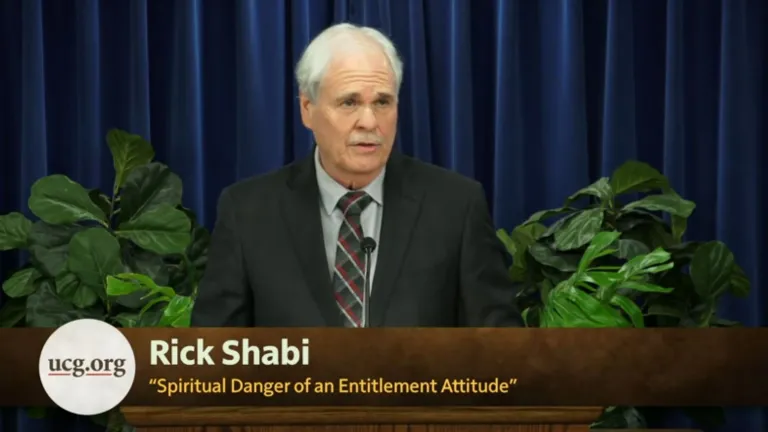
Rick Shabi (1954-2025) was ordained an elder in 2000, and relocated to northern Florida in 2004. He attended Ambassador College and graduated from Indiana University with a Bachelor of Science in Business, with a major in Accounting. After enjoying a rewarding career in corporate and local hospital finance and administration, he became a pastor in January 2011, at which time he and his wife Deborah served in the Orlando and Jacksonville, Florida, churches. Rick served as the Treasurer for the United Church of God from 2013–2022, and was President from May 2022 to April 2025.
