
Roy Holladay
This transcript was generated by AI and may contain errors. It is provided to assist those who may not be able to listen to the message.
Some of the children are going back to the Sabbath classes that they have, so it's nice for them to have teachings on their own level. I'd like to begin by asking a question, a simple one. Have we had fellowship with God today or lately? We do when we pray. It's like walking with God for a while, praising Him, sharing our lives with Him, our hopes, and the needs of others as well as our needs. Notice in Psalm 50, Psalm 50 verse 23, I'll read it. It says, whoever offers praise glorifies Me, says God. Whoever offers praise is a way to glorify God, to exalt Him, to thank Him.
And we can also do that by remembering all the different names and attributes that God has. One commentator mentioned there are over a hundred names for God in the Bible, and each one highlights one of His attributes, one of His qualities. And so it's like a beautiful diamond with all those different facets. Each one shines a different way, and it's a way to praise God, to remember Him. One of the most startling truths that you will find in the Bible, at least for me, it certainly has been very surprising, but it is that God has wanted that fellowship with mankind since the start. Can you imagine God who created everything? We are nothing in comparison, and yet He wants to have fellowship with us. He wants to get to know us as His children. Just like a father or a mother wants to know more about His child, that's the way God wants to do it. That's why He created us. He didn't create us to destroy us, to eliminate us. He loves fellowship far more than us as human beings. In Genesis chapter 3, we see at the beginning God having fellowship with the first humans He created. He didn't create them and forget about them. If you study a bit of history of different religions, usually they have this God that creates humans, and then He sort of washes His hands. The Babylonian gods had that myth that God created them, and then He got tired of hearing the shatter and too much noise. So He decided to just destroy them through a flood. It's very different from the Bible. Notice in Genesis chapter 3, verse 8, after He created Adam and Eve, He says, And they heard the sound of the Lord God walking in the garden, in the cool of the day. And Adam and his wife hid themselves from the presence of the Lord God among the trees of the garden. Then the Lord God called to Adam and said to him, Where are you? And so they were afraid. They were hiding behind the trees. And Adam came out and he said, I heard your voice in the garden, and I was afraid because I was naked and I hid myself. And he said, Who told you that you were naked? Have you eaten from the tree of which I commanded you that you should not eat? And of course, they did. They disobeyed God. They didn't do what God had asked them to do, and He wanted to fellowship with them. He was searching for them. He wanted to talk and enjoy His children. And they had disobeyed Him. And basically, the fellowship that God wanted has never been the same with humankind. But God was committed to recovering. That ability, that opportunity to walk with human beings as a father walks with His children, and as you get older, you appreciate children so much more. And also, whoever it is of the family that you have that are growing up, you want to be there for them. You want to help them go forth, be successful in life.
And God wanted that for Adam and Eve. Much later, God revealed to the Apostle Paul how He was going to recover that fellowship that was lost at the time. Now, God hadn't done anything wrong. It had been human beings that did wrong things. But He said, I'm going to make it all right. And I'm going to show certain prophets of mine, chosen people, I'm going to show them how I am going to do that. And so, let's go to Ephesians. The first three chapters of Ephesians, Dave Wallach mentioned chapter 3 recently. To me, when we teach Spokesman's Club about speaking in public, and we tell them about speech outlines, and after you have the introduction, you have a section which is called the SPS, which means a special purpose statement or specific purpose statement, which means this is what the message is going to be about. What are you going to be speaking about? You better have a clear SPS. It better be specific. Your purpose for speaking it, and it should be in a statement. As I like to say, pithy, short, brief, to the point. And I would say Ephesians 1-3 have to do with God's specific purpose statement. In Ephesians, let's go to chapter 3. He goes on about the plan of God, which was revealed to the Apostle Paul. And he says how that by revelation he made known to me the mystery, which means this is something that had been hidden and is going to be revealed. As I have briefly written already, by which, when you read, you may understand my knowledge in the mystery of Christ, which in other ages was not made known to the sons of men, as it has now been revealed by the Spirit to his holy apostles and prophets. These are the men of God that God used to write his word. He used them to record his word. So with every generation, God didn't have to go back and send another angel and reveal it. He just put it in a book. So it doesn't matter how many generations are there. You can find what is God's will, what is the Word of God. And so he says here that this has been revealed to his holy apostles and prophets, that the Gentiles should be fellow heirs of the same body and partakers of his promise in Christ through the gospel, of which I became a minister according to the gift of the grace of God given to me by the effective working of his power.
So he is saying here that the great revelation is that salvation is not limited to a race. It's not limited to Israelites. But everybody that has the faith doesn't matter what race, what nationality, if you come to the knowledge of the truth and you accept it, you get to have that fellowship with God the Father and Jesus Christ. You are on your way to living forever in the fellowship of God the Father and Jesus Christ. That's why it's such a great revelation, because God does not. He's not a respecter of persons. And everyone that submits to him and follows him, regardless of where they came from, what was their lifestyle before, they get a chance to begin to have true fellowship with God the Father and Jesus Christ. So he goes on to say, verse 8, to me, who am less than the least of all the saints. So this is one of the reasons Paul was used in a way, because he was humble. He did not get puffed up with this knowledge. But he said, I don't deserve it, but God chose me. This grace was given that I should preach among the Gentiles the unsearchable riches of Christ. That word, unsearchable, is one of my favorite words in the book of Ephesians. And it means that which can't be measured by footprints. In other words, it's something that you cannot measure. And there's the analogy that there are people that can say, well, I want to see how long and how the length of this lake. And so they count off the footprints, the footsteps around, and they can measure and see, oh, OK, well, this lake is two miles in circumference. And then you come to another body of water. And he says, well, let me go and also measure this one. And guess what? He just walked to a beach, which is the Pacific Ocean. How do you measure that? If you go north, you're going to get to the Bering Sea. And you know what? You're not going to be able to get around to the other side. The oceans all eventually combine. And so it says this is the same comparison, the unsearchable riches of what Christ has done for us.
He goes on to say, And to make all see what is the fellowship of the mystery, which from the beginning of the ages has been hidden in God, who created all things through Jesus Christ.
And so this is what I'm talking about, the mystery of this fellowship that is revealed now.
And God is going to have this fellowship with us. That that is one of the central purposes of having created human beings.
Wouldn't that be a great message to give to the Chinese or to the Islamic or to African Aborigines or whoever it is?
It doesn't matter. God wants fellowship with every person on earth.
Those who have died, those who are still alive, and those that will be born.
And so what is that mystery of fellowship?
Well, we have to look up a little more about that word. That word is best described, for instance, in Acts 2, verse 42.
Acts 2, verse 42.
The church was just getting started at that time.
And it says here, going back one verse, it says, Then those who gladly received his word, talking about Peter's, were baptized. And that day about three thousand souls were added to them. Now, some people say, well, how could you baptize three thousand people from about the sermon that Peter gave?
Isn't that just too fast? Well, the idea was that Christ had had three and a half years of ministry before that. This was in Jerusalem. Christ had died and been resurrected just less than two months before that. Lazarus had been resurrected. They had seen all of this. So when the scales came off their eyes, they said, oh, there's no one else that can be the Messiah but him. And they repented. They received. They realized the truth. And they changed. But it was because their background, they knew the Bible. And now they opened their eyes that the Messiah had been fulfilling all of these prophecies. It goes on to say, verse 42, And they continued steadfastly in the apostles' doctrine, or teachings, and fellowship in the breaking of bread and in prayers. So part of what they did was that fellowship, that ability to be together with those of the faith and to share their lives, share their dreams, share their hurts and pains. But we are all part of that body that has been created, and we're all members of what Christ is creating in this way. The term fellowship comes from a beautiful Greek word, koinonia, which I've already discussed in other messages in the past. But it means to have a partnership, a sharing, a fellowshiping with someone else. So what did they do? They considered, hey, we're all partners in this now. My physical family, if not converted, they're not part of the partners of this salvation that God is talking about, this fellowshiping that we can begin now in our lives. We don't need to hide behind trees in the Garden of Eden. God is out there looking for us, wanting that fellowship. Do we give Him the time? Do we show Him the honor, respect, love, and obedience that He wants from us?
Another key area of Scripture to know what this mystery of the fellowship is all about is 1 John 1. John can speak about fellowshiping because he was very close to Jesus Christ. He was called the disciple that Jesus loved. He knew quite a bit about talking intimately with Jesus Christ, and God chose Him to talk about this right here at the very start of his epistle.
John 1, verse 1, it says, That which was from the beginning, talking about Jesus Christ, which we have heard, which we have seen with our eyes, which we have looked upon, and our hands have handled concerning the word of life. When it talks about our hands have handled, they saw Him after being resurrected, and He could still show where He had been wounded.
At that time, He just materialized. He wasn't bleeding all over the place, but He showed them, this is who I am, the resurrected Christ. And they touched the resurrected Christ. He goes on to say, The life was manifested, and we have seen, and bear witness, and declare to you that eternal life which was with the Father, and was manifested to us, that which we have seen and heard, we declare to you, that you also may have fellowship, same word as we saw before, koinonia, with us, and truly our fellowship is with the Father and with His Son, Jesus Christ.
And so here we have the same spirit, attitude toward God the Father. Yes, we're on their side. We have committed to following God the Father. We have committed to following Jesus Christ. And we have committed to having fellowship among all those that God has called, that has given them His precious truths and His wonderful Holy Spirit.
So this is part of the central message of the Bible. God wants to elevate us to the level of being sons and daughters in His family. What greater goal can there be for human beings? It starts in Genesis chapter 1 verse 26. Genesis chapter 1 verse 26. It tells us here again, you can call it the first specific purpose statement. It says, then God said, let us make man in our image, according to our likeness. Let them have dominion over the fish of the sea, over the birds of the air, and over the cattle, over all the earth, and over every creeping thing that creeps on the earth.
So God created man in His own image, and the image of God He created them. Male and female, He created them. So both men and women are part of mankind, as we would call it today. They were made in God's image with that expectation, with that hope, that one day they will be transformed and be part of God's family. And so this is what our life is all about. It's preparing, learning to apply it, caring for each other, because it'd be great to have God the Father and Jesus Christ. I think if they were present and somehow materialized, then we wouldn't all be blown to smithereens.
But if they could, I don't think we'd have trouble having fellowship with them. But many times we have trouble with those that God has called. We have difficulty with human beings that are part of the body of Christ. And realizing that we're not perfect, but God has placed us, and we should have fellowship, sharing one with another.
In John 17, which I relate Genesis 1, 26, and 27, it talks about, let us make man in our own image. But here in John 17 is where God elaborates. What does that exactly mean? In John 17 is the parallel account. It's the equivalent, and it elaborates on it. Let's go to John 17, verse 6, because Jesus Christ here in his last prayer before he is arrested and goes through so much. John 17, verse 6, this is the last time he's able to just kneel down and pray the way he did. And what is he talking about? Well, creating human beings so that one day they will be part of his family.
John 17, in verse 6, he says, praying to God the Father, I have manifested your name to the men whom you have given me out of the world. They were yours, you gave them to me, and they have kept your word. They have followed the way of obedience. Now they have known that all things which you have given me are from you. For I have given them the words which you have given me, and they have received them, and have known surely that I came forth from you, and they have believed that you sent me. I pray for them. I do not pray for the world, but for those whom you have given me, for they are yours.
That doesn't mean that Christ is forgetting the entire world. But remember, as I brought out in the Bible study on the fundamental belief number 14, about God works with two different tracts, two different groups of people. He works with the people in the world. He works in their system of governments. Sometimes he intervenes and deals with things for profit to be fulfilled. But it's another thing to be part of the body of Christ. There, he is working on our spiritual character.
He is working to have that fellowship with us. That's why Christ is saying, I pray for them. They're part of my brethren. They're part of my fellowship, in other words. And he goes on to say, Verse 10, So again, what name is he glorifying? The name of the Father, Holy Father.
As we are. So at the beginning, God said, yes, we are one. And we're going to create humans, men and women, so that one day they can be one with us. In perfect fellowship. That's what God wants. He loves fellowship. He loves to have others that he's going to share. His glory and powers. And he doesn't like to keep it all for himself. That's not his nature. Continuing on, verse 14, it says, And the world has hated them because they are not of the world, just as I am not of the world. So those that fellowship together, following this way of life, they're not going to be thanked by the world. They're not going to be praised. They're going to persecute us because they know this is a dangerous truth out there. And the world has its own system of religion. He goes on to say, verse 15, That's how we define what is truth. It's what is written in God's word. And we're going to get to the definition of faith, which basically, if you can just remember this statement about faith, faith is the certainty that God's word is true and should be obeyed above all things. That's what it is. It's a certainty that God's word is true and should be obeyed above all things. Now, of course, we have our own lives. We can obey many things, but we have to put God's word first. That is what it's talking about here. Let's go to another scripture that helps us understand this as well. 1 John chapter 3. 1 John chapter 3.
Starting in verse 1.
Here it tells us again that God's goal is for us to be part of His family. 1 John chapter 3 verse 1. It says, Behold, what manner of love the Father has bestowed on us that we should be called children of God. Therefore the world does not know us, because it did not know Him. The world knew these things that would be obeying God. That would be changing the entire system of governments in the world.
And we would have peace. We would have fellowship. But the world is not going to go along. It goes on to say, verse 2, Beloved, now we are children of God, and it has not yet been revealed what we shall be. But we know that when He is revealed, this is talking about when Christ returns, we shall be like Him, for we shall see Him as He is. Well, we can't see spirit right now. But if we are spirit beings, we're able to see other spirit beings, and we will see Him as He is.
Now, how do we get to be part of God's family and enjoy that fellowship? The Bible reveals it is in two stages.
Two stages of spiritual birth. The first one we can see in 1 Peter 2, verse 1-3. 1 Peter 2, verses 1-3. Talking about the brethren, He says, Therefore, laying aside all malice, all deceit, hypocrisy, envy, and all evil speaking, as newborn babes, desire the pure milk of the word that you may grow thereby, if indeed you have tasted that the Lord is gracious. So He calls them like newborn babes. Now, He's talking to adults, but adults who have repented, who have been baptized, and who have started a life of obedience toward God. Now, they're not at enmity. They are not displeasing God. And so He calls them just like newborn babes. Going on to verses 22 and 23 through 23 of this same chapter, it says, Who committed no sin, nor was deceit found in His mouth. Talking about Jesus Christ here, who did not revile and return when He suffered, He did not threaten, but committed Himself to Him who judges righteously. Verse 25, He says, For you were like sheep going astray, but have now returned to the shepherd and overseer of your souls. So it's God creating in us that spirit, that attitude. And the first stage is baptism and the laying out of hands. We begin a new life and we're kind of like new creatures, and we have to grow spiritually. And so as a member matures, He's able to assimilate more solid food. Now you can have spiritual steaks and meat and potatoes, and not just some pablum or milk all the time. So we are dealing with those more deeper things in the Bible. The second stage is the one at the end of our lives. In Hebrews chapter 2, verse 10, Hebrews chapter 2, at the end of our physical lives, Hebrews 2, verses 10 and 11, it says that talking about God the Father, For it was fitting for Him, for whom are all things, and by whom are all things, in bringing many sons to glory, to make the captain of their salvation perfect through sufferings. For both he who sanctifies and those who are being sanctified are all of one, for which reason he is not ashamed to call them brethren. I'd like to read that in the Good News Bible. It's a bit clearer. It says, So we see here again the goal. God is creating a spiritual family. He's calling from all walks of life, people. And this is just the beginning stages. All of those billions of people, one day they're going to have their chance to learn what the mystery of fellowship, the opportunity to fellowship with God the Father and Jesus Christ, as we have learned. Now this second stage only takes place when Christ returns. So when we die, that's the moment that we fall into an unconscious state. Our spirit goes up to God where it is stored away because it's not going to be activated until Jesus Christ comes back. Notice 1 Thessalonians chapter 4.
We're not going to know how long it's going to take. Once we take that last breath, once we close our consciousness for the last time, we don't know, will it be 100 years? Those people that died in Christ's day, they've been waiting for 2,000 years. They're unconscious. They have no notion or idea how long it has passed because for them, as soon as they wake up again, it's like it's been an instant. It's like going to sleep and waking up, not knowing what happened during the night. 1 Thessalonians chapter 4.
Just to again rehearse the change. This is the second stage, the second part of this spiritual rebirth. It says in verse 13, But I do not want you to be ignorant, brethren, concerning those who have fallen asleep. That's what the Bible calls a person that dies. Doesn't mean they wake up, their soul is still wide awake and living. No, they have fallen asleep, lest you sorrow as others who have no hope. For if we believe that Jesus died and rose again, even so, God will bring with him those who sleep in Jesus. This is the definition of a person that has received God's Spirit, and they die and they sleep in Jesus, which means that they have qualified to be resurrected when Jesus Christ returns.
Not because of their merits, but because in Jesus they remain steadfast and faithful to the end, and God makes it possible. It goes on to say, And with the trumpet of God and the dead in Christ will rise first. So you see how methodical? It tells you what the categories are. The dead in Christ. Notice that it doesn't say they're living in somewhere else. Souls that are alive in Christ? No, the dead in Christ. Then we who are alive and remain shall be caught up together with them. So it's the same group. They come first, then those that are alive in Jesus will be caught up in the clouds to meet the Lord in the air.
So where is Jesus? He's coming down. He's coming down to rule. And now he's going to gather those that he has been fellowshiping. The mystery of the fellowship. All of these that the world has no idea the relationship that these people have with God the Father and Jesus Christ.
But God knows who they are. And with the voice of an archangel and with the trumpet of God, the dead in Christ will rise first. Then we who are alive and remain shall be caught up together with them in the clouds to meet the Lord in the air. And thus we shall always be with the Lord.
So we're part of his team. We're never going to be separate. This is our team. This is our king. And this is our government that is going to be established on the earth. Therefore comfort one another with these words. So we see here the second stage, which Jesus Christ mentioned in one part of Scripture. He called it the time of the rebirth. We notice this in Matthew 19, verse 28. Matthew 19, verse 28.
It says, the apostles that talked about, they had mentioned here in the previous verse, We have left all and followed you. Therefore what shall we have? Jesus Christ answered, As surely I say to you that in the regeneration, Apollon Genesia, which is a Greek word, which means the rebirth. In the time of the rebirth, when the Son of Man sits on the throne of his glory, You who have followed me will also sit on twelve thrones judging the twelve tribes of Israel.
And everyone who has left houses or brothers or sisters or father or mother or wife or children or lands, for my namesake, you know, lands here means economic reasons. You've given up a lot of what you possessed. For my namesake shall receive a hundredfold and inherit eternal life. That's how wonderful that reward is going to be. So what is it that we have in common where we can have that type of fellowship?
There's another place in the Bible that defines what we have in common. What makes us brothers and sisters in this fellowship, this mystery of fellowship? Notice in Ephesians chapter 4, starting in verse 1, here it describes all the common attributes. Ephesians 4, 1, it says, Therefore I, the prisoner of the Lord, beseech you to walk worthy of the calling which you were called, with all lowliness and gentleness. So we should have humility. We should consider others superior to ourselves, with long suffering, bearing with one another in love.
Not easy was an easy endo- Paul's day. It isn't easy in our day. Endeavoring to keep the unity of the Spirit in the bond of peace, which is part of what unites us. There is one body, that's Christ's spiritual body here on earth, and one Spirit. God gives just one Holy Spirit, which opens our minds.
It acts in all of us, just as you were called, in one hope of your calling. Yes, our hope is that future resurrection. We know the immortality of the soul is a false concept. It's not found neither in the Old Testament nor in the New Testament. There is one body and one Spirit.
Verse 5, one Lord, one Master, one faith. Again, here you can define it as those that have the certainty that God's word is true, that we should live by every word that proceeds from the mouth of God. So, it's the assurance, the conviction, and as a result, the obedience follows it. I have an interesting quote from one of the commentators. I put it here in my Bible, and at the bottom, I liked it so much. I'll just read it to you, because I just did this this week, so you hadn't heard this before.
Right here in Hebrews 11.
And it explains what faith is.
This is from Watson, a Hebrew word for the day. It says, the Old Testament contains a unique word for faith. Hebrew, emunah, often also translated truth. This word comes from the root, aman, a verb whose core concept is certainty, which is graphically underscored in Hebrews 11.1, which, of course, was written to Christian Jews. That verse declares that the foundation, the very essence of faith, is an absolute confidence that while we can't see something, we still know that it is real and that it is ours. We have accepted it as real. Pictures in the Old Testament include the certainty of a building's pillar, this column that supports the weight in 2 Kings 18-16.
Every time we see faith being exercised in Scripture, it always has an object. And that object, however manifested, is always in what God has said.
It's based on God's Word. Noah, for example, shows us this in Hebrews 11. In verse 7 it says, By faith Noah, being divinely warned of things not yet seen, God's Word was given to him, moved with godly fear, prepared an ark for the saving of his household by which he condemned the world and became heir of the righteousness which is according to faith. You follow God's Word, His instructions. You walk by faith. You don't let others influence, change your mind about it. It doesn't matter how many want to go along another way. You have your commands. You have your orders to follow.
This commentator goes on to say, This principle also underscores another, namely, that faith speaks of obedience. As the Greek word pisteu unquestionably means. As one reads Hebrews 11, in fact, obedience is always without exception involved. It could have been written by one of our writers.
And so we see here what we have in common to have that fellowship with one another.
In Colossians chapter 3, now let's get to the practical for a moment. Colossians chapter 3, verse 12, it says, Therefore, as the elect of God, those that God has chosen to have fellowship with Him, holy and beloved, put on tender mercies, kindness, humility, meekness, long-suffering. Is that what we reflect? It's a good question. Bearing with one another and forgiving one another, if anyone has a complaint against another, even as Christ forgave you, so you also must do. But above all, these things put on love, which is the bond of perfection. And so as long as we retain that common goal, that common fellowship, yes, we're to bear one another, forgive, just as God forgives all of us.
And so what does the future look like? The next stage of this mystery of fellowship. It's tough in this life. But remember, there's this coming time when fellowship is going to be so much easier. Luke 13, verse 29 gives us a glimpse of this. Luke 13, verse 29.
It says about the kingdom, They will come from the east and the west, and from the north and the south, in other words, from every part, these that are resurrected when Jesus Christ comes back, and sit down in the kingdom of God. They will all be fellowshiping together. I'd like to read this in the Good News Bible. It says, people will come from the east and the west, from the north and the south, and sit down at the feast in the kingdom of God.
How would you like to enjoy eating and talking with Abraham, with Moses, with Paul? Wouldn't that be a great table conversation? Well, that's what's going to happen. Yes, maybe in this life, we don't have chances to fellowship with very many, especially as we get older, and sometimes we have to be committed to these places that are very lonely. But just remember, that's only for a short time, because we're going to be able to fellowship with all those that followed God in this way. In the millennium, there will be a new level of the mystery of fellowship. Gradually, there will be conversions and then fellowshipping.
Their minds and hearts will be opened. Let's go to Isaiah 25, verse 6, about that feast that Jesus talked about. Isaiah 25, verse 6, it says, And in this mountain the Lord of hosts will make for all people a feast of choice pieces, a feast of wines on the lees, of fat things full of marrow, of well-refined wines on the lees. The contemporary English version has a little clearer. It says, On this mountain the Lord, all powerful, will prepare for all nations a feast of the finest foods, choice wines, and the best meats will be served.
And He will destroy on this mountain the surface of the covering cast over all people and the veil that is spread over all the nations, the veil of deceit. People will wake up. They will know the truth. And so that's what's coming in the future. There's going to be more fellowship than we can imagine.
We can come to the conclusion that God loves fellowship. That's why He created this universe to be so big. And the final stage of this mystery of fellowship, why it's so important to practice it, enjoy, and profit from the fellowship we have. In Revelation 22, Revelation 22, verse 1 through 5, basically this is the last description of what that new Jerusalem, the new earth, and the new heavens is going to look like.
This is the final scene because the rest is just explaining about and warnings of what's to come. Verse 1, it says, where for the healing of the nations, God can create spiritual taste, too. So He's not limited to that. And there shall be no more curse. But the throne of God and of the Lamb shall be in it, and His servants shall serve Him. And this is the family of God, just like children love to follow their father and mother and serve them.
So we will do so in a family context. This isn't some type of slave and master. No, it's going to be a family. They shall see His face, and His name shall be on their foreheads. Yes, they will have direct access to God the Father and to Jesus Christ as well. They'll have face-to-face meetings, just like a child, a little boy or a little girl.
They come and they know their father and mother, they're there for them. Their grandparents are there for them. It's inconceivable for some of the grandkids to think that their grandparents aren't going to be there and hug them and love them and think they're the best things since sliced bread. That's part of being a grandparent. And then it goes on at the end.
There shall be no more night there. They need no lamp nor light of the sun. For the Lord God gives them light, and they shall reign forever and ever. So they're going to be part of God's family, and they will be kings. They will be rulers. And then that whole universe is there waiting for the manifesting of the children of God to beautify and have more fellowship. Here are the latest stats on the universe. Right now, they've detected around 200 billion galaxies, and each galaxy has close to 200 billion stars. Now, just recently, some astronomers say that they've detected that these 200 billion galaxies, actually that's only 10% of what has been seen.
They say behind all of this, they've detected that they're farther out, more galaxies. And so, God has a lot of space. And just in this Milky Way galaxy that has around 200 billion stars, you know they've discovered over 3,000, what they call exoplanets, which are planets outside of our solar system. There's over 3,000 of them, but they've also calculated there are 10 billion small rocky planets just in the Milky Way. 10 billion. That's more than all the people on this earth with the potential of being beautified. Because God plans ahead. He loves to fellowship. He loves what he says, I has not seen nor you heard the things that God has prepared for those that love Him.
Wow! That's a lot of space for fellowshiping. It's like feast time when we get to fellowship for those eight days, but this is kind of like on a permanent basis. And of course, we need to have fellowship. As in Hebrews 10 and verse 23 and 25, let's read that real quickly. Hebrews 10, it's always good to remember. Verse 23, it says, It's at the center of all the creation. So let's get to work.
Verse 23, it says,
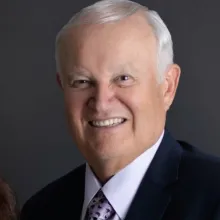
Mr. Seiglie was born in Havana, Cuba, and came to the United States when he was a child. He found out about the Church when he was 17 from a Church member in high school. He went to Ambassador College in Big Sandy, Texas, and in Pasadena, California, graduating with degrees in theology and Spanish. He serves as the pastor of the Garden Grove, CA UCG congregation and serves in the Spanish speaking areas of South America. He also writes for the Beyond Today magazine and currently serves on the UCG Council of Elders. He and his wife, Caty, have four grown daughters, and grandchildren.
