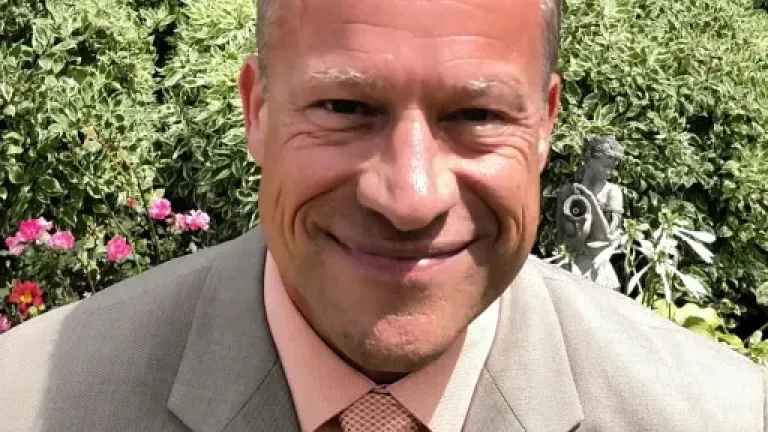

Andrew C Lee
This transcript was generated by AI and may contain errors. It is provided to assist those who may not be able to listen to the message.
That's fantastic, Art. Thank you so much. It's always incredible to see the different gifts that God has blessed us with and to see people using them, especially here at services. Thanks very much for that. Welcome to all of our visitors. It's good to have some new faces with us. We hope you'll enjoy being with us and fellowshiping with us afterwards. Thanks for joining us here today. I'd like to start with a scripture directly from the Bible today.
Please open your Bibles and turn with me to Revelation. I wrote down Revelation, but it's actually Romans. Romans 1, verse 20. Romans 1, verse 20. Mr. Thomas mentioned the sunshine. Of course, we know all the beautiful things that God created outside that we enjoy all the time as we look around us as we go through our different tasks during the day.
Romans 1, verse 20. It's written here, "...ever since the creation of the world, his invisible nature, namely his eternal power and deity, has been clearly perceived in the things that have been made so that they are without excuse." So it's laid out to us not only in this passage, but others in the Bible, is that the creation, everything that we see around us, the world around us, serves as a witness of God. And it tells us things about God and characteristics about him. I'd like to dwell today on one of those characteristics. So if you think about nature, if you think about everything that's out there in our world, our living world, like a lot of people talk about the earth as a living planet, what is it that you would isolate as the main characteristic of everything that lives on this planet? Just think about that for a few moments for yourself, what you would identify as one of the main characteristics. What is it that we hear a lot of people say about their dog or their cat, maybe two years after they got it? No, Mr. Thomas, they don't say, I wish I'd never gotten a dog or a cat. I know it was going through your mind.
They say, boy, why can't they stay a puppy or kitten? They were so cute when they were little, and then they grow up. Some people say that about their children as well. Not me, but some people.
But things grow, don't they? Everything that's out there in nature grows. We get a cat, we get a puppy, a kitten, it grows up. We plant a seed in the ground, it grows and turns into a plant. I can remember playing in the yard when I was a kid, and we had this scrawny little tree in the front yard.
My friends and I would go out and play football. When you're trying to fake somebody out, you grab the tree and kind of use the tree to swing your body around. My dad would come out of the house and start screaming, stop that! Don't do that! You're going to destroy that tree! 20 years later, I come back and visit the house, and I can't even put my hands around the trunk of that tree. It's grown so big. We take that for granted in nature, but when we look out there, is there a living thing that we can identify that does not grow? This is an essential quality of God, and he's built it into his creation. And just think about it, growth. And what we expect from that growth is an integral part of everything we do. Think about the farmer that goes out there and plants a seed. The farmer is planting that seed for a very specific reason, right? Because they want something to grow. They want corn to grow, or soybeans, or whatever else it is that's being grown from that ground. We do the same thing, whether we're tending a garden, or whether we're planting flowers or rose bushes.
There are specific things that we want to grow out of the ground, and we're doing the things that we're doing in terms of planting and tending in order to gain that growth. We look at the universe around us. If we listen to scientists and what they've observed about the universe, the things that they will tell us is that the universe is constantly expanding, right? Even the universe is growing in its physical dimensions, as these planets and everything that's been created by God is hurtling outwards into space and expanding in a universe that's all around us. Everywhere we look, within creation, there's growth. And growth is a natural part of it. For those of us who've had children or have children now, what do we do with little children? How do we gauge whether they're healthy or not? Pediatricians have these growth charts, don't they? And most new parents, especially with their first child, they'll be very carefully calculating and checking, and they'll be proudly saying, my son, he's a big kid, he's so healthy, he's at the 95th percentile for his age, right? And they'll measure weight and height and how everything is tracking against growth charts, because the health of a child, in many ways, is gauged by how it's growing. And we track that, especially over the early years, to see if that child is healthy. So growth and expanding and propagation is just a part of nature and something God's built into it. Another thing I found really interesting to observe, one of the past houses we lived in, we had some strawberry plants, and somebody before us had planted, I think, a small patch of strawberry plants in the middle of a section of ivy, and they hadn't been tended to for several years. And those strawberry plants, within just a couple of years' time, were grown all throughout that ivy. And I remember one spring going out there and trying to clean some of it up and observing what these plants did. And it's amazing, because I don't know if how many of you have looked carefully at a strawberry plant, but these things would grow, and then towards the end of the season, they would send out these shoots that would go and they would hit the ground. And wherever they hit the ground, they would then send out roots of their own, and they would grow then into being plants. And those plants then would send out several other shoots late in the season. They would implant themselves in the ground, put the roots in there, and grow. There's this aggressiveness of growth that God has built into the creation.
Everything that he's made exists to grow, to develop, and not to stay static. That idea of growth extends as well into what God is creating spiritually. I think you can probably think of some analogies and some ideas around that already in your own minds, but turn with me, if you would, to Isaiah 9. And we'll read Isaiah 9, verses 6 and 7. Some of you might recognize this as one of the essential prophecies in the Old Testament about Jesus Christ and his coming and what he would do.
Isaiah 9, verses 6 and 7. It says here, for to us a child is born, to us a son is given, and the government will be upon his shoulder, and his name will be called Wonderful Counselor, Mighty God, Everlasting Father, Prince of Peace. Of the increase or growth of his government and of peace, there will be no end. Upon the throne of David and over his kingdom, to establish and to uphold it with justice and righteousness from this time forth and evermore, the zeal of the Lord of hosts will do this. So right in that very prophecy about Jesus Christ, the coming King that we look forward to as well, one of the essential qualities of his kingdom is that it's going to expand, it's going to grow, there's going to be no end to its increase. Because not only in his physical creation, but also in the spiritual creation that God is making, growth, an essential part of his mind, his way of being, is built directly into the middle of that. Turn with you, if you would, to Matthew 13. Matthew 13. Here Jesus Christ is speaking in some of his parables, and we'll read verses 31 and 32 of Matthew 13. Here it says that Jesus Christ put another parable before them, saying, The kingdom of heaven is like a grain of mustard seed which man took and he sowed in his field. It's the smallest of all seeds, but when it's grown it's the greatest of shrubs and becomes a tree so the birds of the air come and make nests in its branches. So when God was talking about his kingdom, he was also talking about growth, how much bigger this would expand, how large everything will be of what God is trying to create. So the thing I want to leave here before we move on from this is that we think about this and growth being at the center of what God is about. We see it in every part of the physical creation that he's made and we see it as he talks about his son, as he talks about his kingdom, and when he talks about what he's trying to do in the world.
We won't turn to it, but we also know that Jesus Christ and we actually are talked about as the first fruits of God. He talks in the Bible a lot about how he's planting a harvest. He has an early harvest. He has people that he calls out of this world that right now in human life he gives his word, his way of life, and he calls those his first fruits. And we know that his goal, though, as his kingdom and his purpose grows, is to call all of humanity to be a part of his family.
So again, he's talking in terms of growth, agriculture in this case, and the idea that you have an early harvest where some early fruit is born, and then after that comes a much larger harvest as a lot more fruit comes. And so this idea of growth is built into everything that God is doing. Now, is all growth good? Is all growth good? Let's take a few minutes to dwell on that.
Now, I was going to tell you I have a good friend who, but you'll figure it out pretty quickly, and I'll just tell you I did something stupid, and one of many things. I'll just tell you about one of them because it would take too long and you'd all fall asleep after a while if I told you all of it. So this was going back about three or four years ago, and Karen and the kids had gone to visit, I think, her dad to come back to the U.S. when we were living overseas.
And I was on my own, and I was going off on a business trip, and being the good husband that I always strived to be, I took all the dirty dishes, and before I was going to leave on my trip, I took all the dirty dishes and I piled them into the dishwasher. I figured, no problem, right? Piled the dirty dishes into the dishwasher in the morning before I leave for the airport, stick the soap in there, my last couple dishes from breakfast, close it up, come home, clean dishes, everything's good. And I left, I think it was for about a week. So, and Mark Graham has a look of horror on his face right now as he's contemplating what I came home to after a week. And you can imagine, right? Because things grow. I didn't turn on the dishwasher. Amazing. I just forgot.
Somehow that happened. My cereal bowl was sitting right there out on the counter, and I opened the dishwasher and I needed a shaver.
There was mold growing everywhere inside of this dishwasher. And the scrubbing that you have to do, and it's amazing, you know, in a metal pot, did you know, by the way, that mold can eat into a metal pot? I can vouch for that personally. It can eat right through the coating of it. It's that powerful what it does. Things grow, but they're not always good, right? Not all things that grow are necessarily good. Come with me, please, to James 1, and we'll read a little bit about that, because if we apply that as well into our lives, our daily lives, the spiritual walk with God that we're trying to travel, we have to think about the fact that not everything that's going to try to grow within us is good. James 1, verses 15 through 17. James 1, verses 15 through 17.
James writes here, Let no one say when he is tempted, I am tempted by God. For God cannot be tempted with evil, and he himself tempts no one. But each person is tempted when he is lured and enticed by his own desire. And then desire, when it's conceived, brings forth sin. And sin, when it's full grown, brings forth death. So what's being talked about here is another progression of growth. As things come into our mind, as we're led away by our own temptations, stimuli that are out there that trigger the wrong thoughts in our mind that we don't shut down, and we allow them to take root and to begin to grow, and what do they bring forth in the end? It tells us right here, brings forth sinful actions and sinful actions if they remain unrepentative, and if we live in those actions, we'll bring forth death. Not everything that grows is good, and so we have to think about our own lives and what it is that grows within our own minds. Turn with me, if you will, to Galatians 5.
There's an old saying, a lot of people probably know, nature abhors a vacuum. I guess my dishwasher in that story proved that to be true, because equilibrium was not going to live in that dishwasher.
Something was going to grow, right? And it's the same way in our minds. It's the same way in the things going on in our lives, right? Something is going to grow. It's only a question of what that's going to be, and if it's the things that should be in our lives as Christians, or if it's something else. Galatians 5, turn with me please to verse 16. This is a section that talks about the fruit of the flesh and the fruit of the spirit. Galatians 5 verses 16 through 23.
But I say, walk by the spirit, do not gratify the desires of the flesh. For the desires of the flesh are against the spirit, and the desires of the spirit are against the flesh. For these are opposed to each other, to prevent you from doing what you would. But if you're led by the spirit, you're not under the law. Now the works of the flesh are plain. Fornication, impurity, licentiousness, idolatry, sorcery, enmity, strife, jealousy, anger, selfishness, dissension, party spirit, eat envy, drunkenness, carousing, and the like. I warn you, as I warned you before, that those who do such things shall not inherit the kingdom of God. A lot of fruits that we see, probably to some extent in our own lives, even though we don't want them there, and to a large extent especially in lives of others that we might see around us that don't have a faith in God, who are not trying to live according to his way. And our world, unfortunately, is full of so many of these fruits, these things that grow because something is going to grow in the human mind. It's not going to stay stagnant.
It's not going to stay still. But verse 22, the fruit of the spirit is love, joy, peace, patience, kindness, goodness, faithfulness, gentleness, and self-control. Against such, there's no law. And those who belong to Christ Jesus have crucified the flesh with its passions and its desires.
So what's this talking about? This is talking about spiritually being aware of the fact that things want to grow in our mind. That of itself is not a bad fact at all. Our lives should grow and develop. Our minds should grow and develop. The things that we're doing should develop. But we have to think about what it is that is developing. Is it good? Is it in line with God's will, God's spirit, God's word? Or is it sort of default? And just whatever comes in is going to start growing and we'll sort of see what happens. Those things come to very different ends.
So growth has to be tended in order for the right things to grow. I think we know that just intuitively when we think about it. If you leave land fallow and just let it sit there, there's no telling what's going to happen. Now, unfortunately, I didn't have time to pull pictures together this time, but I did have an opportunity about three years ago to go with a friend of mine, actually somebody I grew up with in the church. He's a professor out in the West Coast and a specialist in environmental studies and atmospheric studies. And he had some connections in Chernobyl and Ukraine. And so about seven of us took a trip. We spent two days in the nuclear exclusion area in Chernobyl. And I'll tell you it was probably the most fascinating trip that I've ever taken. And what we did is we went in and this is a whole zone, probably about the size of Cleveland. And in the center of it is the old Chernobyl nuclear power plant. And then in all of the area that's around it, everyone who lived there was cleared out and evacuated within the space of probably three days after the nuclear accident happened there going on 30 years ago now.
And what's amazing is to walk through some of these villages and towns that are there and to see what it is that happens after 25 to 30 years of nobody attending anything. So the only people who are in the zone are the people who are working to do nuclear cleanup. And the rest of it is more or less turned into a big nature preserve. So much so that they actually took this rare form of ancient horses that lived in Europe and introduced them back into there as wild horses. And we didn't get a chance to see them, but they're actually herds of wild European horses running across the old Chernobyl nuclear exclusion area. But what really struck me was we're driving down this road after we'd come in, and it's just a two-lane road, nobody there as far as the eye can see, and we stopped. And the guide said, we're in the middle of a village, and we start looking around us and all we could see was trees. And as we peered sort of back through the trees, you could just make out the outlines of some structures. And they said, this used to be the main street of a village.
And we walked back then into there, and everywhere was trees. And what really amazed me was how on the insides of these old houses, trees can grow up. I saw places where trees grew up and around metal handrails, where the handrail was actually right through the middle of the trunk of that tree.
As we were in another place, a town called Pripyat, which is about 40-50,000 population town, which was about five miles from the plant, we stood in the old town square. And everywhere, in the middle of the pavement, coming up through the blacktop, where trees and roots and weeds and all kinds of things growing, just aggressively growing. And we went to the soccer stadium that had been built there. And when you looked at the soccer field, 25 years later, it looked like a miniature forest. Growth without tending. It just goes everywhere. It goes wild. Some of it's interesting, some of it's beautiful, but in terms of being livable and doing useful things for you, it doesn't do that. It just grows indiscriminately. Whatever's there, wherever the seeds fall, they simply grow. So what does this have to do with us in our lives? So if we think about that from a physical perspective, from our daily lives, from the perspective of God, we have to tend to the growth that we want. To what extent have we defined for ourselves what it is that we want to grow in our lives? We read these scriptures, we understand what it is that God is trying to do, but within that framework, how much time have we spent saying, these are the fruits, this is the produce that I want to come from my life and from my walk with God? Turn with me, if you will, to Mark 11. In my opinion, this is the most bizarre happening in the life of Jesus Christ. You can have different opinions, but I've always thought this is just a really strange occurrence. If you go out and search on the internet, you'll find all kinds of interesting theories about it, even going to the point of, you know, was Jesus Christ committing vandalism? Was he destroying personal property? Now you're probably really wondering what in the world I'm talking about. Mark 11.
We'll start in verse 12. Now this was right around the time that Jesus Christ made his triumphant entry into Jerusalem near the end of his ministry, shortly before the time that he was to be crucified. And after he'd gone in and had his confrontation with the money changers in the temple, the next day, or around that time, then it says in verse 12, Mark 11, the next day when he had come out from Bethany, he and his disciples, he was hungry. And from far away he saw a fig tree that had leaves, so he went to see if perhaps he would find something on it. And when he came to it, he found nothing but leaves, for it was not the season for figs. In response, Jesus said to it, let no one eat fruit from you ever again, and his disciples heard it. And verse 20, in the morning, as they passed by, they saw the fig tree dried up from the roots. And verse 21, Peter, remembering, said to him, Rabbi, look, the fig tree which you have cursed has withered away.
Now that just is bizarre, isn't it? I mean, to me it's just kind of strange, and I've puzzled over that from time to time in the past, so finally spent a little time looking into it, and actually find it very instructive for what we're talking about today in terms of growth, and defining what it is that we want to have grow, and what it is that God wants to grow in our lives. Why is that?
I found a number of different commentaries. I happen to choose this quote from a place called gotquestions.org. Why did Jesus curse the fig tree, it says. It was not the right season for figs.
The answer to this question can be determined by studying the characteristics of fig trees.
The fruit of the fig tree generally appears before the leaves, and because the fruit is green, it blends in with the leaves right up until the time that it's almost ripe. So when Jesus and His disciples saw from a distance that the tree had leaves, they would have expected it to also have fruit on it, even though it was earlier in the season than what would be normal for a fig tree.
Also, each tree would often produce two to three crops of figs each season. There'd be an early crop in the spring followed by one or two later crops, and in some parts of Israel, depending on climate and conditions, it was also possible that a tree might produce fruit 10 out of 12 months.
This also explains why Jesus and His disciples would be looking for fruit on the fig tree, even if it was not the main growing season. The fact that the tree already had leaves on it, even though it was at a higher elevation around Jerusalem and therefore would have been outside the normal season for figs, would have seemed to be a good indication that there would also be fruit on it. So what was happening here, knowing the trees and everything of their environment in that day, is they're walking, they're hungry, they see a tree, they see the leaves, they know it's a fig tree because they're used to fig trees, and of course they know the fig trees produce fruit and then leaves. So if I see a fig tree out there with leaves on it, it's got to have figs. And for that reason, it was reasonable for Jesus Christ to see that and understand that this tree was not doing what it was supposed to do. It produced leaves, but it didn't produce the figs that it was supposed to.
It didn't do it in the right order, perhaps, but in this case it probably just, for whatever reason, hadn't done it. Then he cursed it, and it was meant symbolically for two reasons. One was a fig tree was sort of a symbol of the nation of Israel, and as he was coming into Jerusalem at the very last part of his ministry and showing the fact that Israel, who had been given God's Word, had not done anything with it, had not been fruitful in the way that they had been using the gifts that God gave them, he was going to destroy all of that infrastructure that had been put into place, and he was going to bring a new way. And it's also meant to apply to us as Christians, because we as Christians are called to be fruitful. Just as the nation of Israel in the Old Testament was God's people, and meant to show the fruit and the results of God's way, it also applies to us as individuals.
So again, what is it that we're trying to grow on our trees? What is it that's growing in our lives?
We have to make sure in our lives that we're not mixing up leaves for fruit.
So what does that mean? Well, the leaves, you know, when you look at this fig tree from far away, you see the leaves, and it looks like a fruitful tree. You don't know until you walk right up to that tree and start seeing whether there are figs down hiding inside of those leaves, whether or not it's actually born fruit. So at first glance, in looking at it, it looks like any other fig tree. This one would have.
But in reality, it had done nothing in terms of the job that it should have been done.
So we have to think and ask ourselves as well as Christians, are we tending to the things that make us look like good Christians, or are we tending to the things that good Christians do as a result of God's Spirit living within them, bearing that fruit? Turn with me, if you will, to Matthew 25.
Let's turn to one section here of Scripture that brings out this point in a little more detail.
Matthew 25, and we'll read a fairly lengthy passage here in verses 31 through 46.
Matthew 25, 31, often called the parable of the sheep and the goats.
When the Son of Man comes in His glory in verse 31, and all the holy angels with Him, He'll sit on the throne of His glory, and all the nations will be gathered before Him, and He'll separate them one from another as a shepherd divides his sheep from the goats. He'll set the sheep on His right hand, but the goats on the left, and the King will say to those on the right, Come, you blessed of my Father, inherit the kingdom. For I was hungry, and you gave me food.
Verse 35, I was thirsty, and you gave me drink. I was a stranger, and you took me in. I was naked, and you clothed me. I was sick, and you visited me. I was in prison, and you came to me. And the righteous will answer Him, saying, Lord, when did we see you hungry and feed you, or thirsty and give you drink? When did we see a stranger, or sick, or in prison? And the King in verse 40 will answer and say to them, Inasmuch as you did it to one of the least of these, my brethren, you did it to me.
And He'll say to those on the left, Depart from me you cursed, into the everlasting fire prepared for the devil and his angels. And then He goes on, and He basically lays out the opposite of what was in all of those earlier scriptures about those on His right hand. That they saw people in need, and they didn't help them. And then in doing so, they rejected not only those people, but Jesus Christ as well. And it says in verse 46, These will go away into everlasting punishment, but the righteous into eternal life. Now this is not meant to confine and be the sum total of everything that we're supposed to do as Christians, but it's certainly supposed to lay out the fact that if God's Spirit is working with us and producing fruit, it's not just about saying the right things or acting the right way, it's about doing the deeds of Christianity, whatever those are. And if I would make a generalization, what it really means is connecting with other human beings, understanding them as sons and daughters of Jesus Christ, and of God, creations of His, and taking the love that He's given to us, and the mercy that He's given to us, and extending that to the other people that we come into contact with, and in a practical way helping them through the difficulties and troubles that they have in life. That's the fruit that He's looking for in our lives.
Now He's enabled all of us in different ways to do those things. Okay, I'm not going to get up here and try to sing like Art did. Everyone would leave. Right? That's not a gift that I've been given, but we've all been given unique gifts that we can put to use in this way in bearing fruit in our lives. And God wants us to think about that, to reflect on it, and then to do the things that we can do. So in this first section, in terms of thinking about what should be growing in our lives, what I'd just like to leave everyone about with is the question to think about in this upcoming week.
Have you defined in your life the fruit, the growth, that you want to generate? Have you prayed to God about what it is that He wants to grow in your life? What fruit it is that you can bring forth in His service? I'd encourage everyone to do that, to think about and to pray about where it is that you can use God's Spirit and the gifts and the abilities that He's given you in order to enhance the lives of other people as you come into contact with them.
Let's talk next about pruning.
Pruning. We'll talk in the time remaining, both about pruning and weeding, two things that we do if we tend to plants in order to help them to grow and to bear fruit.
Now, pruning is a little more of a painful process, right? Because when you're pruning, you're actually taking branches of a plant and you're cutting them off. And if you're like me, you're left with nothing but a nub that's not going to grow the next year. If you're like others that are probably a little more expert with plants, you know exactly where you can prune the different growths, whether it's at the end of the season or the beginning of the season, in order to produce even more the next year to make the plants stronger, in order to make it able, if it's a fruit tree to bear more fruit, if it's a rose bush to bear more and larger and more beautiful roses, whatever it might be. But that's achieved through pruning.
Turn with me to John 15. Jesus Christ uses the same analogy of pruning when he talks to his disciples. John 15. We'll read verses 1 through 8.
John 15 verses 1 through 8. I am the true vine, and my father is the vine dresser.
Every branch of mine that doesn't bear fruit he takes away, and every branch that does bear fruit he prunes, that it may bear more fruit. You're already made clean by the word that I've spoken to you. Abide in me, and I in you. As the branch cannot bear fruit by itself, unless it abides in the vine, neither can you unless you abide in me. I am the vine, and you are the branches. He who abides in me, and I in him, he it is that bears much fruit. For apart from me, you can do nothing.
If a man does not abide in me, he's cast forth as a branch and withers, and the branches are gathered, thrown into the fire, and burned. If you abide in me, and my words abide in you, ask whatever you will, and it will be done for you. By this my father is glorified, that you bear much fruit, and so prove to be my disciples. So God talks about pruning, and that's not necessarily pleasant, is it? If you're chopping off a piece of a living thing, a plant in this case, now plants don't feel pain like human beings do, but by analogy the fact is we suffer through different types of trials, painful experiences in our lives, and God uses those in order to produce growth and to produce fruit in our lives. He's not trying to torment us, we're children of His. He treasures us, but He is trying to produce growth within us, and that's something we need to think about as we suffer through some of the different things that we do. He points this out further in Matthew 13 in the parable of the sower. You'll turn with me to Matthew 13. The parable of the sower in verses 3-9 talks about a sower who's going out and scattering seed, and the seed falls in different places.
And then Jesus Christ talks about the characteristics of the seed and what happens to it, depending on the places where it fell. So Matthew 13, we'll pick up in verse 5 and see what it says here. It says here that some fell on, and so we'll start in 4, as He sowed, some seed fell by the wayside, and birds came and ate those up. Some fell on stony places where they didn't have much earth, and they immediately sprang up because they had no depth of earth. But when the sun was up and they were scorched, and because they had no root, they withered away. Then some fell among thorns in verse 7, and in verse 8, others fell on good ground. If we look further in verses 20-21, it explains to us the seed that fell on rocky ground. Verse 20, what was sown on rocky ground, this is He who hears the Word and immediately receives it with joy, yet has no root in Himself that endures for a while, and when tribulation or persecution arises on account of the Word, immediately He falls away. So the challenge here is that we recognize and understand the trials and the difficulties that we have in life in the context of what God is doing and working with us, not viewing them as persecution or us being just given a tough time by a difficult God, but God is growing things within us. It's part of His nature and it's what He does.
Understanding that in the right context, as we read here, is critical for God's Spirit to continue to work within us, so we don't grow weary, we don't say the struggle is too much and give up.
In other sections of the Bible, it talks about the fact that in the end, the things that we suffer from are really pretty much equivalent to the things the rest of the world suffers from as they go through their lives. Only for us, it has a purpose. Giving up doesn't take away the nature of human life and the difficulty we face, but giving up removes us from God and what He's trying to create within us. You know, these things do grow slowly as well, and I think one of the challenging things for us as human beings is that we typically try to avoid things that are painful and we try to go around things that are painful rather than going through them. And so, we come up with all these elaborate ways to avoid things we don't like to do. So I can use a real, maybe a little bit crude, sort of trivial example. How many people wake up in the middle of the night and need to go to the bathroom? And if you think, if you're out camping, if that's ever happened to you, what goes through your mind? You're thinking, oh man, you know, I'm in this tent, you have to get some clothes on, and to hike all the way across to wherever, you know, the outhouse or whatever is, and you say, do I really want to do this? And then if you're like me, you toss and turn for two hours, then you realize, yeah, I really do need to go to the bathroom after you haven't slept for two hours, right? But that same thing in the psyche just plays itself out in so many different parts of life, doesn't it? It's that thing. You know what you need to do. You don't want to deal with it.
You don't want to face it head-on because the immediate discomfort and the pain of it is more than you want to deal with it. And so you decide you can hide from it. And the fact is, you can't, because it's going to keep coming back. Now, I experienced this in a bigger way this week.
Through a friend of mine was introduced to a situation at a business here locally where a lady was convicted of embezzling $250,000 over the course of the last six years. Now, what happened? Very, very typical story of these situations, okay, especially, you know, with embezzlement. She had one month where she was short trying to pay some bills. She had access to the funds of this business where she worked, and so she took some, fully intending and knowing that within two weeks she was going to repay it when she got her next paycheck.
Now, most of you can probably play out the script from there over the course of the next six years, right? Something always comes up where you can't do it, and pretty soon you're in this hole that's so deep that there's nothing you can do about it. And so you just keep digging and somehow convincing yourself, I guess, that it's not going to happen to me. And, of course, in this case, things caught up with her at a certain point in time, and she, at this point, is convinced she's going to lose her family, lose her house, and go to prison, and certainly the last one is more than likely going to happen, and the others very well could as well.
So that's an extreme example, but the fact is that this plays itself out within my life, I can tell you, and I'm sure if we're honest about it, plays itself out in all of our lives. You just have to think about the areas where this is happening. Where is it that we face over and over again the same sort of difficulties or run into the same kinds of troubles, whether it's dealing with other people, whether it's dealing with money, whether it's dealing with things, whatever it is in our lives that we struggle with.
We tend to all as human beings follow this script, and we tend to make the same mistakes over and over again because we're trying to avoid the same element of pain, or we're convinced that we cannot disclose this to someone else, and until you do disclose that, you're not going to be able to get past it.
Whatever it is in your life, these things then become recurring trials that in many ways we just bring upon ourselves. Until we're willing to face that pain, to work through it in a positive way and understand that it's causing growth, we don't move forward in our spiritual lives.
I think often about the thing that came out after 9-11 and talking about first responders, and I think about this a lot at work when I'm dealing with problems that I don't want to deal with or conflicts that I don't want to get in the middle of, but what's the thing they always say about the first responders? They're paid when there's trouble to run to the trouble, not to run away from it, right? The rest of us run away from it, they run to it because that's what they're trained to do, and that's what they're paid to do, and that's what they want to do, and that's an attitude I think we need to take into our own lives, our spiritual lives, as we think about the things that are going on.
As there are struggles, we as humans want to run away from those struggles. We have to run to those things, we have to take them on with God's help and with his power because that's the way that we work through them, we overcome them, and we bear fruit. Let's go lastly to weeding, and we'll make this section short as we're going getting close to our time here, but if any of us have ever tended plants of any kind, we know that weeding is incredibly important, right? Whatever it is that you're trying to grow needs sunshine, it needs space to spread out its roots and to grow, and weeds can easily crowd in and overcome it and take away all of the different types of nourishment that a plant needs in order to grow.
In our lives, spiritual weeding has to take place as well. We have to think about and pluck out the things that are happening in our lives that tend to crowd out God's way of life. Let's turn to Colossians 3. Colossians 3, and we'll read verses 5 through 10.
Colossians 3 verses 5 through 10.
Colossians 3 verse 5 says, Put to death therefore what is earthly in you, fornication, impurity, passion, evil, desire, and covetousness, which is idolatry. On account of these the wrath of God is coming. In these you once walked when you lived in them, but now put them all away. Anger, wrath, malice, slander, and foul talk. Don't lie to one another, seeing that you put off the old nature with its practices, and have put on the new nature, which is being renewed in knowledge after the image of its creator. So it talks about here, looking at our lives, plucking out the things that don't belong there, that get in the way of, and that are contrary to, what God is about, and what his spirit wants to drive us to do as it's living in our lives.
In Matthew 5, we won't read this passage, but in Matthew 5, if you want to look at it later, verses 27 through 30, is a passage that talks in great extremes about this. In fact, Jesus Christ makes a statement, and again I'll emphasize, symbolically speaking, speaking by analogy, if your right eye causes you to sin, pluck it out and throw it away, he says.
It's better that you go into the kingdom without an eye, and it says if your right hand causes the sin, cut it off. Now again, not literal, not literal. Figuratively speaking about our lives, what's it saying? If you've got a problem, you look for things that you can cut off in order to stop that problem from happening. Those who have dealt with alcoholism or know people who have know that, generally speaking, alcoholics are told, don't drink socially. Just stop. Cut it off, right? You're better to go through the rest of your life not having another drink than to take the risk of what's going to happen if you haven't even one drink. You could say that for people who are trying to get over an addiction with smoking, and you could take it into so many different ways.
If you're having problems on the internet, you end up on websites where you don't belong, you're better off going through the rest of your life with no computer or with no internet access or giving a trusted person a password and having them put parental controls on your computer, then you are being embarrassed the rest of your life and not talking to them about it.
If you have a problem with shopping and spending, you're better off living your life without a credit card, keeping it locked up at home for those few occasions when it's really needed to make a transaction rather than ending up in a store and running up a bill that you're not going to be able to pay and you're going to make payments on for the next 10 years.
This works its way through all the different parts of our lives. We all, it's really a matter of searching within our own lives, within our own selves and saying, what is it that I struggle with and what is it that is crowding out God's way within me and how do I cut it off? How do I cut it off? How do I pluck it out like a weed in the garden that doesn't belong there, that's strangling off the growth that's supposed to be happening? So in conclusion, growth is a central attribute of God. We see it all around us. Things grow. They just can't help but grow in our physical world and that's meant as a strong analogy for us and as a witness to God's mind. He wants us to grow as Christians. In order to do that, we need to know what it is that's supposed to grow in our lives. We need to think about it and be resolute about that. We need to be willing to take on the difficult situations in life in order to grow so those things are pruned away and we need to actively weed, looking at what it is that in our lives and our minds that are causing us stumbling blocks and getting in the way of God's way of life and take those out. As human beings, it's amazing.
You know, we have this nurturing nature in us, don't we? We just love to grow things. If we're into flowers, planting a plant or seeing a rose tree grow and tending to it and seeing what it produces after some time, a bush, dealing with a modestly flightless bird and seeing how it develops, along the way, having cats or kittens like we do, having a rottweiler pup and seeing it develop, there's nothing more exciting, right, than having something that's growing, tending to it, and seeing it develop into something mature. God looks at us the same way. That's a characteristic of his own mind that he's given to us, and there's nothing that he wants more than to see us grow.
So as we go forward in our lives, let's think about growth. Let's ask God to give us growth and attend us just as we tend to living things that are in our trust.

Andy serves as an elder in UCG's greater Cleveland congregation in Ohio, together with his wife Karen.
