
Robin S Webber
This transcript was generated by AI and may contain errors. It is provided to assist those who may not be able to listen to the message.
I have a question for you. Why do we do what we do as New Covenant Christians? Why do we do what we do as New Covenant Christians? Have you ever put those questions together with that title? Because that title describes what you and I have been called to be. As we begin this series, I'd like to introduce some thoughts. As I mentioned, a part of this is going to be basically a Bible study, a part of it is probably going to be preaching, a part of it is going to be teaching.
We'll see where the Spirit of God leads us as we're with this congregation. But as I mentioned in the announcements, I'm very pleased to be able to have young people here to be able to hear this message that are just beginning in this way of life for the remainder of their adulthood. And remembering how I was taught and when I was taught and what I received, I'm very pleased to be able to give this to you as a Christian pastor.
Because in this series, which as I mentioned, I don't know how long it's going to go. Now don't get scared. We're not talking about 100 to 102 series. But what we're going to basically do today is we're going to give you a lot of undergirding. And we're going to give you a lot of foundation. The foundation is the important part of any building. That's where the time, that's where the energy, and that's where oftentimes the expense goes.
Now once, whether it be time, whether it be study, or whether it be labor, once the foundation is established, then we can build upon that. And that's going to be hopefully what we're going to do in the course of the weeks ahead. What we're going to be dealing with, for those of you that aren't here, and you might want to be able to get it later on, if and when you want to, we're going to be going in a series of, or dealing with a series entitled, A New Covenant Perspective.
A New Covenant Perspective. And we're going to have a New Covenant Perspective, or deal with that, dealing with the Sabbath, dealing with tithing, and dealing with the biblical food laws. I thought it would be a good opportunity to be able to go through these things. For in the course of the past year, we've been dealing with a lot of different matters, different topics, and different items. I thought it's time, especially with some of our newer members, to get down to basics, to come back to what we shall call doctrine, but to lay a foundation that hopefully will be exciting to you, and that you can build upon in your personal life.
Because it's not simply about the Sabbath, and the Holy Days, and the biblical food laws, and tithing. What we're really talking about is an understanding of what God is doing, and the relationship that He wants to have with each and every one of us that are in this room. As we begin, allow me to introduce this thought. And here it is simply, eternal salvation as immortal children of our Heavenly Father is a true and pure gift from Him.
Eternal salvation is a true and a pure gift from Him. It's a four-letter word that stands out in the Bible. It's called gift. That's why all of us are here today, to be partakers of the gift. All that we do before God, and all that we believe that God is, all moves towards this one item that God might give us His incredible gift.
As I say that, let's understand something. Being a gift, then, it cannot be bought, and it cannot be earned in any manner with human obedience or by our works. Let's take it a step further. No commandment-keeping can unloosen the hinges of this flesh into the spirit world. No amount of commandment-keeping of and by itself can unhinge us from this flesh and allow us to enter the kingdom of God. Why can I say that? Because, again, let's understand something. The gift of God, eternal life, is that it cannot be earned, and it cannot be produced from here below.
It is indeed the gift of God. In no manner, and in no way, can we say, well, if I do this, or if I do that, somehow I can earn God's favor and thus unlock the door to eternity. What is the scripture in the Bible that we anchor ourselves with, with what I've led you to so far? Would you join me in Romans 6 and verse 23? In Romans 6 and verse 23, many of us have only become acquainted with the Church of God, perhaps in the last year to 10 years.
Often times, people are acquainted with the Church of God through the understanding of the Seventh-day Sabbath, and or the Holy Days, and or our understanding of prophecy leading to the Second Coming of Jesus Christ. Many of you, probably to one degree or another, and to your families or parents before you, probably fall in one line or another with that. That we think of going back to Exodus 20 and about the Sabbath or Leviticus 23 and coming to understand the Holy Days or going to Corinthians and understanding that the Holy Days were kept by the apostles and on and on and on and on.
Many people do not recognize that Romans 6 and verse 23, though, is one of the cardinal scriptures at the founding of the Church of God in the 20th century. When Herbert Armstrong, back in the 1920s, became acquainted with this scripture and had to face it, head on, it would not go away. That it is Romans 6 and verse 23 that began to help him understand that man does not have an immortal soul.
That we're not moving forward based upon our good works, our good looks or what we do down below. And that we are not awarded immediately into what many think is heaven and or in that sense going to the other place of which many people believe. He looked at Romans 6 and verse 23 and let's look at it together now. And this is cardinal foundational material for us to build upon. For the wages of sin is death. But then notice, but the gift of God is eternal life in Christ Jesus our Lord.
Up until that time, the gentleman that I mentioned oftentimes thought, well, if you do this, you just kind of keep on going your way. You know, you have an immortal soul. You're not really going to be anchored down here. You just kind of move on this way or you move another way. And he looked at that because he was a man of words. He said, Whoa, wait a minute.
I've been missing something up to this point. It's not about me. And I don't have it in me of and by myself to move beyond this flesh, beyond this life. And he looked at it and he said, Look, what I have bought into is what I deserve.
And that is death in this flesh alone. But the gift of God is eternal life in Christ Jesus our Lord. And that began to awaken him to the Scriptures. Now, when we say that eternal life, which is what we hope for, that is our hope as Christians, the best way that I can explain it about eternal life is if I come over to the whiteboard here for a moment. Let's say that this is a door. There is no way that in this world encapsulated by time and space and in the world of flesh and blood that somehow from this side of eternity that there's a doorknob and I can open the door.
That I can open the door and enter into what God says is only a gift from him. That's eternal life. In other words, the doorknob is actually on this side of the board. The door opens from God's side by God's grace, by God's favor, by what God is designed to offer us as a gift. That's the simplest way of explaining grace. The doorknob is on the other side.
The one thing is, it's beautiful about this, in case you're frustrated thinking that the doorknob is not on my side, God wants to open up that door. God wants to open up that life. He wants to give us that eternity. Let's understand something. When we look at Romans 6.23, perhaps that can even be better understood by the Apostle Paul's words as he outlined how God's grace does come to us and how we gain favor with him. Join me now in Romans 4.
In Romans 4. Because sometimes, and this is very human, because we live in a human world, and thus we think an extension is everything that we are doing of and by ourselves. And so we think, well, if I do this, and if I do that, and if I do this, and if I do that, and if I do this, therefore God's above, and he's going to notice, and then he's going to want to do this, and this, and this, and this, and this for me.
Let's look at Romans 4. I think many of us remember that Abraham is called what? The Father of the faithful. Let's understand how it works. What then shall we say that Abraham our Father has found according to the flesh? For if Abraham was justified by works, that is, by what he did, he has something to boast about. In other words, he could crow all day long. Look what I have done. But he couldn't boast before God, not before God.
Then notice verse 3, chapter 4. For what does the Scripture say? Paul doesn't say, don't think it's what I am saying, but what does the Scripture say? Abraham believed God, and it was accounted to him for righteousness. Now to him who works, the wages are not counted as grace, but as debt.
When we look at Romans 4, and I remember the first time I was confronted with this as a young man, I was 20 years old, I was in what was then called Third Year Bible, at Ambassador College, going through the epistles. And I looked at it the first time and I thought, wow, Scripture is trying to tell me something. It's not what I am doing, but it's what God wants to do through me. Now to him who works, the wages are not counted as grace, but as debt.
As we look at Romans 4, we come to understand something. That it is that we are approved by belief and by faith, what we believe in, not merely by what we do. Now as we move forward in this argument, and an argument is just a display of thought. We're not arguing, I'm just using that as a term. Let's understand something. Eternal life is the gift of God, but we are rewarded according to our works. Once God opens this door up from the other side, it's over here, by the way, he says, enter well done thou good and thou faithful servant.
You enter into my gift because you have believed and because you have faith. Now that you are here, please understand, I have noticed. I do see what you've been doing. I've seen how much you have been leaning against that door and wanting to enter my kingdom and wanting to yield your ways to my way. You come in and you are indeed rewarded according to your works.
But this thing is nothing new. Join me in Genesis 15.6. Paul says, for what saith the Scriptures? Some people just think of the Bible as being in the Old Testament, in the New Testament, but all of the Bible is that which is between two covers. And notice what it says in Genesis 15 and verse 6 because this is what Paul was alluding to when it comes to Abraham.
Genesis 15 and verse 6. Speaking of Abraham, notice, and he believed in the Lord and he accounted it to him, speaking of God, to him being Abraham, as righteousness and for righteousness. Now, with all that stated, here comes a big question now as we move into the next part. A big question. Therefore, if we are saved by grace and we are approved by faith, why would a new covenant Christian who has offered a better covenant, offered better promises, offered even, as the book of Hebrews says, a better resurrection, why would we then observe the biblical observance like number one, the Sabbath, number two, to tithe in the prescribed biblical manner, and or to adhere to the food laws as discovered in the Scriptures?
Very important. That's a pretty good question, isn't it? If we're under the new covenant, now let's remember something. New covenant versus old covenant. New covenant, a better covenant. I didn't say that. The Scripture says that, doesn't it? A better covenant, better promises. It speaks in the book of Hebrews of even a better resurrection.
Now people say, okay, then why are you doing that? Which kind of started back there in the Old Testament.
Very important point is simply this. God not only desires worship. He also tells us how to worship Him on a daily and on a weekly basis. The reason why I'm bringing up this to some of you that are in this congregation is because oftentimes what happens is because we talk to ourselves and we discuss matters to ourselves. We don't understand sometimes how others come from a different direction and can perhaps, even with our young people here that are on the front row, trip us up.
And thus we've got to look at the Bible as a whole and understand the foundations of grace that we are approved by faith. And with that stated and with that foundation, then we can begin to build upon that understand because some will say, some will say, and most do say, understand this friends, most do say, well, those are works and you're striving to earn your way to salvation. You're adding to Christ. Christ died. That's all been done away with. Why would you, if Christ is sufficient, which in a sense is the statement of the book of Hebrews, why then would you deem to be a new covenant Christian? Why would you then deem to choose one day over another?
Why would you go back to food laws? And why would you, in a sense, tithe when it should be out of the abundance of your heart? Some of you have not been to another church where the pastor or the what they call the worship leader will ask to have an offering taken up and they'll say, it's now time to tithe to God. And all of a sudden you hear this rustling of the change. It's time to tithe to God. And people get out an offering. I have a question for you. Is an offering and a tithe the same thing? I'm looking at the front row because you all grew up in the church.
No, it's not. But a lot of people out there, because they don't understand, they haven't looked into the book. They think, oh, I'm tithing today. Now, I am not diminishing or dismissing their desire to give what they do have in the sincerity of what they're doing. But that's not a tithe.
They don't understand that God not only deserves worship, but He's choosy and He's picky as to how He desires to be worshiped. But many people say, well, you're adding to Christ. Christ alone is sufficient. What they would call what they see you perhaps doing by your practice as a New Covenant Christian would be simply this. They would call it Christ Plus. People have come up to me over the years. I've been a Christian Sabbatarian for 45 years of my life. I've been a Christian Sabbatarian minister now for 33 years of my life. And people will come up. They'll challenge me with that. They'll say, what are you doing? Why are you doing that? Is not Christ sufficient? That is the phrase.
And yes, in one sense, Christ is beautiful, wonderful, and yes, sufficient because He is the bridge between man and the Father. But here's a statement that I usually tell them.
I do not keep the Sabbath to be saved. I do not keep the Sabbath to be saved. Because I am saved, I keep the Sabbath. And when you come to understand that, things begin to change in your life. You begin to understand the New Covenant.
You begin to experience the New Covenant more, and you are able to thwart the gainsayer. Now, what do I mean by this statement? Because I will make a comment. That can be just as disconcerting to them as it might be to some of you that are in this room. Wait a minute. I thought that if I did this, and if I did, I'm keeping the Sabbath, and I'm keeping the Holy Days, and I'm tithing. I even give 11 percent, not 10 percent. And I do this, and I do this, and I do this, and I do this, and I do this. Am I the only one that's ever done that before? All the things I do for God.
I get out my list, hits the floor. God, don't you understand what I'm doing? I'm doing what you told me to do. I'm doing this, and I'm doing this, and I'm doing this. By the way, I'm doing this, and this, and I speak foolishly to a degree, don't I? Because I've been there. Because that's how the human mindset works, because we want to buy the gift, rather than recognizing that the gift is in place for us to observe. I realize that when I say that statement, that not only disconcerts the person that may be involved in either Catholic or Protestant theology, but maybe for those that have grown up in the Church of God community. What am I saying? Allow me to be blunt. Let me get ahead of you a little bit. Am I saying once saved, always saved? Not at all. That is not in the discussion whatsoever. We understand that there is a judgment. We understand that we can quench the Spirit. We understand this, and we understand that. That's a whole sermon to itself. That is a very quick bumper sticker that does not solve what we need to discuss today. Join me if you would, for a moment, in 1 Corinthians 1, 18. In 1 Corinthians 1, 18, let's understand something.
When I say that I keep the Sabbath, not to be saved, but because I am saved, what I am talking about, friends, is that we are in a progressive state of salvation towards an end. That end alone is being given eternal life at the resurrection. As God says, well done, come in, receive the gift, receive eternity, receive the glorified body. That is the ultimate, ultimate event of salvation. Are you with me? But now let's go back and let's see what the Bible says. As Paul would say, what saith the Scriptures? 1 Corinthians 1, 18. Let's take a look for a moment. In 1 Corinthians 1, 18, for the message of the cross is foolishness to those who are perishing, but to us, not only to the Corinthians of old, but we today in 2009, to us who are being saved. It is the power of God.
That is in the progressive, present tense, to recognize that God sees things as if they already are and that we are in motion towards the kingdom of God. Join me in Romans 5 and verse 10.
For if when we were enemies, we were reconciled to God through the death of a son, much more having been reconciled. Notice what it says. We shall be saved.
Old King James English would be saved by his life. Now we've gone from a present tense. Interesting. Did you notice? To a future tense. As if it is something yet ahead. Again, let's just walk through the scriptures. Ephesians 2 and verse 4. Ephesians 2 and verse 4.
But God, who is rich in mercy because of his great love, which he loved us, even when we were dead in trespasses, made us alive together with Christ. Then notice, by grace, you have been saved.
To say that we have been saved, understanding that it is a progressive progression towards the resurrection is biblically accurate and raised up together and made us sit together in the heavenly places in Christ Jesus. That in the ages to come, he might show the exceeding riches of his grace in his kindness towards us in Christ Jesus. Now let's notice verse 8.
For by grace, not by works, but by grace, you have been saved through faith and that not of yourselves, for it is the gift of God. Not of works, not of what we accomplished by our hands or by our doings, lest anyone should boast. For we are his workmanship created in Christ Jesus for good works, which God prepared beforehand that we should walk in them. I'd like to read just for a moment, if you'll allow me, a little bit of this from the Living Bible Translation. Not a paraphrase, the Living Bible Translation, which makes it very interesting. God saved you by his special favor when you believed. Remember what Abraham did? He believed.
And it is in that belief that it was accounted worthy before God. And you can't take credit for this, for it's a gift from God. Salvation is not a reward for the good things that we have done.
So none of us can boast about it, for we are God's masterpiece, and he has created us anew in Christ Jesus so that we can do the things that he planned for us a long time ago.
Join me in 2 Corinthians 2 for one more verse.
And I appreciate you bearing with me, because what I said today is we're going to build the foundation. We're putting down the spiritual concrete so that whatever we build upon it we'll be able to stand. 2 Corinthians 2 and verse 15.
For we are to God the fragrance of Christ, among those, notice who are being saved, progressive, present, tense, and among those who are perishing.
Now what are we understanding through this? I've gone through some scriptures.
Let's understand the way that the Bible often works, because oftentimes what we will do is we will do an either-or situation. A mature Bible student and one that is awakening to the scriptures will understand and come to understand that oftentimes there is a tension. I think that's the best word that I often use when I talk about it. There is a tension between the present and the future, because God sees things as if they already are.
We are in the present and we are also in the future. And to recognize that God sees things as they are moving towards that end. Now when I say all of this, because I need to kind of reiterate, we're not talking about one saved, always saved. But what we are talking about when we are girded with this understanding is simply this. Salvation is not just simply an event.
It is an existence. Salvation is not just simply a destination. What Paul is lining out here in Scripture is that we are involved in a process, in a way of traveling. You know, Sandy led that song, which was just beautiful about, I am holy and talking about God and we are holy. That is what we're talking about. God, by His grace and by His design, has chosen in that sense to allow us to be a holy people before a holy God. Let's understand for a moment the simple point. I am just throwing out pointers today as we build.
Let's make a simple definition of what grace is. I always divide it down three ways, which is a human way of doing it, like dividing down your grandmother's apple pie that is out there on the sill, cooling down on the window. Simply this. Again, let's understand that eternal life is a product of God's grace. What do I mean by that? Number one, first point, grace is initiated by God, not by us. God initiates a relationship. He says to you and to me, I want you to be a part of my family. I want this creation that is made out of the dirt to have an eternal destiny. Thus, grace is initiated by God. It can only be received by us. We cannot initiate it. I'm almost saying the obvious, and you're looking at me, but it's very important to understand that. Number two, grace is not only initiated by God, but there's an invitation. As Jesus said in John 6, 44, no man can come unto me unless first the Father draw him. Understanding that tells us something very important in Scripture. It is not whomsoever will, but whomsoever is called by God in his time and in his way and in his wisdom.
Number three, we start that God initiates it. God invites us into his grace. And number three, God is involved with us. God says that if he has started a good work in us, it's his work, it's not our work. If he has started a good work in us, he will see it through to the end.
So God's grace is initiated by him. The invitation is from him, and the involvement from him remains in us until that good work is accomplished. When I say all of this, and when I lay this out, that when we consider salvation not simply being an event but an existence, not just simply an end, but a way of traveling, that should excite us. When I can say in that sense, as Paul did, that we are being saved. I am saved in that sense. When you have the confidence of God the Father behind you and Christ living in you, then you're not going to bump from event to event. You're not going to look at life as a disaster because you're not going to be looking at it as if you're down here all by yourself. You're not going to be looking as if you're all alone. You're not going to worry half as much about what people are thinking as much as the God that has called you.
Because your life is no longer a mystery, but it is one that is being led by purpose, and that's incredible. Now, with all that stated, let's understand something.
But God is not only a Savior, He's also a Master Teacher.
Join me if you would in Isaiah 64 and verse 8.
In Isaiah 64 and verse 8.
But now, O Lord, you are our Father, and we are the clay, and you are our potter.
And all we are... notice again, we are the work of your hand. Not our works, we are the work of your hand. God is accomplishing and doing something in us. Sometimes that can be frustrating because it's so large and it's so big, and we're being invited into a world that we don't fully understand and we've never been able to embrace it because until He started working with us, we weren't invited into it. It's a little bit like Job. Join me in Job 42. Even as God wants to do this, and He wants to begin working with us when He does, sometimes we just say it's too much, God.
I don't understand what you're doing with me. Job had that comment over here in the book of Job, Job 42, in verse 3, when He said... let's actually start in verse 1. Then Job answered the Lord and said, I know that you can do everything and that no purpose of yours can be withheld from you.
You asked, who is this who hides counsel without knowledge? Now Job comes back, and therefore I have uttered what I did not understand, things too wonderful for me, which I did not know. Job kind of came back and said, you know, it's all too much, God.
You're coming at me really strong. And I thought I understood everything, and now I don't know if I understand anything. Maybe we've all been there at one time or another. When God began to work with us and deal with us, we thought we were in the know, and then all of a sudden, there came a moment when we said, you know, everything that I've known up to this point is nothing. And I haven't understood. How do we begin to understand God's ways? Let's talk about that for a moment, and why we do what we do as New Covenant Christians as we begin to move into this now. And that is to understand the way that we understand the wonderful works of God is simply to abide by the Bible.
About that simple. Join me, if you would, for a moment in Matthew 4 and verse 4. Matthew 4 and verse 4. And let's notice Jesus is being challenged, and He comes back and He says, it is written. There it is again. It is written. I find sometimes that when I get into, shall we say, and I say do this carefully, theological arguments or talking about a way, we just start talking, we start talking, we start talking, we start talking. You know what happens?
We're not anchoring ourselves in scriptures. Then we're in trouble. What did Jesus Christ do when He was discussing any matter pertaining to God and His relationship? He always went back to one thing. What does the scripture say? Show it to me in the Bible. And what did Jesus say? Man shall not live by bread alone, but by every word that proceeds from the mouth of God. Every word. And not just simply those things that might seem convenient as we go with the flow of society. Last week when I was in Redlands and giving this message, I was talking to some of the people that were there. We have six people that are actually considering baptism right now. There are so many. We're actually having a baptism class on some of the first parts of it because it kind of saves me time and it's kind of a group bonding thing and we're going through it. And I related it to the congregation of this way and it's simply this. That when an individual is baptized, that when they are baptized and they go underneath that water, they are saying two things. Number one, that I have accepted Jesus Christ as my personal Savior. What a beautiful thing. What a beautiful thing. And number two, I have repented of all of my sins and not only all of my sins but what I am opposed to God, my human nature. And you know what? I'm going to quit playing by my rules. I'm going to throw away my works. I'm going to throw away my list and I'm going to go underneath that water. And what I am saying is I am going to submit myself to Jesus Christ, the King of my life, the Lord of my life. And I'm going to allow Him to walk inside of me. Now that's very interesting as a New Covenant Christian. We often talk about the future when Jesus Christ is going to come back and He's going to land on the Malefs. And He's coming down with all two spiritual feet because it says He's going to land on the Mount of Olives. Now that's over there, way over there, and in a future time. But understanding what God has done and our role as New Covenant Christians, what God the Father has chosen to do is to land in our lives now. Not on the table of a mountain, but in the table of our hearts. And we are to surrender, this is vital, we are to surrender our kingdom to Him. And His laws and His ways and His teachings and His way of doing things is to become our way. Not because of what we do of Him by ourselves saves us, but because He has entered our life. We surrender our life and we go by what the book tells us to do. For it says, man shall do what? Live by every word that proceeds out of the Mount of God.
Now come with me for just a second. Deuteronomy 8 and verse 3. Interesting if you've never noticed this before because how many of you have heard Matthew? You've heard Matthew 4 before, at one time or another? If you have, that means you've been in church probably in the last 10 years, right? Okay, good. Join me if you wouldn't do Deuteronomy 8. Verse 3.
So He humbled you, allowed you to hunger and fed you with man in which you did not know, nor did your fathers know that he might make you know that man should not live by bread alone.
But man lives by every word that proceeds out of the mouth of the Eternal.
You know, it's very interesting when you look at the Old Testament and the New Testament, you put them together. Kind of neat. You come to recognize that God never changes His mind with what He wants to do with His creation. There's only one variable in this. Not about God changing His mind or His direction, but our change of heart as individuals as to whether or not we will live by every word that proceeds out of the mouth of God. So what do I mean by this? Let's talk about it. God is not only sovereign, He is not only eternal, but He is the master teacher. And He breaks His plan down for us in bite-sized chunks to come to know Him personally. The Creator knows us better than anybody. You know, when you get a car, what's the first thing that you do, other than turn on the key? See if it works. The next thing you usually do is you go to the glove compartment. And what's in the glove compartment? The operator's manual. How best to operate the vehicle? Not how you think it should. I think I'll change the oil about every 30,000 miles. See how far it goes. And you know what? I think bald is beautiful. So I'll just drive on four bald tires. I'll put God to the test and see how far it goes. No, no, you go to the operator's manual. You know, I remember that and there was a time when I was younger than all of you on the front row. And I first heard this message and that God is a Creator and He knows what is best for the creation to make it run into work. And He loves us so much that He put it in the Bible and says, if you want to have a full and abundant life, this is how you can do it. Read the book. The Bible is the operating manual for the New Covenant Christian. And He breaks it down into bite-sized chunks so that we can understand Him in this world of flesh and blood and time and space that we are encapsulated in. And when we understand that, the one thing that I share with you, and I really enjoy talking to the young people here, is simply this. Rather than merely rules of do's and don'ts, because I am a New Covenant Christian, I look beyond simply the do's and the don'ts. And there are do's and don'ts that are in the Bible. But the do's and the don'ts don't lead to the relationship. But because God has chosen to have a relationship with me and moved into my world of time and space and into my flesh and blood, the relationship is the foundation. And because I've surrendered my life to God, because I do know that Jesus Christ lived and died and is resurrected for me and is in glory and is at the right hand of God and continually intercedes for me. And He is the one, the Word, that led Moses to write the law and inspired the prophets and then inspired Paul later on.
He is sovereign. And I've yielded my life to Him. And thus, because He's the King of this territory, and I hope He's the King of your territory, I do what He says to make the vehicle work.
Question. Have you ever considered the Sabbath, pithing, and the food laws as tools of grace?
I like to put that phrase out there for you. I've always found that it is best to define yourself as a New Covenant Christian rather than be defined by others. I want to introduce you to this phrase that the Sabbath, pithing, and the biblical food laws found both in the Old Testament and the New, are not devices of works, but they are tools of grace. When you begin to understand that, oh my, my, my, you are going to get so excited about observing the Sabbath of tithing to our Father above, to imbibing of the biblical food laws, because you'll recognize that it's not just about do's and don'ts, it's about a relationship. And it's a teaching mechanism for God in each and every one of us, whether it be the Sabbath, whether it be the food laws, whether it be tithing, that of and by ourselves we can't do it and we don't merit anything and we're not going to go anywhere. You know, humanity at best usually travels seven feet. One foot back, seven feet. One foot backwards and six foot down.
For all you mathematicians out there.
We're going to be moving now into this series of discovery about these tools of grace.
And as we do, whether it be about the Sabbath, whether it be about tithing, whether about the biblical food laws, there are three things I want you to look for and what we'll be discussing. Number one, grace. Number two, relationships. And number three, we will deal with the law, both physically and spiritually. We're going to discover that each of these above items that I mentioned are actually acts of grace-filled worship. Our worship is not once a week. Our worship does not mean that we go simply to a building and worship. What God gave us as New Covenant Christians through the Sabbath, through the Holy Days, which can be combined in a sense, tithing and the food laws. Let's talk about this for a moment. Our all, not acts of works, they are acts of worship. Please put that down if you're taking notes. They are acts of worship. They are grace-filled tools. Let's understand that our worship is not in a day.
It cuts across the very grain of our life. Let's understand this.
What is more precious in life than our time, our treasure, and our appetite to keep us alive, to sustain us? When you consider the Sabbath, when you consider tithing, when you consider the food laws, they cut across all these three pivotal items. Our time, our treasure, our appetite.
When it comes to our time, we can't take off a day. We won't be able to... Wait! I don't know. But I've got to do this, and I've got to... And see the Sabbath of the week I teach you, it's not about our works. We're going to have to depend upon God to make away. It's a time of testing. When it comes to tithing, I can't do that. What do you want? You want the government to bail me out, too? I can't do that. I can't afford to tithe.
What'll I do? I've got to do this, and do all this with my hands.
Tithing is about understanding God's favor and intervention in our life. And then food. Things to think about.
With that thought, the last few minutes today, it would be a study length. We're going to conclude by about 10 minutes, 12 minutes from now. I want to begin by broaching the Sabbath.
Just a broach. And help you recognize how a spiritual God guides a spiritual people with these grace-filled tools to help them to understand Him within this world of time and space.
Sometimes when I've had discussions with other people of faith, they say, well, you know, I'm not under the law. I'm spiritual. I go, that's really neat. I'm glad to hear that. Would you do me a favor for a moment? Would you just stand still? I'm going to take out a pen.
Would you please take out your hand and go, ow! Oh, you're still in a world of time and space, flesh and blood. What happened to the Spirit? Let's understand that in the Bible, in this way of life of being a New Covenant Christian, there are many, many things that are spiritual and only to be spiritually understood. But can we have a reality check, friends?
We're still in time and space. You and I are still flesh and blood. God, the great spiritual one, is the Master Teacher that enters our world and teaches us. Even as we are Spirit-filled, we are still in this world and we have to learn lessons. With that stated, let's begin to understand how the works by dealing with the Seventh-day Sabbath and turning to the Book of Hebrews. Turning to the Book of Hebrews, I'm going to leave you with this today.
Real quick discussion. Point. Let me come to point real quickly here.
It's been a good congregation today staying with us and I realize some of this is a little deep.
Let me give you a background. I said we're going to combine the Sabbath with the Book of Hebrews.
For some of you, you may not understand about the Book of Hebrews and why this can become a dilemma. The Book of Hebrews is written for a very specific purpose. The Book of Hebrews is probably written between 64 and 70 AD, if not a little bit before. It is written to those Jewish Christians. And at that time, the Jewish Christians were under a lot of persecution and a lot of trial. The Roman legions were stirring, their fellow countrymen were stirring, war was coming, there was a thought of a ground invasion by the troops that were up in Syria. There's a whole lot happening. Jesus Christ had not returned. The original apostles were now dying and almost dead or almost gone. And the Jewish Christians were being persecuted by their fellow countrymen and they began to think, is this really everything that it is cracked up to be that my daddy or my granddaddy taught me, the stories that they taught me, the faith that I've had, is that really worth it to be different? That's what Hebrews is about.
Now, if my voice is a little excited, can I tell you something? Those Jewish Christians were a little excited, wondering if it was worth it. And the author of Hebrews comes back and says, wait a minute, do you not realize that your forefathers worshiped Moses, but a better Moses has been given to us? Your forefathers followed Joshua over the river, but a greater Joshua has been given to us, not crossing a physical river, but crossing over a stream into eternity. Your forefathers were protected by the angels and had the voices of angels speak to them, but in this time and in this age have directly heard from the Son of God. Your forefathers worshiped in the tabernacle of old in the wilderness, but you have the opportunity to partake of the heavenly tabernacle, to have a high priest that does not die. Thus, spiritual Israel has better promises, a better Savior, a better captain of their salvation, and we can come boldly before that throne of God. That is the context with that thought. Now join me in Hebrews 4. Therefore, verse 1, since a promise remains of entering his rest, let us fear lest any of you seem to have come short of it. For indeed the gospel was preached to us as well to them, but the word which they heard did not profit them, not being mixed, notice, with faith. They were doing things.
Ancient Israel was, quote-unquote, keeping the law, keeping commandments, but notice what's mentioned here. It did not profit them, because it was not mixed with faith in those who heard it. For we who have believed do enter that rest, as he has said, so I swore in my wrath, they shall not enter into my rest. Although the works were finished from the foundation of the world, for he has spoken in a certain place of that seventh day in this way, and God rested on the seventh day from all of his works, and again in this place they shall not enter my rest. Since therefore it remains that some must enter it, and those to whom it was first preached did not enter because of disobedience, again he designates a certain saying, saying, in David today, after such a long time, as it has been said, today if you will hear his voice, do not harden your hearts. For if Joshua had given them rest, that he would not afterward have spoken of another day. Okay, okay folks, that's it. That means let's plunge forward and let's enter into that rest. We have a difficulty.
That's all we have to do. Just believe. Is that what it's saying? Hebrews 4 is so fundamental, and what we're about to introduce to you, some of you already know, but it is so exciting. Can I say that Christ is sufficient? Yes, I can, to a great degree. Understanding and believing in Jesus Christ's life and death and resurrection and having belief towards God and understanding His grace is, in a sense, powerful. But with that stated, we have an issue that we must understand here.
You ready? See these words up here? You know what Homer said? It's all Greek to me.
Let's understand something here. We've been talking about a lot of rest. Sometimes we have to go to the original language. The rest that we have been talking about so far is this word that is up here. I'll get out of your way over here. Cataposis. That is speaking of a spiritual rest, that ultimate rest. That's a spiritual rest. That has always been God's desire that man might be at one with him, that he would be their God and he would be their people, and that there would be a return to Eden before man rejected the ways of God. What has been talked about so far is the spiritual rest. That is yet there today and that is offered to us today. That word, as much as it was first mentioned back in 65 AD. With all of that said, that God desires that rest, now join me in Hebrews 4 and verse 9. There remains, though, even as there is a better covenant, a greater Moses, better promises, even the offer of a better resurrection. Verse 9, there remains therefore a rest for the people of God.
Now join me here if you would for a moment. Here we find this terminology, Apalapatai Sapatismos. I think I got through it. Almost sounds like a meal that you'd have in a Greek restaurant.
Apalapatai Sapatismos. The word there means there remains. There remains. There is the word Apalapatai. I love saying that. That's a Greek word that means remains in place. Set. Still there. A Sapatismos. Not the spiritual rest, but a Seventh-day observance, a technical observance of a 24-hour period.
This is the only time this word appears in the scriptures. Outside of scripture, it appears in Plutarch. It appears in four other post-canonical treatise.
And whenever it is used, it is always used as a technical observance of the 24-hour Sabbath that God gave. Can I tell you something, friends? This is powerful stuff. Even as, when you understand that the book of Hebrews is almost written in a lawyer form of building a case for it's an apology. You know what I mean by apology? It's an apology. It's an argument towards the sovereignty of Christ over Moses over Joshua over the angels, etc. And it builds and it builds and it builds in some of the most eloquent terminology in all of the New Testament.
You think, wow, who could want for more? Blast off. And then you come to verse 9. Because we are in this world of time and space, flesh and blood, and we are taught in their apalepitai, that there remains in place as it were not only set in stone, but because the laws of God are now written in our hearts and our minds, we don't simply do it because we have to. It is a commandment, yes we do, but because we desire to. I'd like to read from Anker's Bible Dictionary.
The words Sabbath rest translate the noun Sabatismos, a unique word in the New Testament.
This term appears also in Plutarch for Sabbath observance and in four other, and I mentioned that.
Anker Bible Dictionary concludes with this thought. Now please listen to this carefully.
From Hebrews 4, 3 through 11, affirms that the physical Sabbath rest, Sabatismos, is the weekly outward manifest of cataposis. In other words, our observing of the Seventh-day Sabbath is an outward expression or manifestation that we understand the cataposis or the gift of God that is in the future. And because we understand that, because we seek that, we desire that because God wants to give that to us as his gift because he's our our father and he wants a relationship with us. Thus, the Sabatismos comes into play. It's an outward manifest in which the final rest is already experienced today. Thus, Sabbath rest combines in itself. Now, hear this, please. Creation commemoration, because it alludes to the creation in Hebrews 4. Salvation experience. If today you will hearken, as the author mentions here, an estaton, that is the end-time anticipation as the community of faith moves forward towards the final consummation of total restoration and rest. That's a mouthful. Let me make it simple for you.
About 35 years ago, I went to a Friday night Bible study and there was a man on stage, an older man, and he started the Bible study. Everybody was a little bit tired, so he kind of did a little shock thing going here. I tried to do that every so often, you know. A little shock thing to wake you up because we're almost done here. The gentleman got up and he said, you know, brethren, did you realize that I am the wisest man on earth? I thought, yeah, I don't know.
Almost the vainest for a moment when he said that because, you know, that's kind of a statement when you first say that, you know. And I was just a young. He said, whoa. He said, but it's not because of me.
And it's nothing that I have done because of what God has revealed to me. He said, you know, there are people that are far brighter than I am, far more able than I am, far more intelligent than I am, far more humanly gifted than I am. But God gave me a revelation and I've yielded to it.
How many people on this earth know where mankind has been, where mankind is, and where mankind is yet going? Show me a one! Let me know who's out there that knows these things.
But I have that knowledge, him speaking, because I keep the Sabbath. The Sabbath reminds me that there is a God and that there is a Creator. It takes me to the past where mankind started at the Garden. And it reminds me that we are not alone, that I am not of and by myself, that I am a creation and a creation demands a Creator. And thus, the Sabbath brings us into commemoration with the original creation. Number two, it not only reminds me of the past, but it reminds me of where I am right now, that God has enjoined the Sabbath upon the people of God to give us a day of rest, of spiritual nourishment, of physical rejuvenation, and to honor Him.
And it also reminds me of in the future that God is not only dealing with me, but He wants to give a rest to all of humanity, that there is going to come a time, that thousand-year period, that elongated day when all of mankind is going to come to understand what I have come to understand.
What's that? That it's not about me, it's about God. It's not about my works, it's about God.
As far as I remember that, that was Mr. Herbert Armstrong. You probably already recognized that. I said, you know what? I'll never forget that. I'd like to share that with everybody else when I hear it. In other words, basically what he did, some of you are still in school, basically what he did. Do you know how you conjugate a verb? Past, present. They still teach you that in school? Okay. And that's just simply what he did. It's really that simple, isn't it? And a loving God who is spiritual, calling the spiritual people, a holy God is giving a holy people a holy day for a holy purpose. To understand that it's not by our works, but it's by God. Let's recite, not you recite, I'll just recite, thank you. The fourth commandment, remember the Sabbath day to keep it holy. Six days shall you labor and do all of your work, but the seventh day is the Sabbath of the Lord your God. In it you shall do no labor, you nor your son nor your daughter nor your man servant nor your maid servant, not even the donkey or the oxen that is there and by the way or the stranger that is within your gate. Why is that? For in six days God made the heaven, he made the earth, he made the sea, and by the way he made all that is within them.
But on the seventh day the Lord God rested on the Sabbath and he blessed it and he hallowed it.
The Sabbath is a spiritual law for spiritual people, a new covenant people, to understand that it is a tool of grace. I hope that's been beneficial to all of you today. I talked to one person out here today and said, you know, I've got questions coming at me about this very subject. They want to kind of push me into a corner. Well, I hope I've given you some information today to help you with that discussion. Looking forward to continuing the series as we come back in the several weeks. Thank you very much and we look forward to seeing all of you after services day. I will mention as we conclude, we do have a very good book, our own organization, The United Church of God, Sunset to Sunset, God's Sabbath Rest. Another book that I would hardly recommend as we go through this series is a book by Samuel Bacheocchi who just died here a couple of weeks ago, who was a great friend of the United Church of God, Seventh-day Adventist. He wrote a beautiful book. It's called The Sabbath in the New Testament. I remember reading this first time about 13 years ago and it enlivened and it awakened me personally to the joy of observing the Sabbath as a New Covenant Christian. So I would hardly recommend it. It's called The Sabbath in the New Testament.
With that thought, the last few minutes today, it would be a study length. We're going to conclude by about 10 minutes, 12 minutes from now. I want to begin by broaching the Sabbath. Just a broach and help you recognize how a spiritual God guides a spiritual people with these grace-filled tools to help them to understand Him within this world of time and space. Sometimes when I've had discussions with other people of faith, they say, well, you know, I'm not under the law.
I'm spiritual. I go, that's really neat. I'm glad to hear that. Would you do me a favor for a moment? Would you just stand still? I'm going to take out a pen. Would you please stick out your hand and go, ow! Oh! You're still in a world of time and space, flesh and blood. What happened to the Spirit? Let's understand that in the Bible and this way of life of being a New Covenant Christian, there are many, many things that are spiritual and only to be spiritually understood. But can we have a reality check, friends? We're still in time and space. You and I are still flesh and blood. God, the great spiritual one, is the Master Teacher that enters our world and teaches us. Even as we are Spirit-filled, we are still in this world and we have to learn lessons. With that stated, let's begin to understand how this works by dealing with the Seventh-day Sabbath and turning to the Book of Hebrews. Turning to the Book of Hebrews, I'm going to leave you with this today. Real quick discussion. Point. I'm going to come to point real quickly here. It's been a good congregation today staying with us and I realize some of this is a little deep. Let me give you a background. I said we're going to combine the Sabbath with the Book of Hebrews. For some of you, you may not understand about the Book of Hebrews and why this can become a dilemma. The Book of Hebrews is written for a very specific purpose. The Book of Hebrews is probably written between 64 and 70 AD, if not a little bit before. It is written to those Jewish Christians. And at that time, the Jewish Christians were under a lot of persecution and a lot of trial. The Roman legions were stirring, their fellow countrymen were stirring, war was coming, there was a thought of a ground invasion by the troops that were up in Syria. There was a whole lot happening. Jesus Christ had not returned, the original apostles were now dying and almost dead or almost gone, and the Jewish Christians were being persecuted by their fellow countrymen. And they began to think, is this really everything that it is cracked up to be that my daddy or my granddaddy taught me, the stories that they taught me, the faith that I've had? Is it really worth it to be different?
That's what Hebrews is about. Now, if my voice is a little excited, can I tell you something? Those Jewish Christians were a little excited, wondering if it was worth it.
And the author of Hebrews comes back and says, whoa, whoa, whoa, whoa, wait a minute.
Do you not realize that your forefathers worshipped Moses, but a better Moses has been given to us?
Your forefathers followed Joshua over the river, but a greater Joshua has been given to us, not crossing a physical river, but crossing over a stream into eternity. Your forefathers were protected by the angels and had the voices of angels speak to them, but in this time and in this age have directly heard from the Son of God. Your forefathers worshipped in the tabernacle of old in the wilderness, but you have the opportunity to partake of the heavenly tabernacle, to have a high priest that does not die. Thus, spiritual Israel has better promises, a better Savior, a better captain of their salvation, and we can come boldly before that throne of God. That is the context with that thought. Now, join me in Hebrews 4. Therefore, verse 1, since a promise remains of entering his rest, let us fear lest any of you seem to have come short of it. For indeed, the gospel was preached to us as well to them, but the word which they heard did not profit them, not being mixed, notice, with faith. They were doing things. Ancient Israel was, quote-unquote, keeping the law, keeping commandments, but notice what's mentioned here. It did not profit them because it was not mixed with faith. For we who have believed do enter that rest, as he has said, so I swore in my wrath, they shall not enter into my rest. Although the works were finished from the foundation of the world, for he has spoken in a certain place of that seventh day in this way, and God rested on the seventh day from all of his works, and again in this place they shall not enter my rest. Since therefore it remains that some must enter it, and those to whom it was first preached did not enter because of disobedience, again he designates a certain saying, saying, in David today, after such a long time, as it has been said, today if you will hear his voice, do not harden your hearts. For if Joshua had given them rest, that he would not afterward have spoken of another day. Okay, okay folks, that's it. That means let's plunge forward and let's enter into that rest. We have a difficulty.
That's all we have to do. Just believe. Is that what it's saying?
Hebrews 4 is so fundamental, and what we're about to introduce to you, some of you already know, but it is so exciting. Can I say that Christ is sufficient? Yes, I can, to a great degree.
Understanding and believing in Jesus Christ's life and death and resurrection, and having belief towards God and understanding His grace is, in a sense, powerful.
But with that stated, we have an issue that we must understand here. You ready? See these words up here? You know what Homer said? It's all Greek to me. Let's understand something here. We've been talking about a lot of rest. Sometimes we have to go to the original language. The rest that we have been talking about so far is this word that is up here. I'll get out of your way over here.
Cataposis. That is speaking of a spiritual rest. That ultimate rest.
That's a spiritual rest. That has always been God's desire. That man might be at one with him, that he would be their God, and he would be their people, and that there would be a return to Eden before man rejected the ways of God. What has been talked about so far is the spiritual rest. That is yet there today, and that is offered to us today. That word, as much as it was first mentioned back in 65 AD. With all of that said, that God desires that rest. Now join me in Hebrews 4 and verse 9. There remains, though, even as there is a better covenant, a greater Moses, better promises, even the offer of a better resurrection. Verse 9. There remains, therefore, a rest for the people of God. Now join me here, if you would, for a moment. Here we find this terminology, Apalapetai Sapetismos. I think I got through it. Almost sounds like a meal that you'd have in a Greek restaurant.
Apalapetai Sapetismos. The word there means, there remains. There remains. There is the word Apalapetai. I love saying that. That's a Greek word that means remains in place. Set. Still there. A Sabetismos. Not the spiritual rest, but a Seventh-day observance, a technical observance of a 24-hour period.
This is the only time this word appears in the Scriptures. Outside of Scripture, it appears in Plutarch. It appears in four other post-canonical treatise. And whenever it is used, it is always used as a technical observance of the 24-hour Sabbath that God gave.
Can I tell you something, friends? This is powerful stuff.
When you understand that the book of Hebrews is almost written in a lawyer form of building a case for it's an apology. You know what I mean by apology? It's an apology. It's an argument towards the sovereignty of Christ over Moses over Joshua over the angels, etc. And it builds, and it builds, and it builds some of the most eloquent terminology in all of the New Testament.
You think, wow, who could want for more? Blast off. And then you come to verse 9.
Because we are in this world of time and space, flesh and blood, and we are taught. And there, apolepotai, there remains in place, as it were, not only set in stone, but because the laws of God are now written in our hearts and our minds, we don't simply do it because we have to.
It is a commandment, yes we do, but because we desire to. I like to read from Anker's Bible dictionary. The words Sabbath rest translate the noun Sabatismos, a unique word in the New Testament.
This term appears also in Plutarch for Sabbath observance and in four other dimensions.
Anker Bible dictionary concludes with this thought. Now please listen to this carefully.
From Hebrews 4, 3-11 affirms that the physical Sabbath rest, Sabatismos, is the weekly outward manifest of cataposis. In other words, our observing of the seventh day Sabbath is an outward expression or manifestation that we understand the cataposis or the gift of God that is in the future. And because we understand that, because we seek that, we desire that because God wants to give that to us as his gift because he's our our Father and he wants a relationship with us. Thus, the Sabatismos comes into play. It's an outward manifest in which the final rest is already experienced today. Thus, Sabbath rest combines in itself, now hear this please, creation commemoration because it alludes to the creation in Hebrews 4, salvation experience if today you will hearken, as the author mentions here, an estaton, that is the end time anticipation as the community of faith moves forward towards the final consummation of total restoration and rest. That's a mouthful. Let me make it simple for you.
About 35 years ago, I went to a Friday night Bible study and there was a man on stage, older man, and he started the Bible study. Everybody was a little bit tired, so he kind of did a little shock thing going here. I try to do that every so often, you know, a little shock thing to wake you up because we're almost done here. The gentleman got up and he said, you know, brethren, did you realize that I am the wisest man on earth? I thought, yeah, and almost the vainest for a moment when he said that because, you know, that's kind of kind of a statement when you first say that, you know, and I was just a young. He said, well, he said, but it's not because of me and it's nothing that I have done because of what God has revealed to me. He said, you know, there are people that are far brighter than I am, far more able than I am, far more intelligent than I am, far more humanly gifted than I am, but God gave me a revelation and I've yielded to it.
How many people on this earth know where mankind has been, where mankind is, and where mankind is yet going? Show me a one! Let me know who's out there that knows these things.
But I have that knowledge, him speaking, because I keep the Sabbath.
The Sabbath reminds me that there is a God and that there is a creator. It takes me to the past where mankind started at the garden and it reminds me that we are not alone, that I am not of and by myself, that I am a creation of a creation, that man's a creator. And thus the Sabbath brings us into commemoration with the original creation. Number two, it not only reminds me of the past, but it reminds me of where I am right now, that God has enjoined the Sabbath upon the people of God to give us a day of rest, of spiritual nourishment, of physical rejuvenation, and to honor Him.
And it also reminds me of in the future, that God is not only dealing with me, but He wants to give a rest to all of humanity, that there is going to come a time, that thousand-year period, that elongated day when all of mankind is going to come to understand what I have come to understand.
What's that? That it's not about me, it's about God. It's not about my works, it's about God.
As far as I remember that, that was Mr. Herbert Armstrong, you probably already recognized that.
I said, you know what, I'll never forget that. I'd like to share that with everybody else when I hear it.
In other words, basically what he did, some of you are still in school, basically what he did, you know how you conjugate a verb, past, present, they still teach you that in school?
Okay. And that's just simply what he did. It's really that simple, isn't it? And a loving God, who is spiritual, calling the spiritual people, a holy God, is giving the holy people a holy day for a holy purpose, to understand that it's not by our works, but it's by God. Let's recite, not you recite, I'll just recite, thank you. The fourth commandment, remember the Sabbath day to keep it holy. Six days shall you labor and do all of your work, but the seventh day is the Sabbath of the Lord your God. In it you shall do no labor, you or your son or your daughter, nor your manservant, nor your maidservant, not even the donkey or the oxen that is there, and by the way, or the stranger that is within your gate. Why is that? For in six days God made the heaven, he made the earth, he made the sea, and by the way he made all that is within them. But on the seventh day the Lord God rested on the Sabbath, and he blessed it, and he hallowed it. The Sabbath is a spiritual law for spiritual people, a new covenant people, to understand that it is a tool of grace.
Hope that's been beneficial to all of you today. I talked to one person out here today and said, you know, I've got questions coming at me about this very subject. They want to kind of push me into a corner. Well, I hope I've given you some information today to help you with that discussion.
Looking forward to continuing the series as we come back in several weeks. Thank you very much, and we look forward to seeing all of you after Service's Day. I will mention, as we conclude, we do have a very good book, our own organization, The United Church of God, Sunset to Sunset, God's Sabbath Rest. Another book that I would hardly recommend as we go through this series is a book by Samuel Bacheochi, who just died here a couple of weeks ago, who was a great friend of the United Church of God, Seventh-day Adventist. He wrote a beautiful book. It's called The Sabbath in the New Testament. I remember reading this first time about 13 years ago, and it enlivened and it awakened me personally to the joy of observing the Sabbath as a New Covenant Christian. So I would hardly recommend it. It's called The Sabbath in the New Testament.
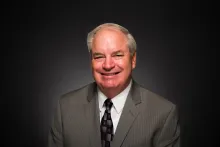
Robin Webber was born in Chicago, Illinois, in 1951, but has lived most of his life in California. He has been a part of the Church of God community since 1963. He attended Ambassador College in Pasadena from 1969-1973. He majored in theology and history.
Mr. Webber's interest remains in the study of history, socio-economics and literature. Over the years, he has offered his services to museums as a docent to share his enthusiasm and passions regarding these areas of expertise.
When time permits, he loves to go mountain biking on nearby ranch land and meet his wife as she hikes toward him.
