
Robin S Webber
This transcript was generated by AI and may contain errors. It is provided to assist those who may not be able to listen to the message.
Well, we certainly do have beautiful, beautiful special music here in the Los Angeles congregation, and thank you very much. To begin the message this afternoon, I have a question for you. Why do we do what we do, and before whom, as New Covenant Christians? Allow me to repeat that because this is going to be germane to our discussion with you over the next five to seven weeks that I am here. Why do we do what we do, and before whom, as New Covenant Christians? Today we're going to begin a series on New Covenant realities and Christian responsibilities. New Covenant realities and Christian responsibilities. I hope to properly challenge and, shall I say, pepper you with questions, biblical considerations, and scriptural answers that perhaps you have never explored or engaged in to come to a full spiritual awareness of the gifts that God has given us. Today, in this message, the foundation is going to be offered, and the foundation is really, really important because, again, as I mentioned a couple of weeks ago to you in another message, the foundation is where the time and the energy and the expense goes. And when we develop a foundation that is proper, everything, the superstructure that rises upon it will be square, and it will be plumb, and we won't have to fight against it on the way going up. One of the great and the clarion scriptures of the Gospels is discovered in Luke 19 and verse 10. Would you join me there, please? In Luke 19 and verse 10.
In Luke 19 and verse 10, this has often been called the specific purpose scripture of the gospel of Luke, and it says, for the Son of man has come. He has arrived. He has entered time and space. He is amongst the creation to seek and to save that which was lost. Purpose of Jesus Christ coming was to seek and to save that which was lost. And so were we at one time, each and every one of us, lost. We were sought, and we were brought into this process of salvation by the call of God the Father through Jesus Christ. In that seeking and in that saving, a gift is offered. There is a beautiful gift that lies ahead of each and every one of us. It is so beautiful that it was on our Savior's mind on that last night of His earthly existence. We find it in the prayer that He offered in John 17 and verse 3, if you'll join me there. In John 17 and over in verse 3, it's where Christ is giving what is called sometimes the true Lord's Prayer, not just the model, but this issuance that came out of Him of what was really important to Him that He needed to convey to His followers that night. He speaks about the authority that's been given to Him. And then verse 2, that He should give eternal life to as many as you, speaking of the Father, have given Him. And this is eternal life that they may know you, the only true God and Jesus Christ whom you have sent. Eternal life. We were sought, we were found, we yielded ourselves, salvation was offered, there was a rescue, a relationship developed out of that rescue, a two-way relationship, God to us, and our surrender to the Father through Christ, and then there's His gift. It's called eternal life. One thing that I want to impress upon you that is so important as we develop and build this foundation regarding New Covenant realities and Christian responsibilities is simply this. That eternal life from God is a pure gift from God alone. It's a four-letter word. It is a gift. It cannot be bought. It cannot be molded down here below. You cannot find it on eBay. Sorry. It is a gift. As we consider that, let's take it a step further. We can't buy it. We can't earn it. We cannot earn it by any form of human obedience or works alone. No amount of commandment keeping alone can unhinge us, unhinge this flesh, and move it to spirit. The bottom line of the foundation as we begin to couple New Covenant realities with Christian responsibilities is to understand that we were rescued, that God has offered us a process of salvation, and at the end there is a gift. It is called eternal life. It's very important for people to understand as we develop this foundation because if you're a little bit like me sometimes, friends, we want to roll out our list of what we have done. And or we feel like if I do this, or if I do that, or if I expand like this, or if I measure up, and or if I fill this space, or if I, or if I, or if I, and of course we recognize what pronoun we're stuck on. We're stuck on the pronoun of I. That's not how God works. Nothing can unlock the door to eternity but God. And that's very important to understand. I'd like to share a very basic verse with you that came to light in my life at about age 12. Would you join me over in Romans 6, 23? In Romans 6 and verse 23. And as I say that, Mr. Hall, if you are out there, you've forgotten my favorite creature up here called the fan. I would appreciate it. In Romans 6 and verse 23.
I think all of us over the years, whether it be in a Ambassador College Bible Study Course or a booklet, or maybe we that had the opportunity here, Mr. Armstrong, in the old days in the Shakespeare Hall, or the library, or in the college gym, remember so often how he would turn to this set of scripture. And it was very important. Sometimes I think that we look back historically and we look at the Church of God culture and believe that it was predicated or founded upon the issue of the Sabbath or the issue of the the identity of Israel. And if we have that thought, that's very, very important. And that's germane to the overall subject. But Romans 6 23 was incredibly profound in the conversion process of Mr. Armstrong nearly 80 years ago. Mr. Armstrong had been raised up in the background of the Midwest, Protestant society, the heaven and hell, which is so common to that world and the understanding back in the turn of the century of the last century. And he came to Romans 6 and verse 23. And we often use Romans 6 verse 23 as a what we might call a proof text regarding the subject of heaven and hell. And if we do, it is important. It is a very important proof text and understanding that. But sometimes so much in the proving and the information we forget the most important part in it. For the wages of sin is death. Mr. Armstrong used to talk about what you buy into is what you get. But the gift of God is eternal life in Christ Jesus, our Lord. Many of us will remember the battle that he had of remembering how people would say, well, if you do whatever you will, you will keep on living. You'll just be living down there, as far as down there being in their mind, not ours. And that was important. That really shocked Mr. Armstrong into reality, just taking the Bible straight. But he also took the Bible straight, especially in many of his writings when he looked at Romans 6 and verse 23. And he expounded that the gift of God is eternal life in Christ Jesus, our Lord. It was not something, even as God was revealing to him the importance of the Ten Commandments and the importance of the Fourth Commandment, that of and by itself, the commandment-keeping of and by itself, does not merit eternal life.
That it is the gift of God. The reason why I bring this up, and I brought one of my props up here. I used to prop in the Bible class today. But there's something about human beings that sometimes, by the way, if you cannot see this, these are two doorknobs.
You may see that. And I realize, I'm just speaking personally, it's Robin. That sometimes by my list, and I have that here below, by what I think I am doing, based on information that I read and I put into practice, that somehow, I might be able to open up the door to eternity from this side. If I do the one that's ever thought back, or assert anybody else, I'm not the only one, I'm sorry. But sometimes, I can truly think that, if I do this, if I pray this much, if I fast this much, if I meditate this much, if I keep the Sabbath this much better, if I do this, if I do that, and I really get on a roll of eye, if I do this, if I do that, and if I really follow the preacher man, and I always put this in the practice this week, that somehow I can do this, really, with my side. Hello. Here. Look what I did.
Just remember that the door knob to eternity is only on one side, and it's not on the side of time and space. It's on God's side. It is the gift. It is not something that we earn by human works or human doings of and by ourself. That's why God sent his son, Jesus Christ, who became righteousness for us, and through him, that we can have a favored relationship with God, and God can look down and begin to deal with us, work with us, and that we can come to full relationship with him. The Apostle Paul understood this, and he outlines how God's grace works over in Romans 4. Join me, if you would, for a moment, in Romans 4. A very important presentation by the Apostle Paul as he's moving people through the book of Romans, which is the great treatise on salvation. It is the opening up of the gift to humanity that was apart from God, whether they be of the Jewish community or whether they were of the Gentile community, that the information and the truth that they had, whether it was the intellectual truth of the Hellenistic world and or the biblical truth of the Bible, even still, there was something missing, something that they both were not getting, both the Jew and the Gentile. We then come up to Romans 4, and Romans 4 tells us, What then shall we say that Abraham, our father, has found according to the flesh? For if Abraham was justified by works, he has something to boast about. He could crow all day long, but he can't crow before God.
For what does the Scripture say? Abraham believed God, and it was accounted to him for righteousness. Now, we remember what it says in Genesis 26 and verse 5, very important verse. We'll be discussing that later on in this series. I know Abraham, he obeyed my commandments, my statutes, and my judgments, and taught his children so. That's not to discount the importance of that verse, but the relationship. And remember, God is calling us to relationships with him. It is not predicated upon what you and I have done, but what God is doing, and what God purposed from the beginning of eternity through his Son. And to recognize, then, that it comes into belief of that purpose, of that plan, of those promises, and of those provisions that the relationship is established. Paul is basically quoting from that, which is in the Old Testament in Genesis 15 and verse 16, when God began working with Abraham. The same God, the same book, the same truth, the same relationship offered. What we come to understand as we look at the book of Romans is that we are approved by faith. We are approved by our belief and our confidence in the sovereignty and the promises of God. And that is very important to understand. I have a big question for you. Another question. I'm not going to be able to answer it all today. We'll be answering it in the series as we go along. Therefore, if we are saved by grace, and as Paul brings out in the book of Romans, we are approved by faith, why would a new covenant Christian—are you with me? Why would a new covenant Christian who is approved by faith, saved by grace—why then would they keep the seventh-day Sabbath? Why then would they observe the biblical law of tithing? No, there's a lot of people that tithe today. They'll be in church tomorrow, and the pastor will call for a tithe, and they'll reach in their pocket, and they'll say the pastor is sincere, but he's sincerely wrong. No, when you use the word sincere, there can be a lot of sin in sincere, and they'll say, well, you now please give your tithe, and somebody will reach down in their pocket, and they'll take the change like this, and they'll put it in the plate as it's going down the aisle. That's not a tithe. That's not what the Bible mandates. That's not how the Bible describes a tithe. How then, and why, does a new covenant Christian who is saved by grace, approved by faith, coming to the Father through the Son, why do we observe the Sabbath? Why do we observe the biblical food loss? Why do we tithe? This is germane to our being in the Church of God, and why we do what we do, but we have to know why we do it, and for whom we do it.
We often talk amongst ourselves, just like Joe Slavin was talking about. There's a lot of people that talk about politics and religion, and they just kind of have a conversation between themselves. They talk amongst themselves, kind of like the talking heads on Fox News or CNN, and they just talk and talk and bark and bark. They bark to the left and they bark to the right. To the left, to the right, bark bark. They're all barking. They're used to the conversation and the lingo. Sometimes, because we're in the Church of God community, many of us just simply talk amongst ourselves. So then we are faced with a conversation that comes from the outside or thoughts that come from the outside. And people that, in our conversation, will say, well, you're keeping those works of the Sabbath and of biblical food laws and the biblical holy days. They don't always lift it up to that positive level, if you know what I'm saying. And or tithing. And Weber, you're doing that to earn salvation. They just hit me right in front. Maybe you've had that same conversation with neighbors or people. Some people will say, well, you know, Robin, I believe in the sufficiency of Christ. I say I do, too. That's okay. But then they'll say, yeah, but you're earning your way up to what they consider another destination than we know. But they'll say, you're earning your way. It's like a Buddhist prayer wheel of so many Sabbaths or so much time. They're doing this or doing that. After all, it's just all been nailed to the cross. And therefore, we don't have to do that anymore. Christ did it for us so we don't have to do it. People say, well, Christ did it for us so we no longer have to observe the Sabbath. Christ did it for us so we no longer give the tithe as it's explained throughout the Bible. Christ never did it. So, you know, I can eat anything that I want. And you know what? The Bible just says, give thanks for everything and it's okay. So when I pray over the shrimp, when I pray over the when I pray over the crab, when I even pray over the muskrat, just I'll wake you up, put a little pepper on that puppy.
Just says, whatever you do, just give thanks and it's going to go down the gullet just right. This is how people approach us, friends. And that's why as your pastor, I want to enter this conversation with you to give you the foundation of why we do and what we do and how we do before whom we do it because it's not just about us. You're very important.
I remember 15 years ago, my last message that was given on the auditorium stage had an opportunity to give one last sermon as so many of those people were headed down a specific direction. Most of those people knew that I had observed the Sabbath almost all of my life, that I was an ardent Christian Sabbatarian and that I had not changed my mind with what was then called the new teaching.
Sometimes new teaching is just old error. But I remember what I mentioned from the stage that day and I'd like to share with you to build upon that and that is simply this. Had about 1,400 people out there to hear that. I said, I don't keep the Sabbath to be saved, but because I am saved, I keep the Sabbath. I want to share that one more time and then we're going to expand upon that.
Don't let me lose you as much as the others were lost. I don't keep the Sabbath to be saved, but because I have been saved, I keep the Sabbath. I came to that understanding almost 40 years ago as a boy that through the teaching of Herbert Armstrong, no amount of commandment keeping alone merits salvation for me.
Isn't that the argument that Paul gives to people that were religious, that were right to the letter of the law and held onto that law like a dog to a bone? And you know what? A dog to the bone, right to the grave without hope of resurrection, because he that lives by the law will die by the law.
The law alone cannot save. We recognize, though, that we worship the great lawgiver who gave himself, that we might have favor with God and that we might have relationship. What do I mean by that statement? Because sometimes it can be perplexing to one side or another. I'd like to expand upon that. What I'm talking about, please understand, is not once saved, always saved. People throw that around and a bumper sticker will get you nowhere but a bumper. What does the Bible say about the progressive state of salvation? In other words, when we understand what God says in the scripture about salvation, we come to understand that we were lost, we were found, we've been offered a relationship, and there is a progressive state of salvation towards and to the resurrection.
But God views things as if they already are. And to recognize that what God is offering us is not just simply a destination, it's a way of traveling. Let's just go quickly through the scriptures just for a moment. 1 Corinthians 1 verse 18.
Join me there for a moment. 1 Corinthians 1.18. Let's notice some verses here. In 1 Corinthians 1 and verse 18, for the message of the cross is foolishness to those who are perishing, but to us who are being present tense, being saved, it is the power of God.
Romans 5 and verse 10. Romans 5 and verse 10. For if when we were enemies we were reconciled to God through the death of a son, much more having been reconciled, notice we shall be saved by his life. As we begin to put these verses together, we recognize that God often uses the scripture to display his plan, that there is a positive tension between the present and the future, and that God sees things as if they already are.
Ephesians 2. Join me there for a moment. Ephesians 2 and verse 4. Ephesians 2 and verse 4. But God, who is rich in mercy because of his great love, which he loves us, even when we were dead in trespasses, made us alive together with Christ by grace, by his favor, by his blessings we have been saved, raised up together, and made us sit together in the heavenly places in Christ Jesus.
Again, in that sense, showing this line of progression from the time that we were lost to the time that God began to initiate his invitation to our acceptance of that, to our rescue, to our relationship, to our ongoing believing in Christ and keeping the commandments, to that time in the future when we are resurrected, there is this progressive state. Ephesians 2 and verse 8. For by grace you have been saved through faith by belief, not by what we do.
Now, what we do is going to come along with our belief, and we'll talk about that a little bit later. For by grace you have been saved through faith, and that not of yourselves. Notice again it is the gift of God. One last verse in this rolodex of Scripture. 2 Corinthians 2 verse 15.
2 Corinthians 2 and verse 15. For we are to God the fragrance of Christ among those who are, notice, are being saved among those who are perishing. Now, when you put this set of five verses together, let's understand the outcome. We begin to gain a sense of tension between that which is and what will be in its fullness at the resurrection. It's a progressive move. The most exciting part that I want to share with all of you is simply this.
So often, because we are trapped in time and space, and just in that moment of our life, things that are coming upon us, the challenges, challenges that are occurring right now in our church, challenges that are occurring on the job, challenges that we have with the battle of our own human nature, challenges that we have in observing the commandments of God. We lose the picture that we worship a loving God. We worship a gracious God. We worship a God that sees us as if we already are there. Now, as He sees that we're already there, we also recognize that if we do not partake in this calling, we can quench the Spirit. God speaks of judgment. We know that there is not in that sense universal salvation.
But we need to know more than anything, brethren, that God called you for a purpose. And if He's begun a good work in you and me, He is going to see it through to that end. Thus, salvation is not just simply a destination. It is a way of traveling, recognizing that God has invested His grace, given us His faith of Him, back to Him, given us His Son, given us His Spirit, given us this incredible Bible that we're going to get into a moment in discussing Christian responsibilities. And He gives it to us for a purpose. I want to share something a little bit for a moment as your pastor, as we get back into a relationship together as a congregation. I'd like to define grace for you. It's my definition, but it works for me. It may not work for you, but I've got the microphone right now. I'm sorry. But let me just share three pieces of grace with you that are really exciting. Are you ready? Number one, grace is about God's initiative. Grace stems from God. Everything stems from the uncreated into our world of time and space. God is love. It moves away from Him, not back to Him. It is what He is, that in that time and infinity, long in the portals of eternity, He and the Word decided that they wanted to establish a family of immortal children called the family of God. And He established that from the beginning. He said, let us make man in our image and after our likeness, but we know what happened in the garden. And we recognize that there had to be a way of return. So God, in His grace, in His favor that we don't deserve, took the initiative and began to extend to us. He discovered us, not us, Him. Have you ever run into people before? People not only like to talk about politics. The religion. So what happens when the religion says, you can't remember these conversations like the 19th was observed or these days. People say, well, I remember when I first came into the church. I joined the church. Bad prayers. You don't join the body. Are you with me? You don't join the body of Christ. It's not about Him. Or I finally got to a group that believed just like I do. Now, that humanly sounded good, but we're even something out of the situation. It's still all about us, isn't it? Rather than recognizing that God, by His grace and His initiative, called us. He called us. He opened up our eyes. He opened up our hearts. And we began to believe in His sovereignty. We began to say, God is sovereign and God is good and He's got a purpose. I am no longer headed towards disaster, but I've come to see through the scriptures that there's a destiny that God has granted me. Not because of anything I have done. Not because of anything that I am doing, but because of who and what He is. Grace is about God's initiative. Number two, grace is about God's invitation. God called. Jesus Himself said, no man can come unto me unless first God the Father calls them. So it was not only about God's initiative, all stemming from Him, but it's an invitation. I've got a question for you. How many of you have been invited to the White House recently? Anybody gotten that call yet? Card? I know the Lakers went. I didn't see you in that picture. Wouldn't it be neat to receive an invitation from the White House?
Wouldn't it be neat to receive an invitation from the United Nations and be able to be in the chief seat amongst all the nations of the world?
You and I have received an invitation from none other than God the Father. It's not about us. It's all about Him. Third point of grace. Initiative, invitation, involvement. Grace is about God's involvement. God not only has a purpose, He not only has a plan that backs that purpose, but He has provisions. And those provisions are based upon promises. And we do what we do, why we do, with the Sabbath, with the Holy Days, with tithing, with the biblical food laws, because we've come to believe in a good God, and a sovereign God, who gave initiative, who gave invitation, and says that as I set you apart from this world, and have you go down this path, I will be with you to the very end. Now, with all that said, that's God's grace. And that's wonderful, and that is so big. And He said, wow! Just like Job said in Job 42 and verse 3, he said, I don't know if it was an Aramaic or some Semitic language, but Job said, wow! He says, things far too wonderful for me. Now that I got it, where do I go from here? Well, that's why God gives us Christian responsibilities, then, to help we that are in time and space and in this mortal flesh to come to appreciate God a little bit more. Join me, if you would, in Matthew 4 and verse 24, because being a new covenant Christian is not just about believing, it's also about reading Matthew 4 and verse 24.
This is about Jesus when He was in the temptation and in the wilderness. Did I say Matthew 4, verse 24? Pardon me, Matthew 4, verse 4. Satan was coming at him just like Satan will come at you and me. Have you heard? Have you heard? Have you gotten the latest lowdown? Have you heard if and if and if and if? You know, Satan, one thing I've always noticed about Satan, he doesn't even operate with the four-letter words. Have you ever noticed that? He never in the Bible pronounces a four-letter word. He's got it down to two letters. If.
Well, if. Wait a minute. God's called me. It's His initiative. It's His invitation. It's His involvement. I read it all coming up through all the scriptures and the example of Christ before me. I know this. And then we get this little side. Yeah. If. What if?
I think if has been running very virulent of recent date in the body of Christ. You don't really know. You don't really understand.
If. Am I talking to the right audience? We in the same world around here? Are we reading the same stuff?
The tactics never change from the wilderness. Just for the purpose and the plan, the promises of God. Just a little two-letter word called if. Notice how Jesus responded. He answered and said, it is written, Man shall not live by bread alone, but by every word that proceeds out of the mouth of God. With that stated, allow me to tell you as your pastor why I do what I do and before whom I do it. And I think we'll share a common story. I just have the microphone right now.
I'm saved by God's grace. I come to him in faith. I'm approved by that faith in the life, the death, and the resurrection of Jesus Christ. There is, in that sense, no amount of commandment-keeping here below, even rule-keeping. That alone can merit me salvation.
I am in relationship with God. He is my sovereign. He is my king. How many of you, along with me, went down into that baptismal pool and we were asked simply two questions. What are the two questions that we were asked? Probably the same questions that I was asked. Have you accepted Jesus Christ as your Lord and as your Savior?
Water is getting cold. Do you want to get out of there? So he probably said, yes, sir. He said, yes. I accept Jesus Christ as my Lord, my Curulos, my king. He is my sovereign.
And then it was said, and have you repented of all of your sins? He said, yes. And then the preacher said, because you have accepted Jesus Christ as your Lord and your Savior and because you have repented of all of your sins, which is not only what you have broken, which is the righteous and holy laws of God, but because of what you are, I am now going to baptize you, not into any church or sect or creed or denomination of this earth. But I'm going to baptize you in the name of the Father and of the Son and of the Holy Spirit for the remission of all of your sins. When we did that, we began that process of being saved by His grace, approved by our faith in the Christ, the gift that God gave us. But we also now, because Jesus Christ is our King and the Lord of our life and His existence fills us, we also recognize that not only the living Word, but the written Word, which reflects the will and the love and the purpose and the plan of God, additionally have sovereignty in our life. This Bible, and may it always be open first and foremost in the United Church of God Los Angeles, has authority in our life. And we do what it says because the King of our life tells us how to live. I remember many years ago, I don't know why, when I'm around you, because you've been in Pasadena, I tend to bring up stories about Mr. Armstrong. I hope you won't mind that. But I remember how Mr. Armstrong used to talk about how the Bible is like that manual that you find in the glove compartment. It tells you how to operate the machinery down here below. And that's exactly, brethren, why we observe the biblical responsibilities and the Christian responsibilities God gives us in the Bible. Commandments, if you will. I want to focus on those for a few minutes. And I'm going to do something. I'm going to put a handle on each of these that perhaps you have not commonly thought of. People will often challenge me and say, well, you, well, we're glad that you understand about Jesus Christ. It's this Sabbath thing that's kind of getting to us, though. Because, well, you're adding to Christ. I'm going to share a term with you right now. You might want to jot this down if you want to be students of the Bible today. The Sabbath, the biblical food laws, and tithing are tools of grace. We are going to define the Bible and not have others define our way of life for us of what we do, how we do, why we do, before whom we do. Why do I say that? Grace is having favor, God's favor towards us, and having a right relationship with Him. I observe the Sabbath as you do, the Holy Days as you do, the biblical food laws as you do, tithing as you do, because my worship before God occurs on Monday, Tuesday, Wednesday, Thursday, Friday, and yes, on this, the seventh-day Sabbath. When you think about it, what is precious to humanity? The three most precious things to humanity is, number one, our time, number two, our treasure, and number three, our appetite, which sustains us. Have you ever considered our worship to God by observing the seventh-day Sabbath, observing the biblical food laws, and giving God His proper rendering of the tithe cuts across the grain of human nature?
Cuts across our grain. People often say, what is life? Life is time. I'm too busy. I can't.
Life is money, especially these days, with our money being much less than it was two or three years ago.
Life is in the tummy. Food is essential for survival. God says through His holy Word, give me time, give me your treasure, and give me your tummy. You will worship me by the laws and the commandments that I will give you. They will not only be external as the people in the Old Covenant, but they will be internal. You will do it, and you will grow in the grace and the knowledge of our Lord and Savior, Jesus Christ, to do it not just simply because it's a duty, but because it is your life's desire. Desire to observe the Holy Sabbath day. Desire to give God a tithe. When He gives us the air that we breathe, the earth that we trot on, the families that we have, He asks so little in return. And He says that when you eat, you will learn to divide that which is clean from unclean, so that you will take the lesson with you that it's not only what's in your plate, but it's what's in your life, it's what's in your mind, it's what's in your heart.
That is important. It's kind of interesting. Can we talk?
Kind of interesting what Joe brought up in his message, that people can abide by the rules of God.
And they'll never have the crawdads go through their lips. The shrimp tikes touch their tongue.
They'll make sure that those croutons are not on the salad during the days of 11 Brad.
But then they launch into a conversation over that very same meal. And that is unclean. Thus, thus, they have not learned the lesson of the biblical food loss.
That God is holy, and therefore we are holy. And therefore we will set aside not only on our plate what is clean or unclean, but we will get off the plate of our life, off the plate of our tongue, off the plate of our heart what is unclean and unseemly. You see, when we understand that we are saved by grace, approved by faith, and God is sovereign not only in our external life, but also in our internal life. It does not become less binding. The role of a new covenant Christian by God's help becomes an even more exciting world to walk in. Let me share a few thoughts about the Sabbath. I just want to give a precursor of where we're going to be going in a couple of weeks, because it's very important. I'd like to just broach it a little bit. Let's understand something about the Seventh-day Sabbath. Simply put, a holy God gave a holy people a holy day for a holy purpose. There's a rhythm in that, isn't there? It all starts with God, but there's a rhythm. We are to be a holy people, and this Seventh-day observance is very important. What is fascinating is that you'll join me in the book of Hebrews. For it is in Hebrews that we find a fascinating conundrum. For those of you that are not versed in the book of Hebrews, this will kind of be my introduction into probably two or three sermons on the Sabbath upcoming. It is simply this. The book of Hebrews is about the extolling of Jesus Christ above all. The author of Hebrews writes Hebrews as the argument of a lawyer speaking to the Jews of his day. He tells them that one better than the angels has come, one that is better than Moses has come, one that is better than Joshua has come, and that there is an edifice in heaven above at this time that is greater than the tabernacle than that which is below. The whole theme of the book of Hebrews is just like this. This is my PowerPoint. It is just lifting Christ up so high that you can't lift him any higher. That's exactly where God the Father would have him for you and for me. He is speaking to a people that are very scared at that time. The book of Hebrews is written about 60 AD. We recognize that the Jewish-Roman wars are developing. We know that the legions are coming down from Syria. We realize that the Jewish Christians in that area are torn.
They don't like the Romans. Their own Jewish brethren ethnically don't like them. They think that they've departed from the faith. It's been a couple generations now since Jesus died. The apostles themselves are dying out. There aren't too many left. So the argument that comes from the other side and probably why the book of Hebrews is written is the second and third generation Christians at this point are saying, is this thing really all cracked up to be? Is it really worth what our grandfathers and fathers thought? Maybe sometimes some of you that are out here, and I see some second and third generation Christians out here, fourth generation, can say, I remember how excited Grandma was or Grandpa was. I remember the thrill that they had when they first came into the church of God community. But I'm just a little doubtful because all these apostles and all of these ministers are now either dying or no longer with us. And thus Jesus Christ becomes the forefront, becomes the incredible super-par-personality, you might say superstar, of the book of Hebrews. He has lifted so high you cannot lift him any further. Now you say, where am I going with this argument? Because many people say, well, Robin, we're glad that you understand Jesus Christ, but you've got this Sabbath problem. You're adding to Christ, and don't you recognize that he did it all. Brethren, that's why God gave us the book of Hebrews 2,000 years ago. Join me in chapter 4. Therefore, since a promise remains of entering his rest, let us fear lest any of you seem to come short of it. For indeed the gospel was preached to us as well as to them. Fascinating thought that the good news, the gospel was preached to those that were even before this time. But the word which they heard did not profit them. Those things that they did. If I do this, if I do that, those things that they did did not profit them for it, that was not mixed with faith in those who heard it.
If we think alone because of what we do and our intellect, the information that is before us, if it is not coupled with understanding that we were lost but we are now found, that we were rescued, not because we were good and could be made a little bit better, but because we were dead in our sins and God had mercy on us by his initiative, by his invitation, by his involvement, then we will wind up with these folks. For we who have believed, remember, Abraham believed and it was accounted to him unto righteousness. For we who believed do enter that rest as he said, so I swore in my wrath that they should not enter my rest. Although the works were finished from the foundation of the world, for he has spoken in a certain place of the seventh day in this way, and God rested on the seventh day from all of his works, and again in this place they shall not enter my rest. Since therefore it remains that some must enter it, and those to whom it was first preached did not enter it because of disobedience. Again he designates a certain day, saying in David today after such a long time as it has been said, today if you will hear his voice do not harden your hearts. For if Joshua had given them a rest, he would not afterward have spoken of another day. Now it's very important in the argument that I'm presenting to you, because there's a lot of rest stops along the way in Hebrews 4. Rest, rest, rest, rest. Let's understand something here. The rest that is being mentioned to this point is the Greek word cataposis. Cataposis, which speaks of a final rest and or a spiritual rest. Ultimately that great rest that is in Christ, who is that Prince of Peace, that Prince of Rest.
They didn't get it back there, back in Israel. They didn't even get it when they crossed the river with Joshua. Now notice verse 9. This little jewel has been put in the Bible for you and for me.
There remains, therefore, a rest for the people of God.
What is profound about this is this is a completely different word. The Greek in this sentence says, Sabatismos epilipatos. There remains a seventh-day observance. The word here in the Greek is only used once in the New Testament. The word Sabatismos.
In other extra-canonical literature, other Greek literature, the word Sabatismos is only used in the sense of a technical seventh-day Sabbath observance. What I'm trying to share with you to encourage you is simply this, that in this incredible treatise to the sovereignty and the exultation of Christ and the sufficiency of Christ as the gift of God to humanity, there lies within it a nugget of Christian responsibility that remains for the people of God.
The seventh-day Sabbath. Fascinating that within this set of scripture that we have, by mention of the Sabbath, commemoration of creation of the past, we have within this set of scripture commemoration of people that believe in the present, then the mention of Sabatismos epilipatos, epilipatos meaning remains, still to be kept even with the exultation and the fullness of the grace of God that comes to Christ. God reaches into time and space and pours eternity into this 24-hour period that we might experience that which is to come, which is a type of the millennium. New Covenant, realities, Christian responsibilities, they remain intact. Even more so, because now, as members of the United Church of God Los Angeles, we not only keep the Sabbath externally before man, but we are to be at rest and away from the labors of our human nature and the labors of this society during this 24-hour period.
God, in His grace and in His wisdom as the master teacher, it's as if He were up in heaven with a full cup of eternity. And He says, you think I can do this with a bush on Mount Sinai and make that area holy? I'm going to pour my holiness, I'm going to pour eternity into this 24-hour period. And I'm going to bless it, and I'm going to set it apart for all time as a gift to my people so that they will understand where they have been, that we are a creation, and not an accident of evolution. They will know where they are in the present, that we are not headed for disaster, but for a destiny. And they know where they are in the future, that not they alone, but all of humanity are being called to a time of rest before God Almighty. So He gives us the Seventh-day Sabbath as a gift, as the tool of grace. New covenant realities? Absolutely. New Christian responsibilities more firmly in place than ever by understanding what God is doing. I'm going to look forward to coming back with you. In two weeks, we're going to pick up again. We're probably going to move through just this tool of grace called the Sabbath for probably the next two or three times that I am here so that we can fully appreciate what God is doing with us as the New Covenant people.
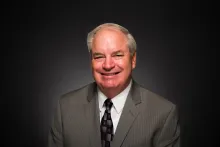
Robin Webber was born in Chicago, Illinois, in 1951, but has lived most of his life in California. He has been a part of the Church of God community since 1963. He attended Ambassador College in Pasadena from 1969-1973. He majored in theology and history.
Mr. Webber's interest remains in the study of history, socio-economics and literature. Over the years, he has offered his services to museums as a docent to share his enthusiasm and passions regarding these areas of expertise.
When time permits, he loves to go mountain biking on nearby ranch land and meet his wife as she hikes toward him.
