
Robin S Webber
This transcript was generated by AI and may contain errors. It is provided to assist those who may not be able to listen to the message.
Was that not a lovely hymn? Most inspiring. And perhaps a petition that all of us have to make at one time or another, to ask our Father above to show us His glory. We're continuing with a series that we started some weeks ago, and we continue it. We know not where it will end, but one day it will end. It is entitled, A New Covenant Heart Towards Christian Responsibility. And as I give it in this congregation, it will also be appearing on our homepage so that others, not in our fellowship or in our congregation, might be able to learn from it in the days, months, and perhaps even the years ahead.
We're going through this series, and right now we're spotlighting the Seventh-Day Sabbath. And we're focusing on the Seventh-Day Sabbath as being a tool of grace. Those are not always words that come together in some people's minds or some people's hearts or what comes across on their tongue. But we're allowing the Bible to define the Bible. And rather than the Seventh-Day Sabbath simply being a fossil of the Old Testament, something that was left behind in Sinai, it is active, it is well, and it is alive in the heart of a New Covenant Christian.
For a moment, allow me to refresh you with some of the major points that we've covered in the three previous messages coming up to this point. We came to see and understand first that the Bible clearly demonstrates that Jesus Christ is the Lord of the Sabbath. We found that over in Mark 2, 27-28, and I'm not meaning to turn there right now. By reviewing this, we can move forward together. For some of you that weren't here, that will at least allow you to kind of know where we have been as a congregation.
And then you too can move along with us as we go through the message. The term there, Lord, in Mark is out of the Greek kyriolos. It means rulership. It means that Christ is literally the ruler of the Sabbath day. Rather than kicking it out the door, rather than pushing it out of the house, Christ said, I own it. I own the Sabbath. I govern it. I alone am able to interpret it. Thus we come to understand, if we allow the Scripture to speak to us, that the Sabbath day does not belong to man.
It does not belong to any one religion. It does not belong to any one race. It does not belong to any one ethnic group and or organization. The Sabbath day belongs to none other than God Almighty. And He alone will interpret it as to how it is good for man. When we think about Jesus Christ, and when we think why He came to this earth, He came to this earth not to abolish a holy day, but show us how God would practice it if He were in human form.
Let's think about that for a moment. If God were a human being and He came down and walked and talked amongst us, now you know how you keep the Sabbath, for those of you that keep the Sabbath day Sabbath. But how would God keep the Sabbath if He was like you, like a human being, like a young man walking on this earth?
How would we understand it? How would He practice it? Well, that's why Jesus Christ came, so that we could understand how Jesus, or how God would do things in the flesh. With Christ as our anchor, and understanding that He is Lord of the Sabbath, we focused on the first point that a new covenant heart will understand that God's creation is not complete.
So often we think of the Sabbath with the initial Genesis account of Genesis 2 and Genesis 3. And therefore, after God had made all the world, and all that is, and even all the things that are in the ocean, and in the skies, and everything, it says that God rested and He made the Sabbath. But the great truth is that God's creation continues. And while He ceased from a physical labor and a material effort, His spiritual work, His spiritual labor, and a spiritual creation is yet to be completed.
And the Sabbath day brings us into that recognition that when God said in Genesis 1 that I will make man in my image and after my likeness, guess what? He is not yet done. Secondly, we came to see and understand how a new covenant heart views the seventh day Sabbath as a day of freedom, a day of liberation, a day of doing things, and not a day of bondage. Do you remember how we went to Deuteronomy 5? And maybe we had never done that before because so often we're used to going to Exodus 20, which is the initial giving of the Decalogue or the 10.
And in that, it goes back to the creation account. Four in six days God made heaven and earth. But when we went to Deuteronomy 5, we came to understand that in the Deuteronomy account God does not link the Sabbath day with creation. It is linked with creation. It is an Exodus. But he adds something else. He says you will keep the Sabbath day to remind you when you were in Egypt. Fascinating. And that I brought you out. Thus, we begin to understand that the Sabbath is not a day about being limited, but it's a day about expansion. And we went through all the different activities and all the different miracles of Christ that he performed on the Sabbath day to show that it's not just simply a day of passivity, but that it is a day of activity.
Thirdly, then, we came to understand and appreciate how a new covenant heart worships God in spirit and in truth, but it also needs just simply to take a rest, to take a breath. That even though we are led by the Spirit, even though we have the Spirit of God in us, even though that God's laws are written in our mind and our heart, the one that made us, the Creator, and made the creation, says, you know what?
Stop! Stop the human machinery. And here's what I want you to do every seven days. I want you just to take a big, deep, just fill up and fill in and get a breath. Restore yourself. Become refreshed. Now, some people will say, yeah, but I'm in the Spirit. Well, those are the kind of people that you want to pinch, just to remind them that they're still down here on earth and that they haven't gone anywhere. And if we're in this flesh, God knows what is best for us. That now leads us to the fourth point that I want to share with you regarding the Sabbath day.
And as we do, it always brings us to a point of why a holy God created a holy day for a holy people for a holy purpose. Allow me to give you point number four, and it is to this point alone that I will speak today. A new covenant heart will appreciate the seventh day Sabbath is designed to test our faith.
Allow me to repeat it, because many of you in this room will be tested on this matter. A new covenant heart will appreciate that the seventh day Sabbath is designed to test our faith. Again, there's nothing passive about the Sabbath day. And perhaps it is this point now that I speak to that will bring this to the fore. For, in a sense, when we think of the day of the seventh day Sabbath as a day of physical relaxation, we might think that, oh, it is a day of vacation, but oh, no, no, no, no. The Sabbath is not about a vacation.
It is about a vocation. It is about the work that God has called us to. And to recognize that that vocation will test our mettle to the very core. And if you don't think so, we'll talk about that by the end of this message. But before we derive the lesson that I speak to, we need to learn a little bit in what we will be talking about the story of the bread and the wilderness. Let's step back once again to the very beginning. For it is in the beginning of the book, that's what Genesis means, beginning, that God sets the framework of a relationship and worship towards Him. And it is here that we learn of God has always offered humanity the prerogative of choices.
That's going to be a key word that we're going to center around today. Choices. One of the things that God designed from the very beginning are choices. It is indeed, and I want to talk to some of the young people that are here today, it is God's greatest gift to we that are human beings. And yet also it is the greatest challenge that lies before us as to whether or not we will make the right choice. Having the ability to make choices is what makes us a human being.
Animals don't make choices. Animals respond to stimulus and response, just as Pavlov. But we as human beings have been given an opportunity to make choice, to have free moral agency. Such opportunity to have free moral agency, to have choice, was not done in a vacuum of instruction. But God, from the very beginning, gave specific guidelines given beforehand.
Now, you say, well, man, if he gave guidelines, well, he must be some kind of a micro-manager to use terms that are today. God does manage a lot. But at the end of the day and before the choice, the decision is each and every one of ours as to what we will do. Adam and Eve, in the beginning of the book, were granted ability to freely eat.
Those were the guidelines. I'm not going to turn there right now. But they were put into the garden. The garden was prepared for them. They were placed in the garden, and they were given the opportunity to freely eat, except for what? How many trees were they told? Get ready on the front row to answer. How many trees were they told not to eat? How many? Now, if we were on radio, Will, they could not hear that.
Okay? You've got to tell me. That does not do well on radio or on tape. Yeah. They said, you can have it all, and all is yours. I am the good God that has given you all, except this one you will not partake of. You and I know the rest of the story. That did not satisfy them.
They felt that God was leaving something out, that the good God that had created them and given this beautiful paradise to live in, somehow was holding something back on them. And so what did they choose to do? And what do we choose to do sometimes, even as New Covenant Christians with a New Covenant heart? We decide to add to that which God has already said is what? Sufficient. Let's understand that the lesson of Eden was not about fruit picking, but whether God's ways will supply our needs, and we can trust Him to provide what is basic not only for our physical survival, but for our spiritual well-being.
What's that called? Let's make it simple. It's about faith. Pure and simple. The Garden of Eden was not just simply about fruit and about trees. The story is underlined about faith. Let's remember that a New Covenant individual does not come to God by what he has done, but like Father Abraham, is approved by belief and by faith. It is our faith that justifies us before God. But with that stated, our obedience is a measurement of that faith.
Our obedience is a measurement of that faith. Obedience is faith translated into action. You know, you and I can say, well, I believe, I believe, I believe, I'm raising my hand, I believe. But all of you, your grandfathers, your grandmothers, and your parents, have taught us all at one time or another, at one time or another, that talk is cheap. It is in the action. It is in the doing. Now, God said you can have all of these trees. Save this one. If you do that, you get to stay here in Paradise. You get to remain in Eden. Well, it sounds kind of easy, but something got in the way. And it's called seeing is believing.
Seeing is believing. I'll believe it when I see it. Most all of us, whether we're a male or a female, our middle name might as well be Thomas. Because Thomas wasn't going to believe it until he had actually seen it, until he had actually touched it, until Christ was literally in his hand. And of course, that reminds me of the old Midwestern expression. I don't know how you might say it in Spanish, but a bird in the hand is worth two in the bush. Because we want to hold things by our own hands.
We want to have our destiny, our present, our future. We want to have our hands wrapped around it securely and tight. And we want to have it in our own safeguard. It doesn't work that way, though. And that's exactly the lesson of Genesis and the lesson of Adam and Eve. And maybe you've never thought about that before. The lesson of Eden is simply this. Will we come to God by faith or by the works of our own hands? Genesis 3 and verse 6. Let's go there for a second.
In Genesis 3 and verse 6. Because we recognize the actions that Adam and Eve did take. In Genesis 3.6, the book reminds us bluntly what the first two human beings did. So when the woman saw that the tree was good for food, that it was pleasant to the eyes, and a tree desirable to make one wise, she took of its fruit and ate. And then notice, and she also gave it to her husband with her, and notice he ate.
Two things happen here. She took. Oh, it must be the woman's fault. No ladies. And he ate. They were both responsible. When she took, and when he ate, they crossed a God-made boundary. God was saying basically this as he says it to you and me today. I lay before you all that is good for you, all that you need to move with me towards salvation. I will be there for you. I will watch over you. I will care for you. I will suffice all that is needed to safeguard you. Trust me. What I bring into your life day by day will be enough.
Adam and Eve added. They added. Think this through. You might want to jot this down. Here's a thought for you. It's kind of a word problem. Ready? They added to God's sufficiency. How do you make complete more than complete? How do you outdo God? Because this is what they did. Because why were they doing this? If you actually go back up here into the story, it says that when it says, For God knows that in the day that you eat of it your eyes will be opened and you will be like God. In other words, by what you take by your hands, by your works, by what you're doing down here on earth, you can rescue yourself. You can be your own person. You don't need God. You will have life to yourself. Hmm. Hmm.
Now, why did they do this? Because they wanted to be like God. Is it a good thing to be like God? Or to be in his family? I would say, yes, it's a good thing. It's not a trick question. I'm watching you. Sometimes you always look at me like I'm going to trick you. No. It'd be a wonderful thing to be like God, to be of God, to be in God's family.
But the point is that you've got to do it his way and not your way. And that requires faith.
With this background, then, we can better appreciate the lesson of the wilderness regarding the Seventh-day Sabbath and how it is a tool of grace. Make no mistake about it, friends. Hear me, please. The issue in the Garden of Eden was grace versus works.
It was about the sufficiency of God. And Father Adam and Mother Eve made a choice that they would try to obtain salvation by their works, rather than God's grace, and by having faith in God, that what he provided was enough. Now, with that, we now move to Exodus. Join me if you would in Exodus 16, and we'll begin to pick up the story. I think it'll make it more clear, because God now adds more to the story here.
In Exodus 16, as we go to it, it's the story of Israel in the wilderness.
And let's understand, the wilderness of Sinai is not a pretty spot.
You don't understand what wilderness is like until you've been there. Maybe some of you have been in the Sinai, and you just recognize how desolate it is and how lifeless it is, and how survival is dependent, moment by moment, upon perhaps what you do have in your hands. And this is where God led Israel. And in Exodus 16, it's noteworthy, again, to notice that we're going to be dealing with the element of food to measure faith, just like it was in Eden. I think what's interesting is, some lessons never go away. And God brings the instrument again. Have you ever noticed that in your own life, how if you don't get it the first time, you think it's, you know, it's going to come back at you and it's going to haunt you. And I don't believe in ghosts. You know what I'm saying? You use the word haunt. But it's going to come around. God's going to make sure that we get it, or at least have an opportunity to make the right choice. So it's noteworthy as we go into Exodus 16 that God's going to use the element of food. Now, what's happening here? They're in the wilderness. We pick up the story in verse 3, verse 2. Then the whole congregation, the children of Israel, complained against Moses and Aaron in the wilderness. So they were not in a pretty spot. They were not in a spot. Oh, boy, that's just so glad we've made it. This is so neat. Oh, let's just pitch a tent. No, they were in the wilderness. It was tough. And the children of Israel said to them, Oh, that we had died by the hand of the Lord in the land of Egypt, when we sat by the pots of meat and when we ate bread to the full, for you have brought us out into this wilderness to kill this whole assembly with hunger.
Israel felt as if they had the short end of the stick. They felt that God was not sufficient, that God was not supplying what they needed. They basically felt just downright abandoned. Then notice verse 4.
They will walk in my law for naught, and it shall be on the sixth day that they shall prepare what they bring in, and it shall be twice as much as they gather daylaying. So every day they were to go out in the wilderness and they were to gather the appropriate quota that God had instructed through Moses. But on the sixth day we noticed that they were to take twice as much. And then Moses and Aaron said to all the children of Israel, that evening you shall know that the Lord has brought you out of the land of Egypt. Now what we notice here is something that we need to focus on. Number one, he says that I'm going to test you. God is a good God. He is a master teacher. But he will test us. And if you'll notice what it says here in verse 4, it says in speaking to Moses, my eyes not quite falling on it, I'm sorry, yeah, at the bottom of verse 4, that they will walk in my law or not. It's very important for you that are young here, just starting to awaken to the Scriptures, beginning to read them, beginning to apply them to your own life. Pronouns are very important. Pronouns will normally tell you what? What possesses the noun? Who owns the noun? And what we have here, God says these are mine. They're not Moses. They're not Israel's. They're not the invention of humanity. These laws are my laws. And I'm going to put a test on Israel as to whether or not they have faith towards my sustaining provision and love, that what I started on the banks of the Nile, that I didn't just bring them out here to fail, and I'm not going to fail through them, but I'm going to use them to glorify me, and that what I have started I will complete. So what we begin to understand as this collection of the manna, and moving to the seventh day, is really when you look at it, is that this whole matter is a tripwire of belief as to whether or not we believe God. Now, it is interesting here that we go down to verse 21. So they gathered it every morning, every man according to his need, and when the sun became hot, it melted. And so it was on the sixth day that they gathered twice as much bread, two omers for each one, and all the rulers of the congregation came and told Moses. And then he said to them, this is what the Lord has said. Tomorrow is a Sabbath of rest and a holy Sabbath to the Lord. Bake what you will bake today, and boil what you will boil, and lay up for yourself all that remains to be kept until the morning. And so they laid it up until the morning as Moses commanded, and it did not stink, nor were there any worms in it. And then Moses said, eat that today, for today is a Sabbath to the Lord, and today you will not find it in the field. Six days you shall gather it, but on the seventh day, the Sabbath, there will be none. Now, there's something very interesting here that we need to talk about. So please stay tuned. What happened in Genesis is that the test, or the instrument, was about food, right?
Tree of good and evil, tree of life, what do we imbibe of? But now in the Exodus account, let's notice something. God adds something. He's using an instrument. In Genesis, it was about food. It was about fruit. Now He introduces time. He introduces the measurement of time through the Sabbath day. I have a question for you. What are two of the most important things that trigger and regulate your life that you are, like, really concerned about? What are you going to eat? And what are you going to do with the time that's in front of you? You want to own what goes into your body, and you want it to keep coming your way. Especially if you're a young male and still growing. And you want that time because it is my time, and I am going to do what I want with it.
Here God begins to work with Israel because Adam and Eve had rejected what God had done. God brings back the matter of food, but now adds the element of time. It's very interesting when you look at verse 23. Maybe you've never noticed this before. This is the first mention of Sabbath as a noun. It is used previously in the biblical account. It's used actually in Genesis 1 and 2. The term there is Shabbat, or deceased, to rest. But it's used as a verb. It's not used as a noun. Here now we find the Sabbath day, the seventh day Sabbath, codified as a noun. So what we begin to see here is we've got issues that we have to begin to deal with. The test in the wilderness does not just simply revolve around food, but time. Two of life's most precious commodities. And what is God saying? I want you to give two of life's most precious commodities to me.
To me. They're not going to be in your control on that seventh day. I said, but I can't do that. Don't you know where I am? I'm in the wilderness. I might die. And the test is of faith as to whether or not God loves you, and as to whether or not, even when you don't see it ahead of you, that what God gives us will be sufficient.
We know, verse 27, what some of the descendants of Adam and Eve did.
Now it happened that some of the people went out on the seventh day to gather. But they found none. They did what they were told not to do. And the Lord said to Moses, how long do you refuse to keep my commandments and my laws? See, for the Lord has given you the Sabbath, and therefore He gives you on the sixth day bread for two days. And let every man remain in his place, and let no man go out of his place on the seventh day. Now with this whole lesson involving food, time, Sabbath, when to gather, when not to gather, what was God doing? Was it just simply about a measurement of time? Was it simply about the instrument of manna? You know, I've often thought about how many different ways could you fix manna and what could you put on it? There was no salsa, no ketchup. You know, you ever thought about eating manna for 40 years? That does take a lot of faith. But what was going on here? Join me if you would in Deuteronomy, in the book of Deuteronomy. This is what God was trying to do with these people. Deuteronomy, verse 1, every commandment which I command you today, be careful to observe. There's something about human nature, friends, that either wants to detract or diminish just a little. Not a lot. For God or people might notice just a little. And or there's that other side of human nature that wants to do what? Wants to add. God won't mind. Oh, yes, He will. Every commandment which I command you today, you must be careful to observe. My commandments are like that box that you take to postal, or your mom or your dad have. It's all wrapped up in the brown paper. And then you go up to the counter and you talk to the post person saying, Please get out that red ink and mark fragile, fragile, fragile, fragile, fragile, fragile, fragile, fragile, fragile. And make sure it's fragile, fragile, fragile. And you know, just keep... Because this is very special and it's got to stay in one piece, just as it's been delivered. I want to get it from point A to point B without any of it being broken. Have you ever done that? Sometimes I have not had the faith that I need to in the mail service, so I take the little fragile rubber stamp from them and I keep on, fragile, fragile, fragile, fragile, fragile, fragile, fragile, fragile. Because I don't want anything to shatter. I don't want anything to be broke or lost along the way.
Have you ever thought that's how God wants us, as New Covenant, folk with hearts of faith to treat His law?
To treat it with the respect and the fragility that it deserves? That it might be passed forward as a pure item? Not so that man sees what we're doing, but so that God Himself might be glorified because we're careful with the precious things that He gives us. And that it's for our good that you may live and multiply. You know, it's interesting that God... the word commandment is not about a burden. God again claims it by saying, they're my commandments, and it's all about living and multiplying. And go in and possess the land of which the Lord swore to your fathers. And you shall remember that the Lord your God led you all the way, these 40 years in the wilderness, to humble you and to test you. Why? To know what was in your stomach? No. To know what was in your heart. Whether... because remember, we have a choice. We have a choice. There are many people that know rules. Knowing rules and knowing that they are the right rules, be they at school, be they at home, or be they in the Bible, that's only a part of the deal. A lot of people know rules.
It's having faith that those rules are there for our well-being. And God will humble us and test us to see what is in our hearts. So He humbled you, verse 3, and allowed you to hunger and fed you with manna, which you did not know, nor did your fathers know, that He might make you know, that man shall not live by bread alone, but man lives by every word that proceeds from the mouth of the Lord. Not every other word. Not words that we add to make God's ways tolerable. Something else that you might notice.
That even though God is moving us all the same direction, just as He mentions to these folk, at times He will give a given generation a specific test that He does not give another generation. It says neither your fathers or others knew of what I'm giving you today, that this has come upon you at this time for a reason and for a purpose.
Let's understand something when we deal with the subject of the bread in the wilderness. The bread is an instrument.
If we simply look at the instrument, we'll lose sight of the goal. The matter of time, the Holy Sabbath, as holy as it is, it is but an instrument of time that God has blessed. The issue always, always, always comes back to your relationship. That you believe in God, that what He has started, He will finish, even though you don't see the end of the story. Now, with all of us stated, though, we've been in the sands of Sinai. The question comes to us, does a Christian under the New Covenant, how are we tied with this wilderness experience of the manna? Do we need to take regard of preparing for the Sabbath and be mindful of not to go out and or what we might be gathering or be tempted to go out and gather on God's holy day? Does God continue to impose this day of testing upon a spiritual people? And I'll put out the answer before I give you the rest of the story. Yes, He does. Yes, He does. And I would suggest something very seriously here. Some of you will be tested to the very core on this issue this year regarding this Christian responsibility of the Seventh-Day Sabbath. For we are entering a time of wilderness, and we are entering a time when we will not have all of the answers in our own hands. And we will not be able to reach of and by ourselves for the sufficiency, for our husband, for our wife, for our children. The test of the Sabbath day of God's law never goes away. Again, let's remember the Abolition found in Hebrews 4. In Hebrews 4, please join me for here a second. For our audience, it has not been here. We came to discover that the book of Hebrews is about extolling the role of Jesus Christ, of being above Moses, of being above Joshua, of being above even the angels of heaven, of bringing to us a better covenant, bringing to us even the hope of a better resurrection. Even with all of that state and all of the glory going to Christ as God the Father would want him to have. We find something mentioned here in Hebrews 4.9. Even so, therefore, remains a rest for the people of God. Even with the elevation of Christ right up there to the right hand of God at that celestial throne at this time. It says that there remains a Sabbath's most up a lap of toast. The remains in place there is set in place the seventh day Sabbath observance. That word Sabbath is most there is the only time that is used in the Bible and it is the technical observance of the seventh day Sabbath mentioned right in the midst of this great spiritual rest that God wants to give us. But we're not there yet. So our good God above knows what we need here. Even though we have God's laws written in our heart and our mind, this commandment remains intact. And therefore, we recognize that it is not altered, but it is actually elevated in the light of what God is doing through Jesus Christ. Now, let's think about this for a second. Very important that we keep our eye on the ball, keep our eye on the goal. We worship God the Father.
We worship Jesus Christ.
Not a day.
Sometimes we need to be careful because people can worship a day if they're not careful. The day is to point us to God the Father. It is to point us to Jesus Christ. It is not meant to be an end in itself.
But every day, think about this for a moment, is an act of worship as we recognize we are involved in the daily existence of preparation towards a holy day given by a holy God to a holy people. For a holy purpose. There's one thing that God does not like to have happen to him. He does not like to be bumped into. That does not reflect well on his holiness.
God does not want to be bumped into. He wants to be given worthiness, honor, and due respect. And when ancient Israel was there collecting day by day and day by day, they went through Monday and Tuesday and Wednesday and Thursday, and then they came to Friday and they had to gather twice. It was to remind them that something very, very special was about to occur. They were about to enter at sunset the time that God had hallowed and blessed and set apart for a purpose. To help them to recognize that they were not alone. That his creation in them was still in the for, was still in the making. And that he had said that I will be your God and you will be my people and this will be a sign. Not the only sign, but a major sign that you are mine and I am yours. And this day, this seventh day, is not simply a rule, but it is the bridge to our relationship. Our relationship.
That's kind of neat when you think about it. I see some of you young people out here right now. We'll flood it with young people today. It's always nice to have a church flood it with young people. You could kind of think right now, who would you like to meet? Who would you like to say that you know you went into that studio or you went into that office and guess who I got to spend time with? We're like this.
We're bros. Spent time. And if you did that, I'm sure you just want to keep it to yourself. You'd get on, you know, or you start texting immediately. You start doing things that these fingers will never do in this lifetime or in the next. Shh! You say, shh! Shh! God Almighty said, I want to spend time with you. I want to be your God. And I hope that you want to be my people. But this is what is going to bond us together. That you recognize that as you move through the week, you are going to be coming into the presence of the day that I have literally poured my essence and my blessing into. And as you approach with respect and with caution and with care, please don't understand that I'd only just simply want to be worshipped. I'll tell you how to worship me. You go, wow, what a micromanager! Whoa! Yeah, you know why he can do that? Because he's God. That's why he can do that. See, that's a part of the problem today is that some people say, well, I believe in God and I worship God, but the God that we worship is a jealous God. He not only tells us that he desires worship, for he alone is worthy of worship, but he tells us how he wants to be worshipped. Now, I've got a story for you. That's where most people part out. They'll say, I'll come to God on my terms and my way and do my thing.
But that's not worshipping God. God is very specific, and now he wants to be approached. Whether in the sands of Sinai or the first century, or even now, I want to share something with you. It will always be humanly risky and spiritually challenging to observe God's Holy Day in a world that does not stop, does make allowance for you to stop. And it's going to be much easier to make things happen by your own hands. I believe that right now we have a real challenge in the here and now with the financial climate that is around us.
I would suggest that this coming year that perhaps some of you, and if not you, others that are in our way of life and in our spiritual fellowship, are going to face the challenge of the wilderness. As to what they will gather and be tempted to gather, be tempted to say, you know, God, I've just got to go out there and do it, you know. Look at my family. Look at my financial situation. Look at where I'm at. You know, this one time, Father, just turn your back and don't worry about me working on this Sabbath day.
Hmm. This is a test that does not go away. This is a test that will not go away. Now, I know we're spending some time and you're wondering when this message is over and it's almost over. But what will not be over is the test of the wilderness, of the manna, of honoring God, of honoring His Sabbath, of recognizing that a good God called you is working with you and is not going to abandon you in the middle of your greatest need. How does that work for a New Covenant Christian? Join me if you would in Philippians 1. In Philippians 1.
It's interesting that Paul himself identifies Jesus as the rock, the one, that led Israel through the wilderness. Isn't it interesting, then, that we are asked in Philippians 1 and verse 6 to be confident of this very thing that He who has begun a good work in you will complete it until the day of Jesus Christ. Wherever you're at right now in your life, male or female, married or single, young or old, and somehow you are tempted to move beyond the sufficiency of God and to add to that which God says cannot be added because my perfect will will be worked out in you. The same God says, I will never leave you nor forsake you. The same God that says that if I have begun a good work in you, I will complete it until the day of Jesus Christ. Yeah, but...
Take, just like He did, take, put it in the hand, gather up. God won't mind. After all, He did create a hand. He did create arms. He did allow this reach to happen. So I'm only honoring the Creator. You know how the human mind can work and justify itself?
That's why it's really important right now, friends, to share stories of faith and deliverance.
Regarding the Sabbath experience. Some of us have been tested on the Sabbath where others, for one reason or another, have been tested on other matters, but have not been tested on the Sabbath issue. And we need to share those stories. Maybe you'll want to share some of those stories tonight after the potluck. When you're talking and we're bolstering one another up about how God did deliver us, how God did care for us. Join me if you would in James 1 for a moment. James 1. I want to share a thought with you.
And I hope you'll take this to heart.
In James 1.
Verse 2. My brethren, count it all joy when you fall into various trials, knowing that the testing of your faith produces patience. But let patience have its perfect work, that you may be perfect and complete, lacking nothing. Here's my point. Please hear me. At times we'll talk about how God delivered, and we read the end of the book. We know that God wins. We've all heard that phrase at one time or another. We open the book. At the end of the book, God wins. So what? We win. But you know what? There's a lot of stuff that happens in between. Or have you noticed? And what is precious is not ultimately at the end when God delivers, but is the process that we're going through. The test, the challenge, the minutes, the days, the hours that go by. And we don't see the answer right in front of us. Just as those Israelites, when they went out to pick up the man who did not obey God, and therefore they didn't have something in their hand, and they thought that they had to do it by their own works, rather than believe in a good God who was there to care for them.
Sometimes in our stories, friends, if I can make a comment, and I know all of you out here, as veterans of this way of life, have stories. Don't move through the story too quickly. Don't make it too glossy. Just don't talk about the good parts. Talk about when the answer didn't come. Talk about when the job did not come immediately when you honored God and kept His Sabbath day, and did not gather a job to you because you said, I will remember the Sabbath day to keep it holy. Six days you shall labor, but on the seventh day you shall rest and honor your God. Tell those stories, but don't rush through them too quickly. Don't rush through them too quickly, whether it be about the Sabbath and or another issue. Let them know at times the answers don't come immediately, but they will come. Reminds me of the story of the two men that live side by side. One lived in apartment A, and yes, the other lived in apartment B. You know why? Because they lived side by side. And the one man in apartment A got down and he said, oh Lord, you know, we're in a drought. Sounds like he lives in Southern California. We're in a drought and we need rain. Oh Lord, above! Good God above, please let it rain. Well, he gave a very fervent prayer and he got up off his knees and he opened that door and he was expecting clouds. Looked out, guess what? And apartment A? No clouds. Looked over by the door and there was an umbrella in one of those canisters that umbrellas like to lie in. He looked at the umbrella. He looked at the sky. There were no clouds. He looked at the umbrella. He walked out by himself.
His neighbor. In apartment B. He got down on his knees and he said, oh Lord, above, you know the condition that we're in.
And you know how much we need it to rain.
Oh boy, did he give a prayer. He was fervent. Finally he got off his knees and you know what? His apartment had a door too. And he opened that door and he looked out on the sky and guess what? He was looking at the same sky as the guy in apartment A. There were no clouds. At all. But he did something differently than the man did in apartment A. Even as he saw that there were no clouds in the sky, he reached up and over and picked up his umbrella. And he took his umbrella with him.
What is the last story? The lesson is simply this. It's like faith. Having faith is moving forward even when you don't see the clouds in the sky.
And you are prepared. And you are ready. That as God did in the wilderness experience provide ancient Israel their daily bread.
Maybe not a loaf. Maybe not the whole store. But God will give us what is sufficient. I think that is going to be one of the great lessons that the body of Christ is going to have to learn in the days, the months, and the years ahead.
Is to rely more than ever on our Father above and to follow the admonition of Jesus Christ that Father give us our daily bread.
I really mean that. Because it's going to come down to that. And the test is not only in the bread, only in the food, or only in the time. But to whether or not we believe in the sufficiency of God. That is why, friends, the Sabbath day is a tool of grace. It is on this day that we put down our good efforts. It is on this day that we remove ourselves from any industrial labor, any industrial activity, that might say that I can take care of myself by myself. I needs myself only. I need none other. And when we divorce ourselves from the works of our hands and by our own energy. Because this is about time. And what is more precious than time? And so that when we are worshipping God by observing the seventh day, and honoring Him the way that He says to do it, that our worship cuts right across the grain of our existence. Because we are made up of time. And we say, God, it is your time. And we honor you with it.
That is why the Sabbath is a tool of grace. I'd like to share something with you in conclusion, in the story of the manna, the story of the bread, and the test of the wilderness, of what God wanted that covenant people to understand, that I want His covenant people under the new covenant to understand today. It's very simple. You might want to write it down. It's worked for me for about 35 years. And it simply goes like this. Every day points to the Sabbath.
Every Sabbath points to a holy day.
Every holy day points to the kingdom of God under Jesus Christ. Do you see the connection? God wants us to move forward into anticipation of the sufficiency from Him, that He wants us to experience by faith.
Mr. Beatty.
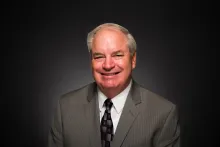
Robin Webber was born in Chicago, Illinois, in 1951, but has lived most of his life in California. He has been a part of the Church of God community since 1963. He attended Ambassador College in Pasadena from 1969-1973. He majored in theology and history.
Mr. Webber's interest remains in the study of history, socio-economics and literature. Over the years, he has offered his services to museums as a docent to share his enthusiasm and passions regarding these areas of expertise.
When time permits, he loves to go mountain biking on nearby ranch land and meet his wife as she hikes toward him.
