
Robin S Webber
This transcript was generated by AI and may contain errors. It is provided to assist those who may not be able to listen to the message.
Certainly want to thank the men's ensemble. Hope all of us in Los Angeles are always grateful to have special music. It's a blessing. It doesn't just happen. And it takes practice. And practice almost makes perfect. Senator, beautiful today, and thank you very, very much.
I do want to mention, just as we begin to let you know where we're going as far as messages, today we are going to be continuing our series on New Covenant realities and Christian responsibility. When we come back in two weeks, we're going to deal one more portion of this series. We're going to be concluding with this first tool of grace called the Seventh-Day Sabbath.
Then we're going to close out for a while, because as your pastor along with elders and others, we want to begin preparing for the Spring Festival days. But then I'll be coming back right after that, and we'll have two or three more sermons that are dedicated to this specific series. For those of you that are with us today for the first time, we are going through the series, as I mentioned.
And we've coupled a couple of thoughts together here. Let's think about it for a moment. New Covenant realities and Christian responsibilities. New Covenant, Christian realities, responsibilities. Some out in the world, those apart from us, would think that there is a conflict. I'm here today as a minister of Jesus Christ to tell you that there is no conflict. What we've been doing through this series, which has now been going three or four at this point, is that we have developed and created a framework. I think it's just important for a moment or two to be able to go over that framework.
And I really do want to build upon the fine foundation that was laid by Mr. Zajac in the first message today. Because again, one thing that we need to understand in the United Church of God, we need to understand in the United Church of God Los Angeles, is that we do believe in grace. When people call me on the phone at times, and they'll say, Well, what does your church believe?
What would you tell them? I always first and foremost focus them that we are followers of Jesus Christ. I then focus them on the reality that we have folks here that believe in God's grace, that we believe in grace, that we have received God's favor. He has initiated a relationship with us. He has invited us into that relationship. He remains involved in that relationship. As the book of Philippians says, whatever God has begun, He's going to see through it to the very end that we are going to make that journey.
So, always focus on the aspect of grace. I like to tell people about that. I like to share that wonderful truth that we have a God that loves us so much that at this time He's reached down, not because of who or what we are, but because of who He is and His plan. And He has allowed us at this time to become the first fruits to experience His grace. I also like to share with people that we come to God in faith. That just as Father Abraham, who is the father of the faithful, who, as it says in the book of Romans, was approved not necessarily by what he did, but because He unbelieved that He was accounted before God to have relationship.
I also like to remind people that, quoting the words of Paul, that the gift of God. Who doesn't like a gift? We all like gifts. We all like to unwrap them and untie the bow and get right into it. What's in the box? And when we open up the wrappings of the Bible, we come to find that a grace-filled God, a loving God, has given us the gift of eternal life. It's not something that we can buy.
It's nothing that we can earn by any human measure and or merit. It's not by our works, but it's by God's grace. And it is a gift, and that's a beautiful thing. Now, with all of that said, though, we also understand something as Christians, as we couple New Covenant realities with Christian responsibilities. Our responsibility, once God's grace has come into our life, and we begin to experience it, we understand that the sovereign of the universe has entered into our life.
And thus, by His Spirit working with us, we surrender ourselves to Him being sovereign. And if we surrender to Him being sovereign, then we surrender to His express will, which is the Bible that is before us. Thus, then, the Bible itself has authority in our life. Not authority of itself, but because we've come to believe. And believing is a gift that comes from God. It says that faith is a gift. And we've been given the gift to understand and reveal to us that these words are our life. And in this life, we surrender to it, and we begin to incorporate the life of the Bible, the words of the Bible, God's sovereignty into our life.
And thus, we do what the Bible says. Thus, even though we are saved by grace, and that's a new covenant reality, thus in turn, in response to the grace, we have Christian responsibilities to obey the Word. And that's why we've been going through this series dealing with the different tools of grace. We're dealing right now with the Seventh-day Sabbath. We're going to be dealing later on with the biblical food laws. Later on after that, we're going to be dealing with the subject of biblical tithing.
But right now, we're centering on the Seventh-day Sabbath. And I love to call it a tool of grace. People out in the world don't buy that argument. But I'm not arguing about that today. I'm explaining it today to you of the new covenant, to recognize that the Seventh-day Sabbath is a tool of grace. It's not a burden.
It's not fossilized in the sands of Sinai. But it is alive, and it is well in the hearts of those that are in and under the new covenant today in 2011. A couple of the thoughts that we've shared so far is simply this. We've come to understand a new covenant heart will understand that the Sabbath is not just something past, but it is about God's plural acts of creation. That God didn't just stop after the Seventh-day and after He created it.
He wasn't pooped out. He was not exhausted. God does not get tired. He moved from one set of activity of creative works at the physical level, and now is performing a work on the spiritual level. The spiritual level. God never ceases. He never hesitates. He never stops in thinking what He wants to do with His special creation. You and me, humanity, made in His image, after His likeness, and that He wants us to go now to the next step through Jesus Christ.
And through that, there will be members of His family forever, as immortal children in the family of God, entering eternity with Him by His invitation. A new covenant heart will also understand that the Sabbath is not about bondage, it's about freedom. I was so happy, Ole, that you brought out today about growing in the grace and the knowledge of our Lord and Savior, Jesus Christ. Do you know, friends, that that is one of the reasons why Jesus walked the earth for three and a half years, so that we could come to understand how God would keep the Sabbath if He had two legs and walked on this earth with us?
The balance, the love, the spirit of Jubilee, of release, of being free to serve, of being free to give, of Jesus in His ministry being free to heal, and in that sense of Jubilee, showing what it's going to be like one day when the entire world is going to come under the rest of God. And we discussed that, and we grew in that, and I hope you've been thinking about it.
Which now leads me to the third point that I want to bring to you today about New Covenant realities and Christian responsibilities. Are you all ready? Here we go. The third one that I would like to bring you to this is simply this. A Spirit-led New Covenant heart recognizes the need to rest in this physical life.
You know, sometimes we can be talking about, well, we're supposed to walk in the Spirit. We're supposed to live in the Spirit. Well, the New Covenant is all about the Spirit, and now we're just basically supposed to do that.
A New Covenant heart recognizes its need to rest in this physical life. Sure, New Covenant Christians are begotten from above, but I want to share something with you. We are still in these physical tents. Is there anybody that thinks they're already in the Spirit here? Can I see a show of hands? If you are, we will give you the pin test. Do you know what the pin test is?
Do you know what the pin test is? Do you want to have the pin test? Oh, you do? Oh, okay. Can I have your pin a moment? Not your hand. That's for your husband. Okay, is that... The pin test is this. If you think you're really in the Spirit, do you all think that this is sharp?
I'm not holding your hand. My wife's back there. Okay, so anyway, here's the pin. Sometimes you say, well, we don't have to keep the Seventh-Day Sabbath anymore because we're in the Spirit. We're holy. We're beyond all of this stuff out of the Old Testament. The pin test is this. If this hurts, you're going to know that you're a human being. You are so good. No, I wouldn't do that to you. We all understand the pin test, don't we?
Absolutely. Sometimes we forget that. We've got to remember. We've got to remember that we are still human beings. The Apostle Peter in his epistle talked about, Oh, I wish I could be gone, but I am still in this physical tent. We need to recognize that God, our Love and Creator, recognize that creation needs a break. We need a break from what I like to call the stress mess. Have you ever heard of anybody that is so wound up?
We say what? They are about to snap. And I think more than ever in this world, with the pace of life, Susan and I find this coming in from Riverside County, where we are out there with the wheat fields and the sheep and a little bit of suburbia. And then, as we begin to come into the 210 Freeway, and I grew up here, as you all know, and Susan and I lived here for 27 years, but when you've gotten away from it and you come right into the heart of the megalopolis, all these cars are whirling.
All the people are on top of you, and all of them are driving and texting at the same time. Or on a phone. Or bad drivers, etc. Are we enjoying the Sabbath yet? Are we almost there? And yet, we can also be doing that on Monday, Tuesday, Wednesday, Thursday, and Friday.
Let me share something with you, friends. God is so benevolent and so wise that when He made the creation, who knows what makes the creation work better than the Creator? And He says that we need to take a stop and rest. I'd like to share a story with you for a moment. It's out of Greek legend. According to legend in ancient Athens, there was a man. He noticed the great storyteller Aesop, playing childish games with some little boys. And this man laughed and jeered at the storyteller, asking him why he wasted his time in such frivolous activity.
Aesop responded by picking up a bow and loosening its strings and then putting the bow down in front of the man. And he said, now, give me the answer to the riddle before you. Well, the man could not. Then Aesop looked at the bow and he looked at the man. And then he said to the critical Athenian, now answer this riddle. Here it goes. And it's simply this. If you keep a bow bent, it will eventually break.
But if you let it have some slack, it will be more useful when you want it. Some of you are in archery and some of you probably use the bow to hunt. Many of you are aware that once you've used a bow, you unwind it. You let it go slack. Otherwise, it loses its strength. It loses its edge. It loses its vitality. Allow me to share something with you today, if I may, friends, and that's simply this.
People are like bows. They need time to rest lest they snap. God, the Creator, understood this. In fact, it's interesting. If you'll join me now as we open our Bible, join me if you would in Exodus 23. In Exodus 23. And let's pick up the thought, if we could, in verse 12, where God says, I don't know if you've ever looked at the Scripture before in your studies of the Seventh-Day Sabbath, but the Sabbath is not only simply to rest, but it is also to be refreshed.
The word, let's remembering that the Old Testament is written in Hebrew, the Hebrew word here actually conveys to take a breath. And or another way of conveying the meaning is, and or being breathed upon by a fresh current of air. How many of you have ever been to Hawaii? Hawaii before there was air conditioning? I think they're getting more and more air conditioning over there. But in the old days, Susie and I were back there in King Kamehameha—no, no, it's been a long time. It's been about 30 years, but I remember being there, and I remember how, do I dare say, other than palm trees, that Hawaii can get a little sticky? And then all of a sudden that in the condo, the air would come through the screen door, and the curtain would begin to billow, just like a sail.
They call them trade winds. And you're just like this, you just want, oh, you just want an air bath. Come on, I'm right here. And you're just refreshed and lathered by the beauty and the crispness of the breeze.
God wants us, we that are Newcomer and Christians, to think of the seventh-day Sabbath in that regard, that we not only rest, but that we are refreshed. Think about the word Sabbath. We do recognize that Shabbat means to cease or to rest or to stop.
I want you to think about something for a moment.
God loves you and me so much. And because he made us, he basically said every seventh day, so that you can function more effectively to serve me, to worship me.
I want you to unbend that bow, and I want you to rest, and you know what? I'm going to give the physical creation a time-out.
How many of you guys out here play basketball? Anybody play basketball out here? Bill, nice and loud, I got a question for you. When does a coach normally call a time-out for his team?
Normally when things are going poorly and the team is tired. Right. Absolutely. You got it. You've seen at least one ballgame. You're there. Okay, got it. A coach will normally call time-out, everybody's going like this, but all of a sudden everything's changed. They were winning, now they're losing, now they're 10 or 15 points behind, and everybody's desperately going like this because they know they need a change. They know that things aren't working. They need to think about what they're doing. Have you ever thought that God is the greatest coach in the universe? That he doesn't ask his people to call a time-out when they're losing, but ahead of time? How many coaches call a time-out ahead? Ahead. To keep their players moving forward and doing what they've been trained to do. God is so great, and his wisdom is so awesome, he calls a time-out for each and every one of us ahead of time so that we can be perfectly functioning as a family before him. Now, when he does that, let's understand something, friends. It doesn't mean a spiritual time-out. Not at all. We've already seen that from the chapters in the beginning of Genesis, but it means a mental and emotional change of pace. A change. Now, this is important, especially in the aspect of being a New Covenant Christian, because it's not just stopping to give your body a rest. Time-out! No further! Not doing this, not doing that. We're thinking externally. Under the New Covenant, the commandment is written in our hearts and our minds. What we need to consider, and I'm encouraging you to think about this today, friends, is that we not only need to rest from our internal labor, but we need to rest from our thoughts. We need to rest from our emotions. We need to rest and analyze our motives, as we were going through in the Bible study today. Why do we do what we do? What have we done these last five or six days? Now, God's called this time-out. And where are we in comparison to where the coach is? To recognize that it's not only time-out to smell the roses, but also a time to be able to walk with God, intensely. Walk with Him. To go back to that experience in the very beginning of time, when man and woman were with God in the garden.
And what does it say that God did in that society? A society that was at rest before sin entered. He was walking, and He was talking with humanity. It says that He talked to Adam. It says that He came walking with the first man and the first woman. There's, in other words, a relationship that is happening today.
Let's ask ourselves a question as we begin to move away from this point. The big question, simply, is how tightly strung are you? And what are you doing about it?
Life has demands. Absolutely. But God also has a demand on you. Let's think about that for a moment. May we?
We say so often, oh, life is a grind, and life has so many, many demands.
Uh-huh. Have we had the same conversation?
But under the New Covenant, we not only surrendered our externals, but our internals, our total person to God, that He might write His laws in our minds and our hearts. And a New Covenant individual will recognize that God has a demand on us.
The Seventh-day Sabbath is a manner of worshipping God.
Remember what we've been talking about, and some of you that are visiting us today, that God cuts across the grain of our existence, and our worship to Him measures that. He deals with time, He deals with our tummies, and He deals with our treasure.
We call it the Three T's. There's nothing more important to a human being than their time, their tummies, and their treasure.
And what we're doing by this tool of grace is recognizing that God has a demand on our time. He says, You shall be refreshed. You shall not do your industrial labor. You or anybody that is in your house.
God owns us. That's what we said at baptism. God owns us. He's our sovereign. He's our king. And what He says goes.
And we need to kind of understand that as New Covenant Christians, as firstfruits of God, oftentimes in the Church of God community, friends, we talk about the Feast of Trumpets representing the time when Jesus Christ is going to land on the Mount of Olives, as depicted in Zechariah. And indeed, He is. But the Feast of Trumpets, in a sense, is a future sense, a festival dealing with prophetic yet to occur.
What you and I are saying...are you with me? What you and I are saying here as New Covenant Christians, we are already citizens of that kingdom.
We are subjects of God Almighty. Jesus Christ is our king. Their rules and their commandments and their statutes are our life.
We have unconditionally surrendered our entire being. All of it. Unconditionally.
It's kind of hard for some of those that are young here. I see some of the young folks...about six rows back, therefore you know you're young. Young folks.
People today don't gain a sense of what unconditional surrender is. History has gone by, and today we have thoughts of Vietnam or the Korean conflict or Iraq or Afghanistan, which goes on and on.
Back in Granddaddy's time, Grandma's time, there were two countries, two regimes that experienced unconditional surrender.
The Japanese Empire and the Nazi regime that was over Europe. They said, we give up. We quit. That's it. No more. Nada. Done.
Your rules, your ways, your dictates will be what we will do henceforth. We've kind of forgotten that, haven't we? Unconditional surrender.
But that's what we said at baptism, that our kingdom, our person, our time, our treasure, our tummies, all that we are, are surrendered to God.
Thus, every seven days, God gives us an opportunity to take a time out and give it all back to Him, resting our bodies.
This physical creation, these human tents, as Peter says, does allow our spirit to be sharpened. And as we have time to focus on God's spirit on the seventh day, it also allows us to harness our bodies' energies.
Bottom line is simply this. Spirit-led people in these human bodies need to rest. It's a command.
Let me take you to another step. We're going to go to one more point today, and that is simply this.
New Covenant Christians embrace the seventh-day Sabbath as a day of testing of our faith.
The seventh-day Sabbath is a day of testing. Testing. See, testing what? A clock?
Will it run 24 hours? Is it a testing of how much energy we have? No, not alone. It's a testing of our faith.
That's why it's so important that we understand something. The Sabbath is a tool of grace.
Grace comes, extends from God. Then we are approved of God by faith because we do believe and we do take God. It is word.
Now, if you have not heard anything yet in this message, I hope that you will really now begin to sink in, because I have some very important things to share with you.
From the very beginning, God has always offered humanity the prerogative of making choices. That's it.
It's amazing that the greatest gift that God gave humanity can also be the greatest weapon if we don't use it right.
And that is free moral agency. The privilege to choose.
Now, when God gave Adam and Eve the privilege to choose in the Garden of Eden, He didn't do it just by fiat, but He gave them instructions.
It was not done in a vacuum. There were specific guidelines. Let's think about that for one.
Adam and Eve were granted ability to freely eat. Eat of everything that was in the garden, save one tree.
One tree. Now, you think about that for a moment. One tree. Not two, not three, not four. God did not make this hard. He did not want to confuse them.
He did not give them multiple choices. Are you with me? He says, Of all the trees of the garden you may freely eat, but of the tree of good and evil you shall not eat.
But they wanted to add. They wanted to add. The lesson in Eden was not about fruit picking, but whether God's ways will supply our needs.
Whether God's ways will supply our needs and that we can trust in Him.
Now, this is going to build to a point, so please stay with me. What are we talking about?
When we believe that God will supply our needs and that we can trust in Him, we are talking about faith. Faith.
And the old word, obedience, our obedience is a measurement of that faith. Our obedience is a measurement of that faith.
I believe in God! I said it, but talk is cheap. Are you with me? Talk is cheap.
The proof is in the pudding. And God gave us the seventh day Sabbath as a tool of grace into the pudding of faith.
To see if we would truly believe that He will satisfy all of our needs and that His ways are sufficient and that we do not have to add one more item to His sufficiency.
The Sabbath is more than a measurement of time or absence of industrial labor. Join me if you would in Exodus 16.
In Exodus 16, we come to understand that God gives us the faith test.
In Exodus 16, God, again, just like Eden, I don't know if you've ever thought about this in discussing the manna, God, just like Eden, uses the element of food to measure faith in relationship to obedience.
Food. Fascinating. Just like Eden. Just like later on in the Gospels with Christ and the temptations. What was used? Food.
Food. Turn these stones into bread. They probably even looked around. They probably looked like loaves of baked bread in that dane. And Christ was tested. But He said, no. God is sufficient. Let's notice what it says here. Verse 3, Exodus 16. And the children of Israel said to them, O that we had died by the hand of the Lord in the land of Egypt. When we sat by the pots of made and when we ate bread to the foal, for you have brought us out into this wilderness. Why? You planned it. You plotted it. It was to kill this whole assembly with hunger.
They were serious. I was about to say they were fed up. They were not. Bad pun. That's not in my notes.
They were not fed up. They were not full. They were angry. They wanted to go back to Egypt. They wanted to go back.
They wanted to go back to where they had pots of made and bread to eat.
Very easy to want to go back into the stress mass.
You know, there's something fascinating about slavery that can be addictive.
You can become secure in your insecurity. There's something about the addiction of slavery. And the Bible speaks of sin as a type of slavery. Egypt is a type of slavery of wanting to go back. Wanting to go back. That's not where God was taking them, though.
Then the Lord said to Moses, Behold, I will rain bread from heaven for you, and the people shall go out and gather a certain quota every day. Notice that I may test them whether they will walk in my law or not.
Now fascinating. We find two things in verse four if you want to jot this down as students of the Word. Number one, the manna which is going to be coupled with the Sabbath is a test. A test that is given towards the Sabbath.
And you might also notice, you might want to circle this, it's not the law of Moses.
But God says it's my law.
This is not just about bread. That's an instrument.
It's not just about the law. That is a measurement. It was about whether or not God sustaining love and provision could be believed in and trusted and not added to. Let's understand what's happening with Israel. Are you with me? Adam and Eve had been introduced to God's way of life. God starts small and builds up. He gave the first man and the first woman an opportunity to have relationship with him. They said, null and void, not going to go there. Nada, no. They rejected God. They didn't think he was enough. They did not believe in his sufficiency.
Here were a man. The man Adam had been brought up out of the dust.
He gave life, given opportunity. He called a son of God in the book of Luke, Luke 3.
It didn't happen for Adam and Eve. God then went from dust to the mud on the banks of the Nile and brought up and raised up a family of slaves.
He gave them life, a future that had not been. No life, no name, no future, no freedom.
God says, I will be your God and you will be my people.
I am a holy God and you are a holy people. I am giving you a holy day for a holy purpose.
But then he tests them here. Notice what it says in verse 6.
Then Moses and Aaron said to all the children, that evening you shall know that the Lord has brought you out of the land of Egypt.
What were they going to know? That God had a bakery up in heaven and was raining bread down on them? Is that what they were going to know? What were they going to come to know?
What was the foundation that they were going on with the bread, the manna, the Sabbath day, etc.? They were coming to a relationship of belief.
Interesting that when we see all of this develop, then you will know that the Lord has brought you out of the land of Egypt.
Interesting that the test, like Eden, revolved around food, but now it was also going to revolve around time. Eden was about food. The test now for these people that were being offered a relationship was about food with the manna and in the time setting of the Sabbath day, two of life's most precious commodities.
The question the Sabbath answers, and here's what I'd like you to get today. I want to focus on this. The question the Sabbath answers is, can God make up the difference of what humanly appears as lost opportunity and lost time?
You might want to jot those two thoughts down, because that's a lot of life and a lot of what we can't believe. Lost opportunity and lost time. We don't think we can afford to stop. We don't think that we can give God a day. What will we do? What will happen? Who will take care of us? It just doesn't add up. Faith was never designed to be numerical. You can't budget faith. Faith is a gift. Faith is something that God gives us to understand this tool of grace. Notice what happened here in verse 21.
The Sabbath is a Sabbath to the Lord. Bake what you will bake today, and boil what you will boil, and lay up for yourselves all that remains to be kept until morning. So they laid it up until morning as Moses commanded it, did not stink, nor were there any worms in it. And then Moses said, Eat, that today for today is a Sabbath to the Lord. Today you will not find it in the field.
Six days you shall gather it, but on the seventh day, the Sabbath, and in Exodus 16 is the first time that the term Sabbath is used as a noun, as a matter of fact. The word Shabbat is used in the Genesis account to cease, but now we find the Sabbath, the element of time coupled with food. What is more important, friends, for survival in the human mind than our tummies and our time? And God says, I claim them, I own them, I want you to give them over to me. Now it happened that some of the people, verse 27, went out on the seventh day to gather, but they didn't find it. And the Lord said to Moses, How long do you refuse to keep my commandments and my laws? Just like Adam and Eve, some of those individuals didn't believe and reached for that which was not theirs. In all of this account, let me ask you a question. What was God trying to determine through the lesson of the manna towards the seventh day Sabbath? Because this cannot be lost on the sand of Sinai. This is relevant for God's laws being written in our hearts and in our minds. Join me, if you would, to Deuteronomy 8, please. Deuteronomy 8. Let's pick up the thought in verse 2. And you shall remember that the Lord your God led you all the way these forty years in the wilderness to humble you and to test you. Nobody likes to be tested. Some people like to do the homework, but they don't like to take the test. Have you ever noticed that? Nobody wants to take a test. Blood pressure goes up. Nobody wants to take a test. But God did it for a reason. God always does something to move towards the relationship. He wanted to know what was in your heart. God gives us the seventh day Sabbath, not just simply as an instrument with a dead end, but to know what is in our heart, not what's on our watch. Not that we can count twenty-four hours. That's probably the easiest part of observing the seventh day Sabbath. He wants to know in our heart as to whether or not we truly believe that God will supply our needs, that we do not have to unnecessarily reach, that we do not have to go down an alley of our own making, that God will provide. So He humbled you in verse 3 and allowed you to hunger and fed you with manna, which you did not know nor did your fathers know. Nobody knew about it. Actually, the term manna, which is really kind of a funny thing in the Bible, manna basically means, what's that?
Ladies, have any of your husbands done that recently at dinner? Ask you that question. What's that? Nobody had ever seen it before.
Cucumbers with salmon juice over it. What is that stuff? Didn't that make you hungry? Nobody had ever seen it before. Wasn't earthly? What are we going to do? God said, I'm going to give you something neat. Because here's what's really cool. God's ways are not our ways. Are they? Have we gotten that down yet? Or am I talking to the right crowd? Or do we just keep on bumping into that one? God's ways are not our ways. They just simply aren't. Just when you think you've got God figured out, He gives you a whole new line of math, spiritually speaking.
They said, what's that? God said, you'll get used to it for 40 years.
And you shall not go after, verse 13, you shall fear the Lord your God and serve Him and shall take O's in His name. Oh no, you know what? I'm on the wrong thing. I skipped. Pardon me. Verse 8 says, beyond that, let's pick up the thought in verse 3. So He humbled you, allowed you to go hungry. God allowed Israel to go hungry. Not because He's mean, but for a purpose.
And fed you with man in which you did not know, nor did your fathers know, that He might make you know that man shall not live by bread alone.
But man lives by every word that proceeds from the mouth of the Lord. He says your garments didn't wear out, nor did your feet swell these 40 years.
You should know in your heart that as a man chastens his son, so the Lord your God chastens you.
Therefore you shall keep the commandments of the Lord your God to walk in His ways, to fear Him.
For the Lord your God is bringing you into a good land, a land of brooks, of water, of fountains and springs that flow out of valleys and hills, a land of wheat and barley, of vines and fig trees, and pomegranates, a land of olive oil and honey.
Sounds like the soup plantation. Mama, Papa, no more manna. We're crossing the river. We're going into the big restaurant. We're going into the promised land.
Look what God is going to grant us. Verse 9, the land in which you will eat bread without scarcity, in which you will lack nothing.
A land whose stones are ironed and out of whose hills you can dig copper. And when you have eaten and are full, then you shall bless the Lord your God for the good land which He has given you. But He made them go hungry first. And He made them eat manna for 40 years.
And He said, you shall collect manna on Monday and Tuesday and Wednesday and Thursday. Double on Friday. You shall not collect it. You shall not go out. The seventh day is holy.
But wait a minute. I can't do that. I can't afford to do that. God says He let people go hungry to serve a purpose. To test their faith. To test that His ways, His laws, His love, His commandments were sufficient.
And sometimes that kind of gets scary when you're running low. It gets scary when you're in a recession. It gets scary when somebody offers you a job and you don't have a job, but you need to work on the seventh day Sabbath.
And you know where your funds are. You know that now your faith is being tested. It's not just about 24 hours. It's not just about the sands of the Sinai.
It is about you being a New Covenant Christian of which God's laws are written in your heart and mind, which means they have not been abrogated. They have not been abolished. They have not been done away by Christ. They are even more, more in force because we live them now by the Spirit as well as the latter. We say, God to. The Sabbath is always going to be a test as to whether or not you believe in God's grace and that you're not a lost cause, that He's not a butterfingers and somehow has messed up with you and forgotten where you are. And while it might be a challenge right now, while it might be hard, while it might be difficult, think of what God says here in the overview of what He did with Israel. I let you go hungry. I did let you go hungry, but it was for a purpose. I had something better in store for you. On the other side of this, there is promise. There is blessing. There will be fulfillment. My perfection, speaking of God, speaking in the first person, my perfection is always better, always better than your best. But God, I got to. This is the job of a lifetime they're offering me. And if it's not the job of a lifetime, you don't realize how long I've been looking for a job.
You don't know how hard this market is.
Some of you are being faced with this reality right now, aren't we? You know that. I know that.
This thing of testing and faith and the Sabbath, they never go away. I'm only here as one Christian to another telling you that I worship a loving God, and I worship a God in whom I know His ways are sufficient. I worship a God and I know you worship a God that recognizes and knows that you have not been lost in the shuffle.
You know why you have not been lost in the shuffle? Because I know that He gave His Son for you and me and His Son died. And when you have your child die for somebody, you don't forget about that person, do you?
See, this is where the discussion moves beyond simply a sand dune and Sinai. But in the heart of a New Covenant Christian, that God's ways are sufficient, that God will in His perfect time and in His perfect way, not be late. Does it mean that we're going to necessarily get everything that we want? I remember the wisdom that comes out of the Psalms where the psalmist says, I have never seen the sons of God go without bread.
He didn't say that I've seen them eating steak, but he said I've seen them and they've never gone without bread.
Right now, some of you may be facing this challenge, and I understand that. And making choices, big choices, I understand that.
Remember, choice is a gift that God gave us at creation.
And to recognize that we can't be in the New Covenant without the Spirit of God helping us. And that the Spirit of God not only convicts us of sin, but it's interesting when you go to John 16, it says it also convicts us of righteousness. It says, yeah, this is the right thing to do.
Even when you don't see all of the answers, you know, when you look back at Exodus 16, are you with me? Can we go about five more minutes? Because the potluck's not until 5.15.
Simply this, that we can at times say, hmm, what's that?
Just like our forefathers in Israel did. And they don't recognize that God is moving beyond our minute, our moment, our week. When God performed that, which was in Sinai, with the manna and the Sabbath, and people said, what is that?
He was not only working here, but he was thinking 1,400 years down the line.
Because the greater Moses, the second Moses, Yeshua, Jesus, the Christ, would come. And he would say what? That, I come not to give you a bread as your fathers of old ate in the wilderness, but now there's a new loaf on the block. Your father is sending something else.
I am the bread of life, and if any man eats of me, he will never go hungry.
Associate that with the thought that Jesus calls himself the Lord of the Sabbath.
Now, when Jesus was alive, you know, they did the same thing with Jesus, the bread from heaven. They did the same thing with him that the forefathers had done in Sinai. What did they say?
What is that? Who is that? What will we do with him?
Because it says that Jesus Christ was a stumbling and a rising for those that were in Israel.
And the Sabbath day will always be there. The day which is lorded by the Lord of the Sabbath, Jesus Christ, the Sabbath will always be there to humble us, to recognize that who we are and what God is.
He will always be there to test us as to whether God is sufficient.
The Sabbath day will always be there as to will we worship him and give him that day, give him that time.
And even when we don't see the answer, we will honor that day as a tool of grace, as a gift of God to worship him.
And say, God, I'm not quite sure where all of this is going, but I believe in you.
And I know that you have given me as a New Covenant Christian, not only the letter, but the spirit of the law to abide in, by the grace and the knowledge of our Lord and Savior, Jesus Christ.
Help me. Help me to understand this. Help me what I ought to do. And some of you might be in that challenge right now. That's why, may I make a comment?
How many of you out in this room have ever had an issue with the Sabbath, where your job was on the line?
Can I see your show of hands? Yeah. You know what? I have two.
Remember 15 years ago? Because I wanted to observe the Sabbath with all of you. I lost my job in another organization because I and so many others around this world believe in this tool of grace called the Seventh-Day Sabbath.
What have we learned today as we begin to conclude? We have learned, friends, as a family here in the Los Angeles congregation, that God has called us to have a time-out from the stress mass.
That even Spirit-led individuals, we're still in these human bodies, and we need to honor the break and the time-out that God has given us.
We need it, or otherwise we'll stab. Number two, we've come to recognize, most importantly, that the Sabbath doesn't just point us to a day on a calendar that points up to an incredibly loving Father and His Son, who's the Lord of the Sabbath, who, when they ask us to do something, they give us promises and provisions, and they will show away.
Take God at His word. Embrace this tool of grace called the Sabbath.
Next time I come, we're going to finish up. Have three more items that I'd like to share with you concerning this tool of grace. Until next time, may God bless each and every one of you out there.
And Susan and I look forward to sharing the potluck and that which follows later.
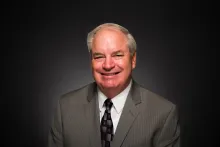
Robin Webber was born in Chicago, Illinois, in 1951, but has lived most of his life in California. He has been a part of the Church of God community since 1963. He attended Ambassador College in Pasadena from 1969-1973. He majored in theology and history.
Mr. Webber's interest remains in the study of history, socio-economics and literature. Over the years, he has offered his services to museums as a docent to share his enthusiasm and passions regarding these areas of expertise.
When time permits, he loves to go mountain biking on nearby ranch land and meet his wife as she hikes toward him.
