
Robin S Webber
This transcript was generated by AI and may contain errors. It is provided to assist those who may not be able to listen to the message.
For a moment, allow me to briefly refresh you on some of the major points from this ongoing series entitled, A New Covenant Heart Towards Christian Responsibility. In the course of this series, we are covering fundamental topics like the Seventh-day Sabbath, tithing, and the biblical food laws. I think we've come to find over this series of classes and messages that, rather than fossilized in the pages of the Old Testament, on the contrary, we find that these biblical responsibilities are really what I like to call tools of grace, which therefore make them alive, they make them vibrant for today's New Covenant individually. Currently, we're focusing on the Seventh-day Sabbath. I'd like to share for a moment the framework of our approach in the course of these messages, especially as we're talking about the Seventh-day Sabbath, but it will play in part with the other topics that we'll be talking about as well. The framework of our approach is always to understand that when we're dealing with the commandments of God, the biblical responsibilities that are found both in the Old Testament and the New Testament, we approach them with an understanding under the New Covenant that we are saved by grace, not simply by what we do, not by what we do at all, and that we are approved towards God by faith just as Father Abraham was, who was indeed the father of the faithful. So when we lay down the foundation in discussing Christian responsibility that we are saved by God's grace and we are approved by God by faith, this is well and this is good. And so you can say, well, I can just live by grace and I can live by faith. But we also came to understand that of all places in the book of Hebrews, which is a fascinating, inspiring epistle about the majesty of Jesus Christ and the elevating of His Messiahship and what He is now doing in His heavenly ministry to use all of those terms together, we come up against this verse. Let's come here. We have some guests today. Let's look at this pivot verse that we find over in the book of Hebrews. Hebrews 4 and verse 9. It's a little spiritual nugget that's just placed in there. Hebrews 4 and verse 9. With the elevation of Christ above Moses, above Joshua, above the angels, and to recognize that He now serves in a far grander tabernacle than that which was of old in the desert. And with all of that spoken, and that He is the one that brings the better promises, and that by belief in Him assures us of a better resurrection. Nonetheless, we come up to Hebrews 4 verse 9. There remains, therefore, a rest for the people of God. In all of this grand conversation of all that God the Father brings to us through Jesus Christ.
And speaking of that spiritual rest which is to be and that God has designed for us.
We come up to Hebrews 4 verse 9. There remains, therefore, a rest for the people of God. In the Greek it is sabbathismos apalapatos. Therefore, there remains in place the Sabbath day. This word sabbathismo is the only time that you find it in the Scripture. The only other time you can find it is in non-biblical literature. But every time that it is used, it is about the technical observance of the seventh day. Of that 24-hour period from Friday sunset to Saturday sunset. So what God is saying is that even with all of this in place and intact, there also remains behind.
There remains in place this Sabbath day. Now, this takes us back to the starting declaration. Let's just go back to Mark again just to bring us all into this conversation. In Mark 2, verse 27, many people believe, sincerely so, that when Jesus Christ came, that He did await with the Sabbath day.
He abolished it. Another word they might use is, well, He abrogated it. He put it to the side. But rather than that, let's look at what the Bible says. Always, always, always. What saith the Scriptures? Not what Grandma told you, not what Grandpa told you, not what your pastor tells you. But what does the authority of God's Scripture tell you? In Mark 2, verse 27, He said to them, The Sabbath was made for man and not man for the Sabbath. Therefore, the Son of Man is also Lord of the Sabbath.
He is, as it is in the Greek, the kireolos. He is the Lord. He is the owner. He's the governor. He's written His signature all over it. It's just like when you have a checkbook before you, and there's a check. When you sign it, you own it. And that is the approach that Christ is saying. Rather than abolishing it, He says, I'm here to show you on this earth how God would keep the Sabbath if He were a human being.
Because that's exactly what Jesus Christ was. God in the flesh, walking on this earth and observing the seventh day. We identified how a new covenant heart would appreciate different aspects of the Sabbath. We talked about that a new covenant heart will understand that the Sabbath reminds us that God's work is not done. That God did not go on strike when He created the Sabbath.
His spiritual labor, His spiritual work, His spiritual creation is yet a work in motion. We also came to understand through the very stories and examples of Jesus Christ and how He treated the Sabbath. That the Sabbath is a day steeped in freedom, steeped in liberty. It's a day to do good. It's a day that you can utilize to heal.
It's a day that people can come together and rejoice in liberty and do good things for one another just as Jesus did. We also discovered the Sabbath of the day is designed as a day of rest. A day to take a deep breath. I just took one. You can't see that on tape, but I just took a big deep breath. It's a day to step back and become refreshed. That even Spirit-led individuals with new covenant hearts, and I think I'm speaking to them in this audience, have you noticed how good it is to take a rest? How much of us need to go to the bench every seventh day, come out of the game of life, and be rejuvenated, and to be refreshed as if God just brings air into our lungs, physically, emotionally, and spiritually, to allow us to breathe and to go back into this world.
Wow! Rather than a burden, rather than bondage, that's a gift. That is a gift. We'll be talking about that a little bit later. We also came to understand that the Sabbath of the day is, yes, it's given to us by our Maker as a test, associated with the test of Israel in the wilderness, as to whether or not we truly believe in the sufficiency of God, that God will grant us our daily bread, even when we put down our labors, our industrial efforts, when we put down the works of our hands, and you say, well, yeah, but I can't do that.
I need seven days. God says, no, six will be fine, and I'll take care of it. No, no, no, you don't understand. Seven. I need all seven. Can't do it. Can't do it. And six. Yes, you can. Because God is our provider. You see, in all of these biblical responsibilities that God gives us, let's think about it for a moment, our worship is on a daily basis, whether it be with the Seventh-Day Sabbath, whether it be with the biblical food laws, whether it be with the aspect of tithing, that these biblical responsibilities is a daily worship that cuts across the very grain of our life.
Most of us in this room at one time or another, both man and woman, have at least sawed something. And you see the grains of the lumber in front of you? Well, our worship cuts across the very grains of everything that is important to a human being. What are the three most important things to a human being?
Time, the Sabbath, food, biblical food laws, and, oh good, it's still there, my wallet, and money. And what God does is what He gives us in all of these matters allows us to worship Him daily, whether it be as we look forward to the Seventh-Day Sabbath, whether it be as to how we distinguish what is on our plate of food, or to offer Him a tithe to honor Him. Even when we think, well, it might be better in my back pocket.
No. God says, come before me and give me the tithe. All of these things, rather than being isolated, are all about the daily worship of a New Covenant heart in a New Covenant Christian that utilizes each of these as a tool of grace to understand that God will supply. That now brings us to the last three features regarding this specific tool of grace called the Seventh-Day Sabbath.
All of these features that we're talking about lead us to a very fundamental point, friends. Simply this. We have a Holy God who has given a Holy people a Holy day for a Holy purpose. And if you can remember that, well, that's well and fine. And then you will have benefited by this presentation. The fifth point I want to give you is that a New Covenant heart understands God blesses us as we delight in the Sabbath.
We derive a blessing from God when we delight in the Sabbath day. Now, I read in the newspaper right now, and can I tell you something? I don't think I have to be a harbinger of bad news to let you know there's not a whole lot good happening in the newspaper right now. How many of you would like to have a blessing right now when you see the Dow going down, when you see GM in crisis, when you see this happening, this happening, this happening, this happening?
Have any of you seen in your local newspaper blessings on board? Come and get them! Has that appeared in the Orange County Register recently? Don't think so. San Diego Union hasn't been appearing in the LA Times, Press Enterprise. God says that as we delight in this tool of grace, called the Seventh-Day Sabbath, that He will grant us a blessing. Join me, if you would, in Isaiah 58.
But blessings don't come on the cheap. We also have a responsibility. That's why we do have, as New Covenant Christians, with New Covenant hearts, we do have responsibilities that are outlined in the Bible. Call them responsibility. Call them commandment. But they're not only supposed to be written on a table of stone, but in our hearts and in our minds. Isaiah 58, verse 13.
Breaking into the thought. It says, if you turn away your foot from the Sabbath, from doing your pleasure on my holy day, and call the Sabbath a delight, the people that Isaiah was talking about were abandoning the Sabbath day. They weren't keeping it holy. Isaiah's message was a call to repentance. A call to remind them that the good God, the gracious God, that had brought their ancestors out of Egypt, still wanted to work with them.
And that you call the holy day of the Lord honorable, and shall honor Him, not doing your own ways, nor finding your own pleasure, nor speaking your own words. Then you shall delight yourself in the Lord, and I will cause you to ride on the hills of the earth and feed you with the heritage of Jacob your father, the mouth of the Lord has spoken. Notice what it says here. That I will cause you, in verse 14, to ride on the hills of the earth. That's just a thought and a portrait in our mind of not having burdens, of being free, of movement, of liberty, of new doors and new passages and new opportunities being opened to us by God.
It's kind of exciting when you think about it. Now, as we go through Isaiah 58, this word, delight, that springs up here a couple of times in verse 13 and 14, the word delight there comes from the Hebrew word of onag, O-N-E-G. Very simple. I don't usually spell words that are over six letters, but this one I'll do. Onag, O-N-E-G. And that word means luxury. It means luxurious. It means soft. It means delicate. The whole connotation is that if you call the Sabbath luxurious and treat it as a delicacy that God has given you, that indeed you will be blessed.
The Living Bible translation puts it this way. Always good to kind of get a couple of different translations to get the total meaning. Keep the Sabbath day holy. Don't pursue your own interest on that day, but enjoy the Sabbath and speak of it with delight as the Lord's holy day. Can you imagine the delight of ancient Israel after having been in Egypt in slavery for hundreds of years? And has God through Moses reawakened this entire people about the seventh day off after they had been in slavery in 250 years?
Do you think that they looked at the Sabbath day as a day that was burdensome or bondage? Do we not think that they looked upon it as a delight when their whole life had not been their own and every day was bondage and slavery in Egypt and every moment of their time was taken up by the Master? And then God says, six days is yours. Do your thing. I'm just asking the seventh day to be mine. And by the way, take it off and learn to delight in it. That was God's intention, but the religious folk of Jesus' day layered this day of delight with their own restrictions.
They had a creed of multiple work prohibitions, none of which you will find in Isaiah 58. What is fascinating, friends, if I can make a comment? There are very, very few do's and don'ts in the Bible about the Sabbath day. It's fascinating. Someone might think that there are pages and pages and pages and pages and pages and pages and pages. But God treats us as mature individuals to give us principles. Principles to understand. And that with those principles that the New Covenant heart, because God's law is written in our minds and in our hearts, is not going to look for ways to escape the Sabbath, but to delight in the Sabbath with the very few principles that are indeed given.
Back in Jesus' day, the Sabbath had become a burden. You could only walk so far. You could only do this. You could only do that. It got so... If I can say this, it got crazy in the sense that even the prohibitions by the religious folk of that day, if you swallowed a gnat and happened to swallow it, it could be regarded as work.
I've worked at that a little bit myself sometimes when a bug has gotten in there. But anyway, it could be regarded as work. And or that if you came upon an individual that was incapacitated, you could stabilize the individual. You could kind of make sure that he doesn't bleed to death, but you couldn't help him to get better. I want you to think that through for a moment, especially in what we just prayed for Daniel about.
Imagine happening upon Daniel on the Sabbath of the day, and you could kind of stabilize him, but you couldn't take it to the next step and help him to live life. Now, when I say this, this was done perpetrated by individuals that thought God, excuse me, they thought that they were doing God a favor. I have found in life that you don't want to write more rules than God writes.
When you do, you're doing more than God has assigned you to. That's why it's very interesting to look at Isaiah 58 in that light and understand that God made the Sabbath for man, not man for the Sabbath. All of this comes down to a very basic principle. Notice what it says here. If you turn your foot from the Sabbath from doing your pleasure on my holy day and call the Sabbath the day of delight, the holy day of the Lord honorable.
That's kind of the foundational premise that we want to build upon. All principles build upon that foundation that we indeed honor God and look at the Sabbath day, this holy day, as honorable. The very word there, honor, is kabed. The sense of kabed is weight.
That which is weighty, that which is of value. Honoring the Sabbath is honoring God. It's more than about a day, but signifies the weight, the value, the gravity that we place upon God's revelation to us of what He is doing.
I mentioned this, I think, in one of the first presentations, that I remember many years ago as a younger man that listened to Herbert Armstrong on the auditorium stage. And he made a profound comment and kind of took me aback for a moment. I thought, wow, it's kind of heady. He said, do you realize that I'm the wisest man on earth? Now, he might have been, but it's not something you'd rather have somebody else tell that about you than proclaim it yourself.
You know, I thought, boy, where is he going with this conversation? Well, it wasn't really a conversation. It was a Bible study. The conversation was coming out one way. But I thought, where is he going? He says, but it's not because of what I've done and it's not about me.
But because God has revealed to me the meaning of the Sabbath day. He said, how many people out there, how many people out there don't know where man comes from, don't know where he is, and doesn't even have a hand of where humanity is headed? And yet, by observing the seventh day Sabbath, it brings us into alignment of what God has done, what God is doing, and where God is yet headed. Now, we've been discussing a lot of that.
I'm going to be discussing a little bit more of that in a moment about the future. When we come to the seventh day as New Covenant Christians, with the Sabbath written in our minds and in our hearts, and we do it not simply because we have to, and indeed we do, it's a commandment of God, but it's not only out of duty, but out of desire because of what God has revealed to us through this instrument.
It is the framework of all that God is doing. And the most exciting part is that he is not done doing. The creation did not end at Eden. A lot of people think, well, he made Eden, and he said, I've got to take a break. I've got to stop. I'm pooped out. God doesn't get pooped out. God neither gets tired. Neither does he get weary, as the book says. He moved on now to the greater vocation of a spiritual creation that involves you and me being made fully in his image and in his likeness. When we come to the seventh day Sabbath and we honor and magnify God with this revelation that comes by this day and is enshrined in this day and gives us a framework for more revelation about more things, and we delight in that, God says, he's going to make you and me ride on the high places.
Notice what it says here. When we make it honorable and notice what it says, how do we honor him? Verse 13 again, and shall honor him not doing your own ways. Not doing your own ways. We're not to do our own ways on the Sabbath day. That's a principle. That's a principle. All our ways aren't necessarily bad. There's a lot of things that we do the other six days of the week that are well and fine, but there are things that God says when we come to the seventh day, hello, you're a new territory.
You're a new time. It's just like it's all right to wear shoes, and I'm glad all of you are wearing your shoes today. Most of you? Yeah, all of you. But remember what God told Moses when he came up against the burning bush? He said, remove your shoes. You're on different ground now. There are things that you did before you came on this ground, but now that you're on this ground, this ground is holy.
Are shoes bad? No, shoes are not bad. But there is a principle that God was giving here, and I think it fits in this aspect. The creation story itself teaches us there are matters that are good, that are very good, and that are holy. God gives us a principle as we come, and this is a principle that you've got to set for yourself.
It's not an atonement. It's not in the rulebook. But are we bringing our ways into the Sabbath day? Not just here at church, but in our home and as we walk. Do we, in a sense, honor this day in a different manner? Recognize that there are things that are good and very good that we might do on Monday, Tuesday, Wednesday, Thursday, and Friday. But now we are in the day that God has imprinted His essence within.
God's holy day demands deference. We're to give it a sense of place and decorum. That's challenging in today's society. In a society where everything goes, I'm okay, you're okay, don't tell me what to do.
All I can do is tell you what the Bible says here. And as New Covenant Christians, we are to take it heart that God says, Don't do your own ways. Here's another one that comes leaping out of the Scripture. And nor finding your own pleasure. Another major principle regarding the Sabbath day, to keep it holy. It's interesting that the emphasis is on finding. The emphasis is seeking or going out of the way to bring something else into the Sabbath day that God doesn't necessarily intend. Let's put it this way. We have six days to do our own thing.
But on the Sabbath day, it's not about us. That's kind of hard in the society today, where we have magazines named us, or me, or self, or people. God says the Sabbath day is about me. It's about the Holy God. It's about the one outside of time and space that has reached down and made time and made space and has a purpose with a dust and given that dust a destiny.
Honor me. It also says here a third principle, which is interesting. Not speaking your own words. Three major principles. Again, let's review it. It says, don't do your own ways, don't seek your own pleasure, nor speak your own words. Out of the abundance of the heart, the mouth does speak. So the book tells us. It's not a day to laboriously discuss every activity that is happening in your life.
It's not a day to talk about your work, to roll out a blueprint, and to share it with somebody of what's going on at work and the engineering project you're on, or making long-range plans, or be a sports buff. Now, I know there's the California Angels. That could be a spiritual discussion. But you get the point.
But we want to stretch for that. God says, six days of the week is all yours. All I'm asking is that you honor me in one day so that I might allow you to ride on the high places. When we separate ourselves from the world, and our minds, and our hearts, and our persons, it gives us more time to study, to pray, to meditate, to be with people of like spirit, like heart, like goal, like future. To encourage one another that when we're here at church, rather than talking about the San Diego Chargers, or talking about this gigantic building project, to talk about what God is doing in your life, about the miracles, about how you ask God to partner with you on that day.
And that people that are talking to God and looking for God are going to find them. And that you begin to share about events that have happened in your life that are exciting, and how God has entered your life, changed your life, or how a new message, a new thought has come to you.
These are the things, these are the words that God is pleased with and says, they are delight to me. Raise these up as, in a sense, an aroma, as an offering, so that I might allow you then to ride on the high places of the earth. Again, with all this said, look at verse 14. Then you shall delight yourself in the Lord, in the Lord. The Sabbath day is not about a vacation. It's about a vocation that God has given us to live in Him and He in us, and that our delight is by being God-centered.
When we put Him first and we put Him foremost, it says that He will bless us and allow us to ride in the high places. Let's go to another point, another feature of a New Covenant heart. A New Covenant heart, number six. A New Covenant heart embraces the Sabbath as a shadow of things to come. It points to the future. Let's understand, pure and simple, that the Sabbath day is not only a memorial of creation, and it's not only a current sign of between God and His covenant people, whether of old or whether today under the New Covenant, which I do believe it is, one of the signs.
The good news is the Sabbath points to the future when all of humanity is going to come to a resting point. And this restless world that refuses to rest is going to come to a grinding halt. No, it's interesting when you read the Bible, and it's right here. The Bible is really a study of gardens. Have you ever noticed that? It starts with a garden, ends with a garden.
Have you ever thought of that? It starts with Eden, and humanity has an opportunity to return to Eden. The book of Revelation, quoting Abba Zikal, talks about the trees of healing, and it talks about God being in the midst. It brings back the thought of the tree of life.
The Sabbath is not only about a garden past, but it points to a future garden, otherwise known as the kingdom of God on this earth, where once again humanity is going to have the opportunity to walk and talk with God. And God will be in the midst of them, just as he was in the midst of the garden. These are the wonderful truths that the Sabbath points to.
Colossians 2, join me there for a moment.
Colossians 2 is one of those fascinating scriptures in the Bible.
On one hand, or in one heart, there are people that use Colossians 2.16 and 17 to basically abolish or abrogate the Seventh-day Sabbath as a tool of grace. They say, you don't need to keep it any longer. Paul told us so. Maybe you've heard that discussion before. Quite on the contrary, rather than diminishing the Seventh-day Sabbath, these same scriptures actually extol us, extol it, and tell us it is squarely in place. Very important. Let's understand what is going on. Let's go to Colossians 2.16. So let no one judge you in food or drink, or regarding a festival or a new moon or sabbos, which are a shadow of things to come, but the substance is of Christ. Now verse 17 is a beautiful scripture. But what does it mean, and what is the discussion? One thing that we want to learn, I see we have some new people here today, and glad to have you. Maybe you're just beginning to awaken to the scriptures and how to explore and how to study them. One of the most important things is to learn to read the Bible in context. I remember when I was a young boy and I first came to church, and I found out what I thought was to read the Bible in context. The minister would say, you know, you just can't read the scripture. You need to read the scripture before that. Well, over the years, since it's been about 50 years, I've learned that the context can move beyond one scripture in front. You've got to go back a little bit and find where is the beginning of the story and what is the story all about. Let's notice, going all the way back into context, what the discussion is. Colossians 2. And let's take a look at verse 4. Now this, lest anyone should deceive you, with persuasive words. So there was a problem happening in the church at Colossae. There were some sweet talkers, some people that had persuasive words, and boy, they sounded so smart. And you know, have you ever noticed that sometimes if somebody sounds really smart and they're smooth of mouth, must be right? No, not necessarily. Not necessarily. You've got to ask, what are they selling? For though I am absent in the flesh, that I am with you in spirit, rejoicing, seeing your good order, and the steadfastness of your faith in Christ. As you therefore receive Christ Jesus the Lord, so walk in him, rooted and build up in him, and abolished in the faith, as you have been taught, abounding in it with thanksgiving. Beware, verse 8, lest anyone cheat you through philosophy, and empty the seat according to the tradition of men, according to the basic principles of this world, and not according to Christ. The subject at hand and what was being discussed about were not the commandments of God, and at this point not the fourth commandment, but what was being had in Colossae, which had created a problem that Paul had to address, that had come his way, were matters dealing with the traditions of men, and some basic principles that were not of God, but had come out of this world. I needed to go back, by the way.
So the discussion was not about the commandments of God.
Let's understand that. What we do find here in verse 17 is that, in verse 16 of interest, that in Asia Minor, in the city of Colossae, in a Gentile church, we can rejoice because we find out that the Sabbath was actually being observed. And yet, these Gentiles that were observing the seventh day Sabbath were being challenged by Gnosticism, a philosophy of do's and don'ts that basically were stoic and basically allowed or disallowed individuals to enjoy themselves, to have pleasure, to rejoice, to make the Sabbath day a holy spirit. A day, a festive day, a festival, a time of excitement, a time of coming together.
People were being pushed back into a corner spiritually and emotionally by these false teachers that were wrapping them of their joy. As ascetics, they were withdrawing from any form of festive celebration. What Paul was actually saying when you get the draft, or you want to put it in the vernacular, Paul was actually saying, get over it and go for it. Don't be judged for what you are doing. Doing what? Keeping the Sabbath. Notice, so let no one judge you in food or in drink, or regarding a festival or a new moon or the Sabbath, which are a shadow of things to come. What is fascinating, the word, you might want to circle it if you want to use your Bible as a textbook, the word are is present tense. It is not past tense. It doesn't say that the Sabbath was. It says that the Sabbath is. The Greek word there is s-t, e-s-t-i. It is progressive. It is present. It is. It is to be. When something is, think about it for a moment, to the contrary, it has hardly been done away with.
The Apostle Paul is saying basically that these do not replace Christ, but point to Christ, which has always been the purpose of the Sabbath. It points to that which is to come. Fascinating when you read some of the literature from the early church, draw your attention to a Hippolytus of Rome, who wrote in the third century. He focused on this comment about shadow of things to come. In that he wrote also a commentary on the book of Daniel. Quote, Hippolytus, understanding of the early church. And six thousand years must needs be accomplished in order that the Sabbath may come. For the Sabbath is a type and the emblem of the future kingdom of the saints, when they shall reign with Christ.
We're not here to worship the Sabbath. We're here to worship on the Sabbath, to worship Christ and his Father and what they're doing. And it points in the direction of the future. For the Sabbath is a type and the emblem of the future kingdom of saints, when they shall reign with Christ, when he comes from heaven, as John says in his Apocalypse. Which is another name for the book of Revelation. Apocalypse just means the unveiling, the unfolding in Greek.
Bottom line, friends, it was understood early on in the church that the Sabbath was and is and remains the embryonic picture of God's kingdom. And that the weekly days of the week, the six days before in a sense, picture that which is of man, that which is ordinary. That which is occurring now. But the seventh day, pictures that which is extraordinary. That which is yet to come. That release and that rest and that delight that only God can bring because we cannot take care of ourselves. We come to recognize, when we think of the Sabbath being a tool of grace, that six days you and I, as well as all of mankind, we labor, we work, we produce our human efforts, we use our hands, we use our arms, we try to accomplish our survival by our own works. And where has it gotten us over six thousand years? When we come to the Sabbath day and we move away from our own industrial work, our own industrial labor, when we put down all of our survival skills and say, God, this day is yours. It's not by what I am doing, but it is by your work in me that you are doing that salvation comes. The seventh day Sabbath is a tool of grace. It brings us into grace orientation every seven days. That there's nothing that we can do of and by ourselves to save ourselves, to keep on living. That strong arm, that mighty arm, must come from somewhere else other than ourselves.
That's why it's so fascinating about the Sabbath.
Let's move to point seven.
A new covenant heart, where God's commandments are no longer simply on stone, but they are on the tables of our heart and in the hallways of our mind. A new covenant heart heeds God's call of assembly on the Sabbath day. A new covenant heart heeds God's call of assembly on the Sabbath day.
Yeah, even spirit-led, spirit-filled individuals are supposed to show up, where God has placed His name. The Sabbath is more than a day of ceasing and self-reflection towards God. A part of our, not vacation, Sabbath isn't about time off, it's about time on for God. A part of our vocation is to show up where He has placed His name. Join me in Leviticus 23. In Leviticus 23 and verse 1. And the Lord spoke to Moses, saying, Speak to the children of Israel, and say to them, The feast of the Lord, which you shall proclaim to be holy convocations, these are my feast. Six days shall your work be done, but the seventh day is a Sabbath of solemn rest. A holy convocation, and in it you shall do no work on it. It is the Sabbath of the Lord in all of your dwellings. Here we find, before the biblical holy days, which are found both in the Old Testament as well as the New Testament, that the first that is mentioned even before the seven biblical festivals is the festival, is the weekly festival, is the weekly feast day of the Sabbath. Fascinating some things as we take a little bit deeper look at it for a moment. A lot of people will say, well, the Sabbath is fossilized and remains in the sands of Sinai because, well, it was devised by Moses. But when you go through this and just read what it says, it seems that Moses doesn't have a claim on these days, but God says that they belong to him. Notice at the end of verse 3, it is the Sabbath of the Lord. It doesn't belong to Moses. It doesn't even belong to the Israelites. The Sabbath is no man's private property. It belongs to God. When God created the seventh day, blessed it, hallowed it, Moses wasn't there. There was no Jew. There was no Israelite. There was no Hebrew because Iber had not yet been born. God blessed the Sabbath day for all of mankind. He owns it. Notice what he says, the Feast of the Lord. He calls it also a convocation. The word feast there out of the Hebrew language that was used at that time, the word is mo'ad. M-O-A-D-E. Fascinating word. Mo'ad. M-O-A-D-E. That means an appointment, an assembly, a congregation. It's a summons. Summons is a fascinating word when you think about it for a moment. Have any of you ever gotten a summons? No, you don't have to answer that. I was going to say, have any of you ever gotten a summons? Confession is good for the soul, but we won't do it here right now. Can you imagine having a summons? I get a summons at the door, and you go, oh, look what I got! That's kind of neat. I got a summons.
Doesn't mean anything to me.
Because, you know, after all, it's written in my heart and in my mind, and it's just me and God, and weeee! I don't need to show up. Normally when you get a summons, you know what it is? Show up. Be there. That's how I was kind of taught. Were you taught that way? I kind of taught that way. If I get a summons, better be there, or something happens. God says He has a claim on our lives. He has a claim on our... It doesn't sound like 21st century America. Home of the free and the brave. Yeah. A new covenant heart understands that God owns us. He owns our time. He owns our treasure. He owns our tummy. He owns our existence. That's what we said when we went down in baptism. When all the body went under the water, we said He owns all of us. We rise in newness of life, and we are no longer our own man. And what it says here is that these feasts are show-up times. The word convocation, which is used here, is from a Hebrew word, mai'gra. And it means called-out meeting. Inferring a call-out with inference of togetherness, we are called out to come together. Interesting. Basically, what we find here is that there's a demand clause. God is sending out a call to worship before Him. And really, in Leviticus 23, 1-2, it doesn't give us this option clause of, well, I don't feel like it. I don't feel like it. God says, Be there. Well, why? Because I'm God.
Going back to the whole understanding that a holy God designed a holy day for a holy people for a holy purpose. With this, let's move to the New Testament as we begin to conclude. Because Leviticus 23 cannot be left on its own. Let's go to, again, the New Testament with these considerations. In Hebrews 10 and verse 23, let's notice what it says. Let us hold fast the confession of our hope without wavering, for He promised who is faithful. And let us consider one another in order to stir up love and good works, not forsaking the assembling of ourselves together, as is the manner of some, but exhorting one another, and so much the more, as you see the day approaching. It says, Do not forsake the assembling of yourselves together. Now, stay with me, please. You might say, well, that does not refer to the Sabbath day. I've had that discussion with people before. And in and of and by itself, you know, you might have a case. Other than if you don't consider that other little verse in Hebrews 4 and verse 9. I suggest that Hebrews 10 and 23 is linked to Hebrews 4 and verse 9. The understanding connects it. For the Jewish Christian community that the Book of Hebrews is written to, formerly Jews would have understood the Magra, would have understood the Mo'ad as a time of assembly and worship, and that they were to come together where God has placed His name. It's really hard to buck up and to build up one another and encourage one another spiritually when you're in another neighborhood or another city or another apartment back in Jerusalem days when this was being written, and not together. Why is that? Because people that God places in our life are the direct object of our conversion. People are the direct object of our conversion. God puts people into our lives and assembles people together in this assembly of togetherness that He calls upon us to love and to share our lives with and to understand them and to encourage them. Let me share a thought that I shared last week. I see Mr. McCartney here. He was here last week. But I think it's a very powerful point that I want to share with you because I think it's really, really important as your pastor and as your friend. I realize that oftentimes people come to church services with expectations. Am I talking to the right audience? We all have expectations. We want to hear that one sermon that's going to send us over the moon. We want to hear that one piece of special music that allows our hearts to soar. We want to have everything rolled out just in the spiritual fantasy of where things are going to be right. In that sense, those are nice expectations other than to recognize that there's something left out of it. Where are you in the equation? And have you come to services to get or to give? Do we come with expectations as we gather together where God has placed His name, that the biggest, best sermon that may be given in that day is by you? Yeah, but you say, but I wasn't up here at the pulpit. That's right. But you might have been down here on the front row. You might have been back there with the Star Wars. You might have been out in the kitchen. The best sermon today might have happened out in the parking lot. It might have been in the women's room. Never limit where God can inspire.
And to recognize what we need does not always come from this mouth or the mouth of those that have been ordained and read out of the book, but something that is shared by the heart. I like to look upon Sabbath services as a living, dynamic laboratory. It's open-heart surgery occurring for several hours here. Open-heart surgery with everybody involved.
Do we come to church thinking, we're going to come to church, we're going to get our seat, you know, the seat that we always have. That seat. No, a third from the left. And we're going to sit there and we're going to get this and we're going to get that. Rather than being open and being flexible and recognizing what's going to happen in this day that people are going to affect your life. Let me share a story out of last week in Redlands. Lance was there. What had happened was...we'll go two minutes and we'll quit because this is good. I think it's good. It was neat. And this does not only happen in Redlands, it happens in San Diego, it happens in Garden Grove, it happens around the world. When you are looking for...remember, people that are looking for God are going to find Him.
And what happened last week in Garden Grove, we have this famous audio system that takes a long time to work. I know Jim's waited for it before when he's gone up and others have skipped. And they're all working on it very diligently and sincerely, but we have this...it's like Balaam's donkey, just don't know how to get it going. And I just recognized that it was not going to happen and church wasn't going to start on time. And so I went to two of the guys and they were underneath the belly of the beast, and it is a beast. They were underneath the belly of the beast, you know, they were like in an auto garage trying to figure out what was going on. And I just said, guys, I'll tell you what, we were going to have baptisms after church, but I'll tell you what, you guys keep on working on it. We'll have baptisms before church. And so I said, hey, everybody, come on. So, and so we've been up to Redlands for baptisms before we have a fountain right there. So you all come. So normally we have about half the congregation there for a baptism after church. But the whole congregation was there. So everybody came up and we were all on that one side of the Redlands congregation. We had 60 people there and we had three baptisms. And you know, it was serious, but joyful. It was fun. We got everybody up that we put down. Everybody was happy. And it was a teaching tool for an error. You know, if you don't know that there is a good God above, when you're there in the middle of it all, baptizing people, and you see 60 sets of smiles. Watching people being baptized and coming into union and communion with one another in a unique experience.
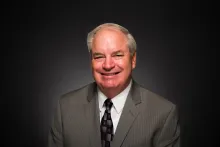
Robin Webber was born in Chicago, Illinois, in 1951, but has lived most of his life in California. He has been a part of the Church of God community since 1963. He attended Ambassador College in Pasadena from 1969-1973. He majored in theology and history.
Mr. Webber's interest remains in the study of history, socio-economics and literature. Over the years, he has offered his services to museums as a docent to share his enthusiasm and passions regarding these areas of expertise.
When time permits, he loves to go mountain biking on nearby ranch land and meet his wife as she hikes toward him.
